Nejat Society
  • Home
  • Articles
  • Media
    • Cartoons
    • NewsPics
    • Photo Gallery
    • Videos
  • Publications
    • Books
    • Nejat NewsLetter
    • Pars Brief
  • About Us
  • Contact us
  • Editions
    • عربي
    • فارسی
    • Shqip
Nejat Society
Nejat Society
  • Home
  • Articles
  • Media
    • Cartoons
    • NewsPics
    • Photo Gallery
    • Videos
  • Publications
    • Books
    • Nejat NewsLetter
    • Pars Brief
  • About Us
  • Contact us
  • Editions
    • عربي
    • فارسی
    • Shqip
© 2003 - 2024 NEJAT Society. nejatngo.org
Mujahedin Khalq Organization as a terrorist group

Documents about the crimes of MKO in Iraq

American obstacles on the way of investigating MKO crimes
"We have collected many documents about the crimes Mujahedin-e Khalq Organization has so far committed in Iraq; but Americans refrain from letting us find access to a part of documents over MKO crimes inside the country" announced chief investigative judge of the Supreme Iraqi Criminal Court in a meeting with Secretary General of Habilian Association.
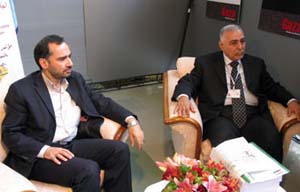
 

chief investigative judge of the Supreme Iraqi Criminal Court in a meeting with Secretary General of Habilian Association

According to the database of Habilian Association (families of terror victims) in a meeting with Secretary General of Habilian Association, Adnan al-Bedeyri also said: We have managed to meet many remnant families of MKO suppression of Kurds in northern Iraq and have collected remarkable documents in this regard.

He also added: Despite all the attempts made by the MKO in order to deviate the case, we strive to get the result and try to tie up any loose ends with this file. We also ask you, as the representatives of terror victims, to provide Iraq’s supreme criminal court with any documents you have about MKO crimes.
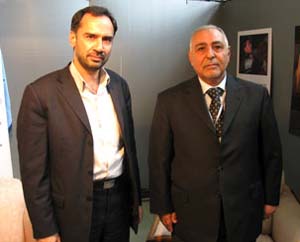
chief investigative judge of the Supreme Iraqi Criminal Court in a meeting with Secretary General of Habilian Association

Underlining that they never follow political goals in this case, the Iraqi official also said: We have put our backs into fulfilling the Iraqi people’s demand for incrimination of the assassins of Iraqi people and we are all in our power to arrive at this result.

Then Secretary General of Habilian Association said in his part: we have discussed the issue of MKO with many Iraqi authorities and are totally aware of the intensity of their hatred against this terrorist cult.

Referring to the fact that America has always made obstacles on the way of fulfillment of the will of Iraqi officials and people about MKO after the occupation of Iraq, Hashemi Nejad also said: MKO tries to portray itself as a political opposition group which has renounced terrorism; but their actual intention is to create an atmosphere of tension and hostility between the government and the people of Iraq. Then Hashemi Nejad pointed out MKO deception in international community and said: MKO struggles to cheat and mislead world’s public opinion and make the international community believe that they are being oppressed by the Iraqi government. To do this MKO is being accompanied by some European political figures.

He also said: Iraqi people are never satisfied with MKO presence inside their country and the only way for bringing to an end their terrorist activities and expelling them from Iraq is to unveil the crimes they have so far committed.

May 19, 2009 0 comments
FacebookTwitterPinterestWhatsappTelegramSkypeEmail
Missions of Nejat Society

Nejat Society delegation met Shadow Minister for Sport, Mr Hugh Robertson in London

On December 18th ,2008 Shadow Minister for Sport, Mr Hugh Robertson met with the Nejat Society delegation in London to hear about their humanitarian solution for Camp Ashraf in Iraq.
Nejat representatives described conditions inside Camp Ashraf in Iraq. The camp is the military/ideological training base of the Mojahedin-e Khalq (MKO) cult organisation.
Mr Robertson was sympathetic to the stories of two women in the delegation who have not seen their relatives for many years because of MKO directives for members to divorce from their spouses, children and families. Mr Robertson agreed that a humanitarian approach should be followed in resolving the problem.Nejat Society delegation met in the House of Lords with Baroness Neville-Jones

May 19, 2009 0 comments
FacebookTwitterPinterestWhatsappTelegramSkypeEmail
Missions of Nejat Society

Nejat Society delegation met in the House of Lords with Baroness Neville-Jones

On December 17th, 2008 Nejat Society delegation met in the House of Lords with Baroness Neville-Jones, Shadow Security Minister and National Security Adviser to the Leader of the Opposition.

Baroness Neville-Jones welcomed the group warmly and spoke of her admiration for their courage.

The Nejat delegation described in detail the problems faced by the captives in Camp Ashraf. They explained that the MKO members have been trapped in the camp by the Rajavis who demand total obedience. Infringements of the draconian conditions which the Rajavis have imposed upon all the members is harshly punished. As a result there is a high rate of suicide in the MKO.
Nejat Society delegation met in the House of Lords with Baroness Neville-Jones

May 19, 2009 0 comments
FacebookTwitterPinterestWhatsappTelegramSkypeEmail
Missions of Nejat Society

MKO members’ families meeting in Ahwaz

A group of family members of Camp Ashraf residents, at Nejat Society office in Ahwaz, attended a gathering held by NejatNGO on Friday May 8th,2009. They issued a statement addressing Mr. Nouri Al Maliki, Iraqi Prime Minister.MKO members' families meeting in Ahwaz

May 19, 2009 0 comments
FacebookTwitterPinterestWhatsappTelegramSkypeEmail
The MEK Expulsion from Iraq

Iraqi MP: Iraq Pursuing MKO Expulsion Seriously

The Iraqi parliament is seriously pursuing expulsion of the anti-Iran terrorist group, the Iman al-Asadi, a member of the Shiite United Iraqi Alliance (UIA)Mojahedin-e Khalq Organization (MKO), from the country, an Iraqi lawmaker said on Sunday.

"Despite pressures exerted by certain bodies to prevent expulsion of MKO, the Iraqi parliament is following the case seriously," Iman al-Asadi, a member of the Shiite United Iraqi Alliance (UIA) – the largest bloc in the Iraqi parliament with 83 out of a total 275 seats – told FNA.

She underlined that expulsion of MKO sets a priority for the Iraqi government.

Reminding pressures on Iraqi government about the MKO’s fate, Asadi stated, "What such institutions want is unacceptable. MKO is not valuable for us. We do not recognize them."
Iraq has vowed to return MKO members to Iran or send them to a third country as it holds the anti-Iran group responsible for destabilizing Iraq through its terror attacks.

The MKO moved to Iraq in 1986 where it enjoyed the support of former Iraqi dictator Saddam Hussein who funded the group to work against Iran in the 1980-88 war. The group launched attacks on Iran from its headquarters, the Camp Ashraf, in the northern province of Diyala.

The MKO is also responsible for numerous acts of violence against Iranian civilians and government officials as well as Iraqis during the reign of Saddam.

The group started assassination of the citizens and officials after the revolution in a bid to take control of the newly established Islamic Republic. It killed several of Iran’s new leaders in the early years after the revolution, including the then President, Mohammad Ali Rajayee, Prime Minister, Mohammad Javad Bahonar and the Judiciary Chief, Mohammad Hossein Beheshti who were killed in bomb attacks by MKO members in 1981.

The MKO has been in Iraq’s Diyala province since the 1980s.

May 18, 2009 0 comments
FacebookTwitterPinterestWhatsappTelegramSkypeEmail
Spain

Open letter to MR. JOSE LUIS RODRIGUES ZAPATERO

HONORABLE and distinguished President of the Government of Spain
“MR. JOSE LUIS RODRIGUES ZAPATERO” President of the Government of Spain MR. JOSE LUIS RODRIGUES ZAPATERO

We are the former veteran members of PMOI (Rajavi’s cult), a terrorist cult organization which has been blacklisted as a terrorist organization by USA and Canada.
We would like to inform your Excellency that MR. ALEJO VIDAL QUADRASS, the Vice President of the European Parliament is helping and backing up the PMOI’s leader MRS. MARYAM AZDANLO and her terrorist cult in European parliament.

We would like to notify your Excellency that this brutal and savage religious cult (PMOI) has perpetrated lots of crimes against the people of Iraq during Saddam Hussein’s reign and suppressed and repressed its own members for decades.

We are all victims of this brutal and tyrant cult, who had been under severe and harsh physical and psychological mistreatment and torture by the henchmen of this cult for years just because we dared to criticize the leaders of this cult and their cultish ideology which is considered as a deadly sin and is totally against the cultish regulations and rules of law in this cult.

We are all witnesses of killing and murdering lots of innocent people of Iraq by PMOI’s military missions in complicity and complete co-operation with Saddam Hussein’s army during the popular uprising of the people of Iraq.

We are all surprised that MR. VIDAL QUADRASS is helping and backing up such a cruel and bloodthirsty cult which has committed numerous crimes not only against its own members but also against the people of Iraq.

Before MR. VIDAL QUADRASS, MR. CASACA, a politician from Portugal, was doing the same job in favor of PMOI, backing up and helping PMOI in European Parliament, but we saw that he lost his popularity in European Parliament and they did not vote for him and he had to withdraw from European politics.

Helping and backing up this terrorist and inhumane cult will ruin and damage the popularity and prestige of anyone who aligns himself with them.

Best Regards

SIGNATORIES (the Former Veteran Members of PMOI)
1. MR. HASSAN PIRANSAR
2. MR. HAMID SIAHMANSOURI
3. MR. MOHAMMAD RAZAGHI
4. MR. MOHAMMAD BAZIARPOUR
5. MR. NADER NADERI
6. MR. MAJID ROHI
7. MR. HAMED SARRAFPOUR
8. MR. MANSOUR NAZARI
Iran Payvand, Paris

May 17, 2009 0 comments
FacebookTwitterPinterestWhatsappTelegramSkypeEmail
MEK Camp Ashraf

Transformation of a military camp into a city

The various definitions and indices of city from the viewpoint of sociologists, economists, Camp Ashraf was one of the military camps of Mojahedin and one of their instruments for pursuing armed strugglegeographers, and demographers were elaborated on to prove or disapprove the statements of Mr.Hezarkhani in his report about Camp Ashraf. There are still other paradoxical points in his book that are to be expounded on and prove the fact that his statements are a kind of formalist description aiming at accomplishing his duty in pleasing MKO leaders and giving false information to outsiders and the fact that he hardly believes in his own statements. Some of these points are to be explained here.

1. As Mr.Hezarkhani puts into words:
Camp Ashraf was one of the numerous bases of NLA in armed struggle against the regime of Velayat-e Faqih and therefore was equipped with all kinds of light and heavy arms. However, Ashraf city is a non-military and disarmed city that the heart of the organized peoples of Iran still beat for it. How and when this transformation happened is a long story about a struggle for survival that was imposed on the movement since the invasion of Iraqi soil by coalition forces.

He acknowledges the fact that prior to its disarmament, Camp Ashraf was one of the military camps of Mojahedin and one of their instruments for pursuing armed struggle against the Iranian government. He further points out that it has been disarmed by the coalition forces, and the US in particular, and its existing conditions like turning its name from Camp Ashraf to Ashraf city has been an imposed issue and inevitable. In fact, this part is the only honest statements of Mr. Hezarkhani:

A. Ashraf is basically a military camp that has undergone disarmament. This point is repeated in other parts of this book too. Therefore, imputing the title city to it has been an inevitable act otherwise there was no rationale behind its survival.

B. In another part of this paragraph, Mr. Hezarkhani states that selecting the title city for Camp Ashraf is a vital issue that guarantees the existence of Mojahedin and Camp Ashraf. In other words, if Mojahedin failed to call it a city, its destiny would be unclear. He also implies that Mojahedin do not believe in urbanization in its conventional meaning since it denotes an open society that is one of the main enemies of Masoud Rajavi, his ideology and ideological revolution. If Rajavi believed in the conventional definitions of a society and city, he never forced MKO members to live in an isolated place far from other men and civility. Also, any mental inclination toward urbanization on the part of Mojahedin is considered an unforgivable sin.

Why Rajavi is so sensitive about Camp Ashraf to the extent that he ties his destiny with its existence is due to the fact that he is well aware that if ashraf turns to an ordinary society, its disintegration is likely. This is the rationale behind calling it a city that no one recognizes its legitimacy. All these facts are implied by Mr. Hezarkhani that dares not to express his ideas clearly. The same ideological and strategic situation comes true for the bastion of Mojahedin in Auver-sur-Oise. It is likely that they turn it into Auver-sur-Oise suburb as soon as they feel the danger of its closure on the part of France.

C. Mr.Hezarkhani makes use of the word transform for comparing the old and new conditions of Ashraf. What he means by this transform is not clear and is one of his double-edged terminologies. If he means transferring a fully armed military camp to a civilized and ordinary city that makes him so impressed, it may be considered a progressive step forward; however, our optimism is faced with his other contradictory statements that show even the use of this term is a kind of tactic for hiding the true nature of Camp Ashraf and is of no reliability. His words show that Mojahedin are very far from developing and undergoing civility and urbanization showing no sympathy to do this.

The facts behind all likings of Mr. Hezarkhani are numerous. For instance, he implies that if Mojahedin were not enforced to surrender to American and coalition forces, Ashraf was still one of the numerous bases of the so-called liberation army equipped with all kinds of light and heavy arms in the armed struggle against the Iranian government. A more interesting point is that upon entering Camp Ashraf, he is afraid lest he is given a false address and finds many changes therein compared to earlier years. However, his surprise is truly the result of visiting his old friends who welcome him with excitement after so many years in their ordinary uniform and then he believes that he has entered the same Camp Ashraf that he visited before in various occasions. He sees himself among militiamen that despite putting on military uniform are bare-handed and have no arm and considers this as a sign of urbanization of Camp Ashraf.

May 17, 2009 0 comments
FacebookTwitterPinterestWhatsappTelegramSkypeEmail
Mujahedin Khalq; A proxy force

Britons support PMOI in letter to Obama

UPILONDON- British lawmakers issued a letter to U.S. President Barack Obama calling for the removal of the People’s Mujahedin of Iran from a terrorist list.
More than 180 members of the British Parliament joined a similar effort by European lawmakers proposing that the Obama administration shift its stance on Iranian opposition movements as part its new policy of engagement.
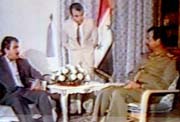
MKO leader Massoud Rajavi (L) and former Iraqi dictator Saddam Hussein who equipped the MKO against Tehran during the Iran-Iraq war in 1980s.
"Our experience has shown that the Iran crisis cannot be resolved without an Iranian solution and without relying on its main opposition movement," the letter said.

President Bill Clinton included the PMOI on the U.S. State Department’s Foreign Terrorist Organizations list in 1997 following the election of Iranian President Mohammad Khatami.
Though largely targeting Iranian government officials, PMOI’s killing of American contractors in Tehran in the 1970s, participation alongside Saddam Hussein’s forces in suppressing Kurdish and Shiite rebellions in Iraq in 1991 and later attacks on Iranian embassies in 1992 earned it a spot on the terrorist lists of several nations.

The PMOI and its affiliates in the Paris-based National Council of Resistance of Iran have waged a successful delisting campaign in Britain and Europe, with similar efforts under way in the United States.

In the letter to Obama, lawmakers said they fear a "catastrophic humanitarian crisis" would result from Washington’s refusal to delist the group, adding that Iran uses the listing as justification for threats against the PMOI.

"It is time for the U.S. administration to listen to this message, a message brought by you who have proved to be symbols of peace and democracy in today’s world," Maryam Rajavi, NCRI president, said in a videotaped statement.
http://www.upi.com/Emerging_Threats/2009/05/14/Britons-support-PMOI-in-letter-to-Obama/UPI-46881242336414/

May 17, 2009 0 comments
FacebookTwitterPinterestWhatsappTelegramSkypeEmail
Iraq

Open letter to President Talebani

Dear Mr. Talebani,
We also believe that it is time to disband Camp Ashraf.

But we also see the Problem, what to do with the inhabitants. They cannot be deported back to Iran without violating international law and human rights and without bringing them in danger to be prosecuted or imprisoned.

You can approach your aim easier – try to get the members of the MKO out of the influence-system of this organisation.

You should separate them from the groups’ daily grind and try to take them back to reality by getting them in contact with their families and the “normal life” outside the camp. Break the chains to the organisations’ ideology and many inhabitants will leave Camp Ashraf voluntary.

Of course, some of the inhabitants will want to stay in the Camp and fight for the MKO anymore, but if you decrease the number of Camp Ashraf inhabitants by interviewing them separated from the groups influence about their own will and taking those who want to leave out of the camp, you maybe can even break the groups’ motivation to fight for Camp Ashraf any longer.

We want to please you, to concentrate on getting in a dialogue with other (western) countries to find places, where the defectors of the Organisation can stay.
You can also intensify your contact to relatives and families of the inhabitants, which can try to convince their loved ones to come home, possibly even to Iran.
You should also negotiate with the Iranian authorities, that those defectors, who were not in touch with any terroristic activities in the past, will not be prosecuted or imprisoned for only being a former member of the MKO.

Show the inhabitants of Camp Ashraf, that do not need to be scared about their future outside the Camp and that leaving the camp and the MKO is a good decision.
If you can save a few of the potential defectors, many will follow.

We support your intent of disbanding Camp Ashraf, but we want you to keep sure, that no one will be deported against his will and under violation international laws and human rights.

Search the help of international human rights organisations and the international community to solve the problem in an human way.

Yours sincerely

AAWA Association
Dipl. Ing. Ali Akbar Rastgou
(Chairman)
Iranischer Kulturverein AAWA e.V.
Postfach 903173
D-51124 Köln
Email: info@iran-aawa.com

May 16, 2009 0 comments
FacebookTwitterPinterestWhatsappTelegramSkypeEmail
MEK Camp Ashraf

The illusion of calling Camp Ashraf a city – 2

Calling Camp Ashraf as Ashraf city is one of the self-fabricated terms of MKO and investigating its semantic, geographical, social, and political aspects is necessary. Ashraf is the military camp of Mojahedin that has surrendered to a superior power by force and still has the parameters and indices of a military camp like putting on military uniform, running morning rituals, military discipline and tens of other instances of practices exercised in most military camps. The fact is that calling Camp Ashraf a city is so irrelevant and ridiculous that in the report about Camp Ashraf written by Manoochehr Hezarkhani, a member of NCRI, he looses his control and is strongly impressed after finding some parameters like the existence of marketplace and a graveyard therein and writes:

I consider the entrance of business to Ashraf as a sign of “urbanization” in this military camp.

Or he refers to another sign of urbanization of Camp Ashraf as follows:

Graveyard is another structure of this (unfortunately) developing city that is not newly built and its establishment goes back to the post Kuwait war period as the monument of those Mojaheds who were martyred in the riots of that time and their body was not found. Until then, Mojahedin buried their martyrs in Karbala yet since then they bury them in this cemetery. The great, pleasant, and orderly graveyard that I saw in this trip is in fact one of the most interesting scenes of this city and as it was said one of the places that all newcomers visit first. The regular line of glittery tombs decorated with flowers, the photo of martyrs of Ashraf as well as the light and mournful music played therein leaves no visitor indifferent.

Let alone the fact that any gathering even comprised of few families needs a place as cemetery and if it is an index of urbanization, any gathering of any size and characteristics is a city if it has a graveyard and the presence or absence of graveyard is the index of urbanization in social and political classifications. Surprisingly enough, Mr. Hezarkhani pays his most attention to the structure of the graveyard of Ashraf and describes it compared to other places. The reason may be that Mojahedin value the dead more than any other issue and the stylish and orderly graveyard therein acts as a motivation for others to die to receive the greatest respect. Likewise, it can be concluded that Mr. Hezarkhani himself has no basis for his statements and there are other objectives behind his report.

Evidently, the best resource and reference for finding if Ashraf can be called a city is the existing encyclopedias and dictionaries. Surprisingly enough, in the online encyclopedia Wikipedia, Camp Ashraf has been considered a city whereas various sociological, geographical, and political definitions given of city in the same encyclopedia and classification of its indices imply that Camp Ashraf lacks many parameters to be called a city. However, in Wikipedia there are some contradictions too where the residents of Ashraf are quoted calling it “Ashraf city or Camp Ashraf” considering its military nature. Such fabricated definition is much owed to Mojahedin lobbies and payments rather than geographical facts to legally refer to an area not even as a village or town but city!

It seems that according to the dualistic viewpoint of Mojahedin consisting of Marxist as well as religious outlook toward all phenomena and issues, the definitions given by Marx and Engle on city are more relevant here since they define city materialistically. Marx defines an urbanized society based on some characteristics and features: A city is the place of centralization of population, production means, resources, demands and needs wherein social working division is made.

It seems that population is the sole commonality found between the definition of a city and Camp Ashraf. However, according to a conventional rule, 3500 residents are not enough to be considered a population. Moreover, according to geographical and sociological definitions, a city has to have at least 50000 hectare width and 50000 residents. In this regard, geographers consider a city as an artificial landscape of streets, buildings, facilities, and structures that make an urban life possible. Moreover, historians define city based on its history and antiquity. Economists refer to city as a place where the livelihood of the most residents is not based on agriculture and demographers take the population of an area as the main factor of its urbanization. These are the classic factors for distinguishing between a city and other geographical divisions. The factors of modern urbanization like designation, body, ideals, and activities are to be added to the above factors. Intelligentsias consider an urbanized structure as a complex and organized design consisting of three main factors of body, ideals, and activity that is changing constantly. Some others define city as the result of removing the earth from life and replacing it with thinking.

Now, taking these factors into consideration, it is very difficult to find the traces of facilities and parameters of a city in Camp Ashraf. The extent to which these definitions and characteristics are accepted by Mr. Hezarkhani depends on the extent to which he has relied on them in his report. For example, if he refers to the index of marketing for proving the urbanization of Camp Ashraf, it means that he takes classic definition of a city into consideration and fails to exempt Camp Ashraf of those definitions. He has to either confirm the standard definitions on city or give a definition other than that of encyclopedias, dictionaries, and theorists. Referring to a marketplace and bank (that are symbolic), and also a standard football field like that of European countries, mosque, hospital, etc , it seems that he recognizes the classic definitions of city and urbanization. The content of these symbols and their true nature is another issue to be discussed.

May 16, 2009 0 comments
FacebookTwitterPinterestWhatsappTelegramSkypeEmail
Newer Posts
Older Posts

Recent Posts

  • Various Aspects of Massoud Rajavi’s Disappearance

    October 20, 2026
  • MEK agents near schools in Tirana, Albania

    October 17, 2026
  • Expectations of human rights bodies regarding censorship within the MEK

    October 13, 2026
  • The Jamalis’ Plea for Help: Save Our Brother from the MEK!

    October 11, 2026
  • Testimonies of Participants in the MEK’s Staged Propaganda Stunt in Karaj

    October 7, 2026
  • Facebook
  • Twitter
  • Instagram
  • Youtube

© 2003 - 2025 NEJAT Society . All Rights Reserved. NejatNGO.org


Back To Top
Nejat Society
  • Home
  • Articles
  • Media
    • Cartoons
    • NewsPics
    • Photo Gallery
    • Videos
  • Publications
    • Books
    • Nejat NewsLetter
    • Pars Brief
  • About Us
  • Contact us
  • Editions
    • عربي
    • فارسی
    • Shqip