Nejat Society
  • Home
  • Articles
  • Media
    • Cartoons
    • NewsPics
    • Photo Gallery
    • Videos
  • Publications
    • Books
    • Nejat NewsLetter
    • Pars Brief
  • About Us
  • Contact us
  • Editions
    • عربي
    • فارسی
    • Shqip
Nejat Society
Nejat Society
  • Home
  • Articles
  • Media
    • Cartoons
    • NewsPics
    • Photo Gallery
    • Videos
  • Publications
    • Books
    • Nejat NewsLetter
    • Pars Brief
  • About Us
  • Contact us
  • Editions
    • عربي
    • فارسی
    • Shqip
© 2003 - 2024 NEJAT Society. nejatngo.org
Iraq

EU will take Mojahedin Khalq back to Europe

President Talebani: God willing, with the new EU attitude, they will take Mojahedin Khalq back to Europe
… Asked about National Security adviser Muwaffaq al-Rubay’i’s statement that the Mojahedin-e Khalq Organization’s Camp Ashraf will be closed and a new security pact will be signed with Iran, Talabani says: "Dr Muwaffaq al-Rubay’i was not authorized to announce this because he is not the Iraqi Government’s spokesman. Dr Ali al-Dabbagh is the official spokesman. The Iraqi constitution rejects the presence of foreign armed forces on its land. It also rejects the presence of any non-Iraqi armed organization on its land be it Kurdish, Persian, or Turkish. We have always called for finding a solution to Camp Ashraf by closing it and finding safe places for those present in it. The Iraqi Government does not have the intention or legal international ability to hand them over to Iran. Iran made proposals to us. For example, it said it is ready to provide anyone of them wishing to travel to Europe with a passport. There is now a new attitude in Europe towards the Mojahedin-e Khalq Organization. God willing, the European states will reach a solution according to which they will accept them there. This group’s stay in Iraq is no longer accepted by the people and government. I can tell you that the leadership of this group committed big mistakes in the past. It cooperated with the dictatorial regime in the fight against the Kurds and the Shi’is in the central and southern regions. Therefore, they were involved in the bloody Iraqi conflict. Accordingly, the overwhelming majority of the Iraqi people want this group out of Iraq, but not by force or handover to Iran as reported. We reject this." …
—–
Iraqi president interviewed on elections, Obama’s message, domestic issues
Al-Arabiya TV, Dubai, in Arabic, February 01, 2009
Reported by: BBC Monitoring Middle East
["Frankly Speaking" programme, featuring an interview with Iraqi President Jalal Talabani in Al-Sulaymaniyah on 30 January by Elie Nakuzi in the studio – recorded]
Dubai Al-Arabiya Television in Arabic at 2004 gmt on 30 January carries a new 51-minute edition of its "Frankly Speaking" weekly programme, featuring an interview with Iraqi President Jalal Talabani, who is interviewed via satellite from Al-Sulaymaniyah on 30 January by Elie Nakuzi in the Dubai studio.
Talabani begins by responding to a question on his health. He denies what he calls "tendentious rumours" about his health and says he is fine.
Asked about US President Barack Obama’s message to the Islamic world through Al-Arabiya Television, Talabani says: "I think that the mere arrival of Mr Barack Obama at the White House was a major historic change. I also think that his new language, which is overflowing with friendly feelings and turn towards dialogue, bodes well. When Mr Obama took the constitutional oath, he did not hesitate to mention his name in full as Barack Hussein Obama. I think this, too, is a message to the Islamic world that he does not deny his relationship with it." He adds: "But there are many intricate problems the Islamic world and its leaders are requited to work on in order to facilitate the arduous task of solving the outstanding problems in the Islamic world."
When told that President Obama said he had "difficult and big decisions" to make on Iraq and that many think he would fulfil his promise to withdraw the US forces from Iraq, and asked if Iraq has apprehensions about a "prompt" US withdrawal from Iraq, Talabani says: "I have no fears about the gradual withdrawal Mr Barack Obama promised the American people during the electoral campaign. I think achieving security and stability in Iraq hinges on the unity of the political forces in a real national unity government and on the attainment of national reconciliation in Iraq. If these tasks are accomplished, security and stability will then prevail in Iraq. We can enforce the law and maintain security and stability in Iraq with the help of the Iraqi armed and police forces that we have now."
Asked about the Iraqi provincial council elections and the prime minister’s performance, Talabani says: "I think the Iraqi elections are going on normally. I take into consideration the fact that Iraq has not witnessed free and democratic elections for over 50 years. Therefore, we believe that elections are going on well. It is normal to exchange accusations during the electoral campaign, but we need evidence to prove interference by government agencies. Initial results do not support these accusations." He then hopes that no rigging will take place anywhere in Iraq.
On the difference between the past and current elections, Talabani says the current electoral lists do not depend on the sectarian factor because the Shi’i and Sunni coalitions are running in independent lists and platforms.
When told that opinion polls showed progress by seculars and moderates at the expense of sectarian and religious parties, and asked if he feels that the religious parties are retreating, Talabani says: "I cannot judge things now. I think the main influential forces continue to enjoy large popular support. I noticed progress by some secular parties. Also I noticed the appearance of several secular lists in the regions. This indicates there is progress."
Asked if the Iraqi religious authority supports one party against another, he says: "His Eminence Grand Ayatollah Ali al-Sistani, may God protect him, is neutral and rises above party ideologies. He calls for the participation of the masses in the elections and for choosing the ones that can represent them in the most ideal way. Therefore, he does not side with a faction or group against another. I think he has always played this glorious historic role in all Iraqi issues."
Asked if it is true that there is retreat in the position and popularity of the Kurds in Mosul, Talabani says: "I do not think so. Also I cannot make an accurate assessment before the results of the elections are announced. True, the Kurds in Mosul were exposed to large displacement campaigns. Thousands of families were displaced and tens of thousands of people left their areas. The Yazidi Kurds were also exposed to unjust campaigns and brutal genocide. Therefore, we have to see a change, but I do not think there is a large change or retreat in popular support for the lists. The Kurds did not run independently in these lists. There are also Arab, Islamic, and non-Islamic Iraqi parties in these lists."
On the issue of Kirkuk and why it will not participate in the new elections, Talabani says some of the people who came to Kirkuk from other places will take part in the elections. He adds that the original people of Kirkuk will not participate because the problem of Kirkuk has not been solved yet. He says a census should be held to know which people are eligible for voting.
Continuing, he says: "I think it is possible to normalize the situation in Kirkuk. I visited Kirkuk some time ago and met there with the representatives of all communities and entities. They all expressed a desire to achieve national reconciliation and normalize relations among them and a desire to solve the issue of Kirkuk through accord among all."
Asked about "differences" between the Kurds and Prime Minister Nuri al-Maliki, Talabani says: "As you know, differences emerged over certain issues. I regret to see these differences reach the news media. As a president of the republic who works for accord, I had hoped that these differences would be restricted to the lobbies of parties and halls where cordial meetings are held. Differences are not large and intense as some circles say. There are differences, of course, over the issues for which five committees were formed. One of these is the political reform committee. The Iraqi parliament endorsed a political reform paper. This means there is need for political reforms in Iraq. The parliament endorsed this paper, which became a law when the Presidency Council signed it and it should be implemented by the government, parties, and parliament. There are also the issues of security, armed forces, oil, and disputed areas. Committees have been formed for all these in order to address the outstanding issues. This means all admit that there are outstanding issues and these require joint solutions in accordance with the Iraqi constitution and the democratic principles currently prevailing in Iraq. I think that the success of the five committees formed from five parties to solve these problems will lead to the resolution of all differences and, consequently, bolster Iraqi national unity. As a Kurd, I do not think there is any problem that cannot be solved because I think Arab-Kurdish brotherhood is firmly entrenched in history and joint Arab-Kurdish struggle is the only way to achieve the aims of the Kurds, Arabs, and other Iraqi citizens." He adds: "We all have to try to solve problems so that these will not get complicated or create difficulties for the Iraqi people."
On the way he views the performance of Prime Minister Al-Maliki, Talabani says: "Frankly speaking, brother Nuri al-Maliki is an old friend of mine. We struggled together to reach this memorable day. Our personal relationship is good and continuing. There are, however, differences in opinion over certain issues. These could sometimes be between me and him or between him and Mas’ud Barzani, but this is not alienation or hostile and conflicting differences that cannot be solved. I think they can be solved. I would like to tell you that during our last meeting we agreed to bolster relations between the Presidency Council members and the prime minister in the Executive Council and on the basis of the political reform document, which should serve as a programme for all. Accordingly, there are large areas for agreement and accord."
Asked about National Security adviser Muwaffaq al-Rubay’i’s statement that the Mojahedin-e Khalq Organization’s Camp Ashraf will be closed and a new security pact will be signed with Iran, Talabani says: "Dr Muwaffaq al-Rubay’i was not authorized to announce this because he is not the Iraqi Government’s spokesman. Dr Ali al-Dabbagh is the official spokesman. The Iraqi constitution rejects the presence of foreign armed forces on its land. It also rejects the presence of any non-Iraqi armed organization on its land be it Kurdish, Persian, or Turkish. We have always called for finding a solution to Camp Ashraf by closing it and finding safe places for those present in it. The Iraqi Government does not have the intention or legal international ability to hand them over to Iran. Iran made proposals to us. For example, it said it is ready to provide anyone of them wishing to travel to Europe with a passport. There is now a new attitude in Europe towards the Mojahedin-e Khalq Organization. God willing, the European states will reach a solution according to which they will accept them there. This group’s stay in Iraq is no longer accepted by the people and government. I can tell you that the leadership of this group committed big mistakes in the past. It cooperated with the dictatorial regime in the fight against the Kurds and the Shi’is in the central and southern regions. Therefore, they were involved in the bloody Iraqi conflict. Accordingly, the overwhelming majority of the Iraqi people want this group out of Iraq, but not by force or handover to Iran as reported. We reject this."
Asked about the new security pact with Iran Al-Rubay’i mentioned in his statement, Talabani says: "I have no idea about it. It was an idea Dr Muwaffaq al-Rubay’i put forward. The idea was not studied by the Iraqi Government or parliament. Some officials sometimes make statements outside their jurisdiction and without consulting with the central government, presidency, or parliament. Iraq has not discussed such an issue."
On whether Iran is interfering in Iraq’s elections, Talabani says: "If interference means Iran sympathizes with some candidates and helps them financially, then I will not rule this out. However, if interference means actual daily and administrative interference, I will then rule this out."
Asked if he does not object to Iranian financial aid to some parties, he says: "I do not deny that some parties may have relations with and receive aid from Iran or Arab countries. Funds come to Iraq from all countries around Iraq. This phenomenon regrettably exists, but I do not exactly know who Iran, Syria, or Turkey is helping. These are secret issues that will later become known."
On Iranian-US ties during Obama’s administration, Obama says: "I believe that a serious US-Iranian dialogue will be in the interest of all. It will be in the interest of Iraq, Iran, and the United States." He adds: "I think the Americans and Iranians will use all cards on the table with regard to US-Iranian relations. Personally, I have no apprehensions because the Iraqi card is now in the hands of Iraq, especially after signing the SOFA [Status of Forces Agreement]. I have no apprehensions about any US-Iranian dialogue or negotiations and I do not think these will be at the expense of Iraq."
On Iraqi-Syrian relations, Talabani says: "Now I see a new atmosphere in relations between Syria and Iraq. During my recent meeting with President Bashar al-Asad in Kuwait, we agreed to bolster, develop, and expand these relations. We also appointed an ambassador to Syria to bolster these relations. We are now discussing the issue of renewing the oil pipeline across Syria and Lebanon to the Mediterranean. We are also trying to improve relations with Syria in other domains. I think Syria is aware of the importance of relations with Iraq. It knows that normal relations with Iraq are in its interest."
Asked if he supports the Saudi monarch’s statement in Kuwait about the Arab peace initiative and asked if he thinks this initiative is now dead, he says: "I do not think the initiative has died. I support what the custodian of the two holy mosques said. I think this initiative is present on the table, but as he said it will not be proposed for ever without a positive response from the Israeli side." He then urges the Israeli rulers to accept the Arab peace initiative, which he describes as "fair and balanced."
Asked if Al-Qa’idah is no longer present in Iraq, he says: "Al-Qa’idah has been much weakened. What is important is that the popular atmosphere that is hostile to terrorism is now large and extensive. The people began to realize that the crimes committed in the name of Islam, including crimes committed against humanity in the form of indiscriminate killing and crimes against the national economy, are all hostile to the Iraqi people. Therefore, people no longer support these operations or facilitate the work of terrorist organizations. On the contrary, people are now cooperating with the government forces in the fight against terrorists."
Asked why he asked Iraqi Deputy Prime Minister Barham Salih and Kurdistan Region Vice President Kusrat Rasul to take over party responsibilities in Al-Sulaymaniyah, he says: "This was done to facilitate the work of the political bureau and leaders present on the ground in Kurdistan so that the required decisions will not be delayed on the pretext that the president or secretary general of the Patriotic Union of Kurdistan is absent. The aim is consolidating the principle of collective leadership in the PUK and facilitating the accomplishments and reforms that are required in the government, party, democratic organizations, and the society."
Concluding, Talabani addresses the Iraqis by saying: "I hope that the elections will lead to choosing true representatives of the Iraqi people. I hope these elections will be a new successful democratic experience in Iraq. I hope that my Iraqi sisters and brothers will actively participate in the elections and choose the ones they believe are qualified and capable of serving them. I think these elections will produce new facts. In the light of these facts, we expect the next parliament to be somehow different from the current one." He adds: "I greatly hope that these elections will usher in a new stage, especially after SOFA has been signed with the United States."

Al-Arabiya TV, Dubai, in Arabic

February 4, 2009 0 comments
FacebookTwitterPinterestWhatsappTelegramSkypeEmail
France

Sobhani pens letter to Minister of Affairs of the Republic France

Dr. Bernard Kouchner Minister of Affairs of the Republic France Dr. Bernard Kouchner Minister of Affairs of the Republic France
During the time since the fall of Saddam Hussein’s regime and the forced disarmament of the Mojahedin Khalq Organisation by the American army, the Mojahedin have been trying to put a mask on their violent, terrorist faces in Europe and America in a bid to remove the organisation from the list of terrorist entities in US, EU and Canada and ….
Unfortunately On last Monday EU ministers removed the MKO from their list of terror organizations, following a European court ruling in favor of the group, which has accepted responsibility for many deadly attacks against Iranian and Iraqi civilians and cooperated actively with the regime of former Iraqi dictator Saddam Hussein.
Unfortunately, the EU’s act of removing this group from its list of terrorist entities has not been based on any credible investigative work.
When PMOI whispers statements denouncing terrorism, it is not referring to its own acts. Rather it means the acts of others that fall within the group’s own definition of terrorism. This is a trickery by which PMOI continues to deceive your politicians.
In your opinion, does a terrorist group which has been disarmed after the fall of Saddam Hussein by the US army and exists in quarantine within a limited geographic boundary inside Iraq, have any opportunity to perform terrorist activities?
Surely your answer must be ‘no’, as they have had no access to arms. Therefore the reasoning that “they have not performed any terrorist act” in the short time mentioned could not in any way be considered as a professional, specialist’s argument for the leaders of European Union. Or could it?
If the Mojahedin Khalq Organisation had access to arms and had refrained from carrying out further terror acts, then in that case perhaps the group would have had to announce this in a clear public statement signed by the leaders Massoud and Maryam Rajavi, then this might have been proper grounds to consider the situation and perhaps investigate the organisation’s intentions deeper. But that was not the case now.
But fortunately, your good self, as the highest authority in the French government have announced that you consider the Mojahedin Khalq Organisation a terrorist organisation and Figaro newspaper has quoted from you:
“France, as do Belgium and Germany, continues to consider this group (Mojahedin Khalq Organisation) as a terrorist organisation”.
I have enclosed a small sample of the evidence which has already been made public concerning the MKO. The charges against the MKO and in particular its leaders include but are not limited to: crimes against humanity and war crimes inside and outside Iran; deliberately targeting civilians in acts of terror; close co-operation with the secret services of Saddam Hussein against Iranians during an 8 years war in which chemical weapons were used against Iranian people; close co-operation with other hostile spying services and spying programs against the best interests of the people of Iran and Iraq; suppression and massacre of Kurds and Shiites in Iraq on the order of Saddam Hussein; criminal misuse of the democratic institutions of a majority of European countries and the US through fraud and deception.

Sincerly
Mohammad Hossein Sobhani

Postfach 90 06 63
51116 Köln – Deutschland
Telefon: +49 (0) 1774829905
Email: sobhani_m_h@hotmail.com

Cc:
Ministers of Affairs of the EU


Mohammad Hossein Sobhani , Iran Pen Association, Germany, February 02, 2009
http://www.iran-ghalam.de/2Haupt/3499-Sobhani-name%20be%20kouchner%20i01.02.09.HTM
sobhani_m_h@hotmail.com

February 4, 2009 0 comments
FacebookTwitterPinterestWhatsappTelegramSkypeEmail
Mujahedin Khalq Organization as a terrorist group

The MKO movement is in decline

Response to Sergio D’Elia, secretary of Hands Off Cain”, the Mujahedin-e Khalq Organization (1) ANNA-MAHJAR :we are not against the removal of MKO from the list of terrorists. Indeed, the movement is in decline already

Caro D’Elia,
Our group had no intention of continuing to write about Mujahedin-e Khalq (MKO), but encouraged by your recent e-mail we feel obliged to make a few points. In principle, we are not against the removal of MKO from the list of terrorists. Indeed, the movement is already in decline  .Since the late nineties the internal dissent in Camp Ashraf is increasing and with the fall of the dictatorial regime of Saddam Hussein, the MKO will be deprived of their basic logistics. However, there are things that continue to preoccupancy.

First, we believe that the leadership of MKO should answer the killing of civilian Kurds. I’m sorry, in fact, contradicting, but under Saddam the MKO were involved directly in the massacre of the Kurdish population. We have received confirmation and documentation of what we are saying by the Kurdish Democratic Party and by independent Tolerancy International, based in Erbil (Iraqi Kurdistan) and headed by a former minister of the autonomous Kurdish government, Hussein Sinjari.

Secondly, we are sure that the meetings in Europe with several supporters and / or members of MKO led you to find them available and courteous. The image that, in fact, the movement has manufactured in the West is a democratic organization. But the situation is different at Camp Ashraf. Some members of MKO have in fact discovered at their expense, the detention camps in which under the leadership of the movement they were subjected to torture, often led to death. Members of MKO are victims of their own cynical leadership. Shown below the records of known and authoritative organization Human Rights Watch on this topic.


The third point is that, as you say it, the movement does not have a libertarian government structure and in light of the facts that we have listed above and that we are committed to detail, are needed to reconstruct the truth about the movement. Surprisingly when Italian parliamentary delegations – and Sen. Perduca – go on a visit to Camp Ashraf and then write in the Italian media praises to movement who do not know at all.
Another point which we would highlight was well summarized by a message left to us by a supporter of MKO in Italy:”It is not far the day when Iran and the Iranians celebrate their freedom and democracy under the flag of the Mojahedin and their president Mrs. Maryam Rajavi.”This concerns us. We want a free Iran, celebrating their freedom under the flag of their country, not a movement, and having as president a leader elected by democratic elections.


For ease of reading we will share this letter / document into four parts. In this letter, write the abuses at Camp Ashraf (which will be divided into two parts), providing evidence. In the coming days, we will post additional material on the killing of Kurds and the armed forces and American civilian, take our information directly from the Department of State. The material here is, we were given by Human Rights Watch and the complete document in English of 28 pages is also available on-line.


Brief Background of MKO
The MKO was founded in 1965 by three student from the University of Tehran, Mohammad Hanifnezhad, Saeed Mohsen and Asghar Badizadegan. The three believed that a peaceful resistance against the Pahlavi government does not lead to any result, and that only armed struggle could fall to the monarchy. Their ideology, however, was based on an interpretation of Islam compatible with the Marxism. during 70s, thirteen members of MKO and Giodania go into Lebanon to be trained . The friendship with Yasser Arafat, remains over the years.
With the revolution of 1979, Massoud Rajavi emerged as a leader of the movement. Immediately after the revolution, MKO supported the revolution but after a while Khomeini excluded them from the division of power. It, therefore, led to an intense rivalry between the leadership of MKO and the regime of Iran. In 1981, members of MKO launched a campaign of armed attacks against the Iranian government. The same year, Massoud Rajavi moved to Paris. In 1986, France asked Rajavi to leave the country and find a new ally: the dictator Saddam Hussein. (In movies we are in possession of Rajavi called Saddam”the big boss”).


The “ideological revolution” of the MKO
In 1985, Massoud Rajavi and Maryam Azdanlu got married. Massoud and Maryam Rajavi became co-leader of the movement. They announced the marriage is an”ideological revolution”resulted from tremendous sacrifices made by both spouses. Maryam was first married to the deputy of Massoud, Mehdi Abrishamchi. The”ideological revolution”of Rajavi was imposed on the movement and required”sacrifice”. First, the leadership has asked its members to divorce by their husbands and wives, ordering”mass divorce.”

In the book “Memoirs of an Iranian Rebel,”the former member of MKO, Masoud Banisadr (not to be confused with the former president Abolhasan Banisadr) fled from the movement in 1996, recounts a meeting for senior officers of the movement page. 37 of the English version.

The first thing I was required to do in Baghdad was watch a videotape of an ideological meeting for “executive and high-ranking members.” The meeting, called “Imam Zaman,” (in the Shiite faith is the hidden Imam), started with a simple question: “To whom do we owe all our achievements and everything that we have?”… Rajavi did not claim, as I thought he might, to be the Imam of our times, but merely said we owed everything to Imam Zaman… The object was to show that we could reach Tehran if we were more united with our leader, as he was with Imam Zaman and God.
“He (Rajavi) was ready to sacrifice everything he had (which in fact meant all of us!) for God, asserting that the only thing on his mind was doing the will of God,….we were expected to draw the conclusion that no “buffer” existed between Rajavi and Imam Zaman; yet there was a buffer between ourselves and him [Rajavi] … which prevented us from seeing him clearly. This “buffer” was our weakness. If we could recognize that, we would see why and how we had failed in Operation Forogh [Eternal Light] and elsewhere. Massoud and Maryam [Rajavi] had no doubt that the buffer was in all our cases our existing spouse…

In the next letter, provide the following themes:
“Birth of dissent in Camp Ashraf”
“Violation and Abuse of Human Rights in Camp Ashraf”
“Testimonies collected by Human Rights Watch.”


Anticipation of the next letter:
Testimony of Sayed Amir Mowaseghi, collected by Human Rights Watch
Sayed Amir Mowaseghi entered a part of MKO in 1984 and was imprisoned by the Iranian government from 1984-1987. After his release, went to Pakistan, from where he could reach Iraq and join forces in the MK 1988.Nel in June 2001, had decided to leave the movement, but he was not allowed. A session of court”was agreed in September 2001 with the presence of Maryam and Masoud Rajavi, who have not granted permission to leave the MKO.


Immediately after it happened as testified:
“I was brought to a gathering of about 600 people. I was dragged into a crowd, I was taken to blows, kicked, verbally abused. I was then led in a caravan, which they called Bangala, I was confined in isolation until 2 June, 2002, and then I was handed over to Iraqi government forces (of Saddam Hussein). The Iraqi forces have put me in the prison of Abu Ghraib, I was then sent back to Iran on 18 March 2003.”


ANNA-MAHJAR of Barducci – Secretary of the”Arab Liberal Democrats

http://www.agenziaradicale.com/index.php?option=com_content&task=view&id=7265&Itemid=52

Translated by Nejat Society

February 4, 2009 0 comments
FacebookTwitterPinterestWhatsappTelegramSkypeEmail
European Union

EU should take the next step

Reza Sadeghi: EU should take the next step by helping the victims of Rajavi cult in Camp Ashraf

Interview with the latest arrival from Camp Ashraf
Paris, January 30, 2009

Reza Sadeghi: EU should take the next step by helping the victims of Rajavi cult in Camp Ashraf

Download EU should take the next step

February 3, 2009 0 comments
FacebookTwitterPinterestWhatsappTelegramSkypeEmail
Massoud Rajavi

Rajavi’s position in the schism of 1975

The ideological schism of MKO in 1975, when actually the leaders of the group were in Pahlavi’s notorious prisons, resulted in different reactions on the part According to Rastegar, Rajavi made an attempt to hide his personal errors and stabilize his leadership over the organization by concealing the truth and labeling the former leaders as traitors as agentsof Mojahedin. The serious errors of Rajavi after the separation of Marxist wing following its declared manifesto was elaborated on and those aware of the course of events in that particular period of time were unanimous that the main mistake made by Rajavi was issuing his twelve-point statement that was considered to be the position taken by all non-Marxist Mojahedin about the schism. It stated that Mojahedin would consider the converted members as their strategic allies and openly revealed their opposition to religious members. It happened at a time when all MKO remnants except Rajavi insisted on reviewing and revising the organizational principles and ideological errors of MKO under the impact of Marxism. Karim Rastegar, an ex-member, elaborates on the impacts of this event saying that after the Marxist wing’s manifesto, Rajavi adopted a dual mannerism of keeping unwavering inclination to the left while role-played a devoted religious inside the prison.
An interesting point is that while siding with the non-Marxist wing, Rajavi took a different position toward the leaders of Marxist wing, i.e. Taqi Shahram, Bahram Aram and against truthful leaders opposed to Marxist wing like Majid Sharif Vaqefi and Morteza Samadieh Labaf. According to Rastegar, Rajavi made an attempt to hide his personal errors and stabilize his leadership over the organization by concealing the truth and labeling the former leaders as traitors as agents:
The leaders inside prison, and Rajavi in particular, tried to acquit themselves of accusations and after the terror of Sharif Vaqefi and Samadieh for a long time overturned the truth calling them traitors and introduced the leftist Vahid Afrakhteh as a hero. For instance, they quoted falsely of committee members that Vahid Afrakhteh has turned to a mythical figure under torture. 1
A more interesting point is that his appreciation of some problematic members like Vahid Afrakhteh intensified the crises and increased the doubt of religious members in Rajavi thus making the ground for his increasingly parting with them. In addition, Rajavi took an antagonist position against religious forces inside prison and worsened the conditions:
The behaviors of Masoud inside prison resulted in marginalization of religious forces. Evidently, appropriate reactions could prevent conflicts and detachments. The organization leadership tried to conceal the realities for five months calling us extremists and compromisers while everyone was well aware of the reality. It was no longer possible for us to bear lies and labels given to the religious members Muslims. Our complaint to the conditions resulted in our total boycott. Nobody dared to communicate with us. Some were so heated that even would kill us if they were allowed to. The news of our boycott by organization leaked to SAVAK and they regarded it a precious opportunity. 2
On the other hand, there is the status and position of Marxist wing. Although they took an overall defensive position regarding the ideological schism, their position is preferred to that of Rajavi that was dualistic and divisive. However, many are unanimous that the main reason of ideological schism of MKO was the dualistic and eclectic viewpoints of the early founders of MKO toward Islam rather than the effect of Marxists therein. Torab Haqshenas, a key figure of MKO in that period of time abroad, refers to significant points on the differences between inside as well as outside looking at the ideological schism of Mojahedin and the divisive position of Rajavi in this regard, saying:
In my opinion, the ideological schism had a principle that was neglected and it was the fact that we should not lie to ourselves. It is correct that we made some mistakes and acknowledged it in 1979 and criticized it, but the main point was that we should not lie to people. When we came to the point that our guide was no longer ideologically religious and it was of no effect to help us in struggle, we had to say it clearly to all people even if it resulted in our losing of many facilities and separation of many members. 3
However, it does not mean that religion was incapable to offer solutions for the challenges of MKO. It is another issue and needs to be investigated in depth. As he says, the hypocrisy and duality of Mojahedin, their eclectic ideology, lack of knowledge on religious precepts and refraining to take a clear position in this regard resulted in the occurrence of schism. In fact, the twelve-point statement of Rajavi issued inside prison was a summary of his real intention and ideas. Shahsavandi, a member of MKO sentenced to death by the order of the Marxist wing’s central committee clarifies the effects of this statement in escalation of inter-organizational tensions and conflicts inside prison:
These twelve articles defined the identity of MKO to the point that members and sympathizers had to recognize it as the basics of their activities word by word with no addition or omission and to transfer it to other prisons and those active outside. 4
The significance of this statement lies in the fact that according to Shahsavandi, it had a decisive role in the future events like that of June 1981:
These twelve articles were in fact the manifesto of Mr. Rajavi against the Marxist drift inside organization. It was a manifesto that led to the revival and reorganization of MKO and worked as infrastructure of activities after the victory of Iranian revolution. 5
Also, he elaborates on the key role of Rajavi in the development of the statement:
The essence and core of this issue is related to Masoud Rajavi and it was mainly for this reason that he tried to stabilize his leadership and bring his role to light. 6
Reviewing the points of this statement and the mistakes made by Rajavi in this regard requires another discussion of its own.

References:
1. Dr. Karim Rastegar’s interview with Cheshmandaz journal on the events of June 1981
2. ibid
3. Torab Haqshenas
4. Saeed Shahsavandi interview with the voice of Iran, part 38.
5. ibid
6. ibid, part 40.

February 3, 2009 0 comments
FacebookTwitterPinterestWhatsappTelegramSkypeEmail
Massoud Rajavi

Rajavi, a disseminator of cultic dogma

There are a number of gadgets at which cult leaders grab to convince members of their unquestionable leadership and charismatic figure. Eric Hoffer refers to the case of leftist political cult of Stalinism that was developed as a result of indoctrinating individuals with a self-fabricated ideology:
The official history of the Communist party states: "The power of Marxist-Leninist theory lies in the fact that it enables the Party to find the right orientation in any situation, to understand the inner connection of current events, to foresee their course, and to perceive not only how and in what direction they are developing in the present but how and in what direction they are bound to develop in the future." The true believer is emboldened to attempt the unprecedented and the impossible not only because his doctrine gives him a sense of omnipotence but also because it gives him unqualified confidence in the future. 1
There are other factors and tools in the hands of cult leaders to make them immune against challenges and criticism. Almost all cult leaders convince members that they have some problematic personal features that have to be corrected by means of cultic techniques and mechanisms. In order to achieve this objective, cult leaders resort to ideological dogmatism and prevent members from thinking. Also they stop the development of self-confidence on the part of members and replace it with total dependence on cultic relations and absolute submission to the point that members suffer from the loss of physical as well as mental independence for ever.
In the ideological revolution of Mojahedin, a phase transforming a political group into a cult of personality, many factors exploited by cult leaders to immunize them against challenges are traceable. Cult leaders make an attempt to convince members that they are endowed with a god-like status and unearthly power in foreseeing future events, a window that is totally closed for followers to see through. Furthermore, they expose members to absolute submission that are in most cases irrational and unreasonable. In this regard, Mohsen Rezaee, an MKO member, says:
The ideological leader has a deeper and greater insight compared to that of ordinary followers. He can foresee and interpret issues in the world that are inexplicable in their own time and it is only the passing of time that reveals their truth. Therefore, a follower has to obey his/her leader devotedly and based on absolute confidence rather than individual understanding. 2
Niyabati, one of the main theoreticians of the ideological revolution of Mojahedin, tries to justify his materialistic viewpoints on the necessity of the absolute submission of followers to cult leader by means of mystical concepts:
A wayfarer [meaning followers of MKO] has no responsibility and should be submissive like a piece of wood in the hands of carpenter. 3
He further adds:
In spiritual journey, no question is allowed. The wayfarer has to put his faith in Sheikh wholeheartedly and must regard him as the most perfect person to conduct him in spiritual training, guidance and education, be his interlocutor and obey Sheikh far from any inward or outward objection. 4
Here, the factor of anathema is added to the factor of sheikh-wayfarer relationship to convince and submit individuals. Furthermore, Rajavi and his apostles have drawn a red line by elaborating on the god-like position of Rajavi and his connection to God and have made attempt to indoctrinate the belief that challenging and disobeying him is an unforgivable sin. Anne Singleton, an MKO ex-member, refers to these factors and writes:
What Rajavi was asking everyone in the Mojahedin to do was to give him total obedience. He implied to them (through the mouths of Maryam and Fahimeh) that he had links with God and therefore knew things that ordinary members couldn’t be expected to understand. This meant that anyone who rejected him was blaspheming against God. The members were mostly willing to allow themselves to be indoctrinated with this new concept. 5
Abrishamchi, a theoretician of the ideological revolution, zealously tries to justify the unquestionable and unfathomable status of MKO leadership and states:
Leadership bears no responsibility downward. His responsibility is determined by the ideological-political considerations of the organization. 6
He further points out that questioning his decisions from lower-ranking members may result in serious disruption of the ideological principles and consequently destabilization of leadership status:
In order to clarify the ideological boundaries, it is necessary to introduce the ideological interpreter of the organization and the person who says the last word. In MKO, it is the thoughts of Masoud that are ideologically problem solving and determine ideological boundaries. Therefore, leader in the organization bears no responsiveness since it may disruptthe leader’s status. 7
In a nutshell, in MKO as in many other cults, there are mechanisms and devices used in order to raise the status of the leader to a point far from that of rank-and-files and to immunize him against criticism and questioning.

References:
1.Hoffer, Eric, The true believer, Harper &. Row, Publishers, New York, 1951, p.58.
2. Rezaee, Mohsen, p.249.
3. Niyabati, Bijan, A different look at the ideological revolution within Mojahedin, p.40.
4. ibid.
5. Singleton, Anne, Saddam’s private army, Iran-Interlink, 2003.
6. Mehdi Abrishamchi’s lecture on the ideological revolution of MKO, 1985, p.44.
7. Mojahed Journal, n. 255, p.23.

Research Bureau – Mojahedin.ws – February 1, 2009

February 3, 2009 0 comments
FacebookTwitterPinterestWhatsappTelegramSkypeEmail
The cult of Rajavi

Ex-member says MEK is like a cult

Ex-member says MEK ‘is like a cult’
Anne Khodabandeh, a former member of the Mojahedin-e Khalq organisation at her Leeds home. Lorne Campbell / The National
When the European Union removed a militant Iranian opposition group from its blacklist of terrorist organisations last month, it drew not only protestations from Iran but also the contempt of a former member who claims the group is little more than a cult.
The Mojahedin-e Khalq (MEK, or the People’s Mujahideen of Iran, and sometimes known as MKO), a leftist Islamist organisation that has vehemently opposed the Islamic Republic since its establishment in 1979, was taken off the EU’s terrorism blacklist on Jan 26 at a meeting of EU foreign ministers in Brussels, the culmination of intensive lobbying by the group and its European supporters.
But Anne Khodabandeh, née Singleton, a former member of the group for 20 years, was sceptical.
“Well, at least this shows the EU blacklist for what it really is – nothing more than a list of friend and foe,” she said.
“But realistically I don’t think it will make any difference to them in Europe. They will continue to carry on with their propaganda and fund-raising activities. They will continue to have their base in Paris where they hold their own members captive in isolation.”
Mrs Khodabandeh, 49, now a computer programmer, runs Iran-Interlink, an organisation that aims to inform the public about what she says is the reality of the MEK and provide assistance to former members, as well as current members who want to leave.
Mrs Khodabandeh said the group enforces strict segregation of men and women – even forcibly separating or divorcing couples – and employs psychological manipulation and mind control. She pointed to the practice of self-immolation at MEK demonstrations in Europe and the United States as further evidence of the group’s “cult-like” characteristics.
“The MEK is a cult, with every implication that has,” she said. “The leadership is unelected, unaccountable and perpetrates abuses against its own members.”
The MEK was established in the 1960s by a group of radical students in violent opposition to the US-backed shah, Mohammed Reza Pahlavi, and took part in the 1979 revolution.
But it soon fell out with Iran’s new ruler, Ayatollah Ruhollah Khomeini, and the the country’s religious establishment and many members were jailed and executed. Most fled the country for Europe and the United States while thousands of others set up a base in northern Iraq at Camp Ashraf, which is in the process of being closed down.
Various estimates put the group’s membership at anywhere between 5,000 and 20,000.
For its part, the MEK describes itself as a secular, democratic organisation that wants to bring democracy to Iran and enjoys significant support in Europe and the United States.
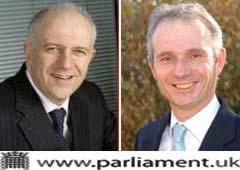
Brian Binley, a member of the British Parliamentary Committee for Iran Freedom, hailed the decision to remove the MEK from the EU blacklist and said descriptions of the group as a cult were “completely untrue”.
“I am delighted the battle has been won,” Mr Binley, a Conservative member of parliament, said of the EU ruling. “This is a perfectly legitimate group that opposes the medieval theocracy of Iran.
“I have found them to be good people, to be democrats who want a free and democratic Iran.”
Mrs Khodabandeh first learnt about the MEK in the early 1980s through an Iranian boyfriend while studying at Manchester University.
An idealist “who wanted to change the world”, she began attending the group’s campus meetings and gradually became more involved with its fund-raising and awareness activities.
Before long she was a fully fledged member, espousing the group’s militant opposition to the theocratic regime in Iran and calling for its overthrow.
But the MEK’s demands on her grew and through such techniques as peer pressure and “psychological manipulation”, Mrs Khodabandeh said, she came ever more under control of the group.
By the age of 30 she had lost touch with most of her friends and family, given up her job as a computer programmer and handed over her house, car and savings.
She left her home in Leeds, Yorkshire, to live with other members at a number of “safe houses” belonging to the MEK, first in London and then in Sweden, and was put to work in the “diplomacy section”, monitoring the news and writing press releases for the group.
“We were like children. We took all our orders from the leaders – we wouldn’t so much as leave the building without their permission,” she said.
Since 1985 the MEK has been led by the husband and wife team of Massoud and Maryam Rajavi – the latter a leading figure in the recent campaign to have the MEK removed from the EU’s terrorist list – both of whom, according to Mrs Khodobandeh, embody all the traits of “cult leadership”. Their authority within the group is unquestionable, she said, and Massoud Rajavi is proficient in mind-control techniques.
A number of rights groups support Mrs Khodobandeh’s claims.
“We have documented serious human rights abuses that the MKO was inflicting on its own members in their camp in Iraq,” said Tom Porteous, the London director of Human Rights Watch. “The organisation … has shown that criticism of leadership is certainly not tolerated.”
It was in 1993, at the height of her devotion to the MEK – “I was willing to die for them,” she said – that Mrs Khodabandeh began to have doubts about the group.
The Rajavis and other leading members had begun introducing bizarre rules, including the banning of marriage and compulsory divorces so that members could dedicate themselves fully to the cause.
She walked out on the MEK, though it took her another three years to finally cut her mental and emotional ties to the group and return to normal life.
In 1996 she met Massoud Khodabandeh, another member who had doubts about the organisation and who left at the same time. They married soon after and moved to Mrs Khodabandeh’s native Yorkshire, where they have lived since.
As a former member and current director of a support group for former MEK members, Mrs Khodabandeh is concerned about the inhabitants of Camp Ashraf in Iraq who will be evicted when the camp is closed in the coming months.
The group has been used by the EU over the years, she said, for a number of purposes, including as a propaganda tool against Iran and as a bargaining chip in nuclear negotiations.
And now that the MEK has been removed from the blacklist, there is no barrier to giving them refuge in Europe.
“EU countries have benefited from their existence for years. If you use them, take responsibility for them,” Mrs Khodabandeh said.
Telephone calls and e-mails to the MEK for comment went unanswered.
Jonathan Spollen, Assistant Foreign Editor – February 03. 2009
jspollen@thenational.ae
http://www.thenational.ae/article/20090203/

FOREIGN/119570883&SearchID=73344134565366

February 3, 2009 0 comments
FacebookTwitterPinterestWhatsappTelegramSkypeEmail
The cult of Rajavi

Individual Rights Denial within MKO

Individual Rights Denial within MKO

Individual Rights Denial within MKO

February 2, 2009 0 comments
FacebookTwitterPinterestWhatsappTelegramSkypeEmail
Former members of the MEK

Sweetness of Freedom

Sweetness  of Freedom

Sweetness of Freedom

February 2, 2009 0 comments
FacebookTwitterPinterestWhatsappTelegramSkypeEmail
The cult of Rajavi

An Organized Cult called PMOI

An Organized Cult called PMOI

An Organized Cult called PMOI

February 2, 2009 0 comments
FacebookTwitterPinterestWhatsappTelegramSkypeEmail
Newer Posts
Older Posts

Recent Posts

  • A study on the financial mechanism of the Mujahedin-e Khalq

    August 10, 2026
  • A Child behind the Ideological Bars of Massoud and Maryam Rajavi

    August 8, 2026
  • A Comparative Analysis of Psychological Control Mechanisms in Jeffrey Epstein’s Cult and the MEK

    August 3, 2026
  • Operation Mersad: How Iran foiled Saddam’s final gambit 37 years ago

    August 1, 2026
  • Ideology Cannot Prevail over Human Dignity

    July 29, 2026
  • Facebook
  • Twitter
  • Instagram
  • Youtube

© 2003 - 2025 NEJAT Society . All Rights Reserved. NejatNGO.org


Back To Top
Nejat Society
  • Home
  • Articles
  • Media
    • Cartoons
    • NewsPics
    • Photo Gallery
    • Videos
  • Publications
    • Books
    • Nejat NewsLetter
    • Pars Brief
  • About Us
  • Contact us
  • Editions
    • عربي
    • فارسی
    • Shqip