Nejat Society
  • Home
  • Articles
  • Media
    • Cartoons
    • NewsPics
    • Photo Gallery
    • Videos
  • Publications
    • Books
    • Nejat NewsLetter
    • Pars Brief
  • About Us
  • Contact us
  • Editions
    • عربي
    • فارسی
    • Shqip
Nejat Society
Nejat Society
  • Home
  • Articles
  • Media
    • Cartoons
    • NewsPics
    • Photo Gallery
    • Videos
  • Publications
    • Books
    • Nejat NewsLetter
    • Pars Brief
  • About Us
  • Contact us
  • Editions
    • عربي
    • فارسی
    • Shqip
© 2003 - 2024 NEJAT Society. nejatngo.org
European Union

Al- Qaeda front appeals to unfreeze assets

13 months ago in December 2006, the European Court of First Instance annulled an EU move to keep Iranian Mojahedin-e Khalq Organisation (MKO) on its terror blacklist, ruling it had not given the group a fair hearing or adequate reasons. However, the EU disputed the ruling and kept the organization on a new version of its list. On December 22, 2007 the European Union published its official Journal in which it updated the Common Position 2001/931/CFSP on the application of specific measures to combat terrorism and repeated Common Position 2007/448/CFSP.

But the move by MKO to challenge the EU and lodge an appeal against the EU’s decision seems to have encouraged other blacklisted persons to make a try. Reported by the International Herald Tribune, Yasin al-Qadi, head of the Saudi-based Muwafaq Foundation, is trying to appeal the freezing of his assets by the 27-nation bloc under a U.N. order filed after the Sept. 11. The US Treasury officials allege al-Qadi’s organization is an al-Qaida front used to funnel millions of dollars (euros) to the global terror organization. Al-Qadi was one of four plaintiffs whose case was dismissed by the EU court in 2005 after they were added to the EU’s terror blacklist.

It is said that the EU’s high court has also recently overturned a decision to freeze the assets of an exiled Philippine rebel leader and the Netherlands-based Al-Aqsa foundation because they were not informed why their assets were frozen

Mojahedin.ws,January 18, 2008
January 20, 2008 0 comments
FacebookTwitterPinterestWhatsappTelegramSkypeEmail
Mujahedin Khalq Organization as a terrorist group

Mojahedin Khalq threatens to kill an author

In the same way that a leopard cannot change its spots, MKO fail to give up violence and terrorism not only in its struggle conduct but also in the literature of criticizing its opponents. Bad-mouthing the critics and threatening them to death is the characteristic of criminal gangs and terrorist groups that advocate violence and atrocity as the sole working apparatus to achieve the ends. For instance, in an angry backlash against a series of articles by Bahar Irani published in Mojahedin.ws, the last of which was Arab countries, Latin America or Africa, where will MKO settle after Iraq? one of MKO’s penman, Sasan Mahmoudi, in an article entitled Mojahedin’s station in the world released by MKO-run iran-efshagari originally in Parsian, threatened the author of the articles to a lethal reaction from the group’s agents. In the ending part of his article he writes:

There will be a group, for sure from Mojahedin, that turns the mills by splitting the blood of the cleric-fed villains even if you make attempts to escape.

It is only a report to let advocates of MKO know that the group proves to be a great disappointment if anybody tries to trust it as a pro-democratic resistance as it claims.

January 17, 2008

January 20, 2008 0 comments
FacebookTwitterPinterestWhatsappTelegramSkypeEmail
The MEK Expulsion from Iraq

Arab countries, Latin America or Africa, where will MKO settle after Iraq?

Encampment of MKO, after its expulsion from Iraq, in France and other European countries as well as the United State of America for the reasons discussed is out of the question. The next option, then, might be the region Arab countries, Latin America and the continent Africa.

Jordan, because of its strategically geographical location, seems to be of undeniable priority for MKO; Iraq is the sole country that separates Jordan from Iran. Naturally an opportunist group, MKO made attempts to establish close relations with Jordan prefiguring it as the alternate option after Iraq and Rajavi had repetitive meeting with King Hussein of Jordan. Even before Rajavi’s flight to Iraq, he met with King Hussein when he was on a visit in France. The meeting was said to have been arranged by Saddam. Although King Hussein was a figure of disrepute among the left groups and MKO in particular, it was so important a matter for Rajavi to establish relations with him as a prospective patron since King Hussein and Saddam were close alliances. However, all these expectations and anticipations have proved to be fruitless since Jordan has utterly rejected to grant asylum to members of MKO.

Jordan and Iran restored diplomatic ties in the early 1990s after the two states severed their relations in 1980 following the outbreak of the eight-year Iran-Iraq war and the King Abdullah paid an historic visit to Tehran in September 2003. In September 2007 some news reports broke that Jordan had granted asylum to members of MKO. Immediately, Nasser Judeh, the Jordanian government Spokesperson, acted in response that the Kingdom did not receive any leader or member of Mujahedin-e Khalq, and does not allow the organization to operate on Jordanian soil”. He reiterated that His Majesty King Abdullah was determined to build brotherly relations between the two countries based on mutual respect and understanding and that, Jordan never consented to grant asylum to a terrorist group which was harbored by the former Iraqi regime and was designated as a terrorist organization by the US, Canada and the EU.

Syria, maintaining a long, friendly relationship with Iran even in the course of Iran-Iraq war, is already an impossible option. The case of two MKO members, Ebrahim Khodabandeh and Jamil Bassam, who were arrested and returned to Iran from Syria in 2003, well indicates that the country is in no way a safe haven for members of MKO.

In respect to other Gulf region countries, Bahrain, Qatar, they prefer not to be engaged in the issues that might generate further tension between them and Iran. Besides, Iran’s sovereignty over the Persian Gulf actually paralyzes any move by the group’s so-called liberation army in the embryo.

At the first look, Latin America, because of a variety of scattered active militia and guerrilla groups, might seem an appropriate option. But it should be noted that a number of Latin countries have come to enjoy periods of peace and tranquility after long periods of various revolutions and opposition conflicts. They need peace to reconstruct their countries and avoid whatever might lead to the escalation of any tension. Latin America is politically divided into two groups of countries and territories; ruled under dictatorial militarism and independant revolutionaries. The former countries absolutely disapprove military and terrorist groups since the presence of any alien opposition that might collaborate with the internal opposition builds up a potential threat against the ruling power. Significantly, MKO has long been under the influence of the Latin theoreticians of the urban and rural guerrilla warfare. Besides, MKO’s natural potentiality to enter any illegal and underground trade in union with other active professional smugglers and gangs worsens the problem these countries can hardly overcome at the present.

The second group of countries are stabilized through revolutions and have developed close political and economic ties with Iran. Regardless of their ties with Iran, traumatic effects of revolutions need peace and tranquility to be healed and consequently, any equivocal move is under severe surveillance. For sure, an alien group that is a globally blacklisted terrorist organization can never be trusted to be granted asylum by these countries; a number of these countries are already facing allegations of harboring terrorism and of course, any sign of favor shown for MKO works as evidences against them.

The next only option, then, is Africa. The settlement of the organization in Africa, provided that any country there let it in, is equal to absolute political isolation. Relocation of MKO to any African country means political suicide of an organization that considers itself as the vanguard of a democratic move to liberate not only Iranian people but the mankind in general. The abject misery of being expelled to African countries, after living seemingly glorious days in European countries, is too much for MKO to endure and the group never consents to encamp in African countries.

Considering that there is no option for MKO after Iraq, the question is what is the appropriate solution for Mojahedin to save their organizational structure and entity? No doubt, Mojahedin necessarily have to change their tune and before anything, they need to have another internal revolution in all aspects of organizational structure, ideology, strategy, and leadership. The first rational move will be reconsideration of two alternative options; either dissolve the organization and let the members free or reorganize a logically democratic struggle. The options have to be discussed in detail.


  Bahar Irani, Mojahedin.ws, January 15, 2008


January 20, 2008 0 comments
FacebookTwitterPinterestWhatsappTelegramSkypeEmail
MEK Camp Ashraf

Camp Ashraf – Mojahedin Khalq corralled by US Army in Iraq now killing own members

While the Mojahedin-e Khalq (MKO) in Europe has latched itself onto the neoconservative Iran agenda, and involved itself in diversionary propaganda over its inclusion in the terrorist lists in Europe, the real victims of this military cult have slipped further from world attention as reports emerged today that twenty-four members have recently been killed by the MKO in Iraq.

Since May 2003, up to 3,800 Iranian terrorist MKO combatants have been ostensibly disarmed and confined to Camp Ashraf by US Military Police, aided by a Bulgarian unit. In this time a Temporary International Presence Facility (TIPF) was also established alongside Camp Ashraf to house those who wanted to leave the MKO. Around 800 have since been processed through the TIPF, of whom around 500 have successfully accepted voluntary repatriation to Iran with the help of the ICRC and Iraqi Human Rights agencies. Over 200 Iranian individuals remained in the TIPF who do not wish to return to Iran. These individuals have UNHCR refugee status. Inside Camp Ashraf the MKO leadership continues to maintain control through its harsh cult methodology which denies all MKO members their basic human rights.

Both the residents of Camp Ashraf and the TIPF are guarded by US Military Police to protect them from revenge attacks by Kurdish and other Iraqis whose knowledge of the MKO is as part of Saddam Hussein’s repressive apparatus. Initially granted protected persons status under the Fourth Geneva Convention, this no longer applies and all of these Iranian individuals are now the responsibility of the sovereign government of Iraq.

During 2007 events have evolved which will affect the Iranians in both Camp Ashraf and TIPF.

Conditions inside Camp Ashraf continued to deteriorate during 2007. The Head of Military Intelligence of Bulgaria was quoted by Fars News as saying that during 2007 the Bulgarian unit has had to deal with fourteen serious clashes in Camp Ashraf, describing them as "due to the unrest of the detainees over the years" while stressing that there was no threat to the Bulgarian soldiers.

Reports continued of low level harassment by US MPs of the individuals in TIPF who were demanding that they be given refuge in third countries. It is understood that loyal MKO members have infiltrated the TIPF in order to report on the activities of the former members and to control the atmosphere in the camp. (This in the main is aimed at discouraging anyone from returning to Iran.)

In addition the MKO is holding around 200 disaffected members inside Camp Ashraf whom it has persuaded not to go to the TIPF. Instead the MKO has promised to remove them to third countries itself. This is clearly not going to happen.

In December 2007 the US Army released about 150 people out of the 200 who were in TIPF. The ex-MKO members were taken to a nearby highway and abandoned. Five have arrived in Turkey where they reported that some of those who were released have been captured by various groups in Kurdistan, and the fate of the others is yet unknown. Today Jahan news agency in Iraq reported that twenty-four MKO members have been killed by the group in northern Iraq. Clearly the lives of these people are in serious jeopardy.

It is known that in spite of being ‘confined’ to Camp Ashraf, the MKO have been able to gain a foothold of control along the route between TIPF and Turkey and are paying local people to apprehend any Iranians (who will almost certainly be from TIPF).

On December 6, 2007 Mostafa and Mahbobeh Mohammady arrived in Iraq from Canada to make another attempt to secure their daughter Somayeh’s freedom from the MKO cult. Mostafa Mohammady had meetings with the Iraqi Deputy Prime Minister and the Deputy Head of the Judiciary. An attempted abduction by the MKO led him to file a complain against the group with the Iraqi judiciary. By January 12, Canadian Government officials warned that the Mohammadys lives cannot be guaranteed in Iraq because of the threat posed by loose MKO personnel.

On January 10 Mostafa Mohammadi was interviewed on Alaraghieh TV. In that programme an Iraqi official was quoted saying that the original owner of the land on which Camp Ashraf has been constructed has been granted permission by an Iraqi court to re-possess his land

“Which had originally been illegally confiscated by Saddam Hussein and gifted to the MKO. The owner has been told that his land will be returned to him in six months. This means that both the TIPF and the whole of Camp Ashraf must be evacuated of personnel “ whether American, Bulgarian or Iranian – within the next six months.

US Military Police have also told visitors to TIPF that a deadline of 6 months has been given to disperse the remaining individuals in both camps. Five years after its disarmament the MKO is regarded as dismantled. The six month deadline will not be used to dismantle the organisation but to find a place of refuge for the individuals contained there. It had been rumored that the TIPF would be moved to Mosel in Kurdistan, but this did not happen. Instead the US Army has simply removed as many as possible from TIPF.

The deadline for evacuation of the camps and the increasingly insurgent behaviour of the MKO renders the situation highly volatile and humanitarian intervention is urgently needed to prevent further bloodshed.

ENDS


Contact

Anne Singleton, Iran-Interlink

editor@iran-interlink.org

www.iran-interlink.org


.

Iran-Interlink

PO Box 148

Leeds LS16 5YJ

UK


Iran Interlink Brief, January 2008

January 20, 2008 0 comments
FacebookTwitterPinterestWhatsappTelegramSkypeEmail
The Ideology of the MEK

Mojahedin forces facing a dilemma

The existing facts signify that MKO cannot possibly maintain its present organizational structure and its insistence to preserve Camp Ashraf as a whole is a strategic attempt to avert whatever destructive and repulsive effects that might affect the totality of the organization. Rajavi in his messages has repetitively focused on the preservation of Camp Ashraf as one of the strategic guideline and a duty on the opposition forces throughout the world. Regardless of its strategic significance, Camp Ashraf has to be regarded as Mojahedin’s ideological receptacle and the symbol of organizational resistance. Consequently, Mojahedin oppose to any decision of relocation of the Ashraf to other camps inside Iraq which no doubt leads to destabilization of the organization. No need to say that MKO’s expulsion and the consequent shutting down of the Camp Ashraf crucially questions the organizational survival. However, under no circumstance the leading leadership agrees to undergo any change. But, is it the same with the subordinate ranks and members?

The intensified challenges among American parties following the released report by American intelligence agencies that Iran has halted its nuclear weapons program in 2003 necessitates a logical and peaceful solution to an issue which have totally disappointed MKO. Through disclosing Iran’s nuclear threat, MKO anticipated instigation of a militarist conflict between Iran and the US; it was the supposition behind Rajavi’s fixing January 2009 as the deadline for the collapse of Iranian regime and Rajavi promised that if nothing happen at the end of the deadline, all the Ashraf residents were free to stay or leave. The countdown has already started and many, including the Rajavis, are closely watching the days passing while nothing of great significance comes in sight. The least consequence will be avalanche-like break of Ashraf veterans that will split the body of the organization.

There is also a possibility that if any threat is sensed from the part of MKO, the world will come to the conclusion to exile the group to a certain location where the group will face strict limits on its levels of activities. In this case, the sole victims will be those members whom the leadership uses as scapegoats to triumph over the crises and guarantee preservation of the organization under the same hegemony. It is a proven fact that, as in many cases of the failed military and suicidal operations, the leadership decides the fate of members who are destined to pay for the terrible mistakes of inept and imposed leaders. No doubt, these members will never taste the sweetness of freedom and will be destined to pass an absolutely stagnated and disheartened life.

But a willful and logical decision will lead members onto a different path of individual and political identity that may also guarantee continuation of the course of the struggle to accomplish the intended objectives for which they had joined. It can only happen through a revolutionary move by the members that separates the body from the head since the present hegemonic domination of the head disappoints the possibility of any deliberately collective change within the organization.

The body without the head may seize the opportunity of getting help from humanitarian and international organizations to decide their own destiny. It grants the members an opportunity, after many years of indecisiveness, to make a rational decision to ask for asylum in any country they think might be appropriate to live a peaceful, normal life as free men. In contrast to the organizational instillations that whoever leaves the organization will be destined to run a passive and isolated life while carrying the stigma of being an agent of the Islamic republic for the rest of his life, the unbound members will actually regain not only their individual identity but also find the chance of reorganizing a new body lead by a capable and qualified head to instigate an idealistic and political struggle if they will. No doubt, these members will give rise to more fundamentally democratic and idealistic political activities since they carry the long experience of being witnesses to much undemocratic, nasty conducts both in the principles of struggle and inter-organizational relations.

It might be hard for the members encircled in Camp Ashraf to anticipate any better destiny for the organization since they are under non-diminishing pressure of organizational dogmatism and unaware of the political flux of the outside world. However, the truth finds its way through the walls to inform the insiders that MKO is nothing more than a defeated and overwhelmed crew in the face of the world’s political vicissitudes. The sole salvation for the body is to abandon the head that is pressing down the body deep into the mire for its own survival. Any schism in any form is more advantageous than absolute demise.


Bahar Irani, Mojahedin.ws, January 17, 2008

January 20, 2008 0 comments
FacebookTwitterPinterestWhatsappTelegramSkypeEmail
UK

Britain accused of failing to outlaw banned terror groups

Some of Britain’s closest allies in the fight against terrorism have accused the Government of allowing banned terrorist organisations to operate openly in this country.

An investigation by The Times has revealed that at least six countries have complained about the failure of the Government to enforce the Terrorism Act 2000, which proscribes 46 foreign terrorist organisations.

The countries include Israel, Pakistan, Saudi Arabia, Sri Lanka and Turkey. Iran has also voiced criticism. America, Britain’s closest ally, is known to have serious reservations about the Government’s commitment to enforcing the law.

The Terrorism Act 2000, which was introduced by Jack Straw, now the Justice Minister, was supposed to prevent London becoming an important terrorist hub, where groups were able to raise funds, distribute propaganda and plan terrorist operations.

From the start, however, the law has been difficult to apply. Many groups simply changed their names, others concealed their operations and some simply seem to have been ignored by the authorities.

One of the most blatant cases is the Kurdistan Workers’ Party (PKK), a Kurdish separatist movement responsible for a recent spate of attacks in southern Turkey.

A Turkish official said that the group ran a multimillion-pound operation in North London, controlling businesses, running a political office and printing a newspaper.

“The British Government tolerates the PKK,” a Turkish official said. “if anything the group has increased its profile over the past decade.”

He said that where once the organisation extorted money from local businesses and ran human trafficking rings, now it owned supermarkets, jewellers, cafés and restaurants.

“We have complained so often about this to the British authorities that we are sick and tired of nothing being done,” he told The Times.

Pakistan, arguably Britain’s most important ally in fighting terrorism, also feels aggrieved. It has repeatedly helped the British authorities to track and apprehend terror suspects, yet it feels that its own problems have been ignored.

A Pakistani official said that Britain was “slow to respond” to the activities of the Baluchistan Liberation Army (BLA), which is on the Home Office proscribed list. The Pakistanis are also frustrated that Hizb ut-Tahrir, an extremist Muslim group banned in Pakistan, has still not been proscribed in Britain despite promises from the Government.

Similar complaints have been made by the Sri Lankan High Commission over the activities of the Liberation Tigers of Tamil Eelam, another banned group that continues to raise money and distribute propaganda in Britain among the expatriate Tamil community.

The Israeli Embassy in London has also had reason to complain over the activities of Hezbollah, the militant Shia Muslim group in Lebanon, and Hamas, the radical Palestinian group responsible for attacks against Israel.

“Hamas has been using the UK for the past few years as a major centre for publishing and distributing incitement-based material, whilst taking advantage of legal loopholes and lenient enforcement policy, an Israeli official said.

He added that a senior Hezbollah member, involved in the group’s al-Manar broadcasting service, was recently granted a visa to visit London. Al-Manar has been taken off the air in France and other countries for anti-Semitic programmes and glorifying terrorist attacks.


Saudi Arabia, another key partner in the anti-terror campaign, is also unhappy that Saudi exiles in Britain, some with connections to al-Qaeda, are able to operate openly.

“To be allowed to use Britain as a base to attack other governments and societies, to us this is puzzling,” Prince Mohammed bin Nawaf, the Saudi Ambassador to London, told The Times.

“We have no problem with people seeing Britain as a safe haven, but they should not use that generosity to attack other countries and to undermine relations between Britain and other countries,” he said. “And they should absolutely not use Britain as a platform from which they can preach an ideology of hatred and violence."

Part of the problem is the support that some groups enjoy from the British Establishment. Last week the banned Mujahidin-e-Khalq won a court appeal to have its name removed from the terrorist list, in a move supported by dozens of MPs.

The group, which currently operates under the name the National Council of Iranian Resistance, was armed and financed for years by Saddam Hussein and is responsible for attacks against targets in Iran.

Patrick Mercer MP, who sits on the Home Affairs Select Committee, urged the Government to enforce its own laws.

“An organisation is either proscribed or it is not. If it is proscribed then it must be given the pariah status that it deserves,” he said. “If the Government will not enforce these proscriptions, what is the point in doing it?”

The Home Office insisted that the proscription was an effective way of preventing terrorist groups operating in Britain.

“It is for the police and the Crown Prosecution Service to take action where there is evidence of an offence being committed,” a Home Office spokesman said.

“Clearly, it is easier for the Police and Crown Prosecution Service to take action where they have firm evidence of illegal activities taking place. Any evidence that funds are being directed to a proscribed organisation from within the UK should be passed to the police.”


The Time

Richard Beeston, Diplomatic Editor of The Times, and Zahid Hussain, December 8, 2007

January 16, 2008 0 comments
FacebookTwitterPinterestWhatsappTelegramSkypeEmail
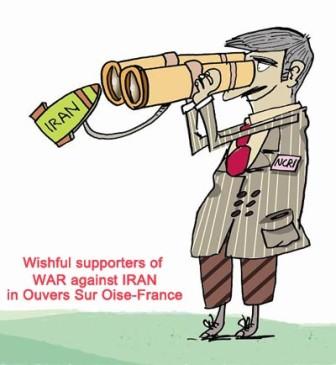
Mujahedin Khalq 's Function

WAR against IRAN

 WAR against IRAN      

WAR against IRAN

January 16, 2008 0 comments
FacebookTwitterPinterestWhatsappTelegramSkypeEmail
The MEK; Baath Party Accomplice

Those who fought their own people

A documentary aired by Swedish TV

A documentary aired by a Swedish TV channel, has also revealed that the MKO also involved in espionage operation on behalf of ousted Iraqi dictator Saddam Hussein.

According to the documentary, the Iraqi dictator had equipped the Mujahedin-e Khalq Organization (MKO) with sophisticated gadgets to pave the way for their terrorist acts against the Iranian nation.

The one-hour historical documentary said that the MKO was blacklisted as a terrorist group for attacking a number of American nationals in Iran.

The movie depicts US Undersecretary Nicholas Burns declining to answer the question that if Washington is using the MKO for intelligence gathering.

An MKO leader has recently revealed that the group is providing the US with the intelligence ‘necessary to protect US troops in Iraq.’

The group moved to Iraq during Saddam’s regime and assisted the Baath Party in the massacre of thousands of Iraqis

January 14, 2008 0 comments
FacebookTwitterPinterestWhatsappTelegramSkypeEmail
Mujahedin Khalq Organization members' families

Canadian Government says Parents of Girl Trapped in Rajavi cult are in danger

Today at 16:10pm I was informed by Canadian government that according to Iraqi government my parents , Mostafa Mohammadi and My mom, Mahbobeh ( Hamzeh) Mohammadi , are not safe any more in Iraq and asked Canada to help them to be transferred to a safe country.

The Canadian agent expressed the government’s concern on their safety.

Due to conspiracy for failed attempt to abduct my parents in front of Ashraf by Mojahedin khalgh on Dec 7, 2007, my parent are making tireless efforts to bring mojahedin before the justice very soon.

Mojahedin try to terrorize the process of the court for hearing on assault and abduction charges.

Mojahedin offered bribe to the TV station reporter and his boss no to air the report on Soamye and my parents anymore. The offer was rejected by the Al-Iraqia TV .

My parents lives are at risk , I hold Mojahedin khalgh accountable for their safety.


Mohammad Mohamadi, January 12, 2008

January 13, 2008 0 comments
FacebookTwitterPinterestWhatsappTelegramSkypeEmail
European Union

Iranian students union thanks EU for keeping MKO on terror list

TEHRAN, Jan. 12 (MNA) — In a letter released on Saturday, Iran’s Union of Islamic Students Association (UISA) in Europe has thanked the European Union for its decision to keep the terrorist Mojahedin Kalq Organization (MKO) on the blacklist of terrorist organizations.

The letter, a copy of which provided to Mehr News Agency, is addressed to Francisco Javier Solana Madariaga, the European Union foreign policy chief, EU countries, and members of the European Parliament.

 The following is the text of the letter:

“We would like to convey our seasonal greetings on the birth anniversary of Jesus Christ, a messenger much revered by both Christians and Muslims who is a propagator of peace and unity for both our Abrahamic religions. Furthermore we wish you all a great start to 2008 and a blessed year to come. We hope that 2008 bears witness to substantial strides towards strengthening worldwide peace via measures taken by influential international bodies.

“The recent decision by the EU to preserve the MKO on its terrorist organization blacklist, which demonstrates the intellectual and humane standards of this Union, is a move fully appreciated by the UISA, the most reputable Iranian student body within Europe.

"The 28 year old history of the Islamic revolution in Iran is tainted by the violent victimization of a sovereign nation via organized terrorist factions aiming to inflict an immobilizing blow to the dignity and morale of the Iranian people. Through a doctrine of fear and assassination such terror attacks have claimed the lives of some of the greatest and most admirable people of this nation, from religious scholars to university lecturers and from distinguished public servants elected by the people to ordinary members of society pursuing their daily lives. The use of highly sophisticated weapons including chemical armaments in assaulting the peaceful people of Iran is so horrifying in nature that the bitter memory of these losses will forever be engrained in the minds of every Iranian.

“One must ask why a unique democratic movement such as the Iranian revolution has been the target of a continuous wave of organized terrorist attacks for the past 28 years. Hitherto the query of how these terrorist groups are supported both speculatively and financially for their inhumane conduct still remains unanswered for the Iranian nation.

“We believe that, in concordance with section 3 of resolution 1483 issued by the United Nations (approved in the 4761 UN general session, on May 22, 2003), it is time for the leaders of MKO — which is an inherently criminal group — to be prosecuted in international courts for cooperating with the Ba’thist regime and performing criminal acts against the two oppressed nations of Iran and Iraq. Furthermore, we express our gratitude towards the EU for their appropriate stance on the enforcement of this ruling across all the European countries so that none of the members of this terrorist group are authorized to seek refuge anywhere within Europe and exert their inhumane terrorist acts.

“Considering the aforesaid group is known as one of the most abhorrent terrorist groups by the Iranian nation, undoubtedly any strides from the respected union to prevent their terrorist activities can be alleged as an evident support of conforming the human rights, human dignity, and admiration at the threshold of honoring the sixtieth anniversary of the issuance of the worlds human right manifesto which with no doubt resides in peoples minds as a worthwhile memento.

“Since a court in the United Kingdom has recently eradicated this criminal terrorist group from the terrorist blacklist, it has offended the Iranians public opinion as the rights of hundreds of innocent people who were martyred by this group is neglected.”

The statement says that the union is expected to make arrangements to have the British government respecting the decision made by the EU in order to include and preserve the MKO on its terrorist organization blacklist.

“Ultimately we would like to once more express our greetings for the arrival of the New Year and inform you that as Iranian students abroad we appreciate your prudent and judicious decisions and will reflect your positive conducts to the Iranian nation. We hope that the collective efforts of politicians, parliamentary representatives, and intellectuals amount to the obliteration of terrorism in all shapes and forms resulting in a state of harmony and global security. Surely even the smallest stride towards this humanitarian goal is in itself a significant achievement and shall leave behind a distinguished mark on the pathway to international safekeeping.”

January 13, 2008 0 comments
FacebookTwitterPinterestWhatsappTelegramSkypeEmail
Newer Posts
Older Posts

Recent Posts

  • A study on the financial mechanism of the Mujahedin-e Khalq

    August 10, 2026
  • A Child behind the Ideological Bars of Massoud and Maryam Rajavi

    August 8, 2026
  • A Comparative Analysis of Psychological Control Mechanisms in Jeffrey Epstein’s Cult and the MEK

    August 3, 2026
  • Operation Mersad: How Iran foiled Saddam’s final gambit 37 years ago

    August 1, 2026
  • Ideology Cannot Prevail over Human Dignity

    July 29, 2026
  • Facebook
  • Twitter
  • Instagram
  • Youtube

© 2003 - 2025 NEJAT Society . All Rights Reserved. NejatNGO.org


Back To Top
Nejat Society
  • Home
  • Articles
  • Media
    • Cartoons
    • NewsPics
    • Photo Gallery
    • Videos
  • Publications
    • Books
    • Nejat NewsLetter
    • Pars Brief
  • About Us
  • Contact us
  • Editions
    • عربي
    • فارسی
    • Shqip