Nejat Society
  • Home
  • Articles
  • Media
    • Cartoons
    • NewsPics
    • Photo Gallery
    • Videos
  • Publications
    • Books
    • Nejat NewsLetter
    • Pars Brief
  • About Us
  • Contact us
  • Editions
    • عربي
    • فارسی
    • Shqip
Nejat Society
Nejat Society
  • Home
  • Articles
  • Media
    • Cartoons
    • NewsPics
    • Photo Gallery
    • Videos
  • Publications
    • Books
    • Nejat NewsLetter
    • Pars Brief
  • About Us
  • Contact us
  • Editions
    • عربي
    • فارسی
    • Shqip
© 2003 - 2024 NEJAT Society. nejatngo.org
USA

Iran moves to pull a troublesome thorn

The November 15 report by the International Atomic Energy Agency (IAEA) on Iran’s nuclear program indicates that Tehran is still violating existing United Nations Security Council resolutions by continuing the construction of a heavy reactor and installing a total of 2,952 centrifuges needed for uranium enrichment.

International pressure on the Iranian government to cease such work is likely to increase in the following months. The present stalemate on the nuclear negotiations coincides with a tougher

US strategy toward Iran, which includes designating the Iranian Revolutionary Guards Corps (IRGC) as a terrorist organization and implementing a new round of unilateral sanctions.

While military action is still not seen as a viable option by the Department of Defense, there are certainly many within and without the White House who are growing increasingly restless about the seeming futility of sanctions. The most vocal advocate and perpetrator of violent regime change in Iran is the Mujahideen-e-Khalq organization (MEK), an Iranian opposition group designated as a foreign terrorist organization by the United States (Executive Order 13224, Department of State, 2003) and the European Union.

A 2007 German intelligence report from the Federal Office for the Protection of the Constitution called the MEK a”repressive, sect-like and Stalinist authoritarian organization which centers around the personality cult of Maryam and Mas’ud Rajavi”.

During the initial phase of the Iranian Revolution, the MEK was significantly influenced by Marxist theories and concepts of exploitation and class struggle, and particular emphasis was placed on Ho Chi Minh and Che Guevara and their ideas of guerrilla warfare. Besides these foreign Marxist influences, the MEK’s ideology was also heavily informed by Islamist/Marxist scholar Ali Shariati (1933-1977), who wrote many treatises on the idea of suffering and eternal struggle in Shi’ite doctrine, combining it with socialist ideas of class emancipation vis-a-vis secular tyranny.

When the Peoples’ Mujahideen were excluded from power sharing after 1979 and thousands of its members were executed under Ayatollah Ruhollah Khomeini’s orders, their struggle turned against what was to become the Islamic Republic. To date, the MEK’s structure is heavily dominated by a socialist outlook coupled with an Islamist veneer, highlighting the concepts of justice in reference to Shi’ite doctrines. The latter serves to legitimize the MEK in the eyes of Iranians at home and helps foster full commitment to the cause.

In October, the 4,000 residents of the MEK’s”Camp Ashraf”in Iraq staged a spectacular large-scale festival that included extensive military style parades, martial arts performances and a display of unarmed combat units. Video excerpts of the festivities were posted on YouTube. The festival was as much a display of military strength and the MEK’s ongoing commitment to fight the regime in Iran as it was a homage to the two leaders of the MEK.

One of the lingering questions surrounding the group’s continued existence is why it has not been disbanded.

Following the 2003 invasion of Iraq, the group was disarmed and many of its members were questioned by the Central Intelligence Agency and the Federal Bureau of Investigation. Soon after, US Major General John D Gardner confirmed the status of the residents of Camp Ashraf as”protected persons”under the 4th Geneva Convention, stating that”the coalition remains deeply committed to the security and rights of the protected people of Ashraf”.

Evidently, one of Iran’s key demands to the US government is the closure of Camp Ashraf and the subsequent expulsion of all MEK members. Despite demands by the International Committee of the Red Cross that residents of Camp Ashraf”must not be deported, expelled or repatriated”, Iraqi Foreign Minister Hoshyar Zebari said in April that the Iraqi government intended to resettle MEK members in European countries and set a deadline of six months for the move. The resettlement is unlikely to materialize given the EU’s tough stance toward the group and its umbrella organization, the National Resistance Council for Iran, but it still indicates that the MEK’s host country is becoming increasingly restless over its presence.

By and large it seems that the Iranian government is following a two-track strategy with regards to the MEK base in Iraq. Iranian diplomats in Iraq are putting increasing pressure on Baghdad to expel the group from Iraqi territory and to actively prosecute leading MEK operatives. At the same time, Iranian authorities continue to offer amnesties for members who cut their ties with the group and return to Iran. The MEK still creates serious security problems for Iran; according to a recent speech by Foreign Minister Manuchehr Mottaki, the group has killed over 16,000 people in and outside Iran, including one president, one prime minister, four ministers and dozens of members of parliament.

Most recently, Iranian authorities arrested a group of MEK operatives for the assassination of Sheikh Hashem Samiri, a Friday prayer leader in the city of Ahwaz. The crime was linked to the earlier September shooting of Sheikh Samir Durak, Friday prayer leader in the Koy-e Alavi district.

Following numerous consultations with Iraqi authorities, Tehran’s lobbying efforts seem to be paying off. Citing evidence of MEK involvement in the current insurgency as well as atrocities committed against Iraqi citizens, Ja’afar al-Musawi, chief prosecutor of the Supreme Iraqi Criminal Tribunal, issued arrest warrants for 150 MEK members, including the group’s leaders Maryam and Mas’ud Rajavi. Though insisting that all of them would be tried under the criminal jurisdiction of Iraq and not be handed over to Iran, Musawi indicated that extradition agreements with Iran will be concluded in the near future.

At the same time, authorities in Iran are wooing residents of Camp Ashraf to come back by offering amnesty and re-socialization programs. Since 2003, over 500 MEK members have returned to Iran, been officially pardoned by Supreme Leader Grand Ayatollah Ali Khamenei and extensively debriefed by Iranian intelligence. Iran’s judiciary officials continue to emphasize that defectors from Camp Ashraf will not be prosecuted on their return to Iran.

Though such amnesty initiatives prove to be useful incentives for disaffected members and their families, they fall short of genuinely addressing Iranian security concerns over the group’s ongoing activities in Iraq. The most urgent issue for Tehran is what Mohammad Jafari of the Iranian National Security Council described as intelligence cooperation between US forces in Iraq and MEK operatives sent across the border to spy in Iranian territory.

Though such accusations are difficult to verify, demands by the Iraqi government to dismantle Camp Ashraf and prosecute those charged with crimes have not yet been met. Abdul Aziz al-Hakim, head of the Supreme Islamic Iraqi Council, claims these efforts are actively prevented by the United States. The recent propaganda festival staged in Camp Ashraf has only fueled Iranian suspicions that the MEK is still considered by the United States as an effective ally against Iran.

 there is no evidence that the MEK enjoy any high-profile support in the State Department or Pentagon, there are certainly some on Capitol Hill who consider any enemies of Iran as friends of the United States. Most notably, congressmen Michael McCaul, Nick Lampson and Brad Sherman have repeatedly asked the US government to remove the MEK from the terrorist list.

Echoing such demands, the White Paper published by the US pressure group Iran Policy Committee in 2007 perceives the MEK in Iraq as”very useful for providing intelligence for border controls and operations”and, because of their”extensive network within Iran”and their”excellent record of revealing key intelligence about the IRGC proxies’ infiltration routes into Iraq”, the MEK is seen as a viable”interlocutor”between Washington and Sunni groups to quell Iraqi sectarian violence.

Given Camp Ashraf residents’ legal limbo under the 4th Geneva Convention, the United States is faced with the highly complex decision of whether to hand over MEK militants to Iraq or Iran, or arrange asylum in a third country. Each choice carries consequences for US-Iranian relations. Although denied by US authorities, keeping the MEK in Iraq may still be seen by some policymakers as providing an effective bargaining chip in the nuclear weapons negotiations.

Dr Bernd Kaussler holds a MA and PhD from the University of St. Andrews and is currently assistant professor in political science at James Madison University. As associate fellow at the Institute for Iranian Studies at St Andrews, he is involved in various research projects on contemporary Iranian politics and foreign policy.

By Bernd Kaussler,

December 9, 2007 0 comments
FacebookTwitterPinterestWhatsappTelegramSkypeEmail
Mujahedin Khalq 's Function

The Terrorist’s Challenged Intelligence

The existing tension between the United States and Iran has compelled the US in the past years to collect intelligence on Iran from various exile organizations including Mojahedin-e Khalg Organization (MKO) that has long been leading a violent struggle against the Iranian regime and was even aligned with Saddam ‘s regime that was at war with Iran. Although its ideology is a blend of Marxism with Islam and from the very initiation strongly advocated an anti-American policy, but in recent years, having taken a 180 degree turn, has begun trying to put forward a thousand and one arguments to prove that it has dropped its Marxist rhetoric and is an apostle of democracy for Iranians.

In December 2002, in spite of being listed on the State Department’s list of Foreign Terrorist Organizations, MKO informed the US government of the existence of two nuclear sites in Iran. However, Sy Hersh later revealed in”The New Yorker” that Israel had provided the group with the information that it boasted as its own piece of intelligence to reveal Iran’s nuclear threat. From then on, it worked as a good subject to feed the group’s propaganda machine, an alibi to advance its own cult-like ambitions that had nothing to do with Iranian’s true wills. But the machine seems to be dropping as of the Monday.

The latest release of a collective study by all 16 US intelligence services, known as the National Intelligence Estimate (NIE), reveals that Iran has turned its back on its nuclear ambitions since 2003. It is a great disappointment to MKO that a big bulk of its propaganda activities concentrates on Iran’s nuclear threat. Of course, MKO has nothing to lose as an opposition group that hardly respects political ethics in its struggle. It is much a new challenge for the US for having put any trust in a proscribed terrorist group that is heavily built on the structure of a cult of personality.

In a recent article entitled Intelligence on Iran Still Lacking, it is explicitly stated why the US has to remain skeptical of expatriate groups like MKO, aks MEK and NCRI.

Perhaps the MEK’s greatest claim to fame was its discovery of clandestine enrichment activity at Natanz in 2002. Shortly thereafter, the International Atomic Energy Agency (IAEA) pressed Iran to open the facility up to international inspectors. The U.S.-based Iranian expatriate community and MEK also provided useful intelligence on the existence of Arak, a heavy-water research reactor in Iran. With the State Department now having a more pronounced role over Iran policy, some experts expect Washington to work less closely with Iranian exile groups like the MEK. Paul R. Pillar, a career CIA officer and professor of security studies at Georgetown University, says it’s wise to remain skeptical of expatriate groups. “Iran has its Chalabis, too,” Pillar says. Ahmed Chalabi, briefly a deputy Iraqi prime minister after Saddam Hussein’s ouster, is widely criticized for providing faulty intelligence to the United States about Iraq’s weapons programs and exaggerating his own ability to win support inside Iraq. “There are some lessons to be drawn from having your intelligence coming from some quarters and not others,” Pillar concludes.

Sattar Orangi comments on Coucil of Foreign Relations Article, December 5, 2007

December 9, 2007 0 comments
FacebookTwitterPinterestWhatsappTelegramSkypeEmail
Nejat Publications

Pars Brief – Issue No.37

1.    Professor Paul Sheldon Foote visit to the British Parliament

2.    When Raymond Tanter turns out his wife to please a cult

3.    Woman brainwashed into staying at guerrilla camp, lawyer says

4.    Rajavi’s latest statement: I am not a terrorist but I am going to kill you all

5.    Mujahedin Khalq Cause of Problems in Iraq

6.    Mojahedin Khalq Organisation (Rajavi Cult) exposed on French TV

7.    Momentum built for Cheney impeachment

8.    Why are MKO terrorists supported by Neocons and Israelis?

 
Download Pars Brief – Issue No.37

December 5, 2007 0 comments
FacebookTwitterPinterestWhatsappTelegramSkypeEmail
UK

UK rejects lifting ban on Mojahedin Khalq (MKO) terrorist group

The British government rejected a ruling Friday that the anti-Iran Mujahideen-e-Khalq terrorist organisation (MKO) should be removed from the UK’s proscribed groups.

“I am disappointed at this judgement. We don’t accept it and we intend to appeal,”Home Office Minister Tony McNulty said.

He added that the MKO would remain on the UK’s list of banned terror organisations during the appeal.

The government’s rejection came after the Proscribed Organisations Appeal Commission in London ruled that the terrorist sect, which is also banned in Europe and the US, should be removed from Britain’s blacklist.

The MKO, which has carried out wholesale terrorist acts in Iran since the 1979 Islamic Revolution, was among the first organisations to be formally outlawed under Britain’s Terrorism Act 2000

December 2, 2007 0 comments
FacebookTwitterPinterestWhatsappTelegramSkypeEmail
UK

British Govenment: Mojahedin Khalq Remain in the List of Terrorism

LONDON, Nov 30 (Reuters) – A British tribunal ruled on Friday to remove Iran’s main opposition movement from a government a list of proscribed terrorist organisations.

The People’s Mujahideen Organisation of Iran, a resistance group, said it was a "magnificent victory for justice", after a six-year battle to annul the listing. But Britain’s government said it was "disappointed" and it intended to appeal.

The group will stay on the proscribed list until the matter is resolved. The organisation is the armed wing of the France-based National Council of Resistance of Iran (NCRI), which says it renounced military activity in 2001.

Following the judgement, Maryam Rajavi, president-elect of the NCRI, called on the European Union (EU) to echo the appeal verdict and remove the group from its blacklist.

"We have always said and repeat again that the fundamental solution to the Iranian crisis is neither foreign military intervention nor appeasement," she said in a statement.

"The solution is democratic change by the Iranian people and resistance, making it imperative to remove the barriers placed in the path of this resistance."

Britain’s Proscribed Organisations Appeal Commission ruled there was "no evidence that the PMOI has at any time since 2003 sought to re-create any form of structure that was capable of carrying out or supporting terrorist acts".

Its 144-page final judgement document said there was no evidence of any attempt by the PMOI to "prepare" for terrorism or encourage others to commit acts of terrorism.

"Nor is there any material that affords any grounds for a belief that the PMOI was ‘otherwise concerned in terrorism at the time of the decision in September 2006," it said.

GOVERNMENT DEFIANT

In a letter to the PMOI last year, Britain’s home secretary said he recognised there had been a "temporary cessation of terrorist acts" but was "not satisfied that the organisation and its members have permanently renounced terrorism".

Home Office Minister Tony McNulty said on Friday the government did not accept the ruling.

"The government adopted a cautious approach in relation to the de-proscription of the People’s Mujahideen Organisation of Iran," he said in a statement.

"I remain convinced that where terrorism is concerned, the rights of the law abiding majority and the overriding need to protect the public, both in the UK and abroad, must lead us to take such a cautious approach."

The PMOI, known as "the Mujahideen-e-Khalq", was added to Britain’s list of proscribed organisations under the Terrorism Act 2000 in March 2001. It first applied to be de-proscribed in June that year.

Earlier this year, it launched legal action to annul its listing as a terrorism group by the EU and to win damages.

The EU blacklist also includes the Palestinian Hamas group, Sri Lanka’s Tamil Tigers and the Kurdistan Workers’ Party. Blacklisting means groups are banned and have assets frozen.

The PMOI, which has bases in Iraq, began as a leftist-Islamist opposition to the late Shah of Iran, but fell out with Shi’ite clerics who took power after the 1979 Islamic revolution.

It is said by Western analysts to have little support in Iran because of its collaboration with Iraq during the 1980-88 Iran-Iraq war. (Editing by Steve Addison and Michael Winfrey)

Reuters News, Jennifer Hill, November 30, 2007

December 2, 2007 0 comments
FacebookTwitterPinterestWhatsappTelegramSkypeEmail
Mujahedin Khalq Organization as a terrorist group

MKO would remain a proscribed organisation

Tribunal rejects Iran group ban The People’s Mujahideen Organisation of Iran (PMOI) is illegal in the European Union and the United States. But the Proscribed Organisations Appeal Commission in London ruled ministers must remove it from their blacklist.

After the verdict, Home Office Minister Tony McNulty said: "I am disappointed at this judgement. We don’t accept it and we intend to appeal."

The Home Office said that the PMOI would remain a proscribed organisation during the appeal by the government.  Launch attacks  The PMOI, or Mujahideen-e Khalq, which operates in exile, says it has renounced violence since 2001. The opposition group has been a thorn in Tehran’s side for more than two decades.

A militant organisation, whose ideology combines elements of both Marxism and Islam, the group based itself in Iraq after being expelled from Iran.

For more than 15 years before the fall of Saddam Hussein, it used bases in Iraq to launch attacks against Iran.

Sixteen MPs and 19 members of the House of Lords appealed against the proscription in the first case to be heard by the POAC.

They argued that there rights to support and promote what they said was a democratic and peaceful opposition to the regime in Tehran had been infringed.

Lord Corbett, chairman of the Committee for Iran Freedom, claimed the banning had been tied up with international diplomatic attempts to stop Iran developing nuclear weapons.

December 2, 2007 0 comments
FacebookTwitterPinterestWhatsappTelegramSkypeEmail
Iran

Iran is a victim of terrorist backed by US backed terrorist Mojahedin Khalq Organisation

IRGC: US attack ‘highly unlikely’

The Commander of the IRGC has described the US attack on Iran as ‘highly unlikely’, saying Washington knows Iran is different from Iraq.

Brigadier General Mohammad-Ali Jafari said the US is aware of Iran’s military capabilities and added that Tehran will give an ‘appropriate response’ if the US attacks the country.

The Commander of the Islamic Revolutionary Guards Corps (IRGC) made the remarks in an exclusive interview with Press TV on the 28th anniversary of the foundation of the Mobilization Resistance Force or Basij.

Jafari said, however, that there was the possibility of a ‘limited air campaign’ by the US on a number of sites in Iran.

In that case, we have to defend our country and we have the means to nullify their attacks, he added.

In another part of the interview, Jafari said the recent IAEA report indicated that Iran’s nuclear program is for peaceful purposes and described the US and Israel’s threats regarding the issue as ‘psychological warfare’.

In response to a question regarding the US accusations against the IRGC, Jafari said Iran is a victim of terrorism while the US backs the Mojahedin Khalq Organization (MKO), an anti-Iranian terrorist group based in Iraq.

Jafari concluded that Iran will never wage a war on any country but will always remain prepared to defend its soil.

December 2, 2007 0 comments
FacebookTwitterPinterestWhatsappTelegramSkypeEmail
USA

US military does not support terrorist Mojahedin Khalq

 Adm Gregory Smith: US military does not support terrorist Mojahedin Khalq (MKO) Interview with MEHR News, November 25, 2007 BBC Monitoring Middle East  Text of report by Iranian conservative news agency Mehr

Tehran, 25 Nov: Rear Adm Gregory Smith, Communication Division Chief for the Multi-National Force-Iraq, who has repeatedly – and without proof – accused the Islamic Republic of Iran of engaging in negative activities in Iraq responded to questions form Mehr news agency concerning US military support to the Monafeghin terrorist group [pejorative meaning hypocrites used by the Iranian government to refer to the Mojahedin-e Khalq (MKO)]. The group has been placed on the list of terrorist groups. He claimed that the US military does not support any terrorist group including the MKO. He admitted: The American government considers the MKO group to be a terrorist group and once again claimed that the US military was not supporting them.  Responding to a question from Mehr asking if the US government and the American military would assist the Iraqi government should it expel these individuals – or at the very not interfere with the expulsions, he answered in generalities, saying: We don’t respond to questions that are based on conjecture. This question is speculative, we don’t work on speculations.

Gregory Smith said he had no knowledge of plans for a new round of Iran-US talks on Iraq, saying: Issues relating to these talks are handled by the US embassy in Iraq.

The official spokesperson for the American forces in Iraq commented on the fate of Iranian diplomats who have been held captive by the occupiers since they were taken in Dey last year [Iranian month starts on 22 December], saying: As far as US officials are concerned these individuals are not diplomats. They shall remain in detention for as long as US official believe them to be a threat to Iraq.

Smith went on to say: A committee made up of representatives form the coalition [forces] and the Iraqi government is reviewing this issue.

Iraqi MP Ali al-Adib contradicts claims by this American military official that his country does not support the MKO group, saying: Even though the Iraqi constitution has banned the activities of opposition groups and organization form neighbouring countries, the US military supports the presence of mko terrorist group

In a recent interview with Mehr, Iraq’s Prosecutor General Ja’far al-Musavi confirmed that the file of the mojahedin terrorist group was under review and would not rule out the possibility of an agreement between Tehran and Baghdad that would include provisions for the extradition of the criminals.

He said that members of the mko terrorist group were guilty of participating in the massacre of innocent Iraqis, adding: The judicial process for the prosecution of these this group has started.

During the early days of the revolution, the mojahedin terrorist group acted to the great determent of our nation. They based themselves in camp Ashraf in the Iraqi province of Diala east of Bagdad. The former Ba’th government under the leadership of the executed dictator Saddam cooperated with this group during the imposed war against Iran in the early eighties [Iran-Iraq war 1980-88] and supported them extensively.

The current elected government of Iraq is attempting to remove traces of this terrorist group from its territorial borders because of their role in the massacre of Iraqi dissidents and the genocide against the shi’i uprising in 1991.

Claims made by this American official about Iranian diplomats that were abducted in Arbil this past Dey are being made while the Iraqi government and officials of the Kurdish Regional Government stress that these individuals were engaged in legal activities the Iranian consulate in Arbil. The Americans have only released two of the diplomats.

December 2, 2007 0 comments
FacebookTwitterPinterestWhatsappTelegramSkypeEmail
Mujahedin Khalq Organization as a terrorist group

The UK adopts a cautious approach in de-proscription of MKO

LONDON — In a victory for British politicians pushing for regime change in Iran, an appeals tribunal ruled Friday that their government had no authority to ban a leading Iranian opposition group as a terrorist organization.

The ruling, which could help the group gain legal status across Europe, was hailed by proponents of the cause as a significant boost to efforts to organize democratic opposition to the Islamic government in Tehran.

But by legitimizing an organization with a history of deadly attacks in Iran, the British panel’s decision could also undermine Iran’s willingness to cooperate on international anti-terrorism fronts and inject a new stumbling block into negotiations over the Persian Gulf nation’s nuclear program, British officials have warned.

The successful appeal was filed by three dozen members of the British Parliament, many of whom say they hope to empower Iranian opposition groups to peacefully overthrow the government in Tehran.

"This judgment will help Iran build a new country," said Robin Corbett, chairman of the parliamentary committee that filed the appeal. "Iran will be free."

The British government said it would probably appeal the ruling.

The case involves the People’s Mujahedin, also known as the Mujahedin Khalq, which over the years has carried out bombings, assassinations and cross-border attacks aimed at unseating Iran’s government. The group maintains that it has abandoned violence and is working to promote democratic transition, but it says it cannot effectively carry out its political activities when it is banned as a terrorist organization.


Outlawed in U.S., Europe

The group is outlawed by the U.S. and throughout the European Union. Its lawyers said it hoped to use Friday’s ruling to win reconsideration internationally and step up efforts to topple the Iranian government.

"The fundamental solution to Iran’s crisis is neither foreign military intervention nor appeasement. The solution is democratic change by the Iranian people, and resistance. For this solution to work, all obstacles placed in the path of the resistance must be removed," said Maryam Rajavi, president-elect of the National Council of Resistance of Iran, an umbrella political opposition group that includes the People’s Mujahedin.


Rajavi spoke to cheering supporters in London by video link from the group’s headquarters in Paris. Dozens of Iranians filled the street outside the courthouse in London after the decision was announced, some weeping, many waving the group’s flag, while organizers handed out sweets.


"Thank you!" the crowd chanted repeatedly.

The British warned in evidence presented to the Proscribed Organizations Appeal Commission that delisting the group could present foreign policy problems for Britain.


"The government adopted a cautious approach in relation to the de-proscription of the People’s Mujahedin Organization of Iran," Home Office minister Tony McNulty said in a statement.

"I remain convinced that where terrorism is concerned, the rights of the law-abiding majority and the overriding need to protect the public, both in the U.K. and abroad, must lead us to take such a cautious approach," he said.


The secretary of Iran’s Supreme National Security Council, Saeed Jalili, noted that U.S. officials also regard the group as a terrorist organization, and he said he had been assured that the British government would attempt to retain its prohibition.


"Some of you have seen for yourselves the terrorist activities of this group inside Iran. They have assassinated, they have killed and injured innocent Iranian citizens. This will not at all be a good precedent for Britain," he said during a visit to London to negotiate Iran’s nuclear dossier with European Union foreign policy chief Javier Solana.

In 2002, the National Council of Resistance provided the first public reports of Iran’s then- secret nuclear program, and some U.S. military officers say the group has provided valuable intelligence about Iran’s leadership and could be a key ally.

A State Department counter-terrorism official said Friday that the Bush administration was not considering removing the People’s Mujahedin from its own terrorist list, where it was placed in 1997.

U.S. officials believe the group, also referred to as the MEK, is capable of committing acts of violence harmful to American interests.


By Kim Murphy

December 2, 2007 0 comments
FacebookTwitterPinterestWhatsappTelegramSkypeEmail
The Ideology of the MEK

The Role of Strategic Stalemates in MKO ideological Shift

The ideological revolution within Mojahedin-e Khalq Organization (MKO) that led the whole organization onto the precipice of being labeled as a notorious cult of personality was not the result of an abrupt and overnight decision. A look at a multitude of the crises the organization ran into following its declare of armed warfare after the initiation of the Islamic Republic in Iran well explain that the organization’s resort to ideological shift was the last option to surmount crises and guarantee the organization’s survival. However, the key role of Massoud Rajavi in the process of deviation is of great significance.

Majority of the organization’s theoreticians are unanimous that the ideological revolution was the byproduct of a strategic dilemma but none of them attempts to dig out the truth about the roots of successive defeats and crises. An investigation into the history of the organization since 1975 and following the great schism within it discloses indisputably critical role of Rajavi since his assuming the lead. His decisions, regardless of their grave impact on strategic, political and ideological deviation, were inventions of a deviant mind spoiled by power ambitions. That is true that power corrupts but his later ideological revolution to gain full hegemony over the organization is a proof that the absolute power corrupts absolutely; no better destiny could be destined for the organization with Rajavi atop but a cult of personality.

The intention here is to examine the roots of the ideological revolution and the causes behind its start with Rajavi behind the steer. The following is an outline of the factors to be studied in detail.

The failed strategy of armed warfare and the aftermath crises

Failure in overthrowing the regime

Gradual dwindling of MKO’s social prestige

Possible occurrence of schism within the organization

serious deterioration of NCRI

political bankruptcy and loss of external backing

The statements and accounts by other opposition groups, active members of the organization as well as the separated members are the best presented evidences throughout the study. Bijan Niyabaty’s A Different Look at the Ideological Revolution within MKO, since it is a source composed by an active left sympathizer of the organization, can give detailed accounts on the process.

The failed strategy of armed warfare and the aftermath crises

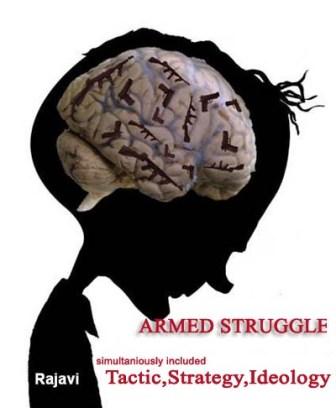
The failed strategy of overthrowing the newly established ruling system in Iran is rooted in the irrationally adopted tactic of armed warfare following the organization’s first mass movement on 20 June in 1981. The turning point that was broadly being propagated at the time an which was supposed to speed up the inevitable collapse of the regime could no more stand the heavy squash of defeats and crises. As a result, the tone of Rajavi changed in justifying his unreasonably taken decision saying that his decision abided by no political, ideological and organizational logic but was a move following the example of Ashura. [1]

Being a fallacy or anything else, his reasoning worked well in wining over a multitude of insiders who supposedly had to challenge him and his ineffectiveness. Publicized passionate speeches and writings could easily convince and hush up whoever presumed to criticize:

Khordad 30th (20 June 1981) is our ‘Ashura”. On that day we had to stand up and resist Khomeini’s bloodthirsty and reactionary regime, even if it meant sacrificing our lives and the whole of our organization. We had to take this road to Karbala to keep alive our tawhidi ideology, follow the example set by Imam Hosayn, fulfill our historic mission to the Iranian people, and fight the most bloodthirsty, most reactionary, and most savage regime in world history. [2]

It took at least two decades to be admitted by a left analyzer of the organization that what MKO anticipated being a supposed mass movement turned to be nothing but failed militia warfare:

The strategy of a widespread and national-wide armed struggle was nothing more than declining a massive public uprising into the level of a limited militia struggle with no prospect. [3]

Rajavi’s strategy of urban militia warfare expanded into much sophisticated tactics of resistance cells, suicidal and armed operations following the June 20 uprising. Niyabati assumes that even long before, Mojahedin had lost their hope in the utility of the so called ‘esistance cells’ and Mojahedin’s strategic tactic had proved to be nothing but a great failure:

Now after five years, the armed warfare is still immobilized in the first stage of preparing a mass uprising. Mojahedin have so far tried all the possible approaches, from the urban militia warfare to the formation of resistance cells and from the suicidal operations to guerrilla warfare launched in the mountains and woods. [4]

In his analysis of Mojahedin’s received heavy blow on 8 February 1982, the raid of Iranian police forces into a MKO’s safe-house in Tehran that resulted in the killing of 20 members of Mojahedin including Musa Khyabani, MKO commander inside Iran after Rajavi’s escape to France, and Ashraf Rabiee, Rajavi’s first wife, Niyabati once more questions the accuracy of Mojahedin’s strategy of armed struggle:

The strategic blow on 8 February 1982 was an end to the accuracy of the urban guerilla warfare. [5]

The consequent doubts and uncertainty raised among a portion of the rational minds though remained covered up, but in the eyes of the leaders were undeniable facts that could possibly intensify internal crises. A large number of separated members admit that it created the best opportunity to persuade an internal reconsideration of the organizational strategies, but instead, unfounded justification and excuses gave way to a rapid grow of internal challenges. The seriousness of the challenge even worsens when one comes across the fact that before facing the crises, unquestionable faith in armed struggle was an essential prerequisite for the recruits of the organization. It was a taboo nobody was permitted to touch upon and any criticism of the approach was absolutely illegitimate even if convincing explanation and facts were adduced beforehand:

Any criticism of the widespread strategy of armed warfare adopted by Mojahedin in the military phase, if made to disapprove the essentiality of the armed resistance, is definitely illegitimate. [6]

Rajavi’s frequent shift to adopt various unsound tactics more than anything indicates a telling indecisiveness in Mojahedin’s leadership. Not only it deepens the already existing crises but also makes the organization vulnerable to further crushing crises that can hardly be curbed. Depicting a much realistic view, an ex-member has said:

What can be done? Does it mean that we should again resort to urban militia warfare? This vicious circle is the work of Rajavi; from the urban militia to terror teams, then to war in fronts, then to an army, and then to cross the border operation teams to launch mortar attacks. It seems he cannot, or does not want, decide on any tactic but associated with arms. [7]

Rajavi’s egocentric decision making has exposed him to the criticism of the insiders to the core. Although he never desists from rejecting allegations of leading the organization to total decadence, his critics believe he lacked the needed political acumen and experience as well as mental aptitude to surmount the crises:

Of course, this guy [Rajavi] suffers a lack of mental aptitude, political experience and insight. If he were experienced and his studies were not restricted to those of Marxist texts or was not hampered by organizational enterprise, that is much a pseudo-security and clandestine activity than political, actually the 20 June incident would never happen. [8]

Notes:

[1]. A historical incident when the third Shiit imam, Imam Hosayn, rose against the tyrant of the time and was martyred along with his 72 followers in Karbala in Iraq on 10 Moharram 61 A.H., publically called Ashura. Mojahedin from the very beginning argued that they were exemplifying the model of his uprising to justify their misdeeds. Mehdi Rezai, a member of Mojahedin, tried and executed by Pahlavi’s regime, in his court testimonies declared ‘each day should be turned into Ashura and each place into Karbala arguing that ‘history had taught the organization one clear lesson: that the only path to liberation is the armed struggle. (The court testimony of martyred mojahed Mehdi Rezai) (1973), pp. 90-3.

[2]. Mojahed, 129-31 (2-16 December 1982).

[3]. Niyabati, Bijan; A Different Look at the Ideological Revolution within MKO, Khavaran Publication, p. 14.

[4]. Ibid, 69.

[5]. Ibid, 14.

[6]. The statute of the National Council of Resistance

[7]. Soliloquies in solitude, a collection; interview with an ex-member of MKO.

[8]. Ibid.

 Bahar Irani,November 29, 2007


December 2, 2007 0 comments
FacebookTwitterPinterestWhatsappTelegramSkypeEmail
Newer Posts
Older Posts

Recent Posts

  • MEPs who lack awareness about the MEK’s nature

    December 20, 2025
  • Why did Massoud Rajavi enforce divorces in the MEK?

    December 15, 2025
  • Massoud Rajavi and widespread sexual abuse of female members

    December 10, 2025
  • Farman Shafabin, MEK member who committed suicide

    December 3, 2025
  • Nejat Newsletter No.131

    December 3, 2025
  • Facebook
  • Twitter
  • Instagram
  • Youtube

© 2003 - 2025 NEJAT Society . All Rights Reserved. NejatNGO.org


Back To Top
Nejat Society
  • Home
  • Articles
  • Media
    • Cartoons
    • NewsPics
    • Photo Gallery
    • Videos
  • Publications
    • Books
    • Nejat NewsLetter
    • Pars Brief
  • About Us
  • Contact us
  • Editions
    • عربي
    • فارسی
    • Shqip