Nejat Bloggers
1. Mojahedin exploit Iraqi bombing victims to secure their own political asylum
2. Paris Appeals Court’s Ruling on MKO
3. US, UK, Israel Talks on MKO
4. A letter to Lord Fraser
5. Terror Ops Underway in Iran
Download Pars Brief – Issue No.25
– According to reports, AIPAC " American Israeli Public Affairs Committee’’, the
strongest lobbying group in Congress, has a great weight among neo conservatives who are seeking the option of regime change in Iran. Also, the neocon senators and representatives including Ilenea Ros-Lehtinen, Bob Filner … support the regime change in Iran sponsoring Mujahedin-Khalq as a viable alternative for clerical regime of Iran. In an interview with Masud BaniSadr, a former member of MEK, on May 19th 2006, ‘’Dissident and defection: An Iranian confession" Mahan Abedin the Middle East analyst at Asia Times asked about the likely relation between AIPAC and MEK: Dissent and defection: An Iranian confession By Mahan Abedin, 19 May 2006 (source: Asia Times) …Mahan Abedin: Explain the dynamics in the MEK-Israel lobby relationship. Masud Banisadr: If there is an anti-Iran petition on the table in the Congress, the two lobbies would work hand-in-hand to promote it, without necessarily communicating directly. MA: Are the two lobbies organizationally linked? MB: To give you an example, we knew which members of Congress were influenced by AIPAC [American Israel Public Affairs Committee], so when we needed signatures we’d go to these congressmen first. AIPAC has a lot of weight in Congress, and without having to communicate with them directly, we benefited enormously from their deep influence. We also copied their lobbying techniques. Consequently the Mujahideen’s lobby in the US is organizationally strong but it lacks the two core elements I outlined earlier, namely numbers and money. They have a tiny constituency among Iranian-Americans, and even with the addition of imaginary names and addresses they cannot deliver votes or similar political advantages to congressmen. It also lacks an independent financial base. Much of its funding came from the former Iraqi regime. MA: Your claim that there were no direct contacts between the MEK and the pro-Israel lobby is undermined by the organization’s intensive and very direct cooperation with the "Iran Policy Committee", which seems to be a spin off of AIPAC. There are also regular media reports alluding to direct MEK-Israel ties. MB: I would not be surprised if these links existed. As I said earlier, the MEK is exclusively motivated by the interests of the cult, and as such it will cooperate with any constituency. If there is any hesitation in collaboration, it stems from Israeli reluctance, since the Mujahideen, because of its close relationship with the PLO [Palestine Liberation Organization], is not fully trusted by the Israelis. On the other hand, from an Israeli perspective, the MEK is the only viable tool against Iran. Monarchists are deeply divided and lack organization. However, Western and Israeli intelligence are well aware of the MEK’s limitations. They are perfectly aware of the cult nature of the organization and know that it has – at most – around 5,000 members and active sympathizers (most of whom are stranded in the Ashraf camp in Iraq) and are in no position to seriously threaten the Iranian government. This factor – coupled with the organization’s cult-like and totalitarian ideology – dissuades the US State Department from working with them. To put it simply, the Americans do not trust Mujahideen-e-Khalq, for they know they have no principles, save the interests of the cult. This is why, despite all the efforts of the organization in the past quarter-century, they have not been able to pass a single substantial resolution in support of the organization in Congress. Note also that the US government regards the Mujahideen as a terrorist organization and does not want to create another al-Qaeda… – As Professor Juan Cole at Antiwar Website explains in his article titled " AIPAC’s Overt and Covert Ops", he brings into question the key role of Israel to lead US policy toward Iran fomenting a second war against Iran: AIPAC’s Overt and Covert Ops
August 30, 2004
by Juan Cole Antiwar.com
..The neoconservatives have some sort of shadowy relationship with the Mujahadeen-e Khalq Organization, or MEK. Presumably its leaders have secretly promised to recognize Israel if they ever succeed in overthrowing the ayatollahs in Iran. When the U.S. recently categorized the MEK as a terrorist organization, there were howls of outrage from "scholars" associated with the Washington Institute for Near East Policy, such as ex-Trotskyite Patrick Clawson and Daniel Pipes. MEK is a terrorist organization by any definition of the term, having blown up innocent people in the course of its struggle against the Khomeini government. (MEK is a cult-like mixture of Marx and Islam). The MEK had allied with Saddam, who gave them bases in Iraq from which to hit Iran. When the U.S. overthrew Saddam, it raised the question of what to do with the MEK. The pro-Likud faction in the Pentagon wanted to go on developing their relationship with the MEK and using it against Tehran. So it transpires that the Iranians were willing to give up 5 key al-Qaeda operatives, whom they had captured, in return for MEK members. Franklin, Rhode and Ledeen conspired with Ghorbanifar and SISMI to stop that trade. It would have led to better U.S.-Iran relations, which they wanted to forestall, and it would have damaged their protégés, the MEK. Since high al-Qaeda operatives like Saif al-Adil and possibly even Saad bin Laden might know about future operations, or the whereabouts of bin Laden, for Franklin and Rhode to stop the trade grossly endangered the United States. The FBI has evidence that Franklin passed a draft presidential directive on Iran to AIPAC, which then passed it to the Israelis. The FBI is construing these actions as espionage or something close to it. But that is like getting Al Capone on tax evasion. Franklin was not giving the directive to AIPAC in order to provide them with information. He was almost certainly seeking feedback from them on elements of it. He was asking, "Do you like this? Should it be changed in any way?" And, he might also have been prepping AIPAC for the lobbying campaign scheduled for early in 2005, when Congress will have to be convinced to authorize military action, or at least covert special operations, against Iran. AIPAC probably passed the directive over to Israel for the same reason – not to inform, but to seek input. That is, AIPAC and Israel were helping write U.S. policy toward Iran, just as they had played a key role in fomenting the Iraq war… – The spying role of Americans for Israel, was sought in an article published at UPI written by Richard Sale. His documented research presents the focus of FBI on a meeting in Paris, attended by Rhode (a member of Near East/ Sauth asia Office)Larry Franklin ( US air force reserve colone ),Gerechet ( a former CIA Operative) with the MEK: DOD spy’s arrest imminent By Richard Sale UPI Intelligence Correspondent …Stephen Green, author of two books on U.S.-Israeli relations and former CIA counter-terrorism chief, alleges that in March 1983 Feith was fired from the National Security Council by Judge William Clark after Feith was discovered to be the object of an FBI probe alleging that he had passed classified information to Israel. Former CIA counter-terrorism chief Vince Cannistraro confirmed to UPI the firing of Feith in the 1980s. Feith did not return repeated phone calls. According to a federal law enforcement official, other Pentagon officials of initial interest included Bill Luti, a former Navy captain who ran the day-to-day office operations of OSP, and Harold Rhode, a prominent member of the Near East/South Asia office, a sister office of OSP. According to sources who have been briefed on the case, the focus of the FBI probe finally settled on a meeting in Rome in December 2001, attended by Rhode and Franklin who met with an Iranian, Mansur Ghorbanifar, the notorious Iranian middleman in Oliver North’s 1980s scheme to craft an arms-for-hostages deal, later named Iran Contra. The head of Italy’s military intelligence also attended, according to these sources. At that meeting, Ghorbanifar offered to put the Bush administration in touch with "elements in Tehran who could mount a coup with U.S. help," one source close to the case said. The meeting was brokered by Michael Ledeen, a major figure in the Iran-Contra scandal of the mid-1980s, according to a source with close knowledge of the case. The meeting allegedly took place with the knowledge of the White House, but White House officials denied that they had known Ghorbanifar was to be there, according to a recent Los Angeles Times account. Other sources briefed on the case, however, said another meeting occurred in Paris in June 2002 when Rhode "accidentally" bumped into Ghorbanifar, a meeting attended by Franklin, Rhode and Ruel Marc Gerecht, a former CIA operative, now a scholar with the American Enterprise Institute, and an assistant to Richard Perle, a former senior Defense Department official during the Reagan administration. Sources close to the case also said that the meeting "was prearranged" and involved representatives of the Mujahedin al-Kahlq, an Iranian group of exiles, to discuss assistance to the MEK for the purpose of destabilizing the current government of Iran. "According to a congressional investigative memo, these meetings were arranged by Gerecht and Ledeen. Ledeen denies this. "The only meeting I knew about was the December meeting," he said. "I don’t know about the others, if they in fact existed."
Ledeen denounced the Franklin case as "total bullshit and lies."
Gerecht did not return phone calls. One source with close knowledge of the case said that the Franklin-Rhode- Gerecht meetings with the MEK, which is on the State Department’s list of terrorist organizations was "served to undermine (Secretary of State) Colin Powell’s effort to sustain dialogue with moderate elements within the Iranian government." The MEK is still listed on the State Department’s list of terrorist groups because they have killed American officials, according to a State Department official. When questioned by congressional investigators, Luti "and other senior Defense officials denied that there was any serious consideration of using the MEK terrorists to destabilize the Iran regime," according to a source briefed on the case… – While Raymond Tanter, one of the cheer leaders of supporting MEK who has founded IPC (Iran Policy Committee ) works closely with AIPAC, seeking the removal of MEK’s terrorist label, Kenneth Timmerman,the executive director of the foundation for Democracy in Iran, asks How MEK a terrorist designated organization can operate in the US so freely: Iran Freedom and Regime Change Politics
ALARAB ONLINE
By Tom Barry*
…The American Israeli Public Affairs Committee (AIPAC) is the most prominent lobbying group pressing for congressional approval of the Iran Freedom Support Act. After the House’s approval of the bill, AIPAC told its members and supporters: “Please thank your Representative for voting for the bill and urge your Senators to co-sponsor S.333.” On its website, AIPAC lists the 58 senators who have already agreed to support the companion bill when it comes to the Senate. The Senate bill counts on such Democrats as Barbara Boxer, Maria Cantwell, Dianne Feinstein, and Barbara Mikulski as well as such conservative Democrats as Joe Lieberman and Mary Landrieu. While AIPAC is the most powerful group advocating a tougher U.S. policy toward Iran, numerous other pressure groups calling for regime change in Iran have emerged over the past several years. One of the earliest, the Coalition for Democracy in Iran (CDI), formed in late 2002, ceased functioning in mid-2005. Operating out of the office of Morris Amitay, the former director of AIPAC, CDI worked closely with AIPAC to encourage Congress to pass resolutions condemning Iran. The CDI principals continue their efforts to promote regime change in Iran through other organizations, including the Foundation for Democracy in Iran, Foundation for the Defense of Democracies, Committee on the Present Danger, and the American Enterprise Institute. Raymond Tanter, one of the original members of the Coalition for Democracy in Iran, founded the Iran Policy Committee (IPC) in January 2005. Tanter, who was a senior staff member of the National Security Council during the Reagan administration, is also associated with several other right-wing policy organizations, including the Washington Institute for Near East Policy, Middle East Institute, and the Committee on the Present Danger. Since its founding the Iran Policy Committee has sponsored conferences and policy briefings on the Hill, and has also published four policy papers—a common theme being that the U.S. government should declassify the People’s Mojahedin Organization of Iran (PMOI/MEK) as an international terrorist organization and recognize it as being the “indisputably largest and most organized Iranian opposition group.” According to Kenneth Timmerman, executive director of the Foundation for Democracy in Iran, the MEK (Mujahedin-e Khalq) is shifting its militant rhetoric and is now claiming to be a nonviolent, pro-democracy group. The MEK, which is characterized as a terrorist group, operates a political front organization called the National Council of Resistance of Iran, which is sponsoring conferences in Paris and Washington during the last week of May on regime change in Iran. The Paris conference, according to Timmerman, is being organized by the London-based Gulf Intelligence Monitor. Timmerman reports that the “five American participants—Ray Tanter, Maj. Gen. (ret.) Paul Vallely, Lt. Gen. (ret.) Thomas McInerney, Navy Capt. (ret) Chuck Nash, and Lt. Col. (ret). Bill Cowan—are all members of the Iran Policy Committe e, an organization set up by Tanter and by former CIA officer Clare Lopez in early 2005.” According to Timmerman, “The group has published a number of ‘white papers’—all of which have one thing in common: they urge the Bush administration to take the MEK and its various front organizations off the State Department list of international terrorist organizations.” Timmerman asks where the MEK is getting the money to finance the conferences and why the FBI is allowing an international terrorist organization to operate openly in the United States. Clare Lopez, the executive director of the Iran Policy Committee, is, like Tanter, a resident scholar at the Middle East Institute. Another leading member of IPC is Bruce McColm, who is the president of the Institute for Democratic Strategies and the former president of the International Republican Institute. Most of the other principals of IPC are retired military officers. The U.S. government has committed at least $75 million for projects that directly or indirectly support a regime change strategy in Iran. Over the last couple of years, several million dollars in U.S. democracy assistance aid for Iran has been distributed to an array of organizations, including Freedom House, a neocon led organization in Washington. New funding would also be channeled to Iranian dissidents, mostly expatriates, although groups like IPC would like to see the MEK, which has bases in Iraq, benefit from U.S. “democracy building” funding…
Download MKO and AIPAC Relations
1. Two more repatriated
2. Defectors of MEK were granted refugee status
3. We would never cooperate with Mojahedin Khalq Organisation of Iran
4. Germany reaffirms MKO terrorist status
5. Nejat Society letter to TIPF
6. Nejat Society letter to the Belgium parliament
7. Third Option: A Window to Nowhere
Download Pars Brief – Issue No.24
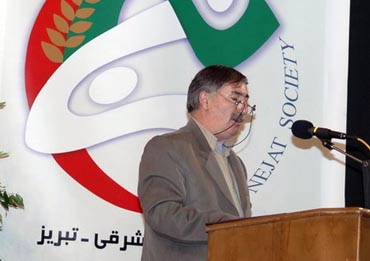
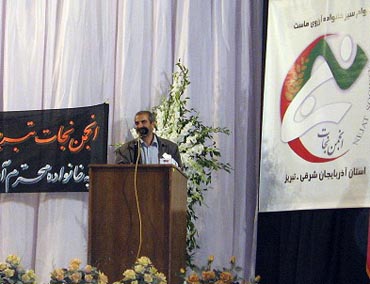
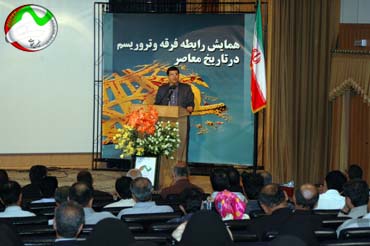
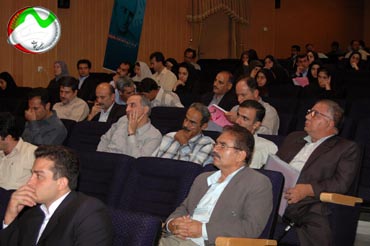
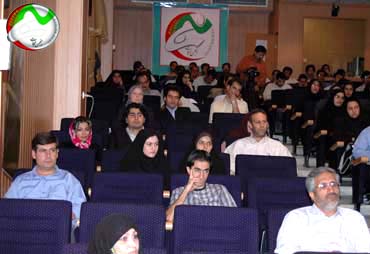
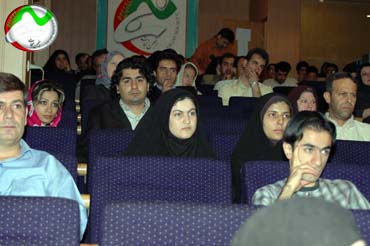
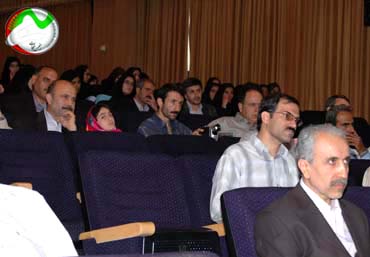
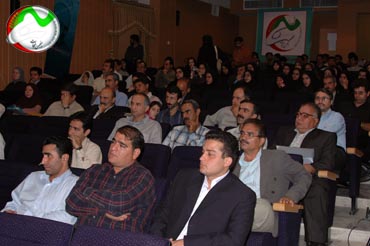
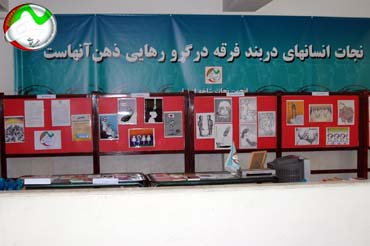
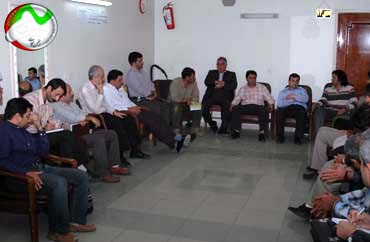
On Tuesday, May 16th the tenth meeting of Nejat Society Isfahan Branch was held on the occasion of the return of Siamak Hatami, a defector of MeK, to
Iran.
During the meeting, Mrs Yazdan Parast a member of the Society presented the schedule of the meeting and invited the audience to watch the film of Mrs. Marzie Qorsi’s Return.
The film imprisoned the audience a lot since she hadn’t seen his son for ten years.
During the other stage of the meeting Mr. Hashemi the President of Isfahan Nejat Society, presented a report of the Society ‘s activities in recent months including a meeting in Kashan on the occasion of the return of Mr. Najafizadeh, a meeting with several German lawyers, foundation of Nejat Society office in Kerman and also visits with some European researchers…
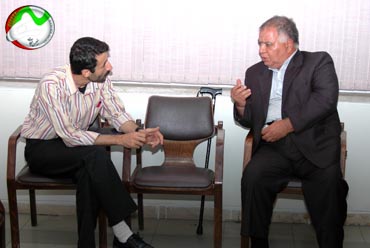
Then Mrs. Baba Safari the sister of one of defectors who had returned to Iran previously, explained her efforts to meet his brother and convince him to return home. She noted the correspondence of families with international organizations. Mrs,Yazdan Parast also declared why the process of separation has become slower recently. She noted that”… MEK has distributed some forms among the members and asked them to fill them out in order to get refugee status.
However we welcome any factor that causes the members leave the Camp Ashraf…
She also read an appeal letter to Iraqi and British embassies. US interests office in Swiss Embassy and UN office and IRC office in which a member of families asked to have the permission to visit their children, contact them by telephone. The families signed this letter.
Behrouz Nazarian, another former member who had been a member of MEK for 17 years explained how he joined the MeK and separated from them.
Siamak Hatami was another person who addressed the audiences during this meeting, he described the 14 years he passed in Ashraf and appreciated Islamic Republic’s efforts to liberate the members.
At the end the families talked to defectors showing the pictures of their children in order to get information of their beloved ones.
Temporary International Presence Facility (TIPF)
Dear Sir,
We in the Nejat (Salvation) Society in Iran would like to draw your outstanding attention to a very important and imperative subject concerning the members of the Mojahedin-e-Khalq Organisation (MKO) of Iran whom are held in the Ashraf Camp in north of Baghdad.
The Nejat Society consists of those ex-members of the Organisation whom have been rescued from the notorious establishment of the MKO and returned to their families inside Iran. The main objective of the Society is to help the previous colleagues whom still mentally or even practically are imprisoned by the Organisation in Iraq. We have tried to our best to manage visits between the relatives and the members; although we have not been very successful in this regards.
We have learned about the excellent activities of TIPF in Iraq who has done a good effort to help those members who wished to free themselves and start a new respectful life for the rest of their lives. Your work has always been appreciated by the many Iranians particularly the families of the victims who are still held captive in the Camp in Iraq. To our opinion TIPF has a historical and humanitarian roll to play for those who really need to be supported and helped to a safe and sound future. We also believe that your work has not been fully recognised and appreciated worldwide and more support must be gained for it.
It should be taken into consideration that the MKO has been recognised as a cult organisation and dealing with a cult which has had the chance of controlling its members in such isolated surroundings like Iraq for many years is a very careful assignment. To our opinion the members of the Organisation should individually be treated as separate cases and the help of their relatives and old friends should be sought. We are pleased to say that the Nejat Society has had plenty experience in this manner.
We are fully aware that the MKO is not happy with the work of TIPF since they wish to continue their domination and control over the members in the framework of the Organisation as they used to do under Saddam Hussein’s dictatorship. We have observed that the MKO has had a hostile attitude towards TIPF and even called them the apparatus of the Iranian Regime. But we believe that TIPF should continue with its good work and insist on the visits made between the members of the Organisation and their families without the presence of the authorities of the MKO under the supervision of the International Red Cross.
We strongly believe that TIPF could play a vital roll to break the present lock concerning the members still residing in Iraq in order to help them to freely and independently decide about their own future without the inspiration usually imposed by the Organisation. Whether they would like to leave the Organisation or hold with it and whether they wish to return to Iran or move to a third country ought to be decided unconventionally with enough thought and careful study by every one personally.
The Nejat Society is seeking an active contact with TIPF since the two establishments are dealing with the same subject and they both wish to help the same people. To our opinion the work of TIPF so far should carefully be revised and evaluated. We think we could find a great deal of subjects that we could share and discuss about. We would be most delighted if we could receive a communication from you soon and we do appreciate any contact with your institution in the future.
Looking forward to hearing or seeing from you
Yours Sincerely
Copy to:
– the International Committee of the Red Cross
– the Iraqi Ministry of Human Rights
They work for you.com
Foreign and Commonwealth Affairs
Mujahedin-e Khalq
Tuesday, 7 March 2006
Andrew Dismore (Hendon, Labour):
To ask the Secretary of State for Foreign and Commonwealth Affairs if he will review the proscribed status of the People’s Mojahedin Organisation of Iran; and if he will make a statement.
Kim Howells (Minister of State (Middle East), Foreign & Commonwealth Office) :
The Mojahadin-e Khalq was proscribed in the UK in March 2001.
My right hon. Friend the then Home Secretary decided to proscribe this group because it met the criteria under the terrorism legislation. This decision was endorsed by Parliament.
The list of proscribed organisations is kept under constant review. Under section 4(2) of the Terrorism Act 2000 an organisation or affected person may apply to the Home Secretary for an organisation to be deproscribed
Foreign and Commonwealth Affairs
Mujahedin-e Khalq
Monday, 20 March 2006
John Bercow (Buckingham, Conservative)
To ask the Secretary of State for Foreign and Commonwealth Affairs what steps are being taken by his Department to engage with the democratic opposition in Iran.
Kim Howells (Minister of State (Middle East), Foreign & Commonwealth Office) :
The Foreign and Commonwealth Office in London and our embassy in Tehran maintain contact with a wide range of Iranians in many different fields. We are seriously concerned about human rights and political freedoms in Iran. Ministers and officials raise our concerns frequently with the Iranian authorities. We also take action through the EU, and in United Nations fora. We maintain a dialogue with those inside and outside the Iranian Government who are working to support reform and the rule of law. As my right hon. Friend the Foreign Secretary said in a speech at the International Institute of Strategic Studies on 13 March,
We will not take sides in Iran’s internal political debates”these are for Iranians to resolve and they are perfectly capable of doing so themselves. Given their history, Iranians are understandably sensitive about any hint of outside interference. But this does not mean that we should stop standing up for principles of human rights and fundamental freedoms which we hold dear to ourselves and which so many Iranians aspire to: freedom of speech; transparent, genuinely democratic and accountable government; respect for the rights of minorities and women; an independent judiciary".
Ministers and officials have no contact with an organisation proscribed under the Terrorism Act, the Mujahedin-e Khalq (MEK), which purports to be a democratic opposition movement, nor with the National Council for the Resistance of Iran, a group with which it has close links. The MEK has been responsible for numerous attacks resulting in many deaths. Its claims to be a democratic party are hard to square with a history of violence and its authoritarian nature, and it has virtually no support inside Iran
Foreign and Commonwealth Affairs
Mujahedin-e Khalq
Tuesday, 28 March 2006
David Jones (Clwyd West, Conservative) :
To ask the Secretary of State for Foreign and Commonwealth Affairs when he last made representations to the European Union on the continued proscription of the Mujahedin-e Khalq Organisation; and if he will make a statement.
Kim Howells (Minister of State (Middle East), Foreign & Commonwealth Office) :
The Mujahedin-e Khalq Organisation (MEK) is a proscribed terrorist organisation in the United Kingdom. The MEK appears on the list of persons, groups and entities which are subject to restrictive measures with a view to combating terrorism under Council Regulation 2580/2001-EC. The Court of First Instance of the European Communities is currently scrutinising the process by which the MEK was included on that list, and the UK has made representations to the Court. Judgment in that case is awaited
Foreign and Commonwealth Affairs
Terrorist Organisations
3 May 2006
David Jones (Clwyd West, Conservative) :
To ask the Secretary of State for Foreign and Commonwealth Affairs what representations his Department has made to the EU on the continuing proscription of the People’s Mojahedin Organisation of Iran in the last 12 months.
Kim Howells (Minister of State (Middle East), Foreign & Commonwealth Office) :
The Mojahedin-e Khalq (MEK, or People’s Mojahedin Organisation of Iran) appears on the EU’s list of persons, groups and entities which are subject to restrictive measures with a view to combating terrorism under Council Regulation 2580/2001-EC. The Court of First Instance of the European Communities is currently considering a challenge by the MEK to their inclusion on that list. The UK has contributed to those proceedings, but since judgment in the case is awaited it would be inappropriate to comment further at this stage.
The MEK is proscribed in the UK under the Terrorism Act 2000.