
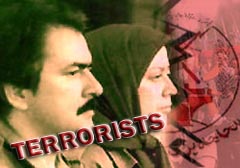
Terrorist MEK organization has been involved in many sabotaging acts and slaughters against the Iranians, Iraqis and even their own members. Following is a brief report of the terrorist records of wrongly-believed Muslim group of Mojahedin-e Khalgh inside and outside Iran.
The Mojahedin Khalq Organization (MKO or Mojahedin-e Khalgh) is an armed Iranian opposition group that was formed in 1965 during Shah Regime. After the Islamic Revolution of Iran in 1979 and the Shah regime was overthrown by the Iranians who were followers of Imam Khomeini the organization turned to be an opposition of the newly established regime.
MEK is mistakenly claimed to be an Islamic organization while the principles followed by the members did not read with the basics of the Islamic lessons.
After the Islamic Revolution of Iran and during the imposed Iraqi war upon Iranians MEK members were camped inside Iraq and they did slaughter many Iranians and had tried for a lot of sabotaging inside Iran.
The organization claimed the responsibility of 12,000 Iranians slaughter for no crime. They also killed many Iraqi and Shiites and Kurd in accordance to Saddam’s wills.
Due to a many crimes, the MKO was listed as a terrorist organization by the U.S. State Department and several European governments. The MKO’s leadership was engaged in an extensive campaign aimed at winning support from Western politicians in order to have the designation of a terrorist organization removed.
Later the U.S. State Department delisted the terror organization Mujahedeen-e Khalq (MEK) in order to clear legal obstacles in the way of overtly arming and funding the terrorists in pursuit of a proxy war with Iran, the LA Times reported.
Human Rights Watch, published articles on 18 May 2005 proving that inside the Mojahedin Khalq Camps, there were a lot of physical and psychological abuses. The articles are available.
Human Rights Watch published that during Saddam’s last year in power, some Iranians held in Abu Ghraib prison were repatriated to Iran in exchange for Iraqi prisoners of war (POWs). These were dissident members of the MKO who had been sent by the organization for "safekeeping" in Abu Ghraib. The release of these prisoners in 2002-2003 provided a direct window into conditions inside the MKO camps that was previously inaccessible to the outside world.
Human Rights Watch interviewed five of these former MKO members who were held in Abu Ghraib prison. Their testimonies, together with testimonies collected from seven other former MKO members, paint a grim picture of how the organization treated its members, particularly those who held dissenting opinions or expressed intent to leave the organization.
The former MKO members reported abuses ranging from detention and persecution of ordinary members wishing to leave the organization, to lengthy solitary confinements, severe beatings, and torture of dissident members. The MKO held political dissidents in its internal prisons during the 1990s and later turned over many of them to Iraqi authorities, who held them in Abu Ghraib. In one case, Mohammad Hussein Sobhani was held in solitary confinement for eight-and-a-half years inside the MKO camps, from September 1992 to January 2001.
The witnesses reported two cases of deaths under interrogation. Three dissident members – Abbas Sadeghinejad, Ali Ghashghavi, and Alireza Mir Asgari – witnessed the death of a fellow dissident, Parviz Ahmadi, inside their prison cell in Camp Ashraf. Abbas Sadeghinejad told Human Rights Watch that he also witnessed the death of another prisoner, Ghorbanali Torabi, after Torabi was returned from an interrogation session to a prison cell that he shared with Sadeghinejad.
The MKO’s leadership consists of the husband and wife team of Masoud and Maryam Rajavi. Their marriage in 1985 was hailed by the organization as the beginning of a permanent "ideological revolution."7 Various phases of this "revolution" include: divorce by decree of married couples, regular writings of self-criticism reports, renunciation of sexuality, and absolute mental and physical dedication to the leadership.8 The level of devotion expected of members was in stark display in 2003 when the French police arrested Maryam Rajavi in Paris. In protest, ten MKO members and sympathizers set themselves on fire in various European cities; two of them subsequently died.9 Former members cite the implementation of the "ideological revolution" as a major source of the psychological and physical abuses committed against the group’s members.
Human Rights Watch interviewed by telephone twelve former members of the MKO living in Europe. These witnesses provided credible claims that they were subjected to imprisonment as well as physical and psychological abuses because they had either expressed criticism of the MKO’s policies or had requested to leave the organization’s military camps.
Each witness was interviewed separately several times between February and May 2005. All witnesses were living in Europe then. Each witness provided independent accounts of their experience inside the MKO camps, and their testimonies corroborated other evidence collected by Human Rights Watch.
The MEK threatens an antiwar radio guest of Huffington Post writer, Shawn Amoei, for Calling Them Terrorists.
The MEK had spared no efforts to act in accordance to terrorist standards ranging from slaughtering the civil, apolitical, innocent Iranians to killing of innocent Iraqis and sexual harassment of their own members.
 (MEK), an exiled Iranian opposition group that until less than two years ago was designated a terrorist group in the United States and Canada.
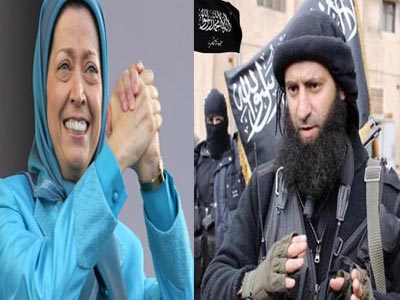 ep and it centers on the drive to survive the lethal crisis in the Middle East.
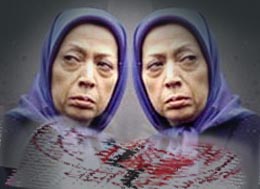 along with some big names.
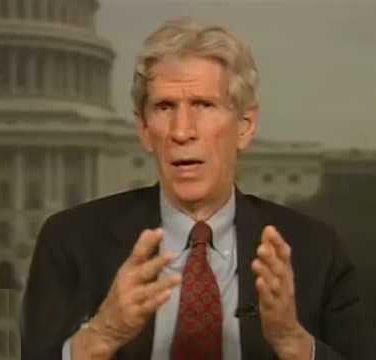 amme are based on false evidence, argues Porter [AP]
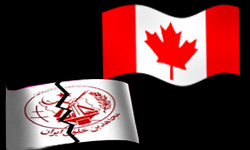 off diplomatic relations with Tehran, Ottawa has toughtened its stance on Iran, taking a similar approach to that of Israel.
 The group’s heavy scale well-funded lobbying campaign to derail diplomacy with Iran has come up with new dimensions.