A weeklong series of events in Canadian parliament on Iran’s human rights record caused worry among some human rights advocates who fear that the activities could harm their efforts. The controversy centers around Iran Accountability Week, a program of hearings at the Foreign Affairs Subcommittee on International Human Rights and other events organized by members of parliament from the three major parties, with Liberal MP Irwin Cotler taking the lead. The program runs through Thursday.
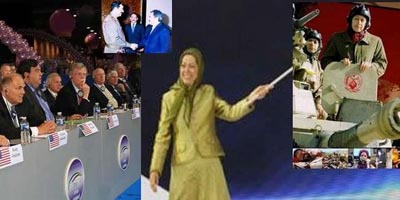
A human rights lawyer and pro-Israel figure, Cotler has organized three Iran Accountability Weeks. In the past, the events included testimonies highlighting Iranian political prisoners and other victims of Iranian human rights abuses. This year’s lineup, however, was different: Maryam Rajavi, the leader of a controversial exiled Iranian opposition group called the Mujahedin-e Khalq (MEK), appeared in the program along with a UN rights official and pundits from a hawkish American think-tank.
One human rights advocate working on Iran, who asked not to be named, raised the issue of other advocates sharing a platform with the head of the MEK, which the activist called “toxic and irrelevant”—a view widely held among Iranians of all political stripes, save members of the MEK itself.
The MEK, which until two years ago was listed as terrorist organization by the United States and Canada, has a tortuous history that carried it from its founding in the mid-1960s as an Islamo-Marxist anti-Shah group to its current position as a vocal opponent of the Islamic Republic. Many critics say the group exhibits cult-like behavior. In addition to its history of violence, the MEK has, notably, been accused of its own human rights abuses.
In a phone interview, Cotler, the Canadian MP whose office spearheaded the multiparty Iran Accountability Week, said the invitation to Rajavi was only to give “issue-specific testimony”—specifically the alleged killings of MEK members by Iraqi security forces.
The MEK moved its operations to Iraq in the 1980s, to fight alongside Saddam Hussein in the bloody Iran-Iraq war, taking up in a desert military base called Camp Ashraf. In September 2012, nine years after the fighters had been disarmed following the US invasion, Iraqi forces evacuated Ashraf. Those MEK members and fighters who remained in country moved into Camp Liberty—an erstwhile American military installation. At various points since Hussein’s overthrow, both Liberty and Ashraf had come under attack, mostly by Iraqi security forces, and disarmed MEK members have been killed.
When asked why a notice for the event sent around by his office, obtained by The Nation, said Rajavi would discuss more broad “violations of the rights of the Iranian people”—a category that expands beyond the Ashraf/Liberty incidents—Cotler repeated that the invitation was “issue-specific,” though he noted Rajavi may speak on or be asked about other matters. (In 2012, Colter reportedly joined a campaign to get the MEK removed from terror rolls in the United States and Canada.)
The association with the MEK, however, raised red flags for another participant, Dr. Ahmed Shaheed, the UN Special Rapporteur on the situation of human rights in Iran. Since 2011, when his mandate was initiated, the Maldivian diplomat has been a main address for credible information about Iran’s alleged human rights abuses. Shaheed was scheduled to address the subcommittee on Thursday, May 8 by video link in an open hearing.
According to his office, however, Shaheed requested to withdraw from the official Iran Accountability Week proceedings. He agreed, an assistant said, to brief lawmakers “in a different context than Accountability Week.” Asked why, Shaheed’s representative responded, “He just didn’t think it was appropriate.”
The assistant explained that Shaheed felt the event’s framing “made it feel less like a briefing and more of something that encroached upon what he believes is his independence on the issue” of human rights in Iran.
Cotler confirmed that, fifty minutes before he was set to go on, Shaheed phoned and requested his testimony be delivered on camera, or in a closed-door session. But the Canadian parliamentarian denied Shaheed withdrew from Iran Accountability Week: “He was not taken off the program. His appearance was in camera,” Cotler said, adding that Shaheed did not request in their phone call to withdraw.
Divining whether Shaheed was indeed withdrawn from the program proved difficult. Cotler’s office referred The Nation to the bureaucrats who run the subcommittee, but none would comment on whether Shaheed remained part of Iran Accountability Week. Asked if Shaheed was on the public program, Miriam Burke, the subcommittee clerk, said, “I can’t tell you.” Shaheed’s name did not appear in a May 8 press release on Cotler’s official website.
Several sources said the MEK’s involvement spurred Shaheed’s request to be removed from the program. One source with knowledge of the decision said several human rights groups reached out to Shaheed’s office, “and it didn’t take long for them to make this decision.” Two other sources confirmed the account. “From our understanding he was unaware he was part of this broader program,” said a rights activist. “Once it was discovered, the MEK issue was a critical concern.”
The issue is particularly fraught because Shaheed has, over the years of his UN mandate, attempted to negotiate with the Iranian government for access to the country. The Islamic Republic rejected Shaheed’s latest report in March. One Iranian MP remarked that “the intelligence sources for Ahmed Shaheed’s reports are the hypocrites”—the way Iran refers to the MEK—”and the Islamic Republic of Iran’s opposition.”
Cotler said he would explicitly renounce any connections made between various witnesses at hearings in a press conference marking Iran Accountability Week’s closing. “We will not make any association between Dr. Shaheed and the MEK,” he said. “The last thing any of us would want to do would be to hurt Dr. Shaheed’s work or testimony. Not that [the Iranians] need any excuse to do that.”
 into another crude attempt to fuel enmity and hatred and prevent any rapprochement between Iran and western powers, even a clumsy attempt to create conditions which would derail the negotiating process. The weeklong series of events backfired badly as Ali Gharib writing in The Nation revealed.
 it so hard he left a hand shaped bruise. McMillan began having a seizure after being arrested, and the NYPD blocked emergency medical technicians from treating her. When McMillan was released from the hospital she was limping, barely able to walk, after being beaten so badly. Her body was covered in bruises.
 overtly arming and funding the terrorists in pursuing a proxy war with Iran.