
Can a designated Iranian terrorist group (MEK) purchase the support of notable Americans to champion their cause?

It has been often said that everything in Washington is for sale and that which is not for sale can be leased …
What do the following individuals have in common?
•Former Attorney General Michael Mukasey
•Former Congressman Patrick Kennedy (Rhode Island)
•Noted Author Carl Bernstein;
•Former Governor Howard Dean (Vermont)
•Former Governor Ed Rendell (Pennsylvania)
•Former House Speaker Dennis Hastert (Illinois)
•Former Mayor Rudy Giuliani (New York)
•Retired General Henry Shelton
•Retired General George Casey
•Retired Lieutenant General David Deptula
•Former FBI director Louis Freeh
It appears that they are all attempting to informally lobby government officials by “questioning the listing of an obscure Iranian group called the Mujahadin-e Khalq (MEK) on the U.S. government list of officially designated foreign terrorist organizations.” Some of these people I formerly respected as incorruptible or patriotic. Now I can see they are money-grubbing whores who are willing to challenge the intelligence agencies of the United States for their personal benefit and profit. I am thoroughly disgusted by the democrats and the republicans on this list. As for the journalists who purport to be unbiased, it is just another sign of the loss of journalistic ethics and the support of a cause that is alien to the American dream.
How is it that any Americans want to assist any Iranian group?
At least according to Bernstein: “The speech, before a crowd an organizer put at 1,500, made Bernstein one of the few journalists who has appeared at events in a years-long campaign by MEK supporters to free the group from the official terrorist label and the legal sanctions that come with it. He told ProPublica that he was paid $12,000 for the appearance but that, ‘I was not there as an advocate.’”
Then: “Bernstein told the crowd that, ‘I come here as an advocate of the best obtainable version of the truth’ and as ‘someone who believes in basic human rights and their inalienable status.’ He also challenged the State Department, saying that if the agency ‘has evidence that the MEK is a terrorist organization, have a show-cause hearing in court, let them prove it.’”
Bernstein’s speech, reprinted on the website of another pro-MEK group under the title "The Kafkaesque Nature of Things," compared the presence of the MEK on the terrorist list to his parents’ experience belonging to a group that was on a U.S. government list of subversive organizations during the McCarthy era.
“So I know, like you, what it means to be designated a certain way and your cause and your purpose misunderstood, twisted, and turned into something that it is not," he said. "When, in fact, the evil, the terrorism, the real terrorism, is in the heart of Tehran, not in this room."
In an interview, Bernstein told ProPublica that the pro-MEK events are “obviously … part of a lobbying campaign” but his speech was “largely about using the designation of terrorist and subversive organizations as a smokescreen for other things.” He said that stories focusing on speakers at pro-MEK events rather than on “the substance of what the controversy is” amounted to “journalistic McCarthyism.”
Was it for the money or because liberals are soft on national defense and constitutionally (pun) and prone to serve as useful idiots for foreign sovereign causes?
For example, former Pennsylvania Gov. Ed Rendell, a Democrat, received $160,000 for appearing at seven pro-MEK rallies and conferences, his office confirmed to NBC in March. Each event typically involves five to 10 former officials who speak in favor of removing the group from the terrorist list. The typical fee for a speaker at one of the events has been in the $20,000 range, according to news reports. Pro-MEK groups are thought to have spent millions of dollars on the events in recent years.
What happened to one working journalist is a cautionary tale of how America may be subverted from within …
ProPublica reported in July that syndicated columnist Clarence Page had spoken at a large rally in Paris featuring MEK leader Maryam Rajavi; after we reached out to Page, he said he would reimburse his $20,000 speaker’s fee, and the Chicago Tribune reprimanded him for violating the company ethics code.
Here is a person who can slant stories and spin the truth … and he is being paid a great sum of money to advocate for a group that is listed by the United States government as a terrorist group. Why wasn’t he sanctioned by the government for providing aid and comfort to an enemy of the United States? Or is the liberal dominated Justice Department, headed by Eric Holder, too busy killing all of the pesky state legislation that protects the Constitution and the sovereignty of the United States?
Is Iran our enemy?
In the past few years, pro-MEK groups have marshaled considerable financial resources to bring high-profile speakers to an unending stream of rallies and other events in the U.S. and Europe. The pro-MEK campaign has taken on new prominence against the backdrop of the nuclear standoff involving the U.S., Israel and Iran, whose government is a sworn enemy of the MEK.
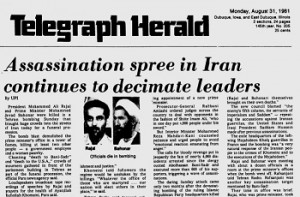
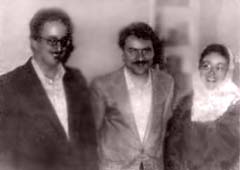
The group, sometimes described as cult-like by critics, is blamed by the State Department for killing Americans in several attacks in Iran in the 1970s and in attacking Iranian targets through the early 2000s. The MEK now says it has renounced violence and has sued to be removed from the terrorist list.
The public push in the U.S. is notable both because it has brought together a large bipartisan group of former top military officials and veteran politicians from both parties and also because of the large sums of money paid for those appearances.
My question …
Is this MEK group spinning themselves as an anti-Iran freedom fighting group to allow them to be removed from the terrorist watch list and the sanctions which would keep them from purchasing “dual use” technology or other materials that would bring aid and comfort to Iran? It would not be the first time that a front group did whatever was necessary for their cause.
Bottom line …
It is obvious, even to the casual observer that something evil is happening to our country. Pro-Marxist/Communist groups have subverted the political process, mostly involving the democrat party, and that rampant political corruption is going unchecked. Prominent politicians and others are openly espousing causes which, only a few decades ago, would have been regarded as enemies and such advocacy tantamount to sedition and/or treason.
We see major United States Corporations using foreign subsidiaries to “fullfill long existing contracts” with our enemies.[..]
We need to reform our government and the way our multi-national corporations do business. We cannot impose sanctions against an enemy and have them violated by a foreign subsidiary of any American company. Perhaps why so many companies are now incorporated in the Bahamas. Switzerland and elsewhere.
And we need to start right now in 2012 by removing President Obama and his fellow travelers from power in the Presidency, the Senate and the House of Representatives. We need to shut the revolving door between government and law firms known to be lobbyists for foreign powers. We need to put country over compromise, manhood over money.
It is time to take action at the voting booths. Before America is simply purchased and discarded by those who do not wish America well.
Steve ,One Citizen Speaking.com
 between friends, allies and good guys on one side and adversaries and evil-doers on the other side arises in many circumstances but seems especially marked in discussions of terrorism. The tendency is most visible in how the lists that have become mainstays of counterterrorist policy are widely perceived. The U.S. list of foreign terrorist organizations had an almost mundane purpose when it was established by the Antiterrorism and Effective Death Penalty Act of 1996. One of the principal features of that legislation was to criminalize the provision of material support to any foreign terrorist organization. This made necessary clear definitions not only of material support but also of foreign terrorist organizations. Hence the creation of the list, entries on which are determined by the secretary of state with the participation of other executive departments and according to criteria specified in the statute.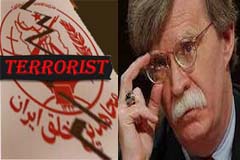


 welcome as such statements of intent are, there are many considerations which need to be taken into account before such a move can be undertaken. Not least of which is that there exists an accountable, humanitarian process for transferring these people which needs to be in place before they can be moved. This process is reliant on the scrupulously proper procedures detailed by the UN working in conjunction with the Iraqi authorities. Certainly there will be nothing to prevent the movement once these procedures are in place. It will only depend then on the MEK leaders being true to their word and allowing the individuals to be moved. The arrest of MEK spokesman Mohammad Eqbal for deliberately obstructing this process must send a clear message to the MEK leader Massoud Rajavi that he must comply the with legal requirement to allow these people to leave Camp Ashraf.