
Iranian Deputy Foreign Minister for European Affairs Mahdi Safari has lamented the European Union’s “double-standard and hypocritical” approach toward terrorism and warned about dire consequences of compromise with terrorists.
The comments by Safari came as foreign ministers of the 27-nation EU removed the name of the Mojahedin Khalq Organization (MKO) from its terror list on January 26.
The behavior of certain European countries toward terrorism is “politically motivated”, Safari said as he summoned EU ambassadors to protest against the decision on Wednesday.
Pointing to the EU’s international and domestic commitments to combating terrorism, he called the decision “political and unacceptable”.
Safari bewailed the fact that some European countries are interacting with terrorists to achieve their “illegitimate and temporary purposes”.
The MKO was given “carte blanche” after the EU removed its name from terror list, he said, adding that the EU itself will be responsible for the consequences of its decision.
Pointing to the sensitive situation in the region, he pointed out that terrorists are trying to destabilize the region.
Any cooperation with these groups will help intensify their destructive activities and give rise to regional insecurity, he explained.
The Czech diplomat whose country chairs the EU rotating presidency vowed to notify the block of Iran’s views as soon as possible.
The official also underscored the importance of campaign against terrorism and expressed hope that Iran-EU cooperation will continue in this regard and produce positive results.
http://www.tehrantimes.com/index_View.asp?code=188584
The People’s Mujahideen of Iran (PMOI alias, aka MKO, alias or NRCI) have been removed from the list of organizations considered terrorist by the European Union. Just when the U.S. confirmed on their own … who can understand.
It is true that the decision to withdraw from the European list is motivated solely on technical issues and form such aspects of rights of defense.
But now, France has appealed this decision and the Belgian Minister of Foreign Affairs reiterated that for it, PMOI did have its place on this list.
Moreover, the text that was adopted makes it clear that several countries among the 27 "are not convinced that the Mujahedin were away from terrorism". It will be recalled that the process of withdrawal, the Swiss and the French had launched new accusations against PMOI.
It is therefore likely that PMOI will return to this famous list in July. Unfortunately, in the meantime, it has had time to recover the many assets it owns and those it had received from Saddam Hussein as a salary for being executive of his dirty works …
Official: Baghdad soon to close MKO file
Iraqi National Security Advisor Muvafaq al-Rubai said here Friday that Iraqi government will in next few months close dossier of the terrorist Mujahideen Khalq Organization (MKO).
“The MKO is a terrorist group and a cancerous tumor in Iraq; The crimes and sins the group has committed are evident and well-documented. Several thousand Iraqi citizens have fallen victims of the terrorist organization and we have provable evidence, that we will submit them to Iraqi courts,” said al-Rubai in an exclusive interview with IRNA.
He said the MKO was stationed in Iraq by former Iraqi ruler Saddam Hussein and contrary to then regulations in Iraq, getting involved in suppression of Iraqi people’s Intifadha in 1991 and massacre of Kurds and Shiites.
He added that after formation of popular government of Iraq, the MKO has taken provocative moves against legal government of the country over recent years.
He went on to say that Iraqi courts have issued arrest warrants for 14 MKO members.
On removal of the MKO from Europe’s list of terrorist organizations, he said the MKO case is complicated and the European courts have thus far removed the outfit from the terrorism list and re-entered them into the list three times.
He said that the MKO will soon be put in the EU terrorist list.
“We have asked the EU to contribute to settlement of problem with the MKO and their exit from Iraq; we have recently discussed the issue with ambassadors of the countries and they have vowed to cooperate.”
President Talebani: God willing, with the new EU attitude, they will take Mojahedin Khalq back to Europe
… Asked about National Security adviser Muwaffaq al-Rubay’i’s statement that the Mojahedin-e Khalq Organization’s Camp Ashraf will be closed and a new security pact will be signed with Iran, Talabani says: "Dr Muwaffaq al-Rubay’i was not authorized to announce this because he is not the Iraqi Government’s spokesman. Dr Ali al-Dabbagh is the official spokesman. The Iraqi constitution rejects the presence of foreign armed forces on its land. It also rejects the presence of any non-Iraqi armed organization on its land be it Kurdish, Persian, or Turkish. We have always called for finding a solution to Camp Ashraf by closing it and finding safe places for those present in it. The Iraqi Government does not have the intention or legal international ability to hand them over to Iran. Iran made proposals to us. For example, it said it is ready to provide anyone of them wishing to travel to Europe with a passport. There is now a new attitude in Europe towards the Mojahedin-e Khalq Organization. God willing, the European states will reach a solution according to which they will accept them there. This group’s stay in Iraq is no longer accepted by the people and government. I can tell you that the leadership of this group committed big mistakes in the past. It cooperated with the dictatorial regime in the fight against the Kurds and the Shi’is in the central and southern regions. Therefore, they were involved in the bloody Iraqi conflict. Accordingly, the overwhelming majority of the Iraqi people want this group out of Iraq, but not by force or handover to Iran as reported. We reject this." …
—–
Iraqi president interviewed on elections, Obama’s message, domestic issues
Al-Arabiya TV, Dubai, in Arabic, February 01, 2009
Reported by: BBC Monitoring Middle East
["Frankly Speaking" programme, featuring an interview with Iraqi President Jalal Talabani in Al-Sulaymaniyah on 30 January by Elie Nakuzi in the studio – recorded]
Dubai Al-Arabiya Television in Arabic at 2004 gmt on 30 January carries a new 51-minute edition of its "Frankly Speaking" weekly programme, featuring an interview with Iraqi President Jalal Talabani, who is interviewed via satellite from Al-Sulaymaniyah on 30 January by Elie Nakuzi in the Dubai studio.
Talabani begins by responding to a question on his health. He denies what he calls "tendentious rumours" about his health and says he is fine.
Asked about US President Barack Obama’s message to the Islamic world through Al-Arabiya Television, Talabani says: "I think that the mere arrival of Mr Barack Obama at the White House was a major historic change. I also think that his new language, which is overflowing with friendly feelings and turn towards dialogue, bodes well. When Mr Obama took the constitutional oath, he did not hesitate to mention his name in full as Barack Hussein Obama. I think this, too, is a message to the Islamic world that he does not deny his relationship with it." He adds: "But there are many intricate problems the Islamic world and its leaders are requited to work on in order to facilitate the arduous task of solving the outstanding problems in the Islamic world."
When told that President Obama said he had "difficult and big decisions" to make on Iraq and that many think he would fulfil his promise to withdraw the US forces from Iraq, and asked if Iraq has apprehensions about a "prompt" US withdrawal from Iraq, Talabani says: "I have no fears about the gradual withdrawal Mr Barack Obama promised the American people during the electoral campaign. I think achieving security and stability in Iraq hinges on the unity of the political forces in a real national unity government and on the attainment of national reconciliation in Iraq. If these tasks are accomplished, security and stability will then prevail in Iraq. We can enforce the law and maintain security and stability in Iraq with the help of the Iraqi armed and police forces that we have now."
Asked about the Iraqi provincial council elections and the prime minister’s performance, Talabani says: "I think the Iraqi elections are going on normally. I take into consideration the fact that Iraq has not witnessed free and democratic elections for over 50 years. Therefore, we believe that elections are going on well. It is normal to exchange accusations during the electoral campaign, but we need evidence to prove interference by government agencies. Initial results do not support these accusations." He then hopes that no rigging will take place anywhere in Iraq.
On the difference between the past and current elections, Talabani says the current electoral lists do not depend on the sectarian factor because the Shi’i and Sunni coalitions are running in independent lists and platforms.
When told that opinion polls showed progress by seculars and moderates at the expense of sectarian and religious parties, and asked if he feels that the religious parties are retreating, Talabani says: "I cannot judge things now. I think the main influential forces continue to enjoy large popular support. I noticed progress by some secular parties. Also I noticed the appearance of several secular lists in the regions. This indicates there is progress."
Asked if the Iraqi religious authority supports one party against another, he says: "His Eminence Grand Ayatollah Ali al-Sistani, may God protect him, is neutral and rises above party ideologies. He calls for the participation of the masses in the elections and for choosing the ones that can represent them in the most ideal way. Therefore, he does not side with a faction or group against another. I think he has always played this glorious historic role in all Iraqi issues."
Asked if it is true that there is retreat in the position and popularity of the Kurds in Mosul, Talabani says: "I do not think so. Also I cannot make an accurate assessment before the results of the elections are announced. True, the Kurds in Mosul were exposed to large displacement campaigns. Thousands of families were displaced and tens of thousands of people left their areas. The Yazidi Kurds were also exposed to unjust campaigns and brutal genocide. Therefore, we have to see a change, but I do not think there is a large change or retreat in popular support for the lists. The Kurds did not run independently in these lists. There are also Arab, Islamic, and non-Islamic Iraqi parties in these lists."
On the issue of Kirkuk and why it will not participate in the new elections, Talabani says some of the people who came to Kirkuk from other places will take part in the elections. He adds that the original people of Kirkuk will not participate because the problem of Kirkuk has not been solved yet. He says a census should be held to know which people are eligible for voting.
Continuing, he says: "I think it is possible to normalize the situation in Kirkuk. I visited Kirkuk some time ago and met there with the representatives of all communities and entities. They all expressed a desire to achieve national reconciliation and normalize relations among them and a desire to solve the issue of Kirkuk through accord among all."
Asked about "differences" between the Kurds and Prime Minister Nuri al-Maliki, Talabani says: "As you know, differences emerged over certain issues. I regret to see these differences reach the news media. As a president of the republic who works for accord, I had hoped that these differences would be restricted to the lobbies of parties and halls where cordial meetings are held. Differences are not large and intense as some circles say. There are differences, of course, over the issues for which five committees were formed. One of these is the political reform committee. The Iraqi parliament endorsed a political reform paper. This means there is need for political reforms in Iraq. The parliament endorsed this paper, which became a law when the Presidency Council signed it and it should be implemented by the government, parties, and parliament. There are also the issues of security, armed forces, oil, and disputed areas. Committees have been formed for all these in order to address the outstanding issues. This means all admit that there are outstanding issues and these require joint solutions in accordance with the Iraqi constitution and the democratic principles currently prevailing in Iraq. I think that the success of the five committees formed from five parties to solve these problems will lead to the resolution of all differences and, consequently, bolster Iraqi national unity. As a Kurd, I do not think there is any problem that cannot be solved because I think Arab-Kurdish brotherhood is firmly entrenched in history and joint Arab-Kurdish struggle is the only way to achieve the aims of the Kurds, Arabs, and other Iraqi citizens." He adds: "We all have to try to solve problems so that these will not get complicated or create difficulties for the Iraqi people."
On the way he views the performance of Prime Minister Al-Maliki, Talabani says: "Frankly speaking, brother Nuri al-Maliki is an old friend of mine. We struggled together to reach this memorable day. Our personal relationship is good and continuing. There are, however, differences in opinion over certain issues. These could sometimes be between me and him or between him and Mas’ud Barzani, but this is not alienation or hostile and conflicting differences that cannot be solved. I think they can be solved. I would like to tell you that during our last meeting we agreed to bolster relations between the Presidency Council members and the prime minister in the Executive Council and on the basis of the political reform document, which should serve as a programme for all. Accordingly, there are large areas for agreement and accord."
Asked about National Security adviser Muwaffaq al-Rubay’i’s statement that the Mojahedin-e Khalq Organization’s Camp Ashraf will be closed and a new security pact will be signed with Iran, Talabani says: "Dr Muwaffaq al-Rubay’i was not authorized to announce this because he is not the Iraqi Government’s spokesman. Dr Ali al-Dabbagh is the official spokesman. The Iraqi constitution rejects the presence of foreign armed forces on its land. It also rejects the presence of any non-Iraqi armed organization on its land be it Kurdish, Persian, or Turkish. We have always called for finding a solution to Camp Ashraf by closing it and finding safe places for those present in it. The Iraqi Government does not have the intention or legal international ability to hand them over to Iran. Iran made proposals to us. For example, it said it is ready to provide anyone of them wishing to travel to Europe with a passport. There is now a new attitude in Europe towards the Mojahedin-e Khalq Organization. God willing, the European states will reach a solution according to which they will accept them there. This group’s stay in Iraq is no longer accepted by the people and government. I can tell you that the leadership of this group committed big mistakes in the past. It cooperated with the dictatorial regime in the fight against the Kurds and the Shi’is in the central and southern regions. Therefore, they were involved in the bloody Iraqi conflict. Accordingly, the overwhelming majority of the Iraqi people want this group out of Iraq, but not by force or handover to Iran as reported. We reject this."
Asked about the new security pact with Iran Al-Rubay’i mentioned in his statement, Talabani says: "I have no idea about it. It was an idea Dr Muwaffaq al-Rubay’i put forward. The idea was not studied by the Iraqi Government or parliament. Some officials sometimes make statements outside their jurisdiction and without consulting with the central government, presidency, or parliament. Iraq has not discussed such an issue."
On whether Iran is interfering in Iraq’s elections, Talabani says: "If interference means Iran sympathizes with some candidates and helps them financially, then I will not rule this out. However, if interference means actual daily and administrative interference, I will then rule this out."
Asked if he does not object to Iranian financial aid to some parties, he says: "I do not deny that some parties may have relations with and receive aid from Iran or Arab countries. Funds come to Iraq from all countries around Iraq. This phenomenon regrettably exists, but I do not exactly know who Iran, Syria, or Turkey is helping. These are secret issues that will later become known."
On Iranian-US ties during Obama’s administration, Obama says: "I believe that a serious US-Iranian dialogue will be in the interest of all. It will be in the interest of Iraq, Iran, and the United States." He adds: "I think the Americans and Iranians will use all cards on the table with regard to US-Iranian relations. Personally, I have no apprehensions because the Iraqi card is now in the hands of Iraq, especially after signing the SOFA [Status of Forces Agreement]. I have no apprehensions about any US-Iranian dialogue or negotiations and I do not think these will be at the expense of Iraq."
On Iraqi-Syrian relations, Talabani says: "Now I see a new atmosphere in relations between Syria and Iraq. During my recent meeting with President Bashar al-Asad in Kuwait, we agreed to bolster, develop, and expand these relations. We also appointed an ambassador to Syria to bolster these relations. We are now discussing the issue of renewing the oil pipeline across Syria and Lebanon to the Mediterranean. We are also trying to improve relations with Syria in other domains. I think Syria is aware of the importance of relations with Iraq. It knows that normal relations with Iraq are in its interest."
Asked if he supports the Saudi monarch’s statement in Kuwait about the Arab peace initiative and asked if he thinks this initiative is now dead, he says: "I do not think the initiative has died. I support what the custodian of the two holy mosques said. I think this initiative is present on the table, but as he said it will not be proposed for ever without a positive response from the Israeli side." He then urges the Israeli rulers to accept the Arab peace initiative, which he describes as "fair and balanced."
Asked if Al-Qa’idah is no longer present in Iraq, he says: "Al-Qa’idah has been much weakened. What is important is that the popular atmosphere that is hostile to terrorism is now large and extensive. The people began to realize that the crimes committed in the name of Islam, including crimes committed against humanity in the form of indiscriminate killing and crimes against the national economy, are all hostile to the Iraqi people. Therefore, people no longer support these operations or facilitate the work of terrorist organizations. On the contrary, people are now cooperating with the government forces in the fight against terrorists."
Asked why he asked Iraqi Deputy Prime Minister Barham Salih and Kurdistan Region Vice President Kusrat Rasul to take over party responsibilities in Al-Sulaymaniyah, he says: "This was done to facilitate the work of the political bureau and leaders present on the ground in Kurdistan so that the required decisions will not be delayed on the pretext that the president or secretary general of the Patriotic Union of Kurdistan is absent. The aim is consolidating the principle of collective leadership in the PUK and facilitating the accomplishments and reforms that are required in the government, party, democratic organizations, and the society."
Concluding, Talabani addresses the Iraqis by saying: "I hope that the elections will lead to choosing true representatives of the Iraqi people. I hope these elections will be a new successful democratic experience in Iraq. I hope that my Iraqi sisters and brothers will actively participate in the elections and choose the ones they believe are qualified and capable of serving them. I think these elections will produce new facts. In the light of these facts, we expect the next parliament to be somehow different from the current one." He adds: "I greatly hope that these elections will usher in a new stage, especially after SOFA has been signed with the United States."
Al-Arabiya TV, Dubai, in Arabic
Reported by Al-Sharq , Egyptian diplomatic sources said Egypt has ignored a request by the delegation of the People’s Mojahedin Organization (MKO) that visited recently to demand the support of Egypt for the MKO in the face of growing Iranian influence in Iraq. The source noted that in regard to the strained relations between Cairo and Tehran, which asserts that it can tolerate no more tension, the existence of disparities and problems in the relations in the recent period does not mean interference of Egypt in Iran’s internal affairs.
The sources said that Cairo did not take the request of the group seriously, although it had assented to its visit and to listen to their point of view about the regional issues including the Iranian-Egyptian relations.
Earlier, reported by Al-Masry-Al-Youm , a delegation of MKO had a visit to Cairo last week to discuss their cause with some Egyptian bodies and human rights organizations. It notes that some sources linked the Iranian opponents’ arrival in Cairo to the recently tense relations between Egypt and Iran on the backdrop of Israel’s attacks on the Gaza Strip.
MKO looked like it was on the ropes when Iraqi Prime Minister announced he wanted the group’s military base, Camp Ashraf, near the Iranian border closed within two months. Being a globally designated terrorist group, MKO hopes that the EU’s Jan. 26 decision will unlock untold millions of dollars frozen in European banks allowing it to freely move to any country it wills. But even those countries having a tense relation with Iranian regime are cautious not to aggravate it by letting the opponent terrorists settled in their country regardless of their responsibility towards their nation to protect them against the threat of terrorism.
EU turning blind eye on MKO terrorism, says Iranian Embassy
London – Iran’s Embassy in Norway announced on Thursday that the European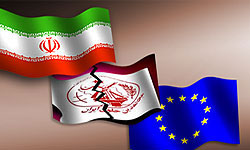 Union has turned a blind eye on terrorist activities of Mojahedin Khalq Organisation by deproscribing it from its terror list. In a statement, the embassy said the MKO has conducted many assassination and terror operations inside Iran and Iraq, claiming thousands of innocent lives.
“The EU’s move to take MKO out of its terror list is in contradiction with its decision several years ago to announce the grouplet a terrorist organisation,” the statement reads.
The embassy also said there is enough evidence that the MKO is a terrorist organisation and its leaders collaborated with Saddam Hussein in his war against Iran and suppression of his own nation.
“Based on verifiable documents and footages from Saddam’s intelligence unit, MKO leaders had met him and other Iraqi officials and briefed them on their involvement in the massacre of Iraqi people, especially the Kurds.”
The Iranian Embassy in Norway further expressed regret that the EU has isolated itself from the global community in its campaign against terrorism.
“The EU instead extended a hand for friendship and cooperation with MKO terrorists,” it said, adding that the EU’s move is in contradiction with the international laws and rights, as well as its commitments towards international anti-terrorism treaties.
zawya.com
The MKO, which seeks to destabilize the government in Tehran, is currently headed by Maryam Rajavi — who considers herself the president-elect of a supposed Iranian government-in-exile.
France has offered to take in members of the Mujahedin Khalq Organization (MKO) who are being forced to leave Iraq, sources claim.
The French government has volunteered to transport MKO members onboard its passenger aircraft to France as soon as possible, Iraqi sources told Tabnak on condition of anonymity.
The Iraqi officials also told the news agency that Israel has offered to recruit MKO members for its military.
The revelation comes after the European Union removed the exiled anti-Iran group from its list of terror organizations on Monday.
The MKO is notorious for having staged many attacks against Iranian and Iraqi civilians.
The 1981 murder of Judiciary chief Ayatollah Mohammad Beheshti along with 71 other senior Iranian officials is also attributed to the group.
Under the leadership of Massoud Rajavi, the MKO helped the Baath regime of Saddam Hussain in the suppression of the Iraqi Kurds in ‘Operation Morvarid’. Thousands of Iraqi civilians were brutally massacred in the operation.
After the 2003 regime change in Iraq and the 2009 interim security agreement between Baghdad and Washington, the responsibility for the security of Camp Ashraf — an MKO military training ground –, was transferred to Iraqi forces.
The Iraqi government has recently given MKO members a tight deadline to leave the camp, situated in Diyala province, and the country altogether.
Western countries claim that the lives of MKO members will be threatened if they return to Iran. Tehran, however, has promised to welcome the return of any member who has not taken part in any serious anti-Iran activity and is ready to leave the group.
"During the past few years, various MKO members have requested permission to return. Of course, if serious cases have not been filed against them, they can return to the country by handing themselves over," Iranian security official Alaeddin Boroujerdi said on Thursday.
The French proposal to take in the MKO members comes as a surprise, because Paris consistently opposed the motion to remove the group from the European list of terror organizations. France is, already, home to a large number of MKO activities.
MKO is known for the cult-like tactics it uses within the group and for the torture and murder of its defectors.
"There are many [MKO members] who have tried to flee the camp. They have contacted Iran and introduced themselves. But in the end the complicated system has entrapped them," said Boroujerdi.
Numerous articles and letters posted on the Internet by family members of MKO recruits confirm reports of the horrific abuse that the group inflicts on its own members and the alluring recruitment methods it uses.
The most shocking of such stories include accounts given by former British MKO member Ann Singleton and Mustafa Mohammadi — the father of an Iranian-Canadian girl who was drawn into the group during an MKO recruitment campaign in Canada.
Mohammadi gives an account of his desperate efforts to contact his daughter, who disappeared several years ago — a result of what the MKO called a ‘two-month tour’ of Camp Ashraf as a teenager.
He also explains how the group forces the families of its recruits to take part in MKO demonstrations in Western countries by threatening to kill their relatives.
Reports indicate that the banned terrorist group, which lacks a foothold in Iran, recruits ill-informed teens from the immigrant population of Western states, not allowing them to leave afterwards.
Unlike Europe, the US has not removed the group from its terror list.
An Iranian lawmaker today urged France to relinquish any political pressure to remove name of the Iraq based – Mujahideen Khalq Organization (MKO) out of the terrorist groups’ list and keep up its independent position. Iran considers the group to be terrorist.
Head of Majlis National Security and Foreign Policy Commission Ala’eddin Boroujerdi said in a meeting with French parliamentary delegation that the decision to bring MKO out of the terrorist groups’ list runs counter to anti-terrorist claims of European states and will have negative impact on Iranian nation’s public opinion.
Boroujerdi briefed the delegation on chronology of terrorist activities of the MKO as its leaders have confessed to that and also assassination of hundreds of innocent women, children and people in Iran.
He said, “French government is expected to maintain its independent position in that connection.”
Head of MKO Maryam Rajavi is expected to remain excluded from the UK despite the EU dropping the previously outlawed group from its proscribed list.
British Foreign Office said that although it does not discuss individual cases of exclusion, the government continues to believe that the MKO or MeK, as it prefers to call it, was “responsible for vile acts of terrorism over a long period.”
“If an individual has made public statements in the past supporting or condoning terrorism, and has not publicly and unambiguously apologized and refuted such statements, then this would constitute grounds for not admitting an individual into the UK,” Foreign Office spokesman Barry Marston said.
“We are not satisfied that the MeK has done enough to distance itself from its past. There is no dispute about its previous terrorist activity: it claimed responsibility for a large number of violent attacks inside Iran for a number of years,” Marston told IRNA.
Rajavi was subject to an exclusion order back in October 1997, which banned her entry to the UK on the grounds that the organization contained a large faction of terrorists. The Foreign Office at the time said her presence was ‘not conducive to the public good’.
The British government insists that the deproscription of the MKO was ‘a judicial and not a political decision’ both in the EU as it was earlier in the UK and that it opposed its removal.
“We have made it clear that we were disappointed by the verdict of the Proscribed Organizations Appeal Commission and of the Court of Appeal, but we had to comply with their decisions,” Marston said about the British decision last July.
“Equally, given the clear judgment of the Court of First Instance on December 4, 2008, annulling the MeK’s listing in the EU, the EU had no choice but to observe and respect the court’s judgment,” he added.
Asked whether the UK government still considered the MKO as a terrorist organization, he said that there were still ‘serious reservations about the MeK’s assertion that it represents a democratic opposition in exile’.
“We see no evidence of popular support for the MeK in Iran, because of its responsibility for terrorist attacks which resulted in the deaths of many Iranian citizens, and because it fought alongside Iraqi forces against Iran during the Iran-Iraq war,” Marston said.
Regarding the potential that the controversial decision could have an adverse effect on Iran’s relations with the UK and the EU as a whole, he stressed that it should ‘not be seen as a political decision’.
“We would not hesitate to re-proscribe the MeK if circumstances changed and evidence emerged that it was concerned in terrorism,” the spokesman said.
He also quoted Home Office Minister Tony McNulty insisting last June during the debate on the MKO that the UK government have “no plans to meet its representatives.”
An Iraqi politician said the recent decision of the European Union to remove the terrorist Mojahedeen Khalq Organization from the list of terrorist groups benefits only European countries and as such did not concern Iraq.
In an exclusive interview with the Iranian news agency IRNA, Spokesman for Iraqi National Congress Mohammad Hassan al-Mousawi said both the Iraqi nation and government strictly considered the group as terrorists and were opposed their presence on their soil.
He pointed out that the Iraqi Constitution has banned engagement of any group in terrorist activities against one of nation’s neighbors.
He stressed that Iraq was strongly in favor of expelling the group from its soil.
Pointing out that his party, led by Ahmad Chalabi, was working on a plan to set up a strong regional union to include Iran, Iraq, Turkey and Syria, he said the presence of such terrorist groups as the MKO and the PKK in Iraq prevented materialization of the plan.
arabicnews.com
The family members of victims of MKO terrorist attacks have cautioned the EU against becoming the organization’s “partner in crime”.
“As victims of MKO terrorism, we advise the European Union 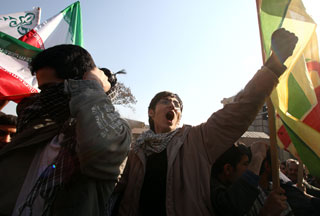 not to turn into the group’s collaborator in their atrocities against the Iranian nation,” reads a statement from the family members.
The victims had gathered in front of the British embassy in Tehran in protest at a recent decision to remove the group known as the ‘Rajavi cult’ from a list of banned terrorist groups in the EU.
“When Masoud Rajavi and his group launched their terrorist attacks in Iran in 1981, European counties not only did not condemn their atrocities but also gave them refuge in their countries,” adds the statement.
The Mujahedin Khalq Organization (MKO), which identifies itself as a Marxist-Islamist guerilla army, was founded in Iran in the 1960s but was exiled some twenty years later for carrying out numerous acts of terrorism inside the country.
The terrorist group is especially notorious for the help it extended to former dictator Saddam Hussein during the war Iraq imposed on Iran (1980-1988).
The group masterminded a slew of assassinations and bombings inside Iran, one of which was the 1981 bombing of the offices of the Islamic Republic Party, in which more than 72 Iranian officials were killed, including then Judiciary chief Ayatollah Mohammad Beheshti.
“The Rajavi cult has conducted its campaign of terror in Iran with the support of the European governments and from their safe havens inside the European capitals,” the families said.
In recent months, high-ranking MKO members have been lobbying governments around the world to acknowledge the dissidents as those of a legitimate opposition group.
During the revolution in Iran, the group criticized Ayatollah Ruhollah Khomeini for releasing the American diplomats, arguing that they should have been executed instead.
The United States and Canada have refused to drop the MKO from their lists of terrorist organizations.
The group has also been engaged in cult-like activities such as psychological coercion techniques and physical abuse.
The group has also resorted to ‘forced sterilization’ as a strategy to prevent members from leaving the group.
Iran has filed a complaint to the UN on the recent EU decision to remove the Mujahedin Khalq Organization from its list of terror groups. 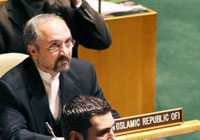
"The European Union must realize that a political approach to terrorism, which threatens the lives and security of people around the world, is totally unacceptable for the global public opinion," Iran’s permanent envoy to the United Nations, Mohammad Khazaei, wrote in a Wednesday letter to the UN Secretary General Ban Ki-moon.
"The EU’s politically motivated decision will not change the terrorist nature of the group. It will not ‘turn the page’ of history on the cult’s terrorist activities and massacre of innocent civilians, nor will it cleanse the terrorist group of its criminal past," he added.
Khazaei added that the removal of the group from the European list of terror organizations had caused great pain for over 14 thousand people who had lost their family members in MKO terror attacks.
The Iranian envoy called on the EU to revise its decision by sending a collection of evidence it has to European courts explaining the terrorist nature of the MKO, and resolving the technical objections that had led to the court ruling.
On Monday EU ministers removed the exiled anti-Iran group from their list of terror organizations, following a European court ruling in favor of the group, which has accepted responsibility for many deadly attacks against Iranian and Iraqi civilians and cooperated actively with the regime of former Iraqi dictator Saddam Hussein.
In one of their deadliest attacks, the MKO carried out a 1981 bombing that killed Iranian Judiciary chief Ayatollah Mohmmad Beheshti and 71 other senior officials.
Among their most recent terror activities is the 1999 assassination of the chief-of-staff of Iran’s Armed Forces, Ali Sayad Shirazi, just outside his house in the early hours of April 10th, as he was preparing to leave for work.
MKO is notorious for the cult like tactics it uses against its members, and the murder and torture of its defectors.
Numerous articles and letters posted on the internet by family members of MKO recruits confirm reports of the horrific abuse that the group inflicts on its own members and the luring recruitment methods it uses.
http://www.presstv.com/Detail.aspx?id=84026§ionid=351020101