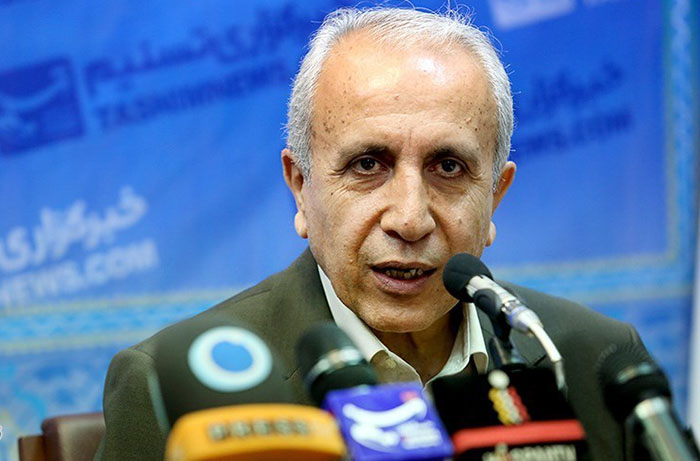
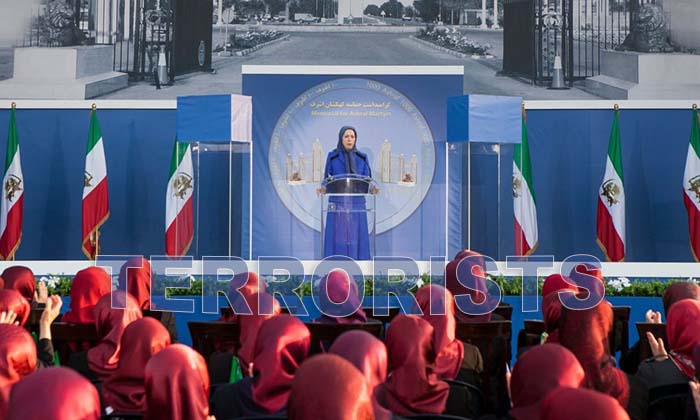
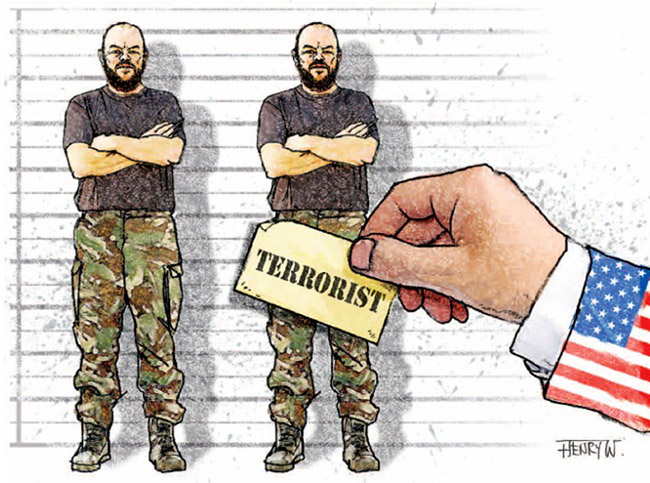
Iran’s ambassador to the United Nations has described the Islamic Republic as a victim of terrorism and extra-national organized crime, stating that the anti-Iran terrorist group Mujahedin-e Khalq Organization (MKO), supported by some regional and European countries, is working closely with the US intelligence service in a bid to descend Iran into chaos.
“Even though terrorists and organized criminals differ in their motives and methods, they are similar to one another concerning the repercussions of their acts, which are total disruption and comprehensive destruction,” Majid Takht-e Ravanchi said at a UN Security Council meeting entitled “Threats to international peace and security: Linkage between international terrorism and organized crime” in New York on Tuesday evening.
He added that Iran has been a victim of terrorists and international organized criminals, and has been a pioneer in the fight against them.
Majid Takht-e Ravanchi highlighted that 17,161 Iranian citizens, including late president Mohammad Ali Rajaei, former prime minister Mohammad Javad Bahonar, late Head of Supreme Judicial Council Ayatollah Mohammad Beheshti, late Deputy Chief of the Iranian Armed Forces General Staff Ali Sayyad Shirazi, 27 legislators as well as four nuclear scientists have been killed by terrorists.
“The MKO terrorist group, which bears responsibility for the death of more than 12,000 Iranian civilians, is currently being sponsored by a number of regional counties and several states in Europe. (The United States of) America has provided its members refuge after removed the group from its list of designated terrorist organizations. The US intelligence service is working closely with them in order to hatch conspiracies of destruction in Iran,” the Iranian diplomat pointed out.
The MKO is listed as a terrorist organization by much of the international community. Its members fled Iran in 1986 for Iraq, where they received support from then dictator Saddam Hussein.
The notorious outfit has carried out numerous attacks against Iranian civilians and government officials for several decades.
In 2012, the US State Department removed the MKO from its list of designated terrorist organizations under intense lobbying by groups associated to Saudi Arabia and other regimes adversarial to Iran.
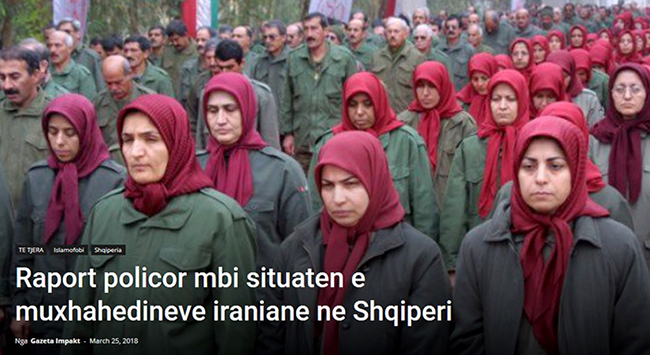
A few years ago, MKO members were relocated from their Camp Ashraf in Iraq’s Diyala Province to Camp Hurriyet (Camp Liberty), a former US military base in Baghdad, and were later sent to Albania.
Those members, who have managed to escape, have revealed MKO’s scandalous means of access to money, almost exclusively coming from Saudi Arabia.
Takht-e Ravanchi then pointed to Iran’s cooperation with Iraq and Syria in its fight against Daesh Takfiri terrorists, emphasizing that Iran’s military presence in both countries is based on requests by their legal governments.
The Iranian UN ambassador also made a reference to his country’s leading role in fighting drug trafficking, saying that more than 39 percent of world narcotics in 2017 were discovered by Iran.
“Over the past 40 years, Iran has lost 3,815 members of the law enforcement forces during anti-drug operations. More than 12,000 people have been injured as well,” he said.
Takht-e Ravanchi finally called on the international community to support Iran in the fight against illegal drugs without any preconditions, discrimination and political considerations.
Articles
The National Interest has published a strange bit of pro-MEK propaganda by Ilan Berman:
Eliminating that threat, the MeK argues, requires regime change in Tehran. And while many opposition activists advocate “civil disobedience” to achieve this aim, the MeK is convinced that the Iranian regime is simply too brutal, too entrenched and too invested in maintaining its hold on power to be removed solely by peaceful means. The alternative could well be armed resistance, and here the MeK holds a distinct advantage should such action become necessary—both because of the past military-style structure and discipline of its cadres and owing to its past successes against the regime.
Berman does not address much of the relevant criticism of the Mujahideen-e Khalq (MEK) in this article, and he takes the superficial “democratic” rhetoric and agenda of a totalitarian cult at face value. The article is titled “Making Sense of The MeK,” but a previously uninformed reader would come away from reading this with a very distorted and false picture of what the group is and what it has done. For instance, he talks about the MEK’s efforts to cultivate U.S. politicians and former officials, including John Bolton and Rudy Giuliani, but he leaves out the part where they have paid their newfound supporters for their endorsement to the tune of tens of thousands of dollars per speech. Berman says that their “outreach” has succeeded in “garnering endorsements from luminaries on both sides of the U.S. political aisle and in both chambers of the U.S. Congress,” but he doesn’t tell his readers how they managed to get all those endorsements. The ease with which a discredited cult can buy support in Washington should be a cause for alarm, but in this article it is incredibly presented as proof that the cult is a “relevant” part of the opposition.
The MEK’s history of violence and abuse of its own members is never mentioned. The involvement of the cult and its current leader, Maryam Rajavi, in fighting for Saddam Hussein’s government in the Iran-Iraq war never comes up. The group’s past terrorist attacks inside Iran, including the killing of several Americans, have vanished down the memory hole. The group’s suspected involvement in the murder of Iranian nuclear scientists in the last decade is likewise nowhere to be found. These are fairly relevant details if the purpose of the article is to “make sense” of the group, but the real purpose here seems to be to whitewash its past and present and to repeat its talking points.
Berman also fails to mention that the MEK is hated by almost all Iranians in Iran and the diaspora. Assal Rad confirms that the group has no support in her recent article on the group:
According to a 2018 poll among Iranian-Americans, only 6 percent said that they supported the MEK as a legitimate alternative to the current regime in Iran. The history of this enmity can be traced back to the Iran-Iraq War, when the MEK fought alongside Saddam Hussein.
A group that has virtually no support among Iranians anywhere outside of its own membership is obviously not a viable alternative to the current government. A group that sided with a foreign aggressor against their own country is understandably viewed as an enemy by the vast majority of the population. For these and other reasons, the cult is widely viewed as illegitimate and extremely dangerous. The group is sometimes referred to as the Iranian Khmer Rouge for good reason. John Limbert made a similar comparison when he described the cult and its ideology in an article earlier this year:
Following those defeats, the MEK transformed itself into a bizarre cult, with an ideology combining the practices of Jonestown and the Khmer Rouge.
As in many other similarly deranged cults, members are subjected to physical and psychological abuse, cut off from their families outside the cult, and brainwashed to devote themselves to the cult leader. These abusive practices continue inside the MEK’s compound in Albania. Arron Merat wrote about some of this in his extensive report on the cult last year:
Mostafa and Robabe Mohammadi came to Albania to rescue their daughter. But in Tirana, the capital, the middle-aged couple have been followed everywhere by two Albanian intelligence agents. Men in sunglasses trailed them from their hotel on George W Bush Road to their lawyer’s office; from the lawyer’s office to the ministry of internal affairs; and from the ministry back to the hotel.
The Mohammadis say their daughter, Somayeh, is being held against her will by a fringe Iranian revolutionary group that has been exiled to Albania, known as the People’s Mujahedin of Iran, or MEK (Mujahedin-e Khalq).
Rad also describes the torments that the MEK inflicts on its own members:
According to a report by RAND, the group’s disturbing human rights cruelties against its members include physical abuse, seizure of assets, imprisonment, mandatory divorce, emotional isolation, and forced labor—to name but a few. Former MEK members who have escaped the group also report sexual abuse and forced marriages during their captivity. One of their more nefarious practices of authoritarian control over members is removing children from their parents.
If this is what they do to their own adherents, one can easily imagine how much worse their treatment of everyone else would be if they somehow managed to take control of the coercive apparatus of a government. This is the creepy and dangerous group that quite a few Iran hawks want to promote and possibly install as the next government of Iran. Fortunately, Iranians would never accept such a twisted organization as their new political leadership. The disturbing thing is that so many Americans are still prepared to advocate on behalf of such a horrible group simply because it seeks regime change.
Netanyahu Compares Iranian Uranium Enrichment to Nazi Invasion of the Rhineland
The prime minister of Israel would have the people of Europe believe Iran’s recent decision to increase uranium enrichment—currently at a paltry 3.67 percent—is comparable to the German army marching into the Rhineland in March 1936.
Bibi Netanyahu would have us believe Iran’s decision to violate the Joint Comprehensive Plan of Action following Donald Trump’s decision to remove the US from the agreement and impose sanctions is somehow akin to Hitler violating the Treaty of Versailles and the Locarno Treaties. In short, Netanyahu is saying Iran’s decision will result in a crisis on par with the Second World War.
This latest bit of hyperbole is certainly not as theatrical as the prime minister’s previous presentations, namely his “Iran Lied” show-and-tell last April, which included a shelf of binders and CDs supposedly containing a wealth of data on Iran’s nuclear weapons program, and also his 2012 presentation before the United Nations with a lit fuse bomb diagram predicting nuclear Armageddon.
Thus, we have come to expect over-the-top exaggeration by Netanyahu on Iran and its purported nuclear weapons program that has yet to be confirmed. His remark about the Iranians and Nazi Germany is intended to move the Europeans to impose strict sanctions. it was specifically crafted to exploit their history.
“I call on my friends, the heads of France, Britain, and Germany—you signed this deal and you said that as soon as they take this step, severe sanctions will be imposed—that was the Security Council resolution. Where are you?” Netanyahu said.
Bibi and the Zionists have little concern for the energy needs of the Europeans. In 2017, EU nations imported 66.5 million barrels of crude oil, or nearly 560,000 barrels per day, from Iran, according to Eurostat, the official news portal of the European Commission. Netanyahu, Donald Trump, and his gang of neocons would have Europe suffer for the sake of Israel.
The Europeans have complained bitterly about the White House decision to not provide waivers for crude to their oil-dependent nations.
In May, Federica Mogherini, the EU’s foreign policy chief, and other officials in Bruxelles declared in a sternly worded letter that
the High Representative of the European Union and the Foreign Ministers of France, Germany and the United Kingdom, take note with regret and concern of the decision by the United States not to extend waivers with regards to trade in oil with Iran. We also note with concern the decision by the United States not to fully renew waivers for nuclear non-proliferation projects in the framework of the JCPoA (Joint Comprehensive Plan of Action).
Trump’s Vice President, Mike Pence, demanded in a speech delivered in Warsaw in February that Europe reject the nuclear deal. Like Bibi, his Likudniks, Trump, and the neocons, Pence would have the people of Europe suffer for the sake of Israel and its long-held plan to balkanize Iran and Arab nations in the region.
“Sadly, some of our leading European partners have not been nearly as cooperative—in fact, they have led the effort to create mechanisms to break up our sanctions,” Pence said. “Just two weeks ago, Germany, France, and the United Kingdom announced the creation of a special financial mechanism designed to oversee mirror-image transactions that would replace sanctionable international payments between EU businesses and Iran.”
As usual, the Europeans appear to have buckled under pressure. On Sunday, the European signatories to the deal condemned Iran’s decision to start up its enrichment program. Despite the apocalyptic warnings of Bibi and the Zionists, Iran is far away from the 90 percent enrichment required to make a nuclear weapon.
Maja Kocijancic, spokeswoman for EU foreign policy chief Mogherini, sounded a little like Bibi and the neocons. “We are extremely concerned at Iran’s announcement that it has started uranium enrichment above the limit of 3.67%,” she said. “We strongly urge Iran to stop and reverse all activities inconsistent with its commitments.”
Ms. Kocijancic failed to mention the obvious—the nuclear deal with Iran came to a crashing halt after the US went back on the agreement and reimposed sanctions designed to make the people of Iran suffer.
Trump and the Israelis plan to overthrow the rule of the current government and replace it with the autocratic rule of a cult leader and former Marxist, Maryam Rajavi. Her organization, the Mojahedin-e Khalq, has killed Americans, but this is of no concern for the likes of Netyanhu, John Bolton, Rudy Giuliani (both have received handsome sums of money for speeches delivered to MEK supporters), and the neocons.
Kurt Nimmo , kurtnimmo.blog
Kurt Nimmo is a journalist and the author of two books, “Another Day in The Empire: Life in Neoconservative America”, 2006 and “Donald Trump and the War on Islam”, 2016. His articles are usually published on the Global Research and his blog. Kurt Nimmo has blogged on political issues since 2002. In 2008, he worked as lead editor and writer at Infowars, and is currently a content producer for Newsbud.
Cult of Rajavi, The Swamp of Political Dogmatism
History and Ideology
Founded in 1965 the People’s Mojahedin Organization of Iran, also known as the Mojahedin-e Khalq or more simply the MEK / MKO imagined itself a political-militant movement against the then-authority of the shah of Iran. If the group first presented itself as an advocate of Islamic values and economic socialism in that it wanted to see the ‘people’ inherit the fruits of their labour as opposed to widespread exploitation by a designated elite, the MEK / MKO quickly fell into disfavour with Iranians on account of its violence and its leaders’ blind hunger for power – even if it meant disavowing their philosophical principles.
This veritable cult of terror was formulated into existence by Mohammad Hanifnejad , Saeed Mohsen and Abdol-Reza Nikbin Rudsari as an extremist Islamic Marxist-based organization which aim was to bring imperialism to its knees – especially that expressed by the United States and the Pahlavi regime – an agent to its western ‘overlords’.
The three founders shared a history of political activism within the religious-nationalist movement and its affiliated Islamic Students Associations. They believed that opposition forces against the Pahlavi government lacked a cohesive ideology and required revolutionary leadership. They reasoned that peaceful resistance against the government was fruitless, and that only a revolutionary armed struggle could dislodge the monarchy.
The organization’s founding trio focused their initial thrust on creating a revolutionary ideology based on their interpretation of Islam that could fuel an armed struggle by persuading masses of people to rise up against the government. This ideology relied heavily on an interpretation of Islam as a revolutionary message compatible with modern revolutionary ideologies, particularly Marxism.
Initially, the founding members recruited some twenty like-minded friends to form a discussion group. Their first meeting, on September 6, 1965, in Tehran, is considered the genesis of the MEK / MKO. The group’s discussions centered on intense study of religion, history and revolutionary theory. In addition to religious texts, the group also studied Marxist theory at length. For its first three years, the group held regular secret meetings. By 1968, these discussions led to the creation of a Central Committee “to work out a revolutionary strategy” and an Ideological Team “to provide the group with its own theoretical handbooks.”
An inherently violent group, the MEK / MKO believed that only through an armed struggle, patterned on those guerilla outfits and paramilitary groups which, through the decades had risen across several continents in resistance to various regimes, would it reach victory. Committed to military action, the MEK / MKO always dismissed diplomacy as a waste of time.
To attract militants to its rank the MEK / MKO, since its inception, led a deceptive recruitment campaign throughout Iran, tailoring its philosophy according to its audience. When speaking to the religious class, the group appealed to clerics’ desire to see rise a system of governance in tune with Islamic principles, while at the same time preaching communist sympathisers the benefits of secularism.
But if the MEK/ MKO’s rhetoric moved with the needs of the days its ambition was always to ensnare young revolutionaries to its ranks to consolidate its reach within Iran. By targeting the youth aggressively the MEK / MKO hoped to impart its worldview onto the next generation, and thus assure continuity.
Because the MEK / MKO was able to map its narrative according to its audience, essentially telling people exactly what they wanted to hear, the terror group was able to attract great many people to kits cause – beginning with intellectuals, clerics and various scholars. Through a clever game of manipulations the outfit merged core Islamic principles with Marxist economic principles, thus broadening its base. If the MEK / MKO fancied itself a new school of thought, its rejection of all criticism to its rule and its unbending desire to break all people to its way of thinking betrayed its latent dogmatism.
It needs to be said that the extreme Islamic-Marxist attitude fronted by many groups today stem back from the MEK / MKO early days.
A sworn enemy of all who disagreed with its ideology, the MEK / MKO called death 5 upon its detractors – an attitude shared by so many terror groups throughout history.
Prior to carrying out any armed activities, the group planned to focus on developing its ideology and training its new recruits. However, this strategy was thwarted by the emergence of a competing Marxist guerilla group, the Fadaian Khalq Organization. On February 8, 1971, members of the Fadaian launched their first operation by attacking a police station in the village of Siahkal in the northern province of Gilan. This incident marked the emergence of armed struggle against the shah’s government.
The MKO’s leadership, surprised by the Siahkal incident, decided to expedite their plans for armed operations by organizing a spectacular attack in Tehran. At this time, the government was in the midst of promoting a large-scale celebration marking 2500 years of monarchy in Iran. The MEK/ MKO planned a series of bombings that would target Tehran’s electric power grids prior to the opening eve ceremonies.
During their efforts to acquire explosives, the MEK /MKO were infiltrated by the security forces who tracked their activities. On August 23, 1971, just days before the scheduled onset of their first operation, thirty-five members of the MEK / MKO were arrested by the authorities. Within the next few months, half of MKO’s member were arrested and put on trial by a military tribunal. “They were all accused of possessing arms, planning to overthrow the ‘constitutional monarchy,’ and studying authors as Marx, Mao, and Che Guevara.”
Puritanism within
Once inside militants have very little recourse, if not to say that they are in fact virtual prisoners … caught in a system designed to bend the minds of all recruits to the point of absolute obedience, everything from physical training to members’ education were and continue to be set in such ways that the individual disappear before the will of his ‘owner’ – the group’s commander in chief.
Threatened with physical violence and reprisals against their family members should they ever defy the group’s authority, militants brought to the MEK / MKO have no choice but to stay committed.
Back in the late 1960s and 1970s, the MEK / MKO used the fear of SAVAK6 – Iran intelligence services under the shah, to placate all opposition. The method was known as the “physical solution”7. Such bloody and violent methods of repression were carried out against Majid Sharif Vaqefi8 and Morteza Samadieh Labaf 9, who were both members of the Central Council of the Organization.
Readers will note that parallel to the MEK / MKO’s taste for betrayal and violence against even its own members, the group also played into sectarian sentiments to attract the sympathies of certain individuals and project a sense of identity among its ranks.
Massoud Rajavi Works with the SAVAK
Interestingly enough… although unknown to most, Massoud Rajavi, himself the self-appointed leader of the MEK / MKO and so-called symbol of the group’s resistance spirit, rather publicly collaborated with SAVAK in exchange for preferential treatment.
According to SAVAK’s own archives Massoud Rajavi proved an important and key asset in cracking down on the MEK / MKO group. Arrested alongside key leaders of the organisation Rajavi quickly turned on his own men on the express promise that he would be spared from a death sentence. As others prepared to be executed, Rajavi enjoyed a commuted sentence. He would finally be released at the eve of the Islamic Revolution.
Massoud Rajavi’s ‘cooperation’ with SAVAK was such that Marshal Nematollah Nasiri, the then-head of the Security Service (SAVAK), introduced Rajavi to the Army Hearing as a “fellow” of SAVAK – an asset not to be discarded, but rather compensated.
In a letter addressed to the military authorities Nasiri emphasised how Massoud Rajavi had “after the conclusion of investigations inside the detention center, worked closely with officials”. Nasiri argued that he therefore deserved for his sentence to be commuted.
Documentary evidences has been published on Rajavi’s cooperation with SAVAK in detecting the activities of a number of MEK members. The evidences include handwritten notes and s1ketches by Massoud Rajavi identifying the whereabouts of other members such as Mohammad Hanifnejad. The evidences also include Nasiri’s letter.
The regime’s leniency towards Massoud Rajavi did not escape the press at the time.
In fact a report was published in the Kayhan newspaper that outlined the whole sordid affair – how most MEK / MKO members had been sold out to SAVAK and how Rajavi himself had bought himself a way out by betraying his brothers in arms.
The article read: “Because, he so skillfully collaborated with the authorities by giving up his co-conspirators, thus allowing the shah’s government to fully crackdown on the MEK / MKO, he escaped death and instead was sentenced to life in prison.”
While the group’s literature today assigned the commuting of Rajavi’s sentence as the result of an active international campaign and the influence of his brother: Kazem Rajavi, a Swiss resident who cooperated with SAVAK, historical documents tell of a different reality.
Massoud Rajavi Escapes to Paris, Flees Tehran
With the shah’s regime in shamble following the victory of the 1979 Revolution Massoud Rajavi finds himself sidelined from power – an undesirable in Iran’s new political landscape.
Robbed of what he felt was his due, Rajavi will rebel against the authority of Ayatollah Ruhollah Khomeini, and ultimately that of the people, by plotting terror acts against his own fellow nationals.
Hunted by the newly established for committing heinous acts of treason against innocent civilians and state officials, Rajavi fled Tehran for Paris where he planned to ask for political asylum.
Ali Akbar Rastgoo, himself a member of the MEK / MKO recalled the events as follow:
“After the group failed to topple the new government (1981) Rajavi escaped to France. If in fact he felt that power had been usurped from the people he should have stood his ground and resist … as he claimed he would. But he chose to run away, he chose to abandon his men not to have to stand trial. Interestingly enough he omitted to save the two people who could have clouded his authority and thus prevent him to proclaim himself commander in chief of the movement: Musa Khayabani and his wife, Ashraf Rabiee. Rajavi already had his eyes set on Abolhassan Banisadr’s daughter, whom he quickly married following his arrival in France to consolidate his position vis a vis the French authorities.”
Before betraying his countrymen Abolhassan Banisadr was a fervent revolutionary and first elected president of Iran’s Islamic Republic. Following the Iranian Revolution, Banisadr became deputy minister of finance on 4 February 1979 and was in office until 27 February 1979. He also became a member of the revolutionary council when Bazargan and others left the council to form the interim government. After the resignation of the interim finance minister Ali Ardalan on 27 February 1979, he was appointed finance minister by then prime minister Mehdi Bazargan. On 12 November 1979, Banisadr was appointed foreign minister to replace Ebrahim Yazdi in the government that was led by Council of the Islamic Revolution when the interim government resigned.
Banisadr was elected to a four-year term as president on 25 January 1980, receiving 78.9 percent of the vote in the election, and was inaugurated on 4 February. Khomeini remained the Supreme Leader of Iran with the constitutional authority to dismiss the president. The inaugural ceremonies were held at the hospital where Khomeini was recovering from a heart ailment.
The Majlis (Iran’s Parliament) impeached Banisadr in his absence on 21 June 1981, in charges of treason.
Rajavi’s marital ambitions were purely self-serving. By allying himself to Banisadr he hoped to seal the latter’s support and benefit from his influence among France’s political elite. A few years later he would divorce Banisadr’s daughter and marry the infamous Maryam Rajavi.
In France, Massoud Rajavi and Banisadr form on 20 July 1981 the National Council of Resistance.
Banisadr and Rajavi’s relationships would come to a brutal halt when the latter’s collaboration with Saddam Hussein against his countrymen became too much for Banisadr to stomach.
Rajavi and Banisadr’s escape from Tehran was made possible with the help of one of the shah’s former pilot: Colonel Moezi, the very man who facilitated the shah’s escape from Iran on the eve of the Revolution.
The Beginning of an Armed Struggle Against the Government and the People
The MEK / MKO’s true nature was revealed after 1979 Revolution. Right up to the fall of the shah the MEK / MKO had managed to attract members and military sympathies by playing up on its leadership’s ability to wield political power and secure a position in Iran’s future political landscape. Only the MEK / MKO’s claims were mostly just that: claims without any real substance.
With little popular support to its name the group was unable to secure a seat in the presidential race. Furthermore, the MEK / MKO suffered a rather crushing defeat during Iran’s parliamentary elections, dashing any and all hope of political relevance.
Despite such lack of popular support, Rajavi maintained among his group’s members an illusion of grandeur – using propaganda techniques and misinformation to assert his hold on the leadership.
Began the group’s armed struggle and reliance on Terror to project its message. It is at this particular juncture in time that the outfit lost all credibility among the public. If many Iranians were willing to give the MEK / MKO the benefit of the doubt prior to 1981, its descent into terrorism made it a social and political pariah – as it were Iran would never forgive treason against its people and its sovereignty.
In the years that follow the MEK / MKO made carved a path of blood and violence, claiming to its sordid cult thousands of innocent lives – women, children, the elderly … no acts of violence were ever too heinous or too cruel to satisfy its leadership’s hunger for power.
In June 1981, the MEK / MKO chose to espouse violence to make a political point and announce its rejection of the new system of governance. Far from being the pro-democracy activists its members claimed to be, the outfit became associated to senseless violence and bloodshed.
Just as Iranians concentrated their efforts to defending their borders from the assaults of Saddam Hussein’s forces (Iraq had the support of the United States and Britain among other western capitals) the MEK / MKO deemed opportune to launch attacks on civilians and state officials within to weaken the integrity of the state.
Faced with several enemies: within and without.
Needless to say that such actions by the MEK / MKO translated into widespread hatred among Iranians for both its leadership and its supporters. For a group which claimed to aspire to bring peace and democracy the MEK / MKO was only too keen to use murder to seize power.
The MEK / MKO is responsible for the death of an estimated 12,000 people.
While the group continues to proclaim it holds great popularity within Iran, it could not be further from the truth. Iranians never could overlook the series of betrayal and treasonous acts the MEK / MKO committed in the name of power – enabling Saddam Hussein’s forces by siding with him against Iran remains to this day a source of much popular anger among Iranians.
One action in particular destroyed whatever goodwill Iranians may have still harboured towards the MEK / MKO in the 1980s: Operation Forough Javidan operation .
Traveling to Iraq and Working with Saddam Hussein
Early in the war against Iraq, the MEK / MKO chose to side with Saddam Hussein, hoping that western capitals would, through the deposition of the Islamic Republic of Iran facilitate its rise to power. Little did the group realize how committed Iranians were to their revolution and their leadership.
Soon, MEK militants joined Saddam’s armed forces, turning their guns against Iran.15 The group subsequently set up camp in a city north of Baghdad in the Diyala province – Camp Ashraf.
The camp fell under Washington’s protection from 2003 to 1 January 2009 when the US completely withdrew from Iraq and handed the administration of the camp to the Iraqi government.
As the MEK / MKO settled in its new ‘home’ the group began its social engineering program, separating children from their parents and forcing all members to divorce their spouse in a bid for greater control over members’ lives and psyches. The main drive was that each member owed absolute loyalty to the group.
The children were subsequently sent to Europe to be trained into the MEK / MKO dogma.
Mr. Davood Arshad, an ex-member of NCRI and former high ranking member of the MEK / MKO testified before the EU parliament in 2017 of the many and grave abused the group committed against its members and its member’s children.
He said: “I as 30 years high ranking member of MEK led by Maryam Rajavi, and also ex-member of National Council of Resistance (NCRI) of MEK, am a witness to one of the organize criminal acts of child poverty enforced by MEK at least on 300 children which were smuggled from Iraq to Europe and kept in absolute isolation in places such as Germany in Cologne, UK, France and Holland,…Which was discovered by FBI. The MEK not only force separated children from their parents but deprived these children from all their rights. MEK received social benefit for these children and used it for his terrorist goals in Iraq and elsewhere even 7 years after MEK returned them by force back to Iraq and used them as Child Soldiers. In just one instance I myself was given nearly 30000 German Marks to just buy train ticket from Bonn to Lyon for organizing MEK’s gathering in 1998 out of the social security benefits MEK received on behalf of these children in Germany alone. In another instance I used 100.000 English Pounds just to ensure a concert that was organized by MEK in Earls Court London that Maryam Rajavi made a speech in. In Iraq many of these children committed suicide under the harsh physical and psychological situations and sexual abuse some shot themselves and some set themselves ablaze.”
A European visitor of Camp Ashraf reported: “About two decades ago, the families who lived in the camp were separated; couples were forced into divorce and their children were sent abroad, and many of them are now with group supporters who live in western countries and they are training these children based on the views of the MEK which is really a sect.”16
After the return of Massoud Rajavi to Iraq in 1987 the MEK established the National Liberation Army in view of overthrowing the Islamic Republic. Upon its creation the group launched an armed campaign against Iran. Up until August 1988, the MEK / MKO conducted over 100 military operations against Iran.
Operation Forough Javidan
After Iran agreed to the terms of UN Resolution 59817 , Saddam Hussein confessed at a closed-meeting that he fully intended to renege on the terms of the ceasefire to strike Iran when it the least expected.
Wafiq al-Samarraee, then the head of the Iraqi army intelligence agency and director of military intelligence for Iran noted: “President Saddam, at a special secret meeting at the Ministry of Defense told us: ‘if we succeed in overthrowing the Iranian government, Kuwait will join Iraq, so there is a historic opportunity for a massive attack to overthrow the Iranian regime and changing it with a new government which we will elect ’.”18
According to the Iraqi intelligence official, the MEK assured Saddam that should its members come to rule, Iran would forever be a friend of Iraq and thus support its policies.
The MEK / MKO was so bent on seizing power that its leadership willingly plotted a war against their own, putting millions of innocent in harm’s way. Most striking remains the group’s divorce from reality as its leaders continue, even to this day, to believe they have some form of popular legitimacy.
Captain Sattar Sa’ ad of the 3rd Army Corps of the Iraqi Army was there during Operation Forough Javidan; he wrote in his diary: “Massoud Rajavi repeatedly said that in those areas we were going to operate in the people would support us. But Rajavi and his men deceived us. I quickly realized that all Iranians we came across in fact hated Massoud Rajavi and his wife. I saw with my own eyes how they tore Massoud Rajavi’s pictures and his wife and how strongly they resisted.”
The captain also commented on the crimes and moral depravation MEK militants so eagerly committed. How for example the group’s female militants gave away sexual favours to prove their loyalty to Iraq and its military. He also described the cruelty of all MEK militants when confronted with Iranian civilians, how they tore at the flesh of women and executed the innocent.
“I saw with my own eyes MEK members tearing women’s belly open and killing them. I asked myself: How will they rule should they be given power? Why do they kill so many innocent people? Where is the popularity they claim?”20
He added: “We arrived in Gilan-e-gharb at 3pm. Although we were already in control of the city, MEK members chose to plunder houses, warehouses and vehicles. Those who resisted the violence were immediately executed by the female corps. In a village in Gilan-e-gharb, Ba’athist troops and the female forces of the MEK, stopped in front of a house and knocked on the door. An old man opened and asked what they wanted. One of the women spat on his face and kicked him. Then, another woman shot the old man dead .”
Ideological Revolution
After the fiasco of Operation Forough Javidan, Massoud Rajavi shamelessly denied all responsibilities, preferring instead to blame his members’ lack of commitment.
Arguing that his troops had been ‘distracted’ by personal matters, Rajavi ordered each individual to swear an oath of celibacy. Under this decree coined “ideological revolution” Massoud Rajavi forced all members to divorce their spouse and abandon their children. He declared that the right to have sexual intercourse and even to think about marriage were now strictly forbidden. He then went to order each female member to marry him.
If the MEK / MKO had always tittered on the verge of fanaticism, this decision firmly turned the group into a cult.
The MEK Exits Iraq
For the past forty years, the Rajavi’s terrorist cult has posed a threat to the Islamic Republic of Iran. Sold to violence, the terror outfit wielded violence and bloodshed against its own countrymen in the hope that such policies would grant its leadership the power it so desperately craved.
In 4 decades the MEK / MKO butchered over 12,000 people – among which women and children, but as well key scientists, intellectuals and state officials 22. To guarantee that the group would benefit from political protection while abroad, Massoud Rajavi and his wife allied themselves to Israel and Washington, thus acting as agents to their new masters against Iran’s interests and safety.
Following the group’s expulsion from Iraq, the US had to intervene. Initially, neighboring countries such as Jordan and Azerbaijan were floated as suitable alternatives for the establishment of a new base from which to direct attacks against Iran. Only both Jordan and Azerbaijan categorically rejected the idea of harbouring terror militants within its borders.
Faced with mounting difficulties, the US then proposed that the MEK / MKO be broken up into several divisions and thus relocated across several countries. Massoud Rajavi refused.
The US then came up with yet another proposal: Albania.
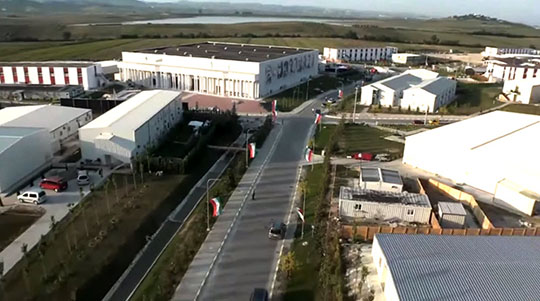
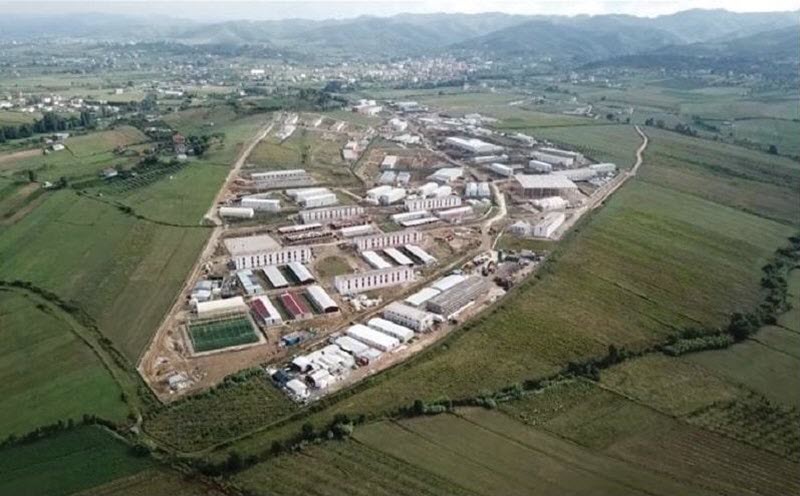
A small country in the Balkans, Albania was in no position to refuse the United States. Beginning 2013 MEK militants began the long journey to Albania where they still remain. There are now an estimated 3,000 MEK militants in Albania.
In 2013, the Obama Administration struck a deal with the government of Albania to offer asylum to about 250 members of Mujahedin-e-Khalq (MEK / MKO). Since 2013, the Obama Administration and the Albanian government have extended the agreement, consequently increasing the number of asylum seekers to somewhere in the range of 500-2,000 MEK members. During the summer of 2016, Tirana received the largest contingent of about 1,900 people- an operation managed by the UNHCR.
Although most local media portray the operation and Albania’s willingness to offer assistance to the dissident group as a humanitarian mission, little discussion has been made regarding the potential implications that MEK’s presence may have for Albania in the long run, and for religious balances that have already been thrown off by Wahabbi and Salafi presence among moderate Muslim communities in recent years.
From Baghdad to Tirana
With the overthrow of Saddam in 2003, the most prominent supporters of the Mujahedin-e Khalq, and the black result of this group in Iraq, which led to the deep hatred of the Iraqi people, the process of transferring members of this terrorist group from Camp Ashraf to Liberty Garrison and then to Albania began. Following the overthrow of Saddam in 2003, the most important supporter of the MEK, and with the dark past of this group in Iraq, which led to the deep hatred of the Iraqi people towards this group, the transfer of MEK members started from Camp Ashraf to Liberty Garrison and then to Albania.
The overthrow of Saddam and the disclosure of terrorist crimes of the group against the people of Iran and Iraq have led the organization to be on the list of terrorist groups in the United States and Europe. But the MEK’s cooperation with the Zionist regime, especially the spy on Iran’s nuclear issue and the advancement of US goals in Western Asia, as well as the use of this group to exert pressure on Iran and some internal goals, made them a US-backed group. In fact, Washington came to the conclusion that the revival and strengthening of this terrorist group can accomplish some of the US plans in the region. Thus, the process to remove the MEK from Foreign Terrorist Organizations list began from 2012, and consequently the arrangements for the transfer of them to another country were provided. Though initially, various plans -such as transferring them to Jordan and Azerbaijan-were proposed, but due to the reasons, that were addressed in the study, and with the aim of preserving the coherence of this group, eventually the country of Albania, a country in the Balkan Peninsula, Europe, was elected for the permanent accommodation of this terrorist group.
Why Is the MEK in Albania?
A small country of just 3 million people, 60% of which are Muslims, Albania never really had a choice as far as opening up its borders to the MEK / MKO went.
A candidate for accession to the European Union, Albania is also a NATO member and the only would-be European member of the Organization of Islamic Cooperation.
Generally speaking Albania greatly lacks political standing – both regionally and Albania as a suitable base for relocation. But if Albania’s weakness presented a valuable opportunity for the US to rehome the MEK / MKO, it also poses many dangers as far as political and social stability are concerned.
Plagued by high-unemployment, widespread poverty, corruption and criminality, Albania is also home to many Wahhabi radicals. To add to that dangerous mix yet another terror outfit can only end in disaster – both for Albania and the Balkans as a whole.
Sunni-based Islamist supporters and organizations have a history of operating in Albania and throughout the Western Balkans via funding that often streams from Gulf countries which have exported Wahhabi and Salafi Islamic values and traditions, ones that were previously foreign to Albania’s majority Muslim population which still follows the Hanafi-based teachings inherited by the Ottoman Empire.
According to a Pew Research Center analysis on Albania’s Muslim population, this religious composition is reflective of centuries of religious influences, including Sufi and Shia traditions, attested in practices and rituals to this day. It is mainly from this long history that six in ten Muslims do not distinguish their religious affiliation in a sectarian form, such as Shia or Sunni, rather simply identify as “just Muslim,” according to findings by Pew.
Despite these historical legacies that have strengthened relations between religious communities, the presence of Wahhabi and Salafi groups over the years has implanted a sectarian identity regarding which most Albanian Muslim practitioners were oblivious in the past. Since the outset of the conflict in Syria, about 150 Albanian citizens and over 500 ethnic Albanians from Kosovo and Macedonia have joined terrorist organizations in Syria and Iraq, alongside then-Jabhat Al-Nusra and later ISIS.
Even though the number of foreign fighters has drastically decreased since 2015, threats persist from non-violent agitations and divisive narratives that continue to dominate some religious landscapes, including negative portrayal of local Bektashi communities and sectarian rifts which are becoming more pronounced among popular religious leaders.
These developments may have serious repercussions for Albania and Albanian policy-makers who may not foresee the long-term consequences of being involved with the MEK / MKO, and in expanding their role on foreign policy issues beyond the small Balkan nation’s traditional reach.
The dangers of an MEK presence in Albania, will not be limited to the country and certainly such dangers will involve the Balkans and beyond, Europe.
It is folly to expect countries such as Albania to house dangerous terror militants without running the risk of precipitating the entire region into chaos – notwithstanding that such decisions fly in the face of international law.
Can we really justify the presence of the MEK / MKO in Europe … or anywhere else for that matter, and still claim to work towards peace and stability?
Since the disappearance of Massoud Rajavi in March 2003 MEK members have been under the authority of Maryam Rajavi. A fierce detractor of Iran’s Islamic Republic, Maryam Rajavi fancies herself the next leader of Iran strong of the financial support of Saudi Arabia and its allies.
Under Maryam Rajavi the MEK / MKO has stood the course set by Massoud Rajavi, crying democracy and peace while wielding guns against the innocent.
A brutal cult, the MEK / MKO exists in a world of its own – violent, sectarian, radical, dogmatic and profoundly intolerant towards its members. If not for the support of the US and the money of Al Saud, the world would long have learnt to see this group for what it is: a cult.
Although the group has been insistent its violent days are in the past, it will serve us well to remember just how brutal and bloodthirsty the MEK has been over the decades. With thousands of death to its name, hundreds of terror attacks and countless other acts of treason against Iran the MEK / MKO is the very definition of Terror.
Terror Spring,
US Intelligence Has ‘Muffed’ Proof on Iran’s Alleged WMD Programs for Decades
Gareth Porter ; the American historian, investigative journalist, author and policy analyst specializing in U.S. national security policy who was active as a Vietnam specialist and anti-war activist during the Vietnam War whose analysis and reporting including on Mujahedin-e Khalq issue has appeared in academic journals, news publications
told Radio Sputnik’s Loud & Clear that the US’ claim that Iran had a nuclear weapons program is based on false ideas bolstered by the US intelligence community and that China is unlikely to succumb to the US’ anti-Iran campaign.
“The problem in part is that the US intelligence community completely muffed it – they blew this even more thoroughly than they blew the questions of weapons of mass destruction in Iraq,” Porter told host John Kiriakou on Wednesday.
“It was based on a series of false ideas that the intelligence communities began with and some maneuvering by high-ranking CIA officials … who interfered with the process of the assessment of Iran’s nuclear program within the CIA,” Porter explained. “It culminated in the approval of this set of documents that came from the Mujahedin-e-Khalq [MEK] that was aligned with and did work with the Israelis” to allegedly prove that Iran had an active nuclear weapons program.
“They were fakes, they were fabricated documents,” Porter said,
referring to a laptop the MEK allegedly supplied Israeli intelligence with in 2005, claiming it belonged to an Iranian nuclear scientist. “And the Israelis were behind it. They were the ones who had the capability and the motivation to produce such fabrication and the CIA did not do their job appropriately and they gave it the go ahead. The reality is that those documents were the central evidence that was offered to the world and accepted by the International Atomic Energy Agency as sufficient evidence to put Iran in the dock.”
“So ever since 2005, the US and its allies have been getting the rest of the world to get along with the idea that Iran was trying to get nuclear weapons,” Porter explained.
“During the Iran-Iraq War, when Iran was subjected to eight years of chemical weapons attack by the Iraqi government which killed upwards of 100,000 Iranians, the Iranians had the capability to produce chemical weapons.
Porter noted that during the 1980-88 Iran-Iraq War, over 100,000 Iranians died – many of them at the hands of Iraqi poison gas attacks – and Tehran had the capability at that time to produce chemical weapons.
“They never did it. They never used a single chemical weapon during the war. Ayatollah Khomeini forbade that … the reason was it was illegal, illcit under Shia Islam,” Porter said about the Iranian revolutionary leader, also adding that there has never been “hard evidence” that Iran has produced nuclear weapons.
“I think that people need to understand that the truth is fundamentally different than the narrative that has been accepted by virtually everybody, by this political system, and in Europe as well,” Porter said.
Tehran is partially discontinuing its commitments under the Joint Comprehensive Plan of Action (JCPOA) agreement in a bid to salvage the multilateral nuclear deal, Iranian President Hassan Rouhani said on Wednesday, Sputnik reported. The president warned that beginning July 7, Iran’s uranium enrichment would exceed 3.67% purity, and earlier this week, it exceeded the 300 kg maximum allowable mass of enriched uranium stockpiles.
Despite the US’ “maximum pressure” campaign against Iran, “the fundamental reality” is that Trump doesn’t want a war with the Middle Eastern country, Porter told Sputnik.
“It is clear he had made a decision. I don’t think he was ever ready to really go to war with Iran. I think he had made up his mind that unless Americans were attacked by Iran directly, he was not going to war with them,” Porter said, noting “the Iranians clearly don’t want to have a war with the US.”
In addition, according to ship-tracking data obtained by Paris-based energy researcher Kpler SAS, at least five supertankers headed to China were loaded with Iranian liquified petroleum gas, suggesting that China isn’t going to abide by the US’ maximum pressure campaign. In recent days, the Chinese-owned ship “Sino Energy 1” was seen approaching Iranian waters before dropping off radar. It then reappeared days later, apparently full and leaving Iranian waters, the New York Times reported.
“I think it’s pretty clear that what this signals is that China is not going to go along with the maximum pressure campaign in any way such as the Trump administration is demanding … I think the bigger question at the moment is whether the Europeans are capable of playing any independent role in regards to this issue. They are poised in this moment to move in the direction of the US despite the fact that they know it’s wrong and the risks are very high. My guess is that they are not ready to openly defy the US on this issue because of the power that the US financial system continues to wield in the world economy,” Porter explained.
According to Porter, there are two likely possibilities regarding the Iran-US situation.
“The most likely two possiblies are that, a) the same cast of characters remains in place over the next few months and the Iranians inevitably take actions take actions that cause [US Secretary of State Mike Pompeo and National Security Adviser John Bolton] people to insist we [the US] have to take more decisive action militarily … and we have the beginning of an actual war; or b) Bolton is replaced as national security adviser by someone who is prepared to actually do something diplomatically to end this crisis,” Porter explained.
BEHROUZ MEHRI, sputniknews.com
Dr. Massoumeh Torfeh the Research Associate at the London School of Economics and Political Science and a former BBC journalist and UN spokesperson and director of communication in an article under the title of :”Trump has overplayed his hand with Iran”writes:
US President Donald Trump has taken several aggressive actions that Iran has all but absorbed. Now, he’s left with few options aside from a military strike, which he says he doesn’t want. So what now?
With three US warships operating in the Persian Gulf and a “maximum pressure” campaign in full force against the Iranian ruling elite, including 1000 sanctions, US President Donald Trump has given Iran reasonable justification for returning to its uncooperative pre-2015 position.
It was President Trump, who in May 2018, violated the landmark nuclear deal – by withdrawing from it — known as the Joint Comprehensive Plan of Action (JCPOA).
Iran’s President Hassan Rouhani warned the international community on Wednesday that Tehran would boost its uranium enrichment to “any amount that we want” after July 7.
Rouhani said Tehran would return to full compliance if all parties, including the United States, also complied. More steps are likely to follow.
President Trump has clearly overplayed his hand, leaving himself little room for exerting further pressure on Iran other than a military strike, which he has said he does not favour.
Rouhani, ridiculing Trump on Wednesday asked if there were any more sanctions or threats he’d like to impose or any more statements he wants to issue.
“Go ahead issue them now, why wait for later,” he said.
Torfe continues:
Iran’s foreign minister Javad Zarif claimed in a Tweet that Iran had acted entirely within the terms of JCPOA which specifies a party could “cease performing its commitments” in the event of “significant non-performance” by any of the other parties.
Trump, who has never offered a clear policy line on Iran — aside from his cabinet’s hawkish rhetoric of regime change — made a mistake ignoring Iran’s relative leniency in April when Zarif, spoke to Fox News tacitly asking the US president to drop his pressure campaign.
For months President Trump has been going on about talks but acting ever more aggressively and humiliating Iran with pressure and accusations, the latest being on the recent tanker attacks in the Persian Gulf. His American adversaries saw these as an excuse to attack Iran.
Take the nonsensical White House statement on July 2 blaming Iran for violating the terms of JCPOA “even before” it was agreed: “There is little doubt that even before the deal’s existence, Iran was violating its terms.”
It’s clear that Trump is trying to use the same strategy that brought him success as a real estate developer in the 90s.
“I will demand anything I can get,” said the younger Donald Trump in an interview with the Playboy Magazine describing how he used to win multi-billion dollar deals.
“When you’re doing business, you take people to the brink of breaking them without having them break, to the maximum point their heads can handle–without breaking them. That’s the sign of a good businessman,” he said.
He admits in that interview that the aim is to get a good deal and if he pushed too far that would’ve been a mistake. That seems to be the case with his handling of relations with Iran.
While sanctions are devastating the economy, Iran seems to have gradually adjusted to the pressure and found some accommodation with other JCPOA signatories over trade.
INSTEX is now available to all European Union member-states and will soon be open to economic operators in third countries. European signatories of the JCPOA have so far refrained from calling for the re-imposition of sanctions, which is now possible because of Iran’s non-compliance.
Meanwhile, the regime-change idea uttered by the US National Security Advisor John Bolton, and the lavish communications plans funded by the Secretary of State Mike Pompeo have all flopped.
Demonstrations inside Iran have died down, and a few small anti-Iran groups operating mainly from the US (or Albania) have fizzled out.
The former Shah’s son, Prince Reza Pahlavi who called for Iranians in the diaspora to unite around him and support regime change inside does not seem to have gained many supporters.
Bolton’s alleged favourite team, the former US-terrorist-listed organisation, MEK, has disappeared off the radar after its controversial gathering last June in Paris attended by Trump’s inner circle.
The event was broadcast live from an allegedly Saudi-funded Persian language television called Iran International and reported in full by the American funded Radio Farda.
Another group called “Fereshgard” mainly famous for its abusive language on social media has been vastly discredited.
While those groups never had a significant following inside Iran, the internal calls for reform have continued to pose the biggest concern for the Iranian regime.
Those calls were there before Trump came to power and will continue after his presidency too.
The damaging impact of President Trump’s miscalculation is that Iran now poses an even greater threat both at home and internationally. It may also opt out of the Non-Proliferation Treaty (NPT).
Iran will probably never hold talks with the US, and we can expect a protracted stalemate.
Perhaps the EU and the UN as the guarantors of the JCPOA must shoulder some of the responsibility for failing to either deter President Trump from his aggressive approach or acting sooner to find mediators for talks between Iran and the US.
Massoumeh Torfeh, TRT World
Propaganda War to Real War: The MEK’s Treacherous Operation
Under the guise of weapons of mass destruction (WMDs) and ties to al-Qaeda, the Bush administration invaded Iraq in 2003—and the consequences have reverberated across the Middle East to this day. With the specter of war again on the horizon, striking parallels have emerged between the lead-up to the Iraq War and the current discourse on Iran. The media has parroted the Trump administration’s claims regarding Iranian “threats,” and U.S. media outlets continue to provide a pulpit for fringe Iranian opposition groups like the Mujahedin-e Khalq (MEK), a formerly designated terrorist organization.
Just as the Bush administration hinged their hopes of Saddam Hussein’s fall on the exiles of the Iraqi National Congress (INC) who duped U.S. officials with the now infamous “Curveball,”
Trump and his regime-change cabinet are now touting the MEK as a viable alternative to the current government in Iran. Despite these parallels, the mainstream media continues to give a platform to radical groups like the MEK, which are weaving together a questionable story to build a case for regime change and war with Iran.
Also similar to the INC, which claimed that it did not seek power in Iraq, the MEK pretends to work for democracy in Iran in the name of the Iranian people. Though both organizations have used fabrications to push their agenda, the tools of disinformation have evolved over time and the MEK has mastered the art of false narratives.
Coordinated efforts by small interest groups to undermine critics of Trump’s Iran policy and stifle pro-peace and pro-diplomacy voices have become increasingly hostile. Revelations have come to light on the role of the MEK in magnifying efforts at misrepresentation through inauthentic social media accounts aimed at manufacturing “Iranian” support for the Trump administration’s pro-war policies. The MEK also utilizes promoted content on news sites. For instance, The Hill is running a 10-week mini-series on Iran sponsored by the Organization of Iranian-American Communities (OIAC), a front group for the MEK.
Even more unsettling is the MEK’s creation of fake personas that publish in major U.S. outlets as a way to promote the pro-regime change narrative, falsely inflate support for war, and secure legitimacy as real “analysts.” Outlets such as Forbes and The Hill continue to host the writings of a person that is not real, a character created by the MEK called Heshmat Alavi.
Evidence of MEK machinations are substantiated by online campaigns intended to influence the narrative on Iran in favor of regime change. Former MEK members have confirmed the operation of MEK troll farms based in Albania, where members create thousands of inauthentic accounts and promote hashtags, propaganda, and tweets targeting anyone that favors diplomacy with Iran. The group also uses front organizations, like the OIAC, to take out paid ads that advance its cause at the expense of U.S. security interests in the region.
Despite its propaganda mission, the MEK is loathed inside Iran and has no support as an opposition force. Support for the fringe group fares no better in the Iranian diaspora. According to a 2018 poll among Iranian-Americans, only 6 percent said that they supported the MEK as a legitimate alternative to the current regime in Iran. The history of this enmity can be traced back to the Iran-Iraq War, when the MEK fought alongside Saddam Hussein.
The United States first placed the MEK on the Foreign Terrorist Organization list when the list was established in the 1990s based on their role in the murders of Iranians as well as Americans in bombings at U.S. companies in Iran in the 1970s. Since the Iranian Revolution of 1979, the MEK has continued to carry out assassinations and terror attacks inside Iran.
The group’s ideological premise is a subversion of Islam. In his seminal study of the history of the MEK, Ervand Abrahamian argues that it “developed an all-consuming hatred for the clerical regime and, at the same time, the burning conviction that its own radical version of Shiism was the one and only true interpretation of Islam.”
Although the MEK outwardly espouses human rights as a guiding principle, it is itself a cult-like group with a history of abuse and torture against its own members. According to a report by RAND, the group’s disturbing human rights cruelties against its members include physical abuse, seizure of assets, imprisonment, mandatory divorce, emotional isolation, and forced labor—to name but a few. Former MEK members who have escaped the group also report sexual abuse and forced marriages during their captivity. One of their more nefarious practices of authoritarian control over members is removing children from their parents.
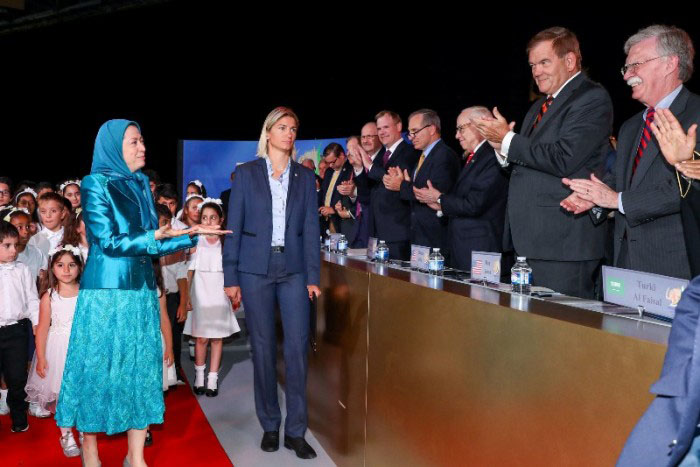
The group’s removal from the terror list in 2012 was a result of a well-funded PR campaign led by paid spokespeople, including National Security Advisor John Bolton, who has received at least $40,000 in “speaking fees” from the group. Other members of the Trump team, such as his attorney Rudy Giuliani, have also received money from the MEK to lend their endorsement and speak at rallies calling for the overthrow of the Iranian government. The MEK has never revealed the source of its funding, although evidence suggests that Saudi Arabia may play an integral role in propping up the organization to manipulate U.S. policy and sow discord in Iran.
Ultimately, despite the parallels between the run-up to the Iraq War and today’s escalating tensions with Iran, the MEK and other radical faux-opposition forces with no legitimacy in Iran continue to be given platforms to propagate distorted Iran narratives. Despite the failures of the Iraq War, the experience seems to have done little to impel the mainstream media to produce more accurate, nuanced reporting.
by Assal Rad,
Assal Rad is a research fellow at the National Iranian American Council. She received her PhD in History at the University of California, Irvine
Washington’s Infatuation with the MEK
Inarguably, Washington has a long history of supporting terrorists. As General William Odom, President Reagan’s former National Security Agency (NSA) Director wrote in his 2007 article “American Hegemony, How to Use It, How to Lose It”:
“[T]errorism is not an enemy. It is a tactic. Because the United States itself has a long record of supporting terrorists and using terrorist tactics…”.
Despite this long-standing use of tactic, there is no record of terrorists operating but a stone’s throw away from the White House. Nor has there been such brazen embrace of a terrorist group dubbed an undemocratic cult – until now.
The 1997 Patterns of Global Terrorism report issued by the State Department stated the following about the Mujahedin-e Khalq Organization (MEK or MKO, NCRI and various other acronyms):
“During the 1970s, the MEK staged terrorist attacks inside Iran to destabilize and embarrass the Shah’s regime; the group killed several US military personnel and civilians working on defense projects in Tehran. The group also supported the takeover in 1979 of the US Embassy in Tehran. In April 1992 the MEK carried out attacks on Iranian embassies in 13 different countries, demonstrating the group’s ability to mount large-scale operations overseas.”
Listed as a Foreign Terrorist Organization (FTO) in 1997, the offices of the group’s spokesperson, Alireza Jafarzadeh was located at 1717 Pennsylvania Avenue.
Even after the attacks of September 11 and America’s declared “war on terror”, the spokesperson and representative of the terror group was just down the street from the White House. Later, the organization would move its offices to 1747 Pennsylvania Avenue, remaining close to the residence of the President of the United States of America located at 1600 Pennsylvania Avenue.
It is said that ‘familiarity breeds contempt’. This is certainly not true of Washington officials and their cozy ties with the MEK cult. It seems that they are inching ever closer and have the audacity to flaunt their ties. Washington’s actions are a long cry from Israel’s who in the 1990’s was secretly aiding the group. (The Israeli-MEK relations continue to be omitted from news headlines while the accusatory finger is pointed to Saudi Arabia for their financial support of the cult).
Connie Brock of The New Yorker writes:
“Israel had a relationship with the M.E.K at least since the late nineties, and had supplied a satellite signal for N.C.R.I. broadcasts from Paris into Iran.
An Israeli diplomat said:
“The M.E.K is useful,”but did not elaborate.”. According to the same report, the Israelis provided the MEK with unsubstantiated ‘intelligence’ on Iran’s nuclear program. Not surprising since the aforementioned 1997 Patterns of Global Terrorism report states, “The MEK directs a worldwide campaign against the Iranian Government that stresses propaganda and occasionally uses terrorist violence .”
The close relationship with Israel may help explain why it was that in spite of being listed as terrorists, the group managed to bribe prominent politicians; even as a provision of the defense authorization bill would grant the military the authority to detain and hold anyone indefinitely, or to assassinate any individual suspected of having ties to terrorists/al Qaeda. Yet, these terrorists were giving speaking fees to American politicians. (The group also has its tentacles around British politicians – see HERE).
What is even more mind-boggling is the fact that Israel was supporting a terrorist cult that had massacred the Kurds in Iraq in 1991, and only a few year later, the Israelis were training the Kurds in Iraq who has survived the massacre (obviously something that has been lost on the Kurds) while their killers, the MEK, were being chauffeured around by American soldiers a short distance away in Iraq – in America’s ‘war on terror’!
Meanwhile, back home, politicians were being bribed by the terrorists! Clearly, FATF (Financial Action Task Force) did not prevent money from being funneled to and from terrorists. Shamelessly, Washington is demanding that Iran become a member of FATF to stop terrorism financing!
Even while the terrorist group was doling out money to corrupt politicians so they could be removed from the FTO list, and Washington politicians accepted money from terrorists, the group continued with its terrorism and carried out cross-border raids inside Iran with the full knowledge and encouragement of the Bush administration (History Commons).
Concurrently, Washington was using other group members to promote propaganda against Iran with emphasis on ‘human rights’. The leader of the terrorist cult, Maryam Rajavi’s live satellite broadcast into Washington was cheered . This certainly gave new meaning to ‘human rights’ promotion by America – as well as its ‘war on terror’.
The hypocrisy reached across the aisle. Democrats and Republicans don’t agree on much, but both parties supported this terrorist cult – all the way to the top.
When Hillary Clinton was running for President in 2008, Congresswoman Sheila Jackson Lee (D -Texas), co-chair of Hillary’s presidential campaign, not only shared her friendship with America’s then presidential hopeful, but she also promoted America’s pet terrorists – the MEK. Congresswoman Jackson Lee went as far as calling Maryam Rajavi “Sister Maryam,[1]. (Would this make Hillary and Maryam ‘sisters’ too?).
Certainly, Hillary’s push to remove the MEK from the FTO was a very sisterly act.
It is important to bear in mind that the group was removed from the list of FTO after U.S. officials disclosed to NBC that the MEK terrorist group was financed, trained and armed by Israel’s secret service and responsible for the killing of Iran’s nuclear scientists; and at a time when the United States was negotiating the Joint Comprehensive Plan of Action (JCPOA), also known as the Iran Deal.
This year, as the Iranians mark the 38th anniversary of a horrendous attack by the MEK cult, the Trump administration is openly promoting the cult and flaunts Washington’s decades long, bipartisan infatuation with a notorious, anti-democratic cult. What makes the MEK stand out?
Israel’s support aside, they seem to be brought out in the open whenever Washington wants to play tis psychological games with Iran – its ‘stick’, the term [offensive] policy makers like to use. Washington knows full well that the group is hated in Iran. That not a single member of this group will be tolerated in Iran, and there is no future for the group. History also shows that Washington has experienced blow-back every time it has supported an unsavory group or when it has encouraged terror and terrorists. Terrorism, like pollution, does not recognize borders. Why the mad romancing of the MEK?
Perhaps Washington hopes that this cult will simply come to an end. As the Council on Foreign Relations has reported:
“Many analysts, including Rubin, have characterized the MEK as a cult, citing the group’s fealty to the Rajavis. Older women were reportedly required to divorce their husbands in the late 1980s, and younger girls cannot marry or have children.”.
Perhaps Washington’s thinking is that their numbers will dwindle and there will be no future generations of this cult to come back and haunt it. Now there is a wish both Washington and Tehran share!
But wishes don’t make policies. Washington needs to understand that its stick is a boomerang that will come back at it. Washington has become morally and fiscally bankrupt as a result of its wrong policies. Its high time to save itself from the quagmire of its own creation before sinking beyond redemption.
ahtribune.com
The Exceptionally American Historical Amnesia Behind Pompeo’s Claim of ‘40 Years of Unprovoked Iranian Aggression’
From a CIA coup and supporting the Shah’s brutality to enabling chemical attacks, shooting down a civilian airliner and training terrorists,‘aggression’ between the US and Iran is overwhelmingly one-sided
Someone attacked two oil tankers in the Gulf of Oman last week. The Trump administration wants the world to believe that Iran is the culprit. Yet there is no serious evidence that Tehran was behind the attacks on the Norwegian and Japanese ships. Not only is there no proof of Iranian involvement, such an attack by Iran makes no sense at all. Japan and Iran are friends. Just last month, Japanese Prime Minister Shinzo Abe — who was visiting Tehran during the tanker incident — affirmed this friendship in the presence of Donald Trump during the US president’s recent state visit to Japan. Most importantly of all, the crew and owner of the Japanese tanker attacked in the gulf vehemently reject the US claim that the vessel was damaged by a mine, asserting instead that a “flying object” struck the ship.
Still, Secretary of State Mike Pompeo blamed Iran for what he called a “blatant assault” on the tankers. Pompeo also said that the attacks “should be understood in the context of 40 years of unprovoked aggression” against the US and other “freedom-loving nations” by Iran. There is no such history. Iran hasn’t started a war since the mid-19th century, when it was still the Persian Empire. The true context which must be understood is one of a century of US and Western exploitation of Iranian people and resources, and decades of US threats and aggression against Iran that once reportedly included a plan to stage a false flag attack very similar to last week’s tanker incident.
Destroying Democracy
Many Americans suffer a collective historical amnesia that renders a true and complete understanding of the causes, conduct and consequences of their nation’s perpetual conflicts all but impossible. This explains why most Americans trace the origins of US-Iran enmity to the 1979 hostage crisis, when Islamists occupied the US Embassy in Tehran for 444 days and Iran was transformed from close ally to arch-enemy practically overnight. US leaders and media portrayed those young revolutionaries as wild-eyed Muslim fanatics consumed by irrational hatred of the United States. Their legitimate grievances, chief among these the repression and brutality of the US-backed regime they dethroned, were ignored.
Pompeo’s preposterous claim that the US wants to “restore democracy” to Iran begs the question of when Iranians ever enjoyed democracy in the first place. The closest they ever came was in the early 1950s, when the reformist prime minister Dr. Mohammad Mossadegh set out to end British and American exploitation of Iranian oil resources by nationalizing the assets of companies including the Anglo-Iranian Oil Company, which despite its equitable-looking hyphenation was really a British-owned near-monopoly known today as BP. Iran’s monarchy, led by Mohammad Reza Shah Pahlavi, had sold out his country to foreign capitalists to the extent that one State Department official wrote in 1942 that the US would “soon be in the position of actually running Iran.”
Emboldened, perhaps, by President Harry S. Truman’s hollow promise to “assist free people to work out their own destinies in their own way,” Iranians rallied behind Mossadegh as he fought to take what was rightfully Iran’s back from foreign predators. In addition to nationalization, he expelled foreign technicians from oil refineries and even broke off diplomatic relations with Britain. Mossadegh’s was the most popular and democratic government Iranians had ever known. Time magazine, in naming him its “Man of the Year” for 1951, called him “the Iranian George Washington.”
The British were nearly as infuriated by Mossadegh as they had been by the original George Washington, and London enlisted its former colony to hatch a plan to depose the Iranian leader. Truman demurred but his successor, Dwight D. Eisenhower, was game. Secretary of State John Foster Dulles and his brother, Central Intelligence Agency Director Allen Dulles, had both previously worked as lawyers at a firm that represented Anglo-Iranian Oil. In 1953 the CIA launched a coup, codenamed Operation Ajax, which fomented unrest through violence including false flag attacks on religious leaders that were then blamed on pro-Mossadegh communists. A very reluctant Shah was swiftly restored to his throne and Mossadegh was deposed and imprisoned. US corporations then seized control of 40 percent of Iran’s oil fields.
In order to help the Shah maintain an iron grip on Iranians, the CIA, along with Israel’s Mossad, created SAVAK, the notoriously brutal state security force whose tortures included amputations, electric chairs and anal rape with electric cattle prods. The CIA reportedly taught SAVAK how to torture men and women and filmed these sessions for instructional purposes. Meanwhile, five successive US presidents lavished the Shah with aid and arms. Jimmy Carter, the so-called “human rights president,” feted the dictator at a 1978 White House New Year’s Eve soirée, toasting his “brilliant leadership” as angry protests against his ill-fated regime’s tyranny raged outside.
“Unprovoked Aggression?”
Forty years ago, long-simmering animosity toward the United States inevitably boiled over, culminating in the now-familiar events of those 444 days in 1979-81. Instead of acknowledging its role in stoking the flames of revolt, the Carter and Ronald Reagan administrations partnered with an even worse dictator than the Shah, Saddam Hussein in neighboring Iraq, as it attempted to thwart Iran’s nascent Islamic Republic. In 1980 the US encouraged Hussein to invade Iran, providing crucial support— including the transfer of deadly chemical and biological materials Iraq weaponized and unleashed upon Iranians and Iraqi Kurds — in an eight-year war of attrition that claimed more than a million lives. Reagan officials knew for years that Iraq was attacking Iran with WMDs but kept up US support while publicly denying knowledge of Iraq’s heinous war crimes.
As the war died down, an accidental US attack on Iran further inflamed Iranians. On July 3, 1988, the USS Vincennes, which was in Iranian waters, shot down Iran Air Flight 655, killing all 290 passengers and crew aboard, including 66 children. An indignant Reagan blamed the “barbaric Iranians” for the wholesale aerial slaughter; Vice President George H.W. Bush, who was running for president, infamously spat, “I will never apologize for the United States of America. Ever. I don’t care what the facts are.”
Fast-forward to the second Bush presidency, when provocation toward Iran escalated to the brink of all-out war. In addition to senior US officials’ constant threats and even jokes about bombing “Axis of Evil” member Iran, the US secretly deployed Special Forces troops inside Iran on reconnaissance missions and to forge alliances with dissident groups.
Chief among these was the People’s Mujahedin of Iran (MEK), a State Department-designated terrorist group that had previously assassinated six US officials when it was fighting the Shah’s regime. Despite this, the US military secretly trained MEK fighters while the terror group paid leading US officials to lobby for its cause.
The Bush administration also pressured the World Bank into suspending emergency relief aid after the 2003 Bam earthquake, which killed more than 26,000 Iranians, and imposed harsh new economic sanctions on Iran which continue to cause great suffering for ordinary Iranians even as a well-connected elite grows fantastically wealthy. Bush-era war plans against Iran reportedly even included a false flag plot hatched in Vice President Dick Cheney’s office to send Navy SEALs in boats disguised as Iranian naval vessels to attack US warships in the Straits of Hormuz.
The menacing of Iran continued unabated through most of Barack Obama’s administration, when Israeli and/or US assassinations of Iranian nuclear scientists, cyber attacks and sabotage — actions that would surely be seen as acts of war if they were committed against the United States — occurred along with the usual threats of war. Meanwhile, the administration sold a record amount of weapons to Iran’s adversaries, further inflaming tensions in the world’s most volatile region. Obama ultimately chose cautions cooperation over confrontation with Iran. His wise decision led to the landmark 2015 Iran nuclear deal, a highly controversial move that faced strong bipartisan opposition from liberal lawmakers as well as from Republicans including neoconservative hawks like John Bolton, who has been itching to bomb Iran for decades — and who is now President Donald Trump’s national security advisor.
The Real Aggressor
US and Israeli intelligence agencies have long asserted that Iran is not trying to develop nuclear weapons, and even President Trump has admitted that Iran was complying with the terms of the nuclear deal. Trump nevertheless withdrew the US from the agreement, with predictably dangerous consequences as Iran’s leaders, like so many before them, realized that a deal with the United States all too often isn’t worth the paper it’s written on. The administration and its allies in Congress and the corporate mainstream media have ratcheted up their warmongering against Iran to a near-fever pitch, all based upon “evidence” every bit as suspect as the lies that led to the disastrous invasion and occupation of Iraq. It is unclear who attacked the Norwegian and Japanese oil tankers in the Gulf of Oman last week. What is clear is that a world wary of US lies and endless war isn’t buying the Trump administration’s story.
Actors including Israel, Saudi Arabia and some in the Trump administration seem hell-bent on waging a war against Iran that would ideally end in the overthrow of that country’s Islamist regime. Iran isn’t without its serious faults. However, these pale in comparison to those of the US, which has — and has used— nuclear weapons, staged or supported numerous coups, attacked half a dozen Middle Eastern countries already this century and nearly encircled Iran with military bases. Iran has no nuclear weapons, no bases within 10,000 kilometers of the United States and has never directly attacked the US or, of course, overthrown its government. Who is the real aggressor here?
By Brett Wilkins, Common Dreams
Crisis of Trust — Trump Tries to Lead on Iran, But Few Follow
The president cannot form an international coalition, weakening America’s position
Last week, two commercial tankers were attacked in the Gulf of Oman, near the Strait of Hormuz, a narrow waterway through which about 20% of the world’s oil passes. United States officials, including President Trump and Secretary of State Mike Pompeo, quickly blamed Iran. When pressed for evidence, the U.S. released a video of Iranians on a small boat removing what appears to be an unexploded limpet mine from one of the tankers.
Major U.S. allies, such as Germany and Japan, were skeptical and said so in public. Yutaka Katada, the Japanese owner of one of the tankers, said the ship was attacked by a flying object, not a mine. U.K. Foreign Minister Jeremy Hunt said his country is “almost certain” Iran was behind the attacks, but instead of condemning the Iranians or calling for freedom of the seas, he urged “all sides to de-escalate.” The European Union offered a similar message.
Europe and Japan probably suspect Iran too, even if they doubt Trump and Pompeo’s statements. Their publicly-expressed skepticism and calls for restraint from all sides sends a signal. They do not want to join Trump’s “maximum pressure” campaign, they do not want conflict, and if the situation escalates to war, America will be alone.
That’s Trump’s fault.
Reasonable Doubt
Donald Trump is not the only reason one might question an American accusation. An accidental explosion on the USS Maine, blamed on Spain, helped lead to the Spanish-American War. False claims about a North Vietnamese attack in the Gulf of Tonkin led to escalation in Vietnam. More recently, the United States justified invading Iraq with inaccurate accusations about nuclear and biological weapons.
But none of this prevented George W. Bush or Barack Obama from leading a global coalition to pressure Iran. Escalating sanctions, authorized by Security Counsel resolutions, had support from the U.K., E.U., Russia, China, Japan, India, and others. That effort culminated in the Joint Comprehensive Plan of Action (JCPOA), which traded sanctions relief for most of Iran’s enriched uranium — i.e. bomb fuel — and their capacity to create more, moving the country further away from a nuclear weapon.
In May 2018, Trump withdrew from the JCPOA, even though the International Atomic Energy Agency certified that Iran was upholding its end of the bargain — an assessment shared by U.S. and allied intelligence. The U.S. imposed sanctions, going against the wishes of every other party to the deal, including NATO allies U.K., France, and Germany.
As a result, everyone outside of the United States blames Trump for the current Iran situation (except for Saudi Arabia, the United Arab Emirates, and Israel, Iran’s regional rivals). But the president’s inability to build an international anti-Iran coalition stems from more than just disagreement over the JCPOA.
It’s About Trust
Freedom of the seas is an international right. Threats to it merit an international response. But the country that usually leads such an effort is the United States, and the U.S. is suffering a crisis of trust.
Few trust that the Trump administration will be honest with them, consider their interests, or move the situation in a productive direction, so they don’t want to line up behind America now. While the Iraq war plays a role, a lot is specific to this presidency.
In his first trip abroad, Trump gave a speech in Saudi Arabia, delighting his hosts by inaccurately blaming Iran for most terrorism. He publicly backed the Saudi-led diplomatic isolation of Qatar — now in its third year — even though Qatar hosts America’s largest Middle East airbase. He repeatedly lied about the murder of journalist Jamal Khashoggi to cover for Saudi Crown Prince Mohammed bin Salman (MBS). His son-in-law/adviser Jared Kushner took an unannounced trip to Riyadh in October 2017, reportedly giving MBS intelligence on influential Saudis the Crown Prince later arrested in a power grab.
This is different than previous presidents, and makes American allies less confident the United States will do the right thing when it comes to Saudi Arabia’s main rival.
In Syria, Trump oversaw the successful conclusion of the campaign to retake territory from ISIS, and then in December 2018 issued a surprise order to withdraw. Quickly leaving would abandon the Syrian Democratic Forces, America’s local partners, and risk increasing instability. Trump’s order prompted resignations from Secretary of Defense James Mattis and special envoy to the anti-ISIS coalition Brett McGurk, who were arguably the administration’s two most credible officials on Middle East issues. Later, the president partially reversed course, agreeing to leave half the force in Syria.
The officials currently at the forefront of Iran policy — Secretary Pompeo and National Security Advisor John Bolton — have advocated regime change for years. Bolton has openly backed the MEK, an Iranian dissident group, which the U.S. designated a foreign terrorist organization from 1997–2012. The MEK recently got caught running a fake Iranian activist persona online, who got articles published in Forbes, the Hill, the Daily Caller, the Federalist and other U.S. outlets.
On May 31, a suicide bomber attacked a U.S. convoy in Kabul, Afghanistan and the Taliban took responsibility. But two weeks later, Pompeo called it one “in a series of attacks instigated by the Islamic Republic of Iran and its surrogates against American and allied interests.” The Secretary has not presented any evidence, and almost no one shares his assessment.
This doesn’t mean Pompeo’s accusation that Iran was behind the tanker attacks is false. Iran is one of the few actors with access, and may have wanted to signal that it can disrupt shipping through the Strait of Hormuz. But that’s not the only possibility, and Pompeo’s boy-who-cried-Iran routine makes him a poor messenger.
The Uncertainty Isn’t Helping
Compounding the problem of the administration’s credibility, it’s not clear what the U.S. wants.
Is America after regime change, hoping the sanctions will collapse the government or spark a revolution? Is pressure supposed to antagonize Iran into an action that justifies a military response? Or is it designed to bring Iran to the negotiating table, ideally with new concessions?
And with the tanker attacks, is the U.S. aiming for freedom of the seas? In that case, a smart approach would involve coordinated international condemnation, a Security Counsel resolution, and perhaps an offer to provide military escorts for merchant vessels near the Strait of Hormuz. But if the U.S. aims to frighten Iran into concessions, or is looking for an excuse to bomb, there’s value in ratcheting up tensions.
Republican Senator Tom Cotton of the Armed Services Committee called for “a retaliatory military strike against the Islamic Republic of Iran.” New York Times columnist Bret Stephens said the U.S. should threaten to sink Iran’s navy. Both advocate regime change, but argue these threats would deter Iran from further attacks on shipping.
Where the Trump administration falls is less certain.
In May 2018, Pompeo issued twelve demands, including ending support for Hezbollah, withdrawing from Syria, and leaving Iraq alone. Essentially, the secretary told Iran to abandon its foreign policy interests — a degree of capitulation to which no country would agree, except after losing a major war. This week Pompeo said the U.S. doesn’t want war, but considering his pre-administration calls for regime change and his absolutist demands, he probably wouldn’t mind it.
Acting Secretary of Defense Pat Shanahan also said the U.S. doesn’t want war with Iran, but he just resigned over accusations that he punched his wife, leaving civilian military leadership in flux.
Mixed messages combined with poor credibility undermines strategies of deterrence and coercion. If the Iranians don’t know where the U.S. draws the line, and what will happen if they cross it, then they’re less likely to be deterred. If Iran doesn’t know what non-absolutist concessions the U.S. would accept, then it’s less likely to be open to negotiations.
What About the President?
Trump seems like he might want a deal. In July 2018, the president publicly floated the idea of meeting without preconditions. This month, Trump asked Shinzo Abe to convey an openness to negotiations when the Japanese prime minister traveled to Tehran.
After the tanker attacks, the president struck a different tone from his senior staffers. “So far, it’s been very minor,” Trump said in an interview with Time, downplaying the possibility of a military response, but “I would certainly go [to war] over nuclear weapons.” This sounds like something out of a gangster movie: how about I let the little thing slide and then you and I have a talk about the big thing?
And it suggests an under-appreciated possibility: Trump might be following the same strategy he used with North Korea. In that case, we’re currently in the “fire and fury” stage, with sanctions and threats. Trump might be trying to get to the Singapore summit stage, where he gets a photo op and something he can call a deal to tout back home.
Some theorize that Trump would like a war to distract from domestic problems or create a rally-around-the-flag effect to help his re-election. But I don’t think the president who ordered withdrawal from Syria, refrained from attacking Venezuela, and sings Kim Jong-un’s praises is eager for war. And he has little trouble creating distractions.
Wars are messy. Expensive. Trump is willing to use force against terrorists and insurgents in Afghanistan, Iraq, Syria, Yemen, and Somalia, who have little ability to respond. But with governments, which can resist and retaliate, he sticks to threats, hoping that bullying will work.
Military action could go wrong and hurt his electoral chances. A chunk of Trump’s base is isolationist and wouldn’t like it, much as they denounced limited missile strikes against Syria in April 2018.
But this situation is different from North Korea. Iran does not have nuclear weapons, and may worry that it has to establish deterrence by demonstrating the ability to impose costs, such as by disrupting global oil markets. North Korea is boxed in by China, Russia, South Korea, and Japan, while Iran is involved in Iraq, Syria, Yemen, Lebanon, and Gaza. And Iran has domestic politics.
It’s not a democracy, but it’s not built around one man like North Korea. Iran has factions competing for influence, and when Trump broke the JCPOA, the faction that’s open to negotiations lost ground to the one that said America can’t be trusted. Iran rejected Trump’s offer to meet, and the government has domestic political incentives to stand firm, even as sanctions create pressure to come to the table.
This week, Iran announced it will resume some uranium enrichment activities banned under the JCPOA. It’s not surprising, since the U.S. reneged on its commitments first, but it’s still a sign that Iran plans to escalate. However, whether they’re trying to generate leverage for negotiation, deter American action, or increase the chances of conflict isn’t clear.
The most worrisome part is not that Trump personally wants war. It’s that without unified global pressure Iran won’t back down, the sanctions will achieve little besides suffering, and Trump won’t get an agreement he can take credit for. And then people with the president’s ear — from Bolton and Pompeo to the Saudis and Israelis — will tell him he has no choice but to bomb because otherwise he’ll look weak.
Then what?
Nicholas Grossman, arcdigital.media