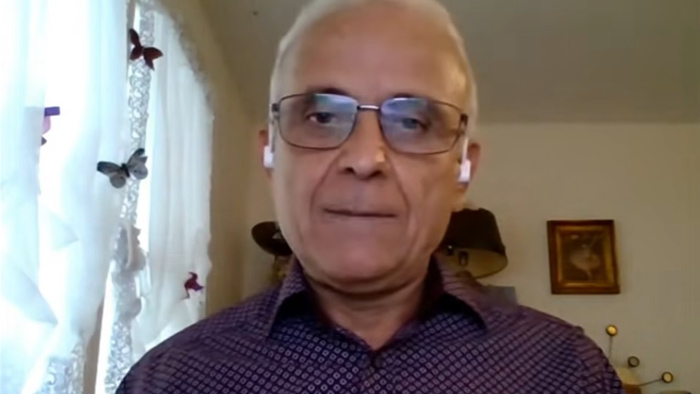
Mohammad Karami, former member of the MEK, speaks of how Maryam Rajavi became so versatile in the MEK. Mohammad Karami was interviewed by Akbar Karami, the owner and interviewer of a YouTube channel on which the conversation was published. In this interview, Akbar Karami questions Mohammad Karami about the internal structure and functioning of the MEK, the rise of Maryam Rajavi, decision-making, treatment of dissent, finances, and the organization’s ideological practices.
Based on Mohammad Karami’s account, the picture he presents is of an organization in which formal titles and committees exist, but ultimate authority is concentrated at the top around the Rajavi leadership.
Karami’s description is essentially of a highly centralized, hierarchical organization. His argument is that the MEK has layers of commanders, committees and responsible officials, but these do not function like independent centers of authority. Instead, decisions ultimately flow upward to the Rajavi leadership and then downward through the hierarchy.
This is particularly important because the MEK publicly presents itself as a movement committed to democratic principles. A 2012 U.S. State Department briefing, however, said that there was no evidence that the way the MEK governed itself demonstrated an interest in democratic principles, and cited documentation concerning its treatment of its own members.
Karami’s own history is relevant here: he says that after becoming an MEK member he eventually opposed aspects of the organization’s policies, was imprisoned inside the organization, and was threatened when he wanted to leave.
How did Maryam Rajavi become so powerful?
This is probably the most interesting part of the story. Karami’s account needs to be understood against the background of what the MEK itself called the “ideological revolution” beginning in 1985.
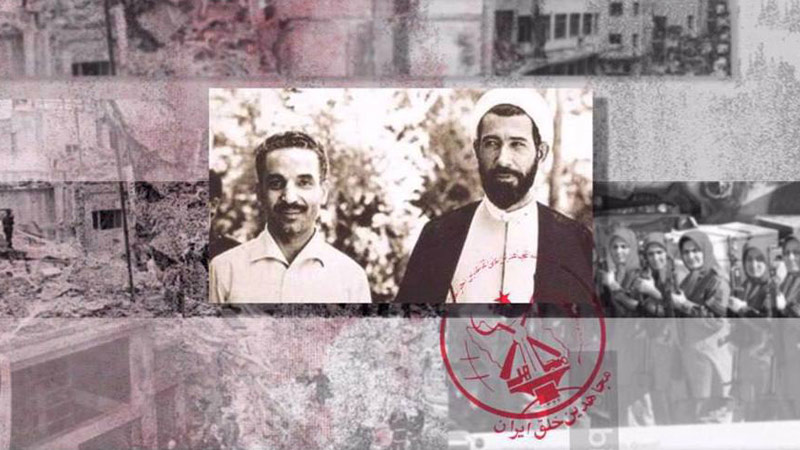
In January 1985, Massoud Rajavi appointed Maryam Qajar Azodanlu as his co-equal leader. Soon afterward, Maryam divorced Mehdi Abrishamchi and married Massoud Rajavi. The organization presented these events as the beginning of a profound ideological transformation.
According to Karami, this wasn’t simply a promotion for Maryam. It fundamentally changed the internal structure of authority. Massoud Rajavi already possessed supreme authority. Maryam was elevated to an unprecedented position alongside him. The marriage between Massoud and Maryam was presented as an ideological event rather than merely a private marriage. Members were expected to accept the new ideological interpretation.
The “ideological revolution” subsequently became a mechanism for restructuring the personal and organizational lives of members. Maryam’s authority increasingly became inseparable from loyalty to the Rajavi leadership itself.
Karami describes the process as transforming Maryam from a senior organizational figure into a central symbolic and ideological authority.
There is independent evidence that the transformation was indeed substantial. Contemporary descriptions of the 1985 “ideological revolution” say that the organization introduced compulsory divorces and restrictions on marriage, while RAND characterized the resulting leadership structure as involving “near-religious devotion” to the Rajavis and identified a number of characteristics associated with cultic organizations. However, the broad historical sequence Karami describes is well documented.
What happened to Massoud Rajavi’s authority?
It would be misleading to imagine that Maryam suddenly replaced Massoud and became an autonomous leader. For many years the organization was essentially built around Massoud and Maryam Rajavi together, with Massoud occupying the supreme ideological position.
After Massoud disappeared following the 2003 U.S. invasion of Iraq, Maryam increasingly became the public and organizational face of the movement. The circumstances and current status of Massoud have never been publicly established with certainty.
Maryam was gradually incorporated into the system of supreme Rajavi authority, and when Massoud disappeared, she became the surviving visible center of that system.
How are decisions made?
Karami’s description suggests a distinction between discussion inside the organization and genuine disagreement with the leadership.
Members could discuss how to implement a decision, and there were meetings in which people were expected to speak. But according to former members such as Karami, this did not mean that members could fundamentally challenge the leadership’s decisions.
The most important mechanism was the organization’s ideological meetings. These meetings required members to examine their own thoughts, motivations and behavior. The leadership could characterize disagreement not simply as a different political opinion but as evidence that the individual had an ideological or psychological problem.
The U.S. State Department also described the MEK as having “cult-like characteristics,” including ideological indoctrination and compulsory ideological sessions.
What happens when somebody disagrees?
This is where Karami’s account becomes especially serious. He says that disagreement could result in repeated ideological questioning, pressure to confess or “correct” one’s thinking, isolation from other members, demotion or reassignment, detention, physical mistreatment, threats concerning what would happen if the person attempted to leave.
Karami says he personally experienced imprisonment within the organization after opposing its policies. In one of his accounts, he says that in 1985 he was imprisoned because of his opposition to what he considered the organization’s sectarian policies, and that Massoud Rajavi subsequently threatened him several times over leaving.
There is significant independent corroboration that former members made similar allegations.
Human Rights Watch interviewed 12 former MEK members about conditions in the organization’s Iraqi camps between 1991 and 2003. They described detention, physical and psychological abuse, coerced confessions, and punishment after expressing a desire to leave. HRW subsequently re-interviewed the witnesses after criticisms of its report and said it remained satisfied with their credibility.
At the same time, it is important to say that the MEK disputes these allegations and has characterized much criticism from defectors as part of an Iranian government disinformation campaign.
To be Continued
Mazda Parsi