
Iran announced that its intelligence forces have identified and arrested all terrorist elements behind the assassination of the country’s nuclear scientists.
"All the elements involved in the assassinations of the country’s nuclear scientists have been identified and arrested," Iran’s Intelligence Ministry announced in a statement on Thursday.
A number of countries, whose territories and facilities had been misused by the Mossad-backed terrorist teams, have provided the Iranian officials with relevant information, the statement added.
Over the course of the investigations, all other elements behind the assassinations of the Iranian scientists Massoud Ali-Mohammadi, Majid Shahriari and Mostafa Ahmadi Roshan as well as Reza Qashqaei (Roshan’s driver) have been apprehended, the statement read.
Some of the perpetrators of the assassination of Dr. Fereydoun Abbasi, the current head of Iran’s Atomic Energy Organization, are among those arrested, the ministry added.
According to the Thursday statement, Iran’s Intelligence Ministry has detected some of Mossad’s bases within the territories of one of Iran’s Western neighbors, which provided training and logistic support to the terrorist networks.
Earlier this month, Iranian Intelligence Minister Heidar Moslehi had announced that the country’s security forces have arrested at least 20 terrorists behind the assassination of Iran’s nuclear scientists.
Moslehi stated that the arrests were made following the identification of two terrorist groups and through multiple sting operations across the country.
Iran has so far arrested several suspects in relation to the assassination of its scientists.
Western spy agencies, collaborated by the terrorist Mojahedin-e Khalq Organization (MKO), have assassinated several Iranian scientists in the last three years.
In the fifth attack of its kind in two years, terrorists killed a 32-year-old Iranian scientist, Mostafa Ahmadi Roshan, and his driver on January 11.
The blast took place on the second anniversary of the martyrdom of Iranian university professor and nuclear scientist, Massoud Ali Mohammadi, who was also assassinated in a terrorist bomb attack in Tehran in January 2010.
The assassination method used in the bombing was similar to the 2010 terrorist bomb attacks against the then university professor, Fereidoun Abbassi Davani – who is now the head of Iran’s Atomic Energy Organization – and his colleague Majid Shahriari. While Abbasi Davani survived the attack, Shahriari was martyred.
Another Iranian scientist, Dariush Rezaeinejad, was also assassinated through the same method on 23 July 2011.
 a relocation of its members from its main training base in Camp Ashraf to a transient settlement facility in Camp Liberty around Baghdad.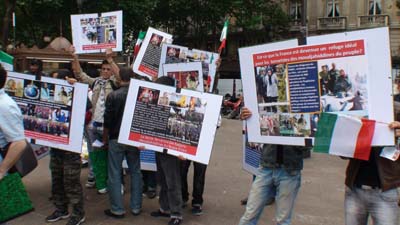




 them a threat to their national security.
  cooperate to complete the transfer of the remaining residents of Camp Ashraf to Freedom Camp / Liberty /.
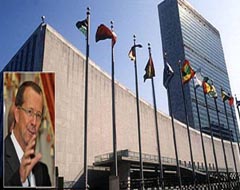
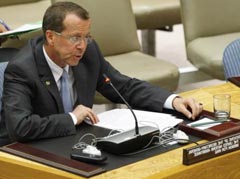 quoted Kobler as saying in a press release today: "almost six months passed since the signing of a memorandum of understanding between the United Nations mission to help Iraq and the Iraqi government to move the residents of Camp Ashraf to camp freedom peacefully, almost 2,000 residents transported in a peaceful and orderly to the camp of freedom and the remaining residents are 1200 residents only."
 Iraqi government considers the detainment of one of its officials to be an abuse of the French Judicial system. Pointing out that lawyers fees were paid to follow the case, al-Moussawi pointed to the absence of any evidence against the official.
  Massoud and Maryam Rajavi’s assets to claim compensation for the victims of the group, the mayor of Khalis in Iraq is pursuing a similar action in his province.