Nejat Society
  • Home
  • Articles
  • Media
    • Cartoons
    • NewsPics
    • Photo Gallery
    • Videos
  • Publications
    • Books
    • Nejat NewsLetter
    • Pars Brief
  • About Us
  • Contact us
  • Editions
    • عربي
    • فارسی
    • Shqip
Nejat Society
Nejat Society
  • Home
  • Articles
  • Media
    • Cartoons
    • NewsPics
    • Photo Gallery
    • Videos
  • Publications
    • Books
    • Nejat NewsLetter
    • Pars Brief
  • About Us
  • Contact us
  • Editions
    • عربي
    • فارسی
    • Shqip
© 2003 - 2024 NEJAT Society. nejatngo.org
Abdollah Ostovari
Mujahedin Khalq Organization members' families

Abdollah Ostovari’s family bring charge against the Albanian Gov.

Mr. Yadollah Ostovari sent a complaint on behalf of the Ostovari family to the UN Committee on Enforced Disappearances.

Honorable Committee on Enforced Disappearances of the United Nations
Office of the United Nations High Commissioner for Human Rights
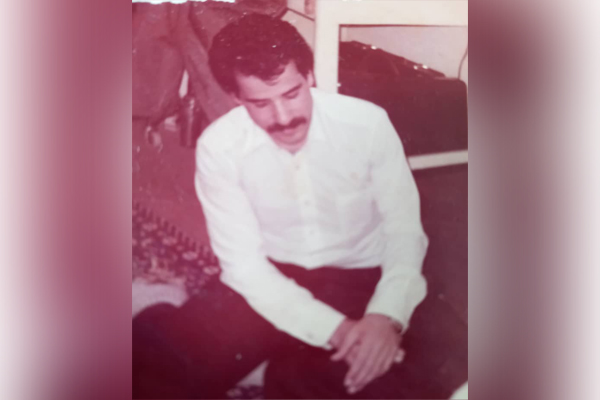
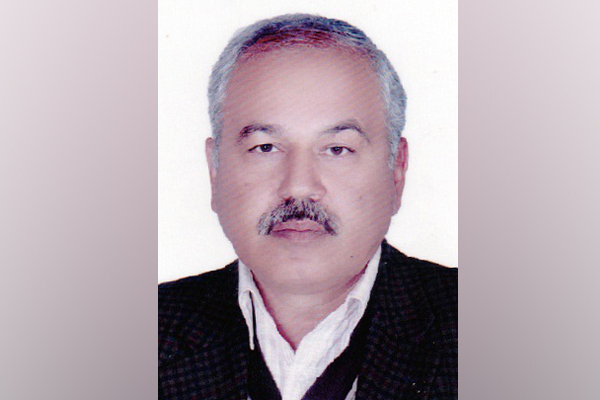
Abdollah Ostovari

Greetings,
Respectfully, I am Yadollah Ostovari, the son of Hossein Ali. I have five brothers and three sisters. My older brother Abdollah Ostovari traveled to Germany on April 4, 1980 to continue his education and remained in Germany until 1988. The family kept in touch with him by letter and telephone. However they lost contact.
After being unaware of him for 7 years, we learned that he had gone to Iraq and joined a group called the Mojahedin-e Khalq Organization (MEK), and is based in the organization’s headquarters in Iraq.

We had no further information until the fall of Saddam Hossein, and the family traveled to Iraq several times in the hope of meeting him at Camp Ashraf.

However, we were not allowed to meet or even make phone calls by the officials of the organization in Iraq.
After many incidents that happened to this group, we learned that the whole group was transferred from Iraq to the European country of Albania and settled in a remote camp in this country. So far, any attempt by the family to contact him in Albania by sending letters to the Albanian authorities has not been beneficial.

You are aware that the Albanian government, in cooperation with the MEK, does not issue visas to Iranian citizens, and therefore our efforts to travel to this country and follow the issue closely have been in vain.
Therefore, we ask that international body to investigate our complaint and take measures to oblige the Albanian government to its legal and international obligations and to allow us to go to that country in search of our missing loved one by issuing a visa. Or at least to provide us means of communication.

We urge you to learn about the latest situation of Abdollah Ostovari, who is supposed to be in the MEK camp in Albania, in order to put an end to many years of family worries and at least provide the possibility of a telephone call.

Yadollah Ostovari, brother of Abdullah Ostavari, on behalf of all family members
Iran – Qom
March 9, 2021 0 comments
FacebookTwitterPinterestWhatsappTelegramSkypeEmail
court hearing on MKO leaders crimes
Mujahedin Khalq Organization

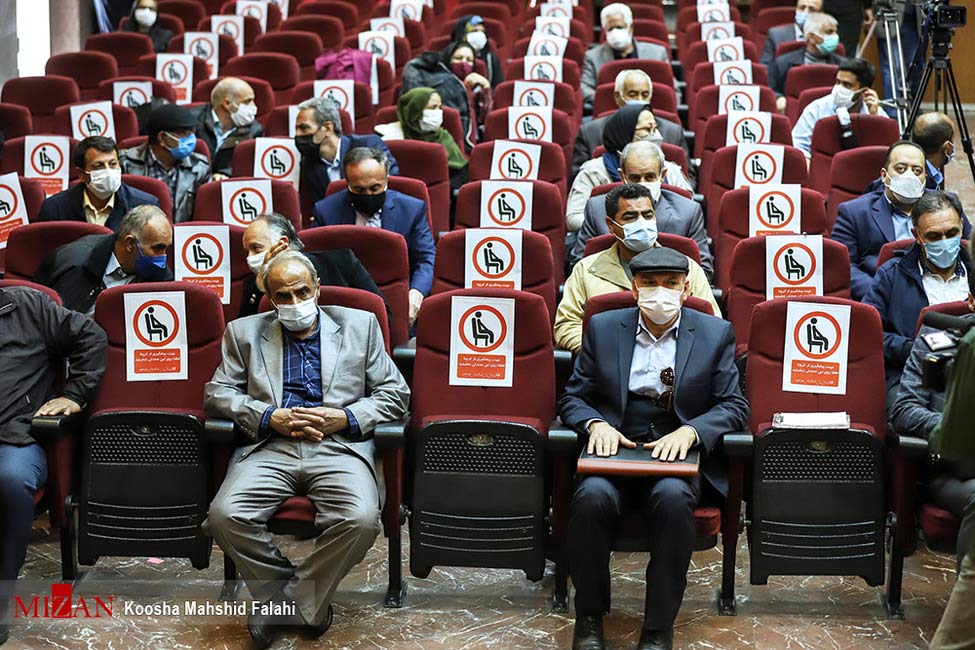
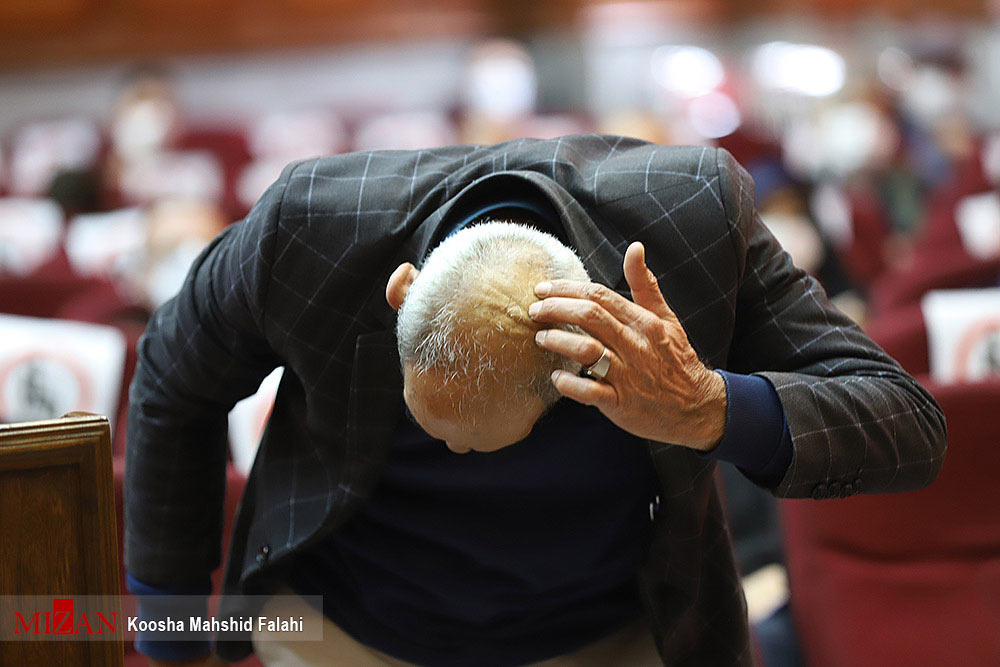
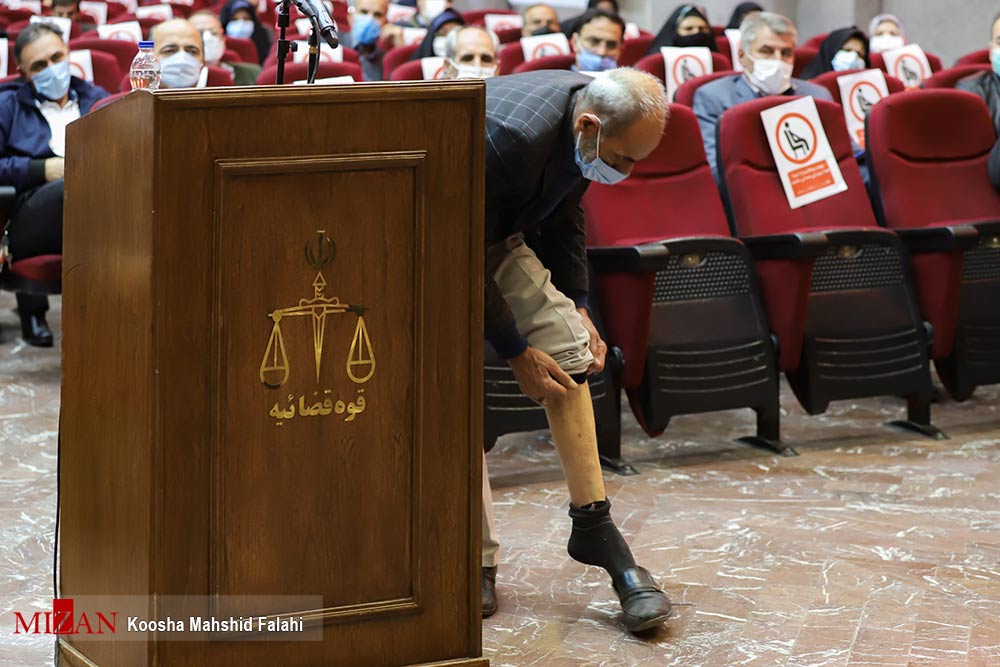
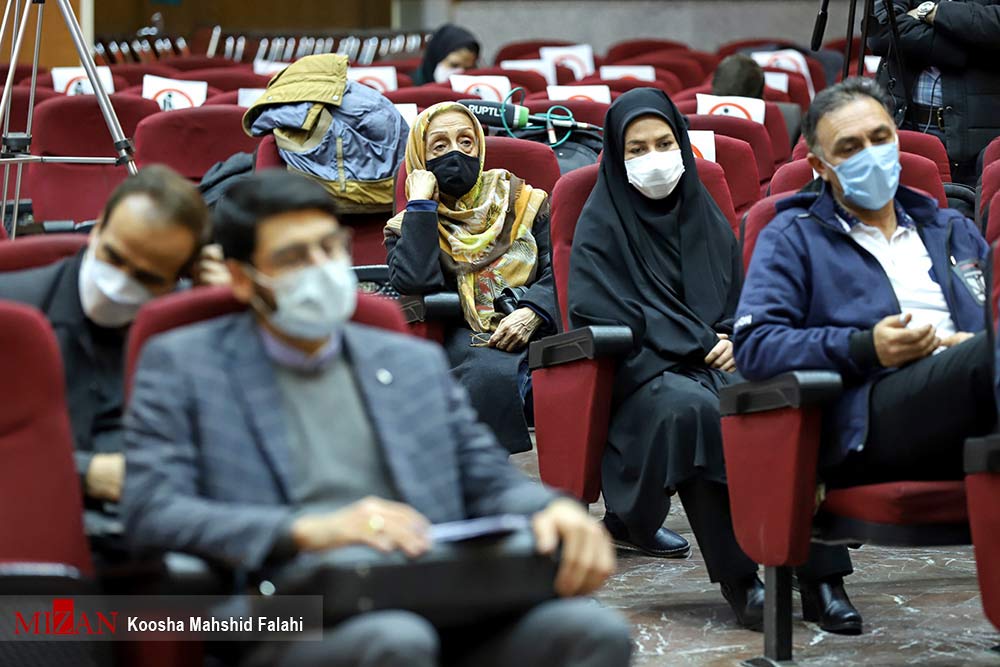
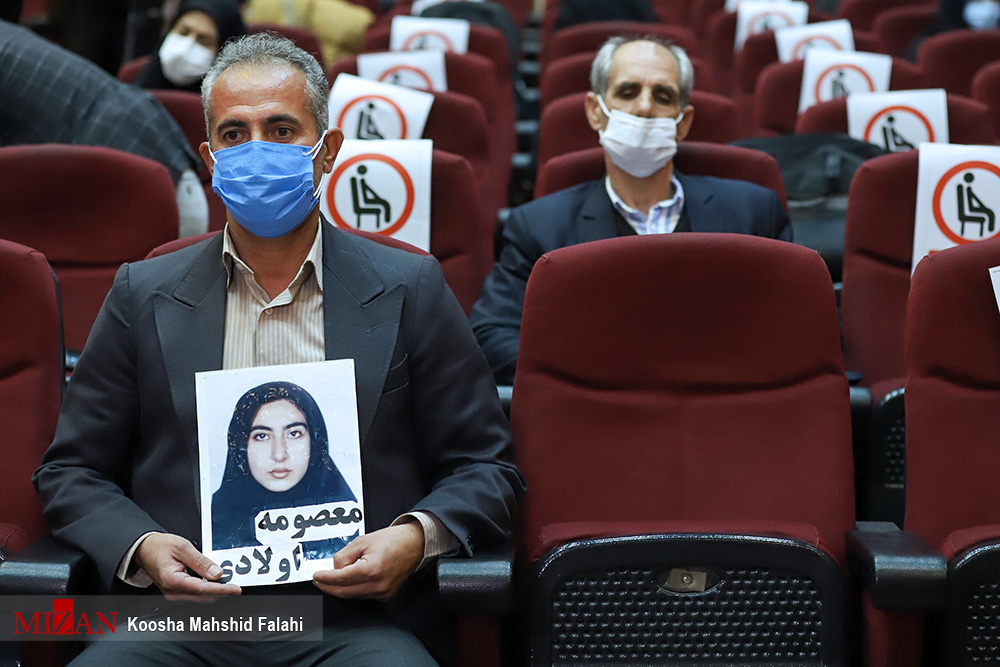
First Court Hearing on MEK crimes held in Tehran

The trial held on the petition of 42 ex-members of the Mujahedin-e Khalq terrorist group

court hearing on MKO leaders crimes

court hearing on MKO leaders crimes

court hearing on MKO leaders crimes

court hearing on MKO leaders crimes

March 8, 2021 0 comments
FacebookTwitterPinterestWhatsappTelegramSkypeEmail
MEK women
The cult of Rajavi

Ten Facts on Women’s Rights Abuse in the MEK

Let’s review Maryam Rajavi’s promises for Iranian women on the occasion of the International Women’s Day

Women’s rights are the fundamental human rights that were cherished by the United Nations for every human being on the planet about 70 years ago. These rights include the right to live free from violence, slavery, and discrimination; to be educated; to own property; to vote; and to earn a fair and equal wage. These basic rights have been constantly violated by the group leaders. Violence against women is one of the most systematic, widespread human rights violation in this group. This violation is embedded in unequal power dynamics between women and men that is reinforced by harmful social norms or inequality in the group.

Maryam Rajavi, the leader of the Mujahedin Khalq Organization (the MKO/ MEK/ PMOI/ the Cult of Rajavi) has always pretended to be an enthusiastic advocate of Women’s rights. She adds certain rights to the above-mentioned list which sound quite rational and ethical. Just to mention an example, in her message on March 8, 2019 on the occasion of the International Women’s Day, she persuades the Iranian women”to rebel against the culture of surrender”and”to cultivate solidarity, compassion, friendship and trust among our people”.

Then she tries to inform her imaginary audience about their rights.”Women are free to choose their place of residence, their occupation, and education,”she writes.”They have a right to freely choose their spouse, to freely travel, to exit the country, to divorce, and to have custody over their children.”

A very”controversial”right that she tries to explicate is what she calls”freedom of choice for selecting their attire”. She asserts,”The compulsory veiling law must be abolished”. This right is controversial not only because veiling is compulsory in Iran but also because it is compulsory in the MEK too. While women in Iran should cover their hair and body according to the law, they are at least free to choose for the color, the pattern and the design of their clothing. But, female members of the MEK are not even allowed to choose for the color of their head scarves.

MEK women

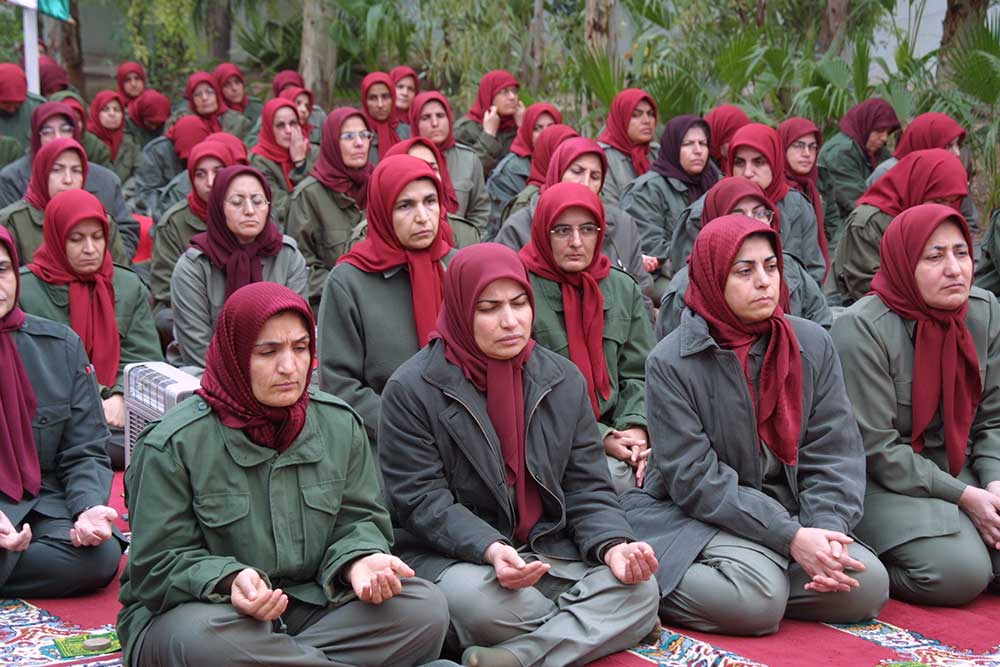
This is obviously shown in the pictures broadcasted by the group, itself. All female rank and file are wearing uniforms in both ceremonies and routine life of the group. The group has no exception for the rule of forced hijab. For example, Ann Singleton was a British Christian woman when she was recruited by the MEK. She was forced to wear hijab as an MEK member. She was not able to unveil only after her defection from the group.
In the same way, Mrs. Rajavi should be questioned on other rights she suggests for Iranian women. First of all, the freedom to choose their place of residence. Members of the MEK have always been kept in concentration camps whether in Iraq or Albania. Members are not allowed to commute out of the camps. Maryam Rajavi should explain how it is possible to choose a paramilitary camp as a residence for over 40 years without any access to the outside world including your family and friends.

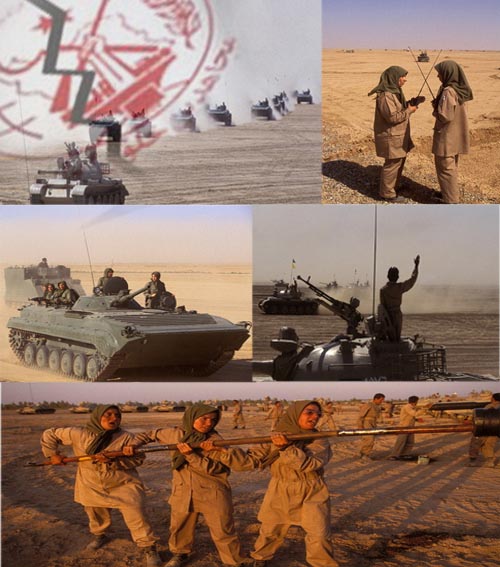
MEK women at Simorgh operation

She speaks of freedom of choosing occupation and education. There is no such thing in the MEK camp. You cannot find an actress, an artist, a fashion designer, a hair stylist etc. among almost a thousand women residing in Camp Ashraf. All duties are scheduled under the rule of the commanders and all occupations are defined according to the agenda of the organization.

The”freedom to choose spouse”is unheard of in Maryam Rajavi’s group. According to the group’s regulations, celibacy is mandatory. Nobody has married in the MEK since the so-called ideological revolution that was launched by the group’s disappeared leader Massoud Rajavi. The revolution required married members to divorce their spouses and single members to vow for long-life celibacy. However, Massoud Rajavi was the only person who later married a group of female members simultaneously.

MEK Women

That means that polygamy was pretty normal for the leader of the MEK while his third wife, Maryam Rajavi utters,”Polygamy must be banned and marriage below the legal age will not be permitted”!

She also speaks of the rights”to freely travel, to exit the country, to divorce, and to have custody over their children”. There are at least 400 children of the MEK members who have been separated from their parents, orphaned in different countries and not allowed to contact their mothers because they are not permitted to enter the camp and mothers are not permitted to travel out of the camp either.

Furthermore, about a hundred of female members of the MEK have undergone forced hysterectomy surgeries in order to elevate in the cult-like hierarchy of the group. This stage is called”the Ideal Peak”by the group leaders.
It is clear that the”culture of surrender”is actually the dominant culture in the world Maryam Rajavi and her husband have created in Camp Ashraf. In this bizarre world, it is not possible”to cultivate solidarity, compassion, friendship and trust”. Members are expected to monitor their comrades all the time; they are supposed to write reports against their comrades; they are even expected to insult and beat their peers during the self-criticism meetings which are held on a daily basis in the group.

As the most basic rights of human beings and specifically women are violated in the MEK regulations, one should forget about the right to vote or the right to own property and to earn money. As an MEK member, nobody is compensated for the long hours of forced labor and sleep deprivation.

Therefore Mrs. Rajavi must explain about at least ten issues in which the rights of her female followers are violated:

1. Female members of the MEK do not have freedom of choice for selecting their attire.

2. Female members of the MEK do not have the right to freely choose their spouse

3. Female members of the MEK do not have the right to freely travel and to exit the group’s camp.

4. Female members of the MEK do not have the right to have custody over their children and even to contact their children.

5. Certain female members of the MEK have been deprived from motherhood for their entire life by a surgery.

6. Female members of the MEK are not free to choose their place of residence, their occupation, and education. No MEK member receives academic education in the MEK camps.

7. Certain members of the MEK’s Elite Council were made Massoud Rajavi’s wives during a ceremony called”Salvation Dance”, an evidence for polygamy in the MEK.

8. Female members of the MEK are under mental and physical pressure in the cult-like regulations of the group.

9. The atmosphere of fear, threat and distrust leaves no room for solidarity, compassion and friendship among female members of the MEK.

10. Female members of the MEK are not paid for the hard work they do in the camp and so they do not own any personal property.

Regarding the magnitude shortcomings in the ruling of Maryam Rajavi over her group, does she still envision”a bright and shining future”for”Iran’s women and people”?

Mazda Parsi

March 8, 2021 0 comments
FacebookTwitterPinterestWhatsappTelegramSkypeEmail
Albania Police
Mujahedin Khalq Organization

EU security question MEK in Albania over disappearance in Paris

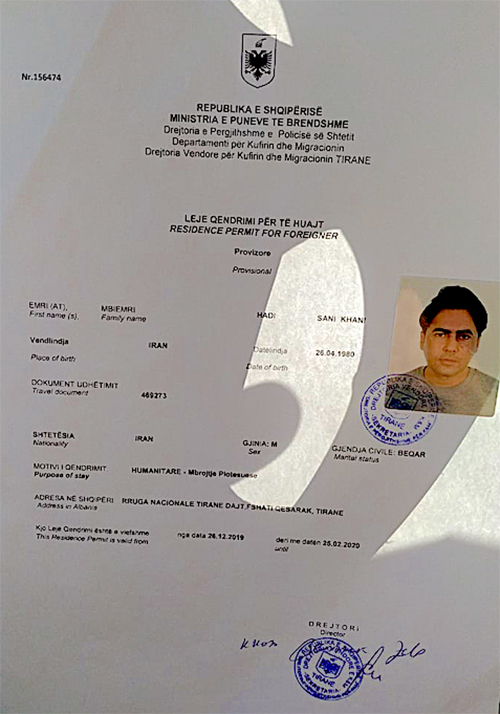
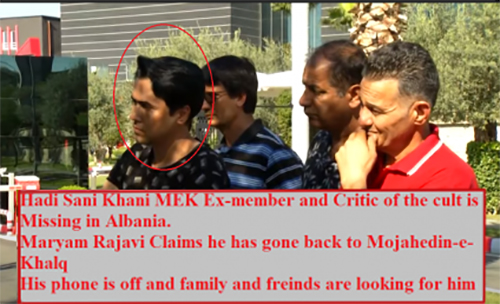
Since former MEK member Hadi Sani Khani went missing from Albania, his friends and family have been extremely concerned about his welfare. It appears that Khani had been persuaded by the MEK to sign letters and statements saying that all his previous criticisms of MEK were lies and that he and other former members had been Iranian spies, in exchange for being taken to Paris where he believed he would start a new life in Europe.

Hadi Sani Khani

The MEK published his ‘confessions’ on their websites. But after reaching Paris, Khani disappeared and nobody has heard or seen anything from him since. Now two major European security agencies are in Albania collecting information about the MEK and investigating the role of MEK leader Maryam Rajavi and her lieutenant Mehdi Abrishamchi who has been identified as one of the MEK’s main people traffickers. The security agencies have evidence that Khani was in contact with the MEK right up to the time he disappeared and have traced his phone to Paris where it was switched off. Rajavi has denied knowledge of his whereabouts.

Two major European security agencies are investing #Maryam_Rajavi, #FreeIran, @Abrichamtchi mafia for their human trafficking network in Europe. #MKO, #NCRI is being asked to show where is #HadiSaniKhani. They have found proof of #MEK contacts with Hadi SaniKhani. Is Hadi dead?

— Olsi Jazexhi (@OlsiJ) March 5, 2021

To download the video file click here

The MEK has a track record of eliminating its critics and unwanted members. MEK experts warn that Khani may have been killed. Another scenario is that the MEK could use Khani’s drug addiction as leverage to force him to take part in a false flag terror operation in Europe. As the MEK’s fortunes have waned in recent years – Rajavi was expelled from Europe in 2018 over security concerns – the MEK is desperate to regain some relevance in the west’s continued covert war against Iran. Khani could have been kidnapped to be used as part of another plot to discredit Iran in Europe.

Hadi Sanikhani

Whatever has happened to Khani, his friends and family are following the investigation with deepening concern.

The longer Khani has gone missing, the more worrying is his situation. And since the last information about Khani is that he was trafficked to Paris by the MEK, Maryam Rajavi must be called upon to account for his location, safety and wellbeing.

March 7, 2021 0 comments
FacebookTwitterPinterestWhatsappTelegramSkypeEmail
Nejat Newsletter
Nejat Publications

Nejat Newsletter No. 81

Inside This Issue:

MEK grows Khashoggis in Ashraf 3 or VIPs of Albania?
Mazda Parsi in Nejat Bloggers points out that MEK’s relocation to Albania brought the cult into the focus of Nejat NewsletterEuropean journalists. Those who tried to investigate were confronted with MEK violence and defamation. Still the MEK base was exposed as a click farm disseminating false and misleading information and trolling social media accounts with their own fake personalities. More than any other European or North American journalists, Albanians Jazexhi and Thanasi have come under vicious attack by the MEK. It is they who have exposed the MEK’s behaviour in their country and their government and security services’ complicity….

The MEK must explain about the whereabouts of Hadi Sanikhani.
The recently published letter on the MEK websites,allegedly signed by Hadi Sanikhani, has raised concerns over the fate of this former member of the group.The letter was published by the so called Security and Counterterrorism Committee of the National Council of Resistance which is the political vitrine of the Cult of Rajavi (aka Mujahedin Khalq, MEK, MKO, PMOI)….

MOTHERS ASK ALBANIAN PM TO ALLOW ACCESS TO THEIR CHILDREN IN MEK CAMP
… I have been informed that the Albanian government is one of the signatories of the “United Nations International Convention for the Protection of All Persons from Enforced Disappearance”.

Letter from the CEO of Nejat Society to the European Commissioner for Home Affairs
Ebrahim Khodabandeh ,CEO of Nejat Society, Iran, wrote a letter to the European Commissioner for Home Affairs, Ylva Johansson, calling on her to raise with the Albanian authorities the issue of abuse of the most basic human rights of members and former members of the Mojahedin-e Khalq Organization (MEK, MKO) in Albania.

Family of “Hadi Sani Khani” seek help from international organizations
Father of Hadi Sani khani,who defected from the Mojahedin-e Khalq Organization (MEK, MKO) in Albania, sent a letter to the SecretaryGeneral of the United Nations and other international and European bodies, as well as Albanian government officials, expressing growing concern over his son’s enforced disappearance in Albania. He and his wife requested that this issue be dealt with….

MEK AGENTS OF MOIS ? HOW DID THIS HAPPEN?
In the language of espionage, agent is a person who is unofficially employed by an intelligence service, often as a source of information. However, in the language of the Mujahedin Khalq Organization (the MKO/ MEK/ PMOI/ Cult of Rajavi), agent is a person who defects the group, criticizes the group and gives testimony against it….

Did Mehdi Abrishamtchi and Maryam Rajavi smuggle Hadi Sani Khani to France for false flag operation?
Dr. Olsi Jazexhi and Gjergji Thanasi comment the latest scandal of the Mujahedin-e Khalq ex-Terrorist Organization, MEK, MKO, Rajavi Cult in Albania. In the past weeks the Mojahedens are believed to have trafficked into France an Iranian ex-terrorist foreign fighter, Hadi Sani Khani…
To view the pdf file click here

March 6, 2021 0 comments
FacebookTwitterPinterestWhatsappTelegramSkypeEmail
MEK- Mujahedin khalq Organization
Mujahedin Khalq Organization

Mujahedin Khalq Organization at a glance

The MEK was founded in 1965 by a group of students from Tehran University who opposed the Shah’s regime. Pahlevi’s policy of alignment with the US and westernization of the country displeased a part of the society, which saw in it a loss of its own values and traditions. It is a heterogeneous group where Marxists and Islamists are mixed, who share the idea of direct action and armed struggle as a strategy of opposition to the Pahlevi regime, according to the website MEK, they are, in the mid 60’s the main group of opponents to the Shah’s regime in Iran. They call themselves the People’s Holy Warriors of Iran or MEK (Mujahedin and Khalq).

The intellectual middle classes and the working classes, are those that nurtured militants to the MEK during the first steps of the organisation, Masud Rajavi joins in 67 in Tehran, stand out as one of the ideologists of the group. After 6 years in which political ideas are shaped and a political ideology based on a mixture of Islam and Marxism is formed, the MKO is ready to carry out its first activity.

MEK Women

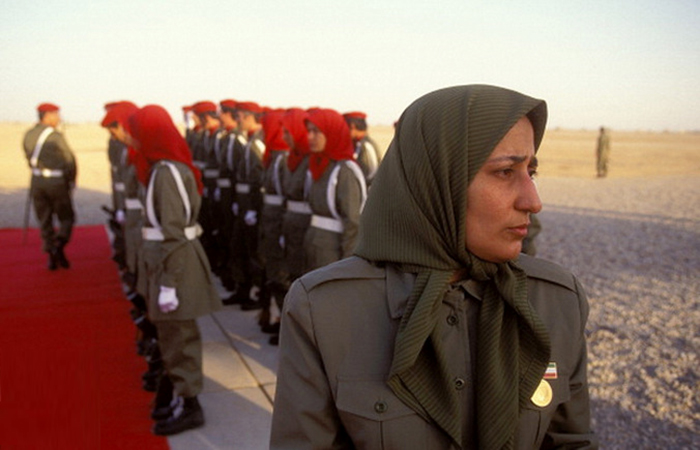
Women fighters armed with AK-47s in the National Liberation Army of Iran stand at attention during a flag ceremony at Camp Ashraf,Wednesday Jan 29 1997, 110 kilometeres northeast of the Iraqi capital Baghdad. The fighters are dedicated to overthrowing the Islamic regime in Iran and installing a multi-party democracy. (AP PHoto/ Jassim Mohammmed)

In the early 1970s they plan their first operation, the attack on Tehran’s electricity grid. However the operation fails, the SAVAK (Sazeman e Ettelaat va Amniyat e Keshvar), the Shah’s fearsome secret police, infiltrated into the MEK’s ranks, disrupts the operation. As a result several MKO activists are arrested and three of their leaders, Mohamed Hanifnejad, Saeid Mohsen and Ali Asghar Badizadegan are executed. An international campaign led by Kazem Rajavi, exiled in Switzerland, in which, according to the MKO website, Francoise Mitterrand, among others, participates, leads to Masud Rajavi, also sentenced to death, having his sentence commuted to life imprisonment.

The SAVAK was the intelligence agency of the Shah’s government, specialized in counter-intelligence and counter-insurgency work. It was formed in the late 1950s under the supervision of the CIA and placed under the direct command of the Prime Minister, personally supervised by the Shah. During the early 1960s it infiltrated all areas of Iranian civil society, workplaces, political, social and religious organisations and universities. He carried out censorship in the media, supervised applications for jobs in the state, while monitoring universities for dissidents. One of its main targets is the Tudeh Party, Iran’s communist party, a political organisation that gained considerable strength at the state level during Mossadeq’s rule but was reduced to a residual political force throughout the country in the early 1970s. The SAVAK in the mid-1970s has almost 15,000 members and an undetermined number of informants throughout the country. However, in the face of growing social unrest against the Shah, they are forced to collaborate with the police in a new organisation, the Anti-Sabotage Committee, to coordinate the fight against political dissent.

They are again turning their attention to relevant sectors of society, infiltrating student associations and labour organisations, both trade unions and employers’ organisations, and political parties and organisations considered to be on the left, including the MEK, although they also operate against conservative parties opposed to the Pahlevi regime. At present, the SAVAK has the capacity to control Iranian students studying outside the country, arresting those who are involved in political activities, including in third countries.

It is the CIA that provides capabilities to the SAVAK for the development of this type of operation. During the years before the revolution the SAVAK dismantled most political parties and organisations, did not hesitate to imprison, torture and execute political dissidents or any citizen involved in political actions or dissidents with the Shah’s regime. The SAVAK retaliates not only against those suspected of activities, described as subversive, their families and friends are also in the sights of the fearsome secret police. Confiscations of property, withdrawal of passports, loss of jobs are some of the consequences for families of the political activity of some of their members. They operate outside the law, under the direct control of the Shah, control the streets by operating with small groups and paramilitary organisations, have their own prisons and their own powers to detain or prosecute suspects. The last prime minister of the Pahlevi government, Sapor Bajtiar, faced with the drift of the protests against the Shah, tries to limit the power of the SAVAK by purging the organisation of officers who are followers of General Nematollah Nasirí, the former prime minister, but it is too late. With the march of the Pahlevi into exile in January 1979, Bajtiar dissolved the organisation and arrested its former leaders. In September of that year, the organisation disappeared for good under the direct supervision of Ayatollah Khomeini.

In spite of the difficulties and the danger that the political activity in Iran during the 70’s supposes, the actions of the MEK follow one another, achieving a certain relevance with attacks to American companies, Pepsi-Cola, General Motors or the air company PAN-AM, and American interests in Iran, attacks where civil and military personnel of the USA stationed in the country die. Little by little, throughout the decade, all the leaders of the MEK are imprisoned or victims of the violence of the SAVAK. In 1975, while Rajavi rots in the Shah’s jails, the Mek undergoes its first political split, by the Maoist wing of the organization. With the majority of its main leaders dead or in prison, one of the groups that make up the Mek, expresses in a manifesto its abandonment of Islam and declares Marxism the only engine of the revolution. The Islamic organisations opposed to the Pahlevi dictatorship were quick to declare the entire organisation Marxist, causing the MKO to lose much support among the popular classes, who were heavily influenced by religious rhetoric. In January 1979, Rajavi was released from prison, free and recognized as the only leader of the organization. The differences with the Islamic opposition organizations become more acute when they accuse Rajavi of collaborating with the SAVAK in exchange for his freedom. Despite these accusations he leads the Mek in the protests against the increasingly weak government of the Shah, causing a chain reaction throughout the country against the absolutism of the Pahlevi.

Finally, the protests lead to the overthrow and exile of Mohammed Reza Pahlevi, putting an end to his regime and giving way to the Islamic Revolution led by Ayatollah Khomeini. The differences with the Islamic organizations quickly surfaced, because although they coincided at first with the revolution and the processes that led to it, including the participation of the MEK in the assault on the US embassy in Tehran and the subsequent hostage crisis, since Rajavi is opposed to the release of the hostages decreed by Khomeini.

The rise to power of the ayatollahs implied the suppression of political parties, causing a definitive break with the movement led by Khomeini, until it became one of its main detractors. After the revolution, Masud Rajavi ran in the 1980 elections, his candidacy being vetoed by the Islamic organizations, so that the MEK supported the president who emerged from the first democratic elections in the country since 1951, Abol Hassan Banisadr in opposition to the PRI, the Party of the Islamic Republic of [Ayatollah]Khomeini.

The PRI, founded in 1979 by the clergymen Mohamed Javad Bahonar, Mohammad Beheshti, Akbar Hashemí Rafsanjaní, the current supreme leader of Iran, [Ayatollah]Alí Khamenei and Abdolkarim Musaví-Ardabilí, all of them very close to the leader of the revolution, Ayatollah Khomeini. The PRI was the unifying element around which Khomeini’s followers gathered in the early years of the Revolution. The principles of the party were based on the Revolution as a way of coming to power and on Islam as a political ideology, in opposition to economic liberalism. One year before the end of the conflict with Iraq, with the Ayatollahs firmly in power, the party is dissolved.

After the invasion of Iran in September 1980, Baghdad begins to finance and provide arms and resources to the MEK and makes the organisation its main source of information on Iran. Months later, pressure from the PRI and the Islamists forced Banisadr to resign from his post as president, and in the first months of 1981, the Mek, the president’s main political support, went over to the opposition, declaring a return to armed struggle as a form of political activity and making the PRI its main target.

After Banisadr’s dismissal in July 1981, Masud Rajavi founded the NCRI (National Council of Resistance of Iran), as the political arm of the MKO, to bring together the opposition, including the KDPI (Kurdish Democratic Party of Iran), the Kurdish Democratic Party of Iran, the Union of Communists of Iran and the Workers’ Party. Days after the dismissal of President Banisadr, after an intense campaign by the Iranian government against the MEK, Banisadr and Rajavi leave Iran and go into exile in Paris. Part of the MKO militants go to Europe, a second group goes to Iraq, and finally a third group of MKO militants remains in Iran, going underground to continue the armed struggle. In the NCRI an autocratic style of leadership is quickly revealed, so that the KDPI splits from the organisation.

Rajaei Bahonar

on August 30, 1981, a bomb attack by an MEK commando killed Iran’s new president, Mohammed Ali Rajai, and the new prime minister, Mohamed Javad Bahonar

During the summer of 1981 the MEK intensifies the attacks on high government officials, fails in its attempt to assassinate [Ayatollah]Ali Khamenei with a bomb, but on June 28, 1981 the MEK achieves one of its greatest successes, by attacking the headquarters of the PRI, killing 75 people, most of them workers. One of the dead in the attack is Ayatollah Mohammed Beheshti, number two in the Islamic Revolution after [Ayatollah]Khomeini. Two days later, on August 30, 1981, a bomb attack by an MEK commando killed Iran’s new president, Mohammed Ali Rajai, and the new prime minister, Mohamed Javad Bahonar. Rajai had taken office 15 days before the attack. That summer the MKO kills more than a hundred people.

Rajavi and Saddam

In October 1981, Rajavi meets Tarek Aziz, Iraqi foreign minister, in Paris, and, granting himself the representation of all the opposition forces in exile, he theatricalizes a peace signature between Iran and Iraq, according to Rajavi, in the name of the Iranian people. The definitive alignment of the MEK with Iraq takes place in 1983, Abol Hassan Banisadr, separates from the NCRI and with him a great number of militants tired of Rajavi’s authoritarianism and the refusal to support Sadam Hussein’s aggressor government.

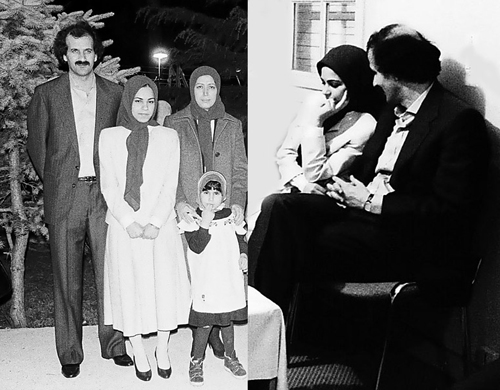
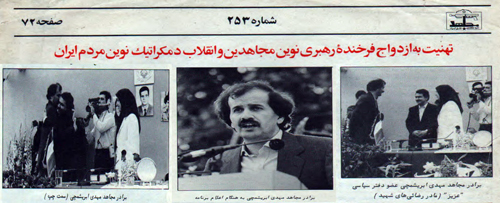
Massoud and Maryam Rajavi on their wedding day

In 1985 Masud Rajavi divorces and marries Maryam Rajavi, formerly married to an MEK militant, whom he forces to divorce, according to various sources. From this moment on, both share the leadership of the organization. In 1987 the Mek was expelled from France, the terrorist actions attributed to the organisation attacked an Iranian diplomat in Madrid in the summer of that year, and the Mek’s alignment with Iraq in the conflict with Iran led to the Mek being used as a bargaining chip in the kidnapping of French citizens in Lebanon. In exchange for their release, France expelled the Mek from its territory.

The whole organisation is moved to Iraq, Saddam Hussein provides the necessary infrastructure for Rajavi and 1000 of his militants to settle in the country, military equipment, training and logistics. In exchange the MEK would be integrated as a combat force in the Iraqi army. Throughout that year, around 7000 people join the MKO in Iraq, most of them MKO militants, although some also join the opposition to the ayatollahs’ government. According to the NCRI, they remain independent of Baghdad, representing the interests of the people of Iran as the only valid interlocutors with the Iraqi government.

During the war, the MKO specialised in intelligence work and operations on both sides of the Iraqi-Iranian border, directly confronting the CGRI (Guardian Corps of the Islamic Revolution).

In Iraq Rajavi creates the ENL (National Liberation Army) as the armed arm of the MEK, it is also the moment when the organisation settles in Ashraf. It is the moment of greater collaboration with the Iraqi army, leading the attacks to localities in the border and participating in actions in which the Iraqis use massive gas attacks on Iran. On the other side of the border, the government’s efforts to break up the MKO result in arrests and executions of its militants. In early 1988, according to Human Rights Watch, nearly 2,000 of them were executed by members of the MKO, Kurdish and Tudeh militants captured on the front after Operation Mersad or Eternal Light, the last major offensive of the war, executed by the MKO with Iraqi support. In the same year, 5,000 MKO fighters took part in the battle of Kirkuk between the Kurdish rebels and the Iraqi army.

Kurds Massacre

MEK allied Saddam Hussein in Suppressing Iraqi Kurds

The end of the conflict led the MKO to increase its actions towards its ally in Baghdad, deploying troops and participating in Kurdish repression in Kirkuk and at the United Nations, where the NCRI was struggling to clean up the image of the organisation. The Rajavi were multiplying by giving press conferences as part of an intense propaganda effort. At the same time, they regularly carried out attacks in Iran, operating from Iraq.

In April 1992, the MKO began a chain of attacks against Iranian embassies and interests around the world, which meant that in 1997, the US and the EU included the MKO in the list of terrorist organisations. The NCRI blamed this on a goodwill gesture by the Clinton administration towards the reformist government of Mohammed Khatami.

The MKO’s terrorist actions did not stop after the organisation was placed on the list of terrorist organisations. Between 1998 and 2002, MKO activity multiplied, so much so that in 2002 all EU countries, Canada and Australia recognised the MKO and its political arm, the NCRI, as terrorist organisations.

In 2003, after the invasion of Iraq, the US reached a ceasefire agreement with the MKO, taking control of its main camp in Ashraf and five other smaller camps established throughout Iraq, Anzali, near the Iranian border, Bonyad in Baghdad, Alavi in Kut, Faezeh in Basra and Homayoun in Amara. The MKO accused the U.S. of attacking their camps, as a concession to the Tehran government, while in France, the government was operating against MKO interests throughout the country. At that time, the MKO was a large, fully operational fighting force, with 4,000 MKO members stationed at Ashraf, including about 600 vehicles, including tanks, armoured vehicles and transport, artillery and military equipment to arm about 10,000 fighters. It is at this point that Masud Rajavi disappears, his wife assuming responsibility for leading the organisation.

Between 2004 and 2005, an investigation by the USA was initiated to determine the involvement of the MEK in terrorist acts and war crimes that could constitute crimes against humanity, giving rise to a complaint by militants of the Patriotic Union of Kurdistan in 2005 for war crimes against Rajavi. With the fall of Saddam Hussein’s regime, the group lost its main source of funding and political support, and was forced to provide 2002 information to both the US and Israel on an Iranian nuclear programme, unbeknownst to the UN, detailing two facilities in Arak and Natanz for heavy water production and uranium enrichment. After obtaining this information, the United States recognized the right of the militants of the MEK in Iraq to the protection due to civilians in time of war. Until 2009, when the MKO camps came under the control of the Iraqi government, ELN members continued to train as military units preparing for combat, leading to clashes with the Iraqi armed forces between 2009 and 2013. In 2010, the Iraqi government evacuated Camp Ashraf, relocating MKO militants and their families near Baghdad’s international airport to a new camp called Hurriya or Camp Liberty, where the MKO says there are clashes and numerous crimes against its militants by the Iraqi army and allied Shi’a militias. Tehran is of course accused of instigating these attacks. In the same year, the Iraqi High Criminal Court requested Rajavi’s arrest on the basis of overwhelming evidence of the MKO’s involvement, among other operations, in the 1991 crackdown on Kurdish rebels. Again, despite the evidence, in September 2012, the US State Department removed the MKO from the list of terrorist organisations. According to the State Department, several factors were taken into account, including the MKO’s quick disposition towards a ceasefire in 2003, the resettlement and evacuation of its base in Ashraf, as well as an alleged renunciation of violence. Human Rights Watch attributes this to the organisation’s intensive lobbying of Western governments and political bodies. This decision was decisively influenced by the support of the group by prominent US politicians such as former governors Howard Dean and Edward Rendell or the former mayor of New York, Rudolph Giuliani, who from 2009 to 2012 actively participated in a campaign to remove the MKO from the list of terrorist organisations, influencing the US, the EU and the rest of the countries that had declared the MKO and the NCRI to be terrorist organisations.

blank

US-Delisted MEK Terrorists Still Openly Committed to Violence

In mid-2013, the MEK, under the umbrella of the NCRI, established a headquarters in the US, as a key pillar of the campaign to launder and clean up an organisation which, as we have seen, had not given up its weapons and for which there was more than enough evidence of its terrorist activities. In early 2017, Giuliani put pressure on President Donald Trump, urging him to recognize the NCRI as representatives of the Iranian exile and to open talks between this group and the US government. As part of the support that the Trump administration has given to the MEK, in 2017 one of the guests of honor at the NCRI congress was John Bolton, the other was Prince Turki bin Faisal Al Saud, former ambassador to London and Washington, who during his speech gave condolences to Maryam Rajavi, implying the death of Masud Rajavi. In June 2018, Giuliani was the star guest at the NCRI congress in France. He accused the Iranian government of being Marxist, terrorist and a sponsor of terrorism, recognized the NCRI as the resistance of the people of Iran, and insisted on the need for more belligerent policies against Tehran. Newt Gingrich, former Speaker of the U.S. House of Representatives and former presidential candidate, another active militant in the cause of the MKO, also spoke at this conference.

MEK terrorists in Albania

MEK was not embraced but imposed on Albania in 2016

Finally, in 2016 the MEK is relocated to Albania, in a camp near Tirana, after an agreement reached in 2013 between Barack Obama and Sali Berisha. According to the Balkan Post, the agreement included the construction of a de-radicalisation centre for MKO fighters from Iraq. According to this source, in reality the camp where the MKO militants have been resettled serves as a military training camp, where security is provided by the organisation and the Albanian government has no jurisdiction. The establishment of the MKO militants in Albania has created more than a few frictions between the Iranian and Albanian governments, the last disagreement following the death of Qasem Soleimani, when Iran called Albania a small and sinister country, an instrument in the hands of the USA, where the enemies of Iran hide, due to the presence of the MKO in its territory, where it has been settled since 2016. It has not gone beyond a mere exchange of declarations and accusations between Ilir Meta and Hassan Rohani, but it can be descriptive of the extent to which the MKO conditions Iran’s relations with third countries. According to Albanian media, the EU even looks at the presence of the MKO in Albania with suspicion.

During the first years of political action, the MKO shapes a political ideology dominated by two ideas, Islam and Marxism. Although God created the world, he also enlightened human beings so that through lessons as the powerhouse of history they would be able to shape the world. This political idea not only confronted the Mek with the Pahlevi regime, but also with Shiite orthodoxy, which considered the Mek’s erroneous interpretation of Islam as a mere excuse to justify terrorism.

With the founding of the NCRI, Rajavi gave the first signs of his authoritarian style of leadership, which, as we have already seen, led to the departure of several organisations from the NCRI.

The MEK went from being one of the most relevant organisations of the revolution that overthrew the Pahlevi, to becoming one of the most belligerent organisations with the government of Tehran. In 1985 Masud Rajavi initiated the ideological revolution of the MKO. Rajavi’s leadership cult was promoted and he came to control all aspects of the organisation, including the control of the militants, who were forbidden to leave the organisation, to control its assets and activities and to work for the organisation, adopting a structure at the organisational level more appropriate to a sect than a political party.

With the end of the war between Iraq and Iran and the need to change the image given during the years of the war as a terrorist organisation, the Rajavi abandoned the pseudo-Marxist revolutionary Islamic ideology and embraced, in the eyes of the world, liberal democracy, but without any democratic intention. By their own definition, they oppose the struggle between atheists and Muslims that the ayatollahs’ government promotes and proclaim themselves to be defenders of democracy in Iran. Or what is the same, part of the process of changing the group’s image since the end of the war is to adopt a more friendly image for the West, separating itself from the ideological Marxism adopted by some of the original organisations that formed the MEK 20 years earlier.

The MEK is a complex organisation that responds to a multitude of different acronyms. The MEK is the original organisation, from which the different branches and denominations that make it up derive. Of the different organisations that make up the MEK, the main one is the NCRI, which is considered the political branch of the MEK and is currently based in France. They define themselves as workers for freedom and democracy and declare themselves representatives of the Iranian opposition in exile. The organisation is presided by Maryan Rajavi and is organised around five secretaries and formed by 25 committees, with the aim of planning the future of Iran. These 25 committees act, according to the organisation, as the 25 ministers of the Iranian government in exile. According to the information provided by the NCRI website, the most relevant committees are the Foreign Affairs Committee, which is in charge of influencing both the United Nations and the different governments, political parties, NGOs and organisations of certain social relevance in the countries where they operate. The women’s committee, which works on the rights of Iranian women both outside and inside Iran. Defence Committee, which acts as a sort of intelligence agency, providing information on Iran and its missile programme. Political committee, which analyses the political situation in Iran. Security and anti-terrorism, again, work on intelligence actions against Iranian infiltration of the organisation and on cyber security. It also monitors and controls all the activities of the other committees and the organisation’s militants. Cultural Committee, according to information provided by the NCRI, organises and promotes events on Iranian culture and provides shelter to all artists fleeing the regime of the ayatollahs.
Under Rajavi’s supervision, they meet regularly in a main assembly at the Paris headquarters. They are represented both in the USA and in Europe, where they have delegations not only in France but also in England and Germany.

The ENL is considered the military branch of the MEK, responsible both for the combatants and for the planning and execution of operations.

Maryam Rajavi

Who is Maryam Rajavi?

The president of the NCRI and the MEK is Maryam Rajavi, wife of Masud Rajavi, born in Tehran in 1953. As a student at the university, she joined the MEK along with several of her brothers. The death and torture of several of her brothers in the Shah’s prisons definitely mark Rajavi. She is elected to parliament in the first elections after the escape of the Shah from Iran, but with the dismissal of the Banisadr in 81, she goes into exile in France. In 1985, the leadership of the NCRI is reorganised, Maryam Rajavi is appointed co-secretary general of the organisation, giving rise to a two-headed leadership shared by the Rajavi couple. In 1991, she took over the sole leadership of the organisation, as such she was accused by the Iranian government of being the main perpetrator of the MEK’s involvement in the repression of the Kurds in Iraq. In 1993 she is elected president of the NCRI, at the same time, she unilaterally proclaims herself president of Iran in exile. From this moment she carries out an intense work of proselytism and publicity of the organisation all over the world, especially Europe and the USA.

Since 2003 he has been pressing for the removal of both the MEK and the NCRI from the list of international terrorist organisations. That same year the DST (General Directorate of Foreign Security) arrested Rajavi and 20 members of the organisation at the headquarters in Auvers-sur-Oise, accused of keeping several million euros destined to finance terrorist actions. The mobilisation of MKO members led to a ban on MKO demonstrations by the Paris Prefecture following three attempts to immolate them in protest at the arrests. Two MKO members were arrested for incitement to suicide. This fact does not prevent Rajavi from continuing her political activity, being invited the following year to intervene in the European Parliament, where she is presented as the third option, accusing the West of acting either with a speech of appeasement towards the Ayatollahs or of constantly threatening Tehran with war. It was also in 2003 that he began to organise the MEK congresses on the outskirts of Paris, which have given the organisation so much political currency.

With the elimination of the MEK and the NCRI from the list of terrorist organisations, Rajavi focused his political activity on presenting the organisation as the legitimate representatives of the Iranian diaspora in exile, with very intense publicity campaigns and pressure on both governments and political parties to recognise the organisation as representing the Iranian opposition. Since 2016 it has been leading a campaign to condemn the Iranian government for the executions of MEK members during the conflict with Iraq, accusing Tehran of genocide.

Despite this, both in the US and in Europe, the MKO remains an organisation that is viewed with suspicion, several agencies and law enforcement bodies have accused the organisation of sectarian practices, encouraging the cult of leaders among themselves or, as a 2009 Rand report states, practices such as compulsory daily community confession, celibacy, authoritarian practices, forced labour, sleep deprivation, physical abuse, confiscation of property, isolation and confinement of dissidents take place within the organisation. It is noted that during the time that the MKO was integrated into the Iraqi army, the children of combatants in the front line were sent away from their parents to be educated by the organisation and when they reached the age considered appropriate to fight and complete their training, they were returned to their parents to serve as soldiers. This same RAND report in its conclusions indicates that about 70% of the MEK members in Ashraf were forcibly recruited. Similarly, a Human Rights Watch report on the MKOE denounces frequent cases of torture in Ashraf.

Over the past few years they have whitewashed their image and blurred their past as a terrorist organisation, in order to present themselves to other Western organisations and political parties as representatives of the political opposition to the Tehran government. The removal of the MKO from the list of terrorist organisations in the US and the EU has been controversial, as there is no evidence that the MKO has abandoned the armed struggle, and there is no evidence of intensive international image whitewashing. According to Tehran, the change in the US and the EU with respect to the MKO as a terrorist organisation is due not only to the profound work of whitewashing the organisation’s image, but also to bribes paid to politicians, parties and institutions in Europe and America.

The truth is that the abandonment of the armed struggle as a form of political opposition has been determined by the change of political regime in Iraq, its main support, after the US invasion in 2003, and the support given to the organisation by prominent US political figures, who see in the MKO a tool to force regime change in Iran, or at least the way to show the face of political opposition to the Ayatollahs. The NCRI frequently proselytizes in the US and Europe in order to attract funding and support among the political classes, most notably the interventions in events during 2015 and 2016 by Elaine Chao, Secretary of Transportation of the US Government, for which they have spent nearly 70,000 dollars.

At a local level they operate with similar organisations, through which they organise different events and where they solicit contributions for the Iranian opposition in exile, such as the Iranian-American Cultural Association of Missouri, Iranian-American Community of Northern or The Society of Iranians professionals in California, USA. In England, they have used the white label Iran Aid.

A common practice to attract funding comes from the families of MEK fighters in Europe and the USA, where under the cover of the Iranian diaspora, they form this type of association or organisation, where the MEK is never named, and which through different acts and events collect donations destined for the opposition in exile, which finally end up in the hands of the MEK. Another source of funding is donations from the families that are part of the MKO or from the families of MKO combatants, who, as we have seen, are forced to send their children away from the front, generally Iraq, so that the organisation can take charge of their education. In return, these families make donations to finance the MKO. In most Western countries the MKO cannot apply for or raise funds under this name or any of the other names it uses for the organisation. In Germany they have raised funds under the guise of refugee aid involving even political parties, which otherwise would not have collaborated with the MKO, such as the Greens. In the same way, under the cover of aid to Iranian refugees, they have operated to raise funds from individual donors to whom they promise anonymity, without specifying that these donations go into the coffers of the MKO.

Throughout its history, the MKO has used a variety of names and denominations, MKO, NCRI, ELN…in Iran they are popularly referred to as monafeghin, the hypocrites or the sect. It is considered a blasphemous organisation in which the leader, Rajavi, is worshipped. They accuse the Rajavi of appointing themselves president of the Iranian government and head of the armed forces, and censure the presence of women as combatants in the ranks of the MKO, since part of the MKO’s ideology emphasises the role that women play in the organisation, including during the war between Iraq and Iran, the presence of women in the front line of combat. They consider MKO members to be unthinking machines, and women initiated into the cult of the Rajavi to be sex slaves.

The MEK ( Mujahedin-e-Khalq MEK MKO ) is not very well established in the country, and its leaders have, as we see, little or no consideration in Iranian society, despite this they operate internally in hiding and have first-hand information about the country. Their historical leader, Masoud Rajavi, is still missing and so far it has not been possible to determine whether he is alive, in hiding, as declared by the MEK in 2011, or dead, as suggested in 2017 by Turki bin Faisal Al Saud, and what the causes of his disappearance have been. What is certain is that since 2003 he has been placed in many different scenarios, dead in Iraq during the 2003 invasion, arrested by the US and then transferred to Bahrain, arrested by the Jordanians and handed over to the US, or in hiding in Paris, where he is sure to meet with Obama.

Tehran holds the organisation responsible for the death of nearly 12,000 Iranian citizens around the world. The abandonment of the armed struggle has reduced, theoretically to a minimum, the military capacity of the organisation, because as we can see the capacity to finance and recruit new members is increasing, to which we can add the tolerance with which some western countries treat the MEK, especially the US. For the US, even more so at this time, when the confrontation with Iran is a matter of the first order, supporting, or at least not bothering too much an organisation like the MKO, may be a reasonable option in order to destabilise the government of Tehran.

Before taking office in the Trump administration, John Bolton testified at the MEK Congress in France in 2017:

“There is a viable opposition to the leadership of the ayatollahs and that opposition is meeting in this room today”.

Luis Illanas García, Atalayar.com, Spain

March 4, 2021 0 comments
FacebookTwitterPinterestWhatsappTelegramSkypeEmail
MKO children
The cult of Rajavi

Tragedy of MEK-Born children

In the history of political groups, one can hardly ever find a group like the Mujahedin Khalq Organization (MKO/ MEK/ PMOI/ Cult of Rajavi) in which the fate of so many children is involved. However, children have always been victims of the destructive cults. Some destructive cults have created horrible tragedies with child labor, early marriages and mass suicide of children. The MEK was found in the path of destructive cults since four decades ago. The group has mentally or physically abused a large number of children and in several cases it has led them to death.

MKO children

Mujahedin Khalq members’ children

In 1991, the MEK separated seven hundred children from their Mujahed parents in Camp Ashraf and sent them to European countries or the United States leaving them orphans in the new societies. A few years later, the group brought back some three hundred of then teenagers to Camp Ashraf Iraq. Most of them are still taken as hostages in the Cult of Rajavi and a number of them were killed in the group. Those who stayed out or managed to leave the group have not been allowed to visits their parents for many years. The story of some of these children are available in the following links:

– Asieh Rakhshani

– Amir Shams Haeri

– Maryam Gheitani

– Azar Ghorab

– Amir Vafa Yaghmai

– Yaser Ezati

– Hanif Bali

– Adeleh Khabazian

– Homa Khodabandeh

– Farhad Rabiee

– Alan Mohammadi

– Saeed Khoshhal

– Marjan Akbarian

– Yaser Akbarinasab

– Fatemeh Akbarinasab

– Mahtab Nayeb Agha

– Fereshteh Khalili

– Babak Shajari

– Amin Golmaryami

– Siavash Nezamolmolki

– Hanif Azizi

– Reza Gooran

– Saeed and Mohammad Akhavan Hashemi

March 3, 2021 0 comments
FacebookTwitterPinterestWhatsappTelegramSkypeEmail
Abrishamchi and his wives
The cult of Rajavi

Maryam Rajavi & Mehdi Abrishamchi

Maryam QajarAzdanlou was 26 years old when she married Mehdi Abrishamchi, 32, in 1979. Mehdi was a high-ranking member of the Mujahedin Khalq Organization (the MKO, MEK, PMOI, Cult of Rajavi) and Maryam was an ordinary member. The first years of their marriage was coincident with the group’s violent acts in the streets of Iran and the escape of the group’s leader Massoud Rajavi to France.

The newly-weds lived in safe houses of the group together with other members. A former member of the MEK who lived with Maryam and Mehdi and their little girl Ashraf, recalls the quarrels between the couple about joining Massoud Rajavi in France. Maryam urged her then-husband to move to France as soon as possible.

Abrishamchi and his wives

Finally, the family fled to France where Maryam became Massoud’s office manager. Former security official of the MEK in Paris, Massoud Khodabandeh states that he witnessed that Maryam was once taken to hospital by Saleh Rajavi, Massoud’s brother in order to have an abortion.”She had Masoud Rajavi’s baby,”says Khodabandeh.

It did not take Massoud Rajavi a long time to declare his third marriage with Maryam QajarAzdanlou. The controversial marriage that took place in 1985 was called by the leader as”The novel ideological revolution”. The so-called marriage was the start of the eventual bizarre actions in the group.

Mehdi Abrishamchi

Mehdi Abrishamchi and Maryam Rajavi divorced under the order of Massoud Rajavi and soon Rajavi married Maryam. The luxurious wedding ceremony of Massoud and Maryam was held in Paris. Maryam took off the wedding ring of Mehdi and immediately put on the ring offered by Massoud Rajavi. She was called”Maryam Rajavi”since the novel ideological marriage.

Mehdi Abrishamchi shook hands with Massoud Rajavi and congratulated his ex-wife’s marriage with the leader Massoud Rajavi. He then addressed the audience in the hall:”As a Mujahed Khalq and as a child of the Khalq (people), I congratulate Massoud and Maryam with each and every cells of my body and I am full of ideological happiness.”

Therefore, Ashraf Abrishamchi, the three-year-old daughter of Mehdi and Maryam was the first child left behind the ideological divorce. Later, Mehdi married the seventeen-year-old Mina Khiabani, under the leadership order. Mina was the sister of Musa Khiabani, a high ranking member of the group killed in a clash with the Iranian government.

scattered families

The outcome of the novel ideological revolution were ideological divorces. Consequently, hundreds of Mujahed families collapsed. Normally Mehdi and Mina divorced too. The only marriage that survived the alleged revolution was that of Massoud and Maryam Rajavi. Furthermore, it was developed and expanded by the mass marriages of Massoud Rajavi with women of the MEK’s Elite Council.

Mazda Parsi

March 2, 2021 0 comments
FacebookTwitterPinterestWhatsappTelegramSkypeEmail
Mehdi Tadayoni brother
Mujahedin Khalq Organization members' families

We are worried about the health condition of my brother at MEK Camp

Representative of the World Health Organization in Albania

Greetings and best regards,

I am Hamid Reza Tadayoni, the brother of Mehdi Tadayoni, who is now in an isolated and remote camp of Mojahedin-e Khalq (MEK) in Albania with no connections to the outside world.

Mehdi Tadayoni brother

For your information, my family and I have not seen my brother for many years and we have not heard his voice on the phone and we have not received any message from him, and this has been bothering us for years.
But now we are very worried about the news that our brother is probably infected with the Covid-19 virus and is in an acute condition. However, the health conditions inside the camp are not favorable at all.

We, the family of Mehdi Tadayoni, have no desire other than to hear his voice and get the news of his health. Of course, Albania does not issue visas to Iranians. At present, it is not even possible to make a phone call to the residents inside the camp.

I ask you not to neglect any action that is conceivable and fruitful in order to alleviate the concerns of me and my family, so that news of our brother reaches us and communication is possible.

Can you understand a brother’s concern in this acute situation? Is it acceptable to prevent MEK members from communicating with their families in the current situation?

Hamid Reza Tadini
Iran, Mashhad

Copy to:
Office of the Prime Minister of Albania
Office of the United Nations High Commissioner for Human Rights

March 1, 2021 0 comments
FacebookTwitterPinterestWhatsappTelegramSkypeEmail
Albania - MEK - Ashraf 3
Mujahedin Khalq Organization

Disappearances Kidnapping Eliminations – MEK Modus Operandi

The recent disappearance of former MEK member Hadi Sani Khani from Albania is not a new phenomenon as this Special Briefing shows. Ten years ago, Ambassador Daniel Fried, US Special Advisor for Camp Ashraf in Iraq, acknowledged that Camp Ashraf had been “a kind of independent, self-governed, autonomous, extraterritorial facility… for many years”.

Hadi Sanikhani

This state has been replicated in Albania in Camp Ashraf 3 in Manez. He acknowledged that residents of the camp had not always got there voluntarily, referring to the RAND Corporation report and that of Human Rights Watch, and that potential threats to the residents may be internal rather than external.
Since arriving in Albania, several MEK members have been killed or gone missing from the extraterritorial facility there.

——–

American Special Advisor, Daniel Fried: Take a look at RAND and HRW reports on Mojahedin Khalq, MKO, MEK, Rajavi cult

American State Department, December 20 2011

US State Departement

MR. VENTRELL: Okay. So we’ll go ahead and get started. Everybody, this is Ambassador Fried. This session is on the record, unless otherwise indicated. We do have the director of our Iraq office here to go into some further detail if necessary. But as we start, this is all on the record, unless otherwise indicated.
So Ambassador Fried, please go ahead.

AMBASSADOR FRIED: I’ll start out with some prepared remarks and then take your questions if that’s all right. Oh, and forgive me if I speak a little slowly. This is the result of Novocain and the dentist this morning.

The U.S. seeks a safe, secure, humane resolution of the impasse at Camp Ashraf. Our interest is humanitarian and independent of our views of the MEK’s past record. Thanks to intense efforts by Ambassador Martin Kobler, the head of the UN Mission in Iraq, a reasonable path forward for a safe and secure relocation from Ashraf to Camp Liberty is at hand. On Christmas Day, Kobler signed with the Government of Iraq an MOU that provides details of the transfer and commitments from the Iraqi Government for the safety and security of the residents of Camp Ashraf.

The residents of Camp Ashraf will be moved from Camp Ashraf to former Camp Liberty, which used to be a U.S. military facility and is located near the Baghdad Airport. UNHCR is – will begin immediately to process these people for refugee status. At the same time, those wishing to return voluntarily to Iran as, by the way, several hundred from Ashraf have already done, will be able to do so.

The UN will conduct 24/7 monitoring at Camp Liberty – or former Camp Liberty. In addition, Embassy Baghdad will visit former Camp Liberty on a frequent basis to provide robust observation. The Government of Iraq has agreed in this MOU to the safety and security of Camp Liberty and those there and not to forcibly repatriate any resident of Camp Ashraf/former Camp Liberty to Iran. The Government of Iraq accepted many of Ambassador Kobler’s suggestions, and the plan agreed now reflects major progress since the discussions began. Secretary Clinton, the EU, UN Secretary General Ban Ki-moon have all publicly welcomed the signing of the MOU and have urged that it be implemented in good faith by all sides.

This is Iraq we’re talking about, however. We must be realistic about the difficulties. We’re also acutely aware of the mistrust and even animosity between the MEK and many Iraqis, given the MEK’s history in Iraq. We’re concerned by the recent series of rocket attacks on Ashraf and we condemn them. While these have not caused injuries or damaged property, they heighten and underscore the risks in this situation. U.S. facilities in the area have also been under attack recently.

The UN has expressed its concerns about these attacks to the Iraqi Government. We are doing so as well. Nevertheless and for – perhaps especially because of these attacks, it’s important to move ahead with the MOU. We welcome the willingness expressed yesterday by the MEK to cooperate with implementation of the MOU, specifically their announcement that they are prepared to move the first 400 persons to Camp – to former Camp Liberty. That move is being prepared now.

The UN is putting its assets in place for monitoring and refugee processing. It’s up to the Iraqi Government to prepare Camp Liberty, to receive the first residents of Ashraf, and this is likely to take several more days at least. It’s important that this first move be followed by other moves from Ashraf to former Camp Liberty. Ashraf is relatively isolated and, frankly, less secure than Liberty will be with its UN monitoring and a frequent U.S. presence. We also hope the day-to-day issues of camp management can be worked out on the ground as, hopefully, confidence grows.

The good news is that we are finally entering a phase of implementing an agreement that’s been painfully negotiated and is understood by all sides. But implementation will take sustained cooperation and patience by all. The U.S. will remain closely engaged in all stages of this process.
So with that, let me take your questions.

QUESTION: So how many people in all are we talking about moving? You said a few hundred have gone back to Iran.

AMBASSADOR FRIED: The MEK says there are about 3,200 people at Camp Ashraf. Years ago, when the – in the early phases of the Iraq conflict, we identified about that number of people, but we don’t know how many people are there now. We don’t know how many have left.

QUESTION: Okay. But several hundred, you said, have gone back to Iran?

AMBASSADOR FRIED: We – yes. We believe several hundred have gone back to Iran voluntarily over the years, not recently. Recently, a number of people at Camp Ashraf have gone back to European countries where they have either citizenship or long-term residency. This has been relatively small in numbers, but it’s picked up in recent weeks.

QUESTION: And do you get the sense that some of these people that will be moving over to Liberty are going to want to move on further or that could be their —

AMBASSADOR FRIED: Well, they all want to move out of Iraq. That seems to be – well, let me back up by saying we don’t know actually what the residents of Camp Ashraf want. We know what their leaders say they want. And what they say they want is for them to leave Iraq in safety and security. There is some number – and estimates vary very widely – of how many will actually want to go back to Iran.

Our view is that if residents of Camp Ashraf want to go back to Iran, this is their right, but it has to be really voluntary and not, quote, “voluntary.” That’s why I mention that some hundreds have gone back already. According to international organizations, there is no evidence that they have been mistreated by the Iranians, but we can’t verify that independently for ourselves.

QUESTION: Have they – have the Camp Ashraf group – have they given you any sort of timeline that – you said the first 400 are going to be ready to move. When do you expect them actually to move? When is the camp going to be able to accept them? And do you have a sense that there’s going to be a clear follow-on from that, that they’re going to keep on moving more and more people? Or is this first 400 sort of a test group?

AMBASSADOR FRIED: In the last 48 hours, we have been heartened by the increased willingness of the leaders of Camp Ashraf and the MEK leadership in Paris to participate in this process. We believe that the first 400 are ready to move soon. The – as I said, former Camp Liberty has to be set up, the infrastructure has to be put in place, and this will – it’ll take, we think, at least several days for this to be done. But under the circumstances, we think that the 400 should move as soon as possible, and this should be followed up by more moves.
There are issues of how the new facility will run. Some of these issues were addressed in the MOU. But in reality, they can be worked out on the ground. It’s important now that people start leaving Camp Ashraf, which is really not a secure place, and move to a place where they can be processed by the UNHCR. So we very much hope that as many people will move out as fast as can be accommodated. The first 400 is a good start; it needs to be followed up.

QUESTION: Well, just on the resettlement issue. I understand in the past there was some demands on the part of the Camp Ashraf or MEK that they be done in groups, that they want (inaudible) all go together. What can you – just walk us through what the current understanding is of how and where they might go?
AMBASSADOR FRIED: You are correct that the MEK in the past made many demands, and it wasn’t until recent weeks that it started working with Ambassador Kobler in a serious way. We are very glad that they decided to do so. Late is far better than never, and it’s never too late to do the right thing. So they have done the right thing by working with Ambassador Kobler.

Specific to your question, the UNHCR does not do group refugee designations. They’ve made it clear that they are prepared look at them as individuals and to begin immediately to process them. We’ve also encouraged the people at Camp Ashraf to send in this – in the early group, in the group of 400 and other early groups, those with the strongest ties to the outside world – that is citizens of European countries, citizens of the United States, if there are more still there. We know of only two left there, but we – there could be more. If they send out those with the strongest ties, those will be the easiest to move out of Iraq. And it’s important to show the Iraqi Government and Iraqis and the people of Camp Ashraf this process can work all the way, meaning from Ashraf to former Camp Liberty and out of Iraq safely.

QUESTION: But isn’t there some risk in that, that if you’re starting with the easiest cases then the hard cases are just going to sit there, right?

AMBASSADOR FRIED: Well, the hard cases aren’t going to get any easier with – easier if you move them up front. Move – our view is move those who can most easily move. There are – in terms of numbers, there are a lot of unknowns. But if you start with a topline of 3,200 people, there is – you have to subtract the number of people who may have left. We don’t have it accounted for, so it’s 32 minus X. Then it is minus those will really want to go back to Iran, and there’ll be arrangements in place for them to do so. Then you take away the number of people with citizenship or strong compelling ties to foreign countries. Then you – what you have left is the group which will be interviewed individually for refugee status by the UNHCR. So hopefully those groups subtracted from the topline number will be as big as possible, but we just don’t know.

QUESTION: Is there a risk that you’re just moving – even if it’s Liberty as a more secure place, you’re just moving the problem a few miles?

AMBASSADOR FRIED: Well, there is no way that Ashraf was going to be the venue for the UNHCR interviews. And for reasons having to do with history and the history of the MEK in Iraq, there was no way that the Government of Iraq was going to allow a Camp Ashraf to exist as it was. So for those reasons, this move is critical to start the process in earnest.

QUESTION: Why do you think the MEK has changed its tune? Have you offered them anything? Like, will it be easier for them to get off the terrorism list if they cooperate?

AMBASSADOR FRIED: We have not offered them anything, but it is, I think – and I can’t read their minds, but I think that it became very clear that the United States was (A) concerned with their welfare and willing to put substantial efforts into this process, and (B) quite serious that we could do nothing if they were going to stand pat with maximalist, unachievable positions.

So I think they realized that they had a reasonable offer made by one of the strongest UN officials I’ve ever worked with, Ambassador Kobler. They had the full engagement of the U.S. Embassy in Ambassador Jeffrey. They had the strong interest of Secretary Clinton and other senior people in the U.S. Government. And I think they realized that now was the time to deal seriously.

QUESTION: Does the designation affect their migration status at all, their eligibility to go to any other country, let alone the U.S.?

AMBASSADOR FRIED: One of the enduring urban legends of this process is that the MEK’s current status as a foreign terrorist organization, so listed by the American Government, is in itself a great impediment to resettlement and that removing them from that list would suddenly make many more eligible that are not now eligible. That apparently, as it has been explained to me by those very familiar with American immigration laws, is not true.

The FTO designation process is quite independent from my office and what we’re doing. I haven’t participated in this, in the paperwork. We will – the United States will look at people at Camp Ashraf or future Camp – those who will be at former Camp Liberty on a case-by-case basis. The status of the MEK as a foreign terrorist organization is not, by itself, disqualifying to any particular individual. And removal of the MEK from that list, if it were to happen in the future, would not necessarily make eligible someone who is now statutorily ineligible.

QUESTION: So you can be a member of a foreign terrorist organization and not an American citizen and be given political refugee status in the United States?

AMBASSADOR FRIED: That isn’t what I said.

QUESTION: Right. But I’m asking —

AMBASSADOR FRIED: What I said was it is not – we are going to look at these people on an individual basis. They may have arrived at Camp Ashraf under all sorts of circumstances.

QUESTION: Okay.

AMBASSADOR FRIED: The reason I’m hesitating and being very careful is because interpretation of our immigration laws is not my business at all, and the Department of Homeland Security has, let’s say, a very great deal to say on this subject. But I’ve – in my conversations with them, it’s clear that they’re prepared to look at individuals, but against, obviously, our immigration laws.

QUESTION: Okay.

QUESTION: They’re going to look at an individual and then say, “No,” right?

AMBASSADOR FRIED: I’m not going to pre-judge how they look at individuals. I will say that people may have found themselves in Ashraf on a variety of circumstances.

QUESTION: Unwillingly, perhaps?

AMBASSADOR FRIED: I don’t want to characterize it that way or any way, but just say what I said.

QUESTION: Okay. Now the UNHCR – I understand when they do their interviews, they have to be private. So they won’t have like a MEK superior watching over them and hearing what they say. But this determination of which ones want to return to Iran – is that done somehow through a private interview process? Because then otherwise you might get the groupthink and the “don’t say you want to go back to Iran” and the numbers would be far smaller than you’d expect maybe.

AMBASSADOR FRIED: Without getting into the details of how individuals will be processed by international organizations, it’s not the U.S. doing it on the ground, I should point out. I would say that the UN and other international organizations are very well aware of the potential problem of, as you said, groupthink or group pressure, and they’re very well aware of the many reports about the atmosphere at Camp Ashraf and the character of that place. And I really shouldn’t say any more than that, but —

QUESTION: So they would be doing it, and – UN and international organizations would handle all of the —
AMBASSADOR FRIED: Well, it’s —

QUESTION: Even the part related to the Iran question, not —

AMBASSADOR FRIED: It’s not the United States doing it.

QUESTION: No, I understand, but —

AMBASSADOR FRIED: Everyone is aware of the problem you identified. I should say also that the MOU does contain an Iraqi commitment not to forcibly repatriate anyone to Iran.

QUESTION: Dan, have you seen these latest statements from the MEK in Paris? There was one this morning that says that they have information that the IRGC is going to launch some new rocket attacks tonight. Whether you’ve seen it or not, the other thing they say is that they’re asking for U.S. and UN monitors at the – at Camp Ashraf until it’s been emptied. Is that something from – at least from the U.S. side, is that something that you guys would be willing to consider, sending people to observe?

AMBASSADOR FRIED: The UN has said that it will monitor the former Camp Liberty. Not Ashraf; that’s not your question. But they’ll be at Camp Liberty on a 24/7 basis. The United States is prepared to mount a very robust monitoring – or I should say observation – a robust observation operation at the former Camp Liberty. It’s not practical, for a number of logistic and security arrangements, for us to be out with anything like that intensity at Camp Ashraf, which is one of the reasons people need to think seriously about moving fast.

QUESTION: Why? Why is it not practical?

AMBASSADOR FRIED: Well, it’s a lot farther away, for one thing.

QUESTION: Right.

AMBASSADOR FRIED: And the move – it is harder to move people back and forth. I don’t want to say much more because that involves the logistics of these kinds of things, but we’re going to be at Camp Liberty a lot – at former Camp Liberty a lot more than we are at Ashraf.

QUESTION: Wait, who – I mean, so in other words, you’re not – that’s not in the cards, this latest request for —

AMBASSADOR FRIED: That’s not in the cards. That’s not – that’s right. That’s not in the cards.

QUESTION: And who runs Liberty now? Is it the Iraqi army or —

AMBASSADOR FRIED: It’s an Iraqi – that’s right. We turned over Camp Liberty to the Iraqi military. They’re there. There have been some – a lot of discussions about the security arrangements in future Camp Liberty, and Ambassador Kobler has had these in some detail with his – with his Iraqi counterparts. It will be an Iraqi facility. It’s not going to be a kind of independent, self-governed, autonomous, extraterritorial facility, which is what Camp Ashraf has been for many years.

And the – Ambassador Kobler has had extensive and detailed discussions with both the people at Camp Ashraf – well, the leaders at Camp Ashraf and with – and in Paris. So the MEK knows very well what he is – what the circumstances will be and what the arrangements are.

QUESTION: Are these two Americans who remain?

AMBASSADOR FRIED: We know of two American citizens that are still at Camp Ashraf.

QUESTION: Are they high-level or more of the —

AMBASSADOR FRIED: I – because of – because they are American citizens, Privacy Policy and Act means I can’t talk more about it.

QUESTION: Okay. If they were to return, would they face possible prosecution?

AMBASSADOR FRIED: I can’t talk about any of that. Now there are some at Camp Ashraf – some of the leaders say there are more American citizens there, that there are more permanent residents. We know of just two that remain.

QUESTION: Okay.

QUESTION: Have others come here?

AMBASSADOR FRIED: Yes. Recently, two have come here from – American citizens have come here from Camp Ashraf. And the – I think I can say that the Iraqi Government facilitated that, and it was – when they finally left, it was very smooth.

QUESTION: Are these Iranian-Americans or Americans of Iranian descent?

AMBASSADOR FRIED: I believe they are, but I’m not sure.

QUESTION: As far as you know, there isn’t anyone who’s a non-Iranian in Camp Ashraf, are – I’m just curious. You said there are – some people might have gotten there by very – in different ways.

AMBASSADOR FRIED: Different means, that’s right.

QUESTION: Can you —

AMBASSADOR FRIED: I just don’t know. I don’t think so. I have not heard reports. But I’m not trying to prove a negative. I don’t think so, but I don’t know.

QUESTION: And when you talk about it, can you just say, I mean, just for example, what kind of means would one have gotten there other than voluntarily going in?

AMBASSADOR FRIED: Sorry?

QUESTION: Well, I mean, like the North Koreans, are they running around kidnapping people and bringing them to Camp Ashraf? How do you get there involuntarily? How would one get there?

AMBASSADOR FRIED: There – well, let me refer you to some of the outside studies that have been written – the Rand Corporation report, for one. Take a look at that, or Human Rights Watch. They’ve described what they think are some of the problems. The MEK denies it. Right now, our concern is humanitarian and getting the people out of Ashraf over to Liberty, and then we’ll deal with the next set of really tough problems, which is repatriation/resettlement of these folks.

QUESTION: Some of those other reports that you mentioned have also discussed potential threats to the residents of Camp Ashraf may be internal rather than external. Without going into what your assessment is of where the threats are, is it the U.S. Government sort of understanding or feeling now that the immediate threats that they may have been facing to life and limb in the camp have decreased significantly? Are they not as at-risk as they were prior to this MOU being signed?

AMBASSADOR FRIED: Well, certainly the developments of the – the good developments of the past several days – that is, the signing of the MOU and the MEK’s expressed willingness to work with Ambassador Kobler on the basis of the MOU and move 400 people out – have the effect of lowering the temperature and putting us on an implementation track rather than a negotiation and imminent disaster track.

Now that’s better, right? That’s a better place to be, but implementation is not easy. It’s fraught with the problems we can imagine and probably some we can’t. So no one who’s working on this issue is putting their feet up and saying, well, job is now done, we can just – it’s just on autopilot. Far from it. It will take a lot of work, a lot of work.

QUESTION: Thanks.

QUESTION: Thank you.

—

Ambassador Daniel Fried on MEK Mujahedin e Khalq Special Briefing
Ambassador Daniel Fried, Special Advisor for Camp Ashraf
Washington, DC, December 29, 2011

Link to RAND report
Link to HRW report

FBI recently disclosed report reveals Mojahedin Khalq (MKO, MEK, Rajavi cult) continued terror campaign years after they claim to renounce terrorism


March 1, 2021 0 comments
FacebookTwitterPinterestWhatsappTelegramSkypeEmail
Newer Posts
Older Posts

Recent Posts

  • The black box of the torture camps of the MEK

    December 24, 2025
  • Pregnancy was taboo in the MEK

    December 22, 2025
  • MEPs who lack awareness about the MEK’s nature

    December 20, 2025
  • Why did Massoud Rajavi enforce divorces in the MEK?

    December 15, 2025
  • Massoud Rajavi and widespread sexual abuse of female members

    December 10, 2025
  • Facebook
  • Twitter
  • Instagram
  • Youtube

© 2003 - 2025 NEJAT Society . All Rights Reserved. NejatNGO.org


Back To Top
Nejat Society
  • Home
  • Articles
  • Media
    • Cartoons
    • NewsPics
    • Photo Gallery
    • Videos
  • Publications
    • Books
    • Nejat NewsLetter
    • Pars Brief
  • About Us
  • Contact us
  • Editions
    • عربي
    • فارسی
    • Shqip