
The MKO takes action to overshadow the gatherings held by families of Ashraf residents in front of the Camp.
Regarding the deadline announced for its expulsion from Iraq, the terrorist Mujahedin Khalq Organization finds no way to prolong its stay in Iraq although it enjoys the support of US and 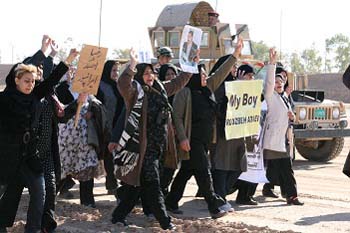 European sponsors and it makes too many efforts in the international community. The most disastrous problem the MKO faces now is the demand of families picketing in front of Ashraf gates.
They want to visit their family member held in Ashraf in a private uncontrolled atmosphere.
The MKO has begun to contact families and to promise them a fake private visit.
During the past two years of families’ picketing in front of Camp Ashraf, the MKO has never been able to rationalize for members why it never let them visit their families. Today, it attempts to diminish families’ presence in front of Ashraf. In order to get rid of their current problems, MKO leaders use this deceitful ploy. Families picketing at the Camp gates should be cautious about such sort of tricks used by the group.
 on his previous interview about his article “Washington’s Secret Wars,” Obama’s newly signed “findings” that authorize covert operations to destabilize the Iranian and Syrian governments, how the US and Israel use the Baluch Jundallah, Kurdish PJAK and MEK groups to commit terrorism-by-proxy, and the MEK’s energetic and well funded campaign to get de-listed as a terrorist group.
 United States classifies as terrorists.
 mentioned in some of interviews I had [with former members of the Mujahedin Khalq Organization]. The former Iraqi Baath regime extensively supported the group both financially and militarily and funded it with hundreds millions of dollars and Iraqi Dinars. A dozen packages of 400 thousand dinars were paid to the MKO, according to a film recorded in 1986 by former Iraqi intelligence. We are well aware of the exchange rate of dinar versus dollar at that time. “Most of these funds were invested in large American and European firms and banks and the benefits resulted from those investment are spent for running the organization but the support from former Iraqi regime wasn’t limited to this,” says Mr. Hassan Azizi. "The families of MKO spies who worked for Iraq inside Iran and were arrested by Iranian
 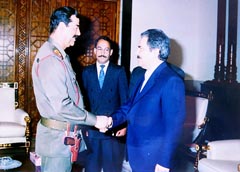 government were also paid monthly salaries (based on the documents obtained of former Iraqi intelligence service, issued on February 2nd, 2000). Besides Iraqi Baath regime, Arabic states of Persian Gulf including Saudi Arabia used to fund the organization. In one case when [Rajavi] returned from Iraq he said in a meeting,’ it was a prolific trip. "
 of Iran, which is committed to overthrowing the Iranian government.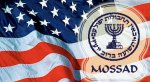
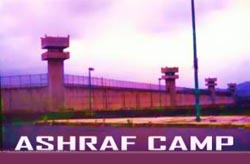 Iraqi government officially signed the Memorandum of Understanding, which is, in essence, an evacuation notice. [1]
 campaign for taking out of the US list of foreign terrorist groups mostly for private gain.
 again returned to the North American country.