
Protests in Tehran against EU removing PMOI group from terror list
Hundreds of Iranian students, pupils and families of veterans of the Iran-Iraq war (1980-1988) staged a protest gathering in Tehran Sunday against the decision by European Union foreign ministers to remove the People’s Mujahedin of Iran (PMOI) from their list of terrorist organizations.
The crowd first gathered in front of the French embassy in Tehran and shouted slogans against France and the EU for their intention to approve the decision in favour of the PMOI at a meeting Monday in Brussels.
The official news agency IRNA reported that a similar protest gathering was to be held later Sunday in front of the German embassy in Tehran but according to the demonstrators themselves, the next protest gathering would be on Monday in front of the British embassy.
The EU move followed a ruling by the European Court in Luxembourg, which in December said the EU was wrong to keep the PMOI’s assets frozen after it was taken off a British list of terrorist organizations.
Iran regards PMOI as a terror group due to its involvement in the assassinations of several high-ranking Iranian officials, including the president and prime minister in 1980.
After the group was expelled from France in the 1980s, former Iraqi president Saddam Hussein allocated a military base to the PMOI near the border with Iran.
Before the ouster of Saddam, the PMOI frequently infiltrated Iranian territory, leading to clashes with Iranian forces and casualties on both sides.
Middle East
Iraq to Extradite Mojahedin Khalq Terrorists to Iran
European Council to reward them for terrorism against Iran (and Iraq)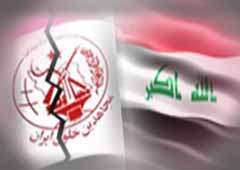
… While Iraq plans to extradite heads of Rajavi cult who have "Iranian blood on their hands", European council is to announce today if they are terrorist no more!! read related news and analysis …
———–
Iraq plans to extradite members of an anti-Iran terrorist group who have "Iranian blood on their hands," Iraq’s national security adviser said Friday during a visit to Tehran.
"Among the members of this group, some have the blood of Iraqi innocents on their hands (and) we will hand them over to Iraqi justice, and some who have Iranian blood on their hands we can hand over to Iran," said Muwafaq al-Rubaie.
He was referring to the terrorist Mojahedin-e Khalq Organization (MKO).
"Over 3,000 inhabitants of Camp Ashraf have to leave Iraq and the camp will be part of history within two months," Rubaie reiterated in a joint news conference with Saeed Jalili, Secretary of Iran’s Supreme National Security Council.
"The only choices open to members of this group are to return to Iran or to choose another country," Rubaie said.
"We are acting under international humanitarian regulations and international laws. These people will themselves choose where they want go."
"Iran’s security cannot be threatened by any factor inside Iraq. Iran’s security is our own security," the Iraqi official underlined.
His words were translated from Arabic into Farsi by an official Iranian interpreter.
Rubaie said that 914 MKO members had a "passport or residence of a third country" and could leave Iraq for these countries.
"Some 914 of them have dual nationalities and others who want to return to Iran will be allowed to do so," Rubaie said, adding he would discuss the issue with officials from 12 countries to see if they would accept MKO members.
"They will leave Iraq in a non-forcible way," he said. "Terrorist groups have no place in Iraq."
The Iraqi government announced on December 21 it planned to close the Ashraf camp north of Baghdad and close to the Iranian border, where around 3,500 MKO members are held.
On January 1, Iraqi Prime Minister Nuri al-Maliki said he would expel the MKO from the country.
The MKO was created in 1965 with the aim of overturning the regime of the Shah of Iran, but now is seeking the overthrow of Iran’s current government.
It was supported by Iraq’s late dictator Saddam Hussein, and it had carried out deadly raids on Iran from Iraq.
Despite being listed as a terrorist group by the United States and the European Union, the MKO receives wide support from Washington and London.
The European Court of Justice last month overturned an EU order freezing its funds.
Group members fought alongside Iraqi forces in the 1980-1988 war between Iraq and Iran and then settled in Iraq.
The MKO is behind a slew of assassinations and bombings inside Iran, a number of EU parliamentarians said in a recent letter in which they slammed a British court decision to remove the MKO from the British terror list. The EU officials also added that the group has no public support within Iran because of their role in helping Saddam Hussein in the Iraqi imposed war on Iran (1980-1988).
Many of the MKO members abandoned the terrorist organization while most of those still remaining in the camp are said to be willing to quit but are under pressure and torture not to do so.
A May 2005 Human Rights Watch report accused the MKO of running prison camps in Iraq and committing human rights violations.
According to the Human Rights Watch report, the outlawed group puts defectors under torture and jail terms.
The group started assassination of the citizens and officials after the revolution in a bid to take control of the newly established Islamic Republic. It killed several of Iran’s new leaders in the early years after the revolution, including the then President, Mohammad Ali Rajayee, Prime Minister, Mohammad Javad Bahonar and the Judiciary Chief, Mohammad Hossein Beheshti who were killed in bomb attacks by MKO members in 1981
During his speech on New Year’s Day to celebrate the official transfer of Baghdad’s heavily fortified Green Zone to Iraqi control, Iraqi Prime Minister Nouri al-Maliki declared Jan. 1 the “day of sovereignty” and congratulated his compatriots for having waited so long. He also warned that an Iranian resistance group, the Mujahedin-e Khalq (MEK), would no longer be able to have a base on Iraqi territory.
To some Western observers in Baghdad, it seemed like an odd thing for al-Maliki to mention, given the more momentous theme of the day. The MEK is an obscure group known for launching attacks on Iran in the 1980s and ’90s, when Iraq and Iran were bitter, warring enemies. But since the 2003 invasion of Iraq, the MEK has been stripped of its weapons, confined to its base at Camp Ashraf about 80 miles north of Baghdad and guarded by U.S. troops. The group is hardly an immediate threat to Iraqi security, or even particularly relevant to the challenges Iraq faces under the new U.S.-Iraq security pact.
But when the U.S. military formally transferred control of Camp Ashraf back to the Iraqi government on Jan. 1, the MEK’s fate suddenly became an issue. The group is a source of contention for Iran and the U.S., Iraq’s two biggest allies, who are increasingly vying for influence as Baghdad’s post–Saddam Hussein Shi’ite government asserts its independence. All three countries label the MEK a terrorist organization. Iran wants the group handed over for prosecution. But the U.S. has pledged to ensure the group’s rights under international law.
The question now isn’t just what to do with the 3,500 Iranians at Camp Ashraf — it’s also who decides their future. Past U.S. ties to the group suggest that the Geneva Convention isn’t the only reason Washington might not want to throw the MEK to the wolves just yet. But how deeply is Washington invested? The answer may lie in how Baghdad chooses to deal with the group.
Founded in Iran in the 1960s on an ideological platform merging Marxism and Islamism, the MEK worked alongside followers of Ayatullah Ruhollah Khomeini to overthrow the shah in the 1979 Islamic revolution, and assisted in the ensuing U.S. embassy hostage crisis. But they clashed with Khomeini in the years that followed, leading to the killing, imprisonment and exile of thousands of the group’s members. In 1986 the MEK set up a base at Camp Ashraf, located in Iraq’s eastern Diyala province, and began receiving funding and protection from Saddam to launch attacks over the border into Iran.
Despite its position on the U.S. terrorist list since 1997, and reports by former members of abusive and cultlike practices at Ashraf, the MEK has gathered support from some surprising places abroad — especially since the U.S. invasion — by pitching itself as a viable opposition to the mullahs in Tehran. “They have been extremely clever and very, very effective in their propaganda and lobbying of members of Congress,” says Gary Sick, a Persian Gulf expert at Columbia University’s Middle East Institute and the author of All Fall Down: America’s Tragic Encounter With Iran. “They get all sorts of people to sign their petitions. Many times the Congressmen don’t know what they’re signing.” But others, Sick adds, “are quite aware of the fact that this is a designated terrorist organization, and they are quite willing to look the other way for a group that they think is a democratic alternative to the Iranian regime.”
The group’s Paris-based umbrella organization, the National Council of Resistance of Iran, has held fundraisers in Washington. One of the group’s former spokesmen, Alireza Jafarzadeh, now serves as a Fox News foreign affairs analyst. From Paris, the group’s leader, Maryam Rajavi, has waged an effective p.r. campaign, gathering a following of European MPs to support removal of the group from the E.U.’s terrorist list and to oppose Ashraf’s closure.
Even some Iraqis see value in keeping the camp intact. “We have many differences with Iran, and Iran is very deeply involved in Iraq, so I don’t think it’s wise to end the Iranian resistance,” said Salah al-Mutlaq, a Sunni member of parliament from the Iraqi National Dialogue Front. “For the Americans, surrendering the Mujahedin-e Khalq file to the Iraqi government is a big mistake.”
For the most part, however, the MEK is no more popular with the Iraqi population than it is with the central government. In his speech from the Green Zone on New Year’s Day, al-Maliki made it clear that the MEK would lose its protected status. “This group has been labeled a terrorist organization,” al-Maliki said. “It can no longer operate in Iraq after today because it has caused a political crisis that contradicts the constitution … We will never force any of these people to go back to their country … but Iraq cannot be a base for these people.”
The move to oust the MEK was anticipated, but the promise not to deport them to Iran was a welcome relief for the group’s supporters and human rights organizations. For months, the National Council of Resistance of Iran has led demonstrations in New York, Paris, Geneva and Washington to protest the possible transfer of Camp Ashraf’s residents to Iran. Al-Maliki’s decision not to hand them over may indicate a small U.S. victory.
While the U.S. government has remained relatively quiet on the Ashraf issue lately, Washington’s approach isn’t entirely passive. In a Jan. 1 press release, the U.S. embassy in Baghdad said an unspecified number of U.S. troops have remained at the camp since the formal handover of control to Iraq. “U.S. forces will maintain a presence at Camp Ashraf and will continue to assist the government of Iraq in carrying out its assurances of humane treatment of the residents of Camp Ashraf,” the release stated. The Iraqi government provided written assurances that the group would be treated in accordance with Iraqi law, and the U.S. government would remain involved in resolving the group’s future, according to the release. U.S. embassy officials declined to comment on what that future might look like.
Just two days after making his declaration to the MEK, al-Maliki left for a scheduled diplomatic visit to Iran — his fourth since taking office. The Iraqi Prime Minister was expected to try to ease fears that Iraq might be used as a base to attack Iran. He has pledged that won’t happen. But it remains uncertain as to what is in store for the MEK.
— With reporting by Mazin Ezzat / Baghdad
By Abigail Hauslohner – time.com
In so lovable a world that even animals enjoy their own rights to be protected against man’s savagery, why should not terrorists have their own protectors to defend them against threats that might be of any harm to them? There are those who believe that the only way to achieve their goals is through the force of violence and perishing other fellow human beings. We may call them terrorists. But there are others who believe that it is an idea for itself and they are also human beings that deserve to be treated with dignity and respect, regardless of having shown no respect for others’ rights and the life of their victims.
The advocates of the terrorists reason that according to the articles of the Universal Declaration of Human Rights they are human beings and thus, “All human beings are born free and equal in dignity and rights” and that “Everyone has the right to freedom of thought, conscience and religion; this right includes freedom to change his religion or belief, and freedom, either alone or in community with others and in public or private, to manifest his religion or belief in teaching, practice, worship and observance”. But, do they deserve to be dealt according to the same rights and rules that non-terrorists do?
There come situations when the same terrorists whose atrocities have stained the history of a nation adopt a new tactic to pose as non-terrorist and pro-democratic, believing that the new generations have totally forgotten what they have done in the past. Or find an opportunity to be cared by some who, for political interests, forget their globally chanted slogans of “combating terrorism” and pretend to be concerned about the spread of violence against their own nations. For them, the enemies of their enemy, even if they themselves would already call them terrorists and hold in leash to curb their threat, are not terrorists with no conscience and spirit of humanity; suddenly they turn to be human beings whose rights have been disregarded and they consider it a responsibility to take a valiant effort to defend them.
The EU’s decision to remove, if the EU foreign ministers reach the conclusion, the terrorist cult of Mojahedin Khalq from its terrorist blacklist will not change the group’s terrorist nature at all. The Iranian history has countless instances of bloody chapters depicted by brutal atrocities of Mojahedin Khalq terrorists, not speaking of their evil conspiracies against Iraqi people when they came to collaborate with the ousted dictator.
The EU foreign ministers are to meet on Monday in a bid to make the final decision on the group’s status and possibly take the group off the 27-nation bloc’s list of terrorist organizations. It happens just at a time when the group is reported by the Iraqi government to have plotted suicide attack against the Iraqi security forces protecting the group’s main resident camp, Camp Ashraf.
I do believe that majority of those members held in Camp Ashraf are no more part of the terrorist group since they are held against their will and are ready to leave if the opportunity is granted. They are also victims of a terrorist ideology that the leaders never consent to change. For sure, even if the EU wins the consensus to take the group out of the terrorist list, they can never change the ideology upon which the group is founded. They have to explain for the public opinion that how is that some of their allies sent forces to Iraq to confront terrorism but discuss to exonerate a terrorist group settled there of the charges for which the Iraqi government is determined to expel them. Whose rights are really being violated; the victims or the victimizers? Who knows, maybe they have developed a different version of defining human rights!
Iranian people are well aware of the group’s terrorist nature and the EU action could not distort the reality
TEHRAN (FNA)- Iran’s Ambassador to Iraq Hassan Kazemi Qomi said on Saturday that striking the anti-Iran terrorist group, the Mojahedin-e Khalq Organization, off the list of terrorist organizations by the EU will not change MKO’s terrorist nature.
“Iraqi people and government and also Iranian people are well aware of the group’s terrorist nature and the EU action could not distort the reality,”Kazemi Qomi told FNA.
The European Union is expected to strike the main Iranian armed opposition group in exile off its list of terrorist organizations on Monday, according to EU officials.
The EU decision will come as a so-called”A point”at Monday’s meeting.
“A points”are usually rubber-stamped without discussion as the details have already been ironed out by ambassadors, but nations could still raise objections.
Irrespective of the possible measures to be adopted by the EU, the terrorist nature of the group would not change, he reiterated.
The envoy also called on the European Union to lodge the MKO in one of its member states if it feels sympathy for the group.
Referring to the Iraqi government’s decision to expel MKO members from the country, he stressed,”As the Iraqi government officially stated, misled and repentant members of the group could return to Iran or go to another country.”
Iraqi National Security Adviser Muwafaq Al-Rubaie said here in Tehran on Wednesday that the MKO will be expelled from Iraq in the near future.
Rubaie had also earlier said that his country is determined to implement its decision for closing the MKO headquarters in Diyala province.
“Iraq has made a decision for Ashraf camp and will implement it firmly,”Rubaie told reporters following his arrival at Tehran’s Imam Khomeini International Airport on Monday.
“We have put forward two solutions for them, they either return to Iran or find a third country for exile. There is no third way for them,”he added.
The MKO, whose main stronghold is in Iraq, is blacklisted by much of the international community, including the United States.
The MKO is behind a slew of assassinations and bombings inside Iran, a number of EU parliamentarians said in a letter last year in which they slammed a British court decision to remove the MKO from the British terror list. The EU officials also added that the group has no public support within Iran because of their role in helping Saddam Hussein in the Iraqi imposed war on Iran (1980-1988).
Many of the MKO members abandoned the terrorist organization while most of those still remaining in the camp are said to be willing to quit but are under pressure and torture not to do so.
A May 2005 Human Rights Watch report accused the MKO of running prison camps in Iraq and committing human rights violations.
According to the Human Rights Watch report, the outlawed group puts defectors under torture and jail terms.
The group, founded in the 1960s, blended elements of Islamism and Stalinism and participated in the overthrow of the US-backed Shah of Iran in 1979. Ahead of the revolution, the MKO conducted attacks and assassinations against both Iranian and Western targets.
The group started assassination of the citizens and officials after the revolution in a bid to take control of the newly established Islamic Republic. It killed several of Iran’s new leaders in the early years after the revolution, including the then President, Mohammad Ali Rajayee, Prime Minister, Mohammad Javad Bahonar and the Judiciary Chief, Mohammad Hossein Beheshti who were killed in bomb attacks by MKO members in 1981.
The group fled to Iraq in 1986, where it was protected by Saddam Hussein and where it helped the Iraqi dictator suppress Shiite and Kurd uprisings in the country.
The terrorist group joined Saddam’s army during the Iraqi imposed war on Iran (1980-1988) and helped Saddam and killed thousands of Iranian civilians and soldiers during the US-backed Iraqi imposed war on Iran.
Since the 2003 US invasion of Iraq, the group, which now adheres to a pro-free-market philosophy, has been strongly backed by neo-conservatives in the United States, who also argue for the MKO to be taken off the US terror list.
He added that the Iraqi government would deal with the members of the organization in a legal way, saying the MKO members should either return to Iran or select a third country.
The Mujahedin Khalq Organization, which identifies itself as a Marxist-Islamist guerilla army, was founded in Iran in the 1960s but was exiled twenty years later for carrying out numerous acts of terrorism within the country.
The terrorist group is especially notorious for the help it extended to former dictator Saddam Hussein during the war Iraq imposed on Iran (1980-1988).
The group has a 40-year history of involvement in terrorist activities and has masterminded assassinations and bombings inside Iran.
The MKO had regularly provided military training for its members on a base north of Baghdad, known as Camp Ashraf.
Earlier in January, Iraqi Prime Minister Nouri al-Maliki said that Baghdad was determined to close Camp Ashraf and expel the MKO members for the sake of Baghdad-Tehran relations.
“Iraq is determined to put an end to this Organization because it is effecting relations between Iran and Iraq. This organization participated in many operations that harmed Iranian and Iraqi civilians,”he said.”Remaining in Iraq is not an option for them,”al-Maliki added.
Baghdad announced in a statement on December 22 that MKO members at Camp Ashraf must close their training ground and leave the country within a six-month period.
After the finalization of a new agreement between Baghdad and Washington, the Iraqi government took over the country’s national security issues. Under the interim agreement, Camp Ashraf, the MKO headquarters and training site, was put under Iraqi control as of January 1, 2009.
At his Friday press conference, al-Rubaie in response to a question asking the reason for the delay in the camp’s shut down, said that before the interim security pact between Baghdad and Washington, Camp Ashraf had been under US control.
Meanwhile Jalili expressed Iran’s readiness to cooperate with Iraq on security matters through the aim of training and setting up security offices.
Europe: Safe Haven For Terrorists
The European Union routinely accuses Iran of sponsoring terrorism for their support of the military wings of Hezbollah, Hamas and Islamic Jihad, forgetting to mention that these are the armed wings of legitimate and democratically elected political parties, who have a legal right to resist Israeli occupation under internationalal law, and are only designated as terrorists organisation by the EU for political reasons – i.e. the EU supports Israel. But what is rarely reported is the extent to which the EU supports terrorist groups. It has reportedly been agreed by EU states to remove the anti-Iranian Mujahedin Khalq Organisation (MKO) from the designated terrorist organisation list in the near future, which makes an absolute mockery of the EU supposed objection to terrorism.
The MKO cult is notorious for committing countless atrocities in Iran and Iraq. In Iran alone, their terrorist attacks have claimed over 12,000 deaths and in Iraq, as well as committing war crimes against the Kurds under the Saddam Hussein regime, they are accused by the current Iraqi government of carrying out terrorist attacks and destabilising the country, despite supposedly being in US custody. The Cult also stands accused of assassinating and torturing dissidence and human trafficking. They have also used self-immolation (suicide bombing!) as a tactic to protest against their designation as terrorist organisation in Europe.
This is why America, Canada and the EU have previously refused to remove the MKO from their terror lists, and as recently as the 12 of this month, Condoleezza Rice announced that the MKO group would remain on the US terror list. So why the change in the EU position now?
Since 2003, Camp Ashraf, the MKO HQ, which is located in Iraq’s Diyala province, along with its 3,400 inhabitants have been under American military control – the Bush regime wanted to protect the 3,400 known anti-Iranian terrorists from being taken into Iraqi custody, so granted them protected status – but since beginning of January control of the base and its inhabitants legally passed to the Iraq government, who have ordered the base closed and all MKO cult members to either return to Iran or select a third country to be deported to.
Obviously it would be politically difficult, if not impossible, for any EU state to open up its borders and welcome 3,400 designated terrorists cult members with open arms, and Obama defintely isn’t going to do it. So quietly the EU has been dropping its resistance to MKO under the pretense that the cult has been disarmed. And the group has one a series of barely contested legal cases. Now that they no longer have a presence in Iraq, it will be easy to argue that they pose no threat to Iraq or Iran, and that might well be true, but this terror cult will be a much bigger threat to Europe than al-Qaeda ever was.
The MKO is committed to the violent overthrow of the Iranian government and enforcing their own brand of fascism, despite the fact that Iranian government was democratically elected (a point often forgotten) and the MKO is universally loathed in Iran and has a long history of anti-western violence as well.
stephiblog.wordpress.com/2009/01/23/europe-safe-haven-for-terrorists
MKO with blood on their hands to be tried in Iraq and in Iran, Camp Ashraf to close within two months
Rubaie: Iraq to Extradite MKO Terrorists
TEHRAN (FNA)- Iraq plans to extradite members of an anti-Iran terrorist group who have “Iranian blood on their hands,” Iraq’s national security adviser said Friday during a visit to Tehran.
“Among the members of this group, some have the blood of Iraqi innocents on their hands (and) we will hand them over to Iraqi justice, and some who have Iranian blood on their hands we can hand over to Iran,” said Muwafaq al-Rubaie.
He was referring to the terrorist Mojahedin-e Khalq Organization (MKO).
“Over 3,000 inhabitants of Camp Ashraf have to leave Iraq and the camp will be part of history within two months,” Rubaie reiterated in a joint news conference with Saeed Jalili, Secretary of Iran’s Supreme National Security Council.
“The only choices open to members of this group are to return to Iran or to choose another country,” Rubaie said.
“We are acting under international humanitarian regulations and international laws. These people will themselves choose where they want go.”
“Iran’s security cannot be threatened by any factor inside Iraq. Iran’s security is our own security,” the Iraqi official underlined.
His words were translated from Arabic into Farsi by an official Iranian interpreter.
Rubaie said that 914 MKO members had a “passport or residence of a third country” and could leave Iraq for these countries.
“Some 914 of them have dual nationalities and others who want to return to Iran will be allowed to do so,” Rubaie said, adding he would discuss the issue with officials from 12 countries to see if they would accept MKO members.
“They will leave Iraq in a non-forcible way,” he said. “Terrorist groups have no place in Iraq.”
The Iraqi government announced on December 21 it planned to close the Ashraf camp north of Baghdad and close to the Iranian border, where around 3,500 MKO members are held.
On January 1, Iraqi Prime Minister Nuri al-Maliki said he would expel the MKO from the country.
The MKO was created in 1965 with the aim of overturning the regime of the Shah of Iran, but now is seeking the overthrow of Iran’s current government.
It was supported by Iraq’s late dictator Saddam Hussein, and it had carried out deadly raids on Iran from Iraq.
Despite being listed as a terrorist group by the United States and the European Union, the MKO receives wide support from Washington and London.
The European Court of Justice last month overturned an EU order freezing its funds.
Group members fought alongside Iraqi forces in the 1980-1988 war between Iraq and Iran and then settled in Iraq.
The MKO is behind a slew of assassinations and bombings inside Iran, a number of EU parliamentarians said in a recent letter in which they slammed a British court decision to remove the MKO from the British terror list. The EU officials also added that the group has no public support within Iran because of their role in helping Saddam Hussein in the Iraqi imposed war on Iran (1980-1988).
Many of the MKO members abandoned the terrorist organization while most of those still remaining in the camp are said to be willing to quit but are under pressure and torture not to do so.
A May 2005 Human Rights Watch report accused the MKO of running prison camps in Iraq and committing human rights violations.
According to the Human Rights Watch report, the outlawed group puts defectors under torture and jail terms.
The group started assassination of the citizens and officials after the revolution in a bid to take control of the newly established Islamic Republic. It killed several of Iran’s new leaders in the early years after the revolution, including the then President, Mohammad Ali Rajayee, Prime Minister, Mohammad Javad Bahonar and the Judiciary Chief, Mohammad Hossein Beheshti who were killed in bomb attacks by MKO members in 1981.
France says it has filed an appeal to an EU court to keep the Mujahedin Khalq Organization (MKO) on a list of banned terrorist groups.
“Our appeal was filed the day before yesterday,”said Foreign Ministry spokesman Frederic Desagneaux Friday.
On Thursday, an EU diplomat said the bloc had decided to remove the anti-Iran group from the EU list of banned terrorist groups.
The source, who was speaking on condition of anonymity, said EU foreign ministers should approve the consensus before it can be fully implemented.
MKO terrorists, banned by many countries including the US, have claimed responsibility for numerous terror attacks inside Iran since the 1979 Islamic Revolution.
The group is also responsible for assisting Saddam in the massacre of thousands of Iraqi civilians.
The EU move to remove the MKO from its banned terrorist group list has provoked widespread condemnations inside Iran as well as among the families of the terror attacks victims.
The French spokesman said Friday that Paris was pressing ahead with the appeal to keep the anti-Iran group on the list.
TEHRAN – Iraqi National Security advisor Muwafaq al-Rubaie said on Friday that Baghdad plans to close down the Ashaf military camp where the terrorist Mojahedin Khalq Organization (MKO) members are held under house arrest.
Iraq is also seeking to extradite the Mojahedin Khalq members who have taken refuge in Iraq since early 1980s, Rubaie told reporters in a joint news conference with Iran’s Supreme National Security Council Secretary Saeed Jalili in Tehran.
The Mojahedin Khalq launched a campaign of assassinations and bombings in Iran immediately after the Islamic Revolution.
The group was supported by Saddam Hussein’s regime in the 1980-1988 Iran-Iraq war but was disarmed after the U.S.-led invasion of Iraq in 2003.
Saddam also used the terror group in suppressing Shiite and Kurdish dissidents in southern and northern Iraq.
Rubaie said, “Among the members of this group, some have the blood of Iraqi innocents on their hands and we will hand them over to Iraqi justice, and some who have Iranian blood on their hands we can hand over to Iran.”
“The only choices open to members of this group are to return to Iran or to choose another country,” he stated.
The Iraqi envoy said “Some of the MKO members have expressed interest to return to Iran and we are making the arrangements for this.”
“We are acting under international humanitarian regulations and international laws. These people will themselves choose where they want to go.”
Rubaie said that 914 MKO members have a passport or residence of a third country and could leave Iraq for these countries.
He said on his return to Iraq he would discuss with the ambassadors of the United States and a dozen European countries to see if they would accept MKO members.
The top Iraqi security official stated that hundreds of MKO members have already returned to their families with the help of the Red Cross organization.
The Iraqi government announced on December 21 it planned to close the Ashraf camp north of Baghdad and close to the Iranian border.
On January 1, Iraqi Prime Minister Nuri al-Maliki went further and said he would expel the MKO from the country.
Elsewhere in his remarks, Rubaie said Iraq is ready to take control of its domestic affairs even sooner than the 16-months deadline set by U.S. President Barak Obama.
Iraq and the United States have signed a security deal that calls for the U.S. troops to leave Iraq by the end of 2011. However, Obama, during his campaign for presidency vowed to withdraw combat forces from Iraq within 16 months from taking office.
Iraqi people and security forces are more than ever ready to take care of the country’s affairs and currently 95 percent of domestic issues are controlled by Iraqis, Rubaie said.
Jalili also stated that Iraq’s repeated announcements that it is ready to take control of the situation inside the county leaves no excuse for the continuation of occupation by foreign forces.
Turning to diplomatic relations with Iran, Rubaie said Iraq has signed a highly important agreement with the Islamic Republic after receiving “positive responses” from Iranian President Mahmoud Ahmadinejad.
“We are leaving Tehran by achieving a very important deal because we raised important issues in our negotiations and received positive, strong and documented responses,” he explained.
Rubaie, however, did not elaborate on the content of the agreement
http://www.tehrantimes.com/index_View.asp?code=187569