
Downing Street still considers the anti-Iran Mujahedin Khalq Organization (MKO) as a terrorist group, says the British justice secretary. 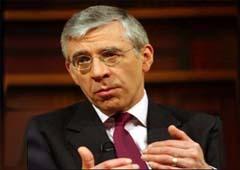
British Secretary of State for Justice Jack Straw said on Wednesday that his country firmly believes in the terrorist nature of the MKO group, despite a controversial decision last year to remove the dissidents from the UK terror list.
Straw said he sorely regrets the British court ruling which de-proscribed the grouplet from the country’s terror blacklist.
"When I was the home secretary, I said it was a terrorist group and the parliament agreed. The difficulty is that there is an independent kind of court which can make the final decisions out of the law. And it decided that the evidence do not support what the government was saying," Straw told IRNA in an exclusive interview.
Following a UK court ruling in 2008, the British parliament lifted the terror ban on MKO — irrespective of the abundance of evidence pointing to the group’s 40-year history of performing terrorist operations in Iran.
The group masterminded a slew of assassinations and bombings inside Iran, one of which was the 1981 bombing of the offices of the Islamic Republic Party, in which more than 72 Iranian officials were killed, including then Judiciary chief Ayatollah Mohammad Beheshti.
Earlier in January, the European Union decided to follow in Britain’s footsteps and moved to redefine the group as a non-terrorist organization, annulling its previous decision to freeze MKO funds.
The Mujahedin Khalq Organization, which blended elements of Islamism and Stalinism, was founded in Iran in the 1960s but was exiled some twenty years later for performing acts of terrorism in the country.
A 2007 German intelligence report from the Federal Office for the Protection of the Constitution has identified the MKO as a "repressive, sect-like and Stalinist authoritarian organization which centers around the personality cult of [MKO leaders] Maryam and Masoud Rajavi".
High-ranking MKO members have camped-out in most of Europe’s parliaments for the past two years and have managed to gain scattered support from various high-ranking circles in the West.
Anne Singleton, an expert on the MKO and author of ‘Saddam’s Private Army’ explains that the West aims to keep the group afloat in order to use it in efforts to stage a regime change in Iran.
"With a new Administration in the White House a pre-emptive strike on Iran looks unlikely. Instead the MKO’s backers have put together a coalition of small irritant groups, the known minority and separatist groups, along with the MKO. These groups will be garrisoned around the border with Iran and their task is to launch terrorist attacks into Iran over the next few years to keep the fire hot," she explains.
"The role of the MKO is to train and manage these groups using the expertise they acquired from Saddam’s Republican Guard," Singleton added.
Egypt has agreed to the establishment of a Mujahedin Khalq Organization (MKO) base in the country as the terrorist group seeks a new home.
The MKO, which identifies itself as a Marxist-Islamist guerilla army, has carried out acts of terror against Iranian nationals and officials. Outlawed in Iran, the group was relocated to Iraq and allegedly assisted former Iraqi dictator Saddam Hussein in the massacre of thousands of Iraqi civilians in the 1990s.
After the finalization of a security agreement between Baghdad and Washington, the Iraqi government regained control of the country’s national security issues. The interim agreement gave control of Camp Ashraf, the MKO headquarters and training site, to the Baghdad government as of January 1, 2009.
Baghdad seeks to expel the members of the terrorist group from the country.
MKO leaders, meanwhile, are scrambling to woo regional countries to establish a foothold in the region.
Iraqi sources were quoted by Mehr news agency as saying that certain countries that oppose Iran are considering allowing the terrorist group to remain in the Middle East.
Egypt, they said, has agreed with a request by MKO leaders to establish a camp in the country.
Many countries, including the US, have designated the MKO a “terrorist” organization. The US State Department acknowledges that the MKO assassinated at least six US citizens in Iran, prior to the victory of the Islamic Revolution in 1979.
Iran has called on Iraq to extradite MKO terrorists to Iran where they would face prosecution for their criminal acts.
“We believe that certain MKO leaders who organized and carried out criminal acts against the Iranian nation should be handed over to the Iranian government so they can be tried and brought to justice,” said Tehran’s envoy to Baghdad, Hassan Kazemi-Qomi.
However, US ambassador to Iraq Ryan Crocker said in a January interview that the Iraqi government had “provided assurances that none of these (MKO) individuals will be forcibly sent to a third country where they have reason to fear for their safety or well-being, and we know those assurances will be respected.”
Zebari: Mojahedin Khalq expulsion from Iraq will be strictly monitored by a special committee
BAGHDAD – Foreign Minister Hoshyar Zebari has stated that Baghdad intends to host talks between Iran and United States over the security situation in Iraq and called for maintaining “Iraq-Iraq-U.S. triangle”.
In an exclusive interview with the Mehr News Agency, Zebari said the Iraqi government, given the current situation in the country, views hosting such talks as a priority.
He pointed out that Iran is “one of Iraq’s most important neighbors” that is seeking “special relations with Baghdad with goodwill” and that Baghdad’s relations with Tehran are of “great significance”.
He added the U.S. influence in Iraq is also “undeniable”.
Iran’s foreign minister has ruled out holding new security talks with the United States over Iraq, saying improved security situation has made such talks unnecessary.
However, Zebari said there are issues that Iran and the United States should “settle between themselves”, and in the run-up to “new Iraq” Baghdad favors cooperation between the three parties by maintaining “Iran-Iraq-U.S. triangle.”
The foreign minister also dismissed reports that Iraq is showing leniency in expelling Mojahedin Khalgh Organization (MKO), saying the Iraqi government has taken its decision on the group and the expulsion will be strictly monitored by a “special committee”.
The MKO has claimed responsibility for carrying out numerous terror attacks against Iranian nationals and officials, and has also been accused of assisting former Iraqi dictator Saddam Hussein in the slaughter of thousands of Iraqi civilians in the 1990s.
The MKO established a camp for about 3,500 members in Iraq, which its forces used to launch cross-border attacks into Iran. It fought alongside Saddam Hussein’s forces during the 1980-88 Iran-Iraq war.
Many senior Iraqi officials have assured Iran that the MKO members will soon have to leave Iraq.
Zebari also stated that Baghdad understands Tehran’s concerns about the Iranian diplomats detained by U.S forces and expressed hope that Iraq’s negotiations with the U.S. will lead to the release of the diplomats.
The U.S. military detained five Iranian diplomats in the city of Arbil, 310 km (190 miles) north of Baghdad, in January 2007. In November that year, U.S. officials said they would release two of the five diplomats.
http://www.mehrnews.com/en/NewsDetail.aspx?NewsID=835267
Envoy says Mojahedin Khalq leaders must be extradited to Iran
Baghdad,Those Mojahedin Khalq Organization (MKO) leaders who masterminded terror operations inside Iran must be extradited to the country to stand trial, Iranian Ambassador to Baghdad Hassan Kazemi Qomi has said.
Iran has presented Iraqi officials a list of the MKO leaders who must be handed over to the country, he told the Mehr News Agency.
MKO members immigrated to Iraq in the 1980s and fought alongside Iraqi forces against Iran in the 1980-1988 Iran-Iraq war.
The ambassador also said, “The Iraqi government has been serious about expelling the terrorist organization members.”
Kazemi Qomi noted that Baghdad has officially informed the MKO members that they “can not choose” between staying or leaving the country, warning that they will be expelled from Iraq.
There are reports that 1,031 MKO members have so far decided to leave Iraq either by acquiring citizenship or by obtaining passport and so they will leave the country or those countries that have granted them citizenship will have to take them out of the Iraqi soil, he pointed out.
The MKO has claimed responsibility for carrying out numerous terror attacks against Iranian nationals and officials, and has also been accused of assisting former Iraqi dictator Saddam Hussein in the slaughter of thousands of Iraqi civilians in the 1990s.
http://www.mehrnews.com/en/NewsDetail.aspx?NewsID=834384
Iran has condemned the removal of the MKO terrorist group from the European Union’s terror list.
Earlier today, Iran’s Ambassador to Azerbaijan Naser Hamidi Zare’ said that exclusion of the group from the list was a new Western trap for the Islamic state, accusing the West of operating a policy of double-standards in dealing with terrorist groups.
 The Ambassador claimed that EU politicians made the decision to leave the group, the Mujahedin Khalq Organization, off the list was because of intense lobbying from the ‘Zionist’ lobby.
The decision to leave the group off the list is a sensitive for Iran, because the MKO has been blamed for the mass killings of Iranians over the last 30 years.
Tehran has now complained at the EU decision to the United Nations Secretary General, Ban Ki-moon.
Zare’ said that the removal of the terrorist organization from the EU terror list had happened after the Iraqi government decided to expel members of the criminal cult who were stationed in Iraq by former Iraqi ruler Saddam Hussein.
The Iraqi government announced in early February that Baghdad would soon close the file of the terrorist organization and expel them from the country.
According to Zare’, the EU made the move when Baghdad had confirmed its decision to expel MKO members from Iraq.
Religious Intelligence By Nick Mackenzie
IRNA, Moscow- A Russian scholar said the European Union (EU) manipulated such issues as terrorism and human rights for its own political purposes.
Talking to IRNA here on Saturday, Ludmila Kulagina, as a top researcher in the Russian Institute of Oriental Studies, criticized the recent EU move in removing the terrorist Mojahedeen Khalq Organization (MKO) form its terrorism list.
She said the move was a clear example of the double-standard policy adopted by the west on the issue of terrorism and frankly undermined the EU claim of fighting terrorism.
She believed the west treated such issues as terrorism and human rights in a biased and fanatical manner based on the double-standard policies inspired by its political interests.
Saying that certain western countries labeled organizations as terrorists according to their own whims and wishes, she said such a policy was clearly manifested in their behavior towards Hamas which was rejected by the west as a terrorist movement despite the fact that it assumed power in Palestine following a democratic election.
Referring to countless terrorist operations carried out by the terrorist MKO in both Iran and Iraq during the past three decades that claimed numerous lives, she stressed the EU’s delisting of the terrorist MKO lacked any legal or rational justifications.
Kulagina noted that the EU’s move, who delisted the terrorist organization instead of punishing it for the crimes it has committed, served the merely political purpose of fueling the tension between Iran and the US and some European countries by strengthening Iran’s opponents.
She said such a decision by the EU would negatively affect Iran-Europe ties.
David Lidington (Shadow Minister, Foreign Affairs; Aylesbury, Conservative) To ask the Secretary of State for Foreign and Commonwealth Affairs what the Government’s policy towards the People’s Mojahedin of Iran is in the light of 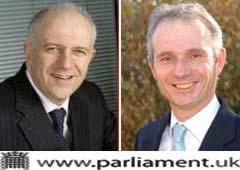 the recent judgment by the European Court of First Instance.
Bill Rammell (Minister of State, Foreign & Commonwealth Office; Harlow, Labour) | Hansard source
On 26 January 2009, taking account of the judgment by the Court of First Instance on 4 December 2008, the General Affairs and External Relations Council adopted a list which did not include the MeK (Mojahedin-e-Khalq, also known as the People’s Mojaheddin of Iran).
However, we remain mindful of the MeK’s history as an organisation responsible for a number of serious terrorist attacks—it claimed responsibility for large numbers of violent attacks inside Iran for a number of years, including 96 in a three-month period in early 2001. We do not agree with its claim that it represents a credible democratic opposition in exile.
10 Feb 2009 : Column 1846W
Written answers | Hansard source
Foreign and Commonwealth Affairs
A front man for the MKO has protested against Iraq’s decision to bring to trial the leaders of the terrorist group, calling it ‘illegal’. 
Alireza Jafarzadeh, a top member of the Mujahedin Khalq Organization, appeared on the Fox news TV channel after the Iraqi government promised prosecution for certain leaders of the group.
Jafarzadeh said Baghdad made the decision as it was under pressure from the government in Tehran.
In a Press TV program aired on Tuesday, Iraq’s National security Advisor, Muwaffaq al-Rubaie said the members of the MKO who had committed crimes against Iraqi civilians had to stand trial in Iraqi courts.
“Iran is prepared to provide legal evidence against these people and is prepared for their trial in Iraq by the Iraqi judicial system,” the Iraqi official said.
“We are going to do this in a humane way. We are going to stick and adhere to all international laws and regulations,” he said, adding that Iran was prepared to respect the court order on the MKO members.
The Iraqi government has vowed to expel the members of the group to their country Iran or send them to a third country, maintaining ‘staying in Iraq is not an option for them’.
Iran has long called for the expulsion of MKO members from their headquarters and training center, Camp Ashraf, in Iraq.
Tehran says the members of the group who have not participated in the organization’s terrorist activities are allowed to return home but others have to stand trial in Iran or outside the country.
Several members of the group have now defected from the organization and returned to Iran.
The MKO, blacklisted as a terrorist organization by many international entities and countries including the US, is responsible for numerous acts of violence against Iranian civilians and government officials as well as Iraqi people at the time of former dictator Saddam Hussein.
Rabbani: Rajavi gang is begging foreign forces to save them
Iranian envoy to Qatar interviewed on ties, relations with US, Hamas
Doha Al-Sharq Online in Arabic on 10 February carries an interview with Iranian Ambassador to Qatar Muhammad Tahir Rabbani entitled: "Gas Forum is a Clear Example of the Qatari-Iranian Cooperation to Regulate the Energy Market in the World," conducted by Taha Husayn. The interview discusses several issues related to the economy of Iran, Iranian-US relations, and bilateral relations with Qatar
..Concerning the question on ignoring the role of the powers that participated in the revolution such as Mujahedin-e-Khalq , Rabbani says that the political struggle against the former regime was coloured by cultural and peaceful characteristics which differ from the other political trends which resolved to weapons, killing innocents, and assassinating the figures of the Islamic regime. Rabbani notes that "the terrorist hypocritical gang [REFERENCE to Mujahedin-e-Khalq] did not once, neither by words or deeds, show faith in the principles of the revolution. They never yielded to the will of the Iranian people." He adds that this "terrorist gang" participated with Saddam in his war against its own people and in the war against the Sunnah and Shi’i in Kurdistan and the southern Iraqi cities. He goes on to say that "this gang is now begging the foreign forces to save them and keep them alive." ..
Source: Al-Sharq website, Doha, in Arabic 10 Feb 09 – Translated by:BBC Monitoring Middle East
http://al-sharq.com
Iraq says it is standing by a decision to shut down Camp Ashraf and end the terrorist Mujehedin Khalq Organization’s presence on Iraqi soil. 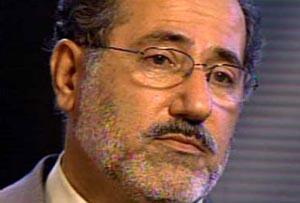
"MKO members who are residing in Camp Ashraf (inside Iraq) should either leave Iraq for Iran or a third country because they won’t be granted permission to stay in Iraq," Iraq’s National security Advisor, Mowaffak Al-Rubaie said in a televised interview with Al-Alam TV network on Sunday.
"The expulsion of MKO members would be conducted in accordance with human and Islamic criteria as well as Iraqi and International law," he added.
The Iraqi government took over the security of the Camp Ashraf following the finalization of the Iraqi-US security agreement. Under the agreement, the security of the MKO headquarter, was put under Iraqi control as of Jan 1, 2009.
Baghdad holds MKO responsible for instigating violence and acts of terror inside Iraq. The government has decided to extradite the MKO members from the Islamic Republic should they decline to leave Iraq.
The Mujahedin Khalq Organization was blacklisted across the Europe. However, on January 26, 2009 the European Union voted to remover the MKO terrorist group from its black list. The MKO is still considered as terror-sponsoring group in the United States.
According to Al-Rubaie Iraq has so far issued arrest warrants for 14 MKO members over criminal charges inside or outside Iraq.
"According to Iraq’s constitution MKO is considered as a terrorist group due to the crimes it committed against the Iraqi people in 1991, no matter how hard the European countries or other states try to strike the organization off the list of terrorist groups," the Iraqi official maintained.