
Founded in 1965 by a group of leftist Iranian college students, the “Mujahedin-e Khalq Organization (MKO, a.k.a MEK and NCRI)” was mainly devoted to opposing the rule of the Shah before the Islamic revolution. In its first five years, the group primarily engaged in ideological work, their interpretation of Islam and economic and political ideas. The MKO preached a combination of Marxism and Islamism.
 Soon following the Iranian Islamic revolution, the organization started a phase of armed struggle in a bid to destabilize the newly formed regime and have its revenge of failing to assume a share in the power. As a result, MKO’s dedicated terrorist teams launched numerous blind suicide operations, bombings, gun-shot assassinations as well as street gun-battles in which many innocent civilians and key officials were killed. The atrocities and crimes of Mojahedin-e Khalq Organization set up one of the bloodiest chapters of Iranian history.
But one of the first times the MKO adopted terrorism as a tool goes back to the era of Shah regime; When the MKO was involved in assassination of American businessmen, military personnel, and even a senior American diplomat in Iran before the 1979 revolution. Some of the attacks on U.S. citizens were reflected in American newspapers back in the 70s. The St. Petersburg independent published an article titled ‘Terrorists Slay Americans in Iran’ in May 21, 1975. It is written in a part of the article: ‘A Woman telephoned the Associated Press office anonymously at noon and said: “The execution of American officers today was a reply to the execution of nine Iranian revolutionaries in prison last month”. Identifying herself as a spokesman for the Iranian People’s Warriors Association, she said Shah Mohammed Reza Pahlavi is a “stooge of the Americans, therefore we murder Americans.”
Following is a short review on US government’s stance on MKO issue since 1984 until 2013:
In December 1984, the US State Department wrote to Rep. Lee Hamilton, then Chairman of the Subcommittee on Europe and the Middle East, to clarify its official views on the MKO: “The Iranian Mujahedin remains a highly nationalistic, Islamic, left-wing and anti-western organization…”
On June 14, 1985, the US State Department issued another statement against the MKO. In this statement, the MKO was referred to as “a militantly Islamic, anti-democratic, anti-American, anti-Western collectivist organization.”
On July 24, 1985, 10 years after the MKO assassinated US citizens, Richard W. Murphy, US assistant secretary of state for Middle East affairs, stated to the US House Foreign Affairs Subcommittee on Middle East affairs that the MKO was “ militantly Islamic, anti-democratic, anti-American, and continue to employ terrorism and violence as standard instruments of their policies.” He also identified the MKO as having been active in bringing down the former Shah and as being Marxist.
These statements shaped the earliest stances the US had taken on the MKO issue. Some people believe at that time, the US government was trying to persuade Iran to help release American soldiers who were arrested in Lebanon so they pressured the MKO to impress Iran.
About a year later, the US government somehow shifted its policy towards the MKO. The State Department apparently contacted the MKO’s Washington office in November 1986, to arrange a meeting.
At a hearing on April 21, 1987, in line with the change in policy, Mr. Murphy did an about-face when asked about the Department’s MKO statements. He said: “I will very freely admit that there were gaps in our knowledge about the organization,” adding, “We meet, have met with the Mojahedin Organization here in Washington. They are a player in Iran…We are not boycotting them.” This policy shift took place exactly at the time the Iranian forces were achieving big victories in the battle against the Iraqi Ba’ath forces who had started the war on Iran. The MKO was at Saddam’s service at the time and the group needed to be strong enough to help Saddam against Iran.
A couple of years later, the MKO was despised again by the US government. In September 1989, the US State Department replied to a letter from Congressman Mervyn Dymally to Secretary of State James Baker. The congressman had asked the Secretary of State to resume talks with the MKO. The State Department rejected his request and again referred to MKO as an anti-American, anti-Western collectivist organization that continues to employ terrorism and violence as standard instruments of its policies.
In November 1992, The US Secretary of State submitted "a report detailing the structure, current activities, external support, and history of the people’s Mojahedin of Iran”. The report was prepared at the request of US Congress.
Some of the report highlights are as following (all direct quotes):
“The Mojahedin revolutionaries developed and disseminated an eclectic ideology based on their personal interpretation of Shi’a Islamic theology and Marxist tenets. Then as now the Mojahedin advocated a two-pronged strategy of armed struggle and the use of propaganda to gain their political objectives.”
“They assassinated at least six American citizens, supported the takeover of the U.S. embassy, and opposed the release of American hostages. In the post-revolutionary political chaos, however, the Mojahedin lost political power to Iran’s Islamic clergy. They then applied their dedication to armed struggle and the use of propaganda against the new Iranian government, launching a violent and polemical cycle of attack and reprisal. In 1981, the Mojahedin leadership fled to France and with other Iranian opposition movements formed the National Council of Resistance (NCR).”
“In 1986, France expelled the leader of the Mojahedin, Masud Rajavi.”
“After his expulsion form France, Rajavi relocated to Baghdad, Iraq, adopting Saddam Hussein as his patron, In 1987.”
“Rajavi announced the formation of the National Liberation Army (NLA), the military wing of the Mojahedin, which conducted raids into Iran during the latter years of the 1980-1988 Iran-Iraq war. The NLA’s last major offensive reportedly was conducted against Iraqi Kurds in 1991, when it joined Saddam Hussein’s brutal repression of the Kurdish rebellion. In addition to occasional acts of sabotage, the Mojahedin are responsible for violent attacks in Iran that victimize civilians. They also engage in violence against Iranian government targets in the West.”
“Since their leadership’s expulsion from Iran, the Mojahedin have conducted a public relations campaign among Western press and public officials, seeking political support and financial backing. Exploiting Western opprobrium of the behavior of the current government of Iran, the Mojahedin posit themselves as the alternative. To achieve that goal, they claim they have the support of a majority of Iranians. This claim is much disputed by academics and other specialists on Iran, who assert that in fact the Mojahedin-e Khalq have little support among Iranians. They argue that the Mojahedin’s activities since the group’s leadership fled from Iran in 1981– particularly their alliance with Iraq and the group’s internal oppression — have discredited them among the Iranian polity. “
“Despite Mojahedin assertions that the group has abandoned its revolutionary ideology and now favors a liberal democracy, there is no written or public record of discussion or debate about the dramatic reversals in the Mojahedin’s stated positions. Moreover, the Mojahedin’s 29-year record of behavior does not substantiate its capability or intention to be democratic. Internally, the Mojahedin run their organization autocratically, suppressing dissent and eschewing tolerance of differing viewpoints. Rajavi, who heads the Mojahedin’s political and military wings, has fostered a cult of personality around himself. These characteristics have alienated most Iranian expatriates, who assert they do not want to replace one objectionable regime for another. Given these attributes, it is no coincidence that the only government in the world that supports the Mojahedin politically and financially is the totalitarian regime of Saddam Hussein.”
“The Mojahedin’s actual military efforts have consisted of occasional strikes against border towns, industrial targets (particularly oil installations), and civilian targets. “
“At the border the Mojahedin’s military record is limited. The group launched its most significant incursion in June and July 1988, when they coordinated an advance into Iran with Iraqi forces. During the same offensive, Iraqi units in other sectors of the front used chemical weapons against Iran. “
United States government’s view on the MKO barely changed until during Clinton presidency, the group was put on the US State Department list of foreign terrorist organizations in 1997. Some believe MKO’s designation as a terrorist organization was a goodwill gesture to the newly elected Iranian government. The MKO was kept on the list for some 15 years in 3 different administrations.
The Bush administration cited Saddam’s support of MKO as a reason to invade Iraq. When the Bush administration sought to justify its attack on Iraq in 2003 by accusing Saddam Hussein of being a sponsor of “international terrorism”, one of its prime examples was Iraq’s “sheltering” of the MKO.
But despite the group was referred to as a terrorist organization and Saddam’s support of it would lead to invasion of Iraq, the MKO enjoyed the support from the US government indirectly and secretly after the US invaded Iraq. The US had planned to use MKO’s terrorist capabilities to confront Iran.
U.S. Congressman Dennis J. Kucinich, The former Ranking Member on the House Government Reform Subcommittee on National Security, Emerging Threats and International Relations, gave a speech during House debate HR 282, the Iran Freedom and Support Act in which he criticized the U.S. government’s support of the Mujahedin e-Khalq terrorist group.
“HR 282 supports anti-government advocates in Iran promoting regime change. This is highly problematic. While an important amendment offered by Congressman Blumenauer was adopted into this bill during markup, to prohibit U.S. assistance to groups that are on the State Department’s list of terrorist organizations, or have been on that list for the last 4 years, there are ways around this. For example, according to a Newsweek article from February 14, 2005, the US has been recruiting individuals from the MKO, a group currently labeled as “terrorist” by the State Department, who have agreed to form a new group with the same mission of the MKO: regime change in Iran. These individuals have been conducting military activity in Iran with the United States’ support. I just want to remind everyone that the MKO was the group responsible for the U.S. Embassy takeover in Tehran in 1979. The MKO also had a camp in Iraq where Osama bin Laden’s first fighters were reportedly trained. The MKO also trained and supported Taliban fighters. Now we’re recruiting help from members of the MKO, which makes a total mockery of this so-called War on Terror.” Kucinich said.
The renowned investigative journalist Seymour Hersh also revealed striking details of his findings on the aim of the $400 million budgeted US covert operations inside Iran in an article published in New Yorker in July 2008, titled ‘Preparing the battlefield’. He provided valuable information on US military preparations to strike Iran, on the total expansion of the Bush Administration’s executive power, about the US recognition of Iran’s overall positive role in Iraq and on the US support for the anti-Iran terrorist organizations Jondollah, PJAK and MKO. He explained how the Bush Administration’s policy of “my enemy’s enemy is my friend” has led the US to support the Baluchi organisation Jondollah and the MKO (Mujahideen-e-Khalq a.k.a PMOI), both of which have clear track records of terrorist activities including against the US. He reiterated that the US has been giving arms and cash to the terrorists in the MKO for years and reveals that “most of the [MKO] leaders have been taking our money and cashing it in an awful lot of bank accounts in London.” He also revealed for the first time that the US has trained MKO teams in the state of Nevada and that “they do a lot of crazy stuff inside Iran”.
As reported by Seymour Hersh, Illegal military and financial support of MKO was not limited to the Bush administration. In April 2012, Seymour Hersh reported at the New Yorker that the Joint Special Operations Command (JSOC) of the US military gave members of the Mojahedin-e Khalq (MEK) training in signals intelligence at a facility in Nevada during the Bush era. The MEK was then on the US State Department’s terrorism watch list, so the Pentagon’s deployment of this group was quite illegal.
Hersh revealed a trail of blatant hypocrisy on the part of the US government. The U.S. favorite terrorists are not terrorists even if they have blown up non-combatants, but national liberation groups such as Hezbollah in Lebanon are designated terrorists. The U.S. Government officials have even brandished the word “terrorism” to describe perfectly peaceful protesters and dissidents inside the US, while JSOC was flying dyed-in-the-wool terrorists to Nevada for training.
Finally, after the United States played all those games with its favorite terrorists, the Obama administration started a new game and removed MKO’s name from the list of foreign terrorist organizations. They also allowed the former terrorists to open an office in Washington. Again what didn’t matter here at all was the MKO itself. It was about politics and a leverage to pressure Iran.
With a brief review on US-MKO relations, it can be seen the MKO has always been perceived by various US governments as a tool to be used against Iran. In fact, what doesn’t really matter is the terrorist group. It is all about the United States and Iran. MKO is just a terrorist group with a black record that could only serve its Master’s wishes without any independency. The only reason the MKO continues to exist today, is that its masters believe they can still use it to pressure Iran.
MKO grasps at every available opportunity of serious aggression against Iran
Ideologically a violence-oriented group, MKO appreciates any military option against Iran and has kept at  fuelling anti-Iranian, warmongering propaganda warfare. But the group intensifies the struggle whenever it grasps at every available opportunity that seems a foretaste of serious aggression against Iran by any foreign power antagonizing Iranian regime. MKO calls such a power that adopts or pursues an aggressive approach an ‘alien element’, a most suitable power to depend on and to cooperate with. The ousted Saddam’s regime was the most apt ‘alien element’ at the time that it collaborated with fierce loyalty.
The fall of Saddam advanced Iraq’s political transition and the new government showed no signs of seeking to compromise with other frustrated political factions and mercenary terrorist groups. So MKO had to seek for a new external supporter and ‘alien element’ to form another parasitic alliance. The only elements at the time being and are those countries that are engaged in an ongoing strife over Iran’s nuclear activities and America in particular. The group took the first step to be the main source of intelligence on Iranian nuclear sites and exposing what was believed to be hidden nuclear sites in Iran for alleged military nuclear activities. However, it is said that MKO disclosed the information it had been provided by the United States and Israel. Michael Mukasey, the American advocate of MKO, in providing reasons for removing the group from FTO list stated, “… there are many reasons, including MEK’s close cooperation with the United States in exposing Iran’s nuclear program for removing MEK from that list”.
Since then, Iran has been facing a challenge from America and its Western allies, and Israel as the closest ally; all have been moving on a deadlock negotiation that has further deepened the crisis.
Following a different policy to confront Iran’s nuclear activities, Israel, widely believed to possess an ever-growing nuclear arsenal, has grown impatient with protracted talks and has threatened preemptive war against Iran if it deemed diplomacy ultimately futile. Announcing a full support for Israel, Secretary of State John Kerry has stressed that Obama is determined Iran will not succeed in acquiring a nuclear weapon and noted that his administration is working closely with Israel: “We are deeply engaged with our Israeli allies, friends, comparing on a regular basis. I think we’re on the same page”.
Not only in words but in action is the United States arming and supporting Israel for any possible military option against Iran. Defense Secretary Chuck Hagel in his first visit to Israel pushed a new arms deal to help preserve Israel’s military edge in the region saying that the arms deal would be “another very clear signal to Iran” that the United States allies in the region were prepared to prevent it from acquiring nuclear weapons.
No doubt, MKO is the only opposition that supports and beats drums of a military option against Iran and is ready to walk on any front that might take the lead, be it America, Israel, or any Western ally. However, Israel seems a better option for MKO as an ‘alien element’ since the existing differences between Iran and Israel is far beyond the nuclear issue and is rooted in ideological, political and historical arguments. The United States in contrast has shown eagerness in reaching an agreement through negotiations. Israel, however, risks a loss of credibility over both its “red line” for Iran’s nuclear program and its threat of military action, and its room for unilateral maneuver is shrinking. Patrick Clawson, the head of the Iran Security Initiative at The Washington Institute, in his political analysis entitled Preventing an Iranian Nuclear Breakout states: “The United States and Israel agree that Iran should not have nuclear weapons, but they may not see eye-to-eye about how to proceed regarding the impasse with Iran. High-profile disagreements surfaced in September 2012 about setting a “redline,” or deadline, for termination of Iran’s program …”
MKO hopes that the old allies develop a unanimous consensus over the military option against Iranian regime. It would make both allies a perfect united ‘alien element’ for a total dependence. What MKO has achieved so far has been an unfortunate outcome; its desperate struggle to achieve the reproachful, anti-national and ambitious goal has brought the group into disrepute among all struggling oppositions. It is not amazing to see MKO, sticking to what is regarded a flagrant example of national betrayal, namely demonizing Iran’s peaceful nuclear activity, spending lavishly to be accepted by any ‘alien element’ that might move on a decisive path of materializing consequent threats.
Yesterday, Dana Rohrabacher (R-CA), introduced a new resolution redoubling his efforts to promote ethnic separatism in Iran.
The idea of fomenting ethnic tensions in Iran as a means to destabilize the country is not a new one.  Rohrabacher, Chairman of the House Foreign Affairs Subcommittee on Oversight and Investigation, has never been shy about promoting ethnic separatism and supporting violent groups as a way to pressure Iran. In addition to his support for groups like Mujahedin-e Khalq (MEK), he has championed resolutions promoting Azeri and Balochi ethnic separatism in Iran.
His new resolution, H.Res.183, would push the Broadcasting Board of Governors to beam news broadcasts in Azeri and Baloch languages into Iran and its border regions with Pakistan to promote ethnic tensions.
Rohrabacher’s intentions are clear. Last year he sent a letter to Secretary of State Hillary Clinton in which he stated that, “Aiding the legitimate aspirations of the Azeri people for independence is a worthy cause in and of itself. Yet, it also poses a greater danger to the Iranian tyrants than the threat of bombing its underground nuclear research bunkers.”
According to reports, the intended purpose of this letter was to capitalize on the opportunity provided by news stories at the time concerning a budding military cooperation between Israel and the Azerbaijan Republic. “It would be wise for the United States to encourage such cooperation, as the aggressive dictatorship in Tehran is our enemy as well as theirs,” Rohrabacher wrote to Clinton.
He is also one of the top supporters of the MEK, and detractor of the Green Movement. He was a major driver of the effort to remove the mujaheddin from the terror list, while acknowledging their use of violence to achieve political goals. “I will have to admit, the thing that attracts me to this movement is that it is willing to fight,” Rohrabacher said ahead of the MEK’s delisting. “It won’t just be pacifists."
There are other violent movements, such as the Sunni militant Jundallah – designated in 2010 as a Foreign Terrorism Organization by the United States – which will undoubtedly benefit from this type of continued effort Rohrabacher is championing to foment ethnic tensions in Iran, particularly in the volatile Sistan-Baluchistan regions bordering Pakistan, which is the intended purpose of Congressman Rohrabacher’s latest resolution.
It should also be noted that Mr. Rohrabacher does not fail to mention, as an added incentive to support H.Res.183, the vast natural resources and the strategic importance of the border region between Iran and Pakistan. “Whereas it is believed the area inhabited by the Baloch people holds a large reserve of oil, natural gas, gold, and other minerals and comprises 1,000 miles of strategically significant coast line from the Persian Gulf and along the Arabian Sea.”
Syria unrest: The price of defying the West
Haaretz has recently published an exceptionally revealing article, confirming that the Brooking Institution’s  “Which Path to Persia?” report – a plan for the undermining and destruction of Iran – had indeed been set in motion, and that the current Syrian conflict is a direct result of Syria and Iran defying the West and disrupting what was to be a coup de grâce delivered to Tehran.
The article is titled, “Assad’s Israeli friend,” appears at first to be a ham-handed attempt to portray Syrian President Bashar Al Assad as somehow allied with Israel’s Prime Minister Benjamin Netanyahu. Instead, it actually reveals that Israel had attempted to execute verbatim, the strategies prescribed in the Brookings Institution’s “Which Path to Persia?” report, where Israel was to lure Syria away from Iran ahead of a US-Israeli strike and subsequent war with Tehran.
Syria obviously did not fall into the trap, and as a result, has been plunged into a destructive, spiteful war of proxy aggression by the US, Israel, Saudi Arabia and their regional allies.
The Haaretz piece states specifically:
In moving closer to Assad, Netanyahu had a number of motives. First, he wanted to put some space between Syria and Iran, in the hope that Damascus would stand aside in the event of an Israeli strike against Iranian nuclear facilities in Natanz and Fordow.
Second, Israel’s loss of its alliances with Turkey and later with Egypt, compounded by apprehension about a deteriorating security situation in the south, pushed Jerusalem into buying quiet on its northern borders.
The third motive was to weaken Hezbollah, while the fourth was to address concerns that the Syrian rebels were in fact al-Qaeda operatives and that the fall of Assad’s regime would turn Syria into a hostile Islamic state.
Of course, while Haaretz admits that the so-called “Syrian rebels” are in fact vicious al-Qaeda terrorists with no intention of instituting anything resembling “freedom” or “democracy” in Syria, contrary to the West’s own long-peddled narrative, Israel is in fact one of three primary co-conspirators in raising the terrorist army in the first place.
In Pulitzer Prize-winning journalist Seymour Hersh’s 2007 New Yorker article, “The Redirection: Is the Administration’s new policy benefiting our enemies in the war on terrorism?” Israel was implicated directly in an insidious conspiracy to funnel aid and arms to sectarian extremists in a bid to topple Iran and its regional allies:
In the past year, the Saudis, the Israelis, and the Bush Administration have developed a series of informal understandings about their new strategic direction. At least four main elements were involved, the U.S. government consultant told me. First, Israel would be assured that its security was paramount and that Washington and Saudi Arabia and other Sunni states shared its concern about Iran.
Second, the Saudis would urge Hamas, the Islamist Palestinian party that has received support from Iran, to curtail its anti-Israeli aggression and to begin serious talks about sharing leadership with Fatah, the more secular Palestinian group. (In February, the Saudis brokered a deal at Mecca between the two factions. However, Israel and the U.S. have expressed dissatisfaction with the terms.)
The third component was that the Bush Administration would work directly with Sunni nations to counteract Shiite ascendance in the region.
Fourth, the Saudi government, with Washington’s approval, would provide funds and logistical aid to weaken the government of President Bashir Assad, of Syria. The Israelis believe that putting such pressure on the Assad government will make it more conciliatory and open to negotiations. Syria is a major conduit of arms to Hezbollah. The Saudi government is also at odds with the Syrians over the assassination of Rafik Hariri, the former Lebanese Prime Minister, in Beirut in 2005, for which it believes the Assad government was responsible. Hariri, a billionaire Sunni, was closely associated with the Saudi regime and with Prince Bandar. (A U.N. inquiry strongly suggested that the Syrians were involved, but offered no direct evidence; there are plans for another investigation, by an international tribunal.)
The Israeli belief that pressuring Syria would make it more “conciliatory and open to negotiations,” as well as the “motivations” cited by the recent Haaretz piece, are torn straight from Brooking Institution’s 2009 “Which Path to Persia?” report. The report stated specifically:
“…the Israelis may want to hold off [on striking Iran] until they have a peace deal with Syria in hand (assuming that Tel Aviv believes that one is within reach), which would help them mitigate blowback from Hizballah and potentially Hamas. Consequently, they might want Washington to push hard in mediating between [Tel Aviv] and Damascus.” (page 109)
Clearly Syria refused the disingenuous “peace deal” with Israel, unlike its regional neighbors Turkey, Jordan, Saudi Arabia, and Qatar who are now all working in lockstep with US-Israeli interests. These neighbors were spared the sedition and carnage visited upon Syria, which has been hit hard and long. The resilience of Syria may have delayed or even shelved Western designs aimed at reasserting hegemony across the Middle East, including delaying indefinitely war with Iran.
Israel’s disingenuous attempts to approach Syria are only one of several prescribed strategies Brookings called for in their 2009 report that have already come to pass. Another was Brookings’ suggestion to delist and arm the bizarre terrorist cult, Mujahedeen e-Khalq (MEK).
MEK had been listed as a foreign terrorist organization by the US State Department for decades, yet it was still heavily armed, funded, and its operatives even trained on US soil – this despite the group being listed for kidnapping and slaughtering US officers and civilian contractors.
In 2012, the US State Department would finally officially delist MEK, and announce that they would begin funding and arming them in earnest against Iran. The LA Times would report in their September 2012 article, “U.S. to remove Iranian group Mujahedin Khalq from terrorist list,” that:
The small but influential Iranian exile group Mujahedin Khalq will be removed from the U.S. list of foreign terrorist organizations, a U.S. official said Friday, following a high-priced lobbying campaign claiming the controversial group had renounced violence.
The New Yorker and the UK’s Daily Mail would each in turn report that MEK was being armed, trained, and directed by the West in terrorist activities against Iran, including the assassination of Iranian scientists.
The US’ delisting and arming of MEK proves that the West possesses the political duplicity to hypocritically arm their own “declared” enemies. This double game of condemning terrorist organizations while simultaneously arming and directing them against the West’s enemies goes far in explaining how thousands of tons of weapons NATO and its regional allies have sent to so-called “moderates” in Syria have ended up almost exclusively in the hands of al-Qaeda’s Syrian franchise, al-Nusra , which has emerged as the most heavily armed, well funded, most organized militant front in the conflict.
The Brookings report is not just a piece of paper – it is a documented conspiracy, executed in plain sight by corporate-financier interests that have transcended at least two US presidencies in their latest campaign against Iran, Syria, and the wider Middle East. Haaretz may hope that people quickly read the article and conclude that Israel is somehow backing the Syrian state, never realizing what is being reported is instead a disingenuous “peace deal” meant to lure in, then fatally betray Syria just as was done to Libya.
Haaretz also hope readers do not realize the obvious – that Syria refused these insidious advances by the West which lead chronologically to the 2011 “uprising,” that Haaretz itself now admits is the work of terrorists, not “freedom fighters,” and that the New Yorker in 2007 revealed as being engineered by the US, Saudi Arabia, and Israel itself.
It is clear that Syria is being punished, divided, and destroyed for obstructing Western designs against Iran. It is also clear that those forces fighting inside Syria against the Syrian people and their government, are aiding and abetting foreign aggression and what is essentially an attempt by Western interests to re-colonize the Arab World. As mortars fired by NATO’s proxy forces, aimed at Damascus University, claim another 10-15 innocent lives, the public must be aware of the premeditated, punitive nature of the unhinged atrocities now being committed by these “rebels.”
Tony Cartalucci is a Bangkok-based geopolitical researcher and writer. He has been published on many alternative media websites, including Alternative Thai News Network and LocalOrg. His writings deal with world events from a Southeast Asian perspective as well as promoting self-sufficiency as one of the keys to true freedom. His website is Land Destroyer Report.
PressTV,
standing under the logo of Mojahedin Khalq to lobby for war
When we mark the grim 10-year anniversary of the U.S. invasion of Iraq next Tuesday, most Americans will be reflecting on the enormous human, economic, and geopolitical costs that the disastrous war and occupation inflicted.
What they won’t be doing is hoping for an anniversary gift from the people who got us into that war.
But Jeff Sessions (R-AL), Chuck Schumer (D-NY), and many of their Senate colleagues are busy wrapping up the perfect gift for a country who has been through everything: a new war of choice in the Middle East with Iran.
Senator Sessions recently addressed an audience on Capitol Hill at an event organized by affiliates of the Mujahedin-e Khalq, a radical Iranian exile group that was considered a terrorist organization by the U.S. until late last year. Sessions told the audience that, if President Obama took military action against Iran, "he would have great support in the Congress." He received not one but two standing ovations for his remarks. What he didn’t mention was that military officials believe a war to end Iran’s nuclear program would means "tens of years" of occupation and would make Iraq look like a cakewalk in comparison.
Meanwhile, the Senate is moving forward with an unprecedented resolution calling for the U.S. to provide support for Israeli strikes on Iran in the form military, economic, and diplomatic backing. The resolution, S.Res.65, is rightly being called a backdoor to war with Iran — a convenient way to plunge the U.S. into war without a messy public debate but instead automatically, based on when Israel Prime Minister Netanyahu decides to pull the trigger.
Senator Schumer, an original cosponsor of the resolution, defended his support for declaring preemptive U.S. backing for a preventive Israel-led war on Iran by offering an argument so riddled with intelligence falsehoods that it would have made George W. Bush blush.
In a letter to constituents, Schumer asserted that the Senate measure is necessary because Iran "continues to enrich uranium into weapons-grade nuclear materials in violation of United Nations resolutions" and that "experts say that the type of fuel that they produce is sufficient to arm a nuclear warhead."
I don’t know who are these "experts" that Senator Schumer is talking to, but they don’t include the U.S. Director of National Intelligence James Clapper. Clapper was on the Hill just this week testifying in the Senate about how Iran is still not enriching to weapons grade and has still not made a decision to build a nuclear weapon. Clapper also told senators that, if Iran did make a move to enrich to weapons grade, we would be able to detect it quickly.
The "experts" Schumer is talking to don’t just ignore the U.S. intelligence community, they also apparently don’t think much of intelligence agencies in Israel or any of the UN Security Council states, or the inspectors at the International Atomic Energy Agency who monitor Iran’s nuclear sites. All of these experts are in firm agreement: Iran is not enriching to weapons grade; Iran does not have materials to load into a nuclear warhead; and, just to be clear, Iran would still be years away from being able to assemble and deploy such a warhead.
The overwhelming consensus of these basic facts notwithstanding, there are, of course, real concerns about Iran’s nuclear intentions. Which is exactly why the Obama Administration is pursuing verifiable caps on Iran’s enrichment through negotiations. Securing such limits on Iran’s nuclear work would be a significant but achievable diplomatic accomplishment, and will take time. But the effort is beginning to showing progress, which is why The New York Times — no dove during the Iraq war push — called out Congress and the "pro-Israel" lobby AIPAC for pushing measures like S.Res.65 and new sanctions. The Times warns that these measures threaten to upend negotiations, fracture international efforts, and make war more likely. It is clear that some have actually learned the costly lessons from Iraq over the past decade.
While in the buildup to Iraq, the intelligence was being politicized from the inside; in the buildup to Iran, the intelligence is being politicized from outside. Leading up to the Iraq invasion, it was the White House that was heading up the effort to twist the intelligence and selling a public campaign reflecting an imagined reality based on suspicions and ideological agendas. It was Congress that eventually went along for the ride. But what we are seeing now from the intelligence community and the White House is the opposite — a sober, reality-based analysis of Iran’s nuclear program and capabilities, and a serious effort to utilize negotiations to avoid a disastrous war. Instead, it is lobby groups like AIPAC and a broken Congress who are helping dismantle diplomatic options, distorting the intelligence and building up the campaign for war.
If senators cannot be bothered to adhere to the most basic facts about the Iranian nuclear program, it is of little surprise they are okay with outsourcing the decision to go to war with Iran to Israel. But as we reflect on the past decade, the most important way that we can mark this grim anniversary is to make sure we never repeat the mistake of Iraq again and that our elected officials don’t take us into war with Iran.
By Jamal Abdi,
Last week Massoud Rajavi’s minions outdid themselves by raising over a million dollars at an event in Dallas with the help of John Bolton and other Neocons. This is the latest chapter in a lengthy history of partnership 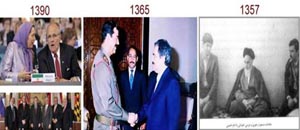 between the Mojahedeen (MEK) and Iran’s enemies.
John Bolton was invited as replacement for Rudy Giuliani who abruptly cancelled just before the event. The MEK organizers did not announce the venue for the event, likely in fear of potential backlash by the local Iranian community.
Articles and videos replete with statements by Bolton and Giuliani on the need to bomb Iran are easily available online, also expressed with equal zeal by Rajavi’s cult. While Bolton and Giuliani call for bombing Iran and "crippling sanctions", the MEK do just the same, only replacing "Iran" with "Mullah’s regime." But alas, the target in both cases remains the same–the people of Iran.
The issue with the MEK is not a philosophical one. It is simple. What these Islamist Marxian terrorists have done throughout their existence can be summed up in one word: treason.
From licking the backside of Soviet Russia, to bending over for their "Imam" Khomeini, to doing "Brother Saddam’s" bidding, and now prostituting themselves to Israel and its Neocons–theirs has been a history of constant betrayal–betrayal the likes of which has no equivalent in modern Persian history.
More than one million was raised by a group with a blood soaked past with the help of the Neocons, another group with hands drenched in blood. The target: Iran. And yet, America’s Iranians have yet to bat an eye. John Bolton and Rajavi’s minions may eventually sow the destruction they seek, and if they do, none other is to blame but our silence.
By Kourosh Ighani
Former top inspector of the Iraqi ministry of agriculture said the current troubles which oppressing powers like 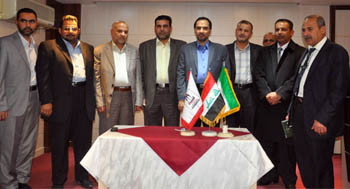 the Zionist regime are creating for the Islamic Republic of Iran is not a new thing and they have tried this since the beginning of the revolution.
Mohsen Mousavi made the remarks during a meeting of a delegation of Iraqi officials, scholars and university professors with Seyyed Mohammad Javad Hasheminejad Secretary General of Habilian Association in Mashhad.
Seyyed Mohammad Javad Hasheminejad started the meeting with a brief on the recent developments in the region and awakening of the Islamic nations.
Referring to the colonial role of western governments during the past decades, he said: “Whenever the front opposing oppressive powers has been comprised of governments that enjoy little or no support from their people, the result has been nothing but a total failure for them. But, where the nations have confronted the colonizers, success has been achieved and the enemy heavily defeated.”
Mr.Hasheminejad pointed out the close and historic relationship between the two Iranian and Iraqi nations and expressed: “The two nations have long been in contact so the enemies have tried to separate them. But we can see although the ties between them had been practically cut for 40 years, the two nations welcomed each other after the fall of Saddam’s Ba’ath regime.”
Habilian SG also pointed out the western governments’ aim, specifically the U.S. government’s, to create separations between the nations in the region including Iran and Iraq and said: “The U.S. needs mercenary terrorist groups such as the Mujahedin e-Khaql organization. When the U.S Army occupied Iraq, it lacked the knowledge on Iraqi tribes and groups, so the MEK which had long stayed in Iraq, was used by the U.S Army for terrorist operations and training other terrorist groups.
Appreciating Habilian Secretary General for his beneficial details on terrorist MEK and U.S. colonial plans in the region, Seyyed Saber al-Hosseini, the head of Iraqi center for strategic studies, highlighted some activities of his center and said: “The center for Strategic Studies of Iraq has executed very good plans to reveal MEK’s crimes inside and outside Iraq. These activities include Satellite TV programs and brochures in Iraqi universities. Mobilizing people and rallying towards MEK camps has been another activity we have done several times during the past recent years.
He reiterated: “The terrorist MEK had a major role in suppression of the honorable Iranian nation and also the Iraqi nation at the Sha’abanieh Intifada as the Saddam’s striking arm. “
The Iraqi scholar referred to the problems on the way to expel the MEK and said: “You are aware the Iraqi administration is not all united and this is the reason of some problems created. Some people are after returning Iraq to the Saddam era.”
In another part of his speech, Saber al-Hosseini said: “We hope Habilian Association has a good connection to the institutes working in Iraq on terrorism. The two nations’ martyrs have had common goals which could be the interface between the nations. About 250 thousand of the Iraqi people were martyred by Saddam regime because they didn’t take part in the war against Iran. This shows Iraqi people were not willing for this war to take place.”
Mohsen Mousavi, former top investigator of Iraqi ministry of agriculture, pointed out the victory of Iranian Islamic revolution led by Imam Khomeini and the struggles in the beginning of the revolution which shed light on the nature of different groups and also the efforts from oppressing powers including the Zionist regime against Islamic Republic and said: “The current troubles these powers are creating for the Islamic Republic of Iran is not a new thing and they have tried this since the beginning of the revolution. What has changed, is the direct presence of U.S. and Israel in the region. The result of this presence is that we can see numerous terrorist groups supported by western powers.
Referring to MEK’s status in Iraq he said: “The MEK is all surrounded and its activities are watched. They can’t do anything in Iraq, but unfortunately there are other political movements and parties in Iraq which are after destabilizing the country with the support of the U.S. and Israel. Financial support of these groups is continuous and not limited. Unfortunately, this is harmful for some popular political groups that are seeking new fields of activity. These terrorist acts hinder their activities.”
Former top investigator of Iraqi ministry of agriculture described the ties between the two nations as inseparable and said: “Naturally, these terrorist groups’ activities are an effort to cut the ties between the Islamic republic of Iran and government of Iraq. The U.S. failure in Iraq has been one of the reasons for harsh economic blockade against the Islamic Republic. “
At the end, Mousavi said: “Number of people killed after Saddam’s fall in Iraq is way more than number of the people killed before and even during the Saddam era. We hope a certain framework is created between us. Not only for the MEK threat, but also for opposing any common threats the both nations are facing in the region.”
At the end of the meeting, Seyyed Mohammad Javad Hasheminejad referred to the various aspects of MEK’s presence in the region and their destructive role and said: “Two issues must be addressed about the MEK. First of all they are still in the region and surrounded. But this is not all the problem. According to our Iraqi friends, there are several people in the Iraqi administration and Parliament who support them. Several Iraqi newspapers have taken money from them, so they also support the MEK. This is their destructive role. Unarmed MEK is far more dangerous than armed MEK.”
Hasheminejad continued: “The MEK is now seeking to destroy nations by highlighting their differences instead of just assassinating people. Anything leading to increment of tensions between the two countries is welcomed by them and this is the very destructive role of the MEK and one of the reasons why the U.S. is trying hard to keep them in Iraq. Another reason for the U.S. to try to keep the terrorist group in Iraq is to stop the MEK members from entering the United States. They are also well aware how dangerous these people can be.”
MEK and other anti-Revolutionary groups has launched attempts to wield their impact on the upcoming Presidential Elections in Iran, to be held in June 2013. Other groups inside Iran have shown their interest in elections, though.
According to this report, members of MEK, a terrorist group, entered Iran illegally and were doing sabotage and terrorists acts during the street uprisings in Iranian 2009 presidential elections. They launched an attempt to extend the riots.
Mujahedin-e-Khalq, also known as Monafeqin, have committed more than 19,157 murders of Iranian citizens since 1979. They also have killed 5 US militaries.
Iran Khabar Agency is one of the news agencies of the MEK terrorist group, which, during 2009 Iranian presidential elections, reported false stories about the elections with the objective of spoiling image of Iran in international scene.
This website has been active since recent few months and published reports about 2009 presidential elections provocative stuff about upcoming elections. In one such act, the terrorist group has contacted citizens in Tehran as polling institutes and made proactive questions as ‘ was 2009 presidential elections a fraud?’, or ‘ do you think that, if your favorite candidate is not elected, will you go to the streets and protest?’.
U.S. and Canada delisted the terrorist organization from their terrorist list despite their red pages of crime against more than 19,000 Iranians. This provides opportunity for MEK to act freely against Iranian government and people.
MEK is such a hated entity in the view of Iranians, that even Iranian opposition groups deny their relationship with MEK.
Another dimension of Rajavi’s anti- national relations
Muajhedin-e-Khalq Organization’s history is replete with treasonous acts.

Regarding various reports on the MKO’s relationship with Western intelligence bodies including CIA and Mossad, it is not surprising to figure out about the group’s deals with KGB almost at the same time it was harbored in Iraq where Saddam Hussein granted it logistical and financial support.
According to the archives of the Soviet State microfilm collection, the MKO leader hadn’t found Saddam Hussein’s support sufficient so he sought support from Russian Committee for State Security (KGB):
Reel 1.993, File 24
Resolution of the TsK KPSS Secretariat approving a response to a letter from M. Rajavi, leader of the Mujahedin [Holy Warriors] Organization of the Iranian People, to M. Gorbachev, and to a request submitted by the organization; two copies of instructions to the Soviet Embassy in Bulgaria to be delivered in ciphered form by the Committee for State Security (KGB); extract from the minutes of the TsK KPSS Secretariat; memorandum to the TsK KPSS from R. Ulianovskii, Deputy Chief of the International Department; letter to Gorbachev from Rajavi (translated into Russian) and the original letter in Persian; statement with information about the collection of documents attached to the letter from Rajavi; memorandum (translated into Russian) to the TsK KPSS from F. Olfat, member of the Politburo of the Mujahedin Organization, and the original letter in Persian requesting that the TsK KPSS lend any amount of money (up to US$300,000,000) to the Mujahedin Organization; memorandum to the TsK KPSS from Olfat, (translated into Russian) and the original letter in Persian requesting that the supporters of the Mujahedin Organization be allowed to cross the Soviet-Iranian border and be granted a temporary asylum in the Soviet Union 1985 December – 1986 February
Source : oac.cdlib.org
The only reason the terrorist Mojahedin-e Khalq Organization (MKO, also known as MEK, PMOI and NCR) is still on the planet is that the US needs them, a prominent Russian journalist said.
"I think they (MKO) took part in the events after election in 2009," Nadezhda Kevorkova said during a meeting with Habilian Association Secretary General Seyed Mohammad Javad Hasheminejad in Tehran.
According to the confessions made by those arrested in the 2009 post-presidential election protests in Iran, the MKO played a key role in those unrests.
Denying the MKO’s claim for bringing democracy to Iran, Kevorkova said her country considers the MKO members as nonexistent.
Many of the MKO members abandoned the terrorist organization while most of those still remaining in the group are said to be willing to quit but are under pressure and torture not to do so.
A May 2005 Human Rights Watch report accused the MKO of running prison camps in Iraq and committing human rights violations.
According to the Human Rights Watch report, the outlawed group puts defectors under torture and jail terms.
The group, founded in the 1960s, blended elements of Islamism and Stalinism and participated in the overthrow of the US-backed Shah of Iran in 1979. Ahead of the revolution, the MKO conducted attacks and assassinations against both Iranian and Western targets.
The group started assassination of the citizens and officials after the revolution in a bid to take control of the newly-established Islamic Republic. It killed several of Iran’s new leaders in the early years after the revolution, including the then President, Mohammad Ali Rajayee, Prime Minister, Mohammad Javad Bahonar and the Judiciary Chief, Mohammad Hossein Beheshti who were killed in bomb attacks by MKO members in 1981.
The group fled to Iraq in 1986, where it was protected by Saddam Hussein and where it helped the Iraqi dictator suppress Shiite and Kurd uprisings in the country.
The terrorist group joined Saddam’s army during the Iraqi imposed war on Iran (1980-1988) and helped Saddam and killed thousands of Iranian civilians and soldiers during the US-backed Iraqi imposed war on Iran.
Since the 2003 US invasion of Iraq, the group, which now adheres to a pro-free-market philosophy, has been strongly backed by neo-conservatives in the United States, who argued for the MKO to be taken off the US terror list.
The US formally removed the MKO from its list of terror organizations in early September, one week after Secretary of State Hillary Clinton sent the US Congress a classified communication about the move. The decision made by Clinton enabled the group to have its assets under US jurisdiction unfrozen and do business with American entities, the State Department said in a statement at the time.
In September 2012, the last groups of the MKO terrorists left Camp Ashraf, their main training center in Iraq’s Diyala province. They have been transferred to Camp Liberty which lies Northeast of the Baghdad International Airport.
Camp Liberty is a transient settlement facility and a last station for the MKO in Iraq.