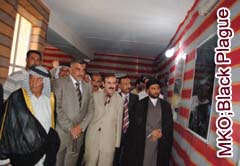
At the beginning of the second year of the families’ sit-in:
Why do we seek prosecution of Rajavi?
(leader of Mojahedin Khalq, MKO, MEK, NCRI, Rajavi cult)
The Iraqi newspaper “assabah” stated in its 23rd of January issue that fresh documents have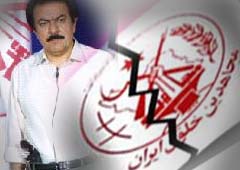 been found which leave no doubt that the Mojahedin-e Khalq Organization (MKO – Rajavi cult) took part in suppressing the Iraqi people and has supported terrorist acts inside the country.
The article refers to the cult’s terrorist acts against the people of Iran, crimes against the people of Iraq even after Saddam Hussein was toppled, and confining and torturing and even murdering its discontented members inside Ashraf military garrison.
The accounts referred to in this article in interviews by the governor of the city of Khalis as well as the chief of police of Diyala province had a great impact in the Iraqi media and media circles. These statements were quoted by a number of Iraq media which also covered the interview.
It is obvious that the Iraqi judiciary system and the government and politicians of Iraq as well as the people of this country seek Rajavi’s prosecution and trial and seek expulsion of the members of his cult from Iraq. Nowhere in the world has a foreign terrorist group been granted by the Americans so much privilege inside a host country that it could be considered a government within a government. This is of course the legacy left by Saddam Hussein for the people of Iraq, and the American forces still impose it on them supposedly for their own political interests.
Massoud Rajavi and the heads of his cult have a huge file in the Iraqi judiciary which is truly bigger than the one of Saddam Hussein and his aides. But the trial of the leaders of the cult has had the same fate as Maryam Rajavi’s file in Paris – she was arrested and charged with attempting terrorist activities against defectors and fraud and money laundry more than seven and a half years ago and she is still waiting trial – since for the time being she has been hired by the Americans and the Israelis.
The former members of the Rajavi cult and the families, as well as the families of the victims of terror and violence in Iraq and in Iran, have many claims filed against the cult and its leaders in the Iraqi courts. Each of these complaints which contain firm evidential documents is enough to put any person on trial. But the story for Rajavi, who has established one of the most destructive and notorious cults of personality and mind manipulation in history, is different since some imaginary political interests are at stake.
The Sahar Family Foundation has always welcomed the trial of Massoud Rajavi for his deeds, particularly against the members and the families. Such a trial should definitely take place with the presence of international observers according to all internationally acknowledged rules and regulations while accepting the recognized rights of the defendant. Our demand is not taking revenge and we do not even seek ordinary justice. We believe that the world must be aware of the destruction brought about by cults to society and the security of society. No one should any longer be trapped by a brainwashing system. No longer should the idealistic youth who desire to struggle for freedom and justice be allowed to be deceived into a mind manipulation organization.
We do hope for that day


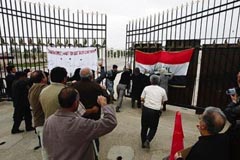 concern for their country. Tribal leaders, clerics and local officials were among those who had taken part in the protest.
 from the Diyala Province and NGOs from all over Iraq, calling for the removal of foreign terrorist group Mojahedin-e Khalq from their country, came under attack by leading members of the group who used bottles, stones and other implements to try to deter the demonstrators. This did not surprise anyone as the MKO had been issuing threats in its western based media in the days running up to the gathering.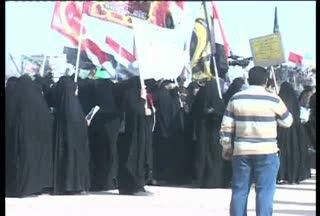
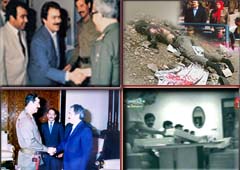 death sentence because of his crimes which include his role in eradicating rival political-religious parties while holding power during the Ba’athist regime. Aziz had been on trial in a long-running case in which he was accused of being part of a campaign of persecuting, killing and torturing members of the Shiite opposition and other banned parties. [2]
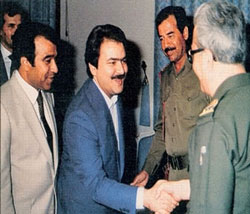 man’s previous supports from Mojahedin-e Khalq. This is an alarm for people like Massoud Rajavi who are responsible for the death of tens of thousands of people and now are hiding in their shelters. Rajavi and other leaders of the MKO consider the fate of Tariq Aziz as their own coming destiny. Therefore they are frightened from being trapped by justice one day.