
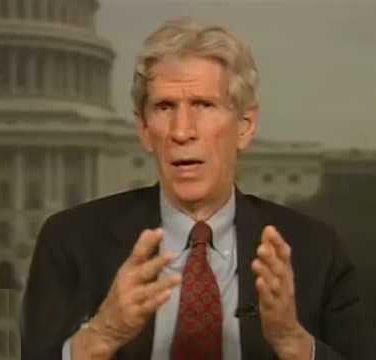
Gareth Porter, author of “Manufactured Crisis: The Untold History of the Iranian Nuclear Scare”, is a renowned investigative journalist and historian on U.S. national security policy. Porter was the 2012 winner of the Gellhorn Prize for journalism awarded by the Gellhorn Trust in the U.K. His previous book was Perils of Dominance: Imbalance of Power and the Road to War in Vietnam published by University of California Press in 2005. He has taught international studies at the City College of New York and American University, where he was the first Academic Director for Peace and Conflict Resolution in the Washington Semester program. Dr. Porter sat down with Reza Akhlaghi of the Foreign Policy Association to discuss his newly released book.
The FP interview was published under the title "A Candid Discussion with Gareth Porter" on March 4, 2014. Reza Akhlaghi thoroughly discussed the Israel-MKO collusion with Dr. Porter who has documented the MKO-Israel misleading role in manufacturing the Iranian nuclear crisis. The following was extracted from the full interview:
–Iran’s “possible military dimensions” as one of the sticking issues in the current nuclear negotiations must be resolved—according to the White House—to the satisfaction of the International Atomic Energy Agency (IAEA). In your conversations with the former German Foreign Office coordinator of North American-German relations, Karsten Voigt, the documents at the hands of the IAEA that point to the presence of such covert military program come from the Iranian dissident group, Mojahedin-E-Khalq (MEK) organization. Tell us about your conversations with Mr. Voigt, how credible these documents are, and if they will be used in the current negotiations?
-Karsten Voigt provided the most crucial revelation in my book – that the documents that had been described in the news media as having come from the purloined computer of a scientist participating on a covert Iranian nuclear weapons research program, were in fact given to the BND, the German intelligence agency, by the MEK, and that the BND had concluded that the MEK source was “doubtful”. Voigt, who is now retired from the German Foreign Office, told me in an interview last year that senior officials of the BND informed him of that fact in November 2004 after Secretary of State Colin Powell had spoken publicly about Iranian efforts to combine their ballistic missile, the Shahab-3, with a “weapon” – meaning a nuclear weapon. They knew that Powell was referring indirectly to information in those papers and they were alarmed, because it appeared that history was about to repeat itself: Powell had cited information from another MEK source two years earlier as the centerpiece of his rationale for war in Iraq. That source was the now infamous “Curveball”. The BND had tried in vain to warn the CIA not to rely on that information, and Voigt believed they now wanted him to do something to warn the United States not to use the information in the “laptop documents” either. Voigt did, in fact, try to do so. But in the event, the Bush administration pushed those documents on the IAEA and they became the basis for that Agency’s indictment of Iran’s nuclear program from 2008 to 2011.
The complete story of those documents in the book, however, includes the evidence I found in my investigation that they were fabricated by Israel in order to advance a strategy of provoking a military confrontation between the United States and Iran.
Nejat Society reported from Foregin Policy
 welcomed the Italian government’s decision to let into the country a total of 15 Iranian refugees from Iraq, including the seven latest arrivals.
 respectful of human rights, for the former residents of Camp Ashraf. It was promoted by the Farnesina in collaboration with the Office of the United Nations High Commissioner for Refugees (UNHCR).
 The Barack Obama administration has demanded that Iran resolve “past and present concerns” about the “possible military dimensions” of its nuclear program as a condition for signing a comprehensive nuclear agreement with Tehran.
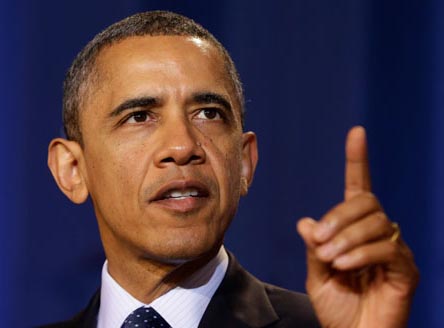 Apart from pressure from Washington that Israel give up the assassination program, sources close to Israel’s intelligence agencies told CBS News’s Dan Raviv that Mossad itself viewed the campaign as too dangerous to continue. Raviv, who was updating a book he co-wrote about the history of Israel’s intelligence agencies, said the pressure form the Obama administration was “more than a hint.”
 Mojahedin-e Khalq leave the country. EU spokesman Michael Mann told the Iran Times the EU has, over several years, given various UN agencies 14 million euros (about $19 million today) to help them interview and register the Mojahedin members, but has not yet given any money to support the group’s relocation since that is an issue for individual member states. So far, Germany has offered to accept 125 Mojahedin members and Albania 220.
 obligations in this respect.

 The Daily Beast reports Rep. Ileana Ros-Lehtinen (R-FL), while acting as chairwoman of the House Foreign Affairs Committee, sent a letter to federal agencies on behalf of William and Roberto Isaias, who once ran the Ecuadorean bank Filanbanco before being convicted in absentia in Ecuador of embezzling more than $100 million as the bank collapsed. The brothers never spent any time in prison because they fled to the United States, where they remain today even as the threat of extradition grows. But the Isaias brothers have friends in high places. Senate Foreign Relations Chairman Robert Menendez (D-NJ), who is being targeted by an FBI investigation for alleged corruption related to the case, made phone calls and sent letters in support of their residency request.