
The Cult of Mojahedin: compliance with ethical obligations
Many believe that the US will use Machiavelli MKO until it is usable and until tensions exist between the two countries, otherwise Americans consider the organization as a mob of war criminals and terrorists that have to be tried for different charges such as killing thousands of Iranian civilians. Of course, MKO has nothing to lose as an opposition group that hardly respects political ethics in its struggle. It is much a new challenge for the US for having put any trust in a proscribed terrorist group that is heavily built on the structure of a cult of personality.
MKO’s inherent tendency toward Machiavellianism frustrates having any trust in its promises and Americans are well aware of the fact that even the group’s surrendering of weapons following the invasion of the coalition forces to Iraq was a tactic to prevent its complete demise. Completely disregarding to respect any codes of ethics in its political conducts with the world outside, MKO is among the rare political and the so-called revolutionary organizations that from its very formation preferably adopted a stealthy policy so as not to bring its strategic and ideological rudiments into view.
As a terrorist group, MKO considered violence and aggressive actions as ethical and legitimate for the accomplishment of the cause since the Machiavellian motto of “the end justifies the means” permitted it to take advantage of any unconventional and violent means in the power struggle. As Walter Reich explains; “A terrorist if considers something ethical, according to his understanding of ideology, it turns to be accepted ethics by all members. Thus, according to that same ideology, the killing of anybody as enemy would be justifiable and necessary”. 1
The group’s duality of conducts took a turn for the worse when it transformed into a cult of personality and mingled terrorism with cultism. Explaining on the inherent double set of ethics in the cults Thaler Singer sates:
Cults tend to have a double set of ethics. Members are urged to be open and honest within the group and to confess all to the leader. At the same time, members are encouraged to deceive and manipulate nonmembers. In contrast, established religions and ethical groups teach members to be honest and truthful to all and to abide by one set of ethics. The overriding philosophy in cults, however, is that the ends justify the means, a view that allows cults to establish their own brand of morality, outside normal social bounds. 2
The most unequivocal reason behind the cults’ duality seems to be the created rift that splits the members from the world outside. In fact, under the influence of the cult’s dogmatism, a member, even if he wills, can hardly swing to any other transcendental belief than what the cult has convinced him to have belief in. Thus, a cult fanatic sees no need to undergo any conversion but to assume a false identity for some time. Eric Hoffer states that:
The fanatic cannot be weaned away from his cause by an appeal to his reason or moral sense. He fears Compromise and cannot be persuaded to qualify the certitude and righteousness of his holy cause. But he lings no difficulty in swinging suddenly and wildly from one holy cause to another. He cannot be convinced but only converted. His passionate attachment is more vital than the I quality of the cause to which he is attached. 3
In the same way, what forces MKO to get closer to the US in spite of its totally ideological contradiction with the imperialism is the need. MKO respects no political principles unless they could be of any instrumental use:
The fanatic is not really a stickler to principle. He embraces a cause not primarily because of its justness and holiness but because of his desperate need of something to hold on to. 4
Regardless of all these views, the main focus is on the supposition that Mojahedin’s dual character and contradictory conducts in its political dealings with the West and the US in particular endorse its untruthful cult feature. Developing cult methodology, MKO gave especial trainings to selected members working in foreign affairs offices of the organization. Massoud Bani-sadr, an ex-member, in his memorial well expounds on the duality of his chosen cult and the instructions he received to perform on the political scene:
Soon I learned we have to act in meetings as Liberal and as Bourgeois as possible. Those were my own characters that for past seven years I was running from them, for changing myself into a Mojahed. In this type of work, I had to have double character, double life and double behaviour, a character, which I hated most. Within the organisation we had to be, straight, simple, honest, humble, and very modest in dressing ourselves. While in work we had to be very careful in what we were going to say. Honesty didn’t have any meaning, nobody was advising us to lie, but we had to be very careful in not saying the whole truth in any subject, which we were talking about it. Only that part of truth had to be said and magnified which were beneficial for us. At this point, we had to give a lot of useless information, as much as making the listener tired of asking any question, especially questions related to those things, which we were not keen in talking about them. Our wording had to be as complex as possible to make it more sophisticated, and difficult to find the existed holes among our arguments. 5
The remarks made by a Western born and raised ex-member can also well explain MKO’s double face when attempting to craft viaduct to pass over the crisis and challenges:
A further look at the controversy of Rajavi’s political history shows an unprincipled avoidance of risk. The Mojahedin is an anti-imperialist group with a history of killing Americans, now happily having petitions signed by American Senators in 1991 while they stayed in Iraq. These Senators quickly withdrew their signatures when they discovered what they had been hoodwinked into supporting. The Mojahedin is a Muslim group with historical ties with the PLO, seeking the support of the Jewish lobby in the United States against the Iranian regime, and at the same time holding meetings with Yassir Arafat. The Mojahedin fought for Saddam in the Gulf War and at the same time took money from Saudi Arabia. Both the Jewish lobby and Saudi Arabia have now stopped any support. The Mojahedin have their main base in Paris, but at the same time threatened the French during the Gabon crisis with suicide bombings. 6
Well acquainted with MKO’s double set of ethics in political conducts, the US is reluctant to risk singling out MKO as a reliable alternative. MKO’s present claim of being the sole democratic alternative is nothing beyond pointless advertisements following the cultivated hope in it by some Western advocates and which is listened to only by a trivial number of misled sympathizers.
References:
Reich Walter; Origins of Terrorism: Psychologies, Ideologies, Theologies, States of Mind (Woodrow Wilson Center Press).
2. Thaler Singer, Margaret; Cults in Our Midst: The Continuing Fight Against Their Hidden Menace, p. 9.
3. Eric Hoffer; The True Believer: Thoughts on the Nature of Mass Movements, New York: First Perennial Classics 2002, p. 62.
4. Ibid. 61.
5. Massoud Bani-sadr’s memories of an Iranian rebel.
6. Iran-Interlink; Anne Singleton’s Saddam Private Army.
Mojahedin.ws, Research Bureau,
 fact, the process of brainwashing in a cult can be carried out within a structure of an absolute charismatic authority. Besides, in facing the outsiders, the built courage within the insiders originates out of the charismatic impact of the guru before whom they cringe and bow. Thus, first the recruits have to be convinced to put all trust in the leader before anything else and as Singer analyses:
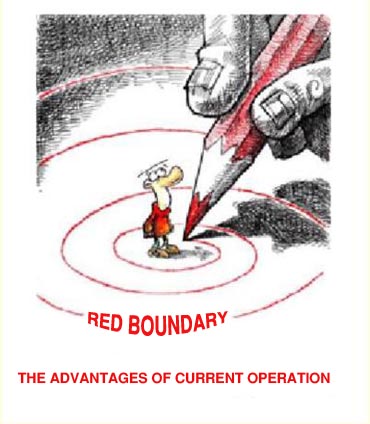 recruits so as not to make a free approval and disapproval of the cult they are invited to join. If the targets are to join and exist in the cult, they must conform to the rules even if they are not privately accepted. Once joined, the targets have to conform to the cult’s standards regardless of having developed an awareness of the existing discrepancy between personal and social standards and those of the cult’s.
 Mojahedin began their military operations in August 1971. Their first operations were designed to disrupt the extravagant celebrations of the 25-century anniversary of the monarchy. SAVAK [the Monarchy’s security-information apparatus] through one of the old member of Tudeh party, who was recruited by them, could infiltrate into Mojahedin and soon was able to arrest another sixty-six members. In the subsequent months, the group lost the whole of its original leadership through executions or street battles. 1

 Taking refuge in France, the Iranian Mojahedin-e Khalq Organization has shown its cult potentiality and to mobilize people for multiple protest demonstrations. In the course of Iran-US football match in Lyon in 1998, for example, and the visits of Iranian key officials to France, notably that of President Khatami in 1999 and Iranian members of parliament in February, 2001, the organization demonstrated the degree of its mass mobilizing threats that alarmed France. Reported by Associated Press, 21 June 1998, quoting some French authorities talking about some taken security measures before Iran-US football match, we read:
 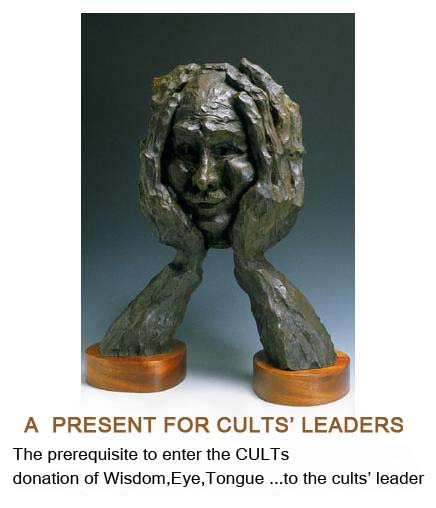 person or group of people that has near-complete control. Charismatic cult leaders often make extreme claims of divine or “otherworldly” power to exercise influence over their members. Many legitimate religions have had powerful figures who have inspired enormous dedication in people. Being a powerful leader is not inherently wrong , though it carries a high potential for abuse. A group becomes destructive when its leader actively uses such power to deceive members and to rob them of their individuality and free will. For example, I was told to surrender my free will (viewed as Satanic) to God’s representative, Moon, and his subleaders. Marshall Applewhite told followers that an alien entity was speaking through him, and used his message to justify his absolute control over their lives.
 for censure, persuasion, distortion, brainwashing and mind-control activities against their insiders and sympathizers. Cults show diverse and double reactions in their dealing with the media that draw substantial public attention to accomplish a variety of objectives. Besides, the media in any form play a key role in the formation of public opinion and thought, life-style, and even the depiction of a nation’s destiny. For sure so important, versatile phenomena of the modernity never escape the attention of the cults. In the same way that the media can give warning against the threat and the evil nature of the cults, they can also be at their service, depending on the amount of revenue and how influentially they can master them, to instil noxious ideas into a society. However, since the media can hardly be an exclusive medium for the cults and in many occasions it is too expensive a means for propagation with the least expected outcome, and sometimes inflicts irreparable damages, the cults prefer not to invest much trust in the media. The case is sometimes different with the political cults. If we consider deliberate isolation tactic as one of the cults’ most common mechanisms of control and enforced dependency, then the social persuasion is the identical definition of the mechanism. The recruits are encouraged to disrupt their common lifestyle and leave whatever they are attached to behind to adapt themselves to the cult’s milieu in isolation. In this process, what is considered to be a threat in neutralizing the effects of the social persuasion will be the media which the cults favour to avoid. That is mostly because cults’ prompt of black-and-white thinking fails to be functional and productive in the media which has to be repelled. However, cults are not so powerful as the governments that can have total control over the media for social persuasion and people’s mind-control if they will. Quoting Orwell reasoning the effectiveness of the media coming under the complete control of the governments, Singer states: Orwell reasoned that if a government could control all media and interpersonal communication while simultaneously forcing citizens to speak in a politically controlled jargon, it could blunt independent thinking. If thought could be controlled, then rebellious actions against a regime could be pre- vented. 1 Milieu control, that is total control of members’ communication in the cults, is a mechanism to keep members from communicating anything other than what the cults approve and often involves discouraging members from contacting relatives or friends outside the cult and from reading, watching and listening to anything unapproved by the cult or the organization. Consequently, the effectiveness of the media in illuminating facts about the cults and active organizations is actually neutralized and the insiders are told not to believe and trust in anything they see or hear reported by the media that has to be accounted as an agent in the enemy’s front. In this way, the cults’ leaders blindfold members about historical facts: Milieu control also often involves discouraging members from contacting relatives or friends outside the group and from reading anything not approved by the organization. They are sometimes told not to believe anything they see or hear reported by the media. One left-wing political cult, for example, maintains that the Berlin Wall is still standing and that the "bourgeois capitalist" press war people to think otherwise in order to discredit communism. 2 As a result, cults’ hostile position against the media decreases the influence of the media on the members to a zero degree. Furthermore, cults exploit a variety of approaches and legal levers in the war against the media. Sometimes they use violent tactics such as threatening, intimidation and harassment to frighten away the critics, reporters, journalists and authors and to compel them cease anti-cult productions and programs: A metropolitan newspaper’s desk editor was harassed after he ran a piece critical of a local cult. He and his family had to move out of their home after receiving seventy-two hours of continuous phone calls from cult members. 3 As mentioned earlier, if possible, cults will set up complex networks of public relations and radio-TV stations to make a direct channel of communication and contact with the sympathizers rather than letting them refer to public media for information. Such a biased medium works as sufficient to hold the followers hooked onto the cult. As Singer explains: Cults have found many ways to restrict and control public information about them. Some groups have brochures, handouts for the press, and written overviews and endorsements of the group, often prepared by sophisticated public relations firms. In essence, these materials imply that "you need go no further. Here is who we are. Here is all you need to know to understand us perfectly. Take this material and use it. Everything is fine." The implication is that the material is objectively represented and relatively comprehensive. 4 As a leftist cult, Mojahedin-e Khalq Organization (MKO) has adopted various tactics to muzzle and beat the media. It will be discussed in the following article. References: 1. Margaret Thaler Singer; Cults in Our Midst, JOSSEY-BASS, 2003, introduction. 2. Ibid, p. 70. 3. Ibid, p. 224. 4. Ibid, p. 226.
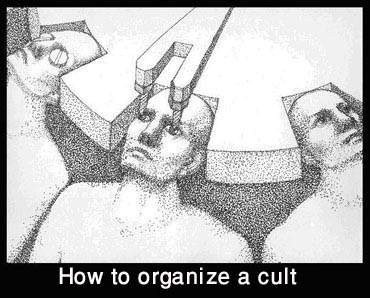 As part of the intense influence and change process in many cults, people take on a new social identity, which may or may not be obvious to an outsider. When groups refer to this new identity, they speak of members who are transformed, reborn, enlightened, empowered, rebirthed, or cleared. The group’ approved behavior is reinforced and reinterpreted as demonstrating the emergence of "the new person." Members are expected to display this new identity. 1 The new personality totally split from the outside world is manipulated for a variety of group tasks based on the objectives of the group and cult that consider the outsiders as the enemies who have to be confronted: The conflicts a mass movement seek and incites serve not only to down its enemies but also to strip its followers of their distinct individuality and render them more soluble in the collective medium. 2 As Hoffer asserts, a cultist personality is formed to be submissive to the inner-cultic relations that have priority to outwardly demonstrated ambitions and goals. The members undergoing overall identity change easily consent to any means of changing behaviour and conduct. Thus, cults can successfully accomplish their goal of binding new members to the group. Considering the stages people will go through as their attitudes are changed by the group environment and the thought reform processes, Singer points to psychologist Edgar Schein’s second stages of three: During this second stage, you sense that the solutions offered by the group provide a path to follow. You feel that anxiety, uncertainty, and self-doubt can be reduced by adopting the concepts put forth by the group or leader. Additionally, you observe the behavior of the longer, term members, and you begin to emulate their ways. As social psychology experiments and observations have found for decades, once a person makes an open commitment before others to an idea, his or her subsequent behavior generally supports and reinforces the stated commitment. That is, if you say in front of others that you are making a commitment to be "pure," then you will feel pressured to follow what others define as the path of purity. 3 There are also the eight psychological themes that psychiatrist Robert Lifton has identified as central to totalistic environments and cults invoke these themes for the purpose of promoting behavioral and attitudinal changes in the members. The third theme, demand for purity, depicts two opposite world of black and white; the cult being an absolutely white and clean world versus the black and evil world of outside. Of course, the members with a new personality have no other choice but to think and act according to cult’s ideology and drawn strategy: An us-versus-them orientation is promoted by the all-or-nothing belief system of the group: we are right; they (outsiders, nonmembers) are wrong, evil, unenlightened, and so forth. Each idea or act is good or bad, pure or evil. Recruits gradually take in, or internalize, the critical, shaming essence of the cult environment, which builds up lots of guilt and shame. Most groups put forth that there is only one way to think, respond, or act in any given situation. There is no in between, and members are expected to judge themselves and others by this all-or-nothing standard. 4 The process of producing identity within MKO follows the same mechanism in the cults and its orientation began with the start of the internal ideological revolution. All the members undergoing the revolution process admitted their identity change, that there does exist a long distance between their organizational and personal identities. It was instilled into them that their identity would be prompted based on the extent of adherence to the ideological system of the group and denial of any personal identity. In a text written by a member of MKO in self-denial we read: Personality, egocentrism, self-reliance and individualism are all souvenirs of the bourgeoisie’s worthless humanism that distanced me from the organization as far as its degree of its impact on me. It was like a chaff that barred me to drink the pure, life-giving instructions of the organization and was leaving me alone in a desolate waste-land with no way out. I was enslaved by dominant ambiguities within me. When I failed to overcome the ongoing struggle inside me, I was even more vulnerable to the outside misfortunes and could not even face them. 5 The member’s confession well depicts his identity destabilization and what psychologists call an identity crisis. He looks back at his own world and values to find out that he has been wrong in the past. This process makes him uncertain about what is right, what to do, and which choices to make and of course, as he admits, only the cult-like instructions of the organization can lead him to what is inspired to be the right path. Consequently, he takes on a new organizational identity which he considers a change for the better. In the process, he, as the member of a cult, detaches from his most dear ideas and attachments which he discovers to have been nothing beyond a barren waste-land for the identity reborn, a utopia in the horizon he fails to dismiss easily. Masoud Banisadr, another separated member of MKO, in his memoir relates of the time when sat tearing whatever attached him to the past under the commands of the organization: This time I attacked my old photographs from my own childhood till marriage and up to then, my parents photographs as I wanted to deny all of them, my father who was perhaps responsible for my bourgeois tendencies and my mother who was responsible of my own ‘mild’ and ‘gentle’ behaviour known as liberal ones. Anna seeing me taking all those photographs and albums, with anger, was quietly crying, then when I attacked our marriage Album she start crying louder, and asked me to stop it. She said those are not just yours . . . but I was not listening to her and took everything and put them in a rubbish bag. 6 Quoting Lifton’s forth theme, through a cult’s instructions, members are told whatever connects them to their former lives is wrong and has to be avoided, a fact well affirmed by MKO’s ex-members: Through the confession process and by instruction in the group’s teachings, members learn that everything about their former lives, including friends, family, and nonmembers, is wrong and to be avoided. Outsiders will put you at risk of not attaining the purported goal: they will lessen your psychological awareness, hinder the group’s political advancement, obstruct your path toward ultimate knowledge, or allow you to become stuck in your past life and incorrect thinking. 7 That is why MKO refer to members’ solubility in the organizational identity as a “reborn” or “identity salvation”. The organization, being transformed into a cult, pursues the same cult mechanism of altering the members’ personal identity to produce a new identity. References: 1. Margaret Thaler Singer; Cults in Our Midst, JOSSEY-BASS, 2003, p. 78. 2. Eric Hoffer; The true believer, Harper &. Row, Publishers, New York, 1966, p. 112. 3. Margaret Thaler Singer; Cults in Our Midst, JOSSEY-BASS, 2003, p. 76. 4. Ibid, 71. 5. Mojahed, no. 252; Abdol-ali Maasoumi’s letter to the ideological revolution. 6. Masoud Banisadr; Memoirs of an Iranian Rebel. 7. Margaret Thaler Singer; Cults in Our Midst, JOSSEY-BASS, 2003, p. 72.