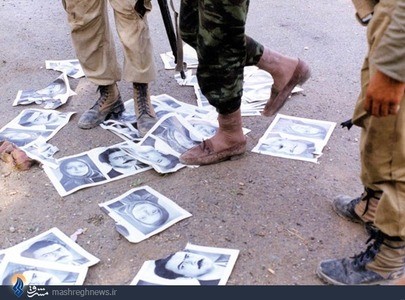
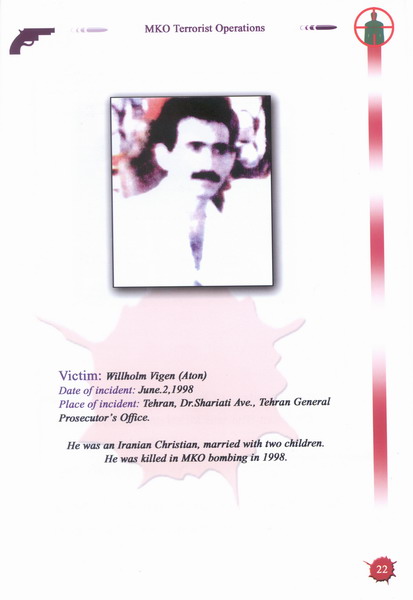
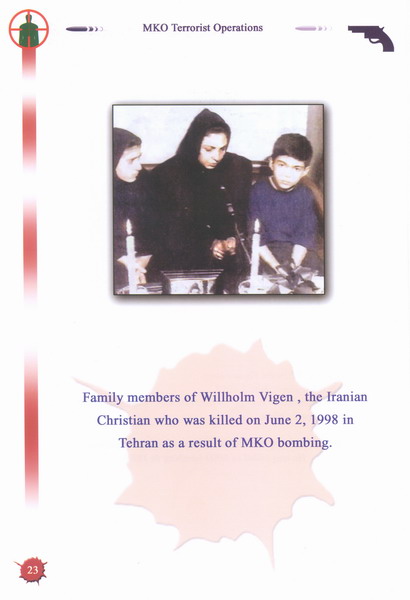
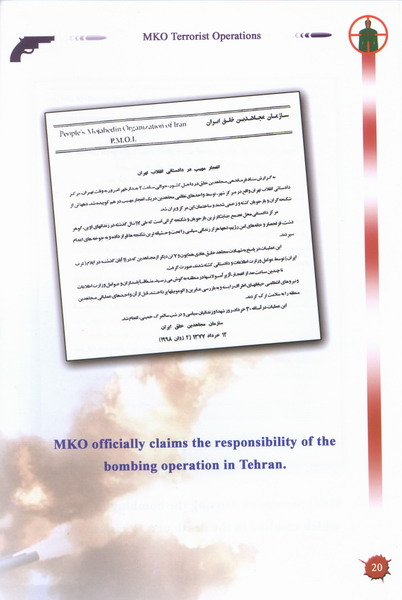
Towards the end of 2018, a flawed and suspicious 140-page report was published by Amnesty International (AI) about events which took place in Iran in the summer of 1988. This report, after more than 30 years, talked about the alleged executions of Mojahedin-e Khalq (MEK) members. The MEK was referred to as a peaceful democratic opposition to the Islamic Republic of Iran even though the MEK was conducting terrorist and military operations against Iran before and after that time.
Examination shows that the report was written by Raha Bahreini, Mansoureh Mills, Shadi Sadr, and of course mainly by the MEK in Albania, and it was approved for publication by Philip Luther, research director for MENA (Middle East and North Africa) at AI.
Following publication of the report many families and victims of the MEK sent letters of complaint to Mr Luther at philip.luther@amnesty.org about anomalies in the report. To date, these have remained unanswered and AI has apparently adopted a policy of ignoring and silence.
When approached in person, AI officials have not accepted responsibility for the content of this report and have instead referred complainants to the authors at raha.bahreini@amnesty.org and mansoureh.mills@amnesty.org and asked them to send their complaints to the writers directly, which is quite odd. Amnesty International did not deny the role of the MEK and Shadi Sadr in preparing this report.
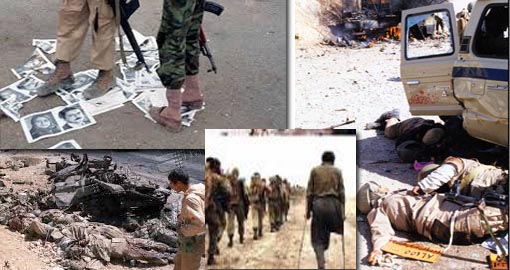
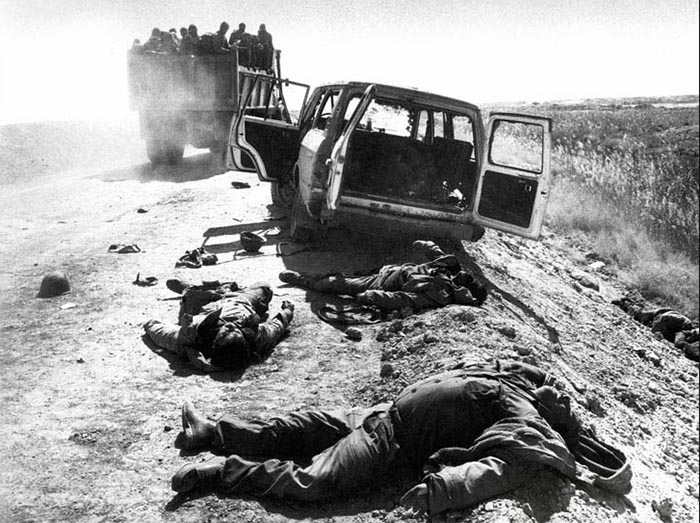
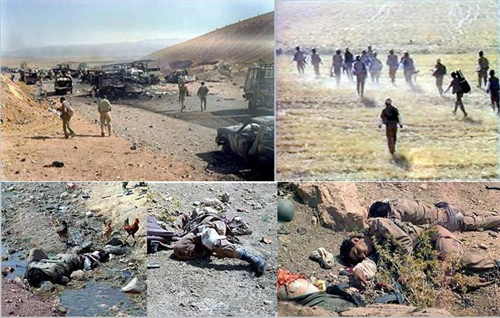
One of the central complaints about this shameful whitewashing propaganda piece by AI concerns the war crimes committed by the MEK in its Eternal Light operation. This operation took place less than a month before the executions. Yet amazingly in these 140 pages there was no mention of the over ambitious and doomed military invasion into Iran in which more than 3000 MEK members – many non-combatant civilians – were killed. Responsibility for the Eternal Light operation lies entirely with the MEK, in particular the leaders Massoud and Maryam Rajavi.
Another glaring fault is that all those whose testimony was included in the report are supporters of the MEK. Yet there are many, many families both in and outside Iran who do not support the MEK but whose testimony was not invited. The report cannot be said to be fair or independent based on this omission.
Among other complaints are that the report does not mention that currently the MEK, facilitated by the Albanian government, still does not allow families to have contact with their loved ones trapped in this group in the closed camp in Manez in Albania. This represents an ongoing violation of basic human rights which families have complained about for several years now.
It is a great pity that a human rights organization with more than a half-century background, has become a tool for political games in the region, and has produced such a long-outdated, narrowly researched and biased report, without addressing any of the complaints it has provoked.
In this regard, the first letter of complaint sent by the families to the Secretary General of Amnesty International Mr. Kumi Naidoo at sct@amnesty.org.uk can be found at the link below:
Mujahedin Khalq Organization as a terrorist group
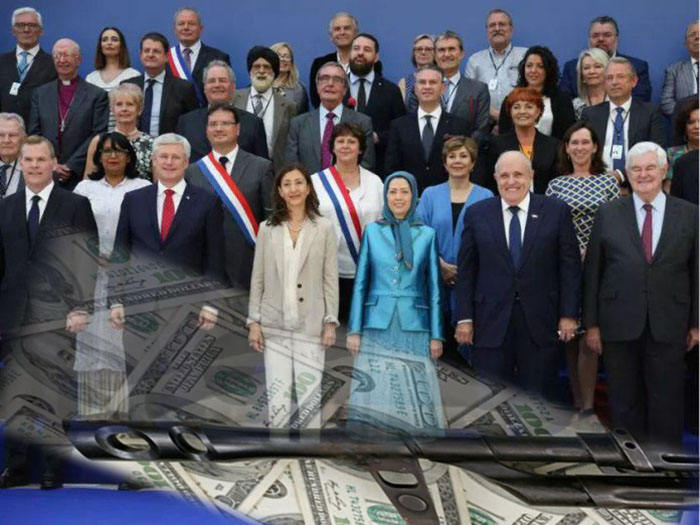
Rudy Giuliani shills for the Mujahideen-e Khalq (MEK) again:
We strongly support the largest and most organized Iranian opposition, known as the Mujahedin e-Khalq (MEK).
The MEK has no support inside Iran, and it has scant support among Iranians in the diaspora. They cannot be the “largest” opposition group when they have virtually no supporters outside the ranks of their own totalitarian cult, and it doesn’t mean anything to say that a cult is organized. Giuliani’s lame argument that the MEK must be powerful and influential because the Iranian government hates them doesn’t pass the laugh test. The Iranian government perceives the MEK as their enemy for obvious reasons, but it doesn’t follow that Iranians want to have anything to do with them. Legitimate opponents of the Iranian government hold this group and its Western fans in contempt, and most Iranians don’t desire the regime change that Western Iran hawks and the MEK seek.
Giuliani is just one of many former American officials and retired officers to embarrass and discredit themselves by advocating for the MEK, but he is also one of the most vocal. As the president’s lawyer, he has access to Trump and may be able to influence him on matters relating to Iran, and his fellow MEK booster John Bolton would have no problem with that. It is a measure of how ideological and fanatical many Iran hawks are that they have cultivated a relationship with such an appalling organization.
No matter what one thinks our Iran policy should be, the MEK is not a credible alternative to the current government. Seeking regime change in Iran is folly, but to promote an obnoxious cult as the answer to Iran’s problems is simply insanity. In addition to being a nasty cult, the group is responsible for killing Americans in the 1970s and aligned itself with Saddam Hussein in the Iran-Iraq war. Iranians understandably view them as traitors. Anyone who is cheerleading for the MEK is advertising both his ignorance of Iran and his hostility to the Iranian people.
By Daniel Larison ,Randy Miramontez / Shutterstock.com
The prominent journalist; Caleb Maupin who has several pieces on the Mujahedin-e Khalq interviews an MEK member during the group’s rally. Maupin published the video on his YouTube page:
About the MEK history he writes:
“During the Iraq-Iran War, the group became very friendly with Saddam Hussein. With money pouring in from the Iraqi regime, the group formed an armed outfit called the “Iranian National Liberation Army.” They went through Iran committing war crimes, hoping that they could secure victory for the US-backed Iraqi invaders that used chemical and biological weapons against Iranian civilians.
In one particularly brutal war atrocity, the MEK group killed nearly all the residents of a village called Islamabad-e Gharb. The group staged this cowardly attack on July 26th, 1988 – six days after Imam Khomeini had announced he was accepting a ceasefire with Iraq.
The number of innocent civilians slaughtered by the MEK or its various front groups such as the Iranian National Council of Resistance, is likely to be in the tens of thousands, if you include the number of civilians killed during the bombing campaigns, the number of people MEK linked groups slaughtered during the Iraq-Iran War, and the number of victims of MEK terrorism against Iran throughout the 1990s and up to today. Human Rights Watch has issued condemnations of the group for routinely torturing those it holds captive.
The internal workings of the group are equally frightening. A Human Rights Watch report from 2005 describes how, within its various bases and camps, the group subjects members to summary execution for violations of its bizarre regulations and practices…”
Caleb Maupin is a journalist, political analyst and activist who resides in New York City focusing his coverage on US foreign policy and the global system of monopoly capitalism and imperialism.
He studied political science at Baldwin-Wallace College.
He has appeared on Russia Today, PressTV, Telesur, and CNN. He has reported from across the United States, as well as from Iran, the Gulf of Aden and Venezuela.
The first official poster for Iranian film ‘Midday Event: Blood Trap‘ has been unveiled.

Official poster for ‘Midday Event’ sequel unveiled
Directed by Mohammad-Hoosein Mahdavian, ‘Blood Trap’ is a sequel to award-winning movie ‘Midday Event’.
Produced by Seyyed Mahmoud Razavi, the shooting for the film has kicked off on September 10, 2018.
Co-written by Hossein Torab-Nezhad and Ebrahim Amini, the sequel will be made in political genre.
‘Midday Event’, a political drama that portrays the terrorist atrocities of the Mujahedin-e Khalq Organization (MKO) in Iran during the 1980s, was crowned best at the 35th Fajr Film Festival in 2017.
It also bagged 4 other Simorgh awards, namely the Audience Favorite Film, Best Scenic Designer, Best Costume Designer and Best Film with National View.
IFilm TV
Also:
With the rise of ISIL activities in Syria and Iraq during the mid-2010s, the simplistic story about”the worst terrorist organization ever”emerged in the mainstream media. However, how accurate is that? Taking into consideration today’s active organizations, their crimes and massacres, number of victims and the operational coverage, we can freely say that ISIL is far from being the worst terrorist group in history. It’s not highly popular Al-Qaeda either, notorious Boko Haram in Africa, or any similar group which received widespread media coverage in the recent years. In accordance with the above mentioned parameters, the infamous”winner”in this category is unquestionably Mujahedin-e Khalq (MEK or MKO). Led by Masoud and Maryam Rajavi (husband and wife), it is known by several other different names and acronyms, including People’s Mojahedin of Iran (PMOI), National Liberation Army of Iran (NLA), and National Council of Resistance of Iran (NCRI). This organization was founded in the 1960s by a group of Iranian leftists opposed to the country’s pro-Western ruler, Shah Mohammad Reza Pahlavi, and later developed into the largest and most militant group opposed to the Islamic Republic of Iran. After the 1979 Islamic Revolution in Iran, the group was driven from its bases on the Iran-Iraq border and resettled in Paris, where it began supporting Iraq in its eight-year war against Khomeini’s Iran. In 1986, MEK moved its headquarters to Iraq where it received its primary support to attack the targets in Iran. The organization is designated as a terrorist organization by Iran and Iraq, and was officially considered a terrorist organization by the United Kingdom, the European Union, the United States and Canada until 2008–2012 period, when the MEK’s long-term lobbying efforts finally gave results. In 2016, the MEK headquarters have been relocated from former US military base Camp Liberty in Iraq to Albania.
Terrorist attacks against civilians
According to the latest estimates, around 14,000 Iraqi and Syrian civilians have been killed by the ISIL terrorist attacks, followed by several thousand people killed by Al-Qaeda and Boko Haram. Precise figures are difficult to determine because all the groups are involved in armed conflicts, and its not easy to distinguish a victim of war crime and a victim of terrorism. Nevertheless, based on the facts and figures, due to the terrorist attacks committed by the Mujahedin-e Khalq more than 16,000 people have been killed in Iran alone, not counting their atrocities against Iranian and Iraqi civilians during the Iran-Iraq war and the 1991 uprisings in Iraq. Their tactics included bomb attacks, targeted assassinations, aircraft hijackings, and so on. Only from 26 August 1981 to December 1982, the MEK conducted 336 terrorist attacks against targets in Iran. The organization initially tried to make their own social and political space inside Iran, and because it failed to bring any success in this work, they changed the orientation to the terrorist acts against Iran’s head of state. The explosion at the headquarters of the Islamic Republic Party and death of Ayatollah Mohammad Beheshti, the head of the Supreme Court with 72 members of the party, including 14 ministers and 27 MPs, the killing of President Mohammad Ali Rajai and Prime Minister Mohammad Javad Bahonar, are some parts of the terrorist activities of the organization.
Terrorism against Western targets
Mujahedin-e Khalq has also conducted attacks against numerous Western targets, both in Europe, North America and elsewhere. In the early 1970s, MEK members killed several US soldiers and civilians working on defense projects in Tehran. Such victims included US Army Lt. Col. Lewis L. Hawkins who was assassinated in June 1973, US Army officers Col. Paul Shaffer and Lt. Col. Jack Turner killed in May 1975, an Iranian employee at the US Embassy in Tehran two months later, and US civilian contractors Robert R. Krongrad, William C. Cottrell Jr. and Donald G. Smith assassinated by four gunmen in August 1976. Furthermore, in May 1972 US Air Force General Harold L. Price was seriously wounded in attempted assassination. Several hours later, the MEK had a plan to assassinate US President Richard Nixon and they blasted a bomb at mausoleum where Nixon was scheduled to attend a ceremony just 45 minutes after the explosion. In November 1970, a failed attempt was made to kidnap the US Ambassador to Iran, Douglas MacArthur II. MEK gunmen ambushed MacArthur’s limousine while he and his wife were en route their house. Shots were fired at the vehicle and a hatchet was hurled through the rear window, however, MacArthur remained unharmed. During the same period, MEK operatives also committed bombing of facilities of Pan-Am Airlines, Pan-American Oil, Shell Oil, and of gates of British Embassy.
The MEK has used a car bomb in July 1987 plot against an Iranian diplomat who survived terrorist attack in Madrid, as well as an injured bystander. In April 1992, they invaded Iranian diplomatic missions in thirteen Northern American and Western European countries, seizing hostages and wrecking offices in a wave of coordinated attacks. In New York, five men armed with knives invaded the Iranian Mission to the United Nations, took three hostages, smashed furniture and computers in a two-hour rampage behind chained doors. Two of the hostages escaped when the police broke through a back door, and the third was released unharmed when the intruders surrendered to police negotiators. In Ottawa, Iran’s Embassy was attacked and pillaged by about 35 people armed with sticks and hammers. And in Europe, the MEK members stormed Iranian embassies and consulates in Bonn, Hamburg, The Hague, Oslo, Stockholm, Copenhagen, Bern, Paris and London. Scores of demonstrators were arrested, and many of the Iranian missions were extensively damaged, some by firebombs. There were many injuries in clashes that erupted, but luckily no deaths.
In Germany, several police officers were hurt as the authorities struggled to arrest about 50 members who occupied the seven-story Iranian Embassy in Bonn for two hours. The angry mob hurled official papers and furniture from the windows during the rampage. The Iranian Consulate in Hamburg also was besieged with demonstrators hurling rocks and firebombs. About 20 protesters were arrested, and four people were treated for smoke inhalation and shock. They also broke into Iran’s Embassy in The Hague after a car rammed through the compound’s gate. Protesters armed with metal bars and sticks rushed through, entered the building and caused extensive damage. In Stockholm, 50 MEK members set two Iranian Embassy buildings and six cars on fire. The Ambassador’s wife and two children were treated for shock, and one embassy employee suffered burns. One embassy employee was injured as invaders ransacked the Iranian Embassy in Oslo, and several others in the embassy in Copenhagen where MEK members smashed windows. They also hurled rocks, smashed windows and tore down the Iranian flag at the embassy in London, and a firebomb was later thrown at the London offices of Iran Air, causing damage but no injuries. Later in the 1990s, Iranian diplomats were also attacked in Denmark, Austria, and Italy. Western diplomats were also targeted; in August 2003 MEK bombed the United Nations compound in Iraq, prompting UN withdrawal from the country.
Participation in the genocide
Following the Iraqi invasion of Iran in 1980, the Mujahedin-e Khalq described Saddam Hussein an aggressor and a dictator, but after he offered them an alliance the MEK transferred its headquarters to Iraq and sided with Saddam against the Iranian Armed Forces in the Iran–Iraq War. Their decision was viewed as treason by the vast majority of Iranians and it destroyed the MEK’s appeal in its homeland. The organization gained a new life in exile, started calling itself the National Council of Resistance of Iran (NCRI) and continued to conduct violent attacks in Iran. Near the end of war, a military force of 7,000 members of the MEK, armed and equipped by Saddam’s Iraq, went into action. During the war and later in the 1991 uprisings in Iraq, the Mujahedin-e Khalq assisted Iraqi Ba’athist government in a series of systematic attacks against the Kurdish fighters (Iran’s allies) in northern Iraq. The result of their action was a genocide that killed between around 100,000 Kurdish civilians. Former Mujahedin members remember Maryam Rajavi’s infamous command at the time:”Take the Kurds under your tanks, and save your bullets for the Iranian Revolutionary Guards.”Regardless of their share in a committed genocide, it is higher than all the Daesh’s massacres committed against Yazidis, Christians, and Shias combined.
BY Ivan Kesić, ahtribune.com
British journalist Lindsey Hilsum was hit by members of the Iranian opposition group known as Mujahedin e Khalq (MEK) living in a “fortified camp” nearby-Durres’ Manez village, on which she’d come to report on for Britain’s Channel 4, local media reported on Sunday.
According to Shqiptarja.com, Albanian authorities attempted to keep the Aug. 10 incident a secret from the public, although Prime Minister Edi Rama, Minister of Interior Fatmir Xhafaj, high police authorities and the British Embassy to Tirana were notified.
Hilsum and her producer Darius Bazargan were investigating and filming the 3,000 Mujahedin, whom Iran considers a terrorist group and whom Albania has been controversially hosting as refugees after the US removed MEK from its terrorist groups’ list in 2012, accompanied by an Albanian translator.
According to the testimony of an eye-witness, private police guarding the fortified camp where the MEK members are hiding attempted to take hold of the camera used to film, while some of the members hit Hilsum, who began to scream, until state police patrolling the area stopped them and took the foreigners at the police station, where they testified.
“They tried to take her camera and break it. The journalist panicked and began to scream, while they grabbed the man that was accompanying them by the neck,” the eye witness told Shqiptarja.com.
It is also reported Channel 4 will run the recordings of the MEK members in Albania in the following days, where the incident with Hilsum and her team will also be depicted.
After a request made by the Albanian media, a spokesperson for MEK said they have reason to doubt the British journalists are, in fact, in contact with the Iranian secret service, which they fear will attack the Mujahedin in their camp here in Albania, which was the only country that accepted to host them.
The MEK announcement said that no one had notified them of the journalists’ arrival and plans to film them and added that Albanian secret service had also requested them to stop filming and had been ignored.
According to the announcement, the violence reported is misinformation spread by Iranian secret agent Massoud Khodabandeh, who is allegedly in touch with the journalists.
It is unclear what further steps have been taken by the Albanian authorities after Hilsum’s testimony, but local media reports violence between MEK members and international journalists who have come to Albania to investigate on their lives here has occurred before.
Relations between Albania and Iran date back to the 19th and 20th century, when several Albanian Renaissance poets were inspired by Persian culture and Bektashism, an ultra-liberal mystical Muslim sect with roots in Sufism and Shia Islam that is also present in Albania, to promote Albanian independence.
However, relations between Albania and Iran in the past few years have been strained by Albania’s willingness to accept providing shelter to MEK, which had been on the list of terrorist organizations for several years by the United States.
Meanwhile, independent experts have raised serious question marks on MEK members presence in Albania, even more than the concerns already raised by their presence here as an ex-terrorist group that is still considered terrorist in many parts of the world.
According to earlier statements by MEK members, their stay in Albania will stretch until the end of Iran’s dictatorship, however experts have not excluded the possibility that MEK members may be building a base against Iran, during their stay in Albania.
Tirana Times
After the assault, the MEK perpetrators were taken to police station 4 in Tirana. MEK then gathered around forty of their members to scream and shout outside the building in an attempt to intimidate both the victims and the police. According to observers MEK have this evening run amok in Tirana and are now spreading out around the city to track down former members and threaten them with death.
Not one of the MEK have any legal status in the country – they were brought by the UNHCR without travel documents. Yet they act with impunity. MEK claim they are backed by the CIA and MOSSAD and therefore nobody can challenge them, not even the Albanian government.
@MojahedinAlbani MEK terrorists are outside police station No4 intimidating victims and lawyer. Please RT
مزدوران رجوی در خارج ایستگاه پلیس شماره 4 تیرانا قربانیان و وکلا را تهدید می کنند. لطفا باز نشر کنید. pic.twitter.com/yC7MasZ91V
— Massoud khodabandeh (@ma_khodabandeh) July 27, 2018
Canadian citizen Mostafa Mohammadi, who wants to take his daughter out of the Mojahedin camp in Manza, claims he was attacked by some members of this community. He says his daughter is unjustly held in the camp.
He is in Albania to rescue his daughter from Manza camp, alleging that she is being unfairly held there. Mostafa Mohammadi, an Iranian with a Canadian passport, was attacked by Mojahedin members at Medresea. He says he and his wife were hit by representatives of MEK.
This couple have been in Albania for several days because they want to rescue their daughter, Somayeh Mohammadi, who, according to the couple, is in this camp. They were not allowed to contact their daughter and therefore there was conflict, resulting in claims to have been hit by some Mojahedin during the prayers at Medresea in Tirana.
The Canadian couple are in the QSUT under the care of doctors after the physical assault by the Mojahedin representatives. After the incident, the police escorted several Mojahedin members to the premises of police station number four in the capital.
The Iranian man says he was physically abused, but after medical examinations at University Hospital, no fracture was found or symptoms of shock. Some days ago, Shqiptarja.com published a letter that her father, Iranian Mostafa Mohammadi, had sent to Interior Minister Fatmir Xhafaj, alleging that MEK is holding his 38-year-old daughter hostage. Earlier though, his daughter, Somayeh Mohammadi, in a letter wrote that her father Mostafa is an agent of the Iranian Interior ministry and is in Tirana to plot against her.


Shqiptarja, Tirana, Albania, Translated by Iran Interlink
President Trump’s belligerent, all-caps tweet about Iran this past weekend is hardly a natural response to anything the Iranians have been saying or doing lately. Iranian President Hassan Rouhani did make a speech on Sunday in which he stated, “America should know that peace with Iran is the mother of all peace, and war with Iran is the mother of all wars,” while advising Trump that “to play with the lion’s tail” would become a source of “regret.” So, Rouhani was saying that he wants peace with America and that moving toward war would be a bad idea. Hardly the stuff that ordinarily would provoke a flaming riposte.
To the extent Iranian leaders might be sounding a little testy these days, no one should be surprised. In response to Iran’s internationally certified compliance with an agreement in which the country willingly subjected itself to some of the most severe restrictions and intrusive monitoring in the history of nuclear arms control, the Trump administration has reneged on U.S. obligations under the same agreement, sworn hostility toward Iran, waged economic warfare against it, and blatantly attempted to destabilize it.
Trump’s now-familiar methods give rise to some possible motivations for his blast on Twitter. The president is, of course, a master of commanding and diverting the attention of the media and the public. This stoking of the fire aimed at Iran helped to steal headlines from a miserable, Russia-centered week that included the embarrassment at Helsinki. The week continued with a release of documents that knock down a scenario that Trump and his partisan defenders have tried to spin about allegedly ignoble motives underlying the investigation into Russia’s election interference.
Trump’s threat in his tweet of “consequences the likes of which few throughout history have ever suffered before” brings to mind his earlier threat against North Korea of “fire and fury like the world has never seen.” This comparison in turn evokes another of Trump’s now-familiar tactics, which he tried to use with the North Korean issue, which is to create a crisis as part of his contention that his predecessors left him a mess and then, after holding a meeting or signing something, claiming that he has achieved a wonderful success. The current tension with Iran, featuring the U.S. reneging on the nuclear agreement, certainly is a creation of the Trump administration. But there any similarity with the North Korean case ends. There is no U.S.-Iranian summit meeting, or even normal, working-level diplomacy, in the offing. The administration is too committed to permanent hostility toward the Islamic Republic of Iran to move in that direction.
A critical difference between the two cases concerns the positions of other states in each region. Neighbors of North Korea have welcomed dialogue and détente with Pyongyang, with South Korea’s President Moon Jae-in deserving most of the credit for moving things in that direction. By contrast, the principal regional rivals of Iran—to whom Trump has subcontracted most of his Middle East policy—don’t want any detente between Washington and Tehran. For Israel, Saudi Arabia, and the United Arab Emirates, unending U.S.-Iranian hostility sustains their own privileged relationships with the United States, keeps a major regional rival isolated, and diverts attention from their own foibles and vulnerabilities.
The timing of Trump’s all-caps blast most likely was related to Secretary of State Mike Pompeo’s speech the same day, which was a full-throated call to destabilize the Iranian government. The secretary and the president probably hope for some form of regime change in Iran as the one development that somewhere up the line—say, within about two years, before the U.S. election in 2020—they will be able to point to as a foreign policy “accomplishment” in the absence of any other developments for which they can make that claim. Pompeo, at least, is smart enough to realize how implausible is a “better deal” with Iran on its nuclear program, despite the administration rhetoric on that theme. A nothing-but-pressure approach was tried before for years and failed, and now it’s even less likely to yield results when its only protagonist is not an international coalition but instead an isolated United States.
In this regard, it is revealing that in his speech this week, Pompeo said almost nothing about nuclear matters—an issue that would have dominated any U.S. speech on Iran a few years ago. There was nothing to say, other than that the issue was resolved, in the best feasible way, by the multilateral agreement that was negotiated under the previous administration and that the Trump administration categorically rejected.
On North Korea, it must be sinking in even with Trump that, despite his rhetoric after the Singapore summit meeting, the North Korean nuclear problem is nowhere near being solved. Solving it would be a genuine foreign-policy accomplishment, but this, too, may be out of reach during what would be a politically meaningful time frame for Trump.
Regime change in Iran is itself an unlikely “accomplishment,” notwithstanding the administration’s rhetoric and economic warfare intended to bring it about. Wishful thinking prevails. Street demonstrations in Iran that are far smaller than those that fizzled out in the time of the Green Movement several years ago are looked on with hope as harbingers of the regime’s imminent collapse. (An interesting duality in Pompeo’s appearance was that, although he pointed to protests in Iran as evidence of what he portrayed as a population unhappy with the regime, his response to a protestor who interrupted his own speech—shouting something about the migrant children controversy—was “if there were only so much freedom of expression in Iran.”)
Much of the administration’s interference and economic warfare makes regime change in Iran less, not more, likely. The sanctions lend credibility to the regime’s argument that Iran’s economic shortcomings are due more to the United States than to the regime’s mismanagement. The sanctions hurt ordinary Iranians far more than privileged members of the regime. Moreover, a U.S. administration that is openly anti-Islamic—as represented by the travel ban, which affects Iranians more than any other nationality—is hardly taken in Iran as a credible source of inspiration.
Even if the regime in Iran were to change significantly in the next couple of years, that leaves the question of the direction of change. The bankruptcy of the administration’s thinking on this subject is underscored by the role that the cult-cum-terrorist-group known as the Mujahedin-e Khalq (or MEK)—which was invited to Pompeo’s speech—plays in that thinking. The MEK has American blood on its hands, and it lost almost all support it once had in Iran when it became an auxiliary to Saddam Hussein’s security apparatus during the Iran-Iraq War. Trump’s national security adviser, John Bolton, and his lawyer, Rudolph Giuliani, are among those close to the president who have sung the praises of the MEK in exchange for fat speaking fees.
If significant political change were to occur in Tehran in the next couple of years—especially after everything the Trump administration has done, including reneging on the nuclear agreement, to discredit moderates such as Rouhani—that change would most likely be in a hardline direction. One possibility would be the Revolutionary Guard acquiring more extensive powers, even to the point of a military dictatorship.
Change is unlikely to be in a more democratic direction. Indeed, the regional rivals of Iran with sway over the administration’s policies do not want more democracy (or any democracy, for that matter) in Iran. Such a development could become a basis for U.S.-Iranian rapprochement that they definitely do not want, and that could lessen their own privileged positions with Washington. An Israeli intelligence officer told a visiting scholar when Iran’s Green Movement was active in 2009 that a victory by the movement would be “Israel’s worst nightmare” because it would mean less Iranian isolation and, consequently, more Iranian power.
The Saudi regime needs to worry not only about a possible tilt by the United States toward a more democratic Iran but also the example that such a democracy would set for subjects of the Saudi regime’s own highly autocratic rule. Herein lies another curiosity in Secretary Pompeo’s speech, which made a big deal about Iranian leaders supposedly enriching themselves as a reason to look for regime change in Iran. Wouldn’t there be similar political implications for the rake-offs of Saudi oil revenues that sustain the expensive tastes of the royal family?
The best outcome—and it isn’t good at all–that one can hope for from the administration’s current course on Iran is endless tension, more antagonizing of Iranian citizens who see the United States as hostile to their own interests, and a constant risk of escalation to open warfare. If the remaining parties to the nuclear agreement cannot keep that accord going, and if the Trump administration’s threats continue to revive thinking in Iran about the value of a nuclear deterrent, then a new nuclear crisis might be added to the mess.
Armed conflict would, of course, be even worse. Donald Trump probably is not now seeking such a war, but one cannot rule out that someday he would as a way to escape from greater political troubles he encounters concerning the Russia investigation or anything else. The bigger worry in the meantime is Bolton, who has long yearned for such a war and, in his current job, is in a position to increase the chances of one breaking out.
Paul R. Pillar,
Cult-like MeK was listed as terrorist group in US until 2012 – but its opposition to Tehran has attracted backing of John Bolton, Rudy Giuliani and others bent on regime change in Iran
The Mujahedin-e-Khalq (MeK), the extreme Iranian opposition group who was the target of a foiled bombing attack in France, was once a sworn enemy of the United States. The cult-like Iranian group was responsible for the killing of six Americans in Iran in the 1970s; in 1979 it enthusiastically cheered the seizure of the US embassy in Tehran, when angry students held 52 American diplomats hostage for a period of 444 days.
Its opposition to Tehran’s current rulers, however, has earned the group powerful allies in the west, particularly among Americans bent on regime change.
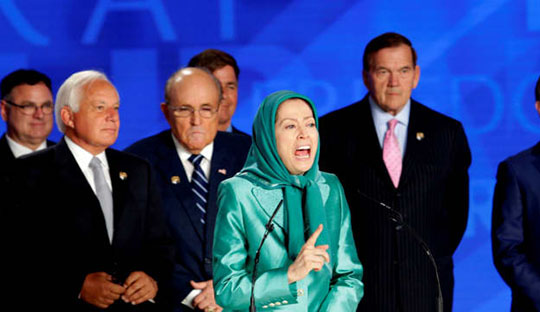
Rudy Giuliani, Donald Trump’s personal lawyer, addressed an MeK rally in Paris on Saturday, calling for regime change in Tehran. On Monday, Belgian authorities said four people, including a diplomat at the Iranian embassy in the Austrian capital Vienna, have been arrested after being accused of preparing a bomb attack in France targeted at the MeK rally.
Many in the crowd of about 4,000 that Giuliani was addressing were eastern Europeans bussed in to attend the event in return for a weekend trip to Paris. He is among a series of high-profile US politicians, including John McCain and John Bolton, who have met the MeK’s leader Maryam Rajavi or spoken at its rallies.
It was only in 2012 that the US delisted it as a terrorist group. But the arrival of John Bolton, the MeK’s most powerful advocate, as US national security adviser has given the group unprecedented proximity to the White House and a new lease of political life.
“There is a viable opposition to the rule of the ayatollahs, and that opposition is centred in this room today,” Bolton said at an MeK rally in Paris last year. “The behaviour and objectives of the regime are not going to change, and therefore the only solution is to change the regime itself.”
Bolton’s ascent to the White House has reinvigorated the group, analysts say, raising questions about the dangers of having in the earshot of the US president a group that some experts say uses human rights concerns to bury its murky past and portray itself as a democratic and popular alternative to the Islamic Republic.
Believed to have between 5,000 to 13,000 members, the MeK was established in the 1960s to express a mixture of Marxism and Islamism. It launched bombing campaigns against the Shah, continuing after the 1979 Islamic revolution, against the Islamic Republic. In 1981, in a series of attacks, it killed 74 senior officials, including 27 MPs. Later that year, its bombings killed Iran’s president and prime minister.
During the eight-year Iran-Iraq war in the 1980s, the MeK, by then sheltered in camps in Iraq, fought against Iran alongside the Iraqi dictator Saddam Hussein. The US-led invasion of Iraq in 2003 was a turning point for the group, which sought to reinvent itself as a democratic force.
Today, it functions as a fringe exiled group with characteristics of a cult that works for regime change in Iran, though it has little visible support inside the country. It portrays itself as a democratic political institution although its own internal structure is anything but.
Eli Clifton, a fellow at the Nation Institute, said the MeK’s influence in the US is multilayered. “When [MeK] members go and swarm Capitol Hill and seek meetings with the members of Congress,” Clifton said, “they’re very often the only voices that are heard, because there is simply not a lot of Iranian-American presence on Capitol Hill.”
Clifton said the MeK, which operates under a set of front groups, writes very large cheques to those speaking at their events. Estimates are in the range of $30,000 to $50,000 per speech. Bolton is estimated to have received upwards of $180,000 to speak at multiple events for MeK. His recent financial disclosure shows that he was paid $40,000 for one speech at an MeK event last year.
Jason Rezaian, the Iranian-American Washington Post journalist who was jailed in Tehran for more than a year, wrote in March that in the seven years he lived in the country, he saw a great deal of criticism towards the ayatollahs but “never met a person who thought the MeK should, or could, present a viable alternative”.
Clifton said the MeK “shares many qualities of a cult”. That description was echoed by Iraj Mesdaghi, a Sweden-based Iranian activist who was jailed in Iran from 1981 to 1991 for his links to the MeK. Mesdaghi left Iran in 1994 and worked for the MeK in its headquarters in Auvers-sur-Oise, France, until 2001.
“In the MeK, everything has to morph into leadership, and leadership means Masoud Rajavi [Maryam Rajavi’s husband, missing since 2003]. Not only your heart belongs to him, any love belongs to him, it’s forbidden to have love for spouse, mother, children,” he said.
He compared working for the MeK to holding an electric wire. “You have to follow the path, you have to transfer what you’re given, you’re not meant to add or reduce anything, you can’t pose any ifs.”
A 2007 state department report included claims that MeK has forced members to divorce. Human Rights Watch, in a 28-page report, has shed light on the MeK’s mistreatment of its members, including claims that those wishing to leave the group have been subjected to “lengthy solitary confinements, severe beatings, and torture”.
Iran, which considers the group as a terrorist organisation, also has a history of mistreating MeK supporters. In the summer of 1988, thousands of leftists and MeK supporters were executed in a massacre of political prisoners.
Mesdaghi said MeK members kept in a massive military-style complex in Albania are particularly vulnerable because they are not given refugee status and depend on the group’s leadership for survival. From March 2013 to September 2016, about 3,000 MeK members are believed to have been sheltered in Albania, after being transferred from Iraq.
Masoud Khodabandeh, a former senior MeK official, has written that MeK members in Albania are “effectively being held in a state of modern slavery”. In a recent interview, he described the group as a “destructive cult” which controls its members financially, physically and emotionally.
The MeK did not respond to email queries seeking comments.
Djavad Khadem, a co-founder of Unity for Democracy in Iran (UDI), an umbrella group of exiled Iranian opposition groups, said MeK’s “collaboration with Saddam against Iranian people will never be wiped out from the memory of Iranian people”.
Khadem said Bolton’s appointment by Trump may have looked liked a coup for the MeK, but argued that Bolton was bound to act more responsibly in administration. “But Bolton will use them as an instrument of pressure on the regime,” he said. “This is bad tactics, because the Islamic regime will use it to frighten the middle class in Iran, as they have done for the last 40 years.”
Clifton said the MeK’s claims of intelligence revelations about Iran are often “hit and miss”, with “some monumental screw-ups”. The group, however, has revealed intelligence relating to Iran’s nuclear programme, which Clifton said was likely to have been passed on by Israel or Saudi Arabia. In 2016, Prince Turki al-Faisal, a former head of the Saudi intelligence agency, was one of several VIPs who attended a MeK conference near Paris.
The MeK, Clifton said, presents a narrative that it is a vibrant, secular, democratic government-in-waiting that has popular support within Iran.
“That’s built on so many falsehoods,” he said. “It’s scary if policymakers listen to that and believe that fairytale.”
Saeed Kamali Dehghan, Iran correspondent