Ahmad Chalabi, the Iraqi politician who died in 2015, is widely known for pushing for the U.S. invasion of Iraq. From exile he helped provide the manufactured excuses needed by the United States for the invasion in 2003 but was eventually denied any share in power after the fall of Saddam Hussein.
Chalabi was perhaps the Iraqi most closely associated with President George W. Bush’s decision to go to war. He cultivated close ties with journalists in Washington and London, American lawmakers, the neoconservative advisers who helped shape Bush’s foreign policy, and a wide network of Iraqi exiles, many of whom were paid for fabricating and distributing intelligence against Saddam Hussein’s government.
It was later revealed that his group, the Iraqi National Congress, received more than $100 million from the C.I.A. and other agencies between its foundation in 1992 and the start of the war. He cultivated friendships with a circle of hawkish republicans – Dick Cheney, Douglas J. Feith, William J. Luti, Richard N. Perle and Paul D. Wolfowitz – who were central in the United States’ march to war.
Chalabi was used by the American warmongers to ‘sell’ the claim that Saddam Hussein possessed weapons of mass destruction and that he had refused to fully cooperate with United Nations weapons inspections as an excuse to launch war against the country.
But the case for the war was predicated on flawed intelligence, and a 2006 report by the Senate Intelligence Committee concluded that “false information” from sources affiliated with the “Iraqi National Congress” was used to support key intelligence community assessment on Iraq and was widely distributed in intelligence products prior to war.
Did Chalabi push the U.S. into the war or was he rather used by advocates of war to produce excuses and announce false intelligence? It was later proved that Chalabi was truly the loudspeaker of the White House warmongers whenever they were not able to directly show their faces. They needed a so-called opposition group to do the job for them or at least to pull the trigger.
Now the Iranian Maryam Rajavi, leader of the Mojahedin-e Khalq Organization (MEK, MKO, NCR, NLA, Rajavi Cult) is playing (and has played for a long time) the same role as the Iraqi Ahmad Chalabi, this time in relation to Iran.
On Monday September 30, 2019 in Washington, the group, which has close ties with the warmongers of the White House, announced baseless details blaming the missile drone attack against Saudi oil facilities on Iran. Without any evidence, the MEK claimed that the decision for the attack was taken by the Supreme National Security Council, presided over by President Rouhani and with the presence of Foreign Minister Zarif.
This echoes the small task the MEK was previously given to promote the manufactured nuclear crisis against Iran. In August 2002, Alireza Jafarzadeh, the representative of the National Council of Resistance (a front organization for the MEK) to the U.S., appeared in a press conference in Washington and issued some nuclear intelligence against Iran. This was later proven to have been handed over to the MEK by Israeli Intelligence. This was being done while the group was listed as a terrorist entity by the U.S. State Department. The Americans only needed an Iranian opposition group to start the crisis, it wasn’t fussy about which one.
The MEK is a highly controversial group. It was responsible for killing several Americans in Iran during the 1970s. In 1992 its members attempted a violet attack on Iran’s U.N. delegation in New York. In 2012 it was removed from the U.S. State Department’s list of foreign terrorist organizations after an intense lobbying campaign that included paying retired U.S. government officials and leaders. Its supporters in the White House say the MEK has been an essential conduit for sensitive information about Iran’s nuclear program.
MEK members in Iraq were largely disarmed after the 2003 American invasion. The group had been granted protection by Saddam Hussein before the invasion and by the US army after the invasion and lived at Camp Ashraf for two decades. After the U.S. troop withdrawal in 2009, many group members moved in 2012 from Camp Ashraf to Camp Liberty, an abandoned U.S. military base. They have been now granted a remote and isolated base in Albania under the Trump Administration where the leaders have reconstructed their cultic internal relations and are doing their job in exactly the same way as performed by Ahmad Chalabi – the manufacture of excuses and false narratives to pave the way for war.
The MEK’s well financed meetings in Paris and now Albania are used as a platform for American politicians to announce their policy of regime change in Iran and the imposition of ‘maximum pressure’ sanctions. It is the only so-called opposition group which fully and unequivocally supports this policy to push the U.S. into war with Iran.
The Trump administration is conflicted about Iran. Even as the warmongers in the White House push for war there are others who are beginning to pull back. The MEK played its role in promoting accusations about Iran’s involvement in the Saudi missile attack. But this time, unlike Chalabi’s accusations, neither politicians nor media have given credence to Maryam Rajavi’s claims. It could well be that history lessons have been learned.
Ebrahim Khodabandeh
Mujahedin Khalq Organization’s Propaganda System
Ignorant Iran ‘experts’ just the beginning of Washington’s foreign policy troubles
An explosive essay calling out the lack of legitimate expertise about Iran ought to be a wake-up call for the US foreign policy field. Yet the same problem also affects Washington’s analysis of Russia, China and many other places.
Imagine a field of study in which less than a third of the experts had related doctorates, half of them could not read, speak or write the language required, and just as many have never set foot inside the relevant country. Preposterous, you might say – yet scientific observation has shown that this is precisely what the US expertise on Iran looks like, according to an essay by political anthropologist Negar Razavi, recently published in the journal Jadaliyya.
Yes precisely @nargesbajoghli. This is a good opportunity for DC folks who took offense at my @jadaliyya piece on #Iran expertise to do what experts **SHOULD** be doing: Raise questions publicly abt evidence/agenda behind this problematic trope/repeatedly disproven claim. https://t.co/9AixPnIaLP
— Negar Razavi (@razaraz) September 14, 2019
Razavi describes the think-tank culture of DC as “a wider system of knowledge production in Washington – one which has consistently rewarded ungrounded, ideologically driven assessments of the Islamic Republic at the expense of qualified, in-depth, and evidence-based analysis.”
This is her conclusion after two years of “ethnographic fieldwork” in the US capital, attending hundreds of events, following the writings and presentations of think-tank experts, and interviewing over 180 people between 2014 and 2016. In other words, this was a serious academic study.
This culture of “expert impunity” when it comes to Iran has combined with historical and contemporary US grievances against Tehran to produce the current policy of confrontation, in which allegations are treated as unquestioned facts while any nuanced assessments are dismissed as the work of “regime apologists,” according to Razavi.
Your occasional reminder that a couple of years ago @CNN had a contracted Russia analyst who, by all accounts, has never been to Russia and can’t speak any Russian. https://t.co/tH2eFIjAbX
— Bryan MacDonald (@27khv) September 16, 2019
If this sounds familiar, that’s because the problem is not limited to Iran. Though Razavi focused exclusively on the state of Iran expertise, her assessment applies in equal measure to the self-styled experts on Venezuela, or Russia, or China, or the Balkans…
The examples are legion. Razavi herself mentions (though not by name) “Heshmat Alavi,” a supposed expert on Iran who recently turned out to be a construct – an online persona operated by the Iranian exile group Mojahedin-e Khalq (MEK). This is an outfit that seeks regime change in Tehran, and has been endorsed by former National Security Advisor John Bolton and President Donald Trump’s personal lawyer Rudy Giuliani.
Gordon Chang, who predicted the “coming collapse of China” in a 2001 book, has been embraced by CNN and Fox News alike as an expert on Beijing – despite the obvious failure of his prediction to actually materialize. Likewise, Swedish economic Anders Aslund has heralded the demise of Russia since 2000 – and cashed in his “expertise” with the Atlantic Council and the governments of Ukraine, Kyrgyzstan and the Baltic states.
Also on rt.com Russia ‘expert’ says Ukraine economy doing great, citing mail-order bride blog
Then there was the never-ending parade of “Russia experts” on cable news shows helping cultivate and propagate the hoax of President Donad Trump’s “Russian collusion” over the past three years, only to see the Mueller Report conclusively quash their fabrications. Have there been apologies? Of course not. As Razavi points out, being an “expert” in DC means never having to admit wrongdoing.
Her essay reveals how actual experts and scholars – who warned against things like the 2003 invasion of Iraq or ‘Russiagate’ – have been been sidelined or smeared time and again, while the think-tank factories churned out false expertise on cable channels and social media. Their takes would then find their way into official papers at the State Department and the Pentagon, morphing along the way into facts that “everybody knows” and no one is allowed to question.
The result of this unholy alliance of tanks and think-tanks has been decades of mis-shapen US foreign policy, with arguably disastrous results – from trillions in squandered treasure to millions of deaths around the world.
Nebojsa Malic, senior writer at RT
How Voice of America Persian Became a Trump Administration PR Machine
AS AN IRANIAN AMERICAN journalist covering the Iran-U.S. relationship, Negar Mortazavi is accustomed to receiving vitriol on social media. Still, she found it unusual when she saw on Twitter that someone had called her a “treasonous criminal” and “a spy and an enemy of the people.” The tweets got darker: “If the U.S. had laws of the Middle Ages like Iran, this mouthpiece of the corrupt regime would have been executed,” one read, in Farsi.
What made the tweets unusual was that the person targeting her was Ali Javanmardi. Javanmardi is a prominent television journalist at the Voice of America Persian, the U.S.-owned network broadcasting to Iranians — which means that he works for the U.S. government. Mortazavi is a former VOA Persian reporter herself and was a colleague of Javanmardi’s, and she was shocked enough by his tweets to complain to VOA editors. An editor told her that he had reminded Javanmardi that personal attacks online were unacceptable to the agency, Mortazavi said in an email to The Intercept. But Javanmardi did not remove his attacks, and they are still available.

The online tirade directed at Mortazavi is part of a pattern: Journalists at VOA Persian have been lashing out at Americans they deem unsupportive of President Donald Trump’s Iran policy, in apparent violation of VOA’s declared standards.
The public attacks are the most visible manifestation of a transformation that’s been underway since November 2016. VOA Persian and many of its staffers have become rabidly pro-Trump, abandoning their stated mission of providing balanced news to Iranians. So perhaps it’s not surprising that its reporters are now acting on social media like Trump himself.
For years, hawks complained that VOA Persian wasn’t sufficiently hostile enough to the Iranian government. In 2012, a Heritage Foundation report accused VOA Persian of being “pro-Iranian” and “anti-American” for having done such things as “reported only the negative aspects of bombing in Iraq and implied that the war was a mistake.” Writers for theWall Street Journal and Commentary lodged similar complaints.
The irony is that that station, which premiered as a radio station in the 1940s, was widely known for hostility to the Iranian government since the 1979 Islamic Revolution. “It was always anti-regime,” said Ali Sajjadi, who was the senior managing editor there before retiring last year. Former executive editor Mohammad Manzarpour told me that he was shocked when he arrived at VOA Persian in 2013, after many years at the BBC, to discover that his new company was filled with monarchists and supporters of the Mojahedin-e Khalq, or MEK, an Iranian opposition group in exile that advocates relentlessly for the Iranian regime’s overthrow.

For all its flaws, however, VOA Persian also upheld some journalistic standards and ran stories critical of the United States. It showcased positive aspects of the Obama administration’s engagement with Iran. Those qualities were, of course, why hawks despised the station: It didn’t act simply as a propaganda network for the right-wing view of Iran. Guests sometimes spoke of Iran as if it could play a constructive role in the region and didn’t always treat the Iranian government as something that needed to be overthrown.
And then Trump was elected.
Since then, the network has become, as Sajjadi puts it, “a mouthpiece of Trump — only Trump and nothing but Trump.” Manzarpour describes the situation as “blatant propaganda.” He said, “There is no objectivity or factuality.”
For example, the MEK is covered heavily and favorably, despite having almost no support inside Iran, a history of terroristic violence, and a well-founded reputation as a cult. A VOA employee, who asked to speak anonymously for fear of reprisal, said, “VOA Persian, for the first time in decades, has been acting as media arm of MEK and is giving wall-to-wall live coverage of their gatherings and events.” And VOA Persian published multiple articles by Heshmat Alavi, a pro-MEK persona exposed by The Intercept this June as having been the product of a multiperson propaganda outfit housed in an MEK compound in Albania. (VOA Persian later said it would remove the articles.)
The VOA has broadcast puff pieces on Reza Pahlavi, the son of the Shah, whom Iran hawks see as a viable opposition leader. Hard-line Iran hawks are frequent guests on the network, often on the receiving end of friendly interviews. These guests include current Trump administration officials like Secretary of State Mike Pompeo, national security adviser John Bolton, Trump’s special envoy for Venezuela Elliott Abrams, as well as Israeli Prime Minister Benjamin Netanyahu, an inveterate Iran hawk. Pundits like Michael Ledeen have appeared, as have personnel from three heavily neoconservative Washington-based think tanks: the Foundation for the Defense of Democracies, the Heritage Foundation, and the Hudson Institute.
“It’s pro-Trump in a way that disregards the way Trump’s polices are hurting Iranians, whether through sanctions or anything else.”
A spokesperson for VOA declined to discuss “individual personnel matters” but told The Intercept that “all VOA journalists, be it federal government employees or contractors, are expected to adhere to VOA’s social media policy as delineated clearly in its Best Practices Guide. When potential policy violations are brought to the attention of VOA management, employees are reminded of the policy and expected to ensure that their social media accounts comply.” She added, “VOA pursues its mission by producing accurate, balanced and comprehensive reporting, programming, as well as online and social media content for a global audience, particularly for those who are denied access to open and free media.”
Azadeh Moaveni, an Iran expert at the Crisis Group, says that VOA’s decline worsens the possibilities for engagement between the U.S. and Iran. “It’s pro-Trump in a way that disregards the way Trump’s polices are hurting Iranians, whether through sanctions or anything else,” she told The Intercept. “To the extent that it might have served as a medium through which Iranians learned about the U.S. and better understood its policies, its present condition as a naked propaganda mouthpiece doesn’t help relations.”
SEVERAL PEOPLE INTERVIEWED for this article described VOA Persian’s shift toward becoming a Trump administration PR service as one that was mostly motivated by internal factors. Careerists, anti-regime journalists, and staff members sought to curry favor with the Trump administration. Some saw an opportunity to promote their like-minded views. For others, “the only reason” to push Trump’s policies “is because they want to save their jobs,” said Vafa Azarbahari, a former writer at VOA Persian.
At the same time, soon after Trump was elected, his allies began campaigning to change VOA Persian. Right-wing pundit Kenneth Timmerman penned an op-ed saying the station had “long been a disaster;” he soon wrote another column calling it “The Voice of Tehran.” Other op-eds followed suit, in the Wall Street Journal and Washington Examiner.
In December 2016, Republicans in Congress disbanded the board of the Broadcasting Board of Governors, the independent agency that oversees VOA, and concentrated its power in the hands of a politically appointed CEO. It was clear that things would change: In January 2017, VOA’s Twitter account shared then-White House spokesperson Sean Spicer’s infamous claims that Trump’s inauguration crowds were the largest ever. Days later, two aides from Trump’s campaign visited the VOA studios, sending a conspicuous message about who was in charge.
Republicans disbanded the board of the Broadcasting Board of Governors, the independent agency that oversaw VOA, and concentrated its power in the hands of a politically appointed CEO.
In 2017, the new BBG chair, Kenneth Weinstein — who is also CEO of the Hudson Institute — asked a different conservative think tank, the hawkish American Foreign Policy Council, to review the BBG’s Iran programs. Unsurprisingly, the resulting reportdetermined that VOA had not been critical enough of the regime or the nuclear deal signed in 2015 by President Barack Obama and Iran — even while acknowledging that the station frequently devoted attention to the plight of minorities inside Iran. “Significant coverage of the state of U.S.-Iranian relations reflected the mistaken notion that the Iranian regime is now friendlier to the United States,” the report read.
The analysis lamented that sometimes the United States and Iran were treated as equals, stating “reportage on bilateral relations between the U.S. government and the Iranian regime conveyed an impression of equivalence between the parties, a position that is both surprising and improper for broadcasting that is funded by the U.S. government.”
Perhaps most consequentially, in 2018, the Senate Committee on Appropriations cleared legislation directing Pompeo to use the BBG to counter Iranian influence. The law directed the BBG to devote its resources to highlighting the Iranian government’s proxies in Syria and Yemen and the damage caused by the Iranians’ foreign policy. In February 2019, Masih Alinejad, who hosts a show on VOA Persian, appeared with Pompeo in Washington to do a photo op purportedly demonstrating the administration’s concern for women’s rights inside Iran. (The BBG, which in 2018 rebranded as the U.S. Agency for Global Media, did not respond to requests for comment.)
VOA Persian journalists and staffers began demonstrating their support for the Trump administration on social media, sometimes urging the administration to be even tougher on Iran. On May 20, a missile believed to have originated in east Baghdad, home to Iranian-backed Shiite militias, struck near the U.S. embassy in Baghdad. Trump tweeted in response, “Iran made a very big mistake!” Javanmardi responded to Trump: “Mr. President you have to punish the Iranian regime. They have attacked the site of the American Embassy and should be punished. A simple warning should not be sufficient.”
In time, VOA employees began targeting critics of Trump’s policies. In March, Saman Arbabi, the co-host, creator, and executive director of “Parazit,” a popular satirical program that has been compared to The Daily Show, sent a tweet to Rep. Ilhan Omar, D-Minn., comparing her hijab to hoods worn by the Ku Klux Klan. He and fellow VOA host Alinejad have repeatedly targeted the National Iranian American Council, which favors engagement between the U.S. and Iran.
Similar attacks directed at anti-Trump journalists and human rights experts were leveled earlier this year by the Iran Disinformation Project, an organization funded by the State Department’s Global Engagement Center. But when the Iran Disinformation Project’s actions were publicized, Congress terminated its government funding. The center’s special envoy and coordinator, Lea Gabrielle, said, “It was never the intent of the Global Engagement Center to have anyone tweeting at U.S. citizens.”
Yet that’s exactly what’s happening at the VOA Persian. It’s not just Trump-style tweets. The changing editorial direction of the site is turning it into a potentially dangerous propaganda channel for hard-line Iran hawks at a time when parts of the U.S. government seem determined to start a war with Iran.
By Jordan Michael Smith, the intercept
Recently, I came across a website by the name of Organization of Iranian American communities or (OIAC). Its mission statement says: “OIAC works to promote human rights and democratic freedoms for the people of Iran. This includes advocating for a democratic secular government in Iran, founded on respect for human rights, religious tolerance, and equality among all citizens.” Nothing could be further from the truth.
Well, it appears OIAC or better known as the MEK is following in the footsteps of the National Iranian American Council (NIAC), an influential IRI lobby in Washington, DC, one which has long sought rapprochement between Washington and Tehran and has infiltrated the US Congress promoting Iran’s Mullahs agenda while claiming “NIAC promotes an active and engaged Iranian-American community in the US and celebrates the community’s deep historical and cultural roots and traditions.” Pure garbage.
Hassan Dai , an Iranian activist and political analyst in an OP-ED slammed this despised and deceptive group that has used the White House (during the Obama administration) to advance The Islamic Republic’s agenda.

OIAC or MEK is an Islamist-Marxist cultish group headed by Maryam Rajavi, the wife of the deceased co-founder of MEK, Massoud Rajavi. During the 1970’s they rebelled against the Shah and were involved in bombing and shooting American and Iranian targets. The MEK or (OIAC) executed U.S. Army Lt. Col. Lewis Hawkins in 1973 as he was walking home from the U.S. Embassy and in 1975 killed two American Air Force officers in their chauffeur driven car, an incident that was studied and used in CIA training subsequently as an example of how not to get caught and killed by terrorists. Between 1976 and 1978, the group bombed American commercial targets and killed three Rockwell defense contractors and one Texaco executive

Mujahedin-e Khalq (MEK) is known for its cultish Foreign Terrorist Organizations and represents a critical threat to Iran’s indigenous democratic movement. Unlike Iran’s democratic opposition, which advances through nonviolence, the principles of democracy and human rights, the MEK is an undemocratic organization that pursues its agenda through violence.
Michael Rubin, penned an Op-Ed stating: The Mujahidin e-Khalq Aren’t America’s Friends.
“The Trump administration, however, is reportedly reconsidering the pariah status of the MEK within U.S. diplomacy. Barbara Slavin, an American analyst often apologetic to the Islamic Republic, reports that “US administration talking points no longer exclude the Mujahidin-e Khalq as a potential replacement for the government of the Islamic Republic of Iran.” While there remains a great difference between “refuses to exclude” and “supports,” Slavin is correct to raise concern.”
Houston, we have a problem. The MEK cult was listed as a terrorist group in the US until 2012 – but its opposition to Tehran has attracted the backing of John Bolton, Rudy Giuliani and others bent on regime change.
After the American invasion of Iraq, Maryam fled to France. Her headquarters in Auver sur d’oise in the suburb of Paris was raided by the French Police in June 2003. She was placed under arrest together with 160 of the group members and the assets of the MEK were frozen by the French judiciary. The Police seized millions of dollars from the group’s headquarters. The group was accused of preparing to commit or finance acts of terrorism and money laundering.
A dozen diehard supporters of the Cult of Rajavi set themselves on fire to protest the arrest of Maryam. Two women were killed eventually.
French Police released the cult leader to stop the horrible scenes of self-immolations in European capitals. In France, Maryam became the administrator of Massoud’s office. The close relationship between Maryam and Massoud in the office led to their dramatic marriage in 1985 immediately after her divorce from Medi Abrishamchi. The marriage was celebrated as an ideological revolution in the history of the group. Maryam Rajavi was named the co-leader of the MEK.
Maryam Rajavi is highly admired by America’s mayor, Rudy Giuliani. For years, Giuliani has been one of the most prominent American officials to advocate on behalf of the MEK, a Marxist Iranian opposition group that claims to be the legitimate government of Iran and more resembles a cult.
Giuliani went so far as to call Maryam Rajavi a heroic woman. He twittered: “2018 Iran Uprising Summit #FREEIRAN2018 is focused on the uprising in Iran posing an alternative to the homicidal regime. The regime has announced that the MEK is the only organization that can realistically replace them. The movement is led by Maryam Rajavi, a heroic woman.”
[..]Like her deceased husband, she [Maryam Rajavi] is extremely narcissistic and an Islamist-Marxist fanatic. If she ever grabs the power in Iran, the first thing she would do is to eliminate the opposition and use the mass media to brainwash the people just as the MEK has done to their handful of followers. They will create a Stalinist dictatorship that would make both Iranians and Westerners nostalgic for the mullahs. Don’t do it!
BY AMIL IMANI- PipeLineNews,
“If it seems like fake news is everywhere, that may be because it is”, suggested NBC News in March 2018, quoting researchers that “Falsehoods spread like wildfire on social media, getting quicker and longer-lasting pickup than the truth”. [1]
This capacity of social media and mass media has been well used by the Mujahedin Khalq Organization (the MKO/ MEK/ PMOI/ Cult of Rajavi) to spread disinformation against the Iranian government. But what will the group gain in exchange?
The MEK launched its propaganda campaign in 2002 when it first published the alleged information on the Iranian nuclear weapon program. The campaign has been working aggressively for the past two decades. The disinformation fabricated by the MEK has so far been used by the US and its allies as a pretext to take the most hostile policies against Iran.
On July 4th, 2019 Gareth Porter, a historian, investigative journalist, and analyst specializing in US national security policy, told Radio Sputnik’s Loud & Clear that the US’ claim that Iran had a nuclear weapons program is based on false ideas bolstered by the US intelligence community and that China is unlikely to succumb to the US’ anti-Iran campaign. [2] Porter had previously published several investigated articles on the very subject.
“The problem in part is that the US intelligence community completely muffed it – they blew this even more thoroughly than they blew the questions of weapons of mass destruction in Iraq,” Porter told Sputnik. [3]
“It was based on a series of false ideas that the intelligence communities began with and some maneuvering by high-ranking CIA officials … who interfered with the process of the assessment of Iran’s nuclear program within the CIA,” Porter explained. “It culminated in the approval of this set of documents that came from the Mujahedin-e-Khalq [MEK] that was aligned with and did work with the Israelis” to allegedly prove that Iran had an active nuclear weapons program. [4]
The peak of the MEK’s successful deal –to sell fake news and buy war drums—was the case of the fictional persona named Heshmat Alavi that was revealed by the Intercept, a few weeks ago. “His purported work has appeared in a wide variety of journals over the years, write Robert Fantina of the Global Research. “However, on closer scrutiny, we learn that Mr. Alavi simply doesn’t exist! He is a creation of the political wing of the terrorist organization known as Mojahedin-e-Khalq (MEK), which exists for the sole purpose of overthrowing the government of Iran.” [5]
Fantina clarifies: “This raises even more questions: why does the U.S. need invented ‘journalists’ to sell its anti-Iran story? Could it be, possibly, because the truth is nothing like the U.S. says, and so relying on a made-up writer for made-up stories is the best it can do?” [6]
“Most journalists (this writer included), don’t hide from the public. In addition to writing, they speak at public forums, and their faces may be almost as well-known as their names,” he continues scrutinizing the MEK and its supporters over Alavi. “Where has the illusive Mr. Alavi been? Was he too busy writing all those articles for Forbes to crawl out of whatever hole he lived in to speak publicly about issues important to him? No, that is not the case; he was unable to speak at any conference, symposium, rally, etc., because he doesn’t exist.” [7]
“This is the ‘writer’ whose ‘work’ Donald Trump cited to justify violating international law, and to bring the threat of a devastating war to an area of the world that his predecessor had made significant progress in calming. This is the ‘writer’ that not only Forbes, but The Hill, the Daily Caller, the Diplomat and other so-called responsible news outlets gave a platform to.” [8]
Assal Rad writes on Lobelog that Trump and his regime-change cabinet are now touting the MEK as a viable alternative to the current government in Iran. “Despite these parallels, the mainstream media continues to give a platform to radical groups like the MEK, which are weaving together a questionable story to build a case for regime change and war with Iran,” She asserts. [9]
Comparing the MEK with Iraqi National Congress, Rad warns about the fraudulent part of the of the MEK in leading the West to another war in the Middle East. “Also similar to the INC, which claimed that it did not seek power in Iraq, the MEK pretends to work for democracy in Iran in the name of the Iranian people”, she states. “Though both organizations have used fabrications to push their agenda, the tools of disinformation have evolved over time and the MEK has mastered the art of false narratives.” [10]
She refers to the MEK as a pro-war entity that is skilled manipulator of mass media: “Revelations have come to light on the role of the MEK in magnifying efforts at misrepresentation through inauthentic social media accounts aimed at manufacturing “Iranian” support for the Trump administration’s pro-war policies. The MEK also utilizes promoted content on news sites. For instance, The Hill is running a 10-week mini-series on Iran sponsored by the Organization of Iranian-American Communities (OIAC), a front group for the MEK.” [11]
As the MEK and its sponsors in the US government continue to push for an all-out war with Iran, remember that these same people and their peers have been repeatedly lying in order to start nearly every war in US history. War and its natural consequence, violence, cannot be excluded from the history of the Mujahedin Khalq as well.
Mazda Parsi
References:
[1] Fox, Maggie, Fake News: Lies spread faster on social media than truth does, NBC News, March 8th, 2018.
[2] Sputnik News, US Intelligence Has ‘Muffed’ Proof on Iran’s Alleged WMD Programs for Decades, July 4th, 2019.
[3] ibid
[4] ibid
[5] Fantina, Robert, America’s War against Iran: The Insidious Role of the Mojahedin-e-Khalq (MEK) Terrorist Entity, Global Research, June 19th, 2019.
[6] ibid
[7] ibid
[8] ibid
[9] Rad, Assal, Propaganda War to Real War: The MEK’s Treacherous Operation, Lobelog, July 1st, 2019.
[10] ibid
[11] ibid
A few incumbents among the mass of former officeholders
On the last Saturday, 13 July 2019, the annual”Free Iran”conference was held for the first time at Ashraf 3 in Albania, the headquarters of the Mujahedin-e Khalq (MEK or MKO), a notorious terrorist cult known by several other different names and acronyms, including People’s Mojahedin of Iran (PMOI), National Liberation Army of Iran (NLA), and National Council of Resistance of Iran (NCRI).
Terrorist-genocidal past
Founded in the 1960s by a group of Iranian leftists opposed to the country’s pro-Western Shah, later it developed into the largest and most militant group opposed to the Islamic Republic of Iran. After the 1979 Islamic Revolution in Iran, the group was driven from its bases on the Iran-Iraq border and resettled in Paris, where it began supporting Saddam’s Iraq in its eight-year war against Iran.
Due to the terrorist attacks committed by the Mujahedin-e Khalq, more than 16,000 people have been killed in Iran alone, not counting their atrocities against Iranian and Iraqi civilians during the Iran-Iraq war and the 1991 uprisings in Iraq. Their tactics included bomb attacks, targeted assassinations, aircraft hijackings, and so on. For comparison, around 14,000 Iraqi and Syrian civilians have been killed by the ISIL terrorist attacks. The MEK has also conducted attacks against numerous Western targets, both in Europe, North America and elsewhere.
In 1986, the MEK accepted Saddam’s offer of alliance and moved its headquarters to Iraq where it received its primary support to attack the targets in Iran. This decision was viewed as treason by virtually all of Iranians and it irretrievably destroyed the MEK’s appeal in its homeland. Furthermore, the MEK assisted Ba’athist government in systematic attacks against the Kurdish fighters (Iran’s allies) in northern Iraq, and the result of their action was a genocide that killed between around 100,000 Kurdish civilians. Former MEK members remember Maryam Rajavi’s infamous command at the time:”Take the Kurds under your tanks, and save your bullets for the Iranian Revolutionary Guards.”
Balkans as terrorist safe haven
The MEK is designated as a terrorist organization by Iran and Iraq, but their former headquarters at Iraqi Camp Ashraf still enjoyed the US protection after the fall of the dictatorship. Until the 2008–2012 period when long-term lobbying efforts by their Neocon, Zionist and Saudi sponsors gave results, the MEK was officially designated a terrorist organization by the UK, the EU, the US and Canada. Nevertheless of official designation, the MEK leadership freely lived and operated in the EU.
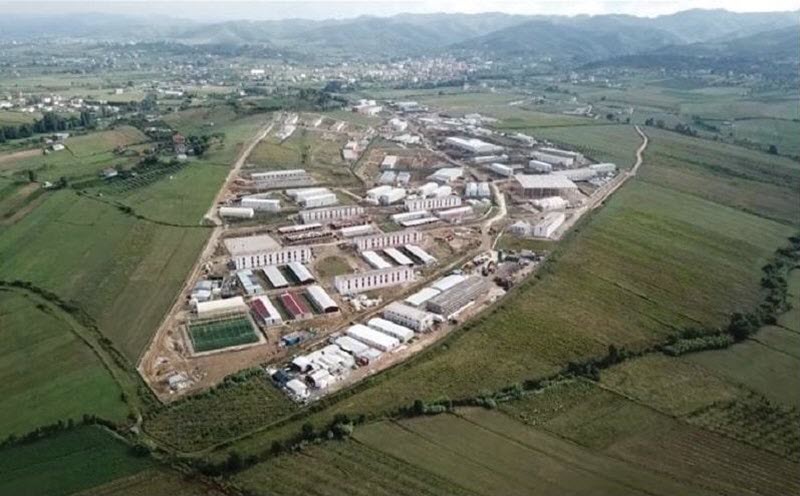
In 2012, the MEK headquarters have been relocated from Camp Ashraf to former US military base Camp Liberty, also in Iraq, and finally in 2016 the headquarters have been relocated again, this time to Ashraf 3 in Albania. A poor Balkan country, encircled by the EU member states and ruled by the US puppet regime, proved to be a safe haven. The transfer of hundreds of MEK members was carried out by US military aircraft.
Today, the gates to the MEK compound, situated on a gently inclined hillside in rural Albania, are usually firmly closed, guarded by two sculpted lions atop stone pedestals and a large team of Albanian security guards. Unannounced visitors are not welcome at the fenced-off, secretive site, where more than 2,000 MEK members live. With no passports or other documents, they remain in limbo, unable either to work or to leave the country. Besides clapping in the audience at fanciful terror festivals, their only activity is spreading anti-Iranian propaganda on social networks.
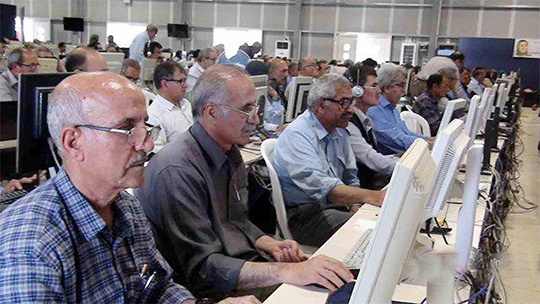
According to the recent interviews, given to journalists by a dozen men in Tirana who had fled the MEK compound, life inside the compound was of a cult-like atmosphere in which mobile phones and contact with relatives were banned, all interactions between men and women were prohibited, and days were spent sitting at computers firing out tweets and other online messages in support of the MEK. An investigation by the Intercept recently found that an anti-Iranian activist, who had written extensive media columns about Iran, in fact appeared to be an invented persona created by MEK trolls.
Terror festival
The last Saturday’s conference”Free Iran”has no political significance, nor does it differ in any way from similar terror festivals that were previously held in Paris. We could see the same personalities from the neoconservative & Zionist circle, like Joe Lieberman and Rudy Giuliani, representatives of the Saudi dictatorship, and numerous former or obscure politicians.
From all of them, we could hear the same slogans about”freedom, democracy, justice and gender equality,”but the only true message is”we hate Iran,”more precisely”we hate it so much that we’ll publicly lie and celebrate the terrorist-genocidal organization.”Taking into account the well-known moral values of the US neoconservatives, the Zionists and the Saudi regime, as well as their cheap mercenaries, such messages are not surprising.
Participants and organizers of the conference are perfectly aware that their words are empty and the MEK can never gain ground in Iran, so the gathering is far from being political in practical sense. Its only purpose is a desperate attempt of spreading Iranophobic hate around the world. Evidence for this is the fact that most of participants do not have real political role, only influential names, thus the media publicity is guaranteed. The names of these terror supporters deserve to be mentioned here.
Formers and incumbents
Looking at the list of participants, there’s an astonishing amount of former officeholders. These’re former US Vice Presidential candidate (Joe Lieberman), former Mayor of New York (Rudy Giuliani), former US Congressmen (Ted Poe and Dana Rohrabacher), former US Senator (Robert Torricelli), former US Assistant Secretary of State (Lincoln Bloomfield), former US Homeland Security Secretary and Governor (Tom Ridge), former US Special Envoy for Nuclear Nonproliferation and Under Secretary for Arms Control and International Security (Robert Joseph), former US Ambassador to Morocco (Marc Ginsberg), former FBI Director (Louis Freeh), former commander of the Multi-National Forces in Iraq (George W. Casey Jr.), former Commandant of the US Marine Corps (James T. Conway), former Canadian Prime Minister (Stephen Harper), and former Canadian Foreign Minister (John Baird).
The list of former officeholders does not end in North America, in the EU these’re former Foreign Minister of France (Bernard Kouchner), former Foreign, Defense, Interior and Justice Minister of France (Michèle Alliot-Marie), former French Minister of Human Rights (Rama Yade), former German Deputy Interior Minister (Eduard Lintner), former Vice President of the European Parliament (Alejo Vidal-Quadras), former UN special representative to Iraq (Ad Melkert), former Norwegian MP (Lars Rise), and former Minister of Transport and Communications of Finland (Kimmo Sasi). The list also includes former Albanian Prime Minister and President (Sali Berisha), former Albanian Prime Minister (Pandeli Majko), former UN Special Rapporteur (Yakin Ertürk), former Minister of Culture and Publicity of Jordan (Saleh al‐Qalab), former Algerian Prime Minister (Sid Ahmed Ghozali), former Colombian presidential candidate (Ingrid Betancourt), and former head of the International Association of Women Judges (Susana Medina).
Ironically, the introductory speech at the conference was held by the former MEK Secretary-General Fahimeh Arvani, the 30th former officeholder on this list. If we exclude above-mentioned individuals with ended careers, the list is reduced to a third and literally all political celebrities are gone. Among the incumbent ones, all are relatively unknown and belong to the opposition parties, including Congressman Lance Gooden (United States), MP Matthew Offord, MP Bob Blackman, Lord Temporal Sandip Verma (United Kingdom), Senator Roberto Rampi, MP Giuseppina Occhionero, MP Anotonio Tasso (Italy), MP Michèle de Vaucouleurs, Mayor of Paris’s 1st District Jean-François Legaret (France), MP Martin Patzelt (Germany), Senator Gerry Horkan (Ireland), Deputy Attorney General Maria Candida Almeida (Portugal), MP Ben-Oni Ardelean (Romania), and Chairman of the Republican Party Fatmir Mediu (Albania). A handful of others also include South Asian activists Ranjana Kumari and Bandanda Rana, as well as Syrian terrorist activist Nazir Hakim.
Summing up, if we put aside all figures without any real political influence, only two or three will remain. Namely, influential pro-Israeli lobbyist Joe Lieberman, Donald Trump’s cybersecurity adviser Rudy Giuliani, and Saudi lobbyist Salman al-Ansari. The latter one is founder and president of the Saudi American Public Relation Affairs Committee (SAPRAC), a Washington DC-based lobby organization which advocates strengthening relations between Saudi Arabia and the United States, whitewashing of Saudi regime’s crimes, collaborative alliance with Israel, and aggressive foreign policy against Iran, Syria, Yemen and Qatar. Therefore, the answer to the question of who financed this lavish terror festival, seems more than obvious.
Balkanspost
MEK operates out of compound in rural Albania and has been described as having cult-like attributes
The gates to the Mujahedin-e-Khalq (MEK) compound, situated on a gently inclined hillside in rural Albania, are usually firmly closed, guarded by two sculpted lions atop stone pedestals and a large team of Albanian security guards. Unannounced visitors are not welcome at the fenced-off, secretive site, where more than 2,000 MEK members live.
The history of the MEK, or the People’s Mujahedin of Iran, is long and complicated.
Critics and many of those who have left the group in recent years describe it as a shadowy outfit with little support inside Iran and many cult-like attributes, condemned to die out at the obscure base in Albania because of its enforced celibacy rules.
But for its backers, which include many politicians and, notably, members of Donald Trump’s inner circle, the MEK are tireless fighters for a free and democratic Iran who could potentially become the country’s next government.
This was highlighted over the weekend when the group held a gathering of international backers attended by, among others, Trump’s personal lawyer, Rudy Giuliani. Other visitors included the former Democratic senator Joe Lieberman and the British Conservative MP Matthew Offord.
Giuliani described the MEK as a “government in exile” and suggested it was also a government in waiting after potential regime change in Iran. “It gives us confidence that if we make those efforts to overthrow that horrible regime, sooner rather than later, we will not only save lives but will be able to entrust the transition of Iran to a very responsible group of people,” he said to cheers from the assembled audience.
Giuliani has been a regular visitor to MEK events for several years, as has the US national security adviser, John Bolton. While they have been predicting an MEK government in Tehran for years, the fact that these officials now have positions in the Trump administration, combined with the increasingly fraught geopolitical situation around Iran, makes their support for the MEK matter more than ever.
Originally a Marxist-Islamist group that played a leading role in the 1979 Iranian revolution, the MEK ended up exiled and fighting against the Iranian regime from a base in Saddam Hussein’s Iraq. In the process, the MEK lost a lot of support inside Iran.
The group was only removed from the US terror list in 2012 and the Obama administration later helped negotiate its relocation to Albania as the situation in post-Saddam Iraq became perilous. There, in the countryside, it has constructed a vast compound where men and women lead segregated existences.
Last month, the Guardian spoke with about a dozen men in Tirana who had fled the MEK compound over the past two years.
With no passports or other documents, they remain in limbo, unable either to work or to leave the country. The picture they painted of life inside the compound was of a cult-like atmosphere in which mobile phones and contact with relatives were banned, all interactions between men and women were prohibited, and days were spent sitting at computers firing out tweets and other online messages in support of the MEK.
Each evening, the men had to gather in small groups with their commanders for “ideological training” as well as a confessional about any sexual thoughts they might have had that day.
“For example, you would have to say: ‘I saw a girl on television and I got an erection,’ or ‘This morning I masturbated,’” said Hassan Heyrani, one of the defectors. He said there was no specific punishment for such admissions except scolding and embarrassment. “If you admit to it too often they will get angry and say: ‘How do you want to create freedom for the Iranian people if you have an erection every day?’”
An investigation by the Intercept recently found that an anti-regime Iranian activist, who had written extensive media columns about Iran, appeared, in fact, to be an invented persona created by MEK trolls.
When leading political figures came to visit, the rank-and-file MEK members were told to do everything to make sure their high-level guests felt appreciated. Heyrani remembered a visit by John McCain in 2017, who was greeted by a chanting crowd of MEK members. “We had to cheer and clap. One of the commanders told us: ‘You speak English. Please tell him he is the best of democracy,’” he said.
For the MEK leadership, the election of Trump in 2016 was a godsend. Those who have left the camp since recalled that in the run-up to the election the group often prayed for a Trump victory and the defeat of Hillary Clinton.
One person who left the compound in 2018 said:
“Everything changed when Obama left and Trump came to power. The leaders came from France to talk to us. They said you must wait a few months and suffer the conditions here and then soon we’ll be in power.”
The MEK did not respond to several requests for comment sent to a Paris-based spokesman, nor to a request left with the security guards outside its compound in Albania.
By Shaun Walker in Tirana,
Shaun Walker is the Guardian’s central and eastern Europe correspondent. Previously, he spent more than a decade in Moscow and is the author of The Long Hangover: Putin’s New Russia and the Ghosts of the Past
Trump Consiglieres Giuliani and Bolton Paid Big Bucks by MEK Terrorist Group
Trump’s attorney, Rudy Giuliani, his pockets stuffed with terrorist cash, tweeted on Saturday that MEK is a viable alternative to the rule of the mullahs in Iran.

Rudy, of course, didn’t bother to point out that NCRI is a front organization for MEK, short for Mojahedin-e Khalq, the terrorist organization that wants, with the help of the neocons, to rule Iran.
According to research conducted by Ivan Kesić, a freelance writer for The Iranian, MEK is a terrorist organization on par with the Islamic State.
Kesić writes that
“based on the facts and figures, due to the terrorist attacks committed by the Mujahedin-e Khalq more than 16,000 people have been killed in Iran alone, not counting their atrocities against Iranian and Iraqi civilians during the Iran-Iraq war and the 1991 uprisings in Iraq. Their tactics included bomb attacks, targeted assassinations, aircraft hijackings, and so on. Only from 26 August 1981 to December 1982, the MEK conducted 336 terrorist attacks against targets in Iran.”
Americans were not immune from violence, according to Kesić:
Mujahedin-e Khalq has also conducted attacks against numerous Western targets, both in Europe, North America and elsewhere. In the early 1970s, MEK members killed several US soldiers and civilians working on defense projects in Tehran. Such victims included US Army Lt. Col. Lewis L. Hawkins who was assassinated in June 1973, US Army officers Col. Paul Shaffer and Lt. Col. Jack Turner killed in May 1975, an Iranian employee at the US Embassy in Tehran two months later, and US civilian contractors Robert R. Krongrad, William C. Cottrell Jr. and Donald G. Smith assassinated by four gunmen in August 1976. Furthermore, in May 1972 US Air Force General Harold L. Price was seriously wounded in attempted assassination. Several hours later, the MEK had a plan to assassinate US President Richard Nixon and they blasted a bomb at mausoleum where Nixon was scheduled to attend a ceremony just 45 minutes after the explosion. In November 1970, a failed attempt was made to kidnap the US Ambassador to Iran, Douglas MacArthur II. MEK gunmen ambushed MacArthur’s limousine while he and his wife were en route their house. Shots were fired at the vehicle and a hatchet was hurled through the rear window, however, MacArthur remained unharmed. During the same period, MEK operatives also committed bombing of facilities of Pan-Am Airlines, Pan-American Oil, Shell Oil, and of gates of British Embassy.
Even Wikipedia, the establishment’s online encyclopedia of spin and historical omission, admits NCRI is a front for MEK.
The organization has appearance of a broad-based coalition; however many analysts consider NCRI and the People’s Mujahedin of Iran (MEK) to be synonymous, taking the former to be an umbrella organization or alias for the latter, and recognize NCRI as an only “nominally independent” political wing or front for MEK. Both organizations are considered to be led by Massoud Rajavi and his wife Maryam Rajavi.
Not surprisingly, one of the most ardent Zionists to ever sit in Congress, Joe Lieberman, supports NCRI-cum-MEK and likely feeds at same MEK trough as Giuliani.
None other than establishment propaganda paragon Politico reported the former New York mayor’s affection for MEK cash.
According to a financial disclosure reported on by The New York Times, Giuliani has been speechifying at hyperspeed for years, collecting $11.4 million for 124 appearances in just one year—and that was before signing up for the MeK gravy train around 2011. Perhaps he just didn’t have time to consider the character of his paymaster.

The euphonious sounding “2019 Free Iran conference” will be held this weekend at the MEK compound in Albania. The terrorist organization has produced a video announcing the arrival of the wined-and-dined, many undoubtedly on the payroll.
The NCRI née MEK proudly announced the following participants:
Former New York Mayor Rudy Giuliani, former United States Senator Joe Lieberman, Foreign French Foreign Ministers Michèle Alliot-Marie and Bernard Kouchner, former Canadian Prime Minister Stephen Harper, former Canadian Foreign Minister John Baird, former US Senator Robert Torricelli and hundreds of other international lawmakers, official and dignitaries attend the Iranian opposition’s 2019 Free Iran conference in ‘Ashraf 3’, the headquarters of the People’s Mojahedin Organization of Iran (MEK or PMOI) in Albania. Iranian opposition leader Maryam Rajavi is the event’s keynote speaker.
The chief neocon warmonger and Trump national security adviser, John Bolton, was not included on the above list.
“There have been quite a few former officials, politicians, and retired military officers that have been cheerleading for the MEK over the last few years, but Bolton is one of their oldest and most consistent American supporters,”
writes Daniel Larison.
Bolton, like Giuliani, is slimy with MEK blood money.
By Kurt Nimmo
Kurt Nimmo is a journalist and the author of two books, “Another Day in The Empire: Life in Neoconservative America”, 2006 and “Donald Trump and the War on Islam”, 2016. His articles are usually published on the Global Research and his blog. Kurt Nimmo has blogged on political issues since 2002. In 2008, he worked as lead editor and writer at Infowars, and is currently a content producer for Newsbud.
Rudy Giuliani, Joe Lieberman Team Up For Albania MEK Conference
President Trump’s personal attorney Rudy Giuliani has joined buckraking forces with former Senator Joe Lieberman (D-CT), speaking at an event in Albania for a bizarre, cultish Iranian group that fashions itself as a government-in-exile for the Islamic Republic.
Mujahedin-e Khalq (MEK) — once designated as a foreign terrorist group — hosted the conference at a compound that MEK operates in Albania.
In addition to Giuliani and Lieberman, former Colombian Senator and longtime FARC hostage Ingrid Betancourt appeared at the event, along with former Marine Corps Commandant James Conway.
Billed as “The 120 Year Struggle Of The Iranian People For Freedom,” the conference appears to focus in part on extolling the virtues of MEK leader Maryam Rajavi.
Rajavi styles herself as the “leader of the Iranian resistance,” but has faced criticism for alleged brainwashing by the group.
In a video posted to Twitter, Giuliani says that “an alternative exists to the theocracy in Iran. It’s our responsibility to support it.”
In March, the Trump Administration reportedly shifted its position to no longer rule out MEK as a potential replacement for Iran’s current government.
Giuliani seems to have gone straight to the conference from a Thursday evening call-in appearance on Sean Hannity.
Giuliani also spoke at an anti-Iran rally in Warsaw in February, saying that he was representing MEK, and not Trump. He did some work for Trump on the sidelines of the event, however, meeting with a Ukrainian prosecutor who was claiming to have dirt on presidential candidate Joe Biden.
At Friday’s conference, Lieberman echoed Giuliani’s statements.
“When I’m here I feel that I’m representing the spirit of my great friend, the late Senator John McCain, who was warned by the establishment to stay away from this organization, but he spent time learning about it,” Lieberman said. “He came to Ashraf 3, believing in this organization and its cause.”
This isn’t Giuliani’s first time in Albania. In May 2018, he traveled to the southern European country for another MEK event. The relationship has gone on for years.
By Josh Kovensky,talkingpointsmemo
Documents reveal that MEK, an Iranian dissident organization labeled a terrorist group as recently as 2012, has been ramping up its influence network in Washington D.C. in recent months.
Tensions between the United States and Iran are rising to a fever pitch following the downing of an American drone Wednesday by Iran’s Revolutionary Guard over the Strait of Hormuz. It comes less than a week after an attack on two tankers purportedly conducted by Iran.
Iran has declared that although it does not want conflict, it is “ready for war.” Hawkish voices in the U.S. have called for aggressive action as top military leaders review plans for a possible confrontation.
What is the MEK?
As both nations move closer to the brink of war, the National Council of Resistance of Iran, a little-known advocacy group determined to install itself as the new government of Iran, continues to build a powerful influence network in Washington and beyond.
Recent documents in accordance with the Foreign Agents Registration Act reveal that the council, the political arm of opposition group Mujahedeen Khalq or MEK, has been hosting opulent events at the National Press Club and elsewhere, publicizing itself through national and international media, and meeting with dozens of current and former government officials, all with the end goal of toppling the current Iranian government and rising to power in its place.
OpenSecrets previously reported on the MEK’s deep ties to National Security Advisor John Bolton and other voices currently agitating for war against Iran. The new documents reveal the extent to which the dissident group is using media and its vast array of prominent supporters to push the national discourse toward confrontation.
The council of resistance either submitted or was quoted in 51 media pieces between December 2018 and May 2019, according to FARA filings. These pieces were concentrated in right-leaning media outlets such as Fox News, The Washington Times, The Washington Examiner and NewsMax.
Throughout their appearances, the organization stood firm behind dubious claims that Iran is currently carrying out assassinations in Europe and the U.S., an assertion widely rejected by experts. The rhetoric, based on Dutch intelligence reports that two Iranian dissidents were murdered by Tehran in 2015 and 2017, portrays the threat as dire and immediate, including calling for all Iranian embassies in Europe to be shut down in May.
MEK’s War Chest of Advocates
The group also continued to meet with a number of major former government officials, including James Jones, who served as Barack Obama’s national security advisor from 2009 to 2010, and Tom Ridge, the first Secretary of Homeland Security.
The council has been building a war chest of prominent advocates to justify its mission to the public and to national and international political communities, including Bolton, former New York City Mayor Rudy Giulliani, former Speaker of the House Newt Gingrich, former Attorney General Michael Mukasey and former U.N. Ambassador Bill Richardson.
Some of these individuals were investigated by the Treasury Department in 2012 for accepting significant speaking fees from the MEK, which was, at the time, still designated by the federal government as a terrorist organization. The investigation ultimately dissipated after the group was de-listed as a terrorist organization later that same year following a multi-million dollar lobbying blitz.
The group continues to organize public protests, rallies and speeches claiming to represent the Iranian people, even though the group is reportedly “widely despised” within Iran and has been exiled from the country for decades. The group spoke with several U.S. senators on Nowruz (Persian New Year) in March and received the backing of two sitting senators, John Boozman (R-Ark.) and Jeanne Shaheen (D-N.H.).
Standing between two Iranian flags emblazoned with the MEK’s golden lion insignia, Boozman told the group, “We are committed to helping you in any way that we can.”
Boozman and Shaheen aren’t the only members of Congress to have publicly backed the MEK Sen. Tom Cotton (R-Ark.), who has repeatedly called for launching a first strike on Iran, spoke at a 2015 meeting of the Organization of Iranian American Communities, an advocacy group closely aligned with the MEK.
Two other senators, Thom Tillis (R-N.C.) and Roy Blunt (R-Mo.), flew to Albania in 2017 to meet with the MEK’s leader Maryam Rajavi and wish her group “success in their struggle for democracy and human rights in Iran.”
Supporters of the MEK claim that Rajavi will usher in a secular democratic state in the place of the current theocratic regime. They champion her stated commitment to free-market capitalism and promises to modernize the nation.
History of the MEK
The council was founded in the early 1980s as the political front of the MEK, which itself was started by self-described Marxist Iranian students in 1965. Initially fighting with other opposition groups to take down the Shah in the 1979 Iranian Revolution, the group soon came into conflict with the new Ayatollah Khomeini’s government, with members of the MEK eventually killing the Iranian president and prime minister in 1981.
They later fought alongside Saddam Hussein’s Iraq in the 1980 Iran-Iraq war and into the 1990s and early 2000s against Iraqi Shiites, Kurds and Americans. They have been blamed for the deaths of thousands of Iraqi soldiers and at least six American citizens.
The group plans to demonstrate in front of State Department headquarters in D.C. on Friday in a protest dubbed “March 4 Regime Change by Iranians” by social media supporters and closely-aligned groups, including OIAC. OIAC has been spending to amplify the march with more than $300 going to Facebook ads in the days leading up to the event and multiple tweets promoting the demonstration on Twitter, but the amount of that spending is unknown since OIAC is not on the list of issue advertisers tracked by Twitter’s Ads Transparency Center.
By Reid Champlin, opensecrets