
President Barack Obama is pressuring Israel to stop carrying out assassinations of top nuclear scientists in Iran as the Islamic Republic continues its negotiations with world powers over its uranium enrichment program, according to a new book.
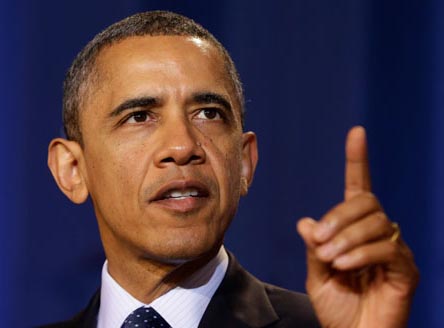 Apart from pressure from Washington that Israel give up the assassination program, sources close to Israel’s intelligence agencies told CBS News’s Dan Raviv that Mossad itself viewed the campaign as too dangerous to continue. Raviv, who was updating a book he co-wrote about the history of Israel’s intelligence agencies, said the pressure form the Obama administration was “more than a hint.”
Mossad itself was apparently undergoing a sea change regarding the program. Fearing their ‘best combatants’ – Israel’s term for its most accomplished spies – could be captured and hanged, the agency is reportedly set to shift its focus to other activities. According to security sources, Netanyahu ordered the intelligence agency to focus its efforts on proving the Islamic Republic is cheating on a landmark preliminary agreement made with six world powers in November to curtail its uranium enrichment program in return for limited sanctions relief.
At least five Iranian nuclear scientists have been killed since 2007, with men on motorcycles sticking magnetically attachable bombs to their victims’ cars. The head of the country’s ballistic missile program was also killed, while in October Mojtaba Ahmadi, who served as commander of the Cyber War Headquarters, was found shot dead. No Israeli national has ever been arrested in collusion with the targeted assassination program, which is reportedly intended to thwart advances in Iran’s nuclear program and dissuade Iran’s best and brightest from working in the sphere.
The killing of Ahmadi was widely viewed as an attempt to derail nuclear negotiations between Tehran and the P5+1 – the five permanent members of the UN Security Council plus Germany.
Israel has never publically claimed responsibility for the attacks.
In 2012, however, an NBC News report concluded that “deadly attacks on Iranian nuclear scientists are being carried out by an Iranian dissident group that is financed, trained and armed by Israel’s secret service.”
The report cited two senior Obama administration officials as confirming that Mojahedin-e-Khalq (MEK) is behind the killings, though the officials denied the US played any role in the program.
Mohammad Javad Larijani, a senior aide to Iran’s Supreme Leader Ali Khamenei, told NBC that Mossad worked through the MEK because “Israel does not have direct access to our society. [The MEK], being Iranian and being part of Iranian society, they have … a good number of places… to get into touch with people.”
The MEK has denied colluding with Israel, though Israeli officials have confirmed links between MEK and Israeli intelligence.
Meanwhile, Iranian President Hassan Rouhani told defense officials on Saturday the country had given up its nuclear program because owning weapons of mass destruction is a sin.
“Even if there were no NPT (nuclear non-proliferation treaty) or other treaties, our belief, our faith, our religion and principles tell us not to seek weapons of mass destruction,” Rouhani said.
In November, Iran agreed to stop enriching uranium beyond 20 percent and to dilute its already enriched stockpiles in return for an estimated $7 billion in sanctions relief. That deal came into effect January 20.
Following the latest round of Iran nuclear talks in Vienna on February 20, Iran and the P5+1 agreed to a framework on which to strike a final agreement within the coming months. Both sides have agreed to hold an additional round of talks in Vienna later this month.
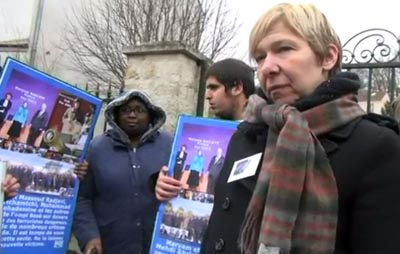 country. At first, the mayor, who is a long term supporter of the MEK, tried to stop the picket. But he soon backed off when he realised there were many local dignitaries among the protestors. He then tried to play it down and act innocent about the MEK’s presence. Demonstrators carried placards and banners and distributed leaflets pointing out the past and present violent nature of the MEK in Iran, Iraq and the EU including France. The Peace Association, a French association, has gained momentum since then and many French citizens have joined since the picket at Auvers and it has become a nationwide movement as French people are becoming more and more aware of the dangers of having this group on their soil, particularly as the MEK is now being expelled from Iraq, and the French do not want their headquarters in their country. The
 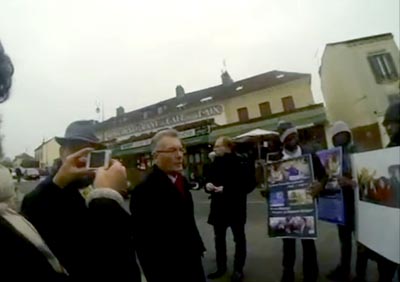 demonstrators were confronted by aggressive MEK security members who issued death threats and violence. Police are investigating several complaints.
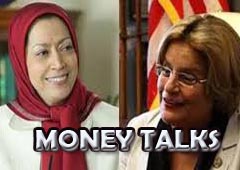 The Daily Beast reports Rep. Ileana Ros-Lehtinen (R-FL), while acting as chairwoman of the House Foreign Affairs Committee, sent a letter to federal agencies on behalf of William and Roberto Isaias, who once ran the Ecuadorean bank Filanbanco before being convicted in absentia in Ecuador of embezzling more than $100 million as the bank collapsed. The brothers never spent any time in prison because they fled to the United States, where they remain today even as the threat of extradition grows. But the Isaias brothers have friends in high places. Senate Foreign Relations Chairman Robert Menendez (D-NJ), who is being targeted by an FBI investigation for alleged corruption related to the case, made phone calls and sent letters in support of their residency request.
 The Washington Diplomat puts, "In Washington, there are very few issues that unite Republicans and Democrats. One is support for Israel and condemnation of the Islamic Republic of Iran." [1] The Israeli notorious lobby AIPAC is a powerful Zionist body that effectively runs Israeli policies including hostile guidelines against Iran, in the US government.
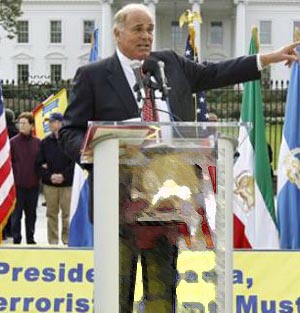
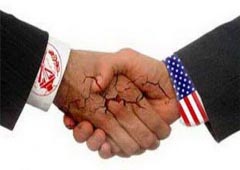 secured bipartisan support from a host of heavyweight Washington insiders and fought its way off of the State Department’s list of designated terrorist organizations illustrates how power is wielded in Washington, and how former officials continue to influence American foreign policy.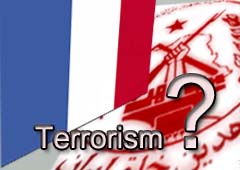
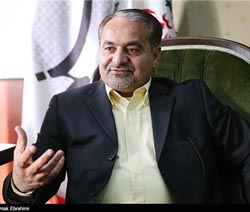 nuclear inspections as the main challenges facing the nuclear talks between Iran and the world powers.