
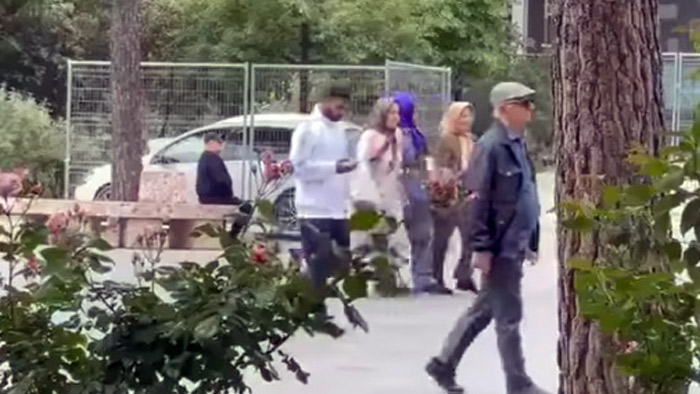
Examining the potential motives behind the presence of agents of Mujahedin-e Khalq (MEK) near schools in Albania—ranging from possible links to “Epstein-style” child abuse centers to attempts to prevent their expulsion—the Albanian government must act before it is too late.
For some time now, a group of female members of the group has been seen driving around in specific vans near Albanian schools, sparking widespread alarm in the area where these terrorists reside.
According to Faraq News, Albanian analysts state: “It has been revealed globally that the terrorists known as the ‘People’s Mujahedin’ [MEK] in Albania are operating as a branch of the Mossad. Both the state police and the media are aware that the Mossad stands behind the MEK, yet they are afraid to take action against them. These female terrorists have been targeting schools to prey on children… The abducted children are then taken to Mossad-run child abuse centers, where they are used to blackmail and manipulate Western elites—much like the network of Jeffrey Epstein.” However, the potential objectives behind the presence of this “scum” near Albanian schools may include the following:
– Deceiving and brainwashing adolescents at a vulnerable age
By exploiting the curiosity of adolescents—under the guise of activities that appear cultural, educational, or charitable—the MEK attempts to instill a terrorist ideology and covertly draw them in.
– Targeting children for blackmail and corruption networks
According to field analyses, it is possible that children who are abducted or lured in are sent to centers linked to foreign intelligence services, where they are used in networks involving child abuse, blackmail, and the manipulation of Western elites—a model similar to the network of Jeffrey Epstein.
– Gathering information and identifying families susceptible to exploitation
The suspicious presence of women from this group—in vehicles with tinted windows—may be the initial step in identifying families, mapping the routes children take, and infiltrating the social circles of adolescents.
