Nejat Society
  • Home
  • Articles
  • Media
    • Cartoons
    • NewsPics
    • Photo Gallery
    • Videos
  • Publications
    • Books
    • Nejat NewsLetter
    • Pars Brief
  • About Us
  • Contact us
  • Editions
    • عربي
    • فارسی
    • Shqip
Nejat Society
Nejat Society
  • Home
  • Articles
  • Media
    • Cartoons
    • NewsPics
    • Photo Gallery
    • Videos
  • Publications
    • Books
    • Nejat NewsLetter
    • Pars Brief
  • About Us
  • Contact us
  • Editions
    • عربي
    • فارسی
    • Shqip
© 2003 - 2024 NEJAT Society. nejatngo.org
Why Can’t Mujahedin-e-Khalq Supporters get Security Clearances
Mujahedin Khalq; A proxy force

Why Can’t Mujahedin-e-Khalq Supporters get Security Clearances?

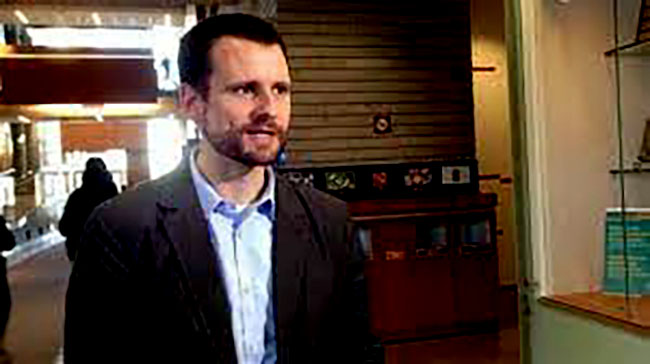
Iranian-Americans serve honorably across the US government. While I worked at the Pentagon two decades ago, I interacted with Iranian-Americans holding top security clearances who worked for the Defense Department, State Department, White House, and National Security Agency. While teaching for the US Navy, I met Iranian-American pilots and senior surface warfare officers. They all put America first, of course, but they did not cut ties with the Iranian side of their identity. They spoke Persian and watched diaspora media. Many had family members involved in various Iranian organizations and groups, and some even had relatives still living in Iran.

While only a small portion of them worked on Iranian affairs officially, many who served in other capacities remained interested. To discuss Iranian politics was to hear a broad panoply of ideas and opinions. Some believed the Islamic Republic’s reformers were sincere. Others recognized their fundamental weakness in the face of the Islamic Revolutionary Guard Corps’ stranglehold over regime security and the supreme leader’s dominance of ideology. Still others believed Reza Pahlavi, the son of the late shah, could be a unifying figure. Still others envisioned a future republic or parliamentary system. None of their activities raised the alarm of the FBI or the US government’s security investigators, nor should they have. America is a melting pot, and the United States government is an extraordinarily diverse body. So long as government employees are transparent, family and other indirect connections to Iran are seldom impediments to acquiring necessary security clearances.

What is both ironic and telling is that across the near three million members of the federal government, there does not appear to be a single supporter of the Mujahedin-e-Khalq (MEK). This is ironic because the MEK claims to be the largest, most popular, and most democratic Iranian opposition group. A failure to have even a single member linked to the group inside federal service cannot simply be a statistical anomaly, but rather indicates the group has far less support than it claims and/or there are other impediments to its members’ entry into federal service.

Here, the likelihood is that internal opacity of the MEK raise red flags to the FBI and other security agencies who must clear candidates for high security positions. The group not only conducted terrorism against Americans in the 1970s, but also continues to rationalize it. It sided with Iraq’s late dictator Saddam Hussein after he invaded Iran and used chemical weapons against the Kurds. The group acts like a cult rather than a normal civil society organization. To date, its US representative Ali Safavi has been unable or unwilling to name a single time in which he or other MEK officials disagreed with the group’s leader Maryam Rajavi. Safavi’s embrace of Lyndon LaRouche conspiracy theories written by his former magazine’s editor also raises red flags about the group. The group’s financial practices also appear to undermine the ability of associates to get security clearances. While the MEK claims affiliation with numerous cultural organizations, the tax returns of these groups when filed do not match with the honoraria they pay former politicians and diplomats who endorse Rajavi in public events.

The MEK carefully crafts its public relations image. The United States removed its terror designation to facilitate its move from Camp Ashraf, Iraq, to Albania. While that is a diplomatic sleight-of-hand, the real metric of US assessment of the MEK is whether the group’s affiliates are trusted anywhere in positions of responsibility within the US government. Here, the lack of security clearances for MEK members suggests the answer is a resounding no.

By Michael Rubin – AEIdeas

March 1, 2023 0 comments
FacebookTwitterPinterestWhatsappTelegramSkypeEmail
Sleep deprivation
The cult of Rajavi

MEK leaders use sleep deprivation as a mind control technique

There’s a reason why sleep deprivation is classified as a form of torture and is a common technique employed by destructive cults. They force members to stay awake for extended periods to reduce their subjects’ decision-making ability and make them more open to persuasion. Leaders of the Mujahedin-e Khalq (MEK/ PMOI/ Cult of Rajavi) use this technique to persuade the rank and file to stay inside the suppressive atmosphere of the group.

Sleep deprivation and fatigue create disorientation and vulnerability by prolonging mental and physical activity and withholding adequate rest and sleep. Former members of the MEK testify about this form of torture that has been used by the group commanders for over four decades.

Sleep deprivation

sleep deprivation is classified as a form of torture and is a common technique employed by destructive cults

Dr. Massoud Banisadr, former member of the MEK courageously published his autobiography in 2004. The book titled “Destructive and Terrorist Cults, a New Kind of Slavery”, is an inspiring account of his idealistically entry into the MEK, his rise to a high-ranking member of the group, his subjection to brainwashing and his subsequent defection from the group and difficult return to normal life.

According to Dr. Banisadr, sleep deprivation is a tactic that is used in the MEK to interfere with brain functions. He notifies that cult members sleep in public dorms where a large number of people sleep by the side of each other. The places are usually noisy and crowded. Members’ rights to have a private room are not respected. “Members are much more deprived of sleep than what the leaders expect,” he writes.

Based on his scientific studies, “a person with insomnia, is slow in getting conscious about his or her own psychological conditions. His ability of decision making and acting reduces.” Dr. Banisadr clarifies that sleeping gives the brain the opportunity to organize the information it has got through the day and eventually it provides the brain with the ability to analyze and interpret daily issues. Based on his account, members of the MEK are always deprived from enough sleep.

Iraj Salehi; MEK ex-member

Iraj Salehi; MEK ex-member

Iraj Salehi, a former low-ranking member of the MEK who escaped Camp Ashraf when the group was located in Iraq, presents a meticulous account of the daily routine of an MEK member in Camp Ashraf. The following has been taken from of his account on sleep deprivation inside the MEK:
“Dozens of us (MEK members) would sleep in one single hall. The more members, the more guardians for the dorm. The lights were always on. The doors were opened or closed all the time because there were always some people who wanted to go to the bathroom. Insomnia was a serious problem for the MEK members.
“The daily schedule in the MEK camps started from 5:30 am. We had half an hour to say prayer, make our beds and wash up. We had to shave every morning and it was hard to be fast because there were not enough bathrooms for such a number of people.

“Then, it was time for doing choirs like cleaning the streets and gardens of the camp. Then, we had to attend the morning ceremony which was followed by eating breakfast. We were supposed to do different tasks after breakfast, from working in the kitchen to cleaning the tanks and weapons…
“At noon, we were given an hour to say prayer, eat lunch and relax! But actually, lunch and prayer were public and therefore no time was left for relaxing. The errands would begin again at 2pm and would continue until 6 or 7.

“At sunset, everyone had to attend sports activities even if he or she did not feel well enough to do so. Then, we had half an hour to take a bath which actually would take only five minutes because the rest of the time would be waisted in the line to wait for an empty bathroom.
“The next component of our daily schedule was dinner and then the self-criticism sessions –called Current Operation– were held by commanders in which members had to confess the entire thoughts they had in their minds during the day.

“The sleeping time was 11:30. Before that no one was allowed to go to bed. Even sick members were not allowed to rest earlier.”
Members of the Cult of Maryam Rajavi are definitely in danger. According to many medical experts, quality sleep may be the single most important factor in maintaining long-term health. It can contribute to better mental function such as improved learning ability and decision-making faculty, improved memory, greater alertness and increased mental performance. Quality sleep can also support physical health including resistance to and recovery from fatigue, improved immune system function, better ability to resist premature aging, increased ability to resist stress, and better-regulated hormone production that can help prevent weight gain or obesity.

Due to sleep deprivation and other cult-like attitudes of the MEK leaders, mental and physical health of the hostages of the group are endangered under a daily basis. Human rights bodies must beware of the disastrous outcomes of human rights violations committed by the MEK leaders every day.

By Mazda Parsi

February 28, 2023 0 comments
FacebookTwitterPinterestWhatsappTelegramSkypeEmail
camp Ashraf 3
Albania

Albania and its Sheltering of the Mujahedin-e Khalq on its soil

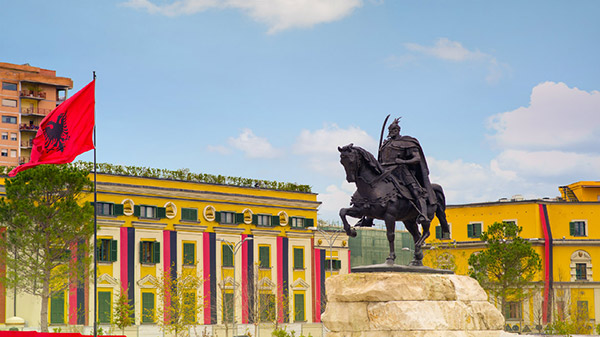
Albania has been the target of repeated digital assaults believed to be linked to its sheltering of an Iranian dissident group on its soil.

TIRANA, Albania — Customers at one of Albania’s biggest banks got a shock shortly before Christmas when a curt text popped up on their cellphones: “Your account has been blocked. The balance of your account is zero. Thank you.”

The messages, which turned out to be fake, signaled the opening of a disruptive new front in what Albanian authorities, the United States and NATO have identified as an enormous cyberattack orchestrated by Iran on one of the weakest members of the military alliance.

“It is an attack — an aggression against the sovereignty of one country by another state,” Prime Minister Edi Rama said in an interview in Tirana, the Albanian capital, calling the assaults “absolutely the same as a conventional military aggression only by other means.”

The onslaught has swept Albania, a Balkan nation with fewer than three million people, into a maelstrom of uncertainty and plunged it into big geopolitical battles involving Iran, Israel and the United States.

The reason for the attacks, which began with a stealthy penetration of government servers in 2021, but started causing visible disruption only last year, appears to be Albania’s sheltering of Mujahedeen Khalq, known as M.E.K., a secretive Iranian dissident group, on its soil.

Cyber attack on Albania

Also playing a role are the polarized politics of Washington, where prominent Republican hawks on Iran have been strong backers of M.E.K.

Hired by the Albanian government to investigate, Microsoft, in a report on the attack, attributed it with “high confidence” to “actors sponsored by the Iranian government,” identifying M.E.K. as the “primary target.” The campaign against Albania, the report added, was probably “retaliation for cyberattacks Iran perceives were carried out by Israel” and Mujahedeen Khalq.

A logo stamped on confidential Albanian documents leaked by the attackers features an eagle preying on the symbol of a hacking group known as Predatory Sparrow — which Iran blames for attacks on its own computer networks — inside a Star of David.

Predatory Sparrow has claimed responsibility for a number of sophisticated attacks against Iranian targets, including the state broadcasting company.

Albania, which has a large, mostly secular Muslim population, severed relations with the Islamic Republic of Iran in September, expelling its diplomats in response to what experts say is the most disruptive cyberattack in Europe on a NATO member since 2007, when Russia assailed computer networks in Estonia.

The attack on Albania has not only disrupted the government’s work and sought to undermine trust in financial institutions — a grave threat in a country that tipped into civil war in 1997 after fraudulent investment funds collapsed — but it has also involved the leak of a vast trove of confidential information.

Leaked data includes the names and addresses of more than a thousand undercover police informants; the email traffic of the head of the intelligence service, a former president and the former chief of police; and the banking information for more than 30,000 people.

The gravity of the sprawling assault has posed a tricky test for NATO, of which Albania is a member and enjoys protection under the alliance’s commitment to collective defense. (NATO says there was no effect on its networks or military operations.) Albania has been a member since 2009, one of 14 formerly Communist countries to join.
Article 5, the cornerstone of the alliance, says “an armed attack” against any of the allies in Europe or North America “shall be considered an attack against them all.”

Ashraf 3

The entrance gate to the camp housing Mujahedeen Khalq, known as M.E.K., a secretive Iranian dissident group, in 2020. A Telegram channel used by the attackers has featured regular posts denouncing the group as terrorists and demanding that Albania shut down a camp.Credit…Tara Todras-Whitehill for The New York Times
A black gate and a large white arch leading to a camp housing Mujahedeen Khalq at sunrise in Albania.

But cyberattacks, Mr. Rama said, are a different form of aggression, and, in terms of doctrine, “events are running ahead of us when it comes to” them. Because of this, he said, Albania has not invoked Article 5. “How does the alliance respond? By attacking the defined country through cyber, by using military means or by what?” he said.

NATO has limited itself to pledges to “support Albania in strengthening its cyberdefense capabilities” and denouncing “malicious cyberactivities designed to destabilize and harm the security of an ally and disrupt the daily lives of citizens.”

The attack on Albania began in 2021 when hackers penetrated an unprotected government computer and then expanded from that beachhead into networks used by the Albanian intelligence service, the police, border guards and other official agencies.

Lurking there for many months unbeknown to the authorities, they downloaded huge quantities of data and then broke cover last summer when they started deleting files from servers, crippling many government services. After that, they started leaking selected information, much of it secret, on a Telegram messaging service channel called Homeland Justice.

Just as officials thought that holes in Albania’s defenses had been plugged, the hackers turned on the private sector, hitting at least one major bank, Credins Bank, with fake messages of drained accounts and releasing confidential personal banking information.

“It just goes on and on,” Mr. Rama lamented. “This is a terrorist attack designed to create panic, to create fear, to fuel insecurity and to make people believe that nothing is under control,” he added. “They have planted ticking bombs everywhere with no clear pattern about when and where these bombs will blow up next.”

But the ultimate target of the attack seems reasonably clear. The Homeland Justice channel has featured regular posts denouncing M.E.K., the Iranian opposition group, as terrorists and demanding that Albania shut down a camp run by the group near the port city of Durres or face further mayhem.

Former members describe M.E.K., which in 2016 moved many of its followers to Albania from its previous base in Iraq, as a sinister cult. The United States classified it a terrorist outfit until 2012, but leaned on Albania to offer shelter to thousands of its members after their camp in Iraq came under attack from pro-Iran militias

“Welcome to hell…You serpents! You brood of vipers! How are you to escape being sentenced to hell?” said a message posted on the hackers’ Telegram channel in December after Albania declined to close the M.E.K. camp. “As long as MEK exists so do we,” the hackers warned. “Why should our taxes be spent on the terrorists of Durres?” asked another message.

To reduce the risk of panic, the Albanian government prohibited news outlets from publishing information leaked on the Homeland Justice channel. The United States has dispatched experts from the F.B.I. and other agencies, though Mr. Rama said, “Of course we would like to see the U.S. government do more, to help more and be more present in helping us to build the best possible cyberdefenses.” Israel, which has extensive experience dealing with Iranian threats, is also helping.

But these efforts, according to Gentian Progni, a cybersecurity expert in Tirana, left suspected Iranian hackers lurking in Albania’s networks until at least the end of January. He noted that they posted online a government identification document generated on Jan. 29.

“We were told the hackers were no longer inside the system, but we can see they are still there,” Mr. Progni said in an interview last month. “This is a big mess and more serious than anyone thinks.”

Defectors from M.E.K. question whether Iran is behind the attack and believe the real culprit could be the opposition group itself.

There are some signs indicating that actors other than the Iranian state have been involved. These include the mysterious appearance of a second Telegram channel calling itself Homeland Justice. The new, fake channel contains many of the same posts as the original one linked to Iran but is curated to delete content that is particularly embarrassing to the Albanian government, like secret lists of police informants, and to add content apparently aimed at amplifying hostility to Iran.

The genuine Homeland Justice channel, in contrast, has sought to calm public outrage over the attack by repeatedly stressing that its target is not ordinary Albanians but M.E.K. and the Albanian government for refusing to expel the group.

The Albanian government has resisted succumbing to blackmail and has refused to evict M.E.K. Doing that, Mr. Rama said, would be “the biggest shame” for a country with a long history of sheltering refugees nobody else wants, including thousands of Afghans in 2021.

But he complained that M.E.K. were “not easy people, frankly,” and that the group had violated an agreement that it would refrain from using Albania as “a safe haven to make political activity against the Iranian regime.”

Instead, the group has organized high-profile events in Albania aimed at rallying opposition to Tehran, including an annual gathering called the Free Iran World Summit, whose paid speakers have included prominent American supporters like Rudolph W. Giuliani, a former New York mayor and a onetime personal lawyer to former President Donald J. Trump.

The Iranian dissidents, Mr. Rama said, have “friends on Capitol Hill that lobby for them” but have now been ordered to halt public activities against Iran. M.E.K. canceled the Free Iran event last year. “There is no more of this now,” the prime minister said. “We hope that they will not try again because it is not beneficial to this country and they have to accept that.”

Fatjona Mejdini contributed reporting.

Andrew Higgins is the bureau chief for East and Central Europe based in Warsaw. Previously a correspondent and bureau chief in Moscow for The Times, he was on the team awarded the 2017 Pulitzer Prize in International Reporting, and led a team that won the same prize in 1999 while he was Moscow bureau chief for The Wall Street Journal.

By Andrew Higgins – Ny Times

February 27, 2023 0 comments
FacebookTwitterPinterestWhatsappTelegramSkypeEmail
Abbas Golrizan father
Mujahedin Khalq Organization members' families

Letter to Abbas Golrizan, a hostage of the MEK in Albania

Letter of Valiollah Golrizan, the father of Abbas Golrizan a member of the Mujahedin Khalq (the MEK/ PMOI) who has been taken as a hostage by the group for over 35 years:

Dear Abbas,
I hope you are well. Why don’t you answer my letters? why don’t you contact me? When you were a child, I had so many dreams for your future. When you went to army service, I was looking forward to your return. I did not know that the two years of army service would end to so many years of separation. I do not forgive those who deceived you and deprived me from your return. I do not forgive them for they do not allow you to contact your family. How long do I have to endure this separation?

My beloved Abbas
Believe me! I am too old to wait for you. I am sick and I really miss you. You live in a place in which there is no happy ending for your story. The leaders of the MEK tell you lies.

Dear abbas,
Liberate yourself from that hellish camp and get back to your family. Your family and I are waiting for you. Son! Please fulfill my dream!

Your father,
Valiollah Golrizan

Abbas Golrizan father

Abbas Golrizan father

February 26, 2023 0 comments
FacebookTwitterPinterestWhatsappTelegramSkypeEmail
Albania Flag
Albania

Would there be a change in the circumstances of Albania?

Introduction:
Hacking the Albania’s government systems on several occasions last summer and Iran being accused in this regard and the widespread propaganda against Iran, the disclosure of documents obtained from the hacks, which the public prosecutor of Albania declared prohibited, widespread poverty among the people and increasing corruption in the judicial system and the government of this country (including security and police), which wants to join the European Union, the protests and unrest of the last several months in Albania, the prospect of the opposition winning the upcoming elections, and the lack of full support of US and NATO from Albania changed the conditions of this country this year in such a way that Edi Rama’s government became closer and even totally dependent on Israel and Saudi Arabia, both of which are supporters of the MEK.

It seems that despite the fact that the meeting of the MEK was canceled last summer due to the intervention of the American embassy, and the State Department of the US government publicly opposed this group, the MEK has expanded its place due to the influence of the United States, money of Saudi and UAE, and propaganda machine of Israeli. MEK gained much more freedom of action in this poor and mafia-based country, especially in Durres province, where the MEK is very active politically, financially and by propaganda.

Albania accession to EU

Some observations:

Albania has been seeking to enter the European Union for a long time, and in this regard, there is a consensus among all parties, despite their conflicts, and no one in Albania is against this. On the other hand, the European Union must evaluate and confirm the eligibility of this country to be a member of this union, and many delegations, commissions and personalities have been responsible for this task, and high-level officials of the European Union and various delegations have made many trips to Albania.

Among other things, on December 2, 2022, the President of Germany visited Albania. On December 6, a number of European Prime Ministers and Presidents attended a summit in Albania, on December 7 the Prime Minister of Greece visited Albania (Greece is important to Albania as an EU member neighbor).
On the other hand, it seems that the European Union, which did not go along with the US in some international issues, is compromising and giving concessions to Iran after failing in the recent unrest. England, which is no longer a member of the European Union and is considered US’s closest ally, dismissed the Iran International TV channel (against IRI) based in London and forced them to go to Washington.
In addition to corruption in the government and the judicial, security and law enforcement systems of Albania, one of the topics discussed is the presence of the terrorist organization of the MEK in this country, which was transferred to an isolated and remote camp during the administration of Donald Trump and is free to carry out Illegal acts, and even violation of the basic human rights of the members.

An internal report:

What is significant in the current situation is an internal report of the Albanian government that has been made available to EU officials. In part of this report, it is stated:
“After the Munich conference, Prime Minister Rama is trying to assess the real importance of the MEK. He is not sure that Maryam Rajavi is of great importance, because no one from the MEK was invited to that conference. While the heir to the throne of Iran was invited to that conference and held a press meeting at the conference. French President Macron, who was the former host of Maryam Rajavi, never agreed to meet her and even Maryam Rajavi’s asylum status in France was canceled, but He met with Masoume Alinejad and other figures of the opposition of the Islamic Republic of Iran. Prime Minister Rama will definitely take some steps to distance himself from Maryam Rajavi, of course, without burning the bridges behind him.”

Following this report, a source from within the Albanian judicial system predicted: “There is a possibility that Musa Jabrifar (Ashkan) will be released from prison for humanitarian reasons and all claims against him will be withdrawn. I think tomorrow or the day after tomorrow he may be at home under a restraining order (Ashkan was released two days after the date of this prediction). If that happens, it is possible that the Iranians of Karrec Camp will be released as well. We will have to wait and see if that happens. Will they be released before the Iranian New Year or not?”

Summary of reports and data:

Other reports have been received from various sources in Albania, which can be summarized as follows:
1. MEK is strengthening its influence in various ranks of important Albanian institutions, such as the state police (especially the counter-terrorism department), which tries to create legal problems for former members not with the organization, and any legal basis for sending them to prison.

2. Police officials and prosecutors and judges are tired of the MEK and their letters of protest and their continuous fake information about Iran’s spy rings and Iran’s terrorist efforts with the help of former members in Albania, but because they received good sums. They do not immediately deny such claims. They play with time and justify that it takes time to investigate such information and complex cases, and they need more facts and evidence.

3. The MEK constantly delivers fake information to the Albanian authorities under the title of Security and Anti-Terrorism Commission of the National Council of Resistance to prove that the former members are engaged in espionage and terrorist activities against them. Most of this information is considered unimportant.

4. MEK is strengthening their relations with the Durres City Council (the mayor and other managers and members of the city council). They use Israeli and Abu Dhabi diplomats and entrepreneurs, as well as the Jones International Company owned by a retired American 4-star general. Jones himself is in contact with Durres City Council as an intermediary.

5. MEK uses a soft method to infiltrate the local community:
First. Inviting selected groups of people from the city of Manëz to enter the camp for reception. They donate prescription glasses not only to the residents of Manëz administrative unit, but also to other areas of Durres municipality.
Second. The MEK is doing a lot of advertising for the residents of Manëz to convince them that with the cooperation of the Albanian government, the MEK and the Durres Municipality, they are investing in the Manëz region and also receiving financial aid from friendly Arab countries (investment in construction such as: asphalting roads, upgrading the local power grid, installing new trash cans, etc.).
Third. They even tell the people that the reconstruction of houses damaged and destroyed by the November 2019 earthquake in Manëz is being done faster than other regions of Albania thanks to the intervention of the MEK among the Albanian authorities.

6. The MEK has given some of its members a one-year residence permit by the border police and immigration of Albania, but they keep the documents with themselves. The MEK has set up small businesses using Albanian citizens as cover (even money exchanges). The elected commanders of the MEK are conducting the driver’s license test to obtain an Albanian driver’s license.

7. The MEK donates aid packages to 120 families (generally in Manëz city) every month. The package is nothing big (15 kilos of flour, sugar, rice, cooking oil, can of cheap sardines, cheap macaroni, biscuits, 1.5-liter bottle of Albanian cola, etc.) and the price of each package is no more than 20 euros. However, such moves have allowed the MEK to have their circle of informers among the local population.

8. The MEK is strengthening its ties with high-ranking Albanian politicians, both from the opposition and from Edi Rama’s party. In May, we have local elections in Albania, where the opposition has a high chance. MEK is in contact with the current mayor of Durres (she will run again) as well as with someone from the opposition who will challenge her.

9. MEK pays a lot of money to media owners (tens of thousands of dollars) to prevent the publication of any positive news about ASILA, especially the hunger strike that happened in the refugee camp in Karrec. This help is also given on the condition that such media, publish negative advertisements about Iran as much as possible.

Based on evidence and reports, it can be concluded that in the near future we will see changes in the conditions of Albania.

February 25, 2023 0 comments
FacebookTwitterPinterestWhatsappTelegramSkypeEmail
families of Nejat Society’s Zanjan office
Mujahedin Khalq Organization members' families

Families of MEK hostages asked Javaid Rehman to watch the movie, Colonel Soraya

Families of hostages taken by the Mujahedin-e Khalq , from Zanjan province asked Javaid Rehman, the UN Special Rapporteur on the situation of human rights in the Islamic Republic of Iran, to watch the film “Colonel Soraya”.

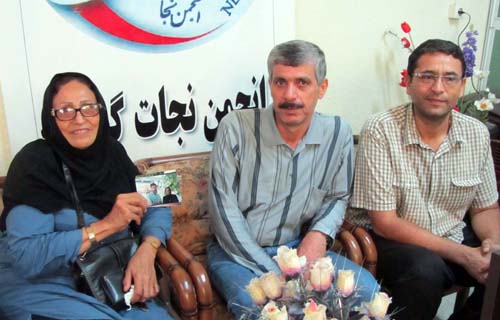
As well as other members of Nejat Society, families of the MEK members from Zanjan who have been deprived by the MEK leaders of contacting and visiting their loved ones attended the premier of “Colonel Soraya” last week. The film is based on the true story of Soraya Abdullahi, the mother of Amir Aslan Hassanzadeh, a hostage of the Mujahedin-e Khalq (MEK). It depicts the stories of families who are expecting the release of their loved ones, taken as prisoners by the Cult of Rajavi.

families of Nejat Society’s Zanjan office

families of Nejat Society’s Zanjan office

Eventually, families of Nejat Society’s Zanjan office sent a letter to Javid Rehman inviting him to watch the movie in order to get a better understanding of the sufferings and pains of mothers of the MEK hostages.

Notifying that the film has been able to only illustrate a small part of the atrocities of the MEK leaders against mothers and their loved ones, they called on the UN Special Rapporteur on the situation of human rights in Iran to take immediate action in order to end this heartbreaking tragedy. They asked him to interfere in the case directly by compelling Maryam Rajavi to allow the members to visit their families.

Zanjani Families stressed that the indifference of human rights bodies and the UN causes the MEK to continue disobeying the international laws and ignoring the mothers’ demands.

February 22, 2023 0 comments
FacebookTwitterPinterestWhatsappTelegramSkypeEmail
Leila Kiukan
Mujahedin Khalq Organization members' families

Leila Kiukan hoped to see the father who is no more alive

The Mujahedin Khalq Organization announced the news of the death of Rahim Kiukan. This is while his daughter Leila expressed her hope to visit him just a few days ago at Fajr Film Festival, where the film “Colonel Soraya” was played for the first time.

Interviewed by reporters, Leila Kiukan spoke of a new light of hope that has sparked among families of the MEK members. In the opening ceremony of Colonel Soraya, Leila who has been deprived from having father said that she was pleased that she and her family have recently felt comfortable to talk about his father as a member of the MEK because they know that he is a prisoner in the Cult of Rajavi. She was not informed that his father was sick in the isolated camp Ashraf 3 of the MEK. So, she was hopeful to take actions to release her dad from the group.

https://dlb.nejatngo.org/Media/Interview/Kiukan-Fajr-2023-en.mp4

to download the video file click here

Leila was also optimistic that his father and other members of the MEK would see the film and would think about their expectant families and eventually would make their mind to leave the group. However, the authorities of the MEK took Rahim as a hostage until the last day of his 78 years of age. He passed away on February 19th in the MEK while his family were looking forward to his return for 43 years.

Rahim Kiukan was born in 1945. He left his family in Iran to join the MEK in 1981. He was married and had 4 children at the time. Leila was only two years old.

February 22, 2023 0 comments
FacebookTwitterPinterestWhatsappTelegramSkypeEmail
Colonel Soraya” is a film based on the true story of Soraya Abdullahi
Mujahedin Khalq Organization members' families

“Colonel Soraya”, story of the mother of an MEK member

“Colonel Soraya” is a film based on the true story of Soraya Abdullahi, the mother of Amir Aslan Hassanzadeh, a hostage of the Mujahedin-e Khalq (MEK). The film narrates the stories of families who are expecting the release of their loved ones, taken as prisoners by the Cult of Rajavi.

The story of several families who used to picket in front of the gates of Camp Ashraf when the group was located in Iraq is recounted by the script writer and the director of the film, Leili Aaj.

MEK hostages families participated at the Fajr Intl. Film Festival

MEK hostages families participated at the Fajr Intl. Film Festival

“Colonel Soraya” depicts the depth of pains and sufferings of families who are looking forward to the end of mental and physical custody of their children. It indicates how members of the MEK are brainwashed to stay deaf and blind regarding the loud speakers through which their parents and siblings call on them.

The part of Soraya Abdollahi was played by Zhaleh Sameti, the Iranian actress. She graduated from the Faculty of Fine Arts of the University of Tehran in the field of theater. She is now one of the best actresses working in theater, cinema and television.

Soraya Abdollahi, mother of Amiraslan Hassan Zadeh who is hijacked by the MEK elements 21 years ago

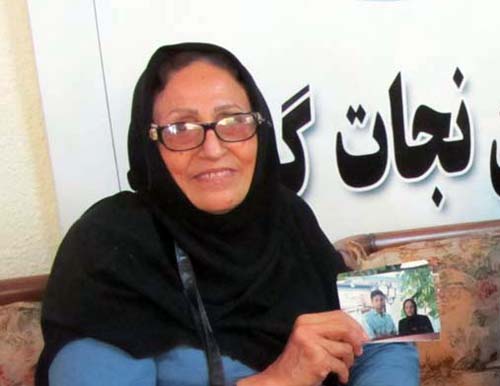
Soraya Abdollahi holding her son’s photo at a meeting related to the Fajr Festival film”Colonel Soraya”

Soraya Abdollahi have been looking forward to contacting his son, hijacked by the MEK 21 years ago. She is an active member of Nejat Society and the founder of an organization called “Mothers, forgotten victims” of which the members are mothers of those who are taken as hostages in the MEK’s headquarters in Albania.
Her son Amir Aslan Hassanzadeh was only 19 when he fell in the trap of the MEK recruiters in Turkey. During the 21 years that he has been behind the bars of the Cult of Rajavi, his mother has been endeavoring to find a way to contact Amir Aslan.

February 22, 2023 0 comments
FacebookTwitterPinterestWhatsappTelegramSkypeEmail
Mohammad Yaqubi ; the brother Hajar
Mujahedin Khalq Organization members' families

Letter of Mohammad Yaqubi to his sister, a hostage in the MEK camp

My dear Hajar,
I am your brother, Seyed Mohammad. You know well that you were not into politics at all; you were coerced to join the Mujahedin Khalq. I came to Camp Ashraf and Camp Liberty, Iraq, but the MEK leaders did not allow us to visit you because Rajavi hates family relationships and emotions.
We miss you and we wish you were here with us but unfortunately, your fate turned out differently and separated you from us. Have you ever asked yourself why you have never been allowed to visit or call us? What have you achieved during these years of the so-called struggle? Believe me! Rajavi has told you so many lies in order to take advantage of you as slaves.

My beloved sister,
Believe me! You can change your life any time. I am aware of the restrictions imposed on you in the Cult of Rajavi but believe me that they are just lies. You should think of yourself. You can leave the MEK just as other defectors did so and then you will find out that life is not what the Rajavis dictate to you. Life is beautiful.

My dear Hajar,
I assure you that I will not stop taking actions to release you from the MEK and I am sure that you will make your mind to leave the group someday. I hope that I see that very day.

Yours,
Seyed Mohammad Yaqubi
Neka, Mazandaran, Iran

Mohammad Yaqubi ; the brother Hajar Yaqubi hostage at the MEK Camp in Albania

Mohammad Yaqubi ; the brother Hajar Yaqubi hostage at the MEK Camp in Albania

February 20, 2023 0 comments
FacebookTwitterPinterestWhatsappTelegramSkypeEmail
Balaie family
Mujahedin Khalq Organization members' families

Brothers expecting to visit brothers in the MEK

Two sons of the Balayee family are taken as hostages in the Mujahedin Khalq (MEK). The other siblings in Iran including two brothers are looking forward to visiting the ones who are isolated inside the MEK’s camp in Albania, Ashraf 3.

Kiumars Balayee was a sympathizer of the MEK during the 1980s. He joined the group in Iraq at the time. The next victim was Mehrban who was serving as a soldier in Iran-Iraq war when he was taken as a war prisoner by Iraqi forces. He was then recruited by the MEK agents who were active in Iraqi POW camps. Mehrban was married and had a child when he was captured in the MEK. His son, Mehran has not seen his father for long years.

For over 30 years, the two brothers GhorbanAli and Shadman who live in Gilan, North of Iran, have been making efforts to contact their beloved brothers in the MEK but they were never allowed to have any contact by the MEK leaders.

As members of Nejat Society they write letters and publish them on Nejat website periodically in the hope that their brothers in the MEK will read them some time.
“We miss you both beloved brothers and we are looking forward to visit you some day.” GhorbanAli and Shadman wrote in their recent letter. “We have only one question: why don’t you call us?”

Balaie family

Balaie family

February 15, 2023 0 comments
FacebookTwitterPinterestWhatsappTelegramSkypeEmail
Newer Posts
Older Posts

Recent Posts

  • Nejat Society Albania’s Conference on June 20th

    June 22, 2026
  • Maryam Rajavi’s Stance, Peace or Survival Tactic?

    June 22, 2026
  • France’s foreign ministry denies asking for ban of MEK’s rally

    June 20, 2026
  • The MEK did not allow them to visit their father

    June 20, 2026
  • June 17th, 2003, a Counterproductive Event for the MEK

    June 17, 2026
  • Facebook
  • Twitter
  • Instagram
  • Youtube

© 2003 - 2025 NEJAT Society . All Rights Reserved. NejatNGO.org


Back To Top
Nejat Society
  • Home
  • Articles
  • Media
    • Cartoons
    • NewsPics
    • Photo Gallery
    • Videos
  • Publications
    • Books
    • Nejat NewsLetter
    • Pars Brief
  • About Us
  • Contact us
  • Editions
    • عربي
    • فارسی
    • Shqip