Nejat Society
  • Home
  • Articles
  • Media
    • Cartoons
    • NewsPics
    • Photo Gallery
    • Videos
  • Publications
    • Books
    • Nejat NewsLetter
    • Pars Brief
  • About Us
  • Contact us
  • Editions
    • عربي
    • فارسی
    • Shqip
Nejat Society
Nejat Society
  • Home
  • Articles
  • Media
    • Cartoons
    • NewsPics
    • Photo Gallery
    • Videos
  • Publications
    • Books
    • Nejat NewsLetter
    • Pars Brief
  • About Us
  • Contact us
  • Editions
    • عربي
    • فارسی
    • Shqip
© 2003 - 2024 NEJAT Society. nejatngo.org
MEK violence
Mujahedin Khalq Organization as a terrorist group

Ask the MEK, how to make a violent insurgent out of a normal protester

Civil protests in Iran often ends with the arrest of some MEK-affiliated insurgents who have committed acts of violence in the scenes of peaceful protests. In recent protests in Iran that was sparked by the death of Mahsa Amini, a number of arrested ones turned out to have been manipulated by the troll farm of the Mujahedin Khalq. The insurgents were arrested under the accusation of spreading propaganda to incite riots and providing incendiary material to demonstrators, following orders from members of the group in Camp Ashraf 3, Manza, Albania.

The MEK’s online manipulation operation runs in the Persian-language social networks. Mohammad Atabay who defected the MEK last month was one of the soldiers of the MEK’s cyber army. He recounts his experience of working on social media to recruit insurgents. The recruited insurgents would be those who eventually set government or religious buildings, banks and traffic lights on fire, in Iran.

According to Atabay, the MEK’s on-line manipulation agents have a detailed instruction to hunt their young victims in social media. They have fake IDs, usually as young as their victims. “I was always 30 years old in the social media,” says Atabay who is 55 right now and worked in the MEK troll farm from 2016 until summer of 2022.

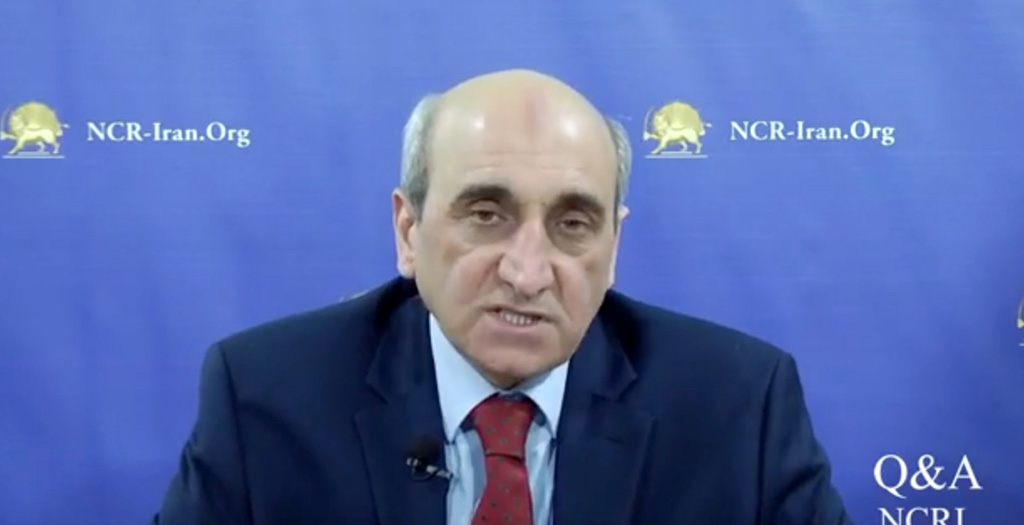
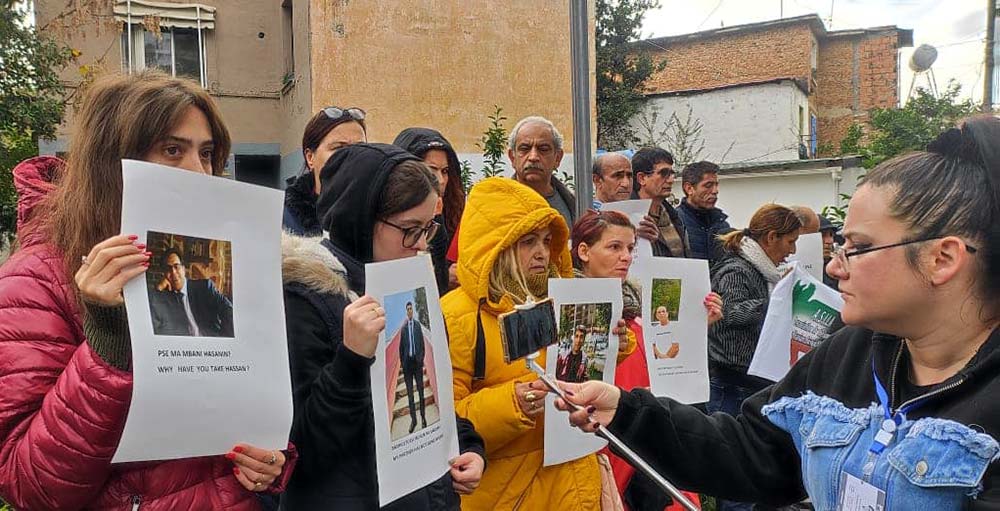
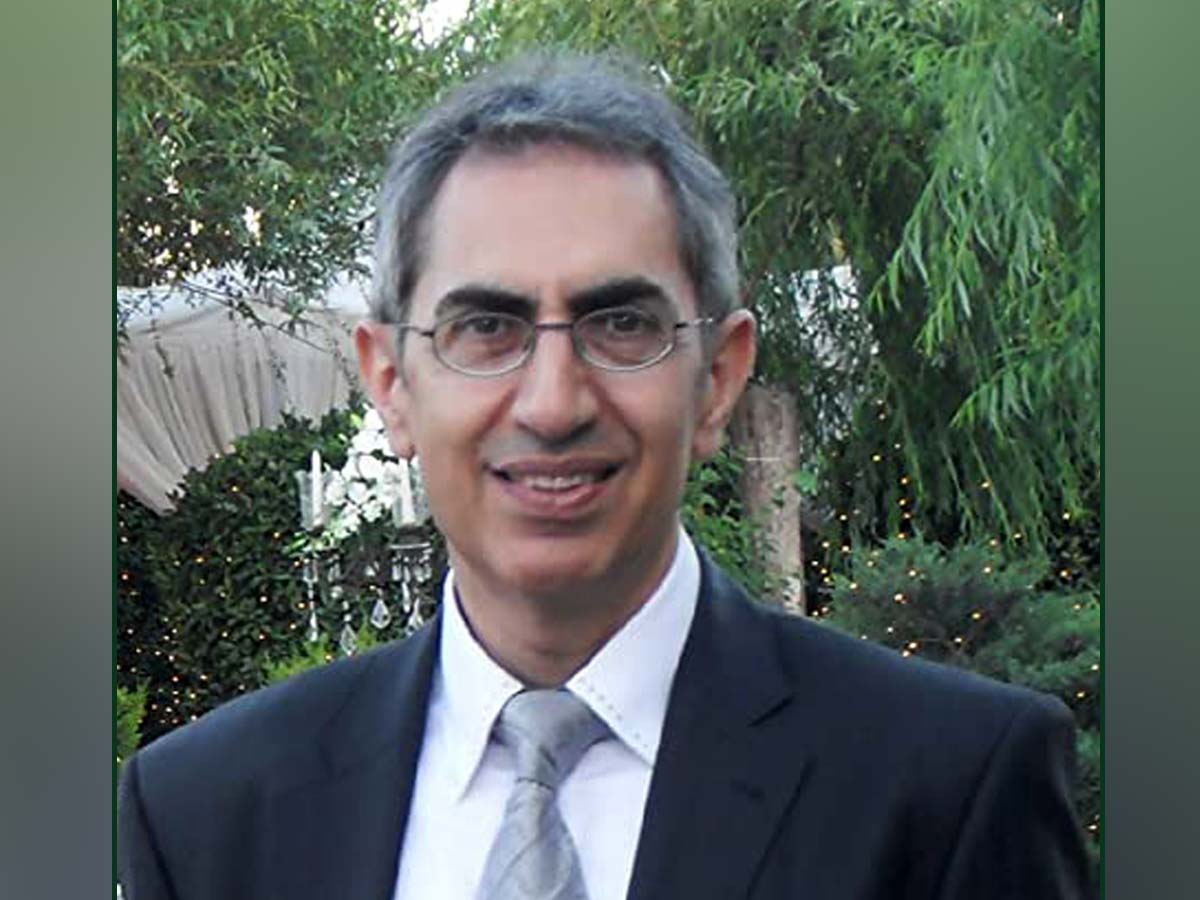
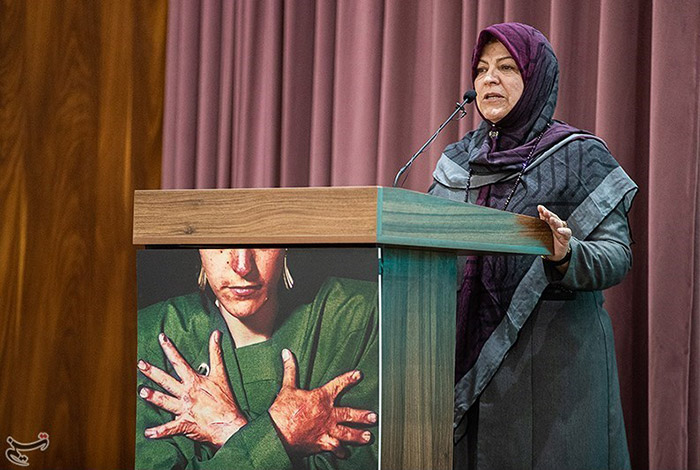
Hamid Atabay interviewed by Hassan Heyrani

Hamid Atabay; the MEK former member interviewed by the head of ASILA

The MEK recruiter on the Internet never reveals that he is a member of the People’s Mujahedin of Iran. He knows that the group is widely detested in Iran. Instead, he tries to text him in private offering sympathy to him for his problems inside Iran. He keeps on socializing until he wins the victim’s trust.
“The next step is sending a news of MEK-led activities in Iran, published in the MEK’s TV channel,” Atabay explains. “This phase was significant because you could find out the person would say ‘yes’ or ‘no’.”
Based on testimonies of this recently defected member of the Cult of Rajavi, most people did not know the MEK and its TV. “Very few people would welcome the MEK-made video,” he says. “The majority of people would say ‘no’ after they came to know who the MEK are.”

During his six years of working in the MEK’s troll farm, Atabay could only win the trust of one person who was “naive” enough to get in to the trap of the MEK. The next phases of the recruitment process are managed by the commanders who have been previously aware of what was going on each and every PC of the rank and file working in the on-line army.

Atabay recalls that the recruited person would be asked to hang the photos of the MEK leaders in the streets of the cities in Iran, take a video and send it to the recruiter in exchange for a small amount of money. These manipulated insurgents would be charged with higher fees if they set a building or the pictures of Iranian authorities on fire.

As a former soldier of the MEK’s cyber army, Hamid Atabay asks Iranian youth and teenagers to be careful about the group fraudulent recruiters in social media. He addresses the Iranian protesters: “I recognize your right to protest but I warn you about the threat of the Cult of Rajavi. The MEK is never a patriot entity. Rajavi does not belong to Iran.”

October 11, 2022 0 comments
FacebookTwitterPinterestWhatsappTelegramSkypeEmail
Abbas Sadeghinejad
Human Rights Abuse in the MEK

Parviz Ahmadi tortured to death in the MEK prison, Eyewitness

Abbas Sadeghinejad who escaped the Camp Ashraf on June 20, 2002, was one of the first defectors of the Mujahedin Khalq Organization to testify about the murder of group members under torture and violence by the leaders. He witnessed the death of Parviz Ahmadi and Ghorban Ali Torabi during the weeks he was jailed in the prison of Camp Ashraf, Iraq.

Leaders of the MEK are accused of committing violence against their members. According to the rulings of the group, the rank and file have to obey the absolute power of the leaders, Massoud and Maryam Rajavi. Disobedience to leaders, criticizing their approaches and expressing your willingness to leave the Cult of Rajavi qualifies you for this label: “spy of Iranian regime” and therefore you deserve the most horrific punishments.

https://dlb.nejatngo.org/Media/Interview/Sadeghinejad-Ahmadi-1.mp4

To download the video file click here

During the 1994 to 1995, hundreds of members who had been deceived by MEK recruiters or simply did not agree with the group’s ideology any more, expressed their dissent. The Cult of Rajavi reacted with a process of suppression called “security clearance”.

A large number of defectors of the MEK have so far testified about what they endured in the MEK’s prisons in Camp Ashraf during security clearances. They also gave testimonies on what they witnessed in the interrogation rooms, prison cells and solitary confinements. In March 2005, Human Rights Watch published a report on the MEK titled “No Exit, Human Rights Abuses Inside the MKO Camps”. The report was based on various interviews with former members of the group.

Human Rights Watch interviewed four witnesses who were detained during the security clearances of 1994-1995 because “they were suspected by the MKO of harboring dissident views”. Based on the HRW’s report, page 16 and 17, “Ali Ghasghavi, Alireza Mir Asgari, Ali Akbari, and Abbas Sadeghinejad were severely tortured, subjected to harsh interrogation techniques and forced to sign false confessions stating their links to Iranian intelligence agents.”

According to the reports, Abbas Sadeghinejad, Ali Ghashghavi, and Alireza Mir Asgari witnessed the death of Parviz Ahmadi in February 1995 inside an internal MKO prison in Iraq. The three shared a prison cell during the security clearance arrests in February 1995. Parviz Ahmadi was a dissident member who was held in the same cell.
Abbas Sadeghinezhad, who was also present in the cell, was interviewed by HRW by telephone, on February 14, 2005. He recalled the final moments of Parviz Ahmadi’s life: “The prison door opened, and a prisoner was thrown into the cell. He fell on his face. At first, we didn’t recognize him. He was beaten up severely. We turned him around; it was Parviz Ahmadi taken for interrogations just a few hours before. Ahmadi was a unit commander. His bones were broken all over, his legs were inflamed; he was falling into a coma. We tried to help him but after only ten minutes he died as I was holding his head on my lap. The prison guard opened the door and pulled Ahmadi’s lifeless body out.”

Sadeghinejad also shared his testimony in a documentary made by another ex-member, Milad Aryaiee, in 2007. He recounts the moments of Parviz Ahmadi’s passing away in the MEK’s prison after he was brought to the cell with a bruised swollen body.

Abbas Sadeghinejad told Human Rights Watch that he had earlier witnessed the death of another prisoner, Ghorbanali Torabi, after Torabi was returned from an interrogation session to a prison cell.

October 10, 2022 0 comments
FacebookTwitterPinterestWhatsappTelegramSkypeEmail
the Italian newspaper Marx21
The cult of Rajavi

IRAN. Behind the protests of the veil, the terrorism of the Mojahedin-e Khalq

The death of the young Kurdish girl Mahsa Amini, after being arrested for not wearing the veil correctly, sparked protests, demonstrations and exploitation. I do not want to discuss the legitimacy of these protests but I am struck by the news of October 1: The Iranian Ministry of Intelligence has presented a report according to which terrorist groups have incited the protests. According to news agency reports, 49 members of the Mojahedin-e-Khalq group, considered terrorist by Tehran and other states, were arrested, spreading propaganda to incite riots and providing incendiary material to demonstrators, following orders from members of the group in Albania.

the Italian newspaper Marx21

The Italian Website Marx21: IRAN. Behind the protests of the veil, the terrorism of the Mojahedin-e Khalq

The Mojahedin-e Khalq (or Mojahedin of the Iranian People or Iranian National Liberation Army – PMOI, MEK, MKO) is accused of murdering about 12,000 Iranians in the last 40 years. The organization, founded in the 1960s by a group of radical students who profess Marxism and Islam, waged the first armed struggle against Shah Reza Pahlavi. After the Khomeinist revolution of 1979, the leader of the MEK, Masoud Rajavi, fights the fledgling Islamic Republic of Iran. In 1981, an attack by the MEK wipes out the leaders of the Islamic Republic: 70 officers killed, including President Mohammad-Ali Rajayee, Prime Minister Mohammad-Javad Bahonar and Chief Justice Hossein Beheshti. The Supreme Guide, Ali Khamenei, is seriously injured and loses the use of his right arm.

Later, the MEK summits took refuge in Paris, where they found their “political umbrella”, the National Council of Iranian Resistance (NCRI). In 1986, when President Mitterrand initiated a dialogue with Iran to release the French hostages held in Beirut, France expelled Masoud Rajavi. Meanwhile, the group – already deployed alongside the Iraqi army during the War against Iran (1980-1988) – flees to Iraq, supporting Saddam Hussein in suppressing the country’s Shiite and Kurdish communities.

MEK women

Women at the MEK Camp Ashraf

Elizabeth Rubin of the New York Times in 2003 visits Camp Ashraf in Iraq (Diyala province) and is able to offer a description of the military base, organization and sectarian characteristics of the group. Rubin says she has seen “an artificial world of worker bees” – about half of the Mojahedin are women – and all, dressed in khaki uniforms and scarlet veils, practice the use of weapons, drive pick-ups and military vehicles. Since the 1980s, MEK adherents have had to take a vow of eternal celibacy, those who are married must divorce, those who are not must swear not to and cannot have children. Over the years the organization, although born from a Marxist-Islamist ideology, assumes the characteristics of a sect centered on the female role and the cult of the personality of the leader Maryam Rajavi (wife of Masoud): girls are taught that joining the sect is “A journey towards self-empowerment and the enlightenment of martyrdom inspired by the light and wisdom of Maryam Rajavi”. Thinking about the Ismaili sect of the Assassins is not really a coincidence!.

Since the 2003 US invasion of Iraq, the US neo-conservative-backed MEK has received training from the Joint Special Operation Command (JSOC) in the Nevada desert (communication techniques, cryptography, assault and guerrilla techniques, etc.). In 2012, testimony from two Obama administration officials denounced that the murders of five Iranian nuclear scientists (in 2007) were allegedly committed by the MEK in collaboration with Mossad and US intelligence support.

The US in September 2012 removed the MEK from the list of terrorist organizations – a list in which they were registered in 1997 by Secretary of State Madeleine Albright as an opening towards the reformist Iranian president Khatami -. The removal from the terrorist list is supported by Secretary of State Hillary Clinton who sends Congress a confidential communication on the matter, allowing the group to do business and activities under US jurisdiction. Since September 2012, the Mojahedin have left Camp Ashraf, their training and training center in Iraq, and are routed to Albania and Europe.

With the Trump administration and the appointment of senior officials such as Mike Pompeo and John Bolton, a new attempt is being made to destabilize Iran. This strategy envisages accreditation in Washington of the MEK group as a “legitimate opposition” to the Islamic Republic of Iran. There are several US political figures who seem “won over” to the cause of the MEK: the former mayor of New York, Rudy Giuliani during the annual MEK conference in Paris (June 2018) openly calls for regime change in Tehran; National Security Advisor John Bolton regularly attends their conventions. Moreover, lobbying efforts are well known in US politics.

Today the MEK publicly profess values of secularism and democracy in Iran, cheerfully exhibit a pro-free-market philosophy, preach women’s emancipation. However, within them they hide a contradictory truth, considering that the members of the group do not have access to newspapers, radio or television and that no one can criticize the leader. They also intend to overthrow the Iranian regime and create a government headed by Maryam Rajavi, already appointed by them as future president. Members are periodically subjected to self-criticism sessions in which they are filmed admitting to having behaved contrary to the laws of the group (the films can later be used against them).

Human Rights organizations have extensively documented abuses within the group, and the Iranian population itself does not recognize any legitimacy, indeed there is a profound hostility towards the MEK for the support provided to Saddam during the Iran-Iraq war.

Veil or not, it is difficult for Iranians and Iranians to forget the trail of blood left by the MEK.

By Marco Pondrelli, Marx21 – Translated by Nejat Society

October 8, 2022 0 comments
FacebookTwitterPinterestWhatsappTelegramSkypeEmail
MEK women
The cult of Rajavi

Stop Outrage against women including the ones in the MEK

While there is no sympathizer of the Mujahedin Khalq (MEK) among Iranian protesters, the group’s leaders broadcast messages for the so-called Khalq (people) one after the other, on their propaganda machine. “Stop outrage! Iranian women do not deserve it,” Maryam Rajavi addressed her fictional audience. She should be asked what about the Mujahed women? Do they deserve outrage?

As an Iranian living in Iran who has access to the media inside and outside the country, I can testify that the majority of Iranian protesters never hear the so-called messages of Maryam and Massoud Rajavi. In fact, the group is so detested by the Iranian public that its very few supporters do not dare to chant slogans on behalf of the MEK and its leaders. They are sure that if they are recognized as MEK supporters, they will be definitely excluded by other protesters because Iranians regard the MEK as traitors and terrorists who has the blood of their own fellow Iranians on their hands. Thus, messages of MEK leaders launched by the group’s media is almost only reached by the group’s insiders, those who are confined in Camp Ashraf 3, in north of Tirana, Albania.

Camp Ashraf 3 in Albania

around a thousand members work in the so-called”computer division,”allegedly using fake accounts to post pro-organization propaganda on Twitter and Facebook

Consider an elderly female member of the MEK who gets the massage of her leader, Maryam Rajavi, while she is sitting in front of a desktop system. Her daily routine is to share the leaders’ messages and other manufactured news of the MEK propaganda in social media. She has to like and share the same contents that are shared by her comrades in the same room, at Ashraf troll farm. She works like a robot but who knows? Mind is the most powerful tool in the world. She might hesitate for a second thinking of her own situation as a female member in the MEK Camp.

The token woman has no husband. She got married about forty years ago but her husband might have been killed in one of the MEK’s terrorist act or more probably he must have divorced from her under the order of the group’s guru, Massoud Rajavi. She has no child. Her children were smuggled to somewhere in Europe or North America in 1991 and since then, she has had no news of them. Maybe, the children have been brought back to the group as a child soldier. She might be allowed to visit her child once a year for new year’s celebration although they live in the same camp, regardless that the child might have defected or might have been killed in past years. She has no news of her family outside the group. No phone call or other means of communication are allowed.

The token might have been endured a hysterectomy surgery as about one hundred MEK women endured when the group was located in Camp Ashraf, Iraq. The surgery made them ready for what Massoud Rajavi would call “Ideal Summit”, the position that made the female members prepared for a sexual relation with him. Thus, the woman of this story might have been coerced to become one of Massoud’s numerous sex partners.

MEK Cult women in Albania

MEK Cult women in Albania

She is wearing a gray or khaki uniform and head scarf. She has no choice to select the color of her clothes. She has to cover her hair, and the whole body. If she does not obey the group’s regulations for clothing, she will be punished. Talking of anything except routine tasks is not allowed. She must always take distance from male comrades. Any contact with the opposite sex is considered a crime and makes her the subject of suppression, verbal abuse, torture and even murder. Read about the fate Mehri Moosavi here.

This woman has been manipulated to abandon her sexuality and her individuality. She should be proud of her situation according to the leaders. She has to admit that the cause of the group is more important that any personal choice in her life. But, where is the cause of the group? What have been these women struggling for? Where is their voice in the streets of Iran? How can Maryam Rajavi call for freedom of Iranian women while her own female followers are deprived from their most basic rights? Outrage and discrimination must be stopped against all women including women of the Cult of Rajavi.

By Mazda Parsi

October 4, 2022 0 comments
FacebookTwitterPinterestWhatsappTelegramSkypeEmail
Newsletter No.97
Nejat Publications

Nejat Newsletter No. 98

Inside The Issue:

– MEK cult neither likes women nor KurdsNewsletter No.97

The propaganda of the Mojahedin-e Khalq (MEK) makes efforts to exploit the incidents in Iran following the death of Mahsa Amini, the Kurdish 22-year-old girl. Although the heartbreaking death of Mahsa sparked wave of protests in Iran, the MEK is absolutely incompetent to take any position in support of Mahsa or Iranian women in general.

– Mother of MEK hostage laments the sons’ loss

37 years ago, Azim Ershadi Nariman left Iran to Turkey along with his family to find a better life. Unfortunately they soon were deceived by the MEK elements in Turkey and transferred to the group’s camp in Iraq.

– Maryam Rajavi Knocked out by Iranians in social media

The death of the young Iranian Kurdish woman, Mahsa Amini, after she was arrested by the Iranian morality Police was heartbreaking and was followed by waves of protests across the country.

– Babakhanloo set himself on fire under MEK’s cult-like pressure

Mohammad Reza Babakhanloo is a name which has been listed as a victim of the Mojahedin-e Khalq by numerous former members of the group. The most recent testimony on the heartbreaking death of Mohammad Reza was given by a defector of the group Jaber Taee Semiromi (nicknamed Arash).

– MEK’s sponsors are known for human rights violations and terrorism

Robert Fantina, the university professor, human rights activist, political commentator and journalist from Canada writes extensively about US foreign policy and the Middle East, which focus on Palestine.

– Open letter of the CEO of Nejat Society to the Prime Minister of Albania

The process of affairs in Albania does not seem very favorable from the point of view of political and national security. The story of tensions started when the presence of a destructive mind-control cult called the MEK was imposed on Albania, and these tensions intensified when this organization directed subversive and terrorist activities inside Iran from the territory of Albania,

– Dominos of problems for Albania after MEK’s relocation

Following the recent hacking of the Albanian government systems which caused the country sever ties with Tehran, Israel offered cyber defense assistance to Albania.

– Cult Withdrawal Syndrome, 20 years after leaving the MEK

According to cult experts, former members of cults show a distinctive psychological syndrome which is attributable to psychologically deleterious practices in cults. This is called cult withdrawal syndrome.

– Open Letter from the CEO of Nejat Society to Josep Borrell Fontelles

You are aware of the tensions and challenges between the governments of Albania and Iran these days. We try to stay away from political issues and focus on our human rights goals only. But the type of work and our aims require us not to be indifferent to the political changes in Albania, which are very worrying for the families.

– Open Letter to Microsoft

From: Olsi Jazexhi and Gjergji Thanasi, To: Microsoft Security
Threat Intelligence, Your anonymous analyst has alluded that the latest cyber-attack against Albania was carried out by Iran. While we are not cyber experts, in your analysis we were impressed by your enterance where you say that: “The attackers were observed operating outside Iran”

To view the pdf file click here

October 3, 2022 0 comments
FacebookTwitterPinterestWhatsappTelegramSkypeEmail
Cyber Attack
Albania

Albania Caught in the crossfire of cyber conflict

The recent cyberattack on Albania by Iran highlights the intensification of conflict within cyberspace.

Earlier this month the “strongest public response to a cyberattack” was witnessed when Albania severed diplomatic relations with Iran over its role in the devastating cyberattacks against Albania’s government infrastructure. This cascading incident highlights the vast differences in nation-state capabilities and defences within cyberspace, and how offensive cyber operations can devastate those nations caught in the middle.

On 17 July 2022, Albania was hit by a series of cyberattacks that targeted public services and government websites. The attack, claimed by ‘HomeLand Justice’ employed new family ransomware malware, ROADSWEEP, and a new variant of a wiper malware, ZEROCLEAR. Since Albania is a NATO member, and these attacks are happening during Russia’s ongoing invasion of Ukraine, the local media speculated that Russia was the culprit.

This speculation faded quickly after a US cyber threat intelligence firm, Mandiant, attributed the cyberattack and the ‘HomeLand Justice’ group to Iran. Their analysis was aided by the imagery used on the ‘HomeLand Justice’ group’s Telegram channel. Iran had posted a banner image which depicted an eagle swooping down on a smaller bird within the Star of David.

ORF online on Albaia Cyber attack

Source: Mandiant

The smaller bird—a character from the Angry Bird franchise—seemed innocuous but provided analysts a clear link to Iran. John Hultquist, Vice President, Mandiant Threat Intelligence, explained that the smaller bird had been claimed by ‘Predatory Sparrow’, a threat actor that has conducted offensive cyber operations against Iran.

ORF online on Albaia Cyber attack

Source: Mandiant

In fact, since July 2021, the ‘Predatory Sparrow’ threat actor has been conducting measured, destructive, and disruptive cyber operations against Iran. Their offensive cyber operations disrupted rail services, cut off fuel distribution, and even destroyed a steel plant affiliated with the Iranian Revolutionary Guard Corps.

There’s no clear evidence to suggest that Albania’s government had a role in ‘Predatory Sparrow’s operations, yet Iran deemed them a fair target in responding against ‘Predatory Sparrow’s actions. The prevailing theory, supported by a new report from Microsoft, suggests that ‘Predatory Sparrow’ is linked to the exiled Iranian opposition group, the Mujahedin-e-Khalq (MeK) which operates out of Albania and Israel. This is further supported by terrorist threats that cancelled a planned MeK conference in Albania.

Given ‘Predatory Sparrow’s year-long destructive cybercampaign, Iran was justifiably itching to respond. Albania, regarded by Iran as a “safe haven” for the MeK, is more of an ‘unwitting conspirator’ than a knowing participant in this ongoing cyber conflict. Albania is considered to be the “fifth largest source of cybercrime in Europe”, which only recently took steps to develop a cybercrime centre, and received 18 million euros in November 2021 to establish a cyber military force. After a massive leak of citizen data in December 2021, Albania brought in US firms to bolster its cyber defences.

Even though Albania lacked proper cyber defences, it is a member of NATO. The military alliance has been reinvigorated, following Russia’s invasion of Ukraine and in February 2022, it reaffirmed that a cyberattack on a NATO member state could trigger Article 5—the alliance’s collective defence clause, last activated by the US after the 9/11 terror attacks. However, NATO has since declined to clarify what threshold a significant cyberattack (or “an accumulation of smaller ones”) would need to cross for an Article 5 decision.

Albania, regarded by Iran as a “safe haven” for the MeK, is more of an ‘unwitting conspirator’ than a knowing participant in this ongoing cyber conflict.

Declaring Article 5, is a political decision, much like a declaration of war. One is inclined to speculate whether Albania’s fellow NATO members, actively engrossed with the Russian invasion, sought to avoid sparking a ‘second front’ in the Middle East. Albania, opted against Article 5, despite the disruption and destruction of its government services and systems, and chose to cut diplomatic ties with Iran. This move did little to deter Iran from conducting yet another offensive cyber operations against Albania’s border system.

What has been unfolding is a perfect case of a comprehensive conflict within cyberspace. The most noteworthy observation is the difference in the playing field between sophisticated cyber actors and other countries.

Those countries that have been on the receiving end of cyber action or cyber-enabled espionage, have gone on to develop both their offensive and defensive capabilities. Often taking a traditional military posture that favours strengthening offensive capabilities over defensive capabilities, Iran is a prime example of this.

On the defensive side, the US has been dealing with offensive cyber action and cyber-enabled espionage from Iran, North Korea, China, and Russia for more than 15 years. NATO members such as the United Kingdom (UK), France, Canada, and Germany have grown to deal with similar threats—albeit within a smaller timeframe. To defend their economies and societies, these nations have spent billions in growing a cybersecurity industry and building defenses against offensive cyber operations.

Escalation in cyber conflict
Ironically, this conditioning: building capacity, developing resilience, and strengthening response times, has likely contributed to the intensification of cyber events that this author and Jason Healey, a Senior Research Scholar at Columbia SIPA, alluded to in December 2021.

ORF online on Albaia Cyber attack

Source: CCDCOE

Cyber events are now routinely crossing thresholds that would have been viewed as increasingly risky 20 years ago. The result is that offensive cyber operations are now manageable for countries such as the US but are now catastrophic for smaller countries that are thrust into the cyber conflict space. The potential scale of this effect likely makes smaller countries ideal targets for sophisticated actors looking to demonstrate their capabilities. Iran appears to have stronger evidence on Israel’s role in the ‘Predatory Sparrow’ campaign (the two countries have been exchanging attacks for years) but opted to attack Albania’s government for harbouring the MeK—using the disruptive incident to send a message to Iran’s enemies.

This incident is chilling because it shows the spread of sophisticated cyber capabilities, and the growing intent to conduct such operations. Most theories around cyber conflict have kept the US as a key player in such conflicts—‘Predatory Sparrow’ and Iran’s response have shown that this is outdated.

The result is that offensive cyber operations are now manageable for countries such as the US but are now catastrophic for smaller countries that are thrust into the cyber conflict space.

The US does continue to play a tremendous role in how cyberspace is shaped. Over several years, it has taken great strides in developing its cyber policy and responses, both domestically and internationally. The US government was first to support Albania’s diplomatic decision against Iran, was quick to sanction Iranian officials over the incident, and US firms and law enforcement have been involved in the initial incident response and capacity development. However, the US continues to make cyberspace an increasingly ‘quintuply dangerous’ area of conflict with its 2018 National Cyber Strategy.

The US’ military has an inherently offence-oriented posture with its ‘Persistent Engagement’ strategy and ‘Hunt Forward’ operations continuing to escalate tensions within cyberspace. These actions are achieved by infiltrating and confronting adversaries within their own networks. These operations can be conducted using networks belonging to the US’ allies (with and without consent) which could mislead counter-cyber operations.

Whether intentional or not, the US’ policies serve as a benchmark which are subsequently modified for individual countries. For adversaries, these policies are intended to confuse and confound any hope of attribution. This pushes adversaries to look for smaller, less cyber-capable countries that can be made an example of. Such efforts are only making cyberspace more dangerous.

VIRPRATAP VIKRAM SINGH – orfonline

October 1, 2022 0 comments
FacebookTwitterPinterestWhatsappTelegramSkypeEmail
Cyber attack on Albania
Albania

Albania– Iran: broken relations and cyberwarfare

Following a cyberattack on its IT system, Albania accused Iran and cut all diplomatic ties. In the background, the conflict over the hosting of anti-ayatollah Iranian movement MEK

On September 7, Albanian Prime Minister Edi Rama announced in a video message his government’s decision to cut off, effective immediately, the diplomatic relations with the Islamic Republic of Iran, accusing Tehran of being the author of a massive cyberattack which hit the digital infrastructure of the Balkan country on July 15.

Cyber attack on Albania

Albania– Iran: broken relations and cyberwarfare

According to the head of the government the breach was carried out by four Iran-affiliated groups and was unsuccessful. Its objectives were to paralyse Albania’s digital public services, steal data, and take possession of governmental communications. Minister for Europe and Foreign Affairs Olta Xhaçka declared that Tirana decided to sever diplomatic relations after consultations with US and EU allies. Iranian diplomats left the country in the following hours.

To conduct the investigation on the breach, Albania hired American cybersecurity company Mandiant and Microsoft, which found out that the hackers undermined around 10% of Albania’s governmental digital network and have had access to the system since May 2021. NATO, USA, EU, and Great Britain officially supported Tirana after the strike, which was followed by another cyber-attack on the customs border patrol’s computer system on September 10, always to be blamed on Tehran according to Albania’s government. The Balkan country has entered in a climate of hybrid warfare (as happened with Estonia in 2007), paying the price for being a NATO member and a main ally of America’s foreign policy and its interests.

Officially denying any responsibility for this wave of cyber-violations, Tehran pins the breakdown of relations with Albania on a Washington-designed “plot”, mentioning the hosting by Tirana of the exiled Iranian organisation Mujahedeen El-Khalq (Mek ), counting 3,000 members and at the core of the tensions between Tirana and Tehran.

Mek

The organisation’s mission is to overthrow Teheran’s theocratic government. Founded in Iran in 1965 to oppose the policies of the Pahlavi dynasty’s last emperor and operating in an internal political context defined by Islamist-Marxist ideology, anti-capitalism, and anti-Americanism, MEK took part in the insurrection that brought to power the ayatollah Khomeini (1979). Advocating for the separation between state and church, the group clashed with the theological republic installed in Tehran, becoming the target of violence, judicial persecutions, and execution of its members. The repression forced the group’s leaders to take refuge in Paris and accept relocation to Iraq in return for militarily supporting Baghdad’s war against Iran (1980–1988). MEK took the shape of a secret organisation, which obliged its members to practice celibacy, while its unsuccessful anti-Iranian military struggle continued even after the Baghdad–Tehran armistice. In 1991, the organisation contributed to Saddam Hussein’s successful effort to crush the Kurdish rebellion that had broken out at the end of the Gulf War in Northern Iraq. Identified by the US Department of State as the author of the assassination of 6 American citizens in Iran in the 70’s, MEK was designated as a “Foreign Terrorist Organization” (FTO) by Washington. EU, Canada, Japan, and Great Britain followed suit and added the group into their list of terrorists. The US disarmed the group after the outbreak of the Iraq War in 2003 and listed its members as “protected persons” under the 1949 Geneva Convention, later having the movement removed from the FTO list. MEK’s internal “restyling” in this period included its official abandonment of the use of violence. Iran’s rising influence in Baghdad, after the formation of a Shia-led filo-Tehran government, forced the US to search a sanctuary outside the Middle East for the group that had become the target of armed attacks. After Romania’s refusal to give them shelter – as asked by the UN on humanitarian grounds, Albania stepped up – a new NATO member at the time and very close US ally since the 1990s – to heed America’s request. In 2006, Albania had already taken in the Chinese Uighurs that had been detained in Guantanamo and again last year it accepted to host Afghan civilians (many of which were US collaborators) fleeing Kabul after the Taliban’s return to power.

The USA expressed gratitude for this UN coordinated accommodation. However giving shelter to a group posing as a future government-in-exile and promoting cyber-propaganda and annual rallies calling for the overthrow of the ayatollahs automatically placed Tirana in a diplomatic conflict with Iran. The expulsion of Middle Eastern diplomats, detection of anti-MEK planned attacks, and exchanges of accusations between both countries’ highest authorities have preceded the current escalation.

Trump, Iran, and Albania

After the relaxation of relations between Iran and the West in the late stage of Obama’s presidency and the resumption of economic activities on oil trade, Tehran and the USA clashed again during Trump’s term. The tycoon unilaterally withdrew Washington from the JCPOA (Joint Comprehensive Plan of Action) designed to limit Iran’s nuclear enrichment program, resumed the sanctions policy against Tehran and ordered the execution of Qasem Soleimani, leader of Islamic Revolutionary Guard Corps.

In this context, Trump’s administration saw MEK as a leverage to exert pressure on the ayatollahs’ regime to weaken it, inducing Tehran to renounce plans of regional hegemony in the Middle East and activities against US allies Saudi Arabia and Israel. In Albania, all major political forces consider it fruitful accommodating MEK, well aware that the USA is the only reliable ally on overall security. Apart from verbally condemning the cyberwarfare against Albania, Washington has recently sanctioned Iran’s Ministry of Intelligence and Security (MOIS) and its minister Esmail Khatib for “malign cyber activities”, while National Security Advisor Jake Sullivan called Edi Rama to express America’s solidarity after the cyberattack.

Sanctions on MOIS and Khatib will remain symbolic due to the fact that the ministry and its responsible person do not possess assets in the USA liable to be seized, but their consequences on attempts between Iran and the West to resume talks on JCPOA are huge. Tehran’s cyberwarfare on a NATO country calls into question the Middle Eastern country’s willingness to reach a new worthwhile agreement on its nuclear programme for both counterparts. On the one hand, Western European countries, which are involved in the talks, need to normalise relations with Iran in order to purchase its natural gas (17% of world reserves are located there) after facing hardships with Russian supply due to the Ukrainian War; on the other hand, the Islamic Republic needs revenues in order to bring technological improvements to the domestic market of this form of energy.

Gjergji Kajana – Balcanicaucaso

October 1, 2022 0 comments
FacebookTwitterPinterestWhatsappTelegramSkypeEmail
Arash Taei Semiromi
Former members of the MEK

Cult Withdrawal Syndrome, 20 years after leaving the MEK

According to cult experts, former members of cults show a distinctive psychological syndrome which is attributable to psychologically deleterious practices in cults. This is called cult withdrawal syndrome. Based on testimonies of former members of the Mujahedin Khalq, most of them suffer from such a syndrome. Arash recently spoke out about his nightmares twenty years after defection from the Cult of Rajavi, the MEK.
Carol Giambalvo is an exit counselor who worked with Cult Awareness Network and chaired on the Cult Awareness Network’s national board of directors. In an article on post-cult problems, she argues that former members are vulnerable to psychological problems unless they get appropriate aids. She categorizes ex-members of cults in three group: Those who had interventions, those who left on their own, or walkaways, those who were expelled, or castaways.

Giambalvo emphasizes that walkaways and castaways need the most help in understanding their recovery process. “Former members who were cast out of a cult are especially vulnerable; often they feel inadequate, guilty, and angry,” she writes. “Most cults respond to any criticism of the cult itself by turning the criticism around on the individual member. Whenever something is wrong, it’s not the leadership or the organization, it’s the individual. Thus, when someone is told to leave a cult, that person carries a double load of guilt and shame. Sometimes walkaways also carry a sense of inadequacy.”

Jaber Taee Semiromi and siamak Naderi

Jaber Taee Semiromi and siamak Naderi

In his interview with Siamak Nader, another ex-member of the MEK, Arash speaks of the psychological torture he endured in the MEK’s solitary confinement, Interrogation sessions and brainwashing meetings during his six years of membership. He recalls that after each of these suppressive attitudes by his commanders he would ask them if they were satisfied with him, if they were convinced that he was a trustworthy member. However, oppressions made him leave the cult immediately after the US invasion to Iraq and the disarmament of the MEK by the US military. Today, near 20 years after leaving the Cult of Rajavi he says, “whenever I see a table and a few chairs around it I recall the brainwashing meetings.”

Meetings in the Cult of Rajavi are titled with different phrases like, Current Operation, Weekly Cleansing, Pot, Beit etc. They are examples of coercive manipulation and brainwashing system that defines characteristics of a cult.
According to Giambalvo the most helpful tool for recovering ex-cult members is learning what mind control is and how it was used by their specific cult. “Understanding that there are residual effects from a mind control environment and that these effects are often transitory in nature helps diffuse the anxiety,” she asserts. “Walkaways and castaways, feel relieved when they learn that, given the situation, what they are experiencing is normal and that the effects will not last forever.” This is what we notice in the testimonies of Arash and other defectors of Rajavi’s cult of personality. He admits that he was brainwashed by the Cult of Rajavi and he was not allowed to live by his own free will.

MEK Cult current operation - one of the groups self criticism sessions

the MEK members in an confession session

The cult exit counselor suggests another effective tool for deprogramming former members of the cults: supportive groups. “When former members live in an area where there is an active support group meeting, it is often helpful for them to participate,” she writes. “Support group meetings provide a safe place for ex-members to discuss concerns with others who are dealing with similar issues. In this environment, no one will look at them like they have two heads.”

During the interview with Arash, Siamak Naderi recalls a midnight of four years ago when Arash called him from his home and opened up about his nightmares. A large number of former MEK members have their own support groups across the world. That of former child soldiers of the group appeared in Club House last year. A large number of former child soldiers shared their heartbreaking experiences of membership in the MEK revealing horrific facts on child rights abuses in the MEK.

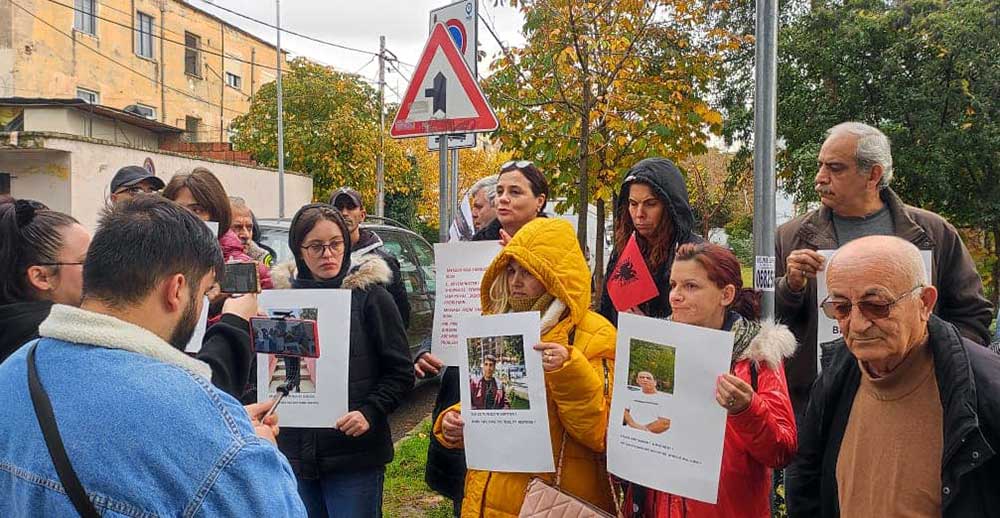
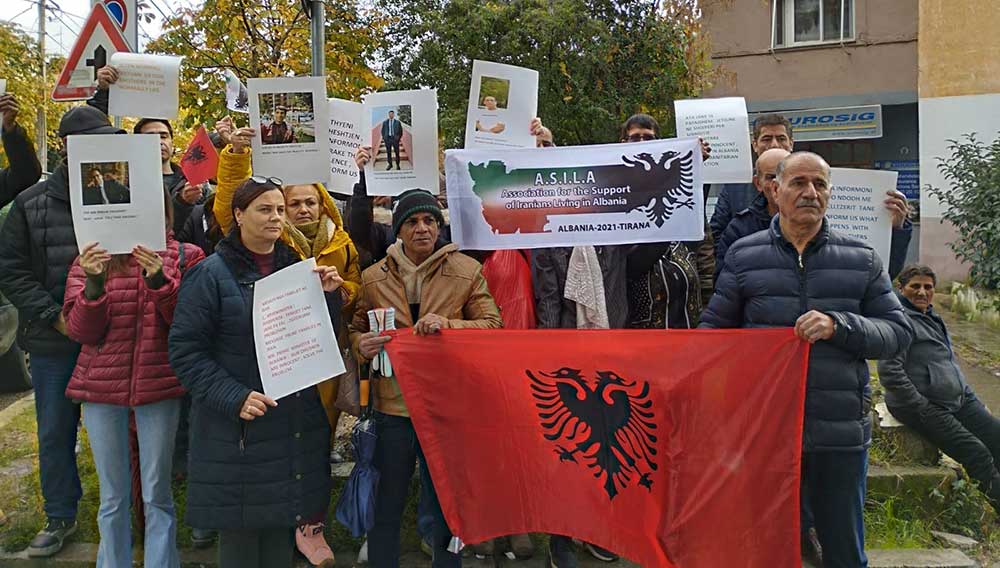
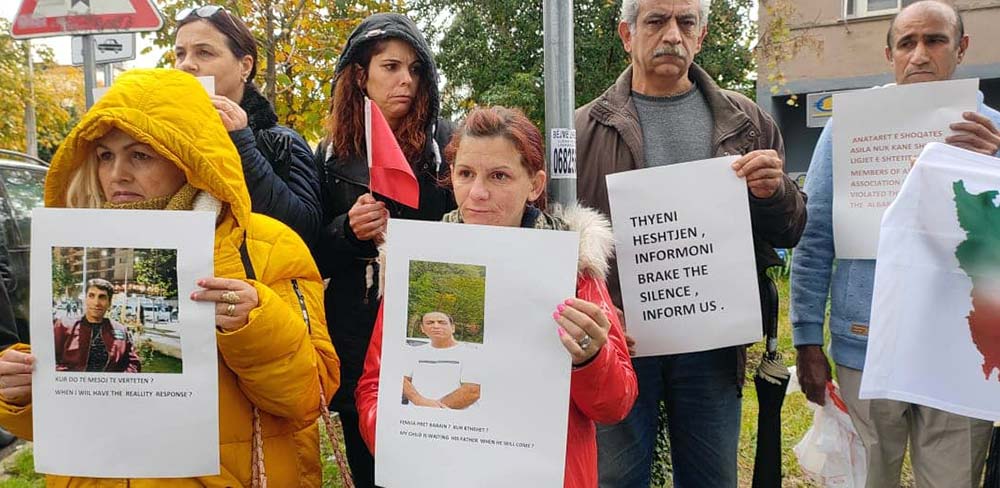
The Association for the Support of Iranians Living in Albania (ASILA) is perhaps the most organized and effective support group to aid defectors of the Cult of Rajavi in Albania get deradicalized. ASILA has been founded by several former members of the group together with a few Albanian human rights activists. It has managed to build a supportive atmosphere in which people feel like being in a family.

By Mazda Parsi

September 28, 2022 0 comments
FacebookTwitterPinterestWhatsappTelegramSkypeEmail
Iran Terror Victims
Iran

Iran’s Families of Victims of Terrorism Write to President Raisi

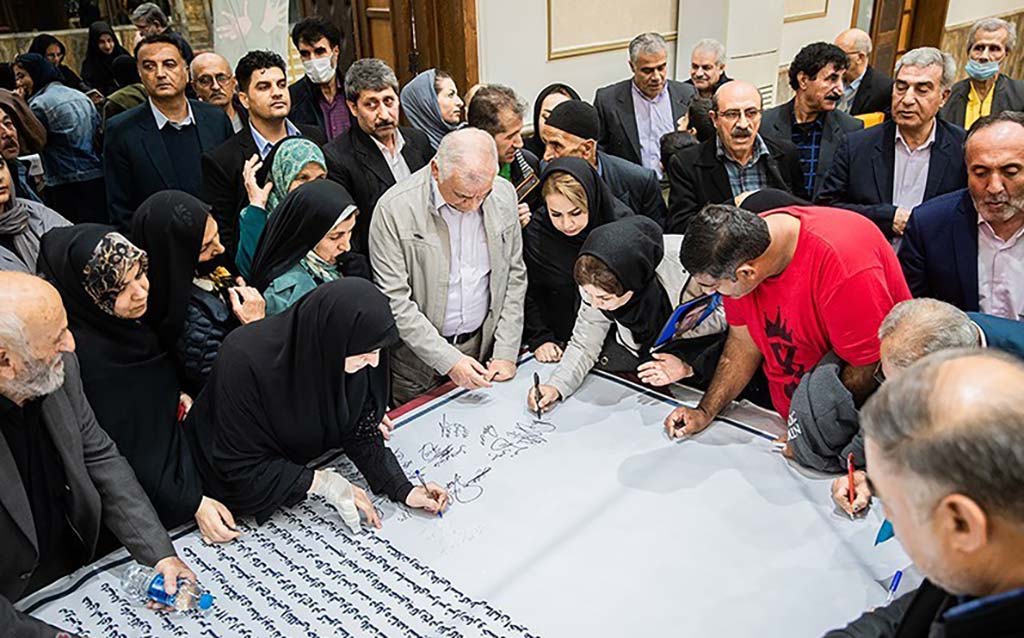
Thousands of Iranian families who have lost their loved ones in acts of terrorism waged by the Mujahedin Khalq Organization (MKO) and other terrorists have urged President Ebrahim Raisi to relay their message to the world.
The families made the demand in a letter addressed to President Raisi ahead of his address to the 77th annual meeting of the United Nations General Assembly in New York.
“We seize the opportunity to request Your Excellency to be the voice of the large family of the country’s terror victims to the world,” the letter said.

Terrorism

The signatories condemned the MKO for martyring more than 17,000 Iranians since the 1979 Islamic Revolution.
In 1986, Iran asked France to expel the group from its base in Paris, following which it moved its base to Iraq.
The group’s members spent many years in Iraq, where they were armed by the former Iraqi dictator Saddam Hussein. The group sided with Saddam during the 1980-88 war against Iran and then helped him quell uprisings in various parts of the Arab country.

The European country of Albania started hosting the terrorists after the cult was shunned by the government of former Iraqi prime minister Nouri al-Maliki.

The European Union, Canada, the United States, and Japan had previously listed the MKO as a “terrorist organization.” In 2012, though, the group was taken off U.S and Europe lists of terrorist groups.
The MKO throws lavish conferences every year in Paris, with certain American, Western, and Saudi Arabian officials in attendance. These include former U.S. national security advisor John Bolton, former U.S. president Donald Trump’s personal lawyer Rudy Giuliani, former Canadian prime minister Stephen Harper, and former Saudi Arabian spy chief, Prince Turki al-Faisal.

The letter denounced the MKO for its acts of “blind killings, border attacks, kidnapping and torture.”
It noted how the group, which had become “disappointed in achieving their goals” following Iran’s Islamic Revolution, went to the United States and some other Western countries to continue planning to overthrow Iran’s political system and target authorities and citizens.
“What bothers our people and victims and survivors of terrorist attacks is that the perpetrators of these

operations are fully supported by the United States and some European countries, instead of being punished,” the survivors wrote.
“Such acts indicate nothing but division of terrorism into good and bad and also double standards of the West regarding dealing with terrorism,” the families said.
They said the very Western countries, which were allowing the group to “operate freely” on their soils, lay claim to be fighting terrorism at the same time.

The letter urged President Raisi “to seriously assert the rights of the families of the terror victims through international organizations and institutions for prosecution, extradition, and trial of leaders of the MKO terrorist group.”

Kayhan.ir

September 26, 2022 0 comments
FacebookTwitterPinterestWhatsappTelegramSkypeEmail
MEK women
Mujahedin Khalq Organization's Propaganda System

MEK cult neither likes women nor Kurds

These days, the propaganda of the Mujahedin Khalq makes efforts to exploit the incidents in Iran following the death of Mahsa Amini, the Kurdish 22-year-old girl. Although the heartbreaking death of Mahsa sparked wave of protests in Iran, the MEK is absolutely incompetent to take any position in support of Mahsa or Iranian women in general. The group has a long record of women rights abuses and killing Kurds.

When the group was located in Camp Ashraf –the group’s base in Iraq donated by Saddam Hussein– the MEK continued to launch its terror acts staging cross-border attacks against Iran. As Saddam’s private army, it helped Saddam to crush uprisings against his rule after his defeat by the US in the 1990 Gulf war.
In March 1991, Saddam deployed the MEK to help quell the armed Kurdish independence movement in the north. According to the New York Times, Maryam Rajavi told her fighters: “Take the Kurds under your tanks, and save your bullets for the Iranian revolutionary guards.” The MEK vehemently denies it participated in Saddam’s campaigns to put down the Shia and Kurdish rebellions, but an Iraqi human rights tribunal has indicted MEK leaders for their part in suppressing the uprisings.

The Mujahedin Khalq Organization is notoriously known as the Cult of Rajavi, an apparently feminist cult which is actually a polygamist cult. Near a thousand women who have been members of the group since the 1980s were forced to wear hijab according to the group’s regulations. However, gender discrimination in the MEK is not only restricted to forced headscarves.

Female members of the group are victims of a cult of personality around Massoud Rajavi who forced them to divorce their spouses in 1989 and a year later ordered to separate their children from them. The children of Mujahed parents were smuggled to Europe under the order of Massoud Rajavi. Mothers were indoctrinated under the cult of Massoud. They were elevated in the hierarchy of the cult until they were coerced to marry Massoud Rajavi, under the rule of his third wife, Maryam Rajavi.

A number of children were smuggled back to Iraq in their teen years. These teenagers included dozens of girls. They were recruited as soldiers of the MEK’s so-called National Liberation Army (NLA). They were ordered to wear military uniforms and headscarves. They were forced to receive military trainings by MEK commanders.
Although several of MEK female members could manage to escape the group and eventually reveal facts on women rights violations in the MEK, there are still hundreds of women in the MEK’s Camp Ashraf 3 in Albania. These women usually show up in the group’s propaganda with red silk headscarves tightly tied under their chins. They do not even have the right to choose a different color for the scarves or they are never allowed to push the scarves just one or two centimeters back on their foreheads.

Thus, Maryam Rajavi is neither a representative of Iranian women, nor she is a sympathizer of Iranian Kurds. She is just a chameleon who chants slogans according to the incidents in Iran in order to please her paid advocates in the West.

September 24, 2022 0 comments
FacebookTwitterPinterestWhatsappTelegramSkypeEmail
Newer Posts
Older Posts

Recent Posts

  • Nejat Society Albania’s Conference on June 20th

    June 22, 2026
  • Maryam Rajavi’s Stance, Peace or Survival Tactic?

    June 22, 2026
  • France’s foreign ministry denies asking for ban of MEK’s rally

    June 20, 2026
  • The MEK did not allow them to visit their father

    June 20, 2026
  • June 17th, 2003, a Counterproductive Event for the MEK

    June 17, 2026
  • Facebook
  • Twitter
  • Instagram
  • Youtube

© 2003 - 2025 NEJAT Society . All Rights Reserved. NejatNGO.org


Back To Top
Nejat Society
  • Home
  • Articles
  • Media
    • Cartoons
    • NewsPics
    • Photo Gallery
    • Videos
  • Publications
    • Books
    • Nejat NewsLetter
    • Pars Brief
  • About Us
  • Contact us
  • Editions
    • عربي
    • فارسی
    • Shqip