Download Silent Cry – part one
Download Silent Cry – part two


Download Silent Cry – part one
Download Silent Cry – part two
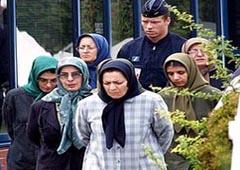
Iraq to expel Washington Backed Mojahedin Khalq Despite American desperate support for terrorists
Larijani warns of plots to cause Iran-Iraq rift
Iran’s top lawmaker says efforts are underway to create a rift between Tehran and Baghdad, but stresses that all such efforts are in vain.

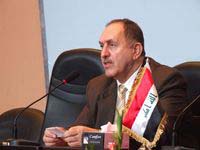
"Iran and Iraq have great potential for economic cooperation. That is why serious attempts are made to prevent them from establishing deep ties," Iranian Parliament Speaker Ali Larijani said during a Wednesday meeting with Iraqi lawmakers in Baghdad.
Larijani, who is in the Iraqi capital for a four-day visit, did not specify which parties oppose close ties between the two countries, but went on to criticize the United States for its ‘extremist’ behavior in the region.
He held Washington responsible for the rise in terrorist activities in Iraq and accused it of trying to spread ‘modern barbarism’ in the world.
Larijani also attacked Washington for encouraging the former Iraqi dictator, Saddam Hussein, to wage a devastating eight-year war against Iran in the 1980s.
Moving to the issue of the Mujahedeen Khalq Organization (MKO), Larijani asked the lawmakers to expedite the process of expelling members of the terror group from Iraqi soil.
After the meeting with Larijani, an Iraqi lawmaker described the Iranian parliament speaker’s comments about the MKO as very important and said that Baghdad was doing its best to expel the group, but added that no country was willing to accept them.
Second Deputy Speaker of the Iraqi parliament, Aref Tayfour, said MKO members must be transferred to a third country far from Iraq and Iran to be unable to infiltrate the borders of the two countries.
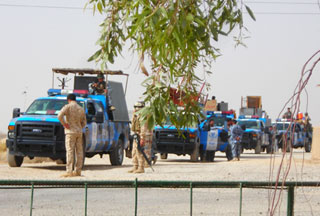
Late in July, Iraqi security forces stormed Camp Ashraf in Iraq’s Diyala province near the Iranian border and shut it down. Camp Ashraf had been housing some 3,500 members of the terrorist group for years.
The MKO, listed as a terrorist group in Iran, Iraq, Canada, and the US, has claimed responsibility for numerous deadly attacks against Iranian government officials and civilians over the past 30 years.
The attacks include the assassination of the late president Mohammad-Ali Rajaei, prime minister Mohammad-Javad Bahonar and judiciary chief Ayatollah Mohammad Beheshti.
The MKO is also known to have cooperated with former Iraqi dictator Saddam Hossein in suppressing the 1991 uprisings in southern Iraq and the massacre of Iraqi Kurds.
The organization is also notorious for using cult-like tactics against its own members and for torturing and murdering its defectors.
A recent report by the RAND Corporation, a prominent think tank that does research for the US Government, illustrate that Washington committed a judgmental error when dealing with the terrorist Mujahedin-e-Khalq Organization (MKO) in Iraq. 
During the 2003 Operation Iraqi freedom, an ongoing military campaign that resulted in the invasion of Iraq by the coalition forces, the MKO was designated as an enemy force.
The "Rajavi cult", as the MKO became to be known, had provided security services to Saddam Hussein from its camps in Iraq and had been listed as a foreign terrorist organization by the US Secretary of State.
It had also targeted Americans in Iran throughout the 1970s. They assassinated a number of American citizens, namely William C. Cottrell, Colonel Lewis L. Hawkins, Donald G. Smith, and Colonel Jack Turner inside Iran.
After a cease-fire was signed, the then US Secretary of Defense designated this group’s members as civilian “protected persons” rather than combatant prisoners of war under the Geneva Conventions
A RAND study, which examined the evolution of this controversial decision, says the designation has left the United States open to charges of hypocrisy in the war on terrorism.
The MKO was founded in Iran in the 1960s, but its top leadership and members fled the country some twenty years later, after carrying out numerous acts of terror inside the country.
The group masterminded a series of assassinations and bombings inside Iran, including the 1981 bombing of the offices of the Islamic Republic Party, in which more than 72 senior Iranian officials were killed, including the Judiciary Chief, Ayatollah Mohammad Beheshti.
The Iraqi dictator Saddam Hussein had invited the MKO into Iraq to fight on his behalf during the eight-year Iraq-Iran War. Once it settled in Iraq and fought against Iranian forces in alliance with Saddam, the group, already hated within Iran for its indiscriminate terror campaign, incurred further ire of the Iranian people.
MKO members where housed in ‘Camp Ashraf,’ in a city approximately 40 miles north of Baghdad, thereby establishing a base for planning operations against the Tehran government during the eight-year war as well as conducting operations against Iraqi Kurds and Shias during the 1991 uprising against Saddam Hussein.
From the early weeks of Iraq’s invasion in 2003 until January 2009, the coalition forces detained and provided security for members of the group, described in the RAND report as “an exiled Iranian dissident cult group living in Iraq".
"Despite their belief that the MKO did not pose a security threat, coalition forces detained the group and provided protection to prevent the Iraqi government from expelling MKO members to Iran, even though Iran had granted the MKO rank and file amnesty from prosecution," RAND says.
"The coalition’s decision to provide security for an FTO (Foreign Terrorist Organization) was very controversial because it placed the United States in the position of protecting a group that it had labeled a terrorist organization," it adds.
In April 2003, US forces in Iraq negotiated a ceasefire between its troops and the MKO, based on claims that later turned out to be false.
"Because they had no information about the characteristics of the group, the Special Forces officers who received the request were persuaded by MKO leaders (who spoke fluent English) that, prior to the invasion, the group had offered to fight on the coalition’s behalf and that many of its members had been educated in the United States."
In May 2003, the Washington establishment agreed to direct coalition forces to secure MKO’s surrender and to disarm the group.
The coalition officers who negotiated with the MKO leadership were dissuaded from carrying out this instruction. Rather than insisting upon the MKO’s surrender, they accepted a cease-fire agreement under which the MKO would be disarmed and its 3,800 members (at the time) would be consolidated and detained through assigned residence (rather than internment) at Camp Ashraf.
Coalition forces, however, took no action to determine the legal status of the MKO for more than a year. The report says this was due to the fact that the US Department of Defense (DoD) was not sure ‘what law should be enforced for the MKO.’
"The United States had adopted the contentious policy of not applying the Geneva Conventions to foreign terrorists fighting in Iraq, though it did apply them to enemy forces while invading Iraq, and war planners had named the MKO an enemy force."
To make matters worse, the group, who had a long history of trickery, had asserted that it had not engaged coalition forces in combat. Officers responsible for detaining the MKO accepted this claim, even though at least one special-forces-casualty had resulted from combat with the group.
"If coalition forces, and particularly those involved in any type of negotiations with the MKO, had been appraised of the group’s long history of deception, they would have been far less likely to have made the kinds of concessions that proved so troublesome later on."
In June 2004, the US Secretary of Defense Donald Rumsfeld tried to determine the legal status of the MKO, by designating its members as civilian “protected persons” under the terms of the Fourth Geneva Convention.
The designation, which presumes that the ‘Rajavi cult’ had not engaged coalition forces in battle, went against recommendations by the Department of State, International Committee of the Red Cross (ICRC), and the Office of the United Nations High Commissioner for Refugees (UNHCR).
"It has proven to be extremely controversial because it appeared that the United States selectively chose to apply the Geneva Conventions to a designated terrorist organization and, further, to grant it a special status," RAND reported.
When, in late 2003, the Iraqi government and the Iraqi Governing Council passed a resolution calling for the expulsion of the group from Iraq, the United sates refused to return MKO members to Iran.
The White House, labeling their return as "a ‘gift’ to the Islamic Republic of Iran," announced its intention to seek the MKO’s relocation elsewhere.
According to the Geneva Convention, when detainees are released from assigned residence or internment, they may either be reestablished in their country of residence prior to detention, resettled, or “accommodated” in third or neutral countries or repatriated to the country of their nationality.
Iraq had made it clear that the terrorists had no place within its boundaries. Iran was not an option either. Though Tehran had offered amnesty to the MKO’s rank and file, Washington bluntly refused to send them back.
“Despite the broad-based expectation that the IRI would persecute all former MKO members who returned to the country, that has not proven to be the case for the approximately 250 individuals who have already been repatriated through a process managed by the ICRC," RAND adds.
The only solution was to send them to any country that would accept them. No western country is willing to offer asylum to the individuals — even though 1015 MKO members have a passport or residence permit of a third country.
"The MKO was a minor issue in the overall conflict in Iraq, but it was an important one because the issues that emerged in the course of detaining the MKO were, in many ways, a microcosm of the larger challenges posed by detainee operations in general."
“To date, there is no evidence that any MKO members who were repatriated to Iran through the ICRC have been persecuted or tortured," The report says.
“JIATF (Joint Interagency Task Force) personnel and former MKO members believe that many members of the MKO rank and file would volunteer for repatriation if they were freed of the MKO leadership’s authoritarian, cultic practices,"
The group practices public self-deprecation sessions, mandatory divorce, celibacy, enforced separation from family and friends, and gender segregation.
One of the MKO’s cultic characteristics is a focus on suicide.
"Although it had not used suicide as a tactical weapon in terrorist attacks since 1981, the MKO has frequently used the threat of suicide as a negotiating tactic or to frustrate investigations."
"This proved particularly effective after 10 members immolated themselves in Paris as a protest action following the arrest of Maryam Rajavi, the MKO’s co-leader, in 2003."
Although MKO leaders and supporters vigorously deny that the group is a cult, the report’s findings suggest that these denials are not credible.
As part of the “ideological revolution,” the Rajavis mandated divorce and celibacy.
Compulsory divorce required couples to place their wedding rings in a bowl and renounce their affections for one another.
Masoud Rajavi would separate couples claiming that "such practices would liberate the members" from competing loyalties. Their children were also sent to European countries, former MKO member, Mohammad-Hossein Sobhani, said in August.
Because "the organization forbids matrimony, for the past 25 years no child has been born to a man and a woman inside the organization," he adds.
Iran’s Judiciary says three Iranians — two are responsible for a deadly bombing and the remaining convict is a member of a terrorist organization — have been shipped to death row.
Reports indicate that two of the convicts are professed members of the Iran Royal Association, a little known monarchist group that seeks to overthrow the country’s Islamic establishment and replace it with the old monarchy.
The group is responsible for a deadly bombing in the southern city of Shiraz back in April 2008, in which 13 people were killed and hundreds were wounded.
The other convict is a member of the anti-Iranian terrorist organization known as the Mujahedin-e-Khalq Organization (MKO).
The three convicts have a right of appeal, officials said.
The MKO was founded in Iran in the 1960s, but its leaders and members fled the country some twenty years later after carrying out numerous acts of terror inside the country.
The group, which had close ties with former Iraqi dictator Saddam Hussein, masterminded a series of assassinations and bombings inside Iran, including the 1981 bombing of the offices of the Islamic Republic Party, in which more than 72 senior Iranian officials were killed, including the then Judiciary Chief Ayatollah Mohammad Beheshti.
One of the monarchists identified as Mohammad-Reza Ali-Zamani was reported by Amnesty International as "the first person sentenced to death" over Iran’s post-election violence in June.
However, a diplomat, who spoke to Press TV on condition of anonymity, said Zamani is convicted for being a member of "a terrorist group, and for trying to overthrow the Islamic Republic as well as spying on behalf of the [Central Intelligence Agency] CIA."
"He has been arrested for his participation in the Shiraz bombing and killing a number of Iranian nationals," the source said.
The MKO members were arrested during the July 28-29 operation at Camp Ashraf.
The Iraqi government has released 36 members of the Mujahedeen-e-Khalq Organization (MKO) detained in a July raid on the notorious Camp Ashraf in Diyala province.
Shahriar Kia, a spokesman for the exiled terrorist group, said the inmates were released on Wednesday ‘after more than two months of hunger strike’, and were immediately taken to Ashraf medical center for treatment.
He said the detainees had recently refused to take water, too, and were in critical condition. The claim could not be independently verified.
The prisoners were arrested by Iraqi police on rioting charges after they clashed with security forces during the July 28-29 operation at Camp Ashraf, north of Baghdad, and were held in custody on grounds of illegal entry into the Iraqi soil.
In September, US Ambassador Christopher Hill vowed to press the Baghdad government not to repatriate Camp Ashraf residents to Iran.
MKO members, together with their families, have lived in Ashraf since former Iraqi dictator Saddam Hussein allowed the armed rebels to erect bases on the Iraqi territory during the 1980-88 war with Iran.
Following the 2003 US-led invasion of Iraq, the camp was protected by the US military until its 3,500 residents were shifted to Iraqi jurisdiction last January under a bilateral security pact.
The MKO, listed as a terror group by both Tehran and Washington, assassinated several leading Iranian figures after the 1979 Islamic Revolution.
It also engaged in bombings and brutal mass killing of civilians, and served as a military arm for the Baath regime in Baghdad during the Iraqi-Iranian war.
A Washington call on Baghdad to go easy on a terrorist group has sparked outrage among a number of Iraqi parties, who deem it in violation of an interim security pact signed between the two states.
The US ambassador to Baghdad has recently advised the Iraqi government to soften its stance on the members of the Mujahedin-e-Khalq Organization (MKO).
Iraqis believe that the move is in parallel with part of MKO’s efforts to extend their stay in Iraq and to bring Camp Ashraf under US control.
The US military officially handed over the control of the camp — which houses MKO members regarded by NATO forces as protected under the Geneva Conventions — to the Iraqi government in January, 2009.
Baghdad has repeatedly vowed to shut down the camp and expel MKO members from the country.
Adnan al-Seraj, the head of the Center for Iraq Media Development, on Wednesday described the US embassy’s support for the MKO as an apparent violation of the principle of the Washington-Baghdad security pact, and called for the immediate expulsion of MKO members.
Iraqis have also criticized some internal media for their coverage of stories calling for the release of 36 MKO members detained in a raid by Iraqi security forces on July 28.
Over the past couple of days, a number of Iraqi newspapers and TV stations, affiliated with the Baath Party of former Iraqi dictator Saddam Hussein, have carried advertisements backing the release of MKO members.
One ad, containing the pictures of the 36 detainees and also published in the Washington Times, says the group’s members were arrested for assaulting Iraqi troops during the unrest in the Camp Ashraf, while Iraqi police say they were detained for ‘illegal entry’ to the country.
Analysts believe that the recent media campaign to portray MKO members as victims, aims at pressing the Iraqi government to allow the terrorist group stay in the country, and to bring the facility under the US military protection again.
Most Iraqis, however, want the terrorist group, which carried operations against Iraqi Kurds and Shias during the 1991 uprising against Saddam Hussein, out of their country.
The MKO is also responsible for several acts of terror in Iran including the 1994 bombing of a revered Shia shrine in Mashhad, eastern Iran.
Anglican Church leader backs MKO supporters
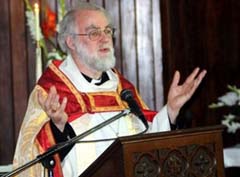
The Archbishop of Canterbury has called for an end to a hunger strike outside the US Embassy in London by supporters of the terrorist Mujahedeen-e-Khalq Organization (MKO).
The supporters are protesting against the treatment of some 3,000 MKO members, whom have been confined to Camp Ashraf in Iraq since the US invasion of the country in 2003.
Rowan Williams, the spiritual leader of the worldwide Anglican Church, on Monday expressed deploration for the conditions of the camp, adding that it was a humanitarian issue "of real magnitude and urgency," AFP reported.
The United States, Canada, Iraq and Iran have designated the MKO as a terror organization. It was only recently removed from the Council of the European Union’s terror list.
The group is responsible for many acts of terrorism in Iran, helping former Iraqi dictator Saddam Hussein in the massacre of Iraqis, and killing civilian and military personnel working for the US Department of State.
The US military officially turned control of the camp — which houses MKO members regarded by NATO forces as protected under the Geneva Conventions — to the new Iraqi government on January, 2009.
Residents of the camp claim that an Iraqi raid there in July left several people dead. The demonstrators in London, meanwhile, are asking Washington to reclaim responsibility for Camp Ashraf.
Baghdad has repeatedly vowed to close the camp, but Williams, who has met with several of the protesters over the past few days, said returning the MKO members to Iran endangered their lives, urging authorities to investigate the matter.
He further added that a UN monitoring team must be established to visit the camp.
Sobhani was separated from his daughter and wife for more than eight years.
A former member of the terrorist Mujahedin-e-Khalq Organization (MKO) claims the US turned a blind eye to the terrorist nature of the ‘Rajavi cult’. 
Mohammad-Hossein Sobhani, 49, from the central Iranian town of Saveh, came into contact with the MKO two years before the 1979 revolution in Iran, which overthrew the pro-US Iranian monarch, Mohammad Reza Pahlavi.
Five year later, after working in the organization’s administrative and student departments, he was whisked away to Iraq to assume his role”as a unit commander at the training school for urban guerrilla warfare.”
After questioning the organization’s”armed struggle and presence in Iraq”, Sobhani claims he was beaten, tortured and”held in solitary confinement for eight-and-a-half years, from September 1992 to January 2001.”
“The reason why I started to raise my objection was that I believed that the strategies employed by Masoud Rajavi were meant to secure his domination on its members,”Sobhani said in an exclusive interview with Press TV.
The former senior MKO official said Rajavi resorted to”cult-like”practices, including forced divorce and celibacy.
He would separate couples claiming that”such practices would liberate the members”from competing loyalties. Their children were also sent to European countries, Sobhani said.
“Rajavi would justify forced divorces by claiming that these practices would free a member, and pave the way to transform a micro society into a macro one and overthrow the Islamic Republic,”Sobhani said.
During his interview, he also claimed that because”the organization forbids matrimony, for the past 25 years no child has been born to a man and woman inside the organization.”
He said the US had committed a colossal mistake in not dealing with the residents of the MKO training camp in eastern Iraq, known as Camp Ashraf.
The camp, home to 3,400 Iranians loyal to Rajavi, was the base for operations against the Tehran government during the eight-year war as well as operations against Iraqi Kurds and Shias during the 1991 uprising against former dictator Saddam Hussein.
“Rajavi maintained a mercenary-like relationship with Saddam Hossein, after Iraq’s invasion he wanted to forge the same relationship with the Americans so he announced that he was ready to [willingly] lay dawn his arms,”Sobhani explained.
“Although the Americans were fully aware of the fact that the MKO was a terrorist organization, they still cooperated with Rajavi,”he claimed.
Americans in Iran were one of the primary targets of the group throughout the 1970s. They assassinated a number of American citizens, namely William C. Cottrell, Colonel Lewis L. Hawkins, Donald G. Smith, and Colonel Jack Turner inside Iran.
“As a former member of the group, I feel that the Americans have made a grave mistake with regards to the organization. Six years after overthrowing Saddam, the MKO is still brainwashing the residents of Ashraf Camp with the help of the Americans,”Sobhani said.
The MKO was founded in Iran in the 1960s, but its top leadership and members fled the country some twenty years later after carrying out numerous acts of terror inside the country.
The group masterminded a series of assassinations and bombings inside Iran, including the 1981 bombing of the offices of the Islamic Republic Party, in which more than 72 senior Iranian officials were killed, including the then Judiciary Chief Ayatollah Mohammad Beheshti.
Sobhani was separated from his daughter and wife for more than eight years.

A former member of the terrorist Mujahedin-e-Khalq Organization (MKO) claims the US turned a blind eye to the terrorist nature of the ‘Rajavi cult’.
Mohammad-Hossein Sobhani, 49, from the central Iranian town of Saveh, came into contact with the MKO two years before the 1979 revolution in Iran, which overthrew the pro-US Iranian monarch, Mohammad Reza Pahlavi.
Five year later, after working in the organization’s administrative and student departments, he was whisked away to Iraq to assume his role”as a unit commander at the training school for urban guerrilla warfare.”
After questioning the organization’s”armed struggle and presence in Iraq”, Sobhani claims he was beaten, tortured and”held in solitary confinement for eight-and-a-half years, from September 1992 to January 2001.”
“The reason why I started to raise my objection was that I believed that the strategies employed by Masoud Rajavi were meant to secure his domination on its members,”Sobhani said in an exclusive interview with Press TV.
The former senior MKO official said Rajavi resorted to”cult-like”practices, including forced divorce and celibacy.
He would separate couples claiming that”such practices would liberate the members”from competing loyalties. Their children were also sent to European countries, Sobhani said.
“Rajavi would justify forced divorces by claiming that these practices would free a member, and pave the way to transform a micro society into a macro one and overthrow the Islamic Republic,”Sobhani said.
During his interview, he also claimed that because”the organization forbids matrimony, for the past 25 years no child has been born to a man and woman inside the organization.”
He said the US had committed a colossal mistake in not dealing with the residents of the MKO training camp in eastern Iraq, known as Camp Ashraf.
The camp, home to 3,400 Iranians loyal to Rajavi, was the base for operations against the Tehran government during the eight-year war as well as operations against Iraqi Kurds and Shias during the 1991 uprising against former dictator Saddam Hussein.
“Rajavi maintained a mercenary-like relationship with Saddam Hossein, after Iraq’s invasion he wanted to forge the same relationship with the Americans so he announced that he was ready to [willingly] lay dawn his arms,”Sobhani explained.
“Although the Americans were fully aware of the fact that the MKO was a terrorist organization, they still cooperated with Rajavi,”he claimed.
Americans in Iran were one of the primary targets of the group throughout the 1970s. They assassinated a number of American citizens, namely William C. Cottrell, Colonel Lewis L. Hawkins, Donald G. Smith, and Colonel Jack Turner inside Iran.
“As a former member of the group, I feel that the Americans have made a grave mistake with regards to the organization. Six years after overthrowing Saddam, the MKO is still brainwashing the residents of Ashraf Camp with the help of the Americans,”Sobhani said.
The MKO was founded in Iran in the 1960s, but its top leadership and members fled the country some twenty years later after carrying out numerous acts of terror inside the country.
The group masterminded a series of assassinations and bombings inside Iran, including the 1981 bombing of the offices of the Islamic Republic Party, in which more than 72 senior Iranian officials were killed, including the then Judiciary Chief Ayatollah Mohammad Beheshti.
Click here to view the video fileDownload MKO dissident broaches US ties with Rajavi cult
Iran’s Foreign Minister Manouchehr Mottaki calls on Baghdad to extradite the criminal members of the Mojahedin-e Khalgh Organization (MKO).
In a Monday meeting with the Iraqi ambassador to Iran, Majid Sheikh, Mottaki said that considering the friendly relations between Tehran and Baghdad, the MKO presence in Iraq was not appropriate.
"We view Iraqi honor, security and development as a cause for joy in Iran, and believe that those who are trying to fuel insecurity in Iraq are committing a great sin," said the foreign minister.
He then called on the Iraqi government to extradite MKO criminals "who are wanted by Interpol" back to Iran so that they can face trial for the crimes they have committed against the Iranian people over the past three decades.
"The continuing presence of Camp Ashraf in Iraq did not suit the growing and friendly ties between the two countries," Mottaki explained.
"Tehran would like those MKO members who are responsible for series crimes and who are wanted by the Interpol to be sent back to Iran," he added.
Late in July, Iraqi security forces stormed Camp Ashraf in Iraq’s Diyala province near the Iranian border and shut it down. Camp Ashraf had been housing some 3,500 members of the terrorist group for years.
Iraq is reportedly preparing to try 36 MKO members who were responsible for the recent unrest in Camp Ashraf, in the near future.
Tehran hailed the move as a step forward in relations between the two neighboring countries.