
The U.S. State Department on Tuesday warned Iranian exile group Mujahideen-e Khalq, or MEK, to comply with its relocation from Iraq’s Camp Ashraf to Camp Hurriya if it hopes to be removed  from the United States’ list of Foreign Terrorist Organizations.
"The United States remains concerned about the situation at Camp Ashraf and urges the residents of Camp Ashraf to resume full cooperation immediately with the Iraqi government and United Nations Assistance Mission for Iraq," State Department spokeswoman Victoria Nuland said.
"The peaceful closure of Camp Ashraf is achievable but requires continued patience and practical engagement to be realized. Constructive offers must be met with a constructive spirit and not with refusals or pre-conditions to engage in dialogue."
The State Department has held the transition over MEK’s head for half a year, saying a peaceful move and cooperation with American and Iraqi authorities could get it off the terrorist list.
Washington believes that the eviction is necessary for humanitarian reasons since Ashraf has long been considered a refugee camp. So far, around 2,000 MEK members have successfully moved to the Iraqi-run Camp Hurriya, formerly Camp Liberty, in Baghdad. But another 1,200 to 1,400 are still in Ashraf, and the relocation is stalled, with MEK threatening to leave them behind if the conditions in Hurriya are not approved.
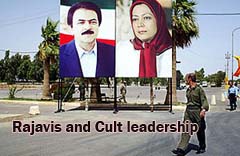
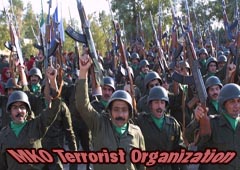
MEK — sometimes known as the People’s Mujahedin of Iran, or PMOI — has been on the foreign terrorist list for the last 15 years and is desperately trying to be removed. The group was exiled from Iran after the Islamic Revolution and fled to Iraq, as well as across Europe, under the guidance of leaders Massoud and Maryam Rajavi. The group allegedly helped Saddam Hussein during the Iraq-Iran war and has in the past been linked to various bombings and assassinations inside Iran.
However, MEK and the National Council of Resistance of Iran, an umbrella organization for Iranian exiles run by Miryam Rajavi, insist that the group is now only a political organization and refugee group. All of MEK’s weapons were confiscated by the American government years ago, and it has renounced its former violence.
Over the past few years, MEK, with help from a slate of American supporters that includes an all-star list of former top officials, have campaigned to be removed from the terrorist list, going as far as filing a suit with a U.S. appeals court to force Secretary of State Hillary Clinton to make a decision about MEK’s status within four months.
Nonetheless, a number of MEK members have seized the move from Ashraf to Hurriya as an opportunity to defect, revealing troubling details about the organization in the process. One of the first, according to the Sahar Family Foundation, a nongovernmental organization that says it provides humanitarian assistance to those who leave Ashraf, was Ali Reza Rahmati, who was in MEK for 10 years.
"I am extremely happy, and I thank God that I could obtain my freedom. I did not even have the right of free-thinking, and I was under the constant pressure and mental torture," Rahmati stated. "Now I feel the love of life’s revival inside of me, which was dead for 10 years, and I feel great satisfaction of this."
Ehsan Bidi, who also defected from the MEK and "declared separation" from "the corrupt Cult of Rajavi," compared his time in the refugee camp to being imprisoned and admitted that he had tried to escape before. Eight-year MEK member Sirous Morsalpour said that he was twice shot in the stomach — once in 2009 and once in 2012 — but was not permitted to have surgery outside of Camp Ashraf despite requests and the severity of the injuries. Morsalpour said that after he continued to insist on going to a hospital, "I was told that I was fired."
"They handed me to Iraqi police to get rid of me," he declared as he left the group.
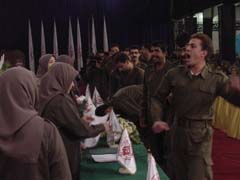
The highest-ranking Mujahedeen to escape was Qorban Ali Husseini Nezhad, a 30-year member who was part of the MEK’s foreign affairs team, as well as a translator. Nezhad escaped after arriving in Camp Liberty in April and, like the rest of the defectors, described MEK more as a cult than a terrorist organization.
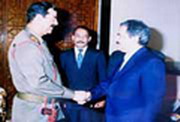
However, confirming long-held suspicions, Nezhad also said that thanks to deals between Saddam and Massoud Rajavi, MEK spied for Iraq’s intelligence service and received payment from the ill-conceived oil-for-food program.
By Daniel Tovrov
 online newsletter published by the founder of WND.
 according to a report in Joseph Farah’s G2 Bulletin.
 terrorist group. The discussion covered issues concerning the MEK’s role in the US and Israel, France and Iraq. Is the MEK a danger to the US is one of the questions asked. Describing Rajavi as a mercenary who will sell his group to anyone to perform acts of violence, Anne Singleton stressed the need to differentiate between Rajavi loyalists and the majority of ordinary members trapped in Iraq who want to leave but are prevented from doing so. The US must do more to help she said …
 opposes the Iranian regime and that it lists as terrorist.
 Nevada from 2005 to at least 2007, as reported by Seymour M. Hersh at The New Yorker.
 US State Department since 1995. The MEK, however do not simply attack Americans. According to The American Muslim: “The M.E.K. are terrorists. They were driven out of Iran and given a home at a place called Camp Ashraf in Iraq by Saddam Hussein, who they supported. Saddam Hussein used the M.E.K. to carry out terrorist acts in Iran.” In 2001, the MEK “renounced” terrorism. Irrespective of this renunciation, a 2004 FBI report on the MEK which was revealed in June 2011 states that the MEK The long and short is that the MEK are current terrorists not former terrorists. So why would the US consider removing the designation from the group?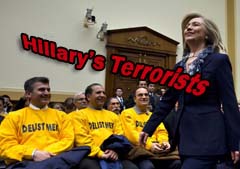
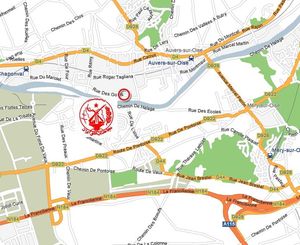
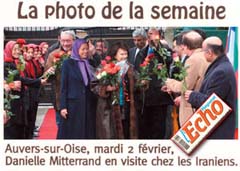
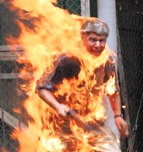 a terrorist organization, French anti-terrorist police raided various MEK offices in and around Paris, including its garrison at Auvers-sur-Oise, arresting 160 members of the MEK and confiscating millions of euros. Nicolas Sarkozy, Interior Minister at the time, expressed concern that the MEK "wanted to make France its support base, notably after the intervention in Iraq," while Pierre de Bousquet de Florian, head of France’s domestic intelligence service, warned that the group was "transforming its Val d’Oise centre into an international terrorist base."
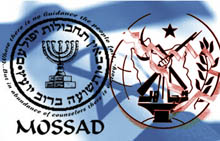
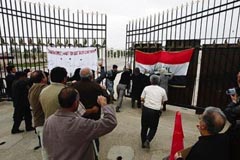
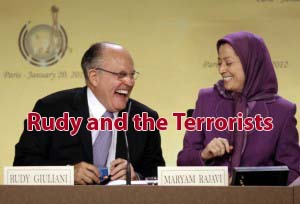
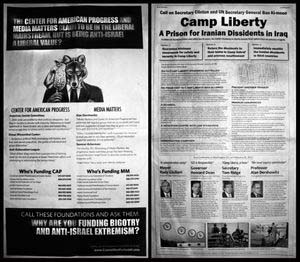

 under the car of an Iranian scientist. Perhaps unintentionally, the message the move would send appears to be: This activity is OK as long as it’s against Iran.