
1. Kingdom offers no haven for Iran opposition group – Judeh 2. MKO under investigation in Iraq 3. Belgium donates half million Euros to assist an anti drug project 4. The Internet as a Terrorist Propaganda Tool 5. Witnesses To Testify Against Mojahedin Khalq Organisation (Rajavi Cult) 6. MKO Behind Karbala Massacre? 7. 11th of September 2001 and the MKO
Download Pars Brief – Issue No.36
Download Pars Brief – Issue No.36
ISSUE No 15, SEPTEMBER 2007
INSIDE THIS ISSUE:
1. Why the US granted protected status to Iranian terrorists
2. Another assassination attempt by MKO in Paris
3. Witnesses to testify against MKO
4. 11th of Sept 200l and the MKO
5. MKO from resistance to treachery
6. France to probe killing of Iranian
7. 11 Sept and MKO’s tactic of duplicity
8. Many Iranians conclude the US is supporting a terrorist organization
9. The highest pitch of stupidity
10. MKO henchmen in western countries
11. Cult leader Massoud Rajavi gives go ahead to kill witnesses in European countries
12. MKO behind Karbela massacre?
13. MKO, a tool in US’s psychological war on Iran
14. Iraqi government seriously angered by the US
15. Psychological techniques to cultivate ideology
16. Some useful sites on MKO
17. Elaheh obituary Times On Line

 Issue 14 – August, 2007
INSIDE THIS ISSUE:
1. Exile Group Stays on EU terror List
2. East French Lines in Terror Alert
3. The presence of MKO in Iraq is against the law
4. Four more defectors of Rajavi’s Cult repatriated
5. Breaking the ties that bind
6. Rajavi name in Mojahedin propaganda sails a cult spiraling towards disaster
7. Elaheh, the singer of flowers passed away
8. Coordinator of MKO terrorists arrested
9. Status of MKO members held in Iraq prompts debate
10. Anne Singleton interview with BBC
11. Two postings from NIAC about MKO
12. NIAC Makes Progress in Defamation Case with VOA
13. NIAC rebuts MKO and Front Page Magazine
14. Iraq will spare no effort to help Iran
Download Nejat NewsLetter-ISSUE NO.14
Download Nejat NewsLetter-ISSUE NO.14
1. Four more defectors of Rajavis’ Cult repatriated
2. Interpol hunting for MKO leaders
3. East French Rail Lines in Terror Alert with Four MKO Members Sought
4. Iran condemned British overt support for a Proscribed terrorist group, Mojahedin Khalq Cult
5. I am Raymond Tanter’s wife and I would like to make a statement
6. Response to Christopher Booker
7. UN and Iraq Cooperate to Expel the MKO
8. Tancredo supporting Mujahedin -e Khalq terrorists
Download Pars Brief – Issue No.35
Download Pars Brief – Issue No.35
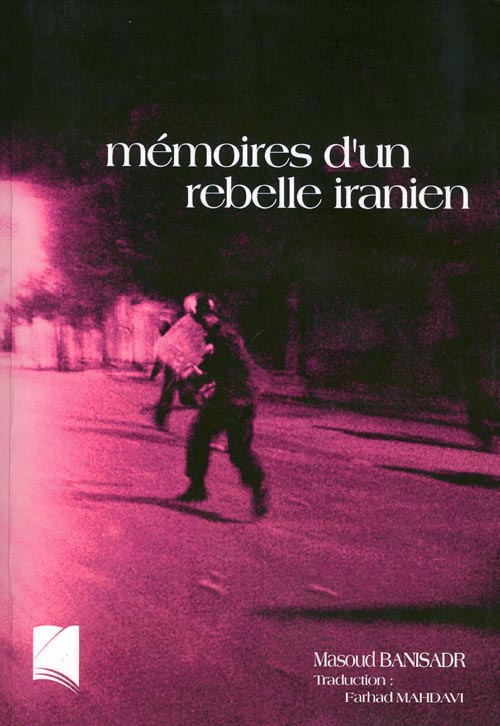
REVIEW: Masoud Banisadr, Masoud: Memoirs of an Iranian Rebel Memoirs of an Iranian Rebel (London: Saqi Books, 2004).
The Mojahedin-e Khalq Organization (MKO), or the People’s Combatants Organization, was established in 1965 as an armed, underground group opposed to the Pahlavi regime and seeking to establish a "monotheistic classless society." Fusing aspects of Marxism-Leninism and political Islam, the MKO played an important role in mobilizing urban, educated Iranians during the Islamic Revolution, yet quickly fell out with Ayatollah Ruhollah Khomeini and his inner circle in the post-revolutionary period. Driven out of Iran, Masoud Rajavi and the Central Committee moved the MKO’s headquarters to Western Europe and then after 1986 to Saddam Hussein’s Iraq. Aside from its official history, little has been written in English about the inner workings of this highly secretive group.
The memoir of Masoud Banisadr, until 1996 a US and European representative of the National Council for Resistance (NCR), the MKO’s nominally independent political wing, helps present a picture of the organization as it functioned from the late 1970s. Masoud is especially timely, since the MKO, though deemed a "terrorist organization" by the State Department and several European governments, has been identified by neo-conservatives Daniel Pipes and Patrick Clawson as a candidate to bring "the tide of freedom" to Iran. The book seriously challenges such assumptions. In fact, Banisadr’s detailed life story corroborates a recent Human Rights Watch report, which describes the MKO’s systematic abuse and torture of members who challenge the Central Committee or seek to defect.
Banisadr, a cousin of the first popularly elected president of the Islamic Republic, and his wife were postgraduate students in Britain during the 1979 revolution. They became involved with the MKO and its affiliates after the fall of the Shah. A self-described "social democrat" at the time of the revolution, Banisadr was attracted to an ideology that "seemed indistinguishable from [Ali] Shariati’s," the thinker he had read and admired while still in Iran. Interestingly, he acknowledges that many MKO supporters did not "know much about the Mojahedin ideology, especially as it differed from that of other Muslims and Marxists." For him, "it was enough to know that they supported democracy, independence and progress."
At almost 500 pages, Masoud is a meticulous, but often meandering and disjointed, book. Yet, for the patient reader, it is crammed with poignant details of how the MKO has maintained organizational unity despite external hostility and the many unsavory practices described by Banisadr. He tells us how the various "bases" scattered across Europe created a combination of complex, opaque hierarchy and communal living arrangements, how songs and military drills were used as rituals to develop a sense of solidarity among middle-class college graduates, and how in order to raise funds the MKO established businesses, such as a stand that "introduced the joys of kebabs" to Durham.
But what will receive the most attention are the disturbing psychological techniques employed to force members to relinquish all sense of individual identity, to monitor each other and to disavow feelings for all people other than the married couple who make up the ideological and spiritual leadership of the MKO, Masoud and Maryam Rajavi. From the outset, the MKO encouraged members to distance themselves from their families, unless they could support the cause monetarily or through activities in Iran. The detachment from greater society, however, reached new levels after 1985 when the Rajavis announced various stages of the "ideological revolution," whereby the MKO sought to reposition itself against the more consolidated regime in Iran. This "revolution" was initiated by the "marriage of the century," in which Rajavi wed Maryam Azodanlu, who had been married to another leading member until shortly beforehand. All MKO members were expected to go through their own "ideological revolutions" in order to become true Mojahedin and demonstrate their loyalty. This was done at regular group confessionals ("cooking pots") in which Mojahedin would admonish themselves and each other, as well as through writing reports on one’s weaknesses, burning "bourgeois" luxury items, limiting and even ending relations between the sexes, and divorcing one’s spouse to prevent "contradictions." The latter step was said to remove the main "buffer" preventing true understanding of the revolution, embodied in "the ideological mother" Maryam Rajavi, the only bridge to her husband. The meetings, taped sermons by the Rajavis and limits on outside sources of information created what Banisadr calls the "mystical efficacy of drip-fed propaganda."
This politico-theological apparatus surely helped to create some devoted followers, as demonstrated when several Mojahedin set themselves on fire when France briefly arrested Maryam Rajavi in 2003. Yet Banisadr describes how this psychologically abusive atmosphere, combined with growing doubts about the MKO’s military capability and political skill, led many other members to question the leadership and eventually quit. Banisadr’s suggestions and criticisms were met with indifference and public personal condemnation, so much so that he began to doubt his own character. Unlike others who ended up attempting suicide or in Abu Ghraib prison for their criticisms, Banisadr was able to leave with relative ease, because he spent much of his time abroad and still had an extended family, including his ex-wife, living in Britain.
Masoud does not fully explain why Banisadr joined the MKO, as opposed to another political party, or why he left when he did. Nor does it offer an alternative politics to the one offered by the MKO. Like many autobiographies, it is too self-reflective to take these analytical steps or challenge the teleology of the narrative. Instead, Banisadr paints a picture of an organization that, over time, corrupted its members’ idealistic vigor and organizing acumen into a means for self-abnegation with the only relationship of any significance being that between the individual member and the two-headed Rajavi beloved. After reading Masoud, it is difficult to imagine, as Pipes and Clawson apparently do, that the MKO will be able to mobilize its small, psychologically fragile membership or recruit more Iranians in order to overthrow the Islamic Republic, let alone establish a transparent political regime and foster a pluralistic society.
Reviewed by Arang Keshavarzian
MIDDLE EAST REPORT No:237
http://www.banisadr.info/MER.htm
Download Masoud: Memoirs of an Iranian Rebel
Download Masoud: Memoirs of an Iranian Rebel
1. Nejat Society Letter to President Nicolas Sarkozy
2. EU keeps Mojahedin Khalq Organisation on terror list after review
3. Iran welcomes repatriation of repenting MKO members
4. Proscribed terrorist Mojahedin Khalq Organisation attack the Seminar on "Cults and Violence" in Paris
5. MKO crafty offer to parent Iraqi children
6. Two Agendas: Why Iran, U.S. Stand Far Apart — Tehran Seeks End to Bid to Destabilize Regime; Washington Wants Insurgent Backing in Iraq to Stop
Download Pars Brief – Issue No.34
Download Pars Brief – Issue No.34
Nejat Newsletter
ISSUE 13 – JUNE 10, 2007
1. Interview with Arash Sametipour and Babak Amin
2. EU cites secret evidence against Iran group
3. Iraq says MKO behind violence
4. Why the MKO Doesn’t leave our land
5. Terrorism Charge: Ex-Hendon Resident Indicted
6. Mujahidin case could reshape EU anti- terror work
7. Woman tells of terror group
8. PM Should Act Resolutely
9. Iran Policy Committee Exposed
10. The Terrorists Lambaste Proscription
11. Misgivings about Undeniable facts
12. The Decision Unfulfilled
13. MEK are accused of training terrorists and bombs to target civilians in the Diyala governorate in Iraq
14. MKO on agenda of Iran-US talks
15. MKO on the EU’s terror list next week
16. Desperation Prevails in Rajavi’s Cult
Download Nejat NewsLetter-ISSUE NO.13
Download Nejat NewsLetter-ISSUE NO.13
11 MAY 2007
- from Iraq
- Report on MKO
- (
- ,
Download Nejat NewsLetter-ISSUE NO.12
Download Nejat NewsLetter-ISSUE NO.12
1. MEK A Banned Group on Canadaian List
2. EU Provides Reasons for Designating the MKO
3. EU nations agree to notify groups, individuals why they are on terror list
4. MKO Rides Terror Boat
5. Open letter to Lord Corbett of Castle Vale
6. MKO hired actors for demonstration in Brussels: German news magazine
7. America’s Covert Terror War Against Iran
Download Pars Brief – Issue No.33
Download Pars Brief – Issue No.33
- Scott Ritter’s Views on MKO
- Operations could wreck American peace strategy
- Can the Rajavi Cult Dupe Progressives?
- British claim discredited by allowing MKO to act as its spokesman
- Mojahedin a bargaining chip in the IranUS negotiations
- Country that forgets the past creates another Bin Laden
- The EU-wide asset freeze against MeK is still in force
- New Charges Added to MKO’s Criminal Case
- MKO hired actors for demonstration in Brussels
- Iraqi Cleric: MKO to be expelled soon
- MKO supports the terrorists
- Baqubah, Terrorism and MKO