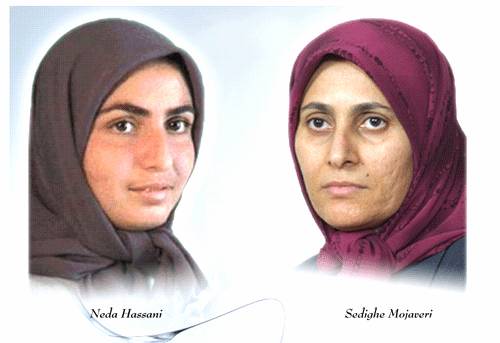
The self-immolations by MEK supporters in Europe in June 2003 are best understood as a mix of extreme political theater, coercive group dynamics, and leader-centered devotion. Two women – Neda Hassani in London and Sediqeh Mojaveri in Paris – died after setting themselves on fire during protests over Maryam Rajavi’s arrest in France. Rajavi had been arrested on 17 June 2003 along with many other MEK members in a French anti-terrorism operation.
European citizens where shocked to see MEK supporters set themselves ablaze as a form of protest to their leader’s arrest. This was considered by the MEK as an act of martyrdom. Since then, the two above-mentioned women are glorified as martyrs of the group and the others who were paralyzed by the fire they set on themselves, are over-valued as role models for the entire members of the group. What it suggests about the MEK?
The most striking feature is the intensity of personal loyalty to the leadership. In ordinary political movements, arrests trigger petitions, rallies, legal defense funds, or strikes. Self-immolation is something else: it suggests an environment where followers saw the leader’s detention not merely as a political setback but as an existential, sacred crisis.
That does not prove that leaders directly ordered anyone to die. But it does strongly suggest an organizational culture capable of producing self-destructive acts in defense of leadership. When members are socialized to treat obedience, sacrifice, and total commitment as moral duties, the boundary between “voluntary protest” and psychological coercion gets blurry. In case of the MEK, members had been coerced to do so according to the testimonies of former members.
Signs of a destructive cult
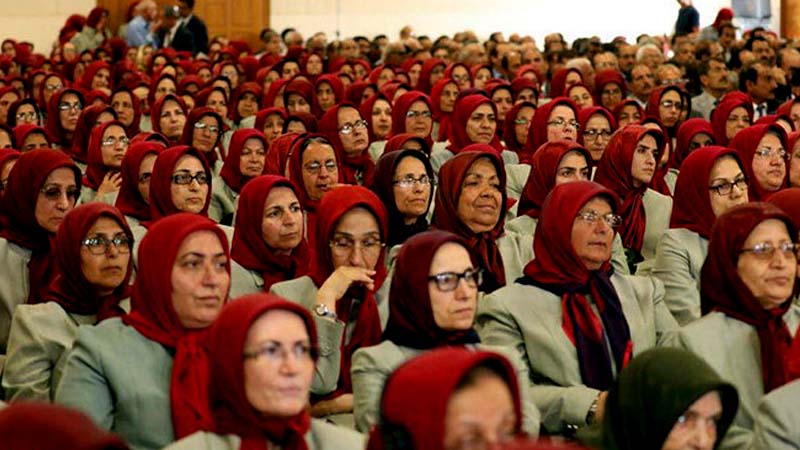
Therefore, many critics call the MEK cult-like. Calling a group a cult is often imprecise, but in this case, critics point to recognizable features:
-Charismatic, centralized leadership focused heavily on Massoud and Maryam Rajavi.
-Demand for total commitment, where personal identity becomes subordinate to the organization.
-Emotional absolutism, dividing the world into pure supporters and evil enemies.
-Readiness for self-sacrifice framed as proof of sincerity and loyalty.
-Suppression of internal dissent, reported by many former members over the years.
The 2003 self-immolations became one of the strongest public signs supporting that critique, because they looked less like spontaneous democratic activism and more like leader-fixated martyrdom.
Neda Hassani and Sediqeh Mojaveri
The deaths of the two women matter not just as isolated tragedies but as evidence of how vulnerable adherents can become inside highly controlling movements. Several layers are worth separating to interpret the deaths of the two women.
Individual agency: the women physically carried out the act themselves.
Organizational responsibility: if a movement creates intense pressure, glorifies sacrifice, and equates devotion with suffering, it bears moral responsibility even without issuing explicit instructions.
Symbolic messaging: self-immolation is designed to shock witnesses and force attention. In this case, it also signaled that Rajavi’s supporters understood her detention as worth dying for.
So, the deaths can be analyzed as both political communication and human exploitation.
The outcome of self-immolations for the MEK
Politically, the tactic was counterproductive outside the committed base. For sympathizers already deeply attached to the MEK, it may have reinforced solidarity. But to broader European audiences, it confirmed fears that the organization had fanatical or cultic tendencies. A movement trying to present itself as a democratic alternative usually benefits from showing discipline, public legitimacy, and respect for life. Supporting self-immolations do the opposite.
Ethically, this is hard to view as a legitimate form of protest in any positive sense. Self-immolation can sometimes be framed historically as a desperate act against overwhelming oppression. But here the trigger was the arrest of a political organization’s leader in a democratic country with legal procedures available. That makes the act look less like the “voice of the voiceless” and more like extreme leader worship under conditions of ideological control.
The key moral point is this: when people die for a leader’s prestige or freedom rather than for their own immediate survival, one should examine the structure of influence around them, not romanticize the sacrifice.
The 2003 self-immolations indicate that the MEK had, an intensely authoritarian internal culture with the power to drive followers toward lethal acts of devotion. The two deaths are best seen as tragic outcomes of manipulation, autocratic ideology, and leader-centered mobilization, not as healthy political resistance.
This event is one of the clearest cases critics use when arguing that the MEK functioned less like a normal opposition movement and more like a high-control organization built around the Rajavis, a cult of personality with a past record of acts of violence.
Mazda Parsi