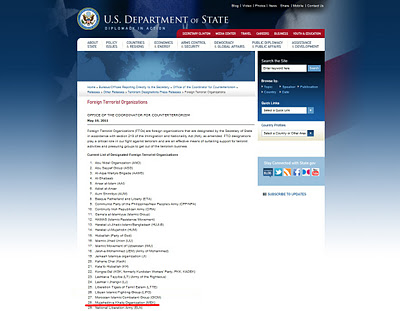
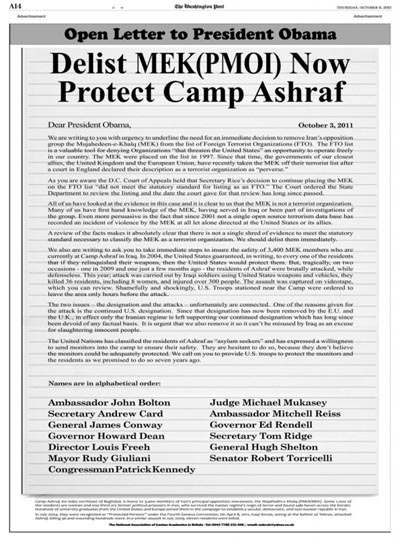
Today it was revealed that Israel has been funding, arming, and training the Mujahedeen e-Khalq (MEK), designated a terrorist organization by the U.S. State Department, to conduct terrorist  attacks killing Iranian nuclear scientists. Anonymous U.S. officials confirmed to NBC News that allegations of this Israeli-MEK connection are accurate. This is a story of national and international significance and, while it was published by NBC, it has been completely absent from the mainstream media.
Hey, I’m no idiot. I know the news media is incredibly biased in favor of powerful institutions and especially the state. But I don’t think I was naive to actually expect some coverage of this news on the day it broke. I scoured the major news media – CNN, MSNBC, Fox, the New York Times, Wall Street Journal, Daily Beast, al Jazeera English, my twitter feed and even my RSS feed (both of which are filled with the kind of dissident material that could spark the interest of Homeland Security) – and nothing. Virtually no coverage.
The U.S. has supported terrorism (and conducted its own state terrorism) innumerable times in the past without appropriate coverage in the news media. But this story of Israeli support of the MEK isn’t about some obscure, chronically marginalized issue. We’re not talking about U.S. support for murderous Colombian paramilitaries, an issue that has never piqued the interest of Americans. The issue of the impending conflict with Iran, however contaminated by false statements and jingoistic war propaganda, has certainly received its fair share of coverage. This is a mainstream issue.
This is a situation where the U.S. government’s closest ally, receiving billions in annual aid and unmatched diplomatic cover, is cooperating with a group that the State Department itself characterizes as a terrorist organization, to conduct assassination programs against innocent people in a sovereign nation. Taken in isolation, this is bad enough. But this kind of behavior has the potential to destabilize a very precarious situation and possibly suck the United States into another war in the Middle East. And these facts have now been confirmed by U.S. officials. I can’t imagine a more headline-worthy revelation.
But the news media is so subservient to the U.S. government and the credibility of its allies that this momentous story isn’t just twisted or lied about like America’s other propaganda – it’s erased. Whitewashed. Never happened.
It may be more enlightening at first, for those dismissing my observation as wacky conspiracy, to think about al Jazeera instead of the mainstream news in America. During the Iraq war, al Jazeera was often turned to in order to get the hard-hitting stories that the U.S. media couldn’t and wouldn’t report. It was “alternative.” They’ve since evolved and have had lots of questionable coverage that unfortunately overlaps that in the U.S. media. But why would a news organization, based in the region in which these Israeli terrorist attacks have taken place, whitewash this story?
Consider the politics of the region. The Gulf Arab states for a long time have been on the side of Israel and the U.S. when it comes to the issue of Iran. Saudi Arabia, Qatar, Bahrain, UAE, etc. – fear Iranian influence in the region because it crowds out their own. The Saudi King, for example, not only has secretly urged the U.S. to attack Iran, but has a strong interest in seeing Iran further isolated by eliminating its one regional ally, Syria (which is why Saudi Arabia has reportedly funneled support to the rebel Free Syrian Army and why it supported the Arab League’s Security Council resolution for intervention in Syria). Al Jazeera, which is based in Qatar, would be going against the interests of its owner and government (one in the same) if it appropriately covered revelations about Israeli terrorism in Iran.
Virtually the same calculations exist for the American media. Washington consistently pushes misinformation about the nature of Iran’s nuclear program (despite a near-consensus on the part of the intelligence and military community that Iran’s nuclear program is entirely civilian in nature) and demonizes the Iranian leadership because Iran lies outside Washington’s sphere of influence in the world’s most geopolitically important region. The news media reflects the state’s interests, both because ruffling the feathers of their commanders in Washington is against their own interests and because of what I call the “culture of regurgitation” in American journalism (“if my government says it, I’ll say it too”).
The focus of the media today, aside from the painfully stale political horserace, was the bank’s mortgage settlement and Syria. Regarding the former, there was gratuitous praise heaped on the Obama administration for overseeing a $26 billion settlement from the nation’s five biggest banks for their role in the mortgage meltdown (this, of course, after having colluded with banks to screw millions of people and bilk the economy out of far more than $26 billion). Regarding the latter, as I write these words CNN is running a story about Iran’s alleged material support for Syria’s killing of civilians.
I’m going to maintain my naiveté for another 24 hours. Let’s see if Israeli terrorism against Iran gets any coverage tomorrow.
By John Glaser
 continues to engage in terrorism, despite the groups claim to have renounced violence, the National Iranian American Council (NIAC) calls on all former officials who have taken part in the MEK’s lobbying and PR efforts to immediately cut ties with the organization, donate any money they have received to charity, and work with law enforcement to ensure this U.S.-designated terror group is dismantled.
 confirming charges leveled by Iran’s leaders.

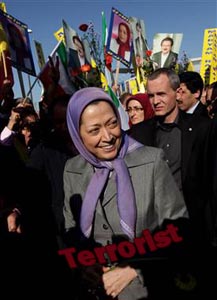
 thousands of dollars to speak in support of the MEK.” No matter what one thinks of this group – here is a summary of its activities – it is formally designated as a Terrorist group and it is thus a felony under U.S. law to provide it with any “material support.”
 state perpetrator, now NBC offers something more specific. According to a report by Richard Engel and Robert Windrem, the assassinations have been the joint work of Israel and the Iranian cult-cum-terrorist group Mujahedin-e Khalq. According to the report, the partnership has involved Israel providing financing, training and arms to the MEK to accomplish the hits, as well as to commit other acts of violent sabotage inside Iran. The story tracks with accusations from officials of the Iranian government, who say they base most of what they know on interrogations and captured materials from a failed assassination attempt in 2010. Such accusations by themselves would be easy to dismiss, of course, as more of the regime’s propaganda. But the NBC story cites two senior U.S. officials, speaking anonymously, as confirming the story. A third
 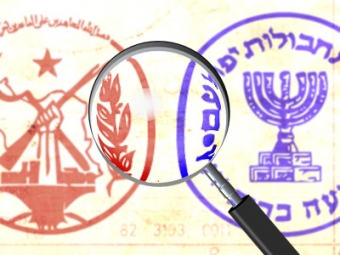 official said “it hasn’t been clearly confirmed yet,” although like the others he denied any U.S. involvement. The Israeli foreign ministry declined comment; the MEK denied the story.
.jpg) Mujahedeen e-Khalq (MEK). But MEK leaders haven’t decided they’re ready to move in just yet.
Mujahedeen e-Khalq (MEK). But MEK leaders haven’t decided they’re ready to move in just yet.  group Jundullah that carries out suicide bombings and other destabilization attacks in Iran.
 terrorists in Iraq.