The People Mujahedin of Iran has a long history of treason and shifting in its
belief so the settlement of MKO forces in Israel soil is not an unexpected option. There are many reasons for such a move. As in the cult of Rajavi the goal has always justified the means, the above-mentioned option could be an alternative for MEK remaining forces after their expulsion from Iraq.
Anyone who has studied the MKO’s background would also have found out that in the early years of its foundation, the MKO members were sent to Palestine to receive military training from the Palestinian armed groups such as PLO. Regarding this fact, one many think its too bizarre that the MKO takes refugee in a nation to which they have once been hostile but the truth is that shifting the believes to an opposite one is far from new in the history of MKO cult.
There are so many other examples like these: The very MKO organization that has assassinated American military personnel and civilians in the 1970’s, is now lobbying to gain the American congress support. It’s a common contradiction in MKO that the so-called former imperialism is now their savior.
The similar approach is headed by MKO towards Israel. The main supporters of MKO in the US government including Raymond Tanter are the leading promoters of the Israeli lobby, AIPAC which is the strongest lobby in the American administration and the best option to advocate MEK’s cause in US. Therefore, the former enemy of America and Israel has transferred to an ally that is the enemy of their enemy and so their friend.
MKO claims to have denounced the alleged intelligence on the Iranian nuclear program, and AliReza Jaafarzade uses it as a pretext to advocate MKO support in his shows on FoxNews, but according to various sources their intelligence had basically come from the Israelis and MKO was only a loud speaker! In case of MEK’s expulsion from Iraq and the shut down of Camp Ashraf their new safe heaven could be Israeli since no third country has accepted to grant refugee to the MKO terrorists. However, the serious violation of human rights in Camp Ashraf and the cult-like manipulation practices of MEK leaders would surely end with the defection of a large number of members. After the fall of Saddam many (about 600) members used the very small overture in the gates of Ashraf and escaped out of the bars of the cult. Thus, there won’t be a lot of people to go to the safe heaven of Israel, following the closure of Ashraf, for it will be an opportunity for those who have long been threatened and forced to stay in the cult under the physical and mental pressure of cult leaders.
By Mazda Parsi
Articles
US-Protected Iran Exile Group in Line for Huge Cash Windfall
"The MEK can use some of that cash to pay legal settlements with former members that they tortured, as well as the families of Iranians they killed when they fought on the side of Saddam against Iran."
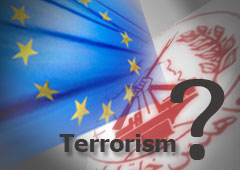
The controversial Iranian exile organization MEK, which the United States calls a terrorist group, could soon see a windfall of tens of millions of dollars as the result of the European Union’s decision Monday to take it off its list of terrorist
organizations.
If so, it will mark dramatic turnaround the group’s fortunes.
The MEK, shorthand for the Mujahedin-e Khalq, and also known as the People’s Mujahideen Organisation of Iran, looked like it was on the ropes only days ago, when Iraqi Prime Minister Nouri al-Maliki said he wanted its U.S.-protected military base near the Iranian border closed within two months.
But the E.U.’s Jan. 26 decision not only unlocks untold millions of dollars frozen in European banks, it allows the militant anti-Iran organization to go public with appeals for millions more, perhaps catapulting it into a leading role in the Iranian opposition abroad.
The MEK could claim $9 million held in France alone, along with "tens of millions of dollars" worth of assets locked away in other EU countries, its spokesman told Radio Free Europe/Radio Liberty.
What will it do with the windfall?
"Set off car bombs around Iran," jibed former CIA operative Robert Baer, whose pursuit was dramatized by George Clooney in the 2005 movie "Syriana."
The group says it has renounced violence, but the MEK has carried out dozens of terrorist attacks and assassinations against Iranian targets both inside and outside of the country. Some of those were launched from its base in Saddam Hussein’s Iraq, before the 2003 U.S. invasion.
MEK leader Maryam Rajavi said the unfrozen millions "will be used to increase our political activities … including to further disclose the mullah regime’s secret nuclear weapons sites."
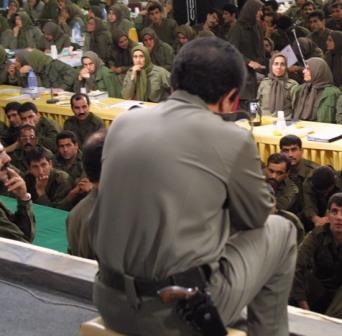
Since Hussein’s overthrow, the 3,000 MEK fighters in Camp Ashraf, as it’s called, have been under the "protection" of U.S. troops, even though they’re still officially labeled terrorists by the State Department.
The seeming anomaly can be at least party explained by frequent reports that the MEK has been secretly helping the CIA run operations against the Islamic regime from its base in southeastern Iraq.
Its terrorist label was earned before the 1979 Iranian Islamic revolution, when the group, which bills itself as Marxist-Islamist, targeted Americans working in Iran. Indeed, 30 years ago this month the group helped overthrow the U.S.-backed shah and take 52 American hostages.
But eventually it turned against the religious regime. In 2001 its sustained opposition to Iran, its supposed renunciation of violence, and its portrayal of itself as a "progressive" political force won it admirers in the Bush administration and pro-democracy groups in Europe. Of no small note, it has also played a major role in exposing Iran’s nuclear activities.
Walid Phares, a scholar on terrorism and American of Lebanese descent, called the closing of Camp Ashraf "a significant Iranian victory."
"Ashraf was the only base for the MEK against Iran’s regime," he said by e-mail. "If it is shut down, they will lose the only base they have."
"More than a military base of the opposition against Tehran," he added, "Ashraf was a political base for broadcast and political outreach to the opposition in the inside."
On the other hand, the E.U.’s decision will conceivably allow MEK fighters entry into Europe, at least temporarily solving the problem of what to do with them once Ashraf is closed.
That, and the new money, can only add to the MEK’s political clout, which was put on display last year when the group drew 85,000 people to an anti-Iran protest outside Paris.
To date, exile communities have been divided over the MEK because of its attacks on Iranian troops from Iraqi soil during the two nations’ 10-year war. Some call the organization a puritanistic "cult,” because of its iron-fist leadership by a husband and wife team who have been accused of violating the human rights of their own followers.
But the E.U.’s decision could give the MEK a big boost over its rivals, Phares suggests.
"Once they are decertified [as a terrorist group] they will act as an international NGO [non-governmental organization] and will most likely receive even more donations from Iranian exiles," said Phares, a senior fellow at the hawkish Foundation for the Defense of Democracies in Washington.
"De-certification by itself will strengthen the group within the Iranian diaspora," he continued. "Will they access to frozen funds in EU banks? This is another issue and will have to be negotiated. But certainly they will have a legal base. They will spend it to widen their base, and on strategic communications regarding Iran."
All things considered, it’s not hard to suspect a hidden American hand in the E.U. decision, or at least acquiescence in it, since it so neatly finesses the eviction notice served on Camp Ashraf by Prime Minister Maliki.
In any event, it keeps MEK alive — and more — despite the threatened closing of its longtime base in Iraq.
The Iranian regime reacted sharply to the E.U. move, accusing the union of a "double standard" on terrorism. It also said it was drafting a plan to put MEK members on trial, "either in the Islamic Republic or outside the country,” according to Press TV, an Iranian news service.
CQ Politics By Jeff Stein
Pressure is growing on Iran’s main opposition group to leave Iraqi territory after living under US military protection in a camp north of Baghdad since 2003. Some 3,400 militants of the Mujahideen- e Khalq (known by the acronyms MKO or MEK) face eviction by the government of Iraq, which has tired of a group that once fielded its own army under the tutelage of Saddam Hussein and remains on Washington’s list of terrorist groups. On Saturday, Iran’s supreme religious leader, Ayatollah Sayed Ali Khamenei, encouraged Iraqi President Jalal Talabani to follow through with Baghdad’s longstanding desire to disband Camp Ashraf, which came under Iraqi control on Jan. 1. "We await the implementation of our agreement regarding the expulsion of the hypocrites," Ayatollah Khamenei told Iraq’s visiting president, referring to the MKO by the term often used by the Islamic Republic. Mr. Talabani was quoted as saying that the MKO "have committed many crimes against the Iraqis, and the Iraqi government is determined to expel them and will go forward with its decision." His words echo those of Iraq’s national security adviser, Muwafaq al-Rubaie. "The only choices open to members of this group are to return to Iran or to choose another country," Mr. Rubaie said in Tehran last January. "Over 3,000 inhabitants of Camp Ashraf have to leave Iraq, and the camp will be part of history within two months," said Rubaie, adding that more than 900 are dual nationals and that he would be holding talks with officials of 12 countries. Those options are limited for the controversial cultlike group, whose armed wing came under Pentagon control after the fall of Mr. Hussein. Despised in Iran for bomb attacks and the killing of government officials and civilians in the first years after the 1979 Islamic revolution – and later for fighting alongside Iraqi troops against Iran during the Iran-Iraq War of the 1980s -the MKO was disarmed in 2003 but kept intact as a possible tool for use by the US against Tehran.
Terrorist list status
In January, the group toasted its removal from the European Union terrorist list. But it was delisted for legal reasons – using its removal from the British terrorism list in 2008 as part of its case. The decision has been appealed by France, and the group remains on the terror lists of some individual member states. The delisting, though, may enable some militants to be accepted in Europe. Many fear returning to Iran, though more than 300 "quitters" – as the MKO calls those who leave the organization – have gone home with little incident. "This is the end of the terrorist label," says Alireza Jafarzadeh, the group’s spokesman in Washington until 2003, when the MKO, with its several arms and variety of names, was closed down in the US. Removal from the EU list is a "major victory for the MEK and the resistance movement overall," he says. Mr. Jafarzadeh says the EU decision "strengthens" those at Camp Ashraf who refuse either to return to Iran or to leave the camp for Europe. "Any justification to expel them [from Iraq], which has been always coming from Tehran, is now gone," he says.
Still, Baghdad announced that it planned to close the camp last December, the same month the US reaffirmed the MKO’s "terrorist" status. Last year, the State Department’s global terrorism report noted the group had "planned and executed terrorist operations against the Iranian regime for nearly three decades;" had killed several Americans in Iran in the 1970s; and "displayed cultlike characteristics," such as vows of "eternal divorce" [to avoid competing loyalties] and weekly "ideological cleansings." For years, Tehran has offered amnesty to members who voluntarily return to Iran, facilitated by the International Committee of the Red Cross (ICRC). Returns have almost stopped in the past year, as Iran now wants Iraq to first screen potential returnees. "For those who wish to come back to Iran, we hope the Iranian government would give again this green light," says Peter Stocker, the head of the ICRC delegation in Tehran. Concerns in Camp Ashraf that returnees could be mistreated in Iran have not proved true in cases the ICRC has handled. "It is important to know that if anything happened to them, I don’t think it could remain hidden," says Mr. Stocker. US officials say Iran wants to prosecute 50 top MKO leaders, and has provided a list, but that perhaps only 20 are at Camp Ashraf. Returning to Iran is "absolutely not" an option, says Jafarzadeh, now an Iran commentator for Fox, contacted in Washington. "These people who are staying at Camp Ashraf are the people who are determined to oppose the Iranian regime."
Lenient treatment for returnee
Still, at least one high-ranking MKO member forced back to Iran received prison time but relatively lenient treatment. Ebrahim Khodabandeh, a British passport holder, was arrested by Syria while facilitating the exit of MKO leaders to Europe from Iraq after the fall of Baghdad in 2003. The Syrians told him he was being taken to London, but then flew him to Tehran. If he had had a cyanide pill, he says today, he would have committed suicide. "The first time I was in Evin prison, I told them: ‘My bones, my blood, my flesh is all made with the name Rajavi, so the best you can do is execute me,’" says Mr. Khodabandeh, referring to the surname of the husband and wife leaders of the MKO. "It took me two years to come to the point of realizing the MKO was a cult and I had been manipulated." He was driven around Tehran by his case officers, who wanted to show him how the capital had changed in the decades he had been away – and to show how different it was from the world described by the MKO.. Khodabandeh says Iranian intelligence understands the need to avoid the death or abuse of MKO members who return, to avoid creating martyrs. "This was very much to the benefit of the Islamic Republic," he says, now free in Tehran. "If I were executed, I would be a martyr and have my picture in the newspapers. The problem for the organization is they haven’t had a martyr for many years."
Scott Peterson Staff writer of The Christian Science Monitor
This is what Maryam Rajavi – head of the People’s Mujaheddin of Iran (PMOI, or MEK, or MKO) stated in Brussels on January 27, 2009 while standing in front of
her many supporters, right after the decision of the ECJ (European Court of Justice) to put her movement off the list of terrorist groups:
"My fellow compatriots, Friends of the Resistance,
The obstacle of the terrorist allegation has crumbled. The spell has at last been broken. With perseverance and determination, you courageously rose above the flames of injustice and rendered law and justice victorious…This marks a decisive turning point on the course of democratic change in Iran."
Although, the US State Department’s report on terrorist organizations states the following:
"The MEK advocates the violent overthrow of the Iranian regime and was responsible for the assassination of several U.S. military personnel and civilians in the 1970’s. MEK leadership and members across the world maintain the capacity and will to commit terrorist acts in Europe, the Middle East, the United States, Canada, and beyond.
The MEK emerged in the 1960s as one of the more violent political movements opposed to the Pahlavi dynasty and its close relationship with the United States. MEK ideology has gone through several iterations and blends elements of Marxism, Islam, and feminism".
Funny, cause if you head your browser toward the official website of Maryam Rajavi, each time you’ll read a sentence like this one: "Our aim is not to attain power at all costs. Our aim is to guarantee freedom and democracy at all costs, even at the cost of sacrificing our own existence." It all sounds much more like a Ghandi’s statement that the one of a terrorist inspired by Marxism, Islamism and Feminism.
Who’s right?
The MEK is still on the list of terrorist groups of the United States, because its fundamental values are anti-western and violent. The group took part in the 1979 revolution against Reza Palahvi’s the pro-western government, helping the present Iranian government to take power in Iran. Although, once the main target has been hit (French revolution anyone?), the winning coalition starts an internal power struggle, with which the real leader will be chosen. This is what happened to MEK, at odds with Islamic Republic. The leadership of the PMOI attempted to overthrow the newly formed IRP (Islamic Republic of Iran) but failed. Ayatollah Khomeini, in response, started a crackdown on the MEK militia and the group was forced to move to France.
In "The Persian Puzzle", Kenneth Pollack describes these events as following:
"…the MEK had made itself a primary target of the IRP. It decided that the best defense was a good offensive and tried to decapitate the IRP leadership in the hope of either toppling the regime or forcing a compromise. On June 28, 1981, a massive explosion inside the IRP headquarters succeeded in killing much of the party’s top leadership. …
…Two days later, a bomb narrowly missed killing Hojjat-ol Islam ‘Ali Khamene’i as he delivered the Friday sermon in Tehran. Sensing that this was their last chance to survive (let alone take power), the Feda’iyan-e Khalq, the Communists, and other leftist groups also joined in the bloody campaign. Thereafter, the MEK and its leftist allies launched a sustained terror campaign that assassinated roughly two hundred government officials by the end of August. Then, on August 30, the MEK pulled off another dramatic coup, smuggling a bomb into the prime minister’s offices and killing President Raja’i (who had succeeded Bani Sadr in blatantly rigged elections), Prime Minister Mohammad Javad Bahonar (who had in turn taken Raja’i’s old office), and three other senior officials. 23 Naturally, the regime reacted with concomitant ferocity. …"
Are we talking about holy water or the devil itself? The Council on Foreign Relations has a detailed description of the MEK:
"…Experts say that MEK has increasingly come to resemble a cult that is devoted to Massoud Rajavi’s secular interpretation of the Koran and is prone to sudden, dramatic ideological shifts."
The MEK, in fact, also has a political arm, called The National Council of Resistance of Iran headed by Maryam Rajavi’s husband, Massoud. No one really knows where Massoud Rajavi is living now, but an interview to a former MEK member appeared (briefly) online on February 2, 2009. If you google for the words "mek" + cult the interview will come out.
Only, if you click on it, you’ll be redirected to some other piece of news not related to the subject. The only thing you can read is the title of the article – Ex-member says MEK, ‘is like a cult’ – and a few other words.
Of course, the fact that the EU removed the MEK from the list of terrorist organizations sparked the reaction of Tehran’s government: "The European Union must realize that a political approach to terrorism, which threatens the lives and security of people around the world, is totally unacceptable for the global public opinion." Iran’s permanent envoy to the United Nations, Mohammad Khazaei, wrote to the UN Secretary General Ban Ki-moon.
"The EU’s politically motivated decision will not change the terrorist nature of the group. It will not ‘turn the page’ of history on the cult’s terrorist activities and massacre of innocent civilians, nor will it cleanse the terrorist group of its criminal past," he added.
It sounds like a power struggle between the EU and the IRP (of course there’s also a war going on between Teheran and the MEK itself). And it seems as if the MEK is being used as a leverage tool here. But this is just a superficial analysis. The truth is far from being exposed, and this could easily be a question of money. Several well informed sources claimed that the MEK leadership has been paying some major politicians and judges to get the sentence they wanted: their group out of that European black list as soon as possible. Of course this is just an assumption and there is no legal evidence to support the thesis of corruption.
On the contrary, it seems unlikely that the European Union could be so easily corrupted, even though they say that the MEK has a lot of money to spend. The fact that Saddam handed over the money he got from the "Oil for food" program to the PMOI, for example, is common knowledge.
Anyhow, the People Mujaheddin of Iran (this is the extended version of the name) may not be considered a terrorist group in the EU but it is still considered a terrorist organization in the US, should it stay there? According to Paulo Casaca, no: "I think this issue has several angles – he told us – all of them quite important. First: it raises the question of the rules, principles, methods and proceedings of terrorist lists. This is a very important question that I addressed in conferences and books; Second: it shows that only after four strong sentences the Council decided to act ‘better late than never’, but the lack of respect of the Court by the Council is scaring for all of those who believe in a "State of Law"; Third: the EU, as the US, are fully engaged in an appeasement policy that did not and will not work, .."
Casaca is a member of the European Parliament for Portugal’s Socialist Party and a supporter of the MEK. A very well informed journalist (anti-MEK), who has researched and written on the matter, told us that she cannot confirm allegations of corruption that have been made in the media. In her opinion, though, the real problem now is the MKO’s Ashraf camp in Iraq. The camp must be closed in two-three months from now.
"The Iraqi government has every right to send these people [the MKO members that are in the camp Ashraf] out, now the question is, where are they going? It will be easier to return to their country in Europe, now that the ECJ ruled them out from the list of the terrorist groups. They are more or less 2.000 brainwashed people, it will be a humanitarian crisis!"
The Iraqi National Security advisor, Muwafaq al-Rubaie, told the press that "the only choices open to members of this group are to return to Iran or to choose another country… Some of the MKO members have expressed interest to return to Iran and we are making the arrangements for this….We are acting under international humanitarian regulations and international laws. These people will themselves choose where they want to go."
So, someone thinks that the MEK (or MKO or PMOI) is a blood-thirsty terrorist cult that only wants to put its paws on Iran, whatever it takes. Someone else thinks that this group is the only democratic and legal alternative to the radical anti-western and corrupted Islamic Republic of Iran. It is very hard to give an answer here, but there are some good questions at least: what will the Obama administration do about the Ashraf camp and the MEK? Will the US State Department remove the group from the black list? Is the MEK going to play a role in the future of Iran?
hudsonny.org By Andrea Loquenzi – Italian Journalist and Research Fellow, The Magna Charta Foundation
One of the prevalent issues in studies on cultic relations of MKO is to determine to what extent the group acknowledges application of ethics in its internal as well as external relations. A review of the manifesto and publications of the organization and their ontological viewpoints indicate that MKO tend to equate ethics with their political feelings and ambitions. On the other hand, for MKO ethical standards are defined as whatever they relatively accept as the right and essential to the ultimate ends. It may give us a better understanding of the correspondence between MKO ethical standards and that of Machiavellianism as well as Marxism that incorporate a belief of “ends justify means”. In Machiavellian viewpoints, the application of levers including pressure, deception, breach of promise, betrayal, fabrication and all possible means for achieving and preserving political power is legitimate. Furthermore, in contrast to some contemporary thinkers who make an attempt to interpret ethics as a relative issue by means of complicated and equivocal philosophical discussions and theories, Machiavelli and his followers are outspoken in disregarding ethical principles.
However, the ideology and methodology of Mojahedin is based on the former policy. They managed to integrate philosophy and science to find a way of expressing their Machiavellian ideas in a novel form. As Machiavelli justifies using all means for achieving and maintaining political power, Mojahedin grab at ontological issues and the ultimate goal of creation. They feel much attachment to philosophical terms like dispensing of existence and absolute truth by which they try to justify their philosophical, political, social, and historical dogmatism. Here, the main viewpoints of Mojahedin on ethics as reflected in their pamphlets and organizational principles are to be reviewed.
Mojahedin distinguish between good and evil with regard to the factor of achieving objectives. In other words, they do not believe in substantive status of ethical values rather define them based on the extent to which they succeed to make the ground for attaining objectives. According to theoretical principles and doctrine of Mojahedin “Good and evil are always determined with regard to the objective”. 1
But what is the objective meant by Mojahedin? As it was mentioned before, Mojahedin believe in absolute good and absolute evil in their worldview yet on the other hand, recognize the legitimacy of using all possible means for achieving that absolute truth. In addition, they maintain the universality of material world and consider evolution as a general law governing all phenomena including man and the society. Consequently, all activities aiming at achieving absolute truth are considered an ethical issue and in contrast, all activities hindering the attainment of that absolute truth are regarded unethical. They define absolute truth and ethical values as follows:
The process that moves the society toward retaining the most dominant humanistic features, (unlimited to a certain time and place), is known as the absolute truth. Absolute good is those actions done for the achievement of absolute truth in any circumstance. 2
Therefore, according to Mojahedin, absolute truth and its opposite are two sides of a coin and there is no third option:
Non-truth is all actions done against truth as a barrier in its way unlimited to a certain time and place. 3
Also, absolute evil has been defined in the theoretical sources of Mojahedin as:
Absolute evil are all actions correspondent to non-truth unlimited to any certain form, time and place. 4
From this viewpoint, ethical standards have no value in themselves and it is only social and political conditions that determine their values. Consequently, in such a context individuals follow their own demands which may make them recoil from doing what is right and thus, they are frequently deviated from what is ethical. As a result, the concept of truth is metamorphosized into a relative issue, too, and is defined according to predetermined objectives as posed by Mojahedin. According to Mojahedin:
Based on circumstances, truth takes various forms. In other words, it is likely that a procedure in a certain time and place is considered as truth because of its furthering us in achieving our objective, yet in other circumstances it is considered false since it fails to help us and rather hinders the achievement of our objectives. 5
Undoubtedly, the terms “good” and “evil” have their roots in all acts that are accordingly evaluated and defined. It has to be pointed out that the terms objective, evolution, and truth are used as equivalence and complementary whenever needed. Mojahedin have elaborated on the integration of these concepts and their function, stating:
Truth is a practice moving parallel to evolution and all actions carried out in this regard are good. Non-truth is a practice done in opposite direction that is in the direction of decadency hence all actions done in the way of untruth are considered evil. 6
Coming to political power is the first step of achieving the stated objective, evolution, and truth. From this viewpoint, all actions are evaluated based on the extent to which they lead to getting the objective, evolution or truth:
All actions needed for achieving the final objective are evidently essential and necessary. 7
In a nutshell, positive ethical concepts like honesty, sincerity, … in contrast to negative ones like crime, absolutism, dishonesty, and betrayal cannot be evaluated and defined separate from conditions and their relation to the intended objectives rather they are defined according to external issues.
References:
1. Evolution, Second book of ideology. Theoretical sources of MKO, Mojahed publication, Tehran, 1979, p.97.
2. ibid, p.93
3. ibid.
4. ibid
5. ibid
6. ibid
7. ibid, p.96.
In the politics arena, the politic men come to the scene either to achieve power or to serve people. Naturally, if the politic men work for the profit of their own pockets or their own ambitions, their reputation will be damaged soon because the people will no more tolerate the abuse of their support or funding. The true use of politics is in fact to bring freedom to people.
Unfortunately, for MKO leaders the only definition for politics is the power over their victims including their cult members and Western politicians. Given the use of politics is only to achieve power; the means to reach such a goal is justified to be anything. The means could include resorting to deception and lie to deceive western powerful governments, so dependence has no place in such a policy, an organization like MKO, without any internal support in Iran, has only one way to not only gain power but also to survive. The deception policy has been a very useful trick to win western support for MKO.
But the west, especially the US government has had various groups on its payroll at one time. Now, they are funding MKO, a decade ago, they funded and trained Bin Laden to fight Russians and even further back, they worked with Ho Chi Minh to bring change in China. As it has been the fate of any group depended on US administration, the role of MKO for the US will also be expired finally, as well as what happened to AlQaida.
All the above-mentioned groups, as well as MKO, used politics to gain control over people to practice their extremist revolutionary ideas and eventually as soon as they lost their western support, they lost their existence. The history has always witnessed various examples of extremist movements’ attempts to gain the support of superpowers for their ambitions and their collapse after missing the external support.
As a matter of fact, if any movement regards the politics as a means to serve people and to bring about freedom and democracy for people, they will definitely win public support and any movement which enjoys the support of the masses is never concerned about its survival.
Mazda Parsi
In the last six years, mountains quaked yet Camp Ashraf stood stable. This is the chorus of mottos, messages, guidelines, victories, and hopes fabricated by Rajavi to foster hope in MKO members held captive in Camp Ashraf. The rationale behind considerable emphasis given to keeping Camp Ashraf, and its strategic advantage for Rajavi are evident and have to constitute one of the major issues to be elaborated on. It has been pointed out repeatedly that Camp Ashraf is the ideological bastion of Mojahedin and Iraqi soil is its strategic lever and instrument. Rajavi is well aware that its destabilization may result in the disintegration of the organization in ideological, political, and military aspects.
Rajavi’s problems have their roots in his tying Mojahedin destiny to the existence of Camp Ashraf; however, it was so at a time when Saddam was the dictator leader of Iraq and as Rajavi repeatedly asserted in his meetings with Saddam and Iraqi officials, he was out-and-out hopeful to Saddam and their ideological and even family ties and relations. Upon entering Iraq, Rajavi called his settlement there a historical event paving the way for immediate overthrow of the Iranian government. Now, after 20 years he still insists on his never-achieved promise and idea that Iraqi soil is the sole solution for furthering his so-called liberating war. The fall of Saddam was considered a turning point in his strategy enforcing him to run off to another region to evade the encountered cul-de-sac. His running away might result in the annihilation of his organization hence he attracted the attention of the world to a secondary issue, i.e. that of the necessity of keeping the integrity of Camp Ashraf for humanistic causes.
How long the process of Rajavi’s resorting to various subterfuges may last and what are his final objectives is unclear since Rajavi is always hew to the strategy of grabbing at the opportunity and now is after misusing the historical conflict of Iran-US to achieve his totalitarian and egocentric objectives. He assumes that the US-Iran conflict may lead to military conflicts that pave the way for Rajavi’s compensating his failure in forming a so-called liberation army in the reign of Saddam. Two years age, Rajavi put the termination of Bush’s taking office as the deadline of the fulfillment of the promise of overthrow and asked Ashraf residents to wait until then when they could decide on their destiny freely. Now, Obama’s anti-war policies has made Rajavi keep silent on his unfulfilled promise holding grab to the claim that even mountains quaked but Ashraf stood stable. In other words, he considers keeping Ashraf as his biggest political and strategic achievement in recent years. He considers the time being as a starting point in the history of MKO.
He still follows his past policies yet refrains to determine a deadline for his false promises. He seeks the sole solution to MKO challenges in two main factors. First, he attempts to keep Camp Ashraf as the ideological stronghold of Mojahedin and the sole factor securing the political and military integrity of Mojahedin in international scene. Second, he aims to use Camp Ashraf and its residents as a pretext to avoid taking a final decision concerning the destiny of the members kept there. It seems that he is waiting for troubled waters in the region to fish as he wishes.
The emphasis of Rajavi on keeping Camp Ashraf running implies that he equals its relocation to the disintegration of Mojahedin entity that also means his own degradation as the leader, another loser added to many other political losers. The sympathy of the world for an opposition that considered itself as the sole alternative for the Iranian government is but a complete defeat for Rajavi. It is likely that Rajavi’s undergoing relocation to another country works as a psychological and mental shock for Ashraf residents to overcome their deep frustration and disappointment but the fact is that the sole achievement of Ashraf for Rajavi is its overhanging role in postponing his answering to all his failures.
Cult leadership is feared. To disagree with leadership is the same as disagreeing with God. The cult leaders will claim to have direct authority from God to control almost all aspects of your life. If the cult is not a religious group then questioning the leaders or program will still be seen as a sign of rebellion and stupidity.
As Ann Singleton (former member of MEK) writes in her book “ Saddam’s Private Army” ,Masud Rajavi “ implied in his speeches that if such a leader has done his job well enough, then he starts a relationship with Imam Zaman ( the last and still awaited Imam in Shiite Islam) and therefore has direct contact with God.”
A brochure on MKO in Geostratos website explains that in 1990 Masud Rajavi declared himself ”as a person who receives his power directly from God” so the members were told to surrender their free will to the God’s representative and in case of disobedience they are called guilty or stupid. By this claim Masud Rajavi immunize himself against any criticism or opposition because the members feel guilty to oppose the order of God and also they are intimidated by their high officials in the peer pressure meetings where their character is assassinated.
Guilt, Character Assassination and Breaking Sessions. Guilt will be used to control you. Maybe the reason you’re not making money is because you’re not "with the programme". Maybe the reason you’re not able to convert new recruits is because "your heart is prideful and full of sin". It could never be that the programme isn’t working, or those new recruits have valid reasons for not joining. It’s always your fault, you are always wrong, and so you must try harder! You will also be made to feel very guilty for disobeying any of the cult’s written or unwritten rules.
Character Assassination is used to help create the guilt in you. Character Assassination is a type of false reasoning used by people and groups who have no real arguments. The technical name for Character Assassination is "The Ad hominem Fallacy". This is how it works. Imagine if you will a conversation between two men, Ford and Arthur…
"One plus one equals three", says Ford.
"No I don’t think so. You see when I have one thing, and I have another thing, then I have two things not three", replies Arthur.
"I see your point, but what you must realize is that one plus one when calculated in relation to this complex number domain, which I just invented, and then squared by the sum of the ninth tangent in the sequence of the Fibonacci series results in three!", stated Ford triumphantly.
Ok, Ford is wrong, but that is not the point. The point is that Ford tried to answer Arthur’s reasoning with more reasoning of his own. This is the healthy way people and groups debate subjects. Now lets see what would have happened if Ford had used Character Assassination…
"Arthur I have been a mathematician longer than you. How dare you disagree with me! You are obviously a very smug and prideful person. I think you are disagreeing with me because you are jealous of me, and to be honest with you Arthur your rebellion has really hurt me and a lot of other people too", stated Ford his face intimidating close to Arthur’s.
You see Ford didn’t answer Arthur’s argument, instead he attacked his character. If you are not aware of how Character Assassination works then it is a powerful way to exert control over you.
![]()
CHARACTER ASSASSINATION IS A SIGN OF A CULT
Breaking sessions are when one, two or more cult members and leaders attack the character of another person, sometimes for hours on end. Some cults will not stop these sessions until their victim is crying uncontrollably.
![]()
CULT MEMEBRS ARE USUALLY VERY FEARFUL OF DISOBEYING OR DISAGREEING IN ANYWAY WITH THEIR LEADERSHIP.HEALTHY ORGANIZATIONS HOWEVER ARE NOT THREATENED BY OPENLY DEBATING ISSUES.
Batoul Soltani is one of the eye-witnesses of character assassination sessions of the Rajavi’s cult who has been the victim of such sessions too. In her memoirs, she describes such meetings in detailed:
“ … while the member is confessing his sins (facts) in the meeting, the others in the group are insulting him with an abusive language using terms like lumpish, idiot …just because he has thought of his ex-fiancé.”
Therefore, after the deceptive methods were used to recruit the members the fearful and intimating atmosphere made by the God-like leader will keep the members in the cult.
Mazda Parsi
Washington may court moderates within Iran rather than outside opposition
The change in tone from Washington toward Tehran is complicated not only by historic acrimony but also by a complex relationship with Iranian opposition movements.
U.S. officials have made it clear that the Obama administration represents a possible opening for Iran.
"With respect to Iran, there is a clear opportunity for the Iranians … to demonstrate some willingness to engage meaningfully with the international community," in the words of Secretary of State Hillary Clinton.
This is in stark contrast to the previous administration and its policy of isolation. Gary Sick, a top White House aide on Iran during the Iranian hostage
crisis and now senior research scholar at Columbia University, says though the administration of George W. Bush had hoped for a better relationship with Iran in the wake of the conflict in Afghanistan, that policy was largely abandoned when the United States invaded Iraq in 2003.
Ali Safavi, a member of the Foreign Affairs Committee of the National Council of Resistance of Iran — a Paris -based group calling itself the Iranian Parliament in exile — said the approach to the Iranian regime, as well as its opposition, would be a litmus test for the Obama administration.
"There has been no shortage of goodwill gestures from the Americans toward Iran with the goal of moderation, but so far this course has failed," he said.
The NCRI, which includes members of the People’s Mujahedin of Iran, a dissident group based in Iraq’s Diyala province, has lobbied the international community to back a 16-point plan for regime change in Iran. It led a successful campaign in January to remove the PMOI from the terrorist list adopted by the European Union.
Maryam Rajavi, the controversial leader of the NCRI, hailed the decision as a victory for the Iranian resistance, saying the move paved the way for democratic change in Iran.
But the group’s image as a cult with a storied history of terrorist activity, both in Iran and across the globe, makes courting the opposition as a viable avenue for regime change in Iran tenuous at best.
The PMOI and the NCRI are both listed by the United States as terrorist organizations for their links to violent opposition to the Iranian regime.
President Bill Clinton in 1997 included the PMOI on the U.S. State Department’s list of Foreign Terrorist Organizations following the election of Iranian President Mohammad Khatami. Sick says that effort was part of a broader policy of appeasement toward the moderate Khatami, adding the State FTO list is a reflection of who Washington likes as much as who it doesn’t.
The PMOI arrived on the scene in the 1960s as a movement opposing the Western-backed Mohammad Reza Pahlavi, the shah of Iran, and supporting the Iranian Revolution in 1979 that brought Ayatollah Khomeini to power. The ideology of the PMOI, centered on Marxism, was in contradiction to the Revolution, however, and the group was exiled to Paris in 1981.
With France recognizing the Iranian regime in 1986, however, the group established itself in various camps throughout Iraq from which it ran a campaign of violence against Tehran. Though largely targeting Iranian government officials, its killing of American contractors in Tehran in the 1970s, participation alongside Saddam Hussein’s forces in suppressing Kurdish and Shiite rebellions in Iraq in 1991 and its later attacks on Iranian embassies in 1992 earned it a spot on the terrorist lists of several nations.
Its reputation for militancy, however, was not supported by recognition as a major fighting force. The PMOI surrendered its tanks and heavy artillery to U.S. forces following the 2003 invasion. Its members are now considered protected persons in Iraq under the Fourth Geneva Convention and claim to have abandoned their militant agenda in favor of peaceful opposition.
The PMOI, and its representatives in the NCRI, claim to hold valuable intelligence on Iranian operations, including Iran’s controversial nuclear program. The group often touts its unveiling of the nuclear program at the Natanz weapons facility in Iran, though several analysts note developments at Natanz were all but flaunted by the Iranian regime.
Massoud Khodabandeh, a former member of the PMOI, said those claims, and the intelligence value of reports from the NCRI/PMOI in general, are at best questionable, at worst useless.
"It is widely believed that intelligence given out by the PMOI about Iran’s nuclear facilities was given to them by Western intelligence contacts," he said.
Meanwhile, allegations have mounted that the U.S. intelligence community has funneled money to the PMOI for operations against the Iranian regime. An article in The New Yorker magazine in 2008 suggested the Bush administration had set aside some $400 million for covert operations against Iran, with a portion going to the PMOI.
The NCRI’s Safavi, however, called those allegations "completely bogus," and U.S. intelligence officers contacted for this story said there was no evidence to support those claims, though the official, speaking on the condition of anonymity, said he "wouldn’t be surprised if the allegation turned out to be true."
Meanwhile, with Iraq emerging from U.S. occupation with a shaky democracy, the relationship between Baghdad and the PMOI remains tense.
With the PMOI widely reviled in Iraq for supporting the violent suppression of the Shiite and Kurdish rebellions, and in Iran for its historic assassination policy, the group has few friends outside its groups of supporters in Europe and the United States.
Though Iraq does not have an extradition treaty with Iran, several top Iraqi officials, including Prime Minister Nouri al-Maliki, have said the group is no longer welcome in Iraq.
Both the NCRI and PMOI, through persuasive and astute campaigns aimed at generating sympathy both in the media and among world leaders, including those in the United States, have pushed for a delisting campaign with an effort to sever its ties to its terrorist past.
International lawyers in Washington, D.C., representing the PMOI filed a petition in July with the U.S. State Department seeking removal from the FTO list there, but U.S. officials say the FTO designation is appropriate.
Speaking to reporters following the Jan. 26 EU delisting, State Department deputy spokesman Robert A. Wood said "nothing has changed from our standpoint" concerning either group.
Meanwhile, the outcome of the January provincial elections in Iraq may indicate a subtle shift in Iraqi relations with Iran as the pro-Tehran Supreme Islamic Iraqi Council was trounced in the elections, largely by Maliki’s more secular State of Law slate.
Former Iranian President Khatami — widely seen as a moderate — has announced plans to run for president again in June, and though an appeal in the PMOI FTO listing case is expected to reach the U.S. Court of Appeals for the D.C. Circuit this summer, with U.S. policy currently leaning toward courting moderates within Iran, rather than outside opposition groups, little seems likely to change in the future.
By DANIEL GRAEBER, UPI Correspondent,
http://www.upi.com/Emerging_Threats/2009/02/20/
Washington_may_court_moderates_within_Iran_rather_
than_outside_opposition/UPI-42961235157864/
There are some issues that have attracted the attention of the world toward MKO. The settlement of Mojahedin in Iraqi soil and recently the recent statements made by Nouri Al-Maliki claiming that the Iraqi government refrains
to deliver organization members to the Iranian government and seeks their transfer to a third country is another issue. The world is also encountering propaganda blitz of the organization on the position taking of the US in keeping on its control over Camp Ashraf and also the MKO’s petitioning the world to hew to international conventions concerning individual rights of MKO members. The focus Mojahedin put on these issues in their sites on the one hand and their recent claim of calling their present situation a remarkable victory on the other hand seems contradictory and calls for a deep study on the overall issue and the concerned parties, i.e. MKO, Iraq, Iran, and the US. In this regard, position of Iran, Iraq, and the US toward MKO has to be reviewed to make us find an appropriate answer to the question; what are Mojahedin after by means of their present considerable propaganda blitz?
1. US position toward MKO
As acknowledged by Mojahedin, US officials consider MKO as a terrorist group; however, they insist on keeping them in Iraqi soil according to international conventions as long as its members will have been settled in a second country; yet the US considers the Iraqi government responsible for controlling Camp but recognizes its rights of deciding to keep or expel the organization from its soil. The US is after all trying to find a solution to prevent the transfer of MKO members to Iran.
2. Iraq positions toward MKO
Up to now, Iraqi officials have desisted to make any statement on their decision to deliver MKO members to the Iranian government; on the contrary, their statements imply that they will never do it. Nevertheless, Iraqi officials believe that national constitution of Iraq necessitates it to expel Mojahedin from Iraqi soil due to their committing terrorist activities therein and has let them free to decide whether relocate their camp to another country or return to Iran. It has to be noted that Iranian officials have repeatedly declared their disinclination to admit MKO members and leaders who have taken part in numerous terrorist attacks inside Iran and even have reveled a prepared list of them in advance. Therefore, there is no possibility that Iraq and the US transfer MKO members to Iran.
3. Iran position toward MKO
Although the Iranian government asked for the transfer of a number of MKO leaders as terrorist criminals to Iran after the fall of Saddam, the fact is that despite a great number of MKO detached members have returned to Iran deliberately, it is a long time when Iranian officials have declared their unwillingness to accept MKO members or even the deliberately detached members. It has to be pointed out that Iranian officials have repeatedly asserted that they have allowed MKO detached members to enter Iran due to humanistic causes and with no political motivation. However, the coming events may prove or disapprove the honesty of Iran in its claims. It is likely that the US-Iran conflict has its roots partly in the approach followed by the US toward MKO and the fact that it defends a notorious organization whose name is in its terrorist list.
Despite the clear position of the three parties mentioned, Mojahedin insist on pursuing their common approach of perverting and fabricating Iraqi and Iranian officials’ statements. In this regard, they make an attempt to inculcate their European advocators with the idea that Iraq has decided to deliver them to Iran in an act of breaking international conventions and human rights. However, the fact is that due to the crises and tensions posed to the organization during years of exile, Mojahedin cannot solve their problems legally and rationally and are used to resort to illegal shortcuts. The tactics grabbed at by Mojahedin reveal that they have always held grab to putting pressure on their dissidents to further their interests and achieve their objectives. Likewise, they are to put Iraqi government in a position to make inappropriate reactions favored by Mojahedin.
In this way, they resort to heavy propaganda blitz and illegal activities like making contact to Iraqi terrorists, intensifying the tensions inside Iraqi soil, etc. Their hostile position toward Iraqi government and their relation with problematic groups therein implies the fact that they rely much on these relations to further their interests in Iraq and also one of their pretexts for refraining to deliver the control of camp Ashraf to Iraqi government is to pave the way for their misusing of the present conditions for making contact to Iraqi problematic groups. Therefore, the Iraqi government has to concentrate its efforts on preventing Mojahedin to misuse the tensions occurred inside Iraq and also be careful not to give them any subterfuge to get their own way. However, does it mean Mojahedin are to be let free to make contact to problematic and insurgent Iraqi trends?
The fact is that perversing tactics of Mojahedin has put the winning card in their hands. The legal measures taken by Iraqi government against MKO may increase the chance of their unexpected reactions and also pave the way for their petitioning the world, yet any negligence of Mojahedin’s illegal activities may result in Mojahedin’s favored condition in furthering their illegal interests in Iraqi soil. Taking this viewpoint into consideration, whatever the course of events in the future, Mojahedin would be the winner. Furthermore, the experience shows that Mojahedin easily take advantage of suicide operations when encountering any impasse to win over, like the self-immolation of a number of MKO members in June 17th 2003 in France. However, it suffices not to take preventive measures against these activities since Mojahedin have proved that they are masters of plotting unexpected activities. In fact, they are like time bombs that despite their high destructive potentials can be deactivated if detected in time. What is of importance at the time being is that the world has to believe the destructive potentiality of MKO leaders and members.
What is to be done?
Now, this question arises: what is to be done? Evidently, the one-sided decision making of Iraq on MKO’s destiny is a risky and problematic action since, as it was experienced in global scene, Mojahedin may resort to defensive measures to foil Iraqi governments’ efforts by means of fabricating false information, suppressing the truth, initiating psychological and propaganda war, poisoning atmosphere in their own favor, and presenting themselves as the victimized party in the existing crises. In this regard and taking the strong support the US offers to Mojahedin and Mojahedin’s inclination to receive the support of the US as well as other international bodies like the ICRC, Red Crescent, and human rights activists into consideration, the cooperation of the US and international organizations with the Iraqi government may prevent MKO’s misusing the critical situation.
Therefore, the collaboration of the US as a mediator to control the overall process, the internationally recognized bodies and the Iraqi government seems necessary to arrive at a general consensus. The necessity of the presence of the US and international bodies is due to the fact that Mojahedin have proven that they have a big hand in changing their strategy and position taking in a blink of an eye and it is likely that they may accuse the Iraqi government of engaging in plots against the group as it has already spread fabrications over explosion of water pipes of camp Ashraf, missile attacks to camp Ashraf, hijacking some MKO members, and terror of Mojahedin leaders. However, the presence of the US and international bodies may put a stop to such fabrications. Also it is necessary to exercise full security control over Camp Ashraf, Mojahedin have to be totally disarmed and the cyanide capsules as well as explosives located therein be detected and collected.
In the second phase and after the formation of the council consisting of Iraq, the US and a number of concerned international organs, MKO’s high rankings should be separated from its rank-and-files so that the latter may find the opportunity of making free contacts to their families. It has to be noted that Rajavis’ refusal to separate top officials from rank-and-files implies the fact that there is a high possibility of plotting terrorist attacks regardless of the cost and form.
Also, it is necessary to declare the names of Ashraf residents openly since there are some families that are unaware of the presence of their relatives therein. Second, Ashraf residents are to interact with the outside world freely. Providing internet, satellite, journals, newspapers, and books for them is necessary in this regard. Third, they should be let free to choose their own destiny and decide for their future.
Another responsibility on international organizations in this regard is to identify those volunteer to separate MKO, and according to their will, make the ground for their transfer to Iran or other countries that may let them in. It may convince Iraqi government to allow the settlement of Mojahedin in Iraq until the time when a country consents to provide MKO members with asylum. As it was mentioned before, this solution and the interference of the US and international bodies in Iraq-Mojahedin conflict may put an end to it and prevent any possible misuse on the part of the concerned parties.