Mr. Radbin is a former member of the MKO. He managed to leave the Ashraf camp just after the occupation of the country. He lives in Canada now. The letter was originally in English which is as follows: I am Keyvan Radbin. I was born on Sep. 22-1971 in Tehran. I got familiar with
MKO by their TV and Radio programs. I became their full-time sympathizer from 1999 to 2001 in Tehran and my activities contained social and advertising for the organization. I leaved Iran to Iraq from Turkey for joining to MKO on July 18-2001. I stayed in Turkey for around one month and then after explanation process by the organization’s people in charge, I got moved to Iraq first to Basra port and then to Baghdad. After staying in Baghdad for half day I was moved to Ashraf camp. I leaved the organization on 2003 after the war with difficulty. I was almost one of the first people who leaved the organization after the war. Actually, the first day that I faced the people in charge in Baghdad, I got that something was wrong with them. I could not understand them well and I got that I had fell into deep trouble because their behavior was completely different from what I had been watching in their media programs and what had been told to me up to that time. But I thought may be after passing sometime everything would be good and I would get matched with the new environment so I took it easy!! But on my entry to the reception area in Ashraf camp I got that everything was getting worse and worse within my thirteen days staying in reception area. I got that they were trying to impose something on me that they had never spoke about! First ideological revolution then divorce (noting that I was single) but they never explained about those subjects frankly and openly. Any time that I used to ask them they answered me that when I go forth I would understand the depth of the subjects more!!! Anyway, I don’t make it too long about the sufferings that had there. In just one sentence I must say that all were like a horrible night-mare that the person who has never been there can’t even imagine. I don’t want to remember them again. In reception area I saw that how they tortured one young person psychologically that his face had been changed to an old person within a couple of months. He suffered there just because he didn’t want to accept their imposed ideas and stay there! (Anyway, I have explained everything in details in my interviews). Then I got moved to reception area (called paziresh) again with fully disappointment of the things that I’d seen there in my previous process in reception area. After less than one month I saw myself in a jungle without any rule, a jungle that everything had a meaning other than human being. Then I remembered the old movies about slavery. In one month of the stress I had bad back pain that I still have it. Then I faced with daily operation (called amaliyate jari) or daily self criticism. It was like the ancient Roma rules that governors put the innocents through the lions to get ripped off by the wild animals. Then I faced with weekly cleaning off (called ghosle haftegi) and many other inhumanity things. I started to criticize the organization for their lies and bad behaviors. But each time I was confronted with rough suppressions that I had never seen even by the Iranian regime. Then I remembered one of my friend’s words that told me before joining the organization that they are the worst dictators! I got everything, yes he was right. I requested a few times to leave the organization but each time I faced with psychological and physical pressures which made me to stay there. Eventually they told me that there is no other world outside Ashraf camp and I had to spend the rest of my life there. They took me to their courts many times. I got beaten up a few times by Hassan Norali and Ali Osat the people in charge. I was threatened by Fahimeh Arvani, Fereshteh Shojayi, Ahmad Ebrahim, Abdi, Nader Rafiyi and others many times that if I stay against them they would send me to Abu Ghraib prison. I spent some times in the organization’s intelligence service jails in Ashraf camp a few times. They got few false confessions from me by keeping me under severe pressure. I was always under the vision and control of the people in charge there. I didn’t have any freedom even for going to bathroom and so on. A few times I tried to kill myself but some power didn’t let me do so. I tried to escape from there but it was impossible because I saw few people that tried to escape had been arrested by Saddam’s forces and had been tortured badly. Within the war we moved to Jalula in the north. Since I knew their lies they tried to kill me and they shouted at my head but I was lucky that I had a helmet on my head and God helped me the bullet after hitting to my helmet crooked and didn’t went deep. When we returned to the Iraqi army base (called feylagh in Arabic) they put me on trial by Ahamad Hanifnejad, Vahid Batebi and Saeed Jamali. They blamed me that I am a spy and I work for Iranian regime! Again they tried to put me in trouble but again God like always was with me and they couldn’t do anything. Anyway when we returned to Ashraf camp again I requested once more that I wanted to leave and eventually because of the presence of the US army this time they couldn’t imprison me. Then they put me in the exit area (called khoruji) and even there they also tried to put me in trouble. But when the US army officers came there other defectors and I explained everything to them. They moved us to first TIF and then to TIPF and I spent two years in TIPF and then I moved to Turkey and after two and half years staying in Turkey I came to Canada. In six months of staying in Canada so far I have been able to study and get my Diploma in International business management and I still study to get my second degree as an automotive service technician. So Rajavi tried to teach me how to do suicide bombing but he never succeeded in doing so. I showed him that he is very weak and stupid and his impression of a human being is false. When I was in Ashraf camp I made friendship with Soheyl Khattar (Sasha). He also had same problems as mine and he also had been tortured. He tried to escape but eventually he was killed by his person in charge (called mas’ul) when he was in the Iraqi base (feylaq). Actually the doctor who was called Hassan Aref told me that because he was witness there when Sasha`s dead body was brought to the clinic. I have tons of bitter experiences while I was in Ashraf camp that I have mentioned some of them in my interviews. I will explain them all again with details anywhere and anytime needed. Once getting into MKO you never could see any exit. It was just a one-way road without return. There I saw the frighten tunnel. I must add, all the human rights activists in all over the world must be aware that there is somewhere in Iraq which is called Ashraf camp that in this so called modern world there are innocents who live there like slaves and still are being tortured physically and physiologically that leaders of the cults do. They are the worst dictators that the world has ever seen, even worse than Stalin and Mao;”blue kite”movie is a simple example of imprisoned people in Ashraf camp. By the way, we shouldn’t forget that the defectors who have been displaced to the north of Iraq in Kirkuk have been tortured and their rights for living have been trampled by MKO for many years. Regarding the fact that their refugee status have been recognized by the UNHCR, but they are still displaced and they are still living in bad situation and also get threaten by the MKO. All the world and free countries should help these defectors to be moved to some safe place for living like millions of free people around the world and make their lives. It’s enough to have people abused by MKO.
MKO former members
"Verdana","sans-serif"; mso-fareast-font-family:”>The Italian Radio (RAI-GRR), in the program ’’ Voices of the world’’, published a report on the MKO, sent by its reporter in Iran, Bruno Rufolo .the main axis of the report are as the followings:
"Verdana","sans-serif"; mso-bidi-font-family: Arial”> -the organization struggles to overthrow the Islamic Republic and has been in the FTO list of EU and US for years.
"Verdana","sans-serif"; mso-bidi-font-family: Arial”> – The reporter interviewed a former member of the group who left the group and was granted amnesty by the Iranian Regime and is now working for Nejat Association that cares about the affairs of the defectors of MKO and tries to help them be received by the society once more. The visit was made in the office of Nejat Association. He says:” I don’t want the others to repeat my mistakes.” He compares the totalitarian nature of the organization to that of a cult, explaining that in 1995, he was recruited by the group in Vienne where he had gone for education. He had been in Iraq until 2001 and after several terrorist operations, he was arrested in Iran and was imprisoned for 5 years, then he declared his regret and was released.
"Verdana","sans-serif"; mso-bidi-font-family: Arial”> – The report reads that:” an Iranian intelligence expert revealed that the organization is able to launch terrorist attacks in Europe. It seems that MKO has an influence in Brussel organizations something that makes Tehran be on the alert. The 27 members of European Union are still opposed to the removal of the group from terror list and the Supreme Court issued a ruling on the freezing of the MKO’s assets. The she-guru of the organization Maryam Rajavi went to Brussels a few months ago and her supporters in Washington are not a few. The group might have revealed the Iranian nuclear program in the past.
"Verdana","sans-serif"; mso-fareast-font-family:”>- The reporter continued by asking a question on the nowadays role of the organization, to answer the question, a terrorism expert Guidio Olimpio says:” in the past, the organization was involved in violent activities in terrorist forms but they have mainly dedicated their activities to the opposition since a few years ago and they are now definitly more active, although they don’t have the previous supporters.”
"Verdana","sans-serif"; mso-fareast-font-family:”>- the reporter mentions that the organization fought against the regime of Shah in the 1970’s but after the revolution they were defeated by ayatollah Khomeini’s partisans, so they sought refugee in Iraq and were used as mercenaries by Saddam Hussein to launch terrorist operations inside Iran. After the occupation of Iraq, the 4000 member of the group went under the protection of American forces. They have no support among Iranian people. According to former members, the leaders of MKO force the members to absolute abeyance.
"Verdana","sans-serif"; mso-fareast-font-family:”>Mrs. Singleton, a defector of MEK, in an interview on BBC said:” when I was in the organization, I thought that I am superior to normal people. The group’s leaders prevented us from having any contact with our family. We were completely separated from outside world.”
Governmental Radio of Italy Rai GRR
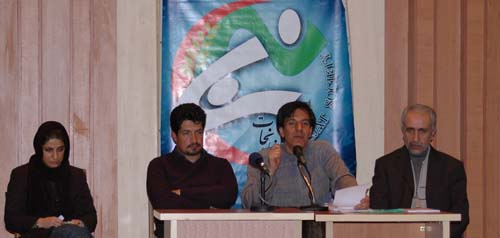
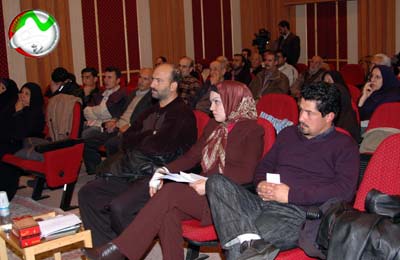
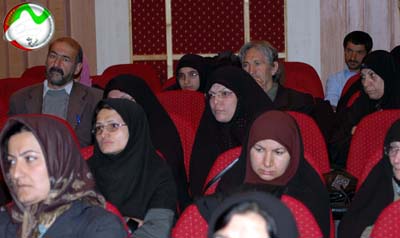
On Sunday March 2nd, a meeting was held by Nejat Society Gilan Branch, in Rasht, where a lot of families of Nejat Society attended to represent their determination to save their beloved ones from camp Ashraf and stop taking them as hostages by MKO Cult.
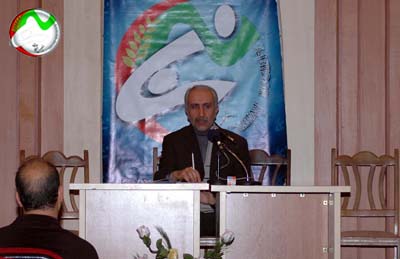
The meeting began with the speeches of Mr. Ebrahim Khodabande, a former political activist of MKO in England. He described the studies made on cults during years, stressing that all the cults have the same nature in brainwashing and psychologically manipulating of the members, forcing them to divorce, separating the children from their parents.
Mr. Arash Sametipour, the former member of MKO’s operational teams mentioned the presence of families in Iraq to visit their children citing the story of a mother who was desirous to visit her son in Camp Ashraf but found him as a robot without any feeling. She became assured that the manipulation system in the organization is very somplicated. She decided to rescue her son by the help of international human right organizations.
Sametipour also introduced Sahar Family Foundation which was recently founded by former MKO members from Canada, England and US, in Baqdad, in order to aid all families whose loved ones are captured in Camp Ashraf.
At the end, Marjan Malek, a former member of MKO military teams addressed the meeting, describing how she could save her two daughters pursuing the case with the help of Holland authorities.
Mr. Fadaiee Kowsari also talked of his trip to Bagdad a few years ago and his determination to link families with their children.
The meeting ended with the appreciations made by families.

Subject: Request for meeting about humanitarian issue of 120 disaffected members of Muhajedine Khalq in Iraq
You might be acknowledged of dozens of the peoples who had been separated from Iraq based Ashraf Camp of the Mojahedin Khalq Organization of Iran, were held at a camp namely Temporary International Presence Facilities (TIPF) in Iraq.
According to the reports received in the last few days by Anjomane Solh, the Peace Association Norway, about 120 people of the disaffected people escaped from the TIPF in a extremely grave condition. Some of them might be remained in a terrible position in different cities of Iraq or some of them might be able to reach near with the borders of Jordan and Turkey to ease them from danger circumstances of Iraq .
We want to raise our deep concern about the situation of these people. You are aware that after the fall of the former Iraqi dictator Saddam Hussein in 2003, TIPF was established provisionally alongside Ashraf Camp of MKO. The purpose was to locate those who defect the organization at the first instance interviews by the American Forces.
As you are aware, in various reports by the Human Rights Watch, the European Union, the British Government, the US State Department, the Canadian Foreign office, and many other sources as well as the worldwide media, the deeds and practices of the MKO and its leader Mas’ud Rajavi have been categorised as terrorist and violating the bases of human rights. Therefore, we urge you to pay attention to our concerns about the situation of around 120 separated people from MKO those do not want to return back to their home Iran , nor they want to rejoin cult of MKO.
These people should be protected by the International Community on the humanitarian gournd and under the World Declaration for Human Rights; and we urge you to help them by any means you can.
It is also worth mentioning that the MKO is considering the fleeing of its members and their departure from Iraq as a grave threat to its existence.
It is essential to point out the fact that some of reports concerning the disaffected people have already appeared in the media.
We are currently considering a purposal to send a delegation under the supervision of International Human Right Organisation based in Norway to Iraq, so that to be able to help the disaffected people of TIPF camp.
We would like to make you further updated in the connection and would be most pleased to have a meeting with you or your colleagues in coming days. We would be grateful for your cooperation in the context.
Kind Regards
Ghasem Ghezi,
Representative of Anjomane Solh, the Peace Association Norway
www.anjomanesolh.com
Anjomane Solh (Peace Association), Norway,
A round table discussion centred on the issue of terrorism in Iraq and possible solutions to this problem. The Symposium was divided in to 3 parts: – the general threat posed by terrorist groups and the ways they operate in Iraq – foreign terrorist organisations in Iraq – the creation of terrorist organisations in Iraq and the global supporters of these terrorist groups Participants of the Symposium ranged from university professors including, Dr. Aziz Jabar Shayal, Dr. Samir Alshweely and Dr. Rasheed Saleh, professors of Political Studies from the University of Baghdad. The Symposium was also attended by many governmental and non-governmental representatives from a wide range of ministries and NGOs, including representatives from Iraq’s Ministries of Defence, Human Rights and Security.

Massoud Khodabandeh from the Centre de recherches sur le terrorisme depuis le 11 septembre 2001 (Paris), who was in Baghdad for meetings concerning the fate of the remaining individuals following dismantlement of Camp Ashraf which houses the disarmed Iranian terrorist organisation Mojahedin Khalq Organisation, was invited to participate in the discussion.
Prominent among the participants was Mr. Bassam Alhassani, advisor to Prime Minister Noori Al Maleki.

The Symposium ended with a full report on the issues discussed and Dr. Aziz Jabar Shayal delivered the end resolution in which one paragraph emphasized the necessity for the dismantlement and deportation of the foreign terrorist Mojahedin Khalq organisation and encouragement and facilitation by the government and others to help the remaining individuals find a safe palace outside Iraq and return to normal life.
The symposium was covered by media representatives who reported from the meeting room.
Alaraghia television, Iraq’s main TV network, reported the Symposium and broadcast a brief interview with Massoud Khodabandeh.
In the interview, Massoud Khodabandeh emphasised above all the right of the Iraqi people to enjoy security and have justice served against the perpetrators of violent acts in their country, in particular the criminal heads of the terrorist Mojahedin-e Khalq organisation which was involved in the massacre of the Kurdish and Shiite uprisings against Saddam Hussein in March 1991. Mr Khodabandeh said that in his belief and according to all the studies of the Centre de Recherches sur le Terrorisme, the phenomenon of terrorism cannot have a single solution and needs inter governmental cooperation as well as the involvement of NGOs to protect the human rights of the who have been inveigled by terrorist leaders into this path, and to give them a second chance of integration back into their societies.
Thanking the organisers of the Symposium Mr Khodabandeh emphasised the cult culture of terrorist organisations and the methods they use to brainwash their followers. He also gave examples of foreign support by some influential groups and parties who facilitate the flow of finance for terrorism. Not the least the relationship between the remainders of Saddam Hussein in Iraq, London, Washington and other countries with the Mojahedin Khalq Organisation, and the way this relationship is becoming clear in the escalation of violence in Diyali province as well as the streets of London and other European countries.
The Symposium lasted for over two hours. Afterwards the participants formed smaller groups to further discuss the variety of issues raised by the Seminar.
A full report and media coverage will be published shortly. Thursday, 31st of January 2008.
Centre for International and Inter-governmental Studies of the University of Baghdad
Dear Mr. Speaker,
Abdollahi, Ali
Adel, Hassan
Azari, Nasrollah
Eslamizadeh, Karam
Ghorbanzadeh, Ramezan
Mohebbi, Hamid
Nemati, Hassan
Zolfaghaari, Kamran
These 8 people aged 30-50 are from a larger group of 200 Iranian nationals and former members of Mojaheddin Khalkh Organization (MKO), an opposition group fighting against the Islamic Republic of Iran. Following Saddam’s downfall, these people seized the opportunity to leave MKO and take refuge in an American-run camp called Temporary International Presence Facility (TIPF) to await their destiny (i.e., being sent to European countries as refugees). They are all UN recognized refugees, each carrying three identification documents: an Iraqi Government’s issued “Lesser Passer” card, a UNHCR Refugee ID, and a Coalition Forces’ issued ID.
About 4 weeks ago, American Forces in TIPF began freeing these people from the camp in groups of 4 to 8 people and providing secure passage to various cities in Kordestan , Iraq , e.g., Moussell, Erbil . Avoiding arrest by Kurdish police and extradition to Iran , many of them began heading north to Turkey . Upon entering Turkey at the Iraq-Turkey border line, they were all arrested by the Turkish Security Police (in charge of foreigners) and moved to various prisons inside Turkey .
These 8 people, after two weeks in prison, were told to get ready to be moved to the city of Shirnak ( Center of Silopi Region ) for processing their request (to be formally recognized as UN refugees and allowed to contact UNHCR representatives in Turkey for resettlement in a safe 3rd country.) Instead, they were taken to the Turkey-Iraqi border post at Haboor on the Turkey side (called Ebrahim Araghi on the Iraq side) in order to send them back to Iraq. Iraqi officials at the border-crossing refused to allow them entry to Iraq . Turkish Security Police then decided to force these people back into Iraq by taking them to a nearby unmanned border point with a river marking the border line between the two countries. There, the Turkish soldiers stripped these 8 people of their money and valuable personal belongings and under the command of Turkish Security Police forced them (by firing warning shots) to cross the river into Iraq. These 8 people, are now in a border city called Zakhoo in Iraq and in eminent danger of being arrested by the Iraqi police and extradited to Iran .
By writing this letter, I would like to report to you this unprecedented level of violation of human rights as well as the negligence of basic rights of UNHCR recognized refugees by your border and security police and to appeal to you for your help to intervene on behalf of these 8 and close to 200 other former MKO members who are kept in Prisons in Turkey. Please act from the position of authority and responsibility and use whatever means available to you to ensure that the Turkish Government respect the minimum rights of these people as UNHCR refugees and allow them to contact UNHCR representatives in Turkey for a safe passage to and resettlement in a country within European Union.
Yours Truly
M. Torabi
Mohammad Torabi, Ph.D
CTO Architecture & Solutions Engineering
Alcatel-Lucent
Monarch Beach, California
USA 92629
Aria Iran, January 24, 2008-http://www.ariairan.com/?mod=view&id=3020
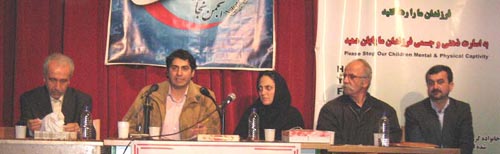
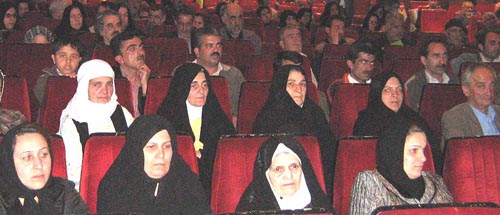
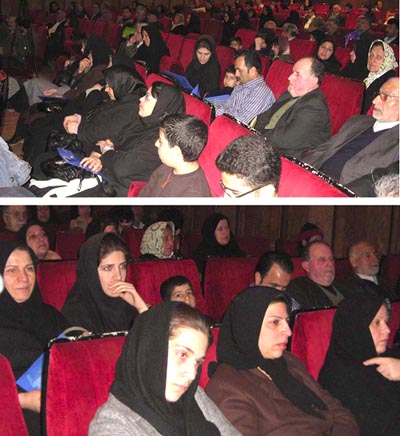
A seminar on the subject of how to release the members of the Mojahedin-e Khalq Organization (MKO) who are held both mentally and physically captive in the Ashraf Camp in Iraq was highly attended by the families in the city of Shiraz despite the cold and snowy weather. The families of the members of the MKO who anxiously desired visiting their beloved ones after so many years had gathered in this seminar organized by the Nejat Society in the city of Shiraz on 11th of January 2008 in the Red Crescent Hall of that city.

Mr. Ebrahim Khodabandeh, Mr. Kambiz Bagherzadeh, and Miss Ronak Dashti the former members of the MKO delivered speeches in this seminar. Mr. Khodabandeh while describing the common methods used by all cults to manipulate and to brainwash the followers, gave some examples on practices applied within the MKO cult and referred to the subjects such as the family relationship, the emotional feelings, expressing opinions, make of choice, thinking independently, showing excitements, and presentation of caring, to be highly restricted and are considered as unforgivable sins. He emphasized that according to the MKO’s ideology all fondness and emotions must be entirely directed towards the leadership. He explained that inside the MKO everyone is held responsible against the leadership while he is considered as impeccable.
Mr. Khodabandeh mentioned the efforts made by the families within the framework of the Nejat Society to organize meetings with their beloved ones held in Iraq. He clarified that restoring the family emotions could lead to the savior of the member from the psychological boundaries the person is held in.
Mr. Bagherzadeh referred to all mistreatments and confinements applied against discontented members inside the MKO and underlined that although his brother was in the same base with him but he did not see his brother for more than one and a half years.
Miss Dashti another former member of the MKO who had some bitter experiences while residing in the Ashraf Camp in Iraq explained how his brother and her were deceived by the MKO to be taken to Iraq and to the Ashraf Camp and how she was finally released thanks to the efforts made by her mother who traveled to Iraq and demanded the visit with his daughter. She described how the families could play a major roll to try to free their beloved ones from captivity.
She described that giving high commanding positions to the women is a sham gesture taken by the MKO while the truth is that women are expected to work even harder than men and their emotions are also systematically suppressed more. She clarified that members are expected to dislike whoever they adored before particularly the members of their family. She also explained that all discontented members are labeled as being metal cases. Miss Dashti also referred to the high level of dissatisfaction amongst the forces inside the Ashraf Camp who find no way out.
The hatred amongst the families in the hall of seminar was to the extent that they started shouting and cursing Mas’ud Rajavi the leader of the MKO who has caused all these miseries for the families and their beloved ones.
In the end the families wrote separate letters of request to the International Committee of the Red Cross (ICRC) and the Iraqi government demanding the arrangement of a visit with their beloved ones by their own expenses without the presence of any third party as soon as possible.
The core slogan of the seminar was”the release of our children from the boundaries of the MKO terrorist cult and arranging a visit between the families and their beloved ones”
Nejat Society,11th of January 2008
To whom it may concern, Since August 2007, I have received telephone calls and emails from individuals, who are among a group of 200 Iranians being detained for the past five years in an American military camp in Iraq. The following summary is based solely on these telephone calls and e-mails. These emails are available upon request. Year 2002 The United States State Department interviewed all the members of the organization of the People Mojahedin of Iran, PMOI (Mojahedin-e Khalgh Organization). A group of 200 individuals, who had been in disagreement with Mojahedin for some times, informed the US officials that they wanted to leave the PMOI. This group was later taken to a camp called Temporary International Presence Facility (TIPE) in Khalis city in Diyala province The United Nations High Commission for Refugees (UNHCR) assigned refugee status to these individuals, promising that all the necessary arrangements would be made in near future and they would be sent to another country. These 200 individuals were detained against their will in TIPF. Lt. Col. Amy F. Turluck was the American director of the camp. Year 2006 150 individuals started a peaceful vigil. Their main request was to leave the camp. This vigil was suppressed by 150 anti-insurgent US guards who used pepper spray and guns. The guards arrested all the representative of the group, in addition to some individuals. The arrested individuals were then sent to solitary confinement for several months and were later transported to a smaller camp. Year 2007 July The Iraqi government issued Laissez Passers for these refugees and informed them that with these Laissez Passers they could leave the TIPF camp and Iraq. The Laissez passers and the money of theses refugees were confiscated by Lt. Col Turluck and they were told that they could not leave the camp or Iraq. On many occasions the refugees asked Colonel Turluck to return their Laissez Passers and money so that they could leave the camp, but to no avail. The American military authorities also told them that the Iraqi government would not allow them to leave the country and that they would need visas for leaving Iraq. The relatives of these refugees went to the Iraqi Embassy in Tehran to inquire about the situation. They were told that the Iraqi government had already issued the Laissez Passers and that these refugees were free to leave the camp, acquire visa from a country and leave Iraq. These relatives also approached the Turkish Embassy in Tehran to find out if the Turkish government would issue visas to these refugees. They were informed that Turkey via its embassy in Iraq was prepared to grant visas to these 200 refugees if they applied in person. The refugees, however, were constantly told by the camp authorities that they have only the following two options. 1. To rejoin the PMOI (even though the PMOI is on the black list, i.e. it is considered to be a terrorist organization by both the United States and the European Union). 2. To go back to Iran (even though they could be executed by the Iranian regime). September · Twenty individuals started another peaceful vigil. This time Col. Turluck threatened to suppress the vigil once again if they did not stop it. Five of these individuals went on a hunger strike and as a result were placed in solitary confinement. They could not have any visitors and could not call their families. October · On October 8th, one individual was taken to the camp hospital and nobody was allowed to visit him. By October 12, after being on hunger strike for 29 days, he was told by the American authorities that if he would not break his hunger strike they would take him to Booka prison, cut his stomach open and would then force feed him. This individual was later transported to Krapeh hospital prison, which is usually used for members of Alghaedeh. · On October 8th, the other four individuals had been on hunger strike for 15 days, 12 days, 11 days and 9 days. One individual who was kept in the hospital of the camp had internal bleeding and had vomited blood. Col. Turluck visited these individual in their cells and told them that they should write their will and indicate where they wanted to be buried. These individuals were constantly being harassed by the American authorities to end their strike. · On October 13 Colonel Turluck announced that the Laissez Passers would be returned to all the refugees. While visiting the refugees on hunger strike in the solitary confinement, she promised them that if they broke their strike, their Laissez Passers would be retuned and they would be taken to Mousel. The refugees on hunger strike ended their strike and returned to the camp. · Colonel Turluck had promised that the voluntary project of re-location to Musel would be finalized by the end of October. · On October 22nd, these refugees were informed that due to the security reasons, they would not be allowed to use the phone. · By the end of October it became evident that the project of re-location to Musel was not going to materialize. November · By early November as the lies about re-location to Musel became evident, those who had broken their hunger strike started another hunger strike. · By November 20th, one of these individuals had been on hunger strike for 9 days. · On November 18 th , sometimes during the night, five of these individuals, who were on hunger strike, were taken out of the camp and were left on a nearby road. · Before leaving the camp, the camp authorities videotaped these individuals. In these videotapes they were asked to state that they were leaving the camp on their own free will. · Few days later five more individuals were taken out of the camp at night and were abandoned on the nearby road. · By now 20 individuals have been taken out of the camp in the dark of the night and have been dropped off somewhere close to the camp. · These abandoned individuals are in danger any time they come across an American checkpoint, the head hunters of the Iranian regime and the dangerous gangs and individuals in Iraq. · By November, the previous director of the camp, Col. Turluck, was replaced by Officer Harmon. December · On December 17 two individuals who had left the camp and were residing in a hotel, left their friend in the hotel for an outing. They have not been heard from since then and no one has any information of their whereabouts. · On December 18 six more individuals were taken out of the camp and were left on a nearby road. No one has heard from these individuals since then. Conditions at the camp: · No access to outside/denied to see a lawyer · No access to the internet · The limited letters, e-mails and phone calls are censored and monitored. If the refugees talk about their condition in the camp on the phone, the American authorities threaten them with losing the right to use the phone. Some emails were never sent and the complaints remain unanswered. · Limited medical services in the camp · No medical services outside the camp · A prisoner, who is going blind and needs immediate surgery, is not allowed to go to Baghdad for the operation. · Water shortage- no water on some days and on other days 3-4 hours at most, for months at a time · The refugees live in tents.
.Constant mal-treatment and torture – In one occasion, these refugees denied entry to their tents to an American soldier who refused to remove his boots. (They pray in the tents and therefore everybody must remove their shoes prior to entering the tent). The angry soldier beat them up and broke the shoulder of one of them. Needles to say, the broken shoulder was never treated medically. · There have been fifty incidents such as this resulting in the batter and injury of these refugees. · When these refugees go on hunger strike, they are immediately moved into solitary confinement and they lose all their privileges such as visits by their friends or contacting their families by phone. · There is evidence of cooperation between American authorities and PMOI. Once in a while some members of the PMOI are brought into the camp. They mingle with the refugees and try to get as much information as possible. They then pass the information to the American authorities and leave the camp. Two of these PMOI spies are presently living in Germany. Mohammad Hassibi Tel: 512-349-7899 hassibi@chebayadkard.com
Mohammad Hassibi, December 20, 2007 http://www.chebayadkard.org/chebayadkard/sokhan/20071217/maghaleh306.pdf
According to Nejat Society correspondent, four other people defected MKO and repatriated. The four defectors, who were MKO members for a long time, spent a few weeks in TIPF Camp and finally could return Iran with Red Cross cooperation.
The defectors’ names:
Ahmad Rostamian
GholamReza Shirdom
Jamil Abdollahzade
AliReza Naghashzade
The above-named people will consequently state their comments on the disruptive atmosphere in Camp Ashraf.
Nejat Society
Tehran-July 30th 2007
SCOTT SIMON, host:
This is WEEKEND EDITION from NPR News. I’m Scott Simon.
Coming up, climate change comes to the Sky Islands. But first, the next round of talks in Baghdad between the U.S. and Iran is expected to take place before the end of July. One issue of particular interest to Iran is the presence in Iraq of more than 3,000 militants of the Mujahideen cult of the People’s Mujahideen.
Until the U.S. invasion of Iraq, this group carried out cross-border attacks against the government in Tehran aided by Saddam Hussein. Since the invasion, the MEK, as it’s known, has been confined to a base in Iraq under the control of U.S. forces. In Tehran, an effort has emerged to persuade MEK members to return home.
NPR’s Mike Shuster has more from Tehran.
MIKE SHUSTER: Arash Semitapur(ph) is a fresh-faced young man with unkempt black hair. Eager to police, he doesn’t look like a terrorist or an assassin. Only his false right hand suggests something may have been amiss in his past.
Semitapur is one of the leaders of the Najat Society here in Iran. Najat means salvation and its goal is to bring the Iranians of the MEK home. Semitapur joined the MEK in the 1990s, recruited as a naive college student in Virginia. Eventually, he made his way to a training base in Iraq. And in 2001, he was sent over the border with automatic rifles, ammunition, grenades and two cyanide pills in his mouth.
Mr. ARASH SEMITAPUR (Leader, Najat Society, Iran; MEK Member): That was like the street order we had that when you entered in Iranian territory, you have to have the cyanide pills in your mouth. We were convinced that if we get arrested here by the securities, we will be tortured to death. And we were told that the easiest way is just to have the cyanide pills and chew them if you are getting arrested. Then you will be a hero. You will be a martyr.
SHUSTER: Semitapur’s mission was to assassinate an Iranian general in Tehran, but everything went wrong and he was arrested. Even the cyanide pills did not kill him.
Mr. SEMITAPUR: Of course, my handgun was jammed and it didn’t work. And I was taken to the police station. There they didn’t search me. I had a hand grenade, like a small grenade in my pocket. Again, with the street orders of the organization, I tried to commit a suicide again so I exploded the grenade in my hand, but fortunately didn’t kill me.
SHUSTER: Because Semitapur didn’t kill anyone he served just four years in prison. When he got out, he joined the Najat Society to try to convince others of what he calls the MEK cult to return to Iran. The Najat Society also helps the families of MEK members to visit Iraq and try to persuade their loved ones to come home.
After the U.S. invasion, Masumai Rasahid(ph) tried to bring her son Sayed(ph) home. So far, she has not been successful.
Ms. MASUMAI RASAHID (Resident, Iran): (Through Translator) They’re completely brainwashed and even they don’t trust us. When my son accuses me as his mother that you got money from the Islamic government to come here, to persuade me and convince me to go back. And she says I’m your mother, how can I cheat you? And this is the way they taught you and they do not trust and believe nobody.
SHUSTER: The MEK is confined to Camp Ashraf, about a hundred miles north of Baghdad. When U.S. forces seized the camp, they disarmed the MEK and took possession of hundreds of tanks, artillery pieces and other military hardware. The State Department considers the MEK a terrorist group.
The U.S. has permitted family members to visit Camp Ashraf. Masumai Rasahid has been there to see her son four times.
Ms. RASAHID: (Through Translator) When he met me, he had a very bad reaction in front of everybody. He screamed at me and yelled at me. His friends told me that he was forced to do that. The last time that we met, it was much better. They let us stay for the night in the camp with him, and he was a little better than the previous time.
SHUSTER: The last time Masumai Rasahid saw her son was in 2004. Since then, it’s been far too dangerous to make the trip. The U.S. has been unable to decide just what to do with the MEK. The Iranian government has reportedly offered to exchange some al-Qaida members it says it is holding for the leaders of the MEK, permitting the rank and file to return to Iran to be reunited with their families.
Some U.S. officials have suggested sending the MEK to a third country. Others have argued that the U.S. should continue to hold the MEK as a bargaining chip and even use them for covert operations against Iran in retaliation for attacks that the U.S. says Iran is behind in Iraq.
Arash Semitapur(ph) urges Washington not to be tempted to use the group against the Iranian government.
Mr. SEMITAPUR: Maybe there are some people in U.S. government who would think that they are useful for them, but I don’t think that they are so naive that they can trust these guys.
SHUSTER: Semitapur argues for a more humanitarian solution to the problem – helping the families to spend more time in Baghdad or in bordertowns with MEK members. That way, he says, many will decide to come home. So far, according to the Najat Society, since the U.S. invasion of Iraq, about 300 MEK members have returned to Iran and are now living with their families.
Mike Shuster, NPR News, Tehran.
National Public Radio, Weekend Edition – Saturday, July 21, 2007
listen to the program:
http://www.npr.org/templates/story/story.php?storyId=12144968