Iran poses no threat to the United States: Ex-US Air Force Lt. Col.
Karen Kwiatkowski is a retired U.S. Air Force lieutenant colonel who spent some 4 years working at the Pentagon. Since her retirement, she has become an outspoken critic on the U.S. foreign policy. Holding a PhD degree in World Politics from the Catholic University of America, Kwiatkowski is a prolific writer at the LewRockWell.com and the American Conservative.
Colonel Kwiatkowski is primarily noted for openly and publicly denouncing what she sees as a corrupting political influence on the course of military intelligence leading up to the invasion of Iraq in 2003. Her most comprehensive writings on this subject appeared in a series of articles in The American Conservative magazine in December 2003 and in a March 2004 article on Salon.com.
Dr. Kwiatkowski joined Habilian Association in an exclusive interview, and shared her ideas on a number of issues. What follows is excerpt of the interview selected by Nejat Society:
[…]
Habilian: The US considers itself to be at the forefront of the war on terrorism and censures other countries for their alleged sponsorship of terrorist groups. But, it took Mujahedin-e Khalq off its list of terrorist organizations, and there are credible evidence showing that Washington has been supporting MEK in its terror ops, both militarily and financially. Isn’t it a hypocritical approach in dealing with the issue of terrorism?
Kwiatkowski: I am personally disgusted by the many years of political support for the MEK by neoconservative elements among the US political class. It is beyond hypocritical, and the history and shifts regarding the MEK– in many ways a western proxy organization from the beginning — is simply one more means of war and provocation against another country, that like drone warfare, is a mechanism that provides the United State government with deniability, ambiguity, a lack of accountability, and ultimately hurts US credibility and interests.
Habilian: Would you please touch on Canada’s dropping MEK from its official list of terrorists?
Kwiatkowski: I don’t follow Canadian politics, but I’m sure Canadian politicians are as venal as the ones we have in the United States. There is a strong and growing tendency for both Canada and Mexican government to fall in line with Washington — I do celebrate when I see Mexican and Canadian leaders expressing their national sovereignty by distancing themselves from US decisions and actions. I don’t see this often, though.
Habilian: And finally, speaking at the French National Assembly on December 5, 2012, MEK leader Maryam Rajavi asked France and the western countries to recognize them as an opposition group as they recognized the Syrian coalition against Assad. What’s your take on this issue? Do you think this group can bring democracy?
Kwiatkowski: I’m not overly familiar with Maryam Rajavi — however, I remember reading about her and the MEK in my days at the Pentagon. My sense was, and remains, that this group is dependent on outside money, serves interests that may have nothing to do with their published propaganda. I left the Pentagon in 2003, nearly a decade ago. Maryam has led the MEK since 1993, and it appears she inherited the position from her husband. That doesn’t sound very democratic, and I suspect that Rajavi knows little about, and cares little about, democracy. The very fact that her organization is favored by a powerful sector in Washington should undermine it as some sort of people’s movement for Iranians dissatisfied with the mullahs and/or Ahmedinejad. Beyond that, Iran already has democracy. Ahmedinejad is an elected leader, much as Obama is. I frankly don’t see democracy as a solution to much of anything. Small, limited and lawful governments — whether they be led by kings or parliaments — deliver far more peace and prosperity than do large, unlimited and unlawful governments, even if those large, unlimited and unlawful governments were “democratically” elected.
With regard to Syria — the war supporters in Washington DC and allies in Europe who are involved in Syrian national politics have been working overtime, without the benefit of public scrutiny, comment or awareness. To wish to be "recognized" by such corrupt governments is revealing, and little good for the people of Syria or the people of Iran respectively, will come of it.
The Third View on Mujahedin Khalq
Press Statement
Jen Psaki
Spokesperson, Office of the Spokesperson
Washington, DC
June 3, 2013
————————————-
On May 31, thirty residents of Camp Hurriya departed Iraq for permanent relocation in Albania. The United States commends the Government of Albania’s generous offer to accept up to 210 former Camp Hurriya residents. This marks the second in a series of planned moves to relocate Camp Hurriya residents to Albania. Albania continues to be a strong partner of the United States in contributing to peace and stability in Iraq.
The United States also reiterates its call to the Mujahedin-e Khalq (MEK) to cooperate fully with the United Nations High Commission for Refugees (UNHCR) process to relocate Camp Hurriya residents outside of Iraq as expeditiously as possible. The permanent relocation of residents is essential to ensure the safety and security of residents, especially following the February 9 terrorist attack that took eight lives.
The MEK leadership has the responsibility to facilitate the full and immediate participation of residents in interview and counseling processes required by the UNHCR. Residents of Camp Hurriya are entitled to unimpeded and private access to UN human rights monitors. The MEK leadership has an obligation to ensure residents are able to engage openly and freely with UN human rights monitors, UNHCR personnel and UNAMI representatives.
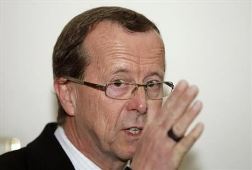
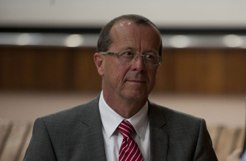
The United States reaffirms its strong support for the work of UNHCR, the United Nations Assistance Mission for Iraq (UNAMI), and especially the tireless work of UNAMI Special Representative of the Secretary General Martin Kobler, to assist and resettle Camp Hurriya residents.
The safety and security of Camp Hurriya residents remain an utmost concern. Security requirements to protect residents must be fulfilled in accordance with the December 25, 2011 Memorandum of Understanding between the United Nations and the Government of Iraq.
Serious concerns over heightened level of violence in Iraq – UN Envoy tells European Parliament
Baghdad, 30 May 2013 – On 29 May, the Special Representative of the United Nations Secretary-General for
Iraq (SRSG), Mr. Martin Kobler, briefed the Foreign Affairs Committee of the European Parliament (AFET) on the current developments in Iraq.
In his exchange of views with the parliamentarians, Mr. Kobler expressed serious concerns over the heightened level of violence in Iraq and the danger that the country falls back into sectarian strife, if decisive action is not taken by its political leaders. “The country stands at a crossroads,” the UN Envoy said, calling for a stronger EU role in dealing with the developments unfolding in the country, and for increased interaction with the Iraqi Council of Representatives.
Mr. Kobler also briefed AFET on UNAMI’s efforts to resettle the former residents of Camp Ashraf to third countries. He deplored the lack of cooperation of the residents and of their leadership with the UNHCR and UN monitors, and urged them to accept concrete resettlement offers. Stressing that “resettlement to safe countries is the only durable option”, he called again on European Union member states to accept former Camp Ashraf residents into their countries.
unami.unmissions.org
Iran is organizing the first national congress of 17,000 Iranian terror victims in the capital, Tehran.
The Congress is set for August 30 which is observed as a day for fighting terrorism in Iran and is also the anniversary of the martyrdom of former Iranian president Mohammad Ali Rajaei and his Prime Minister Mohammad Javad Bahonar, who were lost their lives after an explosion ripped through premier Bahonar’s office in Tehran.
Bringing together experts from across the country and the world, the one-day conference intends to provide a platform for exchanging ideas that will help examine different aspects of terrorism, terror groups and a bunch of related issues, honor the victims of terror in Iran and pay tribute to the families left behind, organizers told Fars News Agency.
In 2012, Association for Defending Victims of Terrorism (ADVT) in Middle East said that the terrorist Mujahedin-e Khalq Organization (MKO) ‘has a long record in terrorist activities, including the assassination of 12,000 Iranian citizens, seven American citizens, and tens of thousands of Iraqi nationals’.
The MKO fled to Iraq in 1986, where it enjoyed the support of Iraq’s executed dictator Saddam Hussein, and set up its camp near the Iranian border. The group is known to have cooperated with Saddam in suppressing the 1991 uprisings in southern Iraq and carrying out the massacre of Iraqi Kurds.
Iran Daily
– – – – – – – – – – – – – – – –
Habilian Association to hold 1st congress on terrorism, terror victims
Habilian Association, human rights NGO representing the families of Iranian terror victims, in collaboration with various organizations is organizing the first National Congress of 17000 Iranian Terror Victims.
The Congress is set to be held on August 30, 8th of Shahrivar on the Persian calendar, which marks the day of Fighting Terrorism in Iran and the anniversary of the martyrdom of former Iranian president, Mohammad Ali Rajaei, and his prime minister, Mohammasd Javad Bahonar, who were killed after an explosion ripped through the Premier Bahonar’s office in Tehran.
By bringing together experts across the country and all around the world, the one-day conference intends to provide a platform for exchanging ideas that will help to examine different aspects of terrorism, terror groups, and a bunch of relevant issues and to honor the victims of terror in Iran and pay tribute to the families left behind.
All the interested parties from across the world are invited to submit their papers on any of the congress topics. The top three papers and all the accepted papers will be honored.
More information on the Congress, topics, and the Call for Papers can be found at: http://www.17000.ir/en/
Mujahedin Khalq leaders are resisting the transfer of the Marxist-Islamist group’s members to other countries. But Iraq’s government tires of protecting them.
The State Department’s decade-long effort to find a new home for a controversial Iranian opposition group has
![]() |
| Members of the Iranian opposition group Mujahedin Khalq in a street in Tirana, Albania. The exiles have been moved to Albania from a camp in Iraq as part of a relocation process. (Hektor Pustina / Associated Press / May 17, 2013) |
ground to a near halt only days after the announcement that the exiles had begun moving from Iraq to permanent homes in Europe.
Fourteen members of the Mujahedin Khalq militant group, or MEK, were flown from the outskirts of Baghdad to Albania on May 15, in what was expected to be the first step in the departure of 3,100 members of the group that has long opposed the government of clerics in Tehran and is also at odds with the government of Iraq.
But a State Department official told Congress on Wednesday that the group’s leadership was not cooperating in the departures, despite the risks to the members’ lives in Iraq.
Beth Jones, acting assistant secretary of state for Near East Affairs, told a House foreign Affairs subcommittee Wednesday that although U.S. officials have worked hard to persuade the group’s leadership to cooperate in the departures, "very few have been allowed to move." She appealed for cooperation.
The Marxist-Islamist group, described by some critics as a cult, moved from Iran to Iraq in the early 1980s, and fought with Saddam Hussein against Iran’s Islamist government during the Iran-Iraq war. The current Iraqi government views the group with suspicion, and U.S. and United Nations officials have been trying to resettle them abroad since 2003.
But though the group’s leadership signed an agreement with the U.N. and Iraq last year to abandon their longtime base, Camp Ashraf, in Diyali province, the leadership seems reluctant to move the group’s members from Iraq. They apparently prefer to remain and continue their effort to overthrow the Iranian government, diplomats say.
The group’s leadership, based in Paris, is apparently refusing to allow their tightly controlled subordinates to cooperate with the U.N. screening required before resettlement can be arranged.
After refusing for years to leave Camp Ashraf, most of the residents began leaving in September for a temporary base. About 100 members, determined not to give up their fight and convinced that world powers have betrayed them, remain.
American and U.N. officials believe the group needs to leave Iraq as soon as possible because of hostility from several Iraqi groups and the limited patience of the Iraqi government, which is protecting it.
In February, eight group members were killed in a rocket attack on the temporary base, which is called Camp Hurriyah. There has been speculation that the attackers were Shiite militants with Iranian backing.
Mujahedin Khalq leaders say they don’t want the group resettled in small numbers in many countries, but instead moved as a single group to new homes in the United States or Europe.
Only about 200 people were slated to go to Albania. U.S. and U.N. officials say that because of lingering concern about the tendencies of a militant group that was on the U.S. list of terrorist groups from 1997 to 2012, no country will take all of them.
The group, which also calls itself the National Council of Resistance of Iran, didn’t respond to messages left with its office in Washington.
By Paul Richter, Los Angeles Times
May 24, 2013,
paul.richter@latimes.com
http://www.latimes.com/news/nationworld/world/middleeast/la-fg-iran-militants-20130525,0,3610225.story
Maliki, Kobler discuss relieving Iraq from UN sanctions
Baghdad (IraqiNews.com) The Iraqi Prime Minister, Nouri al-Maliki discussed with the UN Secretary General’s Special Representative for Iraq, Martin Kobler, the efforts to relieve Iraq from the UN Charter’s seventh Chapter.
A statement by the Premier’s office received by IraqiNews.com on Sunday reported that “Maliki discussed during welcoming Kobler, the different internal issues along with discussing the files following by the UN Representative in Iraq, most notably the efforts to exempt Iraq from the UN Charter’s 7th Chapter.”
“The two sides discussed resolving the problem of the Mojahedin khalq (MKO, MEK, Saddam’s Private army) organization’s existence in Iraq,” the statement added.
Iraqi News,
The first exiles from an Iranian opposition group have moved to Albania from a camp near Baghdad as part of a relocation process, the United Nations said Thursday, a step toward defusing an explosive dispute left over from the Iran-Iraq war of the
1980s and the U.S.-led ousting of the regime of Saddam Hussein.
In a statement, the U.N. envoy in Iraq, Martin Kobler, said 14 members of the Mujahedeen-e-Khalq arrived in Albania late Wednesday, the first of 210 set to travel to new homes in Albania.
The MEK, or the People’s Mujahedeen of Iran, opposes Tehran’s clerical regime. It carried out assassinations and bombings in Iran until renouncing violence in 2001. Several thousand of its members were given sanctuary in Iraq by dictator Saddam Hussein, who was deposed in 2003.
Since then, the MEK refugees have been a stubborn, anachronistic thorn in the side of Iraq and the United States, even after the U.S. turned over responsibility for Camp Ashraf, housing the remnants of the militant group, to the Iraqi government in 2009.
The MEK fought alongside Saddam’s forces in the 1980s Iraq-Iran war, and its members fear persecution and death if they return to Iran.
The Shiite-led government in Baghdad that replaced Saddam’s regime is bolstering its ties with Iran. It considers the MEK a terrorist group and wants its members out of the country.
The MEK exiles have come under fire from armed Iraqis who demand their expulsion. In one incident, seven people were killed in a rocket attack on the MEK camp in February. Later, the head of a Shiite militant group threatened to carry out more attacks on the camp if the MEK members refused to leave.
Last year about 3,000 MEK exiles were moved from their decades-long enclave in northeastern Iraq to a refugee camp outside Baghdad at a former U.S. military base, part of an effort to ensure their peaceful departure from Iraq. However, while Albania is taking in a small group, it remains unclear where the rest of the MEK members might go, leaving a clear potential for further violence.
The U.S. government praised Albania for accepting to host the MEK members, urging the Iranian opposition group to cooperate fully with the relocation process.
"The relocation of Camp Hurriya residents outside of Iraq is vital to their safety and security. It is the responsibility of the MEK leadership to facilitate for the residents of Camp Hurriya free and unfettered access to U.N. human rights monitors," said a statement by the U.S. State Department.
Albanian Interior Minister Flamur Noka pledged to quickly complete arrangements to resettle the 14. He told The Associated Press that they will get the refugee status immediately and then receive residence permits and proper documentation.
"They will be treated like every other Albanian citizen," he said, though "for the moment they will have the status of the refugee," meaning they will not be free to travel outside Tirana, the capital.
Then-U.S. Secretary of State Hillary Clinton negotiated the agreement with Albania and the U.N. to take in the 210 MEK exiles late last year.
The U.S. took the MEK off its list of terror groups in September 2012, raising a stiff protest from Iran, charging that the U.S. move was "a violation of America’s legal and international obligations" that could threaten U.S. interests.
"There is much evidence of the group being involved in terrorist activities. Delisting it shows America’s double standard policy on terrorism," Iran state TV said then. The U.S. distinguishes between "good and bad terrorists" and the MEK are now "good terrorists because the U.S. is using them against Iran," the TV report said.
The MEK spent large sums of money in years of lobbying for removal from the U.S. terror list, holding rallies in European capitals and elsewhere.
On Thursday, Kobler described the transfer of the first group as "an encouraging first step in the relocation of the group of 210 residents the Albanian government has agreed to receive."
Ortenc Balla, a U.N. official in Tirana, said the 14 were in an asylum-seekers center. "The Albanian government has undertaken all the responsibilities, including their security," he told the AP.
Phone calls to the Iraqi government and MEK officials went answered.
___
Associated Press writers Llazar Semini in Tirana, Albania and Bradley Klapper in Washington contributed.
Congress Debates War, Sanctions, Diplomacy and Mojahedin Khalq with Top Obama Officials
MEK
Rep. Dana Rohrabacher (R-CA) conveyed his support for the Mujahedin-e Khalq (MEK) a group, which is widely opposed by Iranians and viewed by human rights organizations as a cult. The group has been actively lobbying the House to pressure the administration to move MEK members back to the group’s paramilitary base at Camp Ashraf, Iraq. Late last year, as part of what was widely viewed as a deal with the State Department to get the group removed from the U.S. list of foreign terrorist organizations, the MEK agreed to leave the base and relocate to Camp Liberty, also in Iraq, where they would then work with the UN to repatriate members in third countries. In a heated exchange with Rep. Rohrabacher, who called for the U.S. to support the MEK, Amb. Sherman expressed her concern that the people at Camp Liberty were being exploited by the MEK’s leadership. “There are opportunities for the people of Camp Liberty to resettle. There have been offers made by countries like Albania to take many of them,” she said. “And to be very frank Congressman, the leadership of the MEK, both in Camp Liberty and in Paris, have kept the people of Camp Liberty from knowing what their options are. And I so care about their lives, and the threat to their lives in the camp, that I hope the leadership of the MEK will allow them to know their options.”
This follows on the heels of testimony from Secretary of State John Kerry in April indicating that MEK members in Camp Liberty had ceased participating in interviews with officials to determine where best to relocate them. Human Rights Watch and other organizations have documented human rights abuses inflicted by MEK leadership against members who questioned their authority or sought to leave the camps
(…)
14 Camp Hurriya Residents Depart for Albania
Press Statement
Jen Psaki
Spokesperson, Office of the Spokesperson
Washington, DC
May 16, 2013
On May 15 the first 14 Camp Hurriya residents departed Iraq for permanent relocation in Albania.
The United States expresses its appreciation to the Government of Albania for its generous humanitarian gesture to accept 210 former Camp Hurriya residents. Albania has been a strong partner of the United States in bringing peace and stability to Iraq.
The United States urges the Mujahedin-e Khalq leadership to cooperate fully with the UNHCR relocation process and to facilitate access by United Nations monitors to Camp Hurriya residents. The relocation of Camp Hurriya residents outside of Iraq is vital to their safety and security. It is the responsibility of the MEK leadership to facilitate for the residents of Camp Hurriya free and unfettered access to UN human rights monitors.
The United States reiterates its strong support for the efforts of UNHCR, the United Nations Assistance Mission for Iraq (UNAMI), and the Special Representative of the Secretary General Martin Kobler. We continue to emphasize that the camp and its residents must be secured in accordance with the December 25, 2011 Memorandum of Understanding between the United Nations and the Government of Iraq, and urge all involved parties to work together effectively on this.
PRN: 2013/0573
The top United Nations official in Iraq today[16 May 2013 ] called the relocation of 14 Iranians to Albania from an exile camp near Baghdad, an “encouraging first step.”
“The residents’ arrival in Albania late last night is an encouraging first step in the relocation of the group of 210 residents the Albanian government has agreed to receive,” said the UN Special Representative for the Secretary-General and head of the UN Assistance Mission in Iraq (UNAMI), Martin Kobler.
More than 3,000 residents, most of them members of a group known as the People’s Mojahedeen of Iran, are temporarily housed in a transit facility called Camp Liberty – also know as Camp Hurriya – while the Office of the UN High Commissioner for Refugees (UNHCR) carries out a process to determine their refugee status.
Mr. Kobler said that the departure of the group from Iraq is in accordance with the memorandum of understanding of 25 December 2011, which foresees the relocation of the residents to third countries. “I thank the Government of Albania and encourage other Member States to come forward and to receive residents in their countries as well.”
Following the original offer by the Albania Government to assist in the resettlement, Secretary-General Ban Ki-moon said he “unequivocally supports” Mr. Kobler’s efforts “to courageously and creatively, in exceptionally difficult circumstances, help resolve this situation.”
In addition, in his recent report about the situation in Iraq, Mr. Ban urged those who express support for the residents of Camp Hurriya and the remaining residents of another camp, New Iraq, to stop spreading insults and falsehoods about Mr. Kobler and instead help to promote a durable solution.
Following Albania’s announcement, the Government of Germany offered humanitarian admission for approximately 100 residents of the camp.