MKO former members
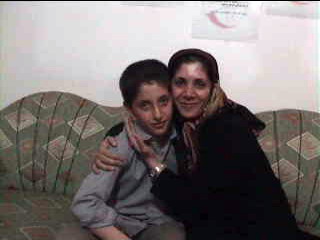
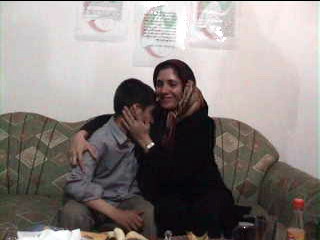
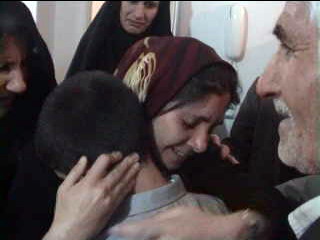
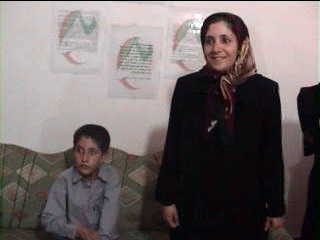
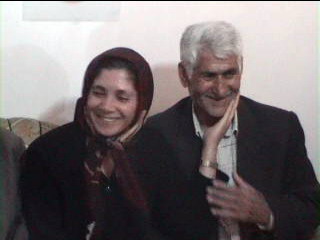
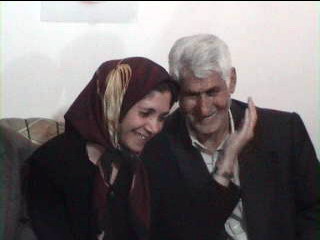
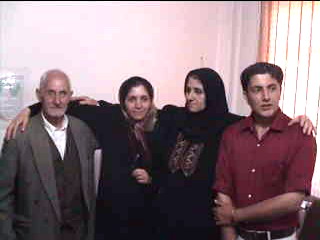
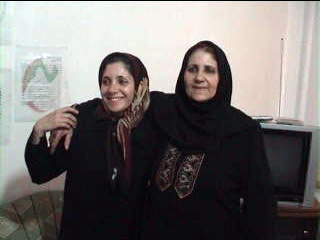
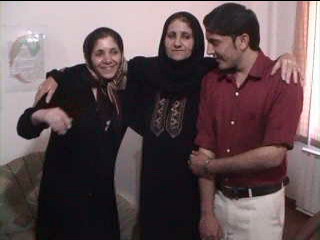
Mrs. Marzieh Qorsi returned home and after a longtime of separation from her beloved son, saw him, embraced him warmly with tearful eyes.


MKO former members
Interviewer: Good morning, its eleven o’clock, we will be live on BBC Asian network for an hour. Did you know a forty-year computer programmer has been involved with a Kalashnikov and has a six year old son?
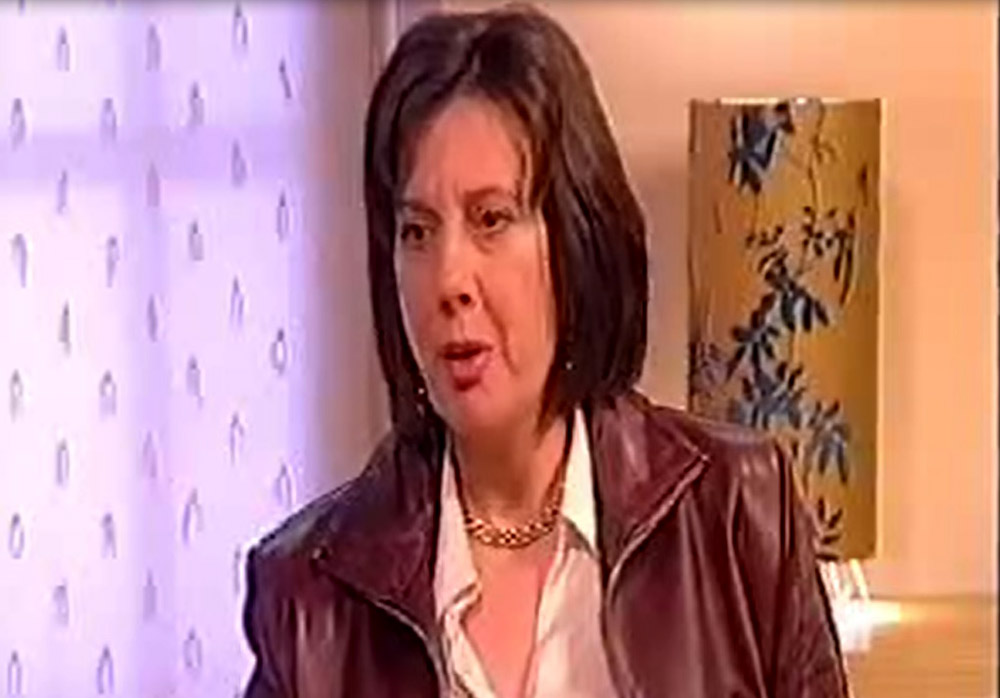
Ann Singleton has a past unlike most people working for the Iranian Mujahedin in Iraq attempting for the overthrow the Iranian government. Today I’m talking to her about her experiences and the lessons that she learned. I will ask her about the feeling of working with a terrorist organization, fighting in the desert and how did she get involved with them in the first place? She has a fascinating story. Ann Singleton, she lives in Leeds, she has got a six year old child and she is a computer programmer. What we hear, you say is that Ann has got a past unlike many others. She used to be part of the Iranian Mujahedin training in a camp in deserts of Iraq, preparing to overthrow the Iranian regime. So what happened and how did Ann get involved with a terrorist organization that was intending to invade Iran. What lessons did she learn? Now she joins me.
Good morning Ann!
Singleton: Good morning Rosina.
Interviewer: let’s start from the beginning. How did you get involved with the Mujahedin? For those who don’t know just explain who the Mujahedin are.
Singleton: Mujahedin are an Iranian opposition group. They formed in 1965 in opposition to the Shah’s regime and after the revolution in 1979, in Iran they tried to take a share of power in the country. When they confronted by the ayatollah Khomeini regime which was established at that time, they left Iran and took a base in Iraq which is where I was trained. Since that time they have been allies to Saddam Hussein’s regime in fighting against the Iranian Islamic Republic and trying to replace the Islamic Republic with a regime of their own. It is an armed guerilla outfit and always has been started as an armed group. I got involved with the group when I was at the University.
Interviewer: so what made an English lady got involved in this?
Ann: The reasons are two things: one is that the time of Iranian Revolution was a very political time in the world. Elsalvador and Chile had revolutions. There were a lot of political activities going on. The political scene in Britain was changing. It was interesting times for everyone, I think, to see how world events would turn out. It happened that I had Iranian friends at the university and I had an Iranian boy friend. He was religious and so he got involved with the Mujahedin which was an Islamic group.
Interviewer: did you convert to Islam?
Ann: I had already converted before I knew them. Yes I was not a very strongly religious person but, yes Islam makes sense to me. I converted. I was almost very interested in finding out more. I did not believe that interest was kind of hijack by the Mujahedin because they were more interested in the politics of Iran rather than increasing people’s religious belief.
Interviewer: so was there a gradual process of indoctrination going through Islam. I mean did you go to it very quickly or no was it quiet slowly?
Singleton: my story is quiet unique because in a scene I was recruited by this organization by default. I have to say that they were actually recruiting Iranian students and it just happened that their techniques also worked on me and then because they were actually targeting me, I think it took a long time to recruit me …It takes about three or four days to recruit some body and I have to note this point that this organization operated as a cult. It wasn’t just an ordinary political organization.
Interviewer: so what kind of methods did they use then?
Singleton: they start with a message. They started to say to me that there is a regime in Iran which is violating people’s basic human rights. And they are repressive and reactionary and their version of Islam is very very inhuman. They came to me with the message that our version of Islam, the Muajhedin’s Islam is progressive and liberal and freeing the people. That was the basic message.
Interviewer: and you have embraced Islam and you are coming down to that kind of thinking.
Singleton: yes. I was quiet intrigued by the events in Iran because there was a revolution enfolding before my very eyes. I know the people who were involved in that revolution with their family. It was a very exciting but also disorientating event. But what really recruited me to this organization were the people not the message. If they just left their message I would have been happy with them in small ways. But what they do, they get the people to come along and flatter you for example they sent the people that they would say to me that you understand more than ordinary people, you have a sensitivity to our issues and you are just not an ordinary person and that for you need to do more because you understand and so they would ask me to go to demonstrations down in London outside the Iranian Embassy or just holding big demonstrations and then eventually they would invite me to their safe houses in London and along side with this they did this to create an atmosphere in which you couldn’t ask questions, in which you never had enough sleep . You never had enough to eat. They kept you uncomfortable and they were bombarding you with the information. All this was disorientating and was imposed from outside and made you deliver yourself toward their demands.
Interviewer: what was the reaction of other members of the group? Were they all Iranians or were there many foreigners like you among them?
Singleton: when in the early 1980’s I got involved with this group, of course they mostly targeted Iranian students or refugees. So most of the members were Iranians but there were non-Iranians who were often the ones who had married an Iranian. These people also, like the others had given up to the organization and had left their studies, job and life and dedicated all their feelings to the organization.
Interviewer: How was your relationship with your boyfriend? His name was Ali? Wasn’t it?
Singleton: Yes. That’s right.
Interviewer: How was it? Now that you were working with the group was your relationship better and closer?
Singleton: in fact, he suffered a lot because they wanted to recruit him and he resisted.
Interviewer: that’s very interesting. You mean you joined the group but he didn’t?
Singleton: it’s exactly so and because of that we broke up. In the late 1980’s, I was so influenced by the indoctrinations of the organization that I compared everything in my life with them and then I evaluated. I have created a black and white aspect in my life. At that time I really believed that somehow they are the only possible hope for the whole world. So I said to my boyfriend that I will go to London to help them in more measures. He opposed, he said that he wanted to live his own life and didn’t want to live that way. So I left him and went to London where I served for Mujahedin full time.
Interviewer: did he ever tell you that you would be brainwashed or did you yourself ever think that you might be brainwashed?
Singleton: no. I didn’t think so and nobody didn’t either because the organization operates in a way so that you believe that anything you’re doing is done with your own will. And you are completely satisfied with what you are doing. In fact as a full time member what suffered me was lack of sleep, affection grieves and psychological manipulations, but I was satisfied and felt that I myself had chosen this life.
Interviewer: what did your friends and family think about it?
Singleton: they didn’t have an idea about the organization. Of course they saw the people I communicated with, were very kind, very sincere, very self sacrificing and very educated people. They couldn’t understand why a white British woman can actually get involved with Iran at all. They couldn’t understand the obsession that I had. My parents told me: if you want to show your concern about human rights, why don’t you help the Amnesty International for example. But I was totally taken over by the group. I was taken over to the point where I believed that my parents had no idea about anything and that I have the answer to everything.
Interviewer: Ann, you mentioned that you were putting you around their way of thinking about how the world was. What was their thinking way about how the world was?
Singleton: well, on the surface of their thinking, the Mujahedin present themselves as quiet pro-Western, pro-democratic, pro-feminist, they have presented a woman leader. They promoted women to the leadership roles but the organization which I joined was in fact their Western aspect. I mean the aspect they show to the world. But actually they have been always anti-imperialist and they basically want to set the Rajavis in power in Iran. The organization is a totalitarian organization inside itself and their absolute objective is to settle pro-democratic Islamic republic of their own but from inside the organization I don’t think anyone can believe that because they are so profoundly undemocratic, profoundly exploitative of the people
Interviewer: then you describe them as a cult and the way they operated is very much like a cult. Just describe how it was. Were you of a big family?
Singleton: absolutely yes. That’s how they would like to see themselves. A cult you can characterize it by several means. It has a self-appointed and non-accountable leader who is usually charismatic person that would be Masud Rajavi in this case, who when you listen to his speech is a very charismatic speaker, you can get quiet carried away and your emotions would be aroused. A cult forms very elitist in a totalitarian society among itself. When I was with the Mujahedin, I believed that we were above normal humanity; we were somehow the avant-garde of the civilization and evolution. The leaders used to speak of spiritual evolution that we had reached the stage now that we had reached the end of physical evolution and we believed that they were leading us to this kind of spiritual evolution. So they were separating us from normal society that included separating us from our families and friends and the outside world in general.
Interviewer: you mentioned it but I try to ask this question which is difficult for me to find out why a middle class English woman would become so heavily involved with the Mujahedin and you mentioned that they tried cutting you off from your friends and family. What was in your life at the time? Was there a hole you were trying to fill? What was there to attract you in the first place?
Singleton: I think on a personal level I found them very friendly. Yes they were extremely affectionate toward me and very inclusive.
Interviewer: hadn’t that happened to you in your life outside the university?
Singleton: for most people life is a bit of struggle. You have friends, these people judge you. Life is not straight forward. What this organization did was to present the most lovely people, the friendliest people, the most compassionate and understanding and caring people. They were almost too good to be true. They weren’t true. This was all deception. They used these deceptive methods to recruit people and maintain them in group. The way cults work, is just based on deception. They use a kind of physical techniques as well as mental techniques in order to control your environment.
Interviewer: so you got deeper and deeper and you got more involved and then in the end you went to a terrorist training camp in the Iraqi desert. What was that like?
Singleton: as briefly to explain, when I joined the Mujahedin at that time after a hunger strike which we held in 1990 as a part of the demonstration about human rights situation in Iran. Hunger and sleep deprivation are classic recruitment techniques which at first I didn’t know about it. By the day three or four of this hunger strike we were almost in state of heightened awareness, in a different state of mind to the point that I gave up everything that I had partly truly my house, my car, my friends, my family. I gave up everything in order to be a full time member, I was completely in their house, and I believe it was a voluntarily thinking, but of course I’ve been manipulated in to this state of mind and from that point I was given various tasks to perform. I was working something like 16 to 20 hours a day. I didn’t get paid, didn’t choose where to live, what to wear, what to eat, every aspect of my life was controlled by the organization and I had no concept that I was so totally under their control. I really did believe and I think every one around me believed that we were doing this after our own free will. We believed in causes so strongly that we were prepared to sacrifice everything. Now I got to the point where I was asked to undertake military training and of course this organization’s main goal was to overthrow the regime in Iran. So I had no reason to imagine that I should not do the military training. And of course I agreed and we went with a group of about 50 people to a place called Camp Ashraf in North of Bagdad and we were separated men and women and we were given a military training.
Interviewer: what did that consist of?
Singleton: well at that
time, it was basic military training which was gotten in any army, consisted of marching, learning how to dissolve, collective training, how to fire a Kalashnikov, how to load it, how to clean it. We learned how to drive heavy vehicle and that was a basic thing. What the organization was doing and we were totally unaware of, they were watching our performance, our commitment, our submission, how far we will be willing to submit to the demands and from the group that I was with, they selected about five or six women for further training and that is how these organizations work, they may train a 100, from that hundred people they will take a few of them to the further step and the further step and the further step and of course the end game is suicide machines.
Interviewer: well, we will come to that again in a moment. You eventually did succeed to get out of the organization and we will find out how. You explained that how you got involved in those camps in Iraq and how you got that stage. Just describe to me a typical day at the camp. What was it like?
Singleton: we had a military uniform. We woke up in the morning. We had breakfast, it was much disciplined. We had particular tasks besides. One day we would do marching and another day we would do the assault collective training. We had classes in which we learned about basic military activities. Through out my whole experience of being with the Mujahedin every moment of my life was programmed by them and you know now that I think about it, its hard to believe that I was so totally controlled.
Interviewer: did watching videos, not sleeping enough, not eating enough continue to control your behavior?
Singleton: inside the Mujahedin there is a constant bombardment of indoctrination that come through meetings and come through films. For example while dinnertime every time every evening they would show film. You are not allowed to see anything or hear anything or read anything that didn’t come from the inside of the Organization, a very very strict censorship in that respect and the films that were shown were films with glorified violence. A very simple example is of a film that was from the early 80’s was about a female suicide bomber inside Iran who blew up one of the ayatollahs. It was a quiet graphic film. To the extent that you could see body parts flying around after the explosion, they showed it several times. The first time I saw it, I was horrified, it was terrific, I looked away and then they showed it again and again and again. What is important here is that after several times they showed it, everyone in that room when this happened, would jump up and cheer and say:" Hurray! What a marvelous woman this was! How fantastic she was!" they praised her to the point that they believed that she did her job, she was a devoted member and maybe I should be like that, maybe I should take amount of that characteristics.
Interviewer: did you seriously investigate that you may also be one of these suicide bombers one day?
Singleton: I had no intention, killing anyone or being killed. What I didn’t understand was that it wouldn’t be in my hands. When I was in the training camp in Iraq, if the leader, Masud Rajavi, said:" we are now going to launch an attack on Iran." I would have gone. I like to believe that I wouldn’t have but deep in my heart I know that I wouldn’t have no will to resist… the indoctrination was so overwhelming and so as I said they had created an environment to the extent that I had no contact with my family if my mum sent me a letter I had to read it so that they would understand what was in it.
Interviewer: what was the punishment like if you did anything against what they wanted you to do?
Singleton: the punishment was very simple and at the same time very very strong. I mentioned peer pressure and it was one of the main stays of the cults. For example I’ve always enjoyed walking and one day I went out and I took a walk and I didn’t tell anybody that I was going when I just spent an hour outside walking for that they didn’t speak to me for days and I had no idea what I have done wrong that for days I was basically sent to coventry and that was quiet horrible punishment because this group was all I knew as a family. I trusted them, I loved them and that was my world but of course as a Western English woman they were very soft with me. Other people who were in the organization who were for example based in Iraq had much harsher punishment. When the Americans invaded Iraq in 2003 they opened up Abu Qoraib prison the Iraqi political prison, there were members of the Mujahedin in that prison, around fifty who had been there because of their dissent. Punishment could be extremely harsh. People would have been killed, people have lost their sanity in the organization. There is a catalog of very very harsh human rights abuses.
Interviewer: what was the turning point when you thought "no this is wrong, no it,s not correct, I don’t want to go on any more"?
Singleton: it wasn’t simple. I did not reject the organization as such. What happened was that the organization had called for forced marriages and that people were expected to get married to somebody and they performed it as a duty. Now in 1990 they reversed this to the point where they had forced divorces and everybody in the organization was required to divorce. If you were married you were expected to divorce your spouse. If you were not married, then you would be expected to mentally and emotionally divorce the understanding that you would ever marry and have children. And that was in order to get you to devote yourself one hundred percent to the leadership, with no distraction, no emotional ties. You are married to the Mujahedin’s leadership. You divorce your sexuality which is impossible. I have never imagined when I joined them, that I would never get married and never have children and I couldn’t submit this commandment so I struggled and struggled and I felt that I was failing and I constantly asked myself this question that this was right or wrong. It was incredible to me but I just couldn’t question the legality of their demands. And I left the Organization because I felt I had failed. And that’s what they wanted me to believe "that I was a failure." And then only when I walked out I began to think more clearly about what they asked me to do and even then it took me three years to separate myself because all the time they were putting place their recruitment techniques again, the ones that worked in the early eighties to recruit and maintain me; their friendliness, their flattery, feelings of guilt, the peer pressures , all these kind of techniques which they used to get me in ,in the first place they continued to use to get me back, now in 1996 I cut off completely from them, I couldn’t accept them anymore and it was only at that point that I started to research what had happened to me and I got a label which was " Cult" and I began to see that what MKO was doing was the same as other cults and there are other organizations that today are acting the same way. I was horrified.
Interviewer: it is fascinating to hear that this fear of not being able to have children was like a switch in your head that made you realize that you can’t continue like this. The desperation of not being able to be a mother in the future. Was it as simple as that?
Singleton: I don’t think it was as simple as that. Yes that was very illogical that why could any organization deny you from your basic human right which is to get married and to have children. On what basis they are making that demand. When I left them and I looked the universal decoration of human rights which is documented by the United Nations, I realized that I did not have one single one of those rights accorded to me as a member of that organization and that I was held in a state of modern slavery. At the time I didn’t question that they had a right to demand, that I didn’t get paid, that I had no time out of there, that I had no time out of there, that I had no family contact that I had no chance of marriage no chance of having children and that my only only purpose was to sacrifice my life for the organization.
Interviewer: how easy was it, to get back to ordinary life again after what you were going through?
Singleton: it was extremely hard, the hardest thing I’ve ever done. I had to learn humanity once again. It may seem strange but as a member of MKO you believe that you are superior to the humanity and that is what they want you to believe. That’s how they get you to perform this self-sacrificing. You accept that you are better than ordinary people because you have to come down. As a computer programmer I had to work among ordinary people who I had to contact with. So I had to learn to make contacts with people as an ordinary person.
Interviewer: how did they react? Did they view you as traitor? Did they ever call you that?
Singleton: they’re still swearing at me, and cursing and trying to discredit me in any way they can accuse me.
Interviewer: it is still difficult to do your everyday works? Are you still influenced by your previous experiences? Are you still haunted by the videos that you were forced to watch?
Singleton: it’s ten years on now since I finally left them and I have worked very very hard with my husband who is also an ex-member to come to terms before it happened to us and I think the birth of my son changed things for me when I realized that he is the future generation and I have to put this behind and put my face to the future and grow his up as a good person.
Interviewer: do you think that it’s easier to recruit somebody if they’re younger or if they’re male or female because you said earlier that some women were selected for further training?
Singleton: I think that people believe that it could never happen to them. They think that the only people who get recruited to their organization are somehow inadequate or they’re stupid or not well-educated. What I have learned is that cults can recruit just about anybody. There is qualification to that. May be it doesn’t happen to you never but younger people because they’re idealistic people they are more vulnerable. You don’t have that kind of experience but what organization like the Mujahedin will do is that they target the people who are intelligent, educated who are skilled and can bring something to the organization. Now it’s become a trend to recruit the women. They may not have generalization but now many of the organizations concluded that the women are more valuable to maintain their organization. They are more easily to manipulate. I’m sorry but as a woman I say this. Emotionally they are more prepared to be manipulated. So I think there is a greater danger to women.
Interviewer: how do you think a society can prevent the recruitment of for example young Muslims to suicide group?
Singleton: I think we have to draw distraction between radical ideas and radical actions. It’s wrong to say people: "you can’t or shouldn’t have radical ideas". Of course you can but you must not do is terrorism. Terrorism is a tool, a method of creating conflict in the society. Islam is also not exclusive to terror in essence. It is exploited by terrorist groups that terrorism is in itself a tool of waging war in society. For young people they have to make that distinction say yes I can have strong and radical believes and I have to test them out in society. Once an organization comes to you and says we have the answer to the world’s problems that should be an alarm in your mind. In history no one organization had the answer to everything. If you are approached by people who do try to separate you from society or separate you from your family they try to take you to their environment where you are not given answer, where you are not allowed to think or question what they’re telling you, you need to think that it is an ordinary organization and walk away.
Interviewer: some people would say only weak people get recruited in these organizations. What would you say to them?
Singleton: I would say No, don’t think that. When I was in the Mujahedin, the people in the organization were probably among the most educated and intelligent of their society. They had come to Britain as students mostly and they were highly educated level people. Recruitment techniques in cults will work on just about everybody. If it doesn’t work on you, you may have some sort of mental problems. In this case being stupid and mad may save you. You are recruited by people telling you great ideas. You are recruited by methods. When you are going to a meeting for example, it is a dark room with an unnatural atmosphere and chanting. So the techniques are recruiting you not the ideas. The ideas are important but what I was told in the Mujahedin were lies but the way I was recruited was their methods.
Interviewer: it was fascinating talking to you Ann. Before I let you go I have to ask you what’s your political stand for the situation between Iran and Britain at the moment? How can the British government get the sailors back? Is Iran a threat?
Singleton: I say from my own position, talk, talk and talk .Go and talk to each other please.
Interviewer: a lot of talks are going on.
Singleton: there is a danger of people standing on their high horses say they are right. In fact what is needed is more diplomacy, more contact, and more involvement between different countries.
Interviewer: Ann Singleton thank you very much for joining me this morning. It’s been a pleasure time as well as your fascinating story.
Good morning, its eleven o’clock, we will be live on BBC Asian network for an hour. Did you know a forty-year computer programmer has been involved with
a Kalashnikov and has a six year old son?
Ann Singleton has a past unlike most people working for the Iranian Mujahedin in Iraq attempting for the overthrow the Iranian government. Today I’m talking to her about her experiences and the lessons that she learned. I will ask her about the feeling of working with a terrorist organization, fighting in the desert…
well, on the surface of their thinking, the Mujahedin present themselves as quiet pro-Western, pro-democratic, pro-feminist, they have presented a woman leader. They promoted women to the leadership roles but the organization which I joined was in fact their Western aspect. I mean the aspect they show to the world. But actually they have been always anti-imperialist and they basically want to set the Rajavis in power in Iran….
Dear Mr Talebani, President of the Republic of Iraq We would like to draw your attention to the fact that after 4 years from the time of disarmament of the Rajavi cult in your country, around 3000 members of the Mojahedin Khalq Organisation (MKO) are still being kept in a camp near Khales, (Diyali Province) called ASHRAF. Many of these people, who are considered as the body of this cultish organisation, have themselves experienced the physical and mental torture imposed on the members by the leaders of the cult. Due to the cult practices, these people have been denied their basic human rights including the right to have contact with the outside world and/or their family members. As you yourself, even in the time of Saddam Hussein’s rule, used to emphasise,”The account of the leaders of the Mojahedin Khalq should be separated from the ordinary members of the cult”. We would also like to draw your attention to the fact that out of 800 people who have managed to escape the cult about 200 are still kept in the adjacent camp called TIPF. Although the disaffected members have clearly denounced violence and terrorism, their faiths still not clear. Dear Mr President, Sabz Association was established by some ex-members and ex-officials of the Mojahedin Khalq Organisation (Rajavi cult) who now reside in European countries. One of our aims is to help our friends who have been taken hostage by the Mojahedin Khalq Organisation (Rajavi Cult). Our aim is to help these people to integrate back into society and start a new normal life away from the cult and violence. Dear Sir, A family of one of these hostages has recently revealed that during his contact with the US army, who along side Bulgarian forces are protecting the existence of the Mojahedin terrorist group in Iraq (the family has been trying to contact their loved one for the past decade), unfortunately the US personnel in charge (in Ashraf camp) has asked the family to directly contact the Mojahedin safe houses in Europe and ask permission from them to visit their loved one. (The written document is available and can be produced upon request). The family have taken the matter to the American Embassy in their country of residence and have officially protested the suggestion of contacting a proscribed terrorist organisation in Europe . The American embassy has declined to answer any further questions upon receiving a copy of the document. Similar situations have been reported by other families residing in European and North American countries. We would be grateful if you would nominate someone for further investigation into this matter, in which case we would be more than happy to put the officials in contact with the families and related documents. Dear Mr President, Four years after the fall of Saddam Hussein and the establishment of the democratically elected government of , it is questionable why the demand of these families to have access to their loved ones is being ignored. You are of course aware that history will judge the willing coalition led by United State of America in a completely different way than judging your good self and your elected Iraqi government. And you are of course aware that the expectation of the people in the region from you and your government is different from their expectation from the coalition forces. You are aware that the desperate families of these captives before having any hope of help from the American army are looking for help from their Iraqi brothers. Dear Mr Talebani, We urge you to intervene to end this harsh bizarre situation according to conditions set out by the Fourth Geneva Convention (under which the US claims to be holding the captured individuals) to guarantee the expected access of the families to their loved ones without the presence of the leaders of the Mojahedin cult, outside the perimeters of Camp ASHRAF, as even in the very exceptional occasions where there has been a brief meeting between the detainees and their families, the Mojahedin leader have been present and the individuals are visibly afraid of talking openly and privately with their families.
With our warmest wishes, Iran-Sabz Association April 2007
Iran-Sabz Association e.V Postfach 680271 50705 köln phone:+49(0)1777581050
Anne Singleton interview with Lorrain Kelly on GMTV (ch.3, Britain) The interviewer: my next guest is a married mother, she comes from Leeds and she is from a white middle class British family. She probably is not somebody who in the first view is expected to have gone to a military base to receive military training that’s exactly what happened to Ann Singleton after being brainwashed by an extremist group and she joins me today.

It’s really good to see you, Ann. I can’t believe how your life has changed so much that you left the life you liked and the road you were supposed to travel and now you have again a different life. Its extraordinary, isn’t it? How did you get involved with the group at the first place?
The interviewer: my next guest is a married mother, she comes from Leeds and she is from a white middle class British family. She probably is not somebody who in the first view is expected to have gone to a military base to receive military training that’s exactly what happened to Ann Singleton after being brainwashed by an extremist group and she joins me today. It’s really good to see you, Ann. I can’t believe how your life has changed so much that you left the life you liked and the road you were supposed to travel and now you have again a different life. Its extraordinary, isn’t it? How did you get involved with the group at the first place?
Singleton: in the late 1970’s I went to a college in Manchester University to study English. I had an Iranian boy friend. It was just after the revolution. There were a lot of activities going on. In fact, 1979 was completely a political year and Margaret Tacher has just been elected. So I joined the students’ union in the university and there were groups of students from every corner of the world almost talking politics. But the only group that really seemed to be active, actually doing things like calling for demonstrations and meetings were the Mujahedin. I guess because I had already an introduction through my boy friend, I joined them.
Interviewer: And thus it was the beginning but they were apparently a sinister group, almost it was a cult. Wasn’t it? They did brainwash you? Didn’t they?
Singleton: It was really a cult. Something I didn’t find out until I left the group.
Interviewer: Right. You do know in such groups the process happens so gradually and slowly. They are very clever. They became manipulative people.
Singleton: exactly, very manipulative. The individuals were completely unaware of what the cult did with him or her. At first you think they are very sincere and self scarifying people but actually they model a kind of special behavior to you which you get drawn into that kind of behavior that you start to mirror and take it on yourself.
Interviewer: you told me before that you became active here and showed some videos to me, by the way you entered the group but according to what you said you went abroad for their work? How did you do that?
Singleton: they took me to a stage that I voluntarily, with pure eagerness prepared myself to go to their military training camps in Iraq.
Interviewer: what was their training program? I mean what did they teach you?
Singleton (while her photo with military uniform is shown): in fact we were about 50 people went to Iraq. Men and women were separated. We went to a place where was clearly obvious that was an Iraqi military base. They started to train us with basic, normal military training including collective system, individual attack and defense, driving trucks and getting familiar with Kalashnikov.
Interviewer: did they tell you for what purpose or objective all these trainings were? You told that they showed videos on people who were receiving military training in Iraq, however what was their purpose, had they ever declared this purpose?
Singleton: it’s now unbelievable even for myself. By the way it was clear to me that the final stage is a military invasion to Iran. This was something that was determined. At that time I was so inspired by their inspirations that I was completely delivered myself to them and followed them, I was ready to fight for them.
Interviewer: how did you leave the group? Because many people can’t do this.
Singleton: it was extremely difficult. It was the most difficult work I have ever done. In 1993, I escaped from their safe house in London because I couldn’t respond their illogic demands any more.
They told that a member of the group should never marry and they forced the married members to divorce their spouses. At that time I was single and had no kids but I thought that I couldn’t accept this idea. I left them in 1993 but it lasted three more years until I could cut all my psychological and affectional relations with them and they always tried to get me back. But even when I had no contact with, it lasted three or four years with research I did on cults and getting familiar with mind control methods and manipulative work on individualists I found out that I was quiet under their control.
Interviewer: it’s very curious and extraordinary. The problem is that you were a normal, educated person, you might have been a little naive but if they could have such a control over you, I suppose we have to be concerned about everyone in the world, who may be even more vulnerable than you. It’s so horrible, isn’t it?
Singleton: yes, absolutely it is. I hope that my experience works as a warning for any other person. Every body, in a point of time during the life may be vulnerable from an aspect. In case of rights, for example about business there are rules that support the customer against the deceiving salesperson, but there is no support for those who are deceived by people like Mujahedin and are recruited by a destructive cult.
Interviewer: yes that’s right and even some people substantially fear doing anything and getting involved in quarrel. They are afraid of some issues for example being accused to supporting racism. By the way, it should be considered that such people do anything to achieve their goal. Now that you have a little boy, isn’t there any danger from their part because you talk against them? since you got married and rebuilt your life. Don’t you fear to talk about them so openly and prevent people from joining them?
Singleton: I personally don’t feel dangerous from MKO but they have tried a lot, by various ways to stop me. Many of former members of the cults don’t set out for describing their stories in the cult and the reason is that they’re very afraid of their threat and intimidation.
Interviewer: by the way you could really rebuild your life. You are definitely very concerned bout those who couldn’t do this.
Singleton: I am at present time, managing a website and my objective to launch this website is that I can denounce the reality of the organization and what its real nature is. This organization has got a modern pro-western gesture that is apparently very democratic and advocating human rights. But I know that the members of the organization don’t enjoy even the least of human rights. The global statement of human rights includes 30 articles. Even one of those articles isn’t applied for members of a cult like Mujahedin. I’m really interested in rescuing the members of MKO and taking them out of the cult and also I’d like to prevent new individuals from being recruited by the cult.
Interviewer: its exactly so since unfortunately now the situation is much worse than the time you were recruited by them. I appreciate you because you shared such information us with. And also it is very important that this information with more details be reflected in your website since they’re very crucial.
TRANSCRIPTION: NEJAT SOCIETY
Transcription of the speech delivered by Mr. Sobhani to the European Parliament
Explanation:
In an assembly held on March 27, 2007 at the invitation of the European Parliament in Brussels, the topic of "maintaining the Mojahedin-e-Khalq Organisation (MKO) in the list of proscribed terrorist groups after the verdict of the Luxembourg Court" was discussed. The assembly was chaired by Ms Angelika Beer, the member of the European Parliament responsible on the Iranian affairs. In this Assembly more than 70 individuals including members of the EP, particularly from the Green Party, experts on the issue of terrorism, and journalists were present. Groups of former members of the MKO who represented some human rights and anti-cult and anti-terrorism societies and centres were also present in this assembly.
Mohammad Hossein Sobhani:
I salute the respected ladies and gentlemen here. I particularly wish to thank Ms Angelika Beer the respected chairperson of the assembly. I also thank Senator Josie Doubiee for his valuable speech on the MKO. I am most pleased to be present in your assembly and I will try to use the limited time that I have to describe my bitter experiences during three decades of my activities and cooperation with the MKO as well as my research on this religious cult. My past organisational position in the MKO is quite clear according to the organisation’s publications and documents. I was a member of the central council of the organisation; therefore I am presenting my own experiences of my close involvement inside the organisation. I have gained these bitter experiences through much suffering and pain. I spent more than eight years “ I emphasise more than eight years “ in the solitary confinement of the MKO in Ashraf Camp since I criticised the strategy of armed struggle and terrorism and cooperating with Saddam Hussein. The related documents have been published in Mojahed publication No. 592 dated August 2002; you can see the actual publication here. According to this document, the MKO has published my handwriting which they forced me to write under torture. This of course is my handwriting, but as I explained, I was forced to write it under torture. According to this letter in my handwriting which has been published in Mojahed, the weekly publication of the MKO, No. 592, page 3, I was jailed in solitary confinement in Ashraf Camp on September 1992. Then after eight years, by the order of Massoud and Maryam Rajavi the leaders of the religious sect, I was submitted to Saddam Hussein’s intelligence and security prison in Baghdad. I was in that prison for 35 days and then I was transferred to Abu-Ghraib prison in which I remained for one year. What I am unfolding now are not just my own experiences and are not just those which were imposed on me. There are a number of individuals in this assembly who were also subjected to violations of human rights and there are many others who could not appear in this session. Therefore I must declare that Ms Angelika Beer’s valuable speech based on the report given by Human Rights Watch is a drop in the ocean of the violation of human rights in the MKO religious sect. I have been invited to this assembly and I deliver my speech here as an expert and researcher on the MKO affairs. If there was a session to speak about the violation of human rights in Iran, I would naturally speak about that subject.
The point I wish to bring up is the fact that the MKO claims they have not attempted any armed or terrorist operation after the fall of Saddam Hussein. The organisation has therefore presented this to the Luxembourg Court as evidence to require its name be extracted from the list of terrorist groups issued by the EU. Nevertheless it is well clear that when the former dictator of Iraq was toppled, the organisation had no backup of arms and ammunitions to carry on any sabotage activities. Therefore the matter brought forward by the MKO that they have not committed any terrorist activities since the invasion of Iraq, by no means proves that the organisation has ruled out the idea of armed struggle. The MKO is based on a deep cultic ideology which was well shown in the speech delivered by Senator Josie Doubiee and I along with my colleagues have witnessed these matters very closely. The position of the leader in the organisation is such that he must be totally praised. Several times a day, in the mornings at noon and in the afternoons, the slogan of salute to Rajavi must be shouted loudly in special ceremonies and this is repeated everyday. I would like to ask those who support the MKO, and I am glad that they are present here at the moment; would a liberal or democrat individual submit to the self invented rule of abandoning marriage? Why is the marriage of men and women forbidden in the organisation and why is the punishment for adultery the death sentence? Why was Ali-Naqi Haddadi executed on this charge? Why have many discontented members of the organisation been jailed in Abu-Ghraib prison? An organisation which violates human rights within its own establishment could not call for democracy and claim to be striving for it. The MKO, falsely, I emphasise falsely, claimed after the verdict given by the Luxembourg Court on 12th of December, particularly in Ashraf Camp, that the name of the organisation has been removed from the EU list of terrorist groups. Referring to the explanation given by Mr Passau as one of the legal counsellors of EP in this assembly, such claims are baseless and not true. I draw the attention of those who support the MKO (Mr Sobhani was referring to Mr Paulo Casaca MEP from Portugal) and other participant in this session to an interesting point. You are now seeing a publication which belongs to the MKO and it is its official organ. In the emblem of the MKO a Kalashnikov firearm appears as a symbol of armed struggle. If the MKO is serious about ruling out terrorism and the use of violence, why do they not change this emblem and remove the sign of violence and terror?
Since my time is very short and Ms Angelika Beer has already spoken relating to this matter, I wish to pay my gratitude to the Council of the Ministers of Economy and Finance of the EU which issued a declaration relating to the EU Court verdict and emphasized that the MKO is a terrorist group. I also wish to draw the attention of MEPs to the very fact that since the MKO is a terrorist group with deep cultic structure, we should not neglect them due to the problems with the Islamic Republic. This would be in contradiction with the primary principles of human rights and democracy. One should bear in mind that the MKO has a record of assassination of Americans in Iran in the era of Shah and has carried out hundreds of street clashes and assassinations during the rule of Islamic Republic. They have also killed many of their own discontented members both before and after the revolution. Therefore my colleagues and I, as persons who have illustrative experiences from this organisation could not easily accept that the MKO be removed from the list. Unless the leadership of the MKO, namely Mr Massoud Rajavi and Mrs Maryam Rajavi, bear their responsibility of more than two decades of bloodshed, armed struggle and terrorism which delayed the process of moving toward democracy in Iran. In this case there are International Courts which, naturally, would deal with the matter according to their own rules and regulations.
My time is over now, I am most grateful for your attention to my speech.
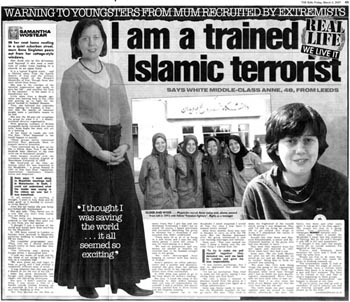
In her neat home nestling in a quiet suburban street, mum Anne Singleton peers out from her cottage-style windows.
Her Audi sits in the driveway and beyond it she sees a neat row of cedar trees leading to a church in an open field.

It is a typical English scene . . . and a lifetime away from the hostile deserts of Iraq and the military training camps of the People’s Mujahidin of Iran. Though Anne also once called these home.
She was in the clutches of the terrorist organisation and ready to give her life ” and sacrifice the lives of the innocent ” in the name of a bloodthirsty war
Little more than a decade ago, Anne was learning how to fire rifles and gearing up to fight for the group backed by Saddam Hussein.
Then, she believed her comrades were fighting for freedom in Iran ” and that the deaths of innocent people were a justifiable means to an end.
But now the 48-year-old recognises the group for what it is ” a deadly, extremist terrorist organisation.
With growing numbers of British youngsters being recruited into terror cells, Anne hopes her story will act as a warning.
At her home in Leeds, she tells The Sun: “What happened to me could happen to anyone.
“These groups entice concerned activists then persuade them to commit terrorist atrocities.
“They convinced me to give up my life to follow them. Now I see their methods were identical to the ones cults use to brainwash people.”
Anne became involved with the extremists while studying English at Manchester University in 1979.
Her boyfriend at the time, an Iranian called Ali, was interested in the Mujahidin” a group formed in 1965 to free Iran from “capitalism, imperialism, reactionary Islamic forces and despotism”.
Anne says:” I went along to Mujahidin meetings held in Manchester. In truth, I could not understand what the leader was saying in the videos we saw but I was transfixed.
“It all seemed so exciting. I thought, “I want to help them and do some good” so I decided to convert to being Muslim.”
Anne did not realise she was being psychologically manipulated.
She says now: “They flatter you in a way that you don’t even realise they are doing it.
“They really put themselves on a pedestal so that when they want you to join them, you feel special.
“I thought I was a saviour of the world and would have done anything for the Mujahidin.”
In 1989 Anne moved to London to become more involved in Mujahidin activities, working in computing and PR for them.
The computer programmer says: “They told me I should dedicate myself totally to them and that they needed me.
“The following year, during a hunger strike, I succumbed fully.
“I took two weeks off work and by day three of not eating I felt like I was on a complete high.
“We were given tea and sugar to keep us going and I had entered a completely different state of mind.
“I was adamant that this was what I should do for the rest of my life.”
Anne has since discovered that hunger and sleep deprivation are classic cult recruiting techniques.
She says: “I didn’t question anything. I was shown a film of a female suicide bomber blowing up an ayatollah in Iran. It was horrific and very shocking at first.
“But they showed me the film so many times that I got less and less distressed. Eventually I didn’t bat an eyelid. Of course, I heard politicians and journalists describing the group as extreme but I dismissed it and assumed they didn’t understand.
“There were 30 or 40 of us living in a safe house and I was the only white person. I never left unless it was for fund-raising or a demo.
“We had no possessions and any money we earned or benefits we received had to be handed straight over to the group.
“We were discouraged from keeping in contact with any family or friends.”
Anne’s parents, an office administrator and a painter and decorator, insisted she gave them her address and they wrote to her regularly, but letters were often confiscated.
In 1992 Anne was asked to go to the Iraqi desert for military training.
She says: “I loved the camp. It felt liberating to obey orders because then you lose all responsibility for yourself. I had a uniform, did assault courses, learned how to drive trucks and did firearms training.
“When I signed up to the Mujahidin I never imagined I would do that, but once I was there it seemed totally normal.”
After three months Anne was sent to Sweden to carry on with the PR work. But she became depressed after the group introduced a new rule banning marriages and families.
Anne says: “That rule seemed too final. I knew a family was the one other thing I wanted from life.
“To try to make me pull myself together they demoted me, sent me back to London and gave me less responsibility.
“It was reverse psychology, but I was so depressed that even that didn’t work.
“I’d lost all motivation. They tried to make me feel guilty, saying I was letting them and God down.
“By 1993 I knew I wanted to distance myself from the group so I began to work part-time again as a college administrator.”
Anne was finally ready to leave ” but the Mujahidin wouldn’t let her go easily. She says: “They tried to make me frightened of the outside world, saying it was dangerous. They said I’d end up living an immoral life or get sucked into drugs or crime if I abandoned the values of the Mujahidin.”
Around this time Anne met Massoud Khodabandeh, a senior and disillusioned member of the group who had also decided to leave.
They went their separate ways but met again and married in 1997. Three years later they had a son.
Anne says: “We are both Muslim but after we left the Mujahidin we would go out and get drunk just to be “normal”. Being able to think for yourself was amazing.
“We were like little kids doing things like going to the supermarket and choosing our own food. We discussed what we’d been through and I had no doubt we were psychologically manipulated. We’re fortunate we have each other to lean on.”
Anne feels it is only since the birth of son Babak, now six, that she truly feels like her old self.
“His birth made me pull myself together and we moved to Leeds shortly afterwards,” she says. “My family live there and after years apart it was great to be close again.”
The couple are now in a group called Iran Interlink, which campaigns AGAINST terrorist cells.
Anne says: “When I joined the Mujahidin I never had any intention of fighting. But by the end I thought it was OK to kill and assassinate.
“I thought it was right that people would die on suicide missions. I’m appalled at that now.
“France and Germany have ministers for cults and I think we need the same here.
“People are free to do what they like virtually until they reach the point of blowing someone up.
“The Government needs to look at terrorism from the angle of recruitment. People have a civilian mind where they know it is wrong to fire a gun and hurt someone. You have to be trained to kill and that is what’s happening in these groups.
“Psychological manipulation can happen to anyone at any time.
“If you’re lucky, you end up with a timeshare. If you’re unlucky you end up blowing yourself and innocent people up on the Tube.”
The Sun
By SAMANTHA WOSTEAR
March 02, 2007
http://www.thesun.co.uk/article/0,,11000-2007100090,00.html
BBC world interview with Anne Singleton and Gordon Corera about Mojahedin Khalq
Anne Singleton
Back in the early 1980s, Anne Singleton was a rebel with a romantic streak, entranced by the selflessness, as she saw it, of a group of Iranians who were trying to bring democracy and a secular government to their country. The People’s Mujahideen, as they were known, had helped to overthrow the Shah but had been rejected by Ayatollah Khomeini and his followers and were allowed to seek refuge in Irag by Saddam Hussein. Anne met some of their members through a boyfriend in the north of England where she lived, and eventually joined them. Only later did she realise their true nature and she spent the next three years trying to escape their clutches. She is now trying to help other members who want to escape. Outlook hears Anne’s story and Heather Payton also speaks to the BBC’s Security Correspondent, Gordon Corera.
Link to outlook/BBC:
http://www.bbc.co.uk/worldservice/programmes/outlook.shtml
Listen to the interview:
Anne Singleton said ordinary British Muslims were increasingly vulnerable to recruitment by extremists
A white British woman who was sucked into an extremist Muslim terror group warned yesterday of the dangers of”brainwashing”by radical groups operating in the .
Anne Singleton said ordinary British Muslims were increasingly vulnerable to recruitment by extremists, who use psychological tricks to turn them into unquestioning followers prepared to carry out atrocities for their cause.
The 48-year-old mother of one, who lives in Leeds, became involved with fanatics while studying at Manchester University in the 1970s.
Her boyfriend at the time, an Iranian called Ali, was interested in a radical group known as the People’s Mujahideen of Iran, or MKO, which was formed a decade earlier and aimed to free from “capitalism, imperialism, reactionary Islamic forces and despotism.
Today Miss Singleton recalls with horror how the group, which is based in Iraq and wants to overthrow Iran’s current regime, was able to convince her to give up her life in the UK and travel abroad with them as a brainwashed slave.
Her indoctrination, conversion and submission to the MKO happened gradually over a period of ten years.
She now regards the group “ known as the”tank girls”because there are so many women in its ranks “ as a dangerous cult which uses psychological manipulation.
“I thought I was a saviour of the world and would have done anything for the Mujahideen. I worshipped those people. I thought they were of a higher order.”
In 1992, Miss Singleton was asked to go to for military training.
“I loved the camp and it felt liberating to obey orders, because you lose all responsibility for yourself,”she said.
But a year later she began to have doubts.
At this point she met her husband Massoud, another disillusioned MKO member, and in 1996 they made the decision to leave. It took them a further three years to break free.
Miss Singleton and her husband are involved in the campaign group Iran Interlink highlighting the dangers of groups such as the MKO.
She works as a computer programmer while raising her six-year-old son.
Yesterday, she warned that many British Muslims are at risk of suffering the same brainwashing as she did.
“Look at the young men in West Yorkshire who are being targeted by the terrorist organisations.
“Psychological manipulation can happen to anyone, any time. If you’re lucky you end up with a timeshare. If you’re unlucky you end up blowing up yourself and innocent people on the Tube.”