
An Algerian journalist said the crimes of the terrorist Mujahedin-e Khalq Organization (MKO, also known as the MEK, NCR and PMOI) will not fade away from the memories of the Iranian nation, 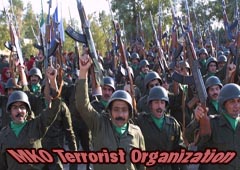 Muslims and the Arab world.
Speaking in an interview with the Habilian Association, human rights NGO formed of the families of Iranian terror victims, Dr. Yahya Abu Zakaria pointed to the crimes of the MKO against Iranian scholars and intellectuals, and said, "These martyrs were the ones who helped Imam Khomeini establish the Islamic Revolution."
Referring to the lack of such great figures of Islamic Revolution as Ayatollah Dastgheib and Ayatollah Dr. Beheshti, Dr. Abu Zakaria said, "The nascent Islamic government needed every one of these individuals, as it takes a long time for a person to become a scholar, but the Monafeqin (Hypocrites, a term used for MKO in Iran and Iraq) assassinate these scholars to deprive the Iranian people of their knowledge and hinder the (Iranian) government from propagating Islamic thoughts."
The political analyst described MKO’s crimes as "unforgivable", and said, "We, as the Islamic Ummah, will prosecute them (MKO members) should the Iranian nation not take a legal action against them, as their crimes were not only against the Iranian people, but against the Muslim Ummah."
"They robbed the Ummah of great scholars and indefatigable Ulama who were melted into Allah’s divine essence and gave away their lives to provide Islamic epistemic theories," he added. "Thus, they have stood against the Islamic culture and civilization."
He added that he has seen the MKO members in Europe distributing anti-Iran leaflets, saying, "I’ve told them: Shame on you, that you’ve resorted to the western countries to overthrow your regime, which is the only regime in the world who has extended his hand to every country for cooperation."
During the early years of the Islamic Revolution, MKO assassinated a number of great Muslim scholars whose presence were a threat to the Islamic-Marxist guerrilla group. Among these scholars, one can refer to Ayatollah Seyed Abdolhossein Dastgheib, assassinated on December 11, 1981, when he along with his companions were heading to Shiraz main mosque to perform the Friday congressional prayers by a female member of the MKO.
Another great Muslim scholar, Ayatollah Ashrafi Esfahani, who led the Friday prayers in Kermanshah, was assassinated when a MKO-linked suicide-bomber embraced him during he Friday prayers and pulled the pin of a hand grenade.
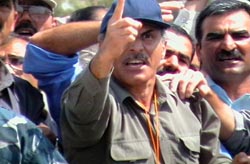 agent of Iranian regime whenever the organization ever publicizes the news of some defection itself. The announcement does not appear just after the escape or defection but months and even years later and after the group fails to come to terms with the defected to stop him/her talking out. The stigma, MKO believes, on the one hand will possibly neutralize the disclosures and on the other, hand will boost a propaganda battle to talk big of its intelligence potentiality in detecting the infiltrated agents. Thus, it may appear to many as a never-ending battle between MKO and Iran’s Ministry of Intelligence and security; and of course the more secretive and sophisticated the ministry is depicted the more capable its rival can be proclaimed.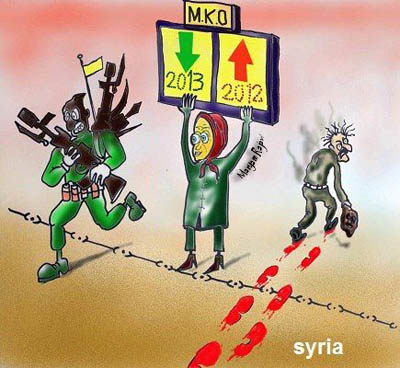
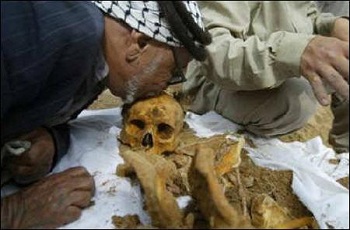 Iraq, where thousands of Iraqis had been buried after apparent mass executions. The discovered graves accounted for a plainly shocking fact that how Saddam got rid of his opponents with no sense of remorse or mercy. And now after the evacuation of Camp Ashraf, a bastion for his mercenary forces, additional dimensions of crimes committed by his mercenaries have been unearthed.
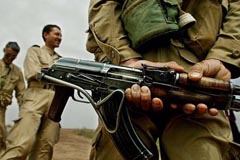 Hamoudi, in central Baghdad in October last year.
 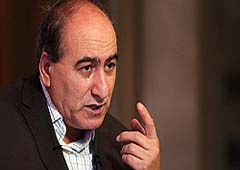 nation, and said Iranians will never forgive the MKO.
 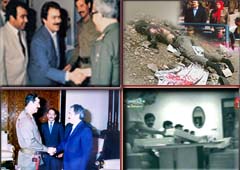 forgivable."
 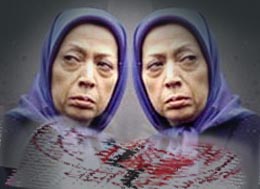 launched a campaign to have France and the European Union grant it the same recognition they have accord to the Syrian coalition battling to overthrow Bashar al-Asad, AFP reported.[1]