
MKO: Turned On…Turned Down… Turned Out

4 Corners, Press TV
MKO: Turned On…Turned Down… Turned Out
4 Corners, Press TV
Rajavi celebrates massacre in Gaza as victory against Iran
What the BBC reported as ‘Massive Israeli air raids on Gaza’ has, according to a source near to Camp Maryam at Auvers-sur-Oise, been celebrated by the Mojahedin-e Khalq (MKO), aka National Council of Resistance as a ‘massive victory against the Iranian regime’.
MKO members reportedly chanted and applauded in celebration at the news and hailed it as a victory against Iran which supports Hammas.
—-
Link to the News (BBC)
http://news.bbc.co.uk/1/hi/world/middle_east/7800985.stm
Massive Israeli air raids on Gaza
Israeli F-16 bombers have launched a series of air strikes against key targets in the Gaza Strip, killing at least 155 people, medical chiefs say.
Gaza officials and the Hamas militant group said about 200 others were hurt as missiles hit security compounds and militant bases across the territory.
The strikes, the most intense Israeli attacks on Gaza for decades, come days after a truce with Hamas expired.
Israel said the operation would go on "as long as necessary".
Israeli Defence Minister Ehud Barak said "it won’t be easy and it won’t be short".
"There is a time for calm and a time for fighting, and now the time has come to fight," he said, quoted by Reuters.
Israel said it was responding to an escalation in rocket attacks from Gaza.
Palestinian militants frequently fire rockets against Israeli towns from inside the Gaza Strip; large numbers of rocket and mortar shells had been fired at Israel in recent days.
In a statement, Israel’s military said it targeted "Hamas terror operatives" as well as training camps and weapons storage warehouses.
A Hamas police spokesman, Islam Shahwan, said one of the raids targeted a police compound in Gaza City where a graduation ceremony for new personnel was taking place.
At least a dozen bodies of men in black uniforms were photographed at the Hamas police headquarters in Gaza City.
Israel’s Foreign Minister Tzipi Livni defended the air raids, saying Israel had "no choice". "We’re doing what we need to do to defend our citizens," she said in a television broadcast.
Israel hit targets across Gaza, striking in the territory’s main population centres, including Gaza City in the north and the southern towns of Khan Younis and Rafah.
In the West Bank, Palestinian Authority President Mahmoud Abbas – whose Fatah faction was ousted from Gaza by Hamas in 2007 – condemned the attacks and called for restraint.
But Hamas quickly vowed to carry out revenge attacks on Israel in response to the air strikes, firing Qassam rockets into Israeli territory as an immediate reply.
At least one Israeli was killed by a rocket strike in the town of Netivot, doctors said.
"Hamas will continue the resistance until the last drop of blood," spokesman Fawzi Barhoum was reported as saying.
Israel also stood firm, saying operations "will continue, will be expanded, and will deepen if necessary".
It is the worst attack in Gaza since 1967 in terms of the number of Palestinian casualties, a senior analyst told the BBC in Jerusalem.
The air strikes come amid rumours that an Israeli ground operation is imminent.
Calls for ceasefire
International reaction was swift and expressed concern, with many world leaders calling for calm and an immediate ceasefire.
A White House spokesman said the United States "urges Israel to avoid civilian casualties as it targets Hamas in Gaza".
"Hamas’ continued rocket attacks into Israel must cease if the violence is to stop," the spokesman, Gordon Johndroe, added.
The UK Foreign Office said: "We urge maximum restraint to avoid further civilian casualties."
The French presidency of the EU meanwhile called for an immediate halt to the shooting by both sides.
At least 30 missiles were fired by F-16 fighter bombers. Israel’s Haaretz newspaper reported that some 60 warplanes took part in the first wave of air strikes.
Hamas said all of its security compounds in Gaza were destroyed by the air strikes, which Israel said hit some 40 targets across the territory.
Mosques issued urgent appeals for people to donate blood and Hamas sources told a BBC reporter in Gaza, Rushdi Abou Alouf, that hospitals were soon full.
Egypt opened its border crossing to the Gaza Strip at Rafah to absorb and treat some of those injured in the south of the territory.
Most of the dead and injured were said to be in Gaza City, where Hamas’s main security compound was destroyed. The head of Gaza’s police forces, Tawfik Jaber, was reportedly among those killed.
Images from the targeted areas showed dead and injured Palestinians, burning and destroyed buildings, and scenes of panic and chaos on Gaza’s crowded streets.
Residents spoke of children heading to and from school at the time of the attacks, and there were fears of civilian casualties.
Reuters news agency said at least 20 people were thought to have died in Khan Younis.
Israeli security officials have been briefing about the possibility of a new offensive into Gaza for some days now, says the BBC’s Paul Wood, in Jerusalem.
But most reports centred on the possibility of a ground offensive, and Prime Minister Ehud Olmert was not expected to authorise any operation until Sunday at the earliest.
Although a six-month truce between Hamas and Israel was agreed earlier this year, it was regularly under strain and was allowed to lapse when it expired this month.
Hamas blamed Israel for the end of the ceasefire, saying it had not respected its terms, including the lifting of the blockade under which little more than humanitarian aid has been allowed into Gaza.
Israel said it initially began a staged easing of the blockade, but this was halted when Hamas failed to fulfil what Israel says were agreed conditions, including ending all rocket fire and halting weapons smuggling.
Israel says the blockade – in place since Hamas took control of Gaza in June 2007 – is needed to isolate Hamas and stop it and other militants from firing rockets across the border at Israeli towns.
http://www.iran-interlink.org/?mod=view&id=5581
One guest on this program, Anne Singleton, former member of the MKO (MEK, PMOI, NCRI, Rajavi Cult, or Pol Pot of Iran) exposed the truth about the MKO.
The other guest, a human rights attorney, defended the MKO using the logic that President Bush is the world’s worst terrorist!
So, the American neo-conservatives (neo-Trotskyites) who support these communist terrorists have as political bedfellows those who claim to be Anti-President Bush. As the MKO continues to prove in America and in Europe, there is no shortage of dupes in the world.
Paul Sheldon Foote commented on the issue.
4 Corners program
The Mojahedin fundraise in shopping malls, airports, train stations, and other busy places. They would stop people and show them pictures and ask the people to help those children. In reality, the money raised would be spent on many terrorist activities in Iran.
“National Council of Resistance is a branch of Mujahedin-e-Khalq which is listed as a terrorist group in US and EU. Mujahedin were Saddam’s mercenary during the 1980s when they launched cross border attacks against Iran. NCR is proud of having denounced Iran clandestine nuclear facilities in Natans. Though, according to a report by the expertise journal Nuclear Fuel in December 2002, IAEA has already been completely aware of those facilities.”
Extracted from the report published in the Austrian newspaper “Die Presse” on 10/24/08, relating the press conference held by MKO, meanwhile the seasonal meetings of IAEA council.
Mujahedin-e-Khalq must believe that the world has achieved a unified description of them, having recorded them as terrorist, cultist, mercenary and spy. The MEK should pay the price of this changed description by their own nature and it is definitely obvious that the cults don’t shoot their own nature and the world has basically accepted that spying, warmongering and terrorism are rooted from the cult-like nature of MEK.
All treasons committed by Mujahedin take their roots from their cult-like practices. Which Iranian is willing to tie his fate with a criminal dictator like Saddam Hussein? Or is proud of submitting the nuclear information of his own country to foreigners? And shouts proudly that “we have denounced Iran!” all those are justified by a manipulated mind. This is a matter that is responded by psychology: the cults have no will.
“MEK has long been considered as the most important spying network in Iran but today they seem to have a very weak operational power. “
Figaro 10/26/2008
It is not an accident that everyone believes in MKO as spies and implicitly states that they are an ended movement. This is a reality that was proved following the fall of Saddam Hussein. But the MEK are trying to survive as long as possible by their false propaganda.
Since 1981 when the National Council of Resistance of Iran was founded by Abul Hassan Bani Sadr(the first Iranian President who fled Iran together with Masud Rajavi),the most influential members has left the council . The significant example is Banisadr himself, who left the NCRI after Masud Rajavi made a treaty with Tariq Aziz; the Iraqi general whose country was in war with Iran at that time. The result of Bani Sadr’s defection was the absolute leadership of Masud Rajavi on NCRI as well as MEK. For further information on the process how the NCRI became the umbrella organization for MKO you can read Ann Singleton’s book “Saddam’s Private army.”
In 1990’s, due to the lack of democracy and the dictatorship of Masud Rajavi, the NCR became a tool, depended on MKO, to be used along with Mujahedin’s objectives. In 1993, the majority of members of NCRI (about 95%) were MKO militants.
Nowadays, the NCRI is the main front organization, for MEK to achieve Western support with its” Diplomacy section” which is under the charge of Mohammad Seyed Al-Mohaddesin and of-course directly under the supervision of Masud Rajavi.
In fact the non- Mujahed members of NCRI have no influential role but the main role belongs to MKO which is listed as a terrorist organization by EU, US and Canada. The NCRI was also added to the list in 2002
The activities of the Diplomacy section are as followings:
Lobbying activities and campaigns in the European parliaments and US congress and Senate, trying to gain their support in various ways including showing the journals claiming to have their colleagues’’ support, showing list of signatures of their alleged supporters …
The NCRI, itself includes many other front institutions that launch fundraising activities throughout Europe and North America. By showing pictures of Iranian orphans they solicit large amounts of money and then with their complicated money laundering operation, they send the sums to their bank accounts in Turkey or UAE. The money will be used to buy arms for their terrorist activities.
Their deception policy does not end up to here. MKO’s large payments to western politicians is a big motivation for them to speak at its rallies which are mostly held in other countries, European capitals with wonderful tour that nobody can ignore having fun in a free trip.
The gathering with western lecturers who have democratic slogans and allegedly want to make democratic change in Iran would be further motivation for the others who will be deceived by the NCRI in future.
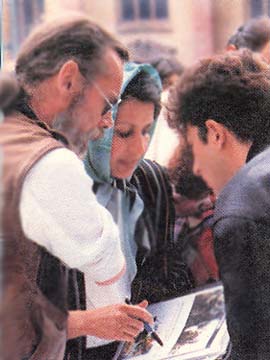
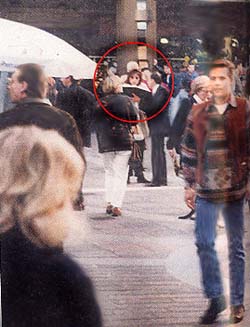
The Mojahedin fundraise in shopping malls, airports, train stations, and other busy places. They would stop people and show them pictures and ask the people to help those children. In reality,the money raised would be spent on many terrorist activities in Iran.
The armed struggle is not able to survive except by having the military equipments and support and especially the support and accompaniment of the public opinion. When an armed opposition loses such a support in the country, it has to look for it abroad.
As MKO was so eager to achieve the power in the political scene of Iran, it could not stay in Europe like the other Iranian dissident groups who are politically or socially fighting the Islamic Republic. The MEK stopped all its social and political activities in Europe in 1980s and sent the forces to Iraq to enjoy the Iran-Iraq war to expand its military power.
At the beginning the only common point of MKO and Saddam Hussein was their common enemy: Islamic Republic.
Iraq provided MEK with land, equipments and funds for their so-called National Liberation Army and in exchange the MEK were spying the Iranian forces’ intelligence for the Iraqi intelligence service.
Therefore the Iraqi government was using the MKO’s facilities to serve its own front.
The civil armed struggle was replaced by the front armed struggle because the civil struggles had been defeated in Iran and now MKO needed to depend on Saddam Hussein who was fighting Iran. If MKO had led its political struggles from Europe, France it would have not needed the support of a dictator and violator of Human Rights like Saddam Hussein.
The MEK had accepted the armed struggle by the side of Saddam Hussein, so they had to accept the presence of Iraqi specialists, military relationships, intelligence exchanged and cooperation in military operations …
To accept the war in the fronts where the invader enemy had started the war and bombarded and killed the innocent people, is more illegal and more anti-national than the civil war.
However after a while the Iraqi Intelligence Service suggested that MKO launch mortar attacks in the cities of Iran. Thus MKO mixed its armed struggle in the fronts with the partisan attacks in the cities and expanded the war in to the whole Iranian territory where a lot of innocent people were killed.
In the operations, the MKO members were under heavy pressure and stress because they knew that they were shooting their compatriots who were service-men or even civilians.
The people in the region also hated the MKO showing their hatred by not giving them any facility. In 1986, Masud Rajavi declared the end of civil partisan struggle officially announcing that:
” The macro-border war is replaced by the micro –civil war.”
Therefore they began to pay their debt to Saddam Hussein. They were so devoted to Saddam that sometimes the Iraqi Authorities assigned the terror objectives for MEK.
The important question, here is: How the anti-human dictator, Saddam Hussein, was so adopted with some pro-human freedom fighters?
The answer is their common ideology and idea and also activity. But how could the both side share the same ideology?
The answer should be analyzed psychologically: The idealist Iranian youth who were brainwashed, manipulated through a long indoctrination process, held the arms as their most excellent mean, camping among the anti-Iranian Baathists. How can they meet the demands of their own nation?
As soon as they picked up the arms, they got distanced from their own nation.
When they entered Iraq, they were completely separated from Iranians who viewed them as traitors since then.
When they attacked Iran, they were considered as the hostile mercenaries of Saddam Hussein.
Now that, their God father is overthrown, they are looking for another one, to hang on. This is the main characteristic of all opportunists who are hungry for the power.
How the Mojahedin Khalq Organisation (Rajavi cult) destroyed all documents and books in Camp Ashraf
After the fall of Saddam Hussein, Rajavi ordered us to search all the camp. Ashraf camp had to be wiped off any material linked to Saddam’s apparatus. He told us, the new hosts (Americans) are stronger and will be able to help us a lot more. He ordered all the anti American and anti imperialist books and documents to be destroyed.
Download Mujahedin destroyed all documents and books in Camp Ashraf
This special report by filmmaker James Longley focuses on the impact of the MEK on US–Iran Relations. Though the MEK, an exiled Iranian group, is listed on the State Department’s list of Foreign Terrorist Organizations, they continue to enjoy both the covert and overt support of some members of US Congress and the Bush Administration because of their opposition to the Iranian government.
This filmed report explores the history of the MEK, their ideology, their participation in the Iranian revolution and exile from Iran, and their collaboration with Saddam Hussein’s regime. Using interviews with historians, journalists, and first-person accounts of former members of the MEK, their shifting role is tracked through to the present day, as they continue to play a central role in US-Iran relations and create sharply divided opinions between various branches of the US government.
A film by James Longley
Download The Mujahedin Khalq and US-Iran Relations- Part One
Download The Mujahedin Khalq and US-Iran Relations-Part Two
If the Mojahedin Khalq Organization (MKO) is forced to weigh anchor from Iraq, since the Iraqi government is decisive to expel the group as once France did, it has to drop it in another country; it has already succeeded to drop it partly in France although not officially consented and announced neither by French government nor the organization. In fact, the organization needs to root in a country to survive, as it has already survived in Iraq for so long within its Ashraf cult-like enclave.
In spite of many current controversies and concerns that the group’s members would be sent to Iran to face trial for numerous terrorist atrocities if the Iraqi government holds the control of Camp Ashraf, a duty more on the shoulders of legal international tribunals investigating war and terrorist crimes, Iran seems to be unveiling to receive and tackle with so many ideologically potential terrorist forces that need thought reformation and have to go under a process of treatment for psychological or physical traumas before being sent into the society. No doubt, it would lead the organization to the precipice of absolute demise and that is why the organization is already protesting an improbable decision through a widespread international propaganda blitz.
Now at the service of world powers that walk on a war path with Iran, MKO will be probably granted a camp of refugees. Will it be a Western country? Of course not, since none of them is willing to risk its internal security. Despite given protections, the world has witnessed MKO’s acts of violence, meddling and espionage wherever it has been settled. Even the strictly imposed controls of French anti-terrorist forces could not cease potential terrorist and cult threats of the group settled in Auvers-sur-Oise when it came to display its real cult nature through setting member ablaze in Paris streets.
The courageous deed by the French government to handcuff terrorists who tried to turn Auvers-Sur-Oise into a bastion of terrorist plots worked as a blueprint for the Iraqi government to follow in order to have more control over Camp Ashraf. Being kept on terrorist lists or removed by some certain country does not necessarily mean that the countries where MKO members are officially, or under political refugees, residing have changed their views on the group; they are known to be terrorists and cultist above all and no country trust them to be freely moving here and there.
Restrictions imposed on the organization in France and Iraq, where it holds two bases, has actually checked group’s political and propaganda activities more or less. All these lead to a third supposition that the group would be relocated to the US as refugees. Although the US is supporting MKO to utilize it against Iran, however, it has never come to terms with the organization to recognize it an alternative for Iran’s current ruling order.
But MKO’s settlement in the US requires another decision: abandoning group’s designation as a terrorist organization. Of course, such a decision would cause the greatest controversy not only amongst the ruling administration but also amongst different political parties as well as national and social communities. It would be a logical and rational question to ask whoever delist MKO that how a group long occupying notorious rank of terrorists comes to be removed from the list and, above all, turns into a most favorite opposition group permitted to settle in the country. Then, where the terrorist cult is destined to settle?