A member of French Senate has written a book on the Mujahedin Khalq (People’s Mujahedin of Iran/PMOI) earlier this year. Senator Nathalie Goulet of Orne published the book "PMOI: a cult in heart of the Republic" to warn her comrades in French Assembly and Senate about the threat of the cult of Mujahedin.
She writes of the MKO’s violent background and its devotion to armed struggle and terrorism, noting that the group has never published a statement or confession letter to officially denounce violence.
Revealing facts on cult-like practices of the group, she warns that a full-scale cult exists in the heart of Republic of France. She describes the MKO’s efforts in her working place, French Senate and Assembly:
"…in December 2011, a petition was being circulated in French parliament. It was signed by 74 senators and 282 members of the Assembly. It demanded support for the People’s Mujahedin Organization of Iran and its leader Maryam Rajavi, as well as guarantee for international protection of camp Ashraf in Iraq.
” As I know, a large number of these representatives think that they are supporting democracy in Iran by embracing the PMOI. However, I should emphasize that the signatories know almost nothing about the history of the PMOI. So I found it useful to notify the history of the group which is Marxist Islamist"
The author refers to the MKO’s treasonous cooperation with former Iraqi dictator Saddam Hussein against Iranian people and Iraqi Kurds and Shiits and notices the lack of support for the group among Iranian community. She poses questions to those French officials and governmental bodies who are involved with the cult of Rajavi:
"How can a group which has had no base in its county since long time, suggest analysis and advice on the current situation of the country?
Can you count on any party or organization that claims to be democratic?"
Ms. Goulet concludes: "Regarding the past of the PMOI, it’s hard to believe that such a group that still suffers all symptoms and problems of a totalitarian cult of personality, violent activities, hidden financial resources, lie, threat, accusation and destruction of civilians under the pretext of enlightening, has turned into a democratic organization!"
Nejat Bloggers
Nejat Society Mazandaran Office interviews Mr. Majid Mohammadi, former member of the Mujahedin Khalq Organization.Mr. Mohammadi left Camp Liberty (Temporary Transit Location) in May 2012.
Nejat Society, Mazandaran Office: Mr. Mohammadi, what did you and your colleagues think of camp Liberty (TTL) before you moved there?

Majid Mohammadi: as you know, Camp Ashraf was an isolated, restricted place where members were under a 24-hour controlling system. When the idea of moving to Liberty was proposed, the majority of guys thought that they would finally go to another place in which they would not be limited and controlled and they would be able to have access to the outside world.
In our private talks, we said that we would ultimately find a way to leave Iraq. Some of the members, who did not want to return to Iran, were happy because they thought that Liberty would open the way to go abroad.
But, we didn’t know that Rajavis intended to build another Ashraf in Liberty.
– What do you mean by building another Ashraf?
– I mean that the organizational control and cult-like practices exercised by the Rajavis, at Camp Liberty was worse than those applied at Camp Ashraf. MKO leaders knew that Liberty is not like Ashraf. It’s not an isolated, closed location with no access to the outside world so they enhanced the organizational control in Liberty to prevent defection and eventually the collapse of the cult.
From the beginning of our arrival at TTL, one of the criminal commanders of the MKO, named Abbas Davari, who had been previously sent there, started holding meetings for members. He said:”The difference between Liberty and Ashraf is that the former was completely under our control, no one was able to interfere in the organization relations but here at Liberty we are dependent on the outside world and Iraqi forces. We should work hard to maintain this Camp and chang it to another Ashraf.”
In order to assure those who realized what “loosing Ashraf” meant, he said, ”It is right, Liberty is a temporary Camp but you should know that Ashraf has been reproduced .We never
leave Iraq.”
At Camp Liberty, they could not fill members’ schedules with forced labor so they held numerous mind control meetings. We attended various manipulation meetings for over 12 hours a day.
– Mr. Mohammadi, speaking of your full-time schedule in Liberty, what was your daily routine?
– From early in the morning (at prayer time) until late at night, we were planned to labor. The cult authorities made us do futile works. For example, they had us move the sand in the camp under the pretext of building streets. Our daily routine was to move the sand to places the authorities said, but as the space was limited, when the task was done, they would find faults with us. they said,” Your female superior doesn’t approve your work” or” you should follow the plan that sisters used”, etc. Once again members had to move the sand to another place, thus our working time was full.
Regarding meetings, I said, twelve hours a day. Our daily routine was to eat breakfast and then to carry the sand until 10:30 am. Then we had a break and we had a meeting until noon.
After lunch, the meetings continued until sunset when we had a break to drink tea. Then we used to go playing sports, however, there wasn’t any possibility for playing games. After dinner time, again we had to attend meetings until midnight.
– How long did you stay at Liberty? How was the condition and facilities there?
– Liberty was a marshy land near our port. It had been known as Saddam Hussein’s hunting ground. After American invasion, the land was dried and filled with sand by US forces and their base was built there. Considering MKO expulsion from Iraq, the camp was allocated to the group as a temporary transit location following the agreement signed between UN representatives and Iraqi government.
A part of this region, about 500 square-meters, in the heart of Iraqi units was allocated to settle MKO forces.
Iraqi police has six stations inside the base.The camp contains 7 parts and each port is divided to 4 blocks. Residents live in Conexes, each conex is resided by 7 people. it is worth to mention that, according to arrangements made by UNHCR supervisor, each conex was due to be allocated to two people but the cult leaders placed 7 people in every conex in order to prevent private meetings and to control members more strictly. The other conexes were used for mind control meetings such as Current Operation and Weekly Cleansing and also for commandants.
Based on the agreement signed by Iraqi government and UN authorities, each Conex should be equipped with TV, air conditioner, telephone etc. until the two residents are granted asylum and leave the camp. But the cult leaders confiscated all Telephones.
The Televisions had no antenna. We were just allowed to watch the MKO channel in the eating place at specific times.
In order to impose more pressure and more limitation, they did not allow us to use the facilities left by American troops. For example, we were not permitted to use the gym which was highly equipped. This was their excuse: ”If we open the gym, members want to build their body, and this is definitely for their desire to have wife and a normal life. So, suggesting the idea of using the fitting center is kind of opportunistic act.” The authorities even did not let us use the exercise mats of US soldiers.”They have the smell of life, they shouldn’t be used”, they said.
– Did the mind control System work the way it worked at Ashraf?
– Yes, exactly. The transfer of members from Ashraf to the new place which is called Temporary Transit Location has changed members’ spirit. The cult leaders have to increase their control over members so that they can maintain the cult-like relations and structure. They hold long-time meetings, gather all members together. They seriously fear members talking to each other in order to prevent members from communicating with their peers; they have divided that 500 – Square-meter place in to smaller areas using bags of sand. The 7-people conexes are divided to two units and each unit is supervised by a high-ranking member to extend their 24-hour control over members.
The camp authorities are severely afraid of members’ gathering in a place. Members are not allowed to gather in the eating place at the same time. Each unit has to attend special ceremonies under the supervision of its own commander who tells them where to sit and when to leave the hall.
On the other hand, they claim that the pressure imposed at Liberty is actually originated in the war we have against Iran. They say,” we are in the battle.”
They try to manipulate members so as they cannot think anything else and ultimately come to different conclusions and decisions.
– What did the MKO leaders think of leaving Iraq?
– As a whole, they suggested that they would not leave Iraq whether at Ashraf or Liberty.
As an obvious contradiction, they told high-ranking members that they would turn TTL into another Ashraf arguing that the Arab Spring would bring change to Iraq too and this way the situation would turn in favor of their cult. But, for low-ranking members, they had another argument.
They told them to be patient until the problem for leaving Iraq would be solved.”If you don’t want to stay with us, be our guest for some time until a solution is found to your problem but don’t give up and don’t go to Iran,” they told us.
Another thing that I should mention about pressure at Liberty is that Rajavi’s nonstop printed and audio messages were the actual troubles for members.
He tries to convince forces not to give up, to stay there. This way, the commandants could more easily suppress the members.
In his last message, he offered four options to the members:
First: if you announce your defection, we deliver you to Iraqis and they will consequently hand you to Iran where you will be tried and executed.
(it is worth to know that before offering such an option, we had attended numerous meetings in which we were told that we would be tortured and executed in Iran so everyone was terrified of going to Iran. After our minds was manipulated ,this option was suggested.)
Second: if you have a good family in Europe, they can follow your case to take you there. (Practically such a solution was impossible for the majority of members who had no one in Europe.)
Third: stay a Mujahed and leave your fate to the Organization.
And after some time he suggested the forth option:
“Stay with the MKO as a guest”. The result of all these options was to stay in the cult and to get depressed in their dirty practices.
In all his messages, Rajavi considered return to Iran as treason. He had made a taboo out of this option.
– Mr. Mohammadi, what’s your idea about the fate of members who are currently imprisoned at Liberty?
– In my opinion, the MKO case in Liberty is just the same as its case in Ashraf. Members should again be staying in suspense for a long time. Although, they have been delisted by European Union since three years ago, not even a member could manage to leave Iraq.
In addition, the cult authorities do not want the members to leave the cult establishment and Iraq. Indeed, the Rajavis are the obstacle against MKO expulsion. I believe that Rajavi doesn’t hesitate to make a thousand people die in order to prolong his stay in Iraq.
– What’s your suggestion to help them leave Iraq as soon as possible?
– As the presence of families at Camp Ashraf had awakened the members for escaping the cult, their presence at Camp Liberty will also be helpful regarding the fact that Liberty is much smaller than Ashraf in size and suppression is much stronger there. Families can play a key role n liberating their loved ones.
Families can assure their children that they are able to make the right decision for their fate demanding UN representative visit their beloveds.
– Thank you for the time you gave Nejat Society. And last question, what do you do now?
– I’m a construction worker and I will soon get married being impressed by Maryam [Rajavi]’s ideological revolution!
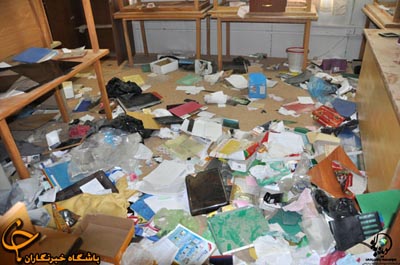
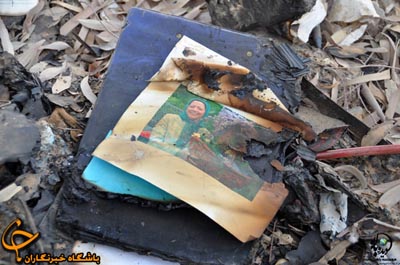
Photos recently released after evacuation of Ashraf residents:

Salvage Equipments. A number of MKO members remained in the Camp in order to sell them


MKO members set all documents and photos on fire before their departure

Dissident members to revenge the group leaders

Lion Statues, at Ashraf gates, stolen from a Park in Kermanshah (a city in the West of Iran)

The MKO leaders had dig a ditch around the Camp to prevent members’ escape

Members who remain in the Camp

Stones used by deceived members to throw at families picketing in front of Ashraf gates.

Conex where families were picketing, damaged by rocks thrown by group members

A metal piece, residents used to throw under vehicles to tear their wheels

Group members guarding at the Camp entry

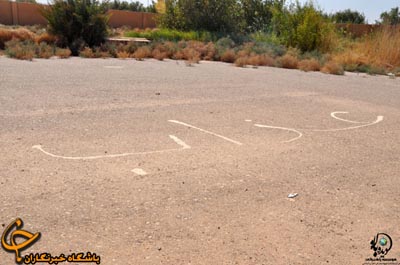
The area in front of torturing room, the word “HARRASMENT” is seen on the ground.

Torture Room

Torture Room, closed circuit Cameras installed on the ceiling

Coffins

Camp Ashraf now

White board used for the group working schedule and priorities. Syria is circled s a crucial case for the group agenda

An example of MKO organizational structure:
Each Clothes rope is divided and named for individuals.
Another member of Mujahedin Khalq Organization, named Mr Hooshang Mirza Ghorbani, escaped Camp Liberty (Temporary Transit Location) and surrendered himself to Iraqi Police.

While, the MKO leaders claim that members consider the delisting of the group from US Foreign Terrorist Organization list as a great victory and dissident member will again trust the group, practically the removal of the MKO from the black list has no impact on members’ defection. Most of the members will run away as soon as they find the opportunity.
It is worth notifying that regarding the increasing process of defection from the MKO, the group leaders have highly enhanced security and guarding supervision in order to prevent escapees.
The decision of the US State Department to remove the Mujahedin Khalq Organization (MKO) from its list of foreign terrorist organizations created an atmosphere of ambivalence particularly in
the West. Public opinion in the West may face contradictory ideas regarding the decision. On the one hand well-paid supporters of the group view the decision as “correct” but “overdue” ,on the other hand, there are experts and journalists and of course Iranians who view it as an evidence of American double standards and hypocrisy.
Regardless what people –pros or cons –may think of the apparent reality: a group is no more considered “terrorist”, the true substance of the MKO as well as many other cult-like groups does not change. In the world of “legal” or “illegal”, “bad” or “good”, “terrorist” and “freedom fighters”, conventions never tell the truth.
Even in the Press Release of the spokesperson’s office of the DOS, you may see the ambivalence in the published decision:”With today’s actions, the Department does not overlook or forget the MEK’s past acts of terrorism, including its involvement in the listing of US citizens and an attack on US soil in 1992. The Department also has serious concerns about the MEK as an organization, particularly with regard to allegations of abuse committed against its own members.”[1]
While the DOS says”Yes” to the MKO, there is a “No” in the background informing its decision. It seems that the US government is not able to fully commit to that “Yes”. This was also implied in comments of a US official who spoke to Barbara Slavin and Laura Rozen of Al-Monitor on condition of anonymity. They wrote in their piece titled” Iran Group MEK’s Delisting Does not Signal US Approval, ”The US official added that taking the MEK off the terrorist list would not connote US government approval. Responsible for the deaths of half a dozen Americans in the 1970’s and for killing hundreds of Iranians after 1979, the MEK is widely regarded as a cult that demands that its followers stay celibate and obey the commands of Mariam Rajavi, the wife of MEK leader Massoud Rajavi, whose whereabouts are unknown.”[2]
Another US official assured Elise Labott who first published the news of delisting on CNN, that US government is concerned about the group’s bad reputation. “While they represent themselves as a legitimate democratic group worthy of support, there is universal belief in the administration that they are a cult”, the official told CNN.”A delisting is a sign of support or amnesia on our part as to what they have done and it does not mean we have suddenly changed our mind about their current behavior. We don’t forget who they were and we don’t think they are now who they claim to be, which is alternative to the current regime.”[3]
One of the authors of the famous RAND report on the MKO, published in 2009, is Christina Wilkie who is also a Huffington Post correspondent. She has a different analysis on the group delisting. As she has widely investigated on the MKO and as she says she’s been reporting on the group for the Huffington Post, she has been threatened by members of the group and her email was hacked by them. However, she believes that the DOS’s “decision was a good one.” She makes it clear that she believes the MKO is a “militant cult of personality” and she doesn’t trust them but Clinton delisted them because she “understands that they’re a dangerous cult, and that all the other potential outcomes of the 30-year standoff between the MEK and the outside world would have likely been much, much worse.”[4]
Wilkie thinks that on top the list of risky MKO functions was mass suicide and to stop such a tragedy,” Clinton only had one major bargaining chip. In exchange for leaving Camp Ashraf, the secretary agreed to delist the group from the U.S. list of Foreign Terrorist Organizations,” this way she saved the lives of “ thousands of brainwashed MEK foot soldiers”.[5]
At least Wilkie admitts that the State Department officials feel some ambivalence about the terrorist substance of the cult of Rajavi: ”But the question facing secretary Clinton wasn’t whether the MEK could be trusted,” she writes. “Or even if the MEK’s members were still dangerous. Privately, US officials don’t pretend to know the answer to either one.”[6]
It seems that no pretext can ultimately enclose the dual approach of the US administration. In a Mint Press article, the author Martin Michaels describes the terror listing or delisting of Foreign Terrorist Organization as paradoxical. He refers to US administration’s decision to classify Wikileaks as the enemy of the State comparing the decision to that of delisting the MKO. He concludes, “The Selective branding of Wikileaks, the MEK or other organizations align with the interests of the US while the MEK may share some of the same goals, namely, regime change in Iran, the labeling indicates an underlying desire to justify alliances in the name of security.”[7]
By Mazda Parsi
References:
[1] US Department of State, Delisting of the Mujahedin-e-Khalq, Office of Spokesperson, September 28, 2012
[2]Slavin, Barbara & Rozen, Laura, Iran Group MEK’s Delisting Doesn’t Signal US Approval, Al Monitor, Septemeber2, 2012
[3] Labott, Elise, Clinton to remove Iranian exile group from terror list, CNN, September 21, 2012
[4]Wilkie, Christina, MEK is Bad News, But Delisting Them Was A Good Decision, the Huffington Post, October 1, 2012
[5]ibid
[6]ibid
[7]Michaels, Martin, Wikileaks And The MEK: The Paradoxical Labeling Of Foreign Terrorist Organizations, Mint Press News, October 1, 2012
- Americans terror delisting the Mojahedin Khalq is a cynical sham
- By Delisting the MEK, the Obama Administration is Taking the Moral and Strategic Bankruptcy of America’s Iran Policy to a New Low
- What’s new at Camp Liberty in Baghdad?
- Families from Kermanshah and Lorestan enter camp Ashraf, Iraq
- Hamed Moradi escape Camp Liberty
The war on terror seems to be a tactical expression to rationalize the colonial intrusions of the US throughout the world. When in 2003, the Bush administration sought to justify its invasion on Iraq; they accused Saddam Hussein of sponsoring of international terrorism. 
The big change in US approach towards terrorism of the very MKO indicates that for the US government, there’s no right or wrong, or legal or illegal, there’s just one question ‘are you with the US or against US?’
The US is clearly stating that if you disagree with us you deserve to be called “terrorist” or “state sponsor of terrorism”. This way, Obama administration makes one of its most risky decisions to antagonize the Iranians.
Now that the US has delisted an international terror group the MKO, there is no legal restriction to fund, arm and train it for insurgency operations against Iran.
Richard Silverstein writes on Guardian:”the delisting of the group is a sham. The Obama administration isn’t even claiming the MEK has renounced terrorism. If it did, it knows that it’s likely such a statement would rebound should the MEK’s activities become exposed.” He concludes that the MKO is useful in the covert war the US and Israel are waging against Iran’s nuclear program. [1]
What is confusing is that the US administration pretends to be engaging in negotiation but on the other hand their approach towards Islamic Republic is far from diplomacy.
Coleen Rowley of the Antiwar website describes the recent act of double standard by the US government as a “movie” that was seen before. He refers to previous CIA’s covert assistance to Mujahedin rebels in Afghanistan — who were recruited and trained by Osama Bin Laden- against Soviet Union.[2]
Using indirect aggression is nothing new in US foreign policy. Using drones and insurgency groups in Afghanistan, Libya, Yemen and the MKO in Iran are far more evidences of American ambivalence towards terrorism.
In his piece on the Guardian, Chris McGreal warns that since then the MKO’s multi-million campaign and supporters of People’s Mujahedin of Iran (MEK) are to press the Obama Administration to recognize it as the “legitimate opposition” to the Iranian government after the group is removed from the list of banned terrorist organizations in the coming days,” he writes.[3]
US politicians should know that legitimacy come from people. The MKO’s well funded lobbying campaign has spent too much to change its image from a violent cult of personality to a pro-democratic opposition movement. They may have been successful to manipulate western politicians but they do not represent Iranian people. Only the Iranians are qualified to give them the legitimacy they fail to have. Reza Marashi a former official of the State Department’s Iran Desk who is now a member of National Iranian American Council (NIAC) told McGreal:”The majority in the country know that these guys fought with Saddam Hussein during the Iran-Iraq war and they view them as traitors. During my time in Iran, and I’m still hearing this from people who are on the ground in Iran, there’s little to no support.”[4]
The delisting of the MKO, with its long history of bombings, murders, treason cult-like practices and human rights abuses might have destructive impacts. Lajos Szasdi, an international affairs analyst who was interviewed by RT , explains the inevitable results of such a decision: ”It is going to in any case, work to the detriment of the relationship between the West and Iran, and in particular the United States. It is going to favor taking hardening positions towards the West and the United States. I think it is quite inevitable in light of the rhetoric coming from Washington, alongside that coming from Tel Aviv regarding Iran and the Iranian nuclear program. It might not make much difference, but it certainly is going to be ammunition for those who would try to suppress the idea of any dialogue with Washington, because after all ,Washington is not offering any olive branch for such kind of dialogue”.[5]
As a matter of fact, one thing is for sure. The US –Israeli lobbies are entirely misled if they want to preserve the MKO as a viable alternative to the government in Tehran. They will never be able to advance this goal as millions of Iranians never remove the MKO from the list of terrorist cultist traitors they have maintained in their historical memory.
They never want the democracy which is brought by a bunch of power-thirsty traitors who murdered their own countrymen to obey their paymasters such as Saddam Hussein or Netanyahu.
By Mazda Parsi
References:
[1]Silverstein, Richard, Terror delisting the MEK is a cynical sham, the guardian, September22, 2012
[2]Rowley, Coleen, Our (New) Terrorists’ the MEK: Have We Seen This Movie Before? , Antiwar.com.September28, 2012
[3]McGreal, Chris, MEK supporters push for recognition by US as official Iranian opposition, the Guardian, September28,2012
[4]ibid
[5]RT.co, lobbying campaign takes Iranian dissident group off US terror list, September 29, 2012
Inside This Issue:
• Five lessons from the de-listing of MEK as a terrorist group
• Terror delisting the MEK is a cynical sham
• MEK decision: multimillion-dollar campaign led to removal from terror list
• Syrian security forces arrest five MKO terrorists
• UN envoy welcomes last major transfer of Iranian exiles MEK
Download Pars Brief – Issue No.68
Only a few weeks are left to the deadline a US Court assigned for the State Department to make decision on the terrorist designation of the Mujahedin Khalq Organization. Whether the State
Department will delist the group or not depends on the US government’s approach about terrorism. The US reaction towards terrorism has been propagandistic.
“The common American tendency to view the outside world in starkly divided Manichean terms between friends, allies and good guys on one side and adversaries and evil-doers on the other side arises in many circumstances but seems especially marked in discussions of terrorism, writes Paul Pillar of the National Interest.[1]
A few weeks ago the US black listed the Pakistan-based Haqqani network. Designation by the State department as a foreign terrorist organization would bring sanctions including criminal penalties for anyone providing support to the group and seizure of any assets in the US, reported Guardian. [2] Haqqani group is linked to al-Qaida .
Paul Pillar believes that listing or delisting of a particular group gets promised by those with an agenda that has nothing to do with enforcement of a criminal statute. “This has been seen most obviously with the well-financed campaign to delist the Iranian cult-cum-terrorist group the Mujahedin –e-Khalq,” he writes. He suggests that pushing for a particular group’s listing in this case the Haqqani group, is a way of making a statement. [3] Perhaps not because of the attacks it launched in Afghanistan but for the recent attacks on the US embassy in Kabul and on other US troops in the region. The listing might complicate the US-Pakistan relations.
On the other side of the issue of terrorism, we got the news of the removal of Nepal’s Maoist Party from the DOS’s blacklist. The Communist Party of Nepal (Maosit) was founded in 1994 and from 1996 through 2006 it waged a bloody insurgency against the government, during which about 16000 people dies, according to Moscow Time.[4]the group laid down their arms in 2006 and engaged in legal politics but the US government delisted it six years later. The Boris Volkhonsky writer of the Moscow Time article asserts that the first listing of the Maoists by the US was due to the murder of two US embassy security guards not for the 16000 people murdered by the group. He also notifies that as a China –leaning party, the Maoists will help the US to start its own game on the prospective battlefield of regional politics in which China’s influence is growing. [5]
About the MKO probable removal of the FTO list, Moscow Time reads: ”It was reported recently that the US is mulling over the possibility of lifting Iranian Mujahedin Khalq (People’s Mujahedin) not because they ceased to be terrorist, but for the simple reason that its main foe is the ruling regime in Iran, which suits Washington perfectly.”[6]
The writer also refers to Baloch separatists in Pakistan and Syrian opposition as real terrorist attackers who are supported by the US as levers to exert pressure on government of the region. [7]
Besides numerous acts of violence the MKO committed against the Iranian civilians, it killed 6 Americans in Iran in the 1970’s. After the Islamic Revolution, the group supported the takeover of the US embassy in Tehran and opposed the release of the hostages. They even called for a protest to ask for the execution of American diplomats as imperialist hands in Iran.
Years passed and the MKO turned out to be an ally for the US. Seymour Hersh’s investigative report on the New Yorker revealed that the Bush administration has offered the MKO elements with military and intelligence training in the US territory, Nevada desert. [8]
“Like so much of US foreign policy, the idea that the US would legitimize a crazed cult like the MEK sounds like the plot of a bad thriller,” writes Justin Raimondo, editor of the antiwar website. [9]
The difference between what we call “terrorism” and what the US government does is that terrorism for the US is the term you use when people not on your side do it. Seymour Hersh reports on long-standing ties between Mujahedin Khalq and the US Special Operation force. The MKO is now on the America’s side.
By Mazda Parsi
References:
[1]Pillar, Paul, Dividing the World into Terrorists and the Rest, The National Interest, September4, 2012
[2] Guardian, US set to blacklist Haqqani as terrorist organization, claims report, Septemeber7, 2012
[3] Pillar, Paul, Dividing the World into Terrorists and the Rest, The National Interest, September4, 2012
[4]Volhonsky, Boris, the US-Nepal: good terrorists and bad terrorists, Moscow Times, Septemeber7, 2012
[5]ibid
[6] ibid
[7] ibid
[8]Hersh, Seympour, Our men in Iran? The New Yorker, April6, 2012
[9]Raimondo, Justin, Hillary’s Terrorists, antiwar.com, May16, 2012