Examining the power structure and decision-making methods in the Mujahedin-Khalq (MEK) has always been a controversial topic in the contemporary history of Iran and opposition political movements. While the media affiliated with this organization and its official announcements emphasize the holding of internal organizational electoral processes using phrases such as holding “three consecutive plebiscites” and “secret ballots in several countries around the world”, and naming several other so-called “candidates” for this position, critics, relying on political science and sociology research, believe that the electoral processes claimed by the MEK are far from the recognized standards of parliamentary or electoral democracy.
To better understand the nature of these types of choices in paramilitary and ideological structures, it is very helpful to review academic texts and reference books in the field of sociology of closed and cult-like organizations. Important books in this field, such as Eric Hoffer’s work in “The True Believer” and sociological research on totalitarian ideological leaderships, show that in organizations with a centralized and ideological doctrine, intragroup elections usually have a function of confirming and legitimizing decisions made in advance by the ideological leadership rather than free political competition. In such organizations, concepts such as “ideological revolution” and “ideological leadership” prevent the formation of political pluralism or a real and competitive rotation of power in the style of genuine democracies.
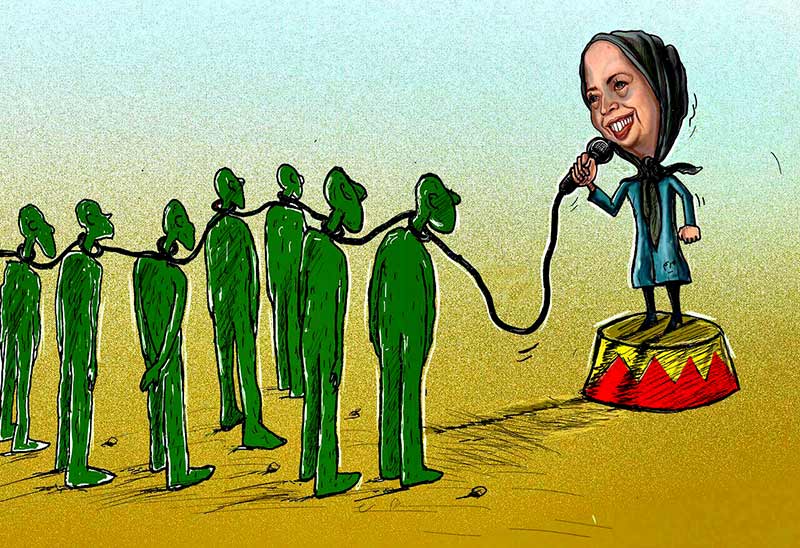
On the other hand, critics and political observers point out that Massoud Rajavi’s appointment of Maryam Rajavi as “the elected president of the National Council of Resistance”, as well as the manner in which the members of the leadership and central councils are appointed, all indicate a system in which authority flows from the top down (an organizational pyramid with Massoud Rajavi at the top).
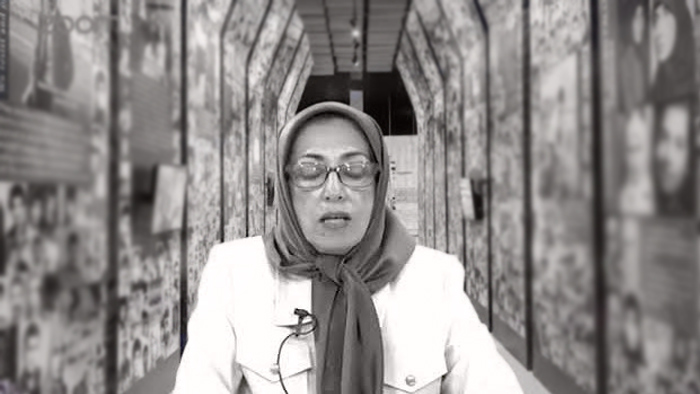
In this context, titles such as “first responsible” –the title of newly-elected Mahnaz Meimanat- more closely reflect the distribution of executive duties at the highest levels of management of the organization than the manifestation of a free will election by a body independent of the leadership.
A comparative study of these structures with Max Weber’s theories on traditional and charismatic authority in the book “Economy and Society” also explains how, in dictatorial structures with the charisma of an individual at the top of the hierarchy, legitimacy is defined and reproduced not through standard ballot boxes, but through connections to the main center of leadership, namely Massoud Rajavi first and then Maryam Rajavi.
Finally, the MEK is trying to present the process of selecting Mahnaz Meimant as the new “first responsible” on the eve of the organization’s 62nd anniversary as a sign of its internal democratic dynamics. However, political analysts and critics assess these mechanisms as in-group, arbitrary, and lacking the standards of modern democracy, because the hegemony of the ideological leadership and the main center of power remains intact.
Mazda Parsi