
An extract of Nazi Biglari’s interview with Rayan Crocker American Ambassador in Bagdad, Nazi Biglari: there are two Iranian dissident groups in Iraq: Mujahedin-e-Khalq and the Kurds of Iraqi Kurdistan. Do the Americans have any links with these two? 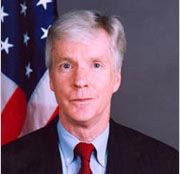 Rayan Crocker: we consider MKO as a terrorist group. They killed American military officials in Tehran and were a part of Saddam’s intelligence service. Everything is clear. We oppose all terrorist organizations whoever and wherever they are. Nazi Biglari: what will you do with the Mujahedin Khalq in Camp Ashraf? Jalal Talebani has called them terrorist group and said that their presence in Iraq is illegal. Rayan Crocker: this is a crucial question and we are negotiating the case with Iraqi administration. If they are supposed to leave Iraq, they should have a destination that should be designated. March 4th,2008 Translation: Nejat Society
Reported by BBC originally in Persian, a group of Mojahedin-e Khalq’s detached members arrived in France. It is the first of a number of groups that managed to leave Iraq for a Western country. 
BBC persian, April 06, 2008:
http://www.bbc.co.uk/persian/iran/story/2008/04/080405_bd-mko.shtml
Link to Aria Association report:
PRNewswire-USNewswire/ — At a press conference in Paris on April 5, 2008, the first series of survivors of the Mojahedin-e Khalq Organisation, aka the Rajavi cult or Saddam’s private army, announced their escape from Camp Ashraf in Iraq and their arrival in Europe.
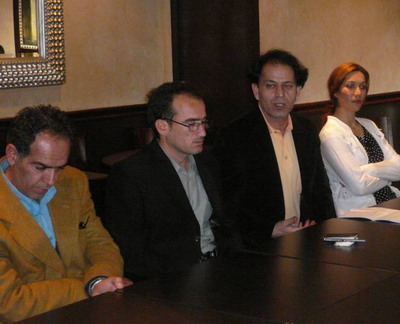
The Mojahedin, which is proscribed as a foreign terrorist entity in the US, UK, EU and Canada, was bombarded and disarmed by the US army back in 2003 and have been confined since in Camp Ashraf in Iraq.

Ms. Nasrin Ebrahimi, 26 years old, who served in the group for over 10 years explained how two years ago she used a military vehicle to escape the terrorist run camp and take sanctuary with the American Army. She alleged that Marjan Akbari, daughter of Bashir Akbari, was killed by the organisation about two years ago.
Mr. Jamshid Charlang, 49 years old, alleged imprisonment and torture by the Mojahedin for criticising the group’s leaders. He said during his imprisonment he witnessed the torture and murder of Parivis Ahmadi in an MKO run prison inside Camp Ashraf. The MKO prevented Charlang from seeing his wife and child for twenty years. After the fall of Saddam he escaped and reached the American army camp before arriving in Paris.
Ebad, 33 years old, and Alireza, 36 years old, were among others talking about the situation of Camp Ashraf which is protected by the American Army, but is still run internally by the uniformed military structure kept intact during the past five years.
In February 2008, Massoud Khodabandeh of Iran-Interlink reported from Baghdad after several meetings addressing the issue of foreign terrorism in Iraq. Iraq’s government demand to expel all 3,000+ Camp Ashraf captives is stalled because no western country will de-proscribe the group so that asylum can be granted them. In the interim, Sahar Family Foundation was established in Iraq to help disaffected Mojahedin members who renounce terrorism find asylum, be reunited with their families and integrate back into mainstream life.
The Conference was organised by the Association for the Protection of Iranian Refugees in France. According to BBC reporting, the Association’s spokesman Javad Firoozmand said this is only the first group to arrive in France after the establishment of Sahar Family Foundation
Prnews wire,
Asghar Farzin, Reza Sadeghi, and Ali Biglary, former members of the MKO, plead for justice against the organisation to the Iraqi judicial authorities and urge them to deal with the situation in Ashraf camp
I Asghar Farzin was born on 1965 in Abadan, Iran. On 1987 I moved to Turkey to continue my studying in that country. I was acquainted with the Mojahedin-e Khalq Organisation (MKO) in the university. They spoke about freedom and justice and also Islam and recruited me into their organisation. The same year, that is December 1987, I was sent to Iraq for a short visit and I returned back to Turkey. The following year I was asked to go to Turkey for a short visit again and I accepted. But this time my passport was taken away from me and they did not let me go back to Turkey. I had to stay in Ashraf camp until the year 2003.
When the coalition and American forces occupied Iraq, I took refuge with the Americans and on February 2004 I moved to a camp called TIPF. On March 2005 I went to Iran to my family in Bushehr on my own request. Now I have come back to Iraq to file a lawsuit against the MKO in Iraqi judicial system.
Consequently 17 years of my life has been wasted and I was kept in Iraq against my will with no contact with my family and if the Americans had not occupied Iraq, God knows how long I had to stay in Ashraf camp. The leaders claim that the entry door of the organisation is closed but the exit is always open. They seduced me and it appeared that they take me to Iraq for a short period but then they said that the exit is only open to the Abu-Ghraib prison in Iraq. Many discontented members had been sent to Abu-Ghraib, therefore I chose to stay in the organisation.
During this period anytime I demanded to contact my family in Iran or I requested to leave the organisation they put me under severe psychological pressure to the point that I would withdraw my request.
The MKO has used seduction as well as compulsion to take away many years of my life when I was young and made me to do forced unpaid labour all through these years. Could a value be estimated for many years of my lost life and my poor heath state at the moment? I urge the Iraqi authorities to deal with the case of the inhabitants of Ashraf camp too who are subject to constant brainwashing and who have no contact with the outside world. I request that the leaders of the MKO face trial since they have abused the basic human rights of their own members.
————–
I Gholam-Reza Sadeqhi Jebeli was born on 1961 in Esfahan, Iran. On 1986 I left Iran to Pakistan and then to Canada and I stayed in Toronto. I married there and I have a son called Arian. After the first Gulf war I was recruited into the MKO and I used to participate in their meetings. On March 1994 I started to work with the organisation fulltime and I used to do street collection and recruiting other people. Then the organisation sent me to the USA and I was a fulltime member over there too. Then I was asked to go to Iraq for a short visit. I travelled to Iraq from New York on September 1997. But in Iraq they took my passport and did not let me go back to Canada again. So I had to stay there against my will until April 2006 when I left the organisation and moved to TIPF. There I realised that my son who had been taken to Iran by a friend when I was going to Iraq is still in Iran and his mother is badly missing me and her. She had gone through hard psychological experiences all through these years and she was hospitalised as the result of enormous mental pressure since she had no trace of either me or our son. The organisation never let me have any sort of contact with them.
Then I decided to go to Iran voluntarily since my son was there. I managed to send him back to Canada to his mother. Now although I can go to Canada myself but I decided to come to Iraq to file a lawsuit against the MKO for wasted many years of my life and my shattered family. The fact is that the organisation seduced me to go to Iraq and forced me to stay there and did not let me to have any contacts with my family in Canada or in Iran. I should also add that when I announced inside the organisation that I would definitely want to despatch from the MKO and the psychological pressure had no use, they assaulted me physically which left me a broken finger which is still noticeable.
—————–
I Ali Biglari was born on 1969 in Kermanshah, Iran. During the Iran-Iraq war I was arrested by the Iraqi forces. On October 1989 the MKO people including Mehdi Abrishamchi came to the camp of the prisoners of war in Iraq and recruited me telling many lies and giving false promises. On the year 2000 I announced that I wanted to dispatch the organisation and consequently they put me in solitary confinement. The condition to get out of the jail was to announce that I regretted my previous request to leave the organisation. Eventually they handed me over to the Iraqi security forces and they took me strait to Abu-Ghraib prison under the charge of illegally passing the boarder. In the prison I requested to meet with the ICRC but they paid no attention and there was no trial either. I was a POW and I was registered with the Red Cross and had an ID number, so illegally passing the boarder had no significance with my case, but they used to say openly that I had to either go back to the MKO or stay in prison without any trial. I was in prison up to the second Gulf war when I was handed over to the Iranian officials and I went back to my family on March 2003. Now I have been married for three years and I have a two years old daughter. I have returned to Iraq to claim for 18 years of my life which was wasted in Iraq and the physical and psychological damages that I suffered both inside the organisation and inside Abu-Ghraib prison. Mehdi Abrishamchi and others who came to the camp of PWOs in Iraq seduced me and showed me a false image of the MKO. They first told me that I can leave anytime I wanted to but I ended up in Abu-Ghraib prison. They imprisoned me and tortured me inside the organisation merely because I wanted to depart and they left the rest of the work for Saddam’s security forces. The mental pressure on me was so high that I once committed suicide inside the organisation but fortunately I survived.
I have come to Iraq to urge the Iraqi judicial authorities to deal with many crimes of the MKO in Iraq against its own members and also deal with the situation of those mentally and physically captured in Ashraf camp and help them.
——————
Contact (Iraq):
saharfamily@yahoo.com
Tel: +964 – 7808481650 (Arabic and Farsi)
Contact (outside Iraq):
Sahar
BM 2632
London
WC1N 3XX
U.K.
Tel: +44 – 2076935044 (English only)
Mr Gholam-Reza Sadeghi a former member of the Mojahedin-e Khalq Organisation (MKO) who was in Ashraf Camp from 1997 until 2006 and stayed about 8 months in the camp controlled by the US Forces called TIPF had previously filed a lawsuit against the MKO in the French judicial system. He has complained the MKO for forcing him to stay in Iraq against his will, imposing psychological and physical pressure on him, and beating him so that his thumb was broken in two places. In this regard his French lawyer who is proceeding the case in the French court had asked him in a meeting to provide him his medical record registered in the American hospital in TIPF which proves that he was tortured when he left the Ashraf camp. Therefore Mr Reza Sadeghi travelled to Iraq and approached the camp to gain that medical record. There happened some events relating to his presence which has been described by him to the Sahar Family Foundation as below:
“. . . I approached the TIPF adjacent to the Ashraf Camp to gain my medical record from the American hospital. While I was waiting in the taxi some MKO guards in Ashraf camp in Iraq recognised me and started photographing me that I took no notice of them. Then as I learned later they informed the Iraqi police based outside Ashrf camp that an Afghan national wearing a blast belt is standing outside the America base and he is aiming to do a terrorist action. Thus some Iraqi police personnel took this warning serious and harassed me with arms and arrested me. The police took away all my belongings and started to take me towards their base. While passing the American check point I started to call them and when they saw us they asked the Iraqi police to take me to them. Meanwhile the MKO persons were busy taking photos. They left the place when the Americans warned them to stop it and asked them to go away.
The personnel in the American check point asked the Iraqi police about the case and they explained that the MKO guard has informed them that an Afghan terrorist wearing a blast belt is busy photographing the US Army facilities and is aiming to carry out a terrorist action, and then we took action to arrest him. I fully introduced myself to the US Forces officer based outside Ashraf camp and explained the reason I was there and told them that I do not posses any weapons or ammunition and I do not have a camera or any other device which might worry them. I told them that I had only approached the TIPF to gain my medical record which indicates that I was tortured when I entered there.
The American officer in charge recorded my particulars and after full investigation and taking orders from his superiors realised that they have been deceived by the MKO persons and I have been subject to a conspiracy where the Iraqi police was made to get involved. He asked the Iraqi police personnel to release me and after I finished my job to escort me back to my taxi that was still waiting for me, and do not let the MKO people bother me anymore or harm me. Meanwhile the American colonel talked to me on the line and assured me that there would be no problem for me and he expressed his wishes that I would make a safe return back to Baghdad.
The Iraqi police personnel took me to their base afterward and asked for my pardon. The higher rank officer said repeatedly after kind hospitality that the Ashraf camp persons misinformed us and we thought that a terrorist activity is in progress against the US Forces. This of course resulted to causing such discomfort for you. He pointed out that neither they nor the American forces have any problem with me or any former MKO member. He also expressed that the MKO is causing a lot of trouble in their province and they are really fed up with these sorts of acts as well as their presence in the area. They asked me to stay with them over the night and be escorted to Khalis in the morning and arrange for my return to Baghdad since it was getting dark and the roads were not safe. I did not accept their offer and decided to return after I finished my business there with the taxi which was waiting for me.
It is worth mentioning that Bizhan Qahremani a member of the MKO intelligence and also Farhang and three other individuals were involved in this case and although they managed to waste my time a little but they once again exposed their nature for the Iraqi police as well as the American forces. The Iraqi police assured me that from now on he would brief his forces not to react immediately on misinformation received form the MKO. He said that such mistakes would not happen again and we would not be trapped within their conspiracy any more. He emphasised that now they are sure the MKO has deliberately misguided them and he is happy that his forces did not harm me when they were provoked by the MKO. . .”
Contact (Iraq):
saharfamily@yahoo.com
Tel: +964 – 7808481650 (Arabic and Farsi)
Contact (outside Iraq):
Sahar
BM 2632
London
WC1N 3XX
U.K.
Tel: +44 – 2076935044 (English only)
————
Sahar Foundation, Baghdad, April 03, 2008
Escape from a guerrilla-cult organisation blocked
In Europe, the Iranian Mojahedin presents itself as a democratic alternative to  the mullahs in Tehran. But the camp, which the organization established in Saddam’s Iraq, is beset by reports of dissidents escaping the gulag. The Iraqi government wants to get rid of the former fighters, but find this avenue blocked. IRO. Baghdad, in early March Hoshiar Esmail says the biggest mistake of his life was to leave his safe exile in Switzerland and to return to the Mojahedin-e Khalgh (Volksmujahedin). In 1998, he went to Iraq, where the armed Iranian opposition group, equipped with weapons and money from the former Iraqi regime, led the struggle against the mullahs’ regime. But since then the political situation in Iraq has changed fundamentally. The Shiite and Kurdish-dominated government is pursuing a course of rapprochement with the former enemy Iran, which culminated in the recent visit of Iranian President Mahmoud Ahmadinejad. The Iranian opposition members are regarded as terrorists who threaten Baghdad. Locked borders
Hoshiar separated from those [loyalists] interned in the Mojahedin-e Khalq camp. But the Iraqis make no difference between those who are loyal to the organization, and those who have separated. Equipped with Iraqi travel documents, he wanted to leave Iraq as soon as possible. In mid-December [2007], together with two other former Mojahedin-e Khalq fighters he made his way to the Turkish border. The journey, and with it the hope of a new beginning floundered at a checkpoint of the Kurdish state in northern Iraq. The Kurdish security forces monitor its border with the rest of Iraq, as if it were a state border. They took the three Iranians, and they were stuck in prison for nearly three weeks. Finally, the three were left stranded in Erbil. Hoshiar found temporary shelter in an inconspicuous building in a secluded quarter in Erbil. On the floor of his bare room is a carpet, in the corner a mattress, the curtains are also drawn in the bright daylight to fend off the curious glances of outsiders. Hoshiar crouches next to the stove. In the year 1979 – Iran had just won the Islamic revolution – he joined the Mojahedin-e Khalq. Fighting alongside the Ayatollah Khomeini against the Shah’s regime, and inspired by the revolutionary zeal of the time, these young Iranians believed in the Islamism and Marxism … doctrine of salvation that Massoud Rajavi, the leader of the group, preached. But early on in the revolution dissident voices were stifled as mercilessly as before under the Shah by the regime which came to power. The Mojahedin-e Khalq was again pushed back, thousands of its members were jailed or executed. Aged 17 years, Hoshiar landed in the Evin prison in Tehran, was later freed and was arrested again. After his release in 1984, he fled to Pakistan, from where he found his path led to Switzerland, which granted him political asylum. "The years in Switzerland were the best of my life," says Hoshiar in retrospect. But like so many exiles he felt torn between the comfort of his country and loyalty to the cause. And the propagandists of the beleaguered Mojahedin-e Khalq told him: If he really wants to change the political situation in Iran, he should go to Iraq. In the Mojahedin-e Khalq gulag
Meanwhile, the Iranian regime’s opponents struck a diabolical pact with Saddam Hussein, who supported it [Mojahedin] generously with weapons and money. In five bases the group planned and rehearsed the storming of Tehran. In Europe Massoud Rajavi’s charismatic wife Maryam acted the part of Jeanne d’Arc of Islam. In 1998, Hoshiar… went to Iraq where he was placed in Camp Ashraf in Baquba, the largest camp of the Mojahedin-e Khalq. Soon, he realized that their talk of an Islamic state with a democratic face was just hollow rhetoric.
The group was acting as a sect, Hoshiar reported. "All we got to hear and see was Rajavi this, Rajavi that," he recalls. But that was not enough. Couples were separated and … in rituals of self-criticism the fighters had to reveal intimate details about themselves before the camp leadership. In this way every individual has been made compliant. Whoever has not complied has felt humiliation. "One veteran fighter wanted to get out. He was with 400 of us in a locked room. We had to swear at and insult him,” Hoshiar reported. Another former fighter who does not want to be named, said: "It was like a Stalinist gulag." Leaving was out of the question. In the autumn of 2002 after the American attack on Iraq Hoshiar finally said he wanted to separate from the Mojahedin. "They promised me that I would go to Europe," he says, "but instead they threw me in a secret prison in the camp." He spent eleven months in solitary confinement… Twice the now 44-year-old tried to take his own life.
The arrest has left serious effects since he now suffers from chronic headaches and tinnitus. In June 2004, Hoshiar, together with several hundred fighters, had left [the group]… Rather than leave Iraq he was admitted again into a camp, this time run by the Americans. The Iraqi government says the Mojahedin-e Khalq are mercenaries of Saddam’s regime and accused it, along with Saddam’s elite units of suppressing the Shiite and Kurdish uprisings in 1991. The Iraqis say they are terrorists, and Baghdad wants them sent back to Iran. But the leadership ranks of the Mojahedin-e Khalq handed their weapons to the Americans and offered them their services. [In 2003] The Americans interned the remaining Mojahedin-e Khalq in Camp Ashraf and put them under their protection.
Endless Odyssey?
Two years later, about 200 ex-fighters applied to become UN Refugees (UNHCR). Walpurga Engelbrecht of the UNHCR in Baghdad said, with the recognition of political persecution the ex-fighters were given refugee status. But no country was prepared to take the refugees. In European diplomatic circles in Baghdad, it is assumed that the Americans’ Camp Ashraf [TIPF and FOB Grizzly] will soon close and that they want to get rid of the separated Mojahedin-e Khalq fighters as quickly as possible. Now Hoshiar and several dozen former Mojahedin-e Khalq have travel documents. Some 50 of them are stranded in Kurdistan. One of them, Mohammed Rostam, has twice tried to get to Turkey but each time he was re-arrested and deported to Iraq where the Kurds also briefly put him into jail. His attempt to get to Baghdad also ended in prison. The security chief of Erbil, Ismet Ergushi, confirmed the arrests and gave assurance that the Government is trying to achieve a lasting solution.
Like many of their former comrades, Mohammed and Hoshiar fear not only the Kurdish authorities, but also the long arm Tehran… "We live in constant fear," says Hoshiar. While Maryam Rajavi poses in Europe as a democratic alternative to the present regime in Tehran, Hoshiar is looking for a new hiding place. The end of his temporary odyssey is not yet in sight.
NZZ online March 31, 2008 (Translated by Iran-Interlink)
http://www.nzz.ch/nachrichten/international /ehemalige_iranische_volksmujahedin_im_irak_ohne_ausweg_1.694952.html
Mr. Radbin is a former member of the MKO. He managed to leave the Ashraf camp just after the occupation of the country. He lives in Canada now. The letter was originally in English which is as follows: I am Keyvan Radbin. I was born on Sep. 22-1971 in Tehran. I got familiar with MKO by their TV and Radio programs. I became their full-time sympathizer from 1999 to 2001 in Tehran and my activities contained social and advertising for the organization. I leaved Iran to Iraq from Turkey for joining to MKO on July 18-2001. I stayed in Turkey for around one month and then after explanation process by the organization’s people in charge, I got moved to Iraq first to Basra port and then to Baghdad. After staying in Baghdad for half day I was moved to Ashraf camp. I leaved the organization on 2003 after the war with difficulty. I was almost one of the first people who leaved the organization after the war. Actually, the first day that I faced the people in charge in Baghdad, I got that something was wrong with them. I could not understand them well and I got that I had fell into deep trouble because their behavior was completely different from what I had been watching in their media programs and what had been told to me up to that time. But I thought may be after passing sometime everything would be good and I would get matched with the new environment so I took it easy!! But on my entry to the reception area in Ashraf camp I got that everything was getting worse and worse within my thirteen days staying in reception area. I got that they were trying to impose something on me that they had never spoke about! First ideological revolution then divorce (noting that I was single) but they never explained about those subjects frankly and openly. Any time that I used to ask them they answered me that when I go forth I would understand the depth of the subjects more!!! Anyway, I don’t make it too long about the sufferings that had there. In just one sentence I must say that all were like a horrible night-mare that the person who has never been there can’t even imagine. I don’t want to remember them again. In reception area I saw that how they tortured one young person psychologically that his face had been changed to an old person within a couple of months. He suffered there just because he didn’t want to accept their imposed ideas and stay there! (Anyway, I have explained everything in details in my interviews). Then I got moved to reception area (called paziresh) again with fully disappointment of the things that I’d seen there in my previous process in reception area. After less than one month I saw myself in a jungle without any rule, a jungle that everything had a meaning other than human being. Then I remembered the old movies about slavery. In one month of the stress I had bad back pain that I still have it. Then I faced with daily operation (called amaliyate jari) or daily self criticism. It was like the ancient Roma rules that governors put the innocents through the lions to get ripped off by the wild animals. Then I faced with weekly cleaning off (called ghosle haftegi) and many other inhumanity things. I started to criticize the organization for their lies and bad behaviors. But each time I was confronted with rough suppressions that I had never seen even by the Iranian regime. Then I remembered one of my friend’s words that told me before joining the organization that they are the worst dictators! I got everything, yes he was right. I requested a few times to leave the organization but each time I faced with psychological and physical pressures which made me to stay there. Eventually they told me that there is no other world outside Ashraf camp and I had to spend the rest of my life there. They took me to their courts many times. I got beaten up a few times by Hassan Norali and Ali Osat the people in charge. I was threatened by Fahimeh Arvani, Fereshteh Shojayi, Ahmad Ebrahim, Abdi, Nader Rafiyi and others many times that if I stay against them they would send me to Abu Ghraib prison. I spent some times in the organization’s intelligence service jails in Ashraf camp a few times. They got few false confessions from me by keeping me under severe pressure. I was always under the vision and control of the people in charge there. I didn’t have any freedom even for going to bathroom and so on. A few times I tried to kill myself but some power didn’t let me do so. I tried to escape from there but it was impossible because I saw few people that tried to escape had been arrested by Saddam’s forces and had been tortured badly. Within the war we moved to Jalula in the north. Since I knew their lies they tried to kill me and they shouted at my head but I was lucky that I had a helmet on my head and God helped me the bullet after hitting to my helmet crooked and didn’t went deep. When we returned to the Iraqi army base (called feylagh in Arabic) they put me on trial by Ahamad Hanifnejad, Vahid Batebi and Saeed Jamali. They blamed me that I am a spy and I work for Iranian regime! Again they tried to put me in trouble but again God like always was with me and they couldn’t do anything. Anyway when we returned to Ashraf camp again I requested once more that I wanted to leave and eventually because of the presence of the US army this time they couldn’t imprison me. Then they put me in the exit area (called khoruji) and even there they also tried to put me in trouble. But when the US army officers came there other defectors and I explained everything to them. They moved us to first TIF and then to TIPF and I spent two years in TIPF and then I moved to Turkey and after two and half years staying in Turkey I came to Canada. In six months of staying in Canada so far I have been able to study and get my Diploma in International business management and I still study to get my second degree as an automotive service technician. So Rajavi tried to teach me how to do suicide bombing but he never succeeded in doing so. I showed him that he is very weak and stupid and his impression of a human being is false. When I was in Ashraf camp I made friendship with Soheyl Khattar (Sasha). He also had same problems as mine and he also had been tortured. He tried to escape but eventually he was killed by his person in charge (called mas’ul) when he was in the Iraqi base (feylaq). Actually the doctor who was called Hassan Aref told me that because he was witness there when Sasha`s dead body was brought to the clinic. I have tons of bitter experiences while I was in Ashraf camp that I have mentioned some of them in my interviews. I will explain them all again with details anywhere and anytime needed. Once getting into MKO you never could see any exit. It was just a one-way road without return. There I saw the frighten tunnel. I must add, all the human rights activists in all over the world must be aware that there is somewhere in Iraq which is called Ashraf camp that in this so called modern world there are innocents who live there like slaves and still are being tortured physically and physiologically that leaders of the cults do. They are the worst dictators that the world has ever seen, even worse than Stalin and Mao;”blue kite”movie is a simple example of imprisoned people in Ashraf camp. By the way, we shouldn’t forget that the defectors who have been displaced to the north of Iraq in Kirkuk have been tortured and their rights for living have been trampled by MKO for many years. Regarding the fact that their refugee status have been recognized by the UNHCR, but they are still displaced and they are still living in bad situation and also get threaten by the MKO. All the world and free countries should help these defectors to be moved to some safe place for living like millions of free people around the world and make their lives. It’s enough to have people abused by MKO.
"Verdana","sans-serif"; mso-fareast-font-family:”>The Italian Radio (RAI-GRR), in the program ’’ Voices of the world’’, published a report on the MKO, sent by its reporter in Iran, Bruno Rufolo .the main axis of the report are as the followings:
"Verdana","sans-serif"; mso-bidi-font-family: Arial”> -the organization struggles to overthrow the Islamic Republic and has been in the FTO list of EU and US for years.
"Verdana","sans-serif"; mso-bidi-font-family: Arial”> – The reporter interviewed a former member of the group who left the group and was granted amnesty by the Iranian Regime and is now working for Nejat Association that cares about the affairs of the defectors of MKO and tries to help them be received by the society once more. The visit was made in the office of Nejat Association. He says:” I don’t want the others to repeat my mistakes.” He compares the totalitarian nature of the organization to that of a cult, explaining that in 1995, he was recruited by the group in Vienne where he had gone for education. He had been in Iraq until 2001 and after several terrorist operations, he was arrested in Iran and was imprisoned for 5 years, then he declared his regret and was released.
"Verdana","sans-serif"; mso-bidi-font-family: Arial”> – The report reads that:” an Iranian intelligence expert revealed that the organization is able to launch terrorist attacks in Europe. It seems that MKO has an influence in Brussel organizations something that makes Tehran be on the alert. The 27 members of European Union are still opposed to the removal of the group from terror list and the Supreme Court issued a ruling on the freezing of the MKO’s assets. The she-guru of the organization Maryam Rajavi went to Brussels a few months ago and her supporters in Washington are not a few. The group might have revealed the Iranian nuclear program in the past.
"Verdana","sans-serif"; mso-fareast-font-family:”>- The reporter continued by asking a question on the nowadays role of the organization, to answer the question, a terrorism expert Guidio Olimpio says:” in the past, the organization was involved in violent activities in terrorist forms but they have mainly dedicated their activities to the opposition since a few years ago and they are now definitly more active, although they don’t have the previous supporters.”
"Verdana","sans-serif"; mso-fareast-font-family:”>- the reporter mentions that the organization fought against the regime of Shah in the 1970’s but after the revolution they were defeated by ayatollah Khomeini’s partisans, so they sought refugee in Iraq and were used as mercenaries by Saddam Hussein to launch terrorist operations inside Iran. After the occupation of Iraq, the 4000 member of the group went under the protection of American forces. They have no support among Iranian people. According to former members, the leaders of MKO force the members to absolute abeyance.
"Verdana","sans-serif"; mso-fareast-font-family:”>Mrs. Singleton, a defector of MEK, in an interview on BBC said:” when I was in the organization, I thought that I am superior to normal people. The group’s leaders prevented us from having any contact with our family. We were completely separated from outside world.”
Governmental Radio of Italy Rai GRR
Ms Batul Soltani, former member of the MKO, appeals to the Iraqi legal authorities against the organisation based in Camp Ashraf in Iraq:
Honourable Judicial Authority of the Republic of Iraq, My name is Batul Soltani daughter of Morteza. I was born in 1965 in Iran and at the moment I live in Baghdad. I married with Mr Hosein Moradi in 1986 in Iran and then we moved to Pakistan together the same year. We were recruited by the MKO in that country and then we were ordered to go to Iraq a year later in 1987. In 1991 we were separated by the order of the organisation and had to give up our children who were sent to Europe later. At first my husband and I resisted against these demands, but being under enormous psychological pressure, we were forces to yield to their orders and eventually we were separated both from each other and then from our children. My daughter Hajar Moradi was born in 1987 in Pakistan and my son Mi’ad Moradi was born in 1991 in Iraq. In the year 1991 while Hajar was 5 and Mi’ad was only 6 months old they were dispatched from me and sent to Europe. I was not allowed to have any contact with them. I still cannot forget the moment my daughter was badly crying when she was leaving me and I still recall the innocent face of my six months old son. Later I learned that my daughter resided with a family in south of Sweden with the alias name of Setareh Khabbazan and she is now studying in a university in the north of that country. My son who is now known as Milad was taken from Iraq by an Iranian family to Holland and after a while was taken back by the organisation and given to another family. When this family faced some difficulties he was given to an orphan residential place. He is now living in a centre for keeping the youngsters in Holland. I have no contact with my children at all and I even don’t know if they have any idea about me. The MKO would not give me any trace of them. While I was in Iraq the organisation did not let me have any contact with my family in Iran and hence my father who was very upset and frustrated as the result of not knowing anything about me died in sorrow. My mother in Iran is now very ill and is deeply suffering as the result of my absence for such a long time. In 2006 I escaped from Camp Ashraf and sought refuge in the American camp called TIPF. In 14 January 2008 I left the TIPF and moved to Baghdad and I desire to go abroad now, but before doing that I wish to file my complaint against the MKO to the Iraqi legal authorities to be dealt with as soon as possible. I wish to regain my family and also my lost identity. I want to appeal against the MKO for my father’s death, my mother’s illness, the separation of my husband as well as my two children, and the wasted 20 years of my life. The MKO and its leadership are responsible for all these miseries. I would like that the MKO be forced to yield to my just requests and give my children’s addresses and also let my husband to meet me in Baghdad. I wish to thank you for your sincere cooperation in advance.
SFF: Please describe your political and organisational life briefly. BS: My name is Batul Soltani daughter of Morteza. I was born in 1965 in Iran and at the moment I live in Baghdad. I married Mr Hosein Moradi in Iran in 1986 and then we moved to Pakistan the same year. There we were recruited into the MKO and the next year, which is 1987, we were ordered to go to Iraq. In 1991 we were separated by the order of the organisation and yet again by their order our children were taken away from us and sent to Europe. My husband and I initially resisted these orders and did not wish to either be separated from each other, nor to abandon our children, but we were put under enormous psychological pressure and we were forced to submit to their demands.
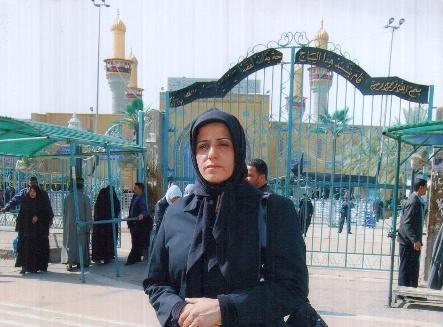
My daughter Hajar Moradi was born in Pakistan in 1987 and my son Mi’ad was born in Iraq in 1991. In the year 1991 while Hajar was 5 years old and Mi’ad was 6 months old, they were separated from us – after we were forcibly separated from each other – and they were sent to Europe. They did not allow us to have any contact with them at all. I still remember my daughter crying hard as she was leaving me. And the innocent face of my six months’ old son is always before my eyes. Many years later I found out that my daughter had been given to a family in the south of Sweden with the fake name of Setareh Khabbazan, and she is now studying in a university in the north of that country. My son was taken to Holland by a family and later moved to another family and eventually was left in an orphanage and now he lives in a care centre for youth in Holland. I do not have any further trace of them and do not even know if they know me at all. The MKO would not give me any addresses and I have no means to contact my children. While I was in the organisation in Iraq I had no permission to contact my family in Iran unless it was to ask for money or try to deceive them into joining the organisation. My father died four years ago whilst under severe mental pressure because of my mysterious absence and my mother is ill and lives with the bitterness of being away from me for such long time. I left the organisation last year, which is 2006, while I was a member of the Leadership Council of the MKO. I escaped from Camp Ashraf and moved into TIPF, which is run by the US forces in Iraq. Then on 14 January 2008 I left the TIPF and moved to Baghdad in order to go abroad. I managed to achieve that possibility but I preferred to stay in Iraq since I have complaints against the MKO and I wish for the Iraqi judicial system to deal with my case urgently. SFF: Why didn’t you go to abroad after you left the TIPF and had the possibility to do so? Why did you decide to stay in Iraq?
BS: I stayed in Iraq to save my husband who is the father of my children and also I wish to help other shattered families like that of my own. I will do anything in my capacity for the families and for the dissident members of the MKO. The truth is that the leader of the MKO has committed many atrocities against these families and he must be questioned for all his actions.
SFF: As a wife and as a mother what demands are you following?
BS: You’d better ask ‘as a human being’ what demands am I following. Of course a human being who has lost 20 years of her life and could not be with her father when he was dying and whose mother is badly missing her and who now wants to regain her husband and her children and her crushed life and rebuild everything from scratch. I will strive to attract the attention of all international political bodies as well as the media to the case of the families of MKO members in Iraq and I wish to help them by any means that I can.
SFF: You have obviously experienced the destruction of a family inside a cult. How do you reckon that one could help other families?
BS: I will do anything I can for these families. I would urge international and humanitarian organisations everywhere to help these suffering families – families who in some cases have not seen their beloved ones for nearly 20 years. The members of the MKO are in a sort of captivity which is worse than any ordinary prison.
SFF: Why is the MKO basically opposing the establishment of any family and what is their definition of a family?
BS: In my opinion the MKO is opposing families because the existence of any kind of feelings and emotions in the members and followers is considered as an obstacle in the way of brainwashing them. The essential state needed to control one’s mind is to suppress anything of that sort in that person. Therefore every trace of love and care most be demolished in the mind of the subject in order to make that person successfully obedient of the leader. No other tendency must exist in the heart of the follower than that towards the leader in order to make the person ready to accept any illogical demand of the leader and to fulfil any of his bizarre desires.
SFF: How are the dissidents of the MKO in Iraq living now and what sort of help they can receive?
BS: At the moment the dissidents of the MKO in Iraq need urgent help. On the one hand they face threats from the Rajavi cult since this the rule of cults, that they cannot tolerate their dissidents and they harass them all the time, and on the other hand these people need legal and financial aid to be able to rebuild their destroyed lives where they wish. In this regard the SFF which is a humanitarian foundation and has been established by Iraqi personalities and international bodies as well as some families of the MKO members in Camp Ashraf is aiming to rescue these people as much as possible and help their families.
SFF: What is the demand of the families who come to Iraq and approach the gates of Camp Ashraf?
BS: They have a righteous and just demand. They want to see their beloved ones without any control and observation imposed by the MKO. For many years these people have been indoctrinated within the isolated boundaries of Camp Ashraf, and they have been denied their basic rights, above all of which is the right to choose freely and to enjoy family relationships. They have always been forced to choose what the leaders want them to. The members of a cult are the prime victims of that cult who need urgent help.
SFF: How could the families help their beloved ones and what can they achieve?
BS: In my opinion some important things could be done. Initially they can neutralize the belief imposed on them under the guise of ‘the path to emancipation’ that family relationships are a sin. This is vital in order to bring their beloved ones back to normal ideas and ordinary life so they can choose for themselves. The truth is that family values and relationships are contrary to cult relationships and would surely deactivate it.
SFF: In your opinion why is the MKO so strongly opposed to its members’ free and direct meeting with their families in Baghdad?
BS: Because as soon as some sort of family tie is established, the lost human feeling of love and affection would come to life in them again, something which Rajavi’s cult is so afraid of. The MKO insists that all members’ feelings and emotions be directed towards Maryam Rajavi and through her to Mas’ud Rajavi.
SFF: What are your plans for the future?
BS: From now on I want to live freely and I wish to decide for myself what to do. I do not wish to be a captive in the boundaries of a destructive cult and will not let them decide for me. I am experiencing the outside world again after 20 years and now I have a better understanding of the realities of the misery inside a cult. I wish to help all those still bound within Camp Ashraf and also their awaiting families as much as I can.
In this respect I wish to refer to the touching will of the father of one of those mental captives in Camp Ashraf who wrote: "I do not know for what reason I should not hold the warm hand of my beloved one while my hand is turning cold?’" He passed away without being able to see his child one more time after so many years.
SFF: We do thank you Ms Soltani for the time you provided us and the good work that you are doing and we wish you every success.
BS: I thank you too and I appreciate the efforts of all Iraqi and Iranian associates of the SFF in Iraq. I believe that you do very good work.