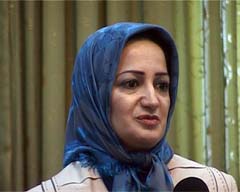
Open letter of SFF to UN envoy to Iraq Martin Kobler
Mr Martin Kobler, Special Representative of the UN General Secretary for Iraq and Head of the 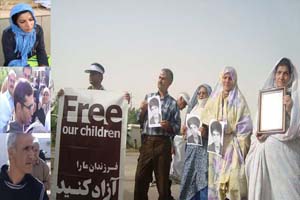 United Nations Assistance Mission for Iraq (UNAMI), reported some facts during the session of the UN Security Council regarding MKO obstructing the evacuation of Ashraf garrison which must be handed over to the government of Iraq. Apparently this report did not please Massoud Rajavi and consequently the so called National Council of Resistance issued a statement and indicated some accusations against Mr. Kobler and the Government of Iraqi.
Mr Kobler advised the UNSC that the patience of the GOI is reaching to its limit and they have every right to impose their rule over their sovereignty and they can no longer close their eyes to the fact that the group is breaking national and international laws and is not cooperating.
Sahar Family Foundation has written a letter to Mr. Kobler regarding the MKO statement which comes below to explain some facts:
United Nations Assistance Mission for Iraq (UNAMI)
Dear Martin Kobler
Immediately following your report to the UN Security Council, the MEK issued a statement on 21 July 2012. You had explained that the MEK was obstructing the evacuation of Camp Ashraf which should have been handed over to the Government of Iraq by 20 July. You advised the UNSC that the patience of the GOI is reaching its limit and they have every right to impose Iraqi sovereignty over the camp and they can no longer be expected to close their eyes to the fact that the MEK is breaking national and international law by not cooperating.
The MEK statement claims that “Martin Kobler’s report to the UNSC against the Mojahedin of Ashraf is at the disposal of violence and suppression” and has accused the GOI of being responsible for the deadlock in the procedure of the evacuation of Ashraf garrison.
Everyone knows and everyone except those who have some interests with the cult admits that no one except Rajavi desires violence and suppression and it has been clearly demonstrated that Rajavi is doing his best to lead the situation towards violent clashes. He wants to pretend that the MEK is being suppressed and then try to find excuses to keep Ashraf.
As you have emphasized in your report, at the moment UNAMI and the GOI have no direct and systematic contact with the inhabitants of Liberty and Ashraf. The leaders of the cult claim that the GOI has not fulfilled its commitments. But first the GOI has no duty toward those who have cooperated with Saddam Hussein in creating massacres in Iraq and second as far as the individual residents are concerned the maximum medical and welfare facilities have been provided for them. Rajavi insists that all the necessities be given only to him – as was the deal under Saddam Hussein – and that he not be obliged to give anything to the residents but keep these necessities for himself and his close aides.
The most amazing argument that Rajavi makes is that he claims Liberty is like a prison. According to all those who managed to escape from the cult, Ashraf garrison is the most notorious prison in the world since the prisoners have not been allowed any sort of contact with the outside world, even their families, for decades. This is the case in Camp Liberty as well and Rajavi’s loyalists there impose all kinds of artificial boundaries on the inhabitants.
Rajavi has proven so far that he does not understand the language of kindness and tolerance and of course tries to incite the Iraqis into violent clashes and get more people killed to feed his propaganda machine. His act is like someone who puts his foot against the door of your house and doesn’t let you close it and if you try to push, he cries that you are hurting his foot.
The truth is that Massoud Rajavi still insists that only he can talk on behalf of all the MEK victims and hostages. Yet, all those who managed to escape from both Ashraf and Liberty admit that they had no idea about the outside world and they were afraid of everything outside the organization and so accepted every possible risk when they decided to flee. They all share the same belief that if enough and correct information be given to the members of the MEK in Iraq, they will surely have maximum cooperation with both the UNAMI and the GOI.
The Sahar Family Foundation once again stresses its principal request – which only Rajavi is refusing. All the victims and hostages both in Ashraf and in Liberty must have the right to visit their suffering families freely and independently. So long as this important matter has not happened, Rajavi is able to demand his ransom for the hostages and will not give in.
Sahar Family Foundation
Baghdad, 23 July 2012
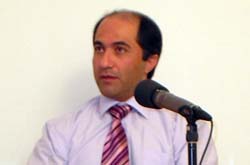 have 25 years record of heavy injuries in this organization and for more than 24 years I have been forcibly using the wheelchair , would like to draw your attention to the situation of the patients as well as injured people in this organization , because recently , Maryam Rajavi and the people’s mujahedin organization by announcements and attending to the security officials of the camp Liberty and by creating different pretexts and excuses like building roads for the patients and injured people and the ridiculous plan of planting trees , are looking for creating more excuses to buy time to convert the Liberty camp to a new Ashraf camp. Truly , you specified a deadline for the closure and evacuation of Ashraf camp because according to the leaders of the people’s mujahedin organization ¨any logic word and cooperation is a sign of weakness¨ for that reason , they do not cooperate by no means , the only logic that the leaders of this organization understand is the language of power.
 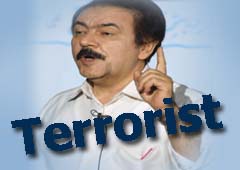 concomitant Patriot Act funding that would surely follow – Massoud Rajavi would grab it with both hands, vacate the camp and make plans to move his army to a similar camp in another country neighbouring Iran.
  died during the past two weeks in Camp Ashraf.
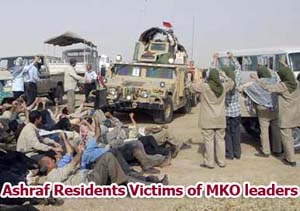 Camp Ashraf.
  that they’d better live in a democracy. Most states claim that their political system is “democratic”. Most opposition groups claim that they are struggling for democracy.
 the UN High Commission of Refugees.
 handed to the MKO by the help of red Cross but the cult hadn’t give him any of them. This caused more hatred in his heart against the Cult of Rajavi.