
Press Statement
Marie Harf
Deputy Spokesperson, Office of the Spokesperson
Washington, DC
September 1, 2013
The United States strongly condemns the terrible events that took place at Camp Ashraf today, which according to various reports resulted in the deaths of and injuries to numerous camp residents. Our condolences go out to the families of the victims and those who were injured in today’s violence.
We are deeply concerned about these reports and are in regular contact with the United Nations Assistance Mission in Iraq (UNAMI), as well as Government of Iraq officials. We support UNAMI’s efforts to conduct its own assessment of the situation and call on the Government of Iraq to fully support those efforts.
We further call on Iraqi authorities to act with urgency to immediately ensure medical assistance to the wounded and to secure the camp against any further violence or harm to the residents. We underscore the responsibility of the Government of Iraq and all relevant stakeholders to ensure the safety and security of residents at both Camp Ashraf and Camp Hurriyah, and we affirm the call by UNAMI for a full and independent investigation into this terrible and tragic event. Those found to be responsible must be held fully accountable.
 that Baghdad says is in the country illegally.
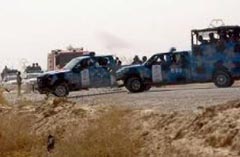 security officer, were met with international condemnation. But the UN and Western governments have been careful not to assign blame amid wildly conflicting narratives.
 presumably know what to do. That is because he and a number of colleagues in law enforcement have received paid trips to Israel to learn how to deal with the terrorist threat. The Washington-based Jewish Institute for National Security Affairs (JINSA) sponsors a Law Enforcement Exchange Program “in order to learn how to better protect the U.S. communities from terrorist attacks.” The program takes law enforcement officials from the United States and sends them to Israel for training in the “strategies and techniques perfected by Israeli law enforcement.” Amerson, past president of the National Sheriff’s Association, made his trip in 2012. Along the way, he reportedly benefited from a “greater understanding of the situation in Israel as it relates to terrorist threats.” JINSA also hosts conferences in the U.S. where Israeli officers are brought over to brief American law enforcement officials.
 astemi, Mossadeq’s right hand, had multiple convictions of embezzlement and jury tampering. […] Stewart Alsop and his brother Joseph—both leading columnists for The New York Herald—warned that unless the United States took a firm stand, "all the little Musaddiqs would be tempted to cause trouble."—Ervand Abrahamian in The Coup: 1953, The CIA, and the Roots of Modern U.S.-Iranian Relations, p. 100
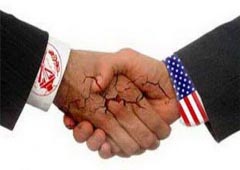
 interaction and cooperation between Iran and the international community will begin soon. The government of “prudence and hope” promised to improve Iran’s foreign relations and find a negotiated solution to Iran’s nuclear stalemate after almost one decade of confrontation and dispute.
 governments in Syria and Iran. The Obama-Al Qaeda marriage of convenience is particularly deep and it centers on the drive to overthrow the Bashar Assad government in Damascus, through an armed opposition.
 emocratically-elected Iranian Prime Minister Mohammad Mosaddeq.