Rajavi and Cult leadership
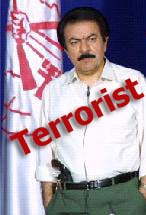
Massoud Rajavi
The MKO’s long-time ideological leader, Mr. Massoud Rajavi’s recently published a message (April 2010) which is weighted with the MKO’s typically aggressive language. Rajavi presents various examples from among national heroes, religious leaders, saints and prophets. It is full of fallacious reasoning particularly used to manipulate and convince Ashraf residents. Here, Rajavi measures himself up to these figures. His words suggest he considers himself superior to them, but his futile effort to heighten the members’ spirits does not thrive because they have long been the audiences of such delusional sayings. 
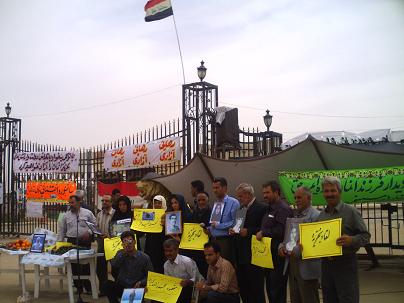
Rajavi also accuses the IRI of launching a psychological campaign by "sending its spies" to Camp Ashraf in his ten-page propaganda campaign. Rajavi uses denial as a defense mechanism to suggest that "the families’ show" in front of Camp Ashraf is a conspiracy of both the Iranian and Iraqi governments. He attempts to make the members believe that there are, in fact, no real families, and that those people, with a very strong emotional presence, who are waiting at Ashraf gates are the regime’s mercenaries—actors who merely play the part of family members. Iraqi and Western media reports portray a number of grieving elderly whose beloved ones are barred from visiting them. Those awaiting people tell stories of the years of separation from their dear ones. Among those interviewed by the BBC, is a young girl who speaks of her eagerness to meet her father whom she has not seen since birth. There is a strong emotional presence near the gates of the camp .
Rajavi uses condescending language and erratic reasoning to affront the families whose loved ones remain in the camp. Further, Rajavi claims to be a follower and admirer of Mosadeq (the Iranian President who nationalized the oil industry in the 1950’s) and quotes his words, saying, "My family is my nation". Although he compares himself to, he fails to mention the atrocities he and his followers committed against fellow Iranians during the eight years of being Saddam Hussein’s accomplice.
Further in the article, Rajavi compares himself with Noah and Camp Ashraf with Noah’s ark. , He interprets the Quran’s verses regarding Noah’s story and clearly sees himself superior to Noah by his criticism of the prophet. Noah who allegedly hesitated to deny his son, but Massoud Rajavi is determined to deny all families’ of Ashraf residents. These allegations are parts of Rajavi’s hard job to persuade Ashraf residents and indeed, signs of his total indigence in justifying his three-decade terrorist activities!
By: Mazda Parsi
Through his serial message of 27 April, Rajavi made its best, in addressing all factions of Iranian new generation, to present a partial and self-analyzed depiction of the post-revolution Iran. However, it is not clear why he suddenly stopped sending these so-called educational messages. The messages contained a chronological analysis of the Iranian contemporary history from the viewpoint of Masoud Rajavi and pursued various objectives. The main point of the messages was developing a link between Rajavi and the widespread post-election conflicts that troubled Iran for a certain period, through which a number of MKO’s sympathizers were also arrested. The degree and extent of the organization’s success and failure in this regard has to be discussed at length, yet the question here is why he changed his mind to proceed with clarifying the issues he deemed necessary. The abrupt interruption came when he was to start explaining the events of 1980s, the initiation of armed phase and Mojahedin’s rampant, aggressive and violent operations. The phase is recorded as the most convulsionary post-revolution chapter in the Iranian contemporary and the organization has since persisted in use of violence in its struggle in spite of its pro-democratic slogans. The struggle has so far resulted in 12000 death and assassinations, as recorded and asserted by the organization itself, as well as an escalating an atmosphere of hostility against the current ruling regime.
Through the messages, Rajavi was supposed to either accept the responsibility of the terrorist actions of 1980s, some of which he has denied, or deny it and in any case, he had to face challenges and blames directed at him by many other opposition, active both inside of Iran and in abroad, as well as being accountable for the deeds before the international societies and tribunals. Although Rajavi makes his utmost effort to rationalize and theorize his terrorist and aggressive actions by resorting to fabrication and distortion of the truth, he fails to deny the declaration of his armed struggle and the operations in succession; tragic bomb plants and assassinations condemned by majority of the Iranian masses and factions. He stopped just when all were waiting to see how he could acquit himself of the plain and obvious charges of terrorism that he considered as the organization’s integral ideological and political principles and indoctrinations.
He justified his terrorist atrocities as a response to the regime’s politically outrageous treatment while he initiated the phase long before receiving heavy strikes from the regime perpetrating terrorist and bomb attacks. In other words, he grabbed at armed phase at a time when the regime had a neutral position toward the organization. All groups and parties of any political and ideological thought and position as well as those who followed Rajavi until the commencement of the armed phase have acknowledged the fact that Rajavi has struck a heavy strategic blow on the organization by resorting to armed struggle and altered the development of democracy in the society for some decades.
Interestingly enough, Rajavi insists to instill the accuracy of his decision in entering the armed phase into the prior and present generations. However, he is well aware that the terrors like that of 1980s were so brutal, disastrous and unjustifiable that he can never rationalize them particularly at a time when a great number of critics and dissidents have accused him of terrorism and violence. At least the proven evidence is its registration on global terrorist lists regardless of being removed or maintained. Any explanation in this regard by Rajavi either for denying or accepting the responsibility of the actions may just result in the severity of his lack of political legitimacy. The review of such events and the position takings of Rajavi toward them may clarify the extent of the sympathy of Rajavi with the new post-election riots known as the green movement.
Now Rajavi is getting mired in a dilemma to clarify, now that he has started a review of his irreconcilable contrarieties with a revolution, who the perpetrators of terrorist deeds were and what he hoped to gain by these atrocities premeditated against noncombatant and civilian targets. He intentionally evades reviewing the events of the 20 June onward when Mojahedin, provoked by him, surfaced their opposition in the first mass movement on in 1981. He has to either bear the responsibility for engaging in bombings, assassinations and other committed series of atrocities, to force the population to rise against the regime or distance them, or put the blame on others; either of which have negative consequences for him. Can it be for any other reason when somebody as Rajavi, ideologically and organizationally prejudiced, begins to chronicle fragments from a nation’s post-revolution history?
Mujahedin Khalq Organization was founded in 1960’s, to overthrow the US-backed regime of the Shah of Iran but it took it 45 years to turn in to a religious cult of personality.

Once mujahedin chanted the slogans for "Liberation of Iranian Heroic People", and viewed people as their main resource, its leaders, on top position Massoud Rajavi deviated in order to stand against those very people including families of Ashraf residents.
Why is Rajavi so terrified of families visiting with their children? Why does he enter the course personally to insult the families as "regime’s chained dogs"?
If MKO’s members, according to Rajavi, chose the struggle willingly, why would he fear visiting their parents?
The true fact that Rajavi tries to deny is that the motivations on which MKO war based in 1965s, are no more existing.
In his message of April 29th, Rajavi speaks of the so-called heroic people and the ransom they should dedicate:"How simply we can speak of paying for freedom of people and country but it is too hard to act".
Indeed, the treasons the Rajavis committed against their compatriots have left nothing for MKO. Once they chanted the motto "Without Iran, I don’t want life, today they hang the slogan "Without Ashraf, I don’t want life" on Camp Ashraf gates! Today MKO leaders are resisting against Iranian people.
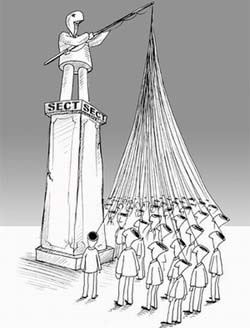
Massoud Rajavi points the flesh of his attacks on families, why? The answer is laid in MKO’s cult like practices. Maryam and Massoud Rajavi have turned the members into robots who have no free will and no individuality.
Some time ago their love to country meant taking weapons and chanting slogans, according to them but today their love is limited to the piece of land denoted to them by Saddam Hussein. Their love to parents and family have replaced by love to Massoud and Maryam Rajavi. All this defines a "cult of personality".
MKO members have been living in a bubble called Camp Ashraf. They have been manipulated and deprived from emotions and affections for more than two decades.
Massoud Rajavi knows that the spell of his cult’s amputation is family and normal social relationship. Once a member is among his family, far from the cult’s propaganda, the bubble is ruined and the member’s eyes will open to a new world full of love and affections.
Ali Reza Mir Asgari
The repeated airplay of a series of inter-organizational sessions discussing MKO’s July’s violent reaction against the entrance of Iraqi forces that left many casualties from the both sides well illustrates the organization’s bias toward cultic and non-democratic practices. The sessions, held in absence of Rajavi and under the title of ‘in defense of camp Ashraf’, mainly focused on the procedures that resulted in the withdrawal of Iraqi police forces. Emboldened by the
consequences, the organization is preparing for and seriously considering further systematically organized defensive measures to defend its bastion against any similar move by the Iraqi government. There are some significant points in this regard to be considered.
1. As mentioned before, the survival of Camp Ashraf is dependent upon these never-ceasing sessions and it is impossible to alter or modify the relation between the organization’s high rankings and rank-and-files as long as the form and structure of Mojahedin organization and discipline remains as such. Likewise, Rajavi refers to Camp Ashraf and his ideological revolution as the main factor in the survival of MKO. He believes that his opponents have failed to understand his internal ideological revolution.
2. The main point is the indirect presence of Rajavi in the sessions. Though his physical absence may have some negative consequences, even his indirect presence may double the mental and psychological upshots therein. Another point is how Rajavi develops his relationship with MKO members. Before, he deemed it necessary to have a direct and close control over the members and to motivate them to put all faith in mechanisms imposed on them. Although living in hideout, the members are persuaded to feel his presence.
3. These sessions are highly significant to the point that Rajavi has repeatedly focused on the necessity of their holding. He considers it as one of the main achievements of the struggles in the contemporary history and also one of the main inter-organizational principles of Marxism.
The significance of the sessions can be reviewed from different aspects yet the main issue is how to nullify the negative and destructive consequences of this inter- organizational mechanism of Rajavi. Iraqi officials have to get a deep understanding of MKO’s systematized programming and procedures to force them desist from relocation of Camp Ashraf. It has been pointed out over and over again that determination of the destiny of Ashraf residents depends on communicating and sympathy with MKO separated members. According to the statements made by MKO former members as well as international reports, findings and studies on cultic relations, the sole solution for meeting the challenge of Mojahedin in Iraq is separating the body (the members) from the head (the leaders) of the organization.
However, the evidences disclose that the direct and hierarchical relationship between the head and body within MKO is as before and it is unlikely to undergo any changed or be altered. Mojahedin cannot be neither relocated nor expelled from Iraqi soil unless a heavy strike splits MKO leadership from the members. The airplay of the sessions may imply that there would be no change in the organizational relations of MKO as long as these sessions are held. As shown in Mojahedin TV, Rajavi is still brainwashing Ashraf residents to celebrate triumph over the adversaries after they have been coerced to resort to violence and self-destruction.
According to the psychologists, narcissism is the basis of many adversities including totalitarianism and despotism. The atmosphere and conditions make no difference for the narcissist one yet the satisfaction of his desires is of utmost significance. Evaluating Rajavi from this point of view and based on the visage he depicts of himself through his messages may clarify the hidden aspects of his personality. Of course, his narcissism is the result of a long process starting from his adolescence up to his recent so-called educational serial messages for the present Iranian generation. Years ago, Lotfollah Meisami presented an analysis of Rajavi’s personal behaviors in team-houses in an article titled “Moral decadence of a Mojahed” when hardly anyone cared this aspect of Rajavi’s personality. There, he has investigated Rajavi from various dimensions based on the quoted evidences of the eye witnesses.
The picture depicted by Meisami of Rajavi is an amalgam of narcissism, despotism, absolutism, vaingloriousness, jealousy, totalitarianism, welfare-seeker and other negative features proving the incompetence of an individual for assuming the leadership of an organization like MKO. Yet, Rajavi had no care for this matter. According to Meisami, Hanifnejad and Bakeri, of the early founders of the organization, reacted severely to his egotism and affluence and warned about these potential threats in Rajavi. The same traits and inclinations can be traced in Rajavi in higher echelons particularly when he initiated the ideological revolution of Mojahedin to make the ground for the appeasement of his egoistic lusts one of which was to appoint himself an omniscient sacred leader free from any error and mistake. All those criticizing him in this phase, including his foreign critics like Abrahamian and Gessler, are unanimous that he is a real narcissist and totalitarian psychopath. The statements made by Batool Soltani, a separated MKO member of the Leadership Council, may clarify this aspect of his personality more clearly.
Moreover, his narcissism is evident in his lectures and written messages just by paying attention to his tone and style in making a relationship with his audience. He looks at others from a top position legitimizing no one but himself and bearing the existence of no dissident. He is in the centre of all memoirs stated in his messages. All events depend upon him. He sets up every thing and finally puts and end to them through a determining and historical conclusion. In this regard, Saeed Shahsavandi refers to a key point illustrating this aspect of Rajavi’s personality more clearly. As he puts into words, Rajavi considered all his actions as a step forward and a victory disregarding their real negative political and organizational consequences in the world outside.
There are interesting points focusing on Rajavi’s narcissism by his own words. In his message, he attempts to promote himself to the highest possible point where he makes a relation of any kind between himself and the contemporary historical events of Iran. Surprisingly enough, he makes an astonishing claim in the 14th part of the massage by raving about his education and understanding of Islam beyond those much older than him at a time in 1973 when they were in Pahlavi’s prison:
In 1972, we had a ceremony of commemorating the event of Ashura in Qasr prison in which all prisoners attended. I was one of the lecturers and re-examined the history of Islam from the departure of the Prophet up to the uprising of Ashura. Later, Mr. Anvari asserted that his viewpoint on Islam and Mojahedin had been altered totally and he had never had such an understanding from Islam…
Or he refers to his acquaintance with Qur’an and Arabic language, saying:
Another instance was Ayatollah Rabbani Shirazi. Once in Qasr prison I told him that the Holy Qur’an is to be translated into Persian again to be understood by all. He pursued it repeatedly and asked me to start the translation of the Qur’an along with him yet I fudged.
Moreover, he expounds on his mastery of Islamic economy:
In 1973, he asked me insistently to hold a class of economy from the Islamic viewpoint and finally I consented to discuss economy with him in ten sessions while walking in the section 6 of Qasr prison. Rabbani had no doubt or ambiguity at the end of the sessions.
Of course, Rajavi makes other claims of these kinds while he passed the days in prison and how some distinguished political figures came to become interested in him. These statements can be judged upon by those who were in the same prison at that time like Meisami. He writes that Rajavi failed in inter-prison election held by the imprisoned members to choose a leader for the organization inside prison and he embarrassed and disappointed to the point that he began to cry. In this regard, the memoirs of Mohammad Ali Mamouei, of leftist prisoners, can be reviewed too. Taking a brief look at the baseless claims of a frail and narcissist individual on his mastery of Arabic language and history, economy and the more to be appreciated by elites, many of whom were considered ayatollahs, three times older than him as well as his adamant persistence to identify himself with historical figures like Weber, Marx, Feuerbach, Smith, Oparin, and Hegel may help us to unearth the truth about an egotist and narcissist man enforcing his will and power on an organization that has been turned into a personal cult. Also, the reason why he tries as well as other sacred and holy personalities can be identifies. He is highly suffering from narcissism and is under such delusions of grandeur that he claims to be the most talented in all fields of philosophy, sociology, history, economy, biology, ecology, anthropology, psychology, and the more. Not only that but he is the genius to solve all questions and ambiguities concerning the aforementioned fields. What can really one expect of an organization run under the leadership of such a self-conceit psychopath or comic character as some may call.
Whenever possible, Rajavi has sought refuge in historical, popular, and revolutionary figures of Iranian history to justify his anti-national activities during years of his so-called revolutionary struggle. In other words, he misuses the repute of the distinguished Iranian freedom fighters as well as the leaders of social revolutions, particularly in the recent century, like Sattar Khan, Baqir Khan and Modarres to cover up his political scandals. The reputation of these leaders is due to their patriotism and can never be compared to the notorious status of Rajavi in the Iranian history and the mind of the public. He can hardly claim to be truly struggling for the independence and freedom of Iran. Evidently, all leaders of social movements in Iran had fortes and failures yet their actions are highly different from that of Rajavi who is a dishonorable traitor. While the Iranian history has recorded the above mentioned and even non-Iranian freedom fighters as great patriots and heroes, it never forgets those quislings like Rajavi who betrayed their country allied themselves with the invaders against their home country and took the oath of cooperation with the enemies of their nation.
Rajavi is making his utmost attempt to parallel his anti-national activities with those of admirable historical figures of Iran who sacrificed their lives to secure the independence and freedom of their land. Despite the temporary dominance of the invaders in Iran, they never took the path of Rajavi to collaborate with the foreigners under the pretext of freedom fighting. However, the position of Rajavi in the Iranian history is like a stigma evident and it is not clear how he can justify his notorious past record of perfidious deeds, besides his fruitless lobbying with the EU, USA, and France as the opponents of the independence of Iran, that made other associate oppositions ashamed of their alliance with MKO. The fact is that those trying to judge him according to Marxist thought and analyses are intentionally neglecting the real cultic nature of his activities that cannot be analyzed within any framework. The main mistake of these leftist and rightist individuals and groups is that they still judge Rajavi in the framework of a fallible revolutionary, political, and idealist individual in political arena. They aim to hide the real visage of Rajavi under the banner of criticism yet they ignore the fact that Rajavi has never recognized their legitimacy since Rajavi has proved that he does not consent to anything less than being totally submitted to and admired.
Those who insist to put Rajavi among the ten top figures of Iranian history are in fact deriding themselves. How Rajavi dares to parallel himself to these historical figures is due to the fact that his advocates and supporters are not aware of their real position in the Iranian history. While he bears no one but himself as the leader of the Iranian contemporary history, he has to resort to this parallelism for winning legitimacy. However, his position takings are different from his intra-organizational viewpoints on these individuals. For instance, though Rajavi appreciates Mosaddeq as the leader of nationalization of oil industries in Iran, Mosaddeq is described as a man of the bourgeoisie class and a descendant of Qajar, the dynasty previous to Pahlavi, who failed to find a true social path in his life to side with MKO.
Moreover, despite the fact that Rajavi approves the anti-tyrannical and anti-colonial struggles of Mirza Koochak Khan, the distinguished Iranian leader of the Jungle Movement, and claims himself as his follower, he had no qualms about calling him a reactionary and backward-looking person whenever he came to analyze his movement for the insiders. Also in regard to Modarres, although Rajavi highly esteems him in out of the organization relations, yet he criticizes him as a dogmatist who stood against republicanism as a barrier to hinder Iran’s historical and economic progress toward Socialism originated revolution. Likewise, almost all historical figures have the same typical duality for Rajavi. On the one hand, he admires their activities for the sake of demagogy and on the other hand, they are accused and criticized in the intra-organizational analyses of MKO. This may clarify the depth of the insincerity and fraudulency of Masoud Rajavi in misusing historical figures. The ideological subordinates of Rajavi who have deified him have no other choice but to follow him blindly in his hypocrisy.
There is a significant implied point in the recent message of Masoud Rajavi despite all his quibbles and paradoxical statements. There, he has acknowledged the fact that after three decades of blind activities, victimization, wasting time, indetermination, and misusing all levers and means for achieving political power, he has to return to a zero point initiating his struggle anew. In other words, the organization has to accept the assumption that nothing has happened so far and the past and all its events are to be cleaned and replaced with a new phase. It is a bitter truth to be admitted by Rajavi and his organization, yet he is well aware that he has no other choice but submitting to the existing conditions. Therefore, he has to ignore the past and play a new game like those children who cannot bear failure and feel ashamed to pursue it yet their childish perversity refrains them to quit so they insist on playing again.
The motivation of this true confession is that the child is to prevent the psychological effects of the humiliating failure, refreshing his mental and psychological potentials to set up another game. Some children even cannot bear continuing a lost game but stubbornly disturb it and declare the end of the game they have lost to provide the grounds for another one. Suppose that the egotist failed child steps in a new game with the same potentials and mental and physical abilities. The more games restarted, the more failures will results. The psychological state of the failures make them refrain to submit to any defeat and reflect upon its causes and effects. Perhaps, they cannot do so due to their childish self-will.
However, the psychological analysis of Rajavi at the time being reveals that he is similar to the child who fails repeatedly yet his perverse insistence and stubbornness give solace neither to him nor to his followers and advocates. He never learns lessons of his past nor does he investigate the basis of his failures in himself; he prefers to restart a new game occasionally based on his outdated cliché ideology.
There is another point in his message that is a novel delusion. Though he is consent to return to a zero point, he concentrates on an optimistic childish view based on his old delusion of overthrowing the Iranian regime. He is to initiate a long play. He has come to the point that allying with Saddam and then with the West due to their opposition to Iran has been fruitless since he suffers from the lack of public support in Iran, a fact referred to by the West repeatedly. Now, Rajavi knows that he has no option but supporting Reza Pahlavi, the descendant of Pahlavi’s regime in Iran, offering him the presidency of Iran in the future to win the consent of the West too. What is surprising, he has also become unconcerned of a past sensitivity for the hegemony of Mojahedin over the Iranian opposition.
During the last three decades, Rajavi never consented to be in such a full retreat. It has its roots in his pathological delusion and simplistic political views. He is not aware of the fact that all his challenges are not due to his wrong and cursory decision makings yet his ignorance of the internal conditions of Iran and the public view that is the main challenge met by MKO. Any amount of flexibility and submission on the part of Rajavi toward the west may solve a trifle portion of his problems. His basic challenge is the lack of public support in Iran so he is doing his best to attract the attention of the Iranians. Anyway, this is a childish game based on the delusion of winning the legitimacy of outsiders as well as insiders. This new approach is in fact the maintenance of his past policy in the recent decades; it differs in the point that he has to return to a zero point and at the same time resort to new illusions and fantasies.
It is typical of the cult leaders to use rhetoric to demarcate the boundary for the critics, especially those who demonstrate signs of siding with the adversaries. Rajavi is not an exception at all. For him, as he has recently expressed in his message, the true critics are those who in no way take any side with the Iranian regime as the organization’s foe to be overthrown. As seen in his recent message, he once more focuses on this point saying:
We declare that everyone has the right to oppose NCRI or MKO and express its criticisms freely. But if it is manipulated as a means to overstep the demarcated line between MKO and the regime or to recognizing the legitimacy of some internal parties, we consider it a betrayal of the interests of the nation.
In simple words, Rajavi makes a new attempt to legitimize his critics and opponents just when they denounce the Iranian regime and maintain their siding with the organization. But it is a claim hard to believe since Rajavi, at least in his past 30-year long struggle against the Iranian regime, has never treated his critics with the least courtesy let alone to recognize them and their deed. However, his newly set criterion is founded on a mutual concordance, the prerequisite for which is recognition of Mojahedin’s rightful resistance and further distancing from the Iranian regime because, as he puts into words, “contravening this rightful resistance, under any subterfuge, results in nothing but the survival of the regime”.
Rajavi is well aware that he is talking nonsense for a critic cannot possibly take sides with the Iranian regime as well as Mojahedin at the same time. Besides, he has never welcomed the opponents of the regime who have also taken a different side with his organization. Clearly enough, those who have ever recognized the legitimacy of MKO and have submitted to the authenticity of its leadership fail to be true critics even if they have dared to say or write to question anything. In other words, any individual, regardless of the high or low political status he occupies, failing to be totally devoted to Rajavi is labeled an agent of the Iranian regime despite his opposition to the regime and he has to even pay costs for defending political rights of Rajavi. Here is an example.
It was revealed in early days after the Islamic revolution that Mehdi Bazargan, the late Provisional Government’s Primer, and Rajavi had frequent contacts. In spite of their disputes, Bazargan is said to have tried to convince Rajavi to support his government. However, the main point is that Rajavi does approve antagonizing Bazargan as the man of authority who once defended him as the nominee in the course of the parliament elections at the time:
Although we openly declared disputes with Bazargan in 1979-80, he supported me plainly in the second round of elections and made many troubles for himself while he was under many pressures after his dismissal as the Prime Minister.
Of course, this is not an assertion for appreciating the late Bazargan but further to state he had betrayed him and his organization by refusing the invitation to join the organization to fight in the same front against the regime. His hostility against Bazargan who had made full support of Rajavi in the early years of revolution while the organization had created many problems for his government is a good indication of the fact that Rajavi denounces whoever would decry his leadership authenticity. Consider that Rajavi claims Bazargan’s support was due to the principles of freedom and ethical considerations, then, has he to be blamed for rejecting Mojahedin’s invitation for the very same causes? It has to be pointed out that Bazargan never criticized the organization in his life; on the contrary, he supported them during 1980s and sometimes advised them from the stance of an experienced politician.
We are not concerned with Bazargan and his position in this discussion; here the aim is to prove that the slogans of Rajavi on being open to criticism and siding with the regime’s opponents are absurd and nonsense and sheer lip service. If he has any objection, he is invited to present just one example to have recognized critics who have made mild or sever criticism against Mojahedin’s leadership.
It is not the first time that MKO, and its leader in particular, falsely claims to have provided an open window for dissident members, critics, and even infiltrators to express their views and is showing the highest degree of tolerance compared with other revolutionary organizations. On the contrary, most former MKO members report instances of the organization’s duality in dealing with its critics. They acknowledge the fact that Mojahedin suppress dissident members by means of intimidation, torture, false accusations, contempt and other psychological pressures as well as being branded as the agents and traitors. None of the Rajavi’s plotted scenarios to pose a pro-democratic seem to be working especially when he tries to proselytize hostile attitudes towards critics.
As it is common in most closed systems with an authoritarian structure, no feedback is permitted within the system and any modification is refused except those done by leadership approval. As a result, any critic or complainer will face a variety of allegations since the leader never tolerates them. It is a well proven fact within Mojahedin Khalq Organizatin (MKO, MEK, PMOI, NCRI) and Massoud Rajavi goes further in his message of January 20th in an attempt to justify his hostile and aggressive reactions against his critics:
They suppose we do not know the meaning, definition and the difference between serious criticism and submission, reactionarism, scandal, and flattery regarding the regime of Velayat-e Faqih and democratic gestures and think that we have not experienced it.
In this way, Rajavi makes an attempt to deny all criticisms and disclosures made by MKO detached members pretending that all his critics are unexceptionally related to the Iranian regime and are it agents. Evidently, he has to attribute his critics as well as the opponent trends to the Iranian regime. His self-fabricating theory and principle of “those who are not with us are against us” legitimizes him to introduce anyone having the least objection to his policies and actions as an agent of the Iranian regime. His analyses in the last three decades results in this conclusion:
They suppose we do not know the notorious ministry (of Information) has instructed anonymous soldiers to give the priority to spreading rumors on the action of Mojahedin in labeling all their critics as the agents of Iranian regime.
The above statements being distracted from his message of January 20th may shed light on Rajavi’s paradoxical and false assertions. He tries to infuse the idea that in spite of the existing rumors against him, he is highly democratic and ready for accountability contrary to the Iranian regime. Interestingly enough, Rajavi denies all the charges posed on him and attributes his 30-year policy to the Iranian regime while all his intra and extra-organizational statements and messages in recent years openly focus on calling his critics and opponents as infiltrators and agents of the regime. He states that he knows the difference between serious criticism and submission. It is a clear difference and everybody can distinguish the boundary between these concepts yet Rajavi has never admitted any criticism, even those announced to have been on an impartial side.
It is highly surprising that someone can claim all his critics, detached members of his organization as well as westerners and researchers criticizing him over the last three decades have been paid by the Iranian regime. This assertion in itself implies Rajavi’s undemocratic and egocentric nature. Now this question arises that even if we consider all his past critics related to the Iranian regime, how can he legitimize his present critics and be accountable for their political, ideological, and strategic questions and doubts in an ethical manner far from any insult and slander keeping the red borders? Is it probable that Rajavi once for ever answer his critics’ questions and doubts even by means of virtual and communicative devices?
Even we give him the opportunity to disgrace those he assumes to be the agents of the Iranian regime and just answer to one person.
His claim of the policy of the Iranian regime in spreading rumors on his labeling the critics as agents of the regime is a big lie yet taking an optimistic view; he is invited to take part in face-to-face debates with his critics to prove that the Iranian regime is responsible for these charges and also acquit himself of all accusations posed on him in recent three decades. Although the new approach of Rajavi to solve the information gap in those who are unfamiliar with his past history due to their social isolation with distortion and fabrication is not so instrumental, we can blink at them and hope that the recent transitions and new conditions have influenced Rajavi and he is ready for a fundamental change. Taking this assumption into mind, Rajavi is invited to determine a time for answering the issues and questions posed on him.