- What do Iranians think of the MEK?

- IT’S A MISTAKE TO TREAT THE MEK AS A NORMAL OPPOSITION GROUP
- Female Defectors Of The MKO (MEK) In EU Parliament. March 8th
- INTERNATIONAL LIBERTY ASSOCIATION, MEK’S SO-CALLED CHARITY BREACHES RULES OF THE UK CHARITY COMMISSION
- THE MOJAHEDIN-E KHALQ AREN’T AMERICA’S FRIENDS. EVEN IRANIANS WHO HATE THE REGIME DON’T WANT MEK
- THE SPECIAL MOMENT TO SAY NO TO THE CULT OF RAJAVI (MEK, NCRI, …)
- Mothers, the Forgotten Victims
Nejat Bloggers
Nejat Society members who went to Atabay home on the occasion of Nowruz were warmly welcomed by the family.

Atabay family are among active families of Nejat Society, Gilan branch.
The ailing, aged mother of the family whose son is captivated by the cult of Rajavis for long years asked about her dear Hamid Mohammad whereabouts. She asked why the cult leaders doesn’t allow her dear son to contact his family?!

Atabay family has several times petitioned to the international human rights bodies to help them visit their beloved son.
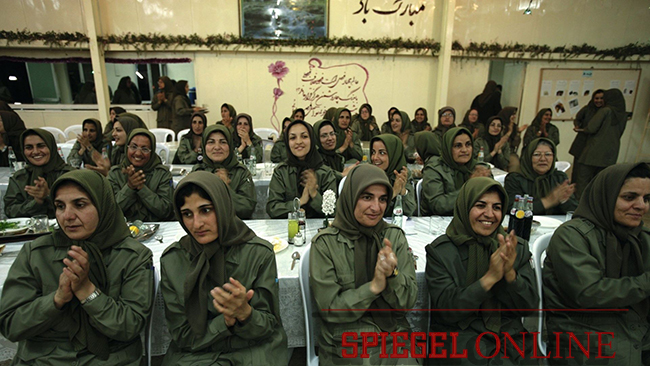
Mujahedin-e Khalq former members in Albania gathered together and celebrated the Iranian New Year.
They wished their friends who are still captivated at Camp Ashraf 3, liberty from the MKO cult.
During last years, the MKO defectors in Albania, most with more than three decades of membership in the group, shared with the outsiders what they underwent and witnessed in the oppressive cult-like system of the Mujahedin-e Khalq camps.
The former members’ testimonies and insights caused the liberation of several other members and this process has continued and increased day by day.


Imagine terrorist extremists attacking European citizens, cutting their throats with knife, breaking their hands, removing their eyes with fingers, and tearing their mouth open. Even imagining such scenes seems horrific but there are some people out there who have been trained to do so. A large group of these trained terrorists are members of the Mujahedin Khalq Organization (the MKO/ MEK/ PMOI/the Cult of Rajavi). Coincidently, they live in Europe now.
The recent report published by Der Spiegel revealed the above-mentioned horrific facts about the evil of the MKO. The history of the MKO has proved that committing such violent acts is not far from the background of the group. There are numerous reports and testimonies on the MKO’s armed and unarmed violence. Today, there are hundreds of people in the MKO camp in Albania who have been trained to commit these evil deeds whenever they deem them necessary. One may wonder what makes such brutal trainings as ordinary routine choirs of a community.
The German born prominent philosopher Hannah Arendt is best known for her works on the problem of “evil”. Can one do evil without being evil? This was the puzzling question that she grappled with when she reported for The New Yorker in 1961 on the war crimes trial of Adolph Eichmann, the Nazi operative responsible for organizing the transportation of millions of Jews and others to various concentration camps.
Arendt was remarkably sensitive about some of the deepest problems, confusions and dangerous tendencies in modern political life, many of them still with us today. The suffocating atmosphere of the MKO camps –where members have to pressure their peers abusing them verbally and physically in their everyday life and are always prepared to attack outsiders —is a significant example of complex and dangerous tendencies within a community in the modern world.
Arendt believes that all aspects of the life under the totalitarian ruling systems are controlled by the totalitarian leaders. The evil of the dictatorship leads the followers to an abyss in which they practically lose their mental power. According to her, conscience of the citizens in a dictatorship is paralyzed; they lose their individuality.
This process has been the exact mechanism that has been used in the MKO.
The most recent defector of the MKO in Albania, Hadi Sani Khani admits that once he was an MKO member, he was like a robot, not able to choose for a moment of his private life. “We were brainwashed in daily meetings, our minds had to be drained of any personal thoughts during daily and weekly brainwashing sessions,” he says.
Actually, totalitarianism has sickened members in a dangerous way that they submit to the decisions that the dictator (in this case Massoud Rajavi) makes for them. Members believe in what the top of the hierarchy says. They think that Massoud and Maryam Rajavi are protectors of their rights and interests. “Massoud Rajavi was idolized like a prophet, a god for us,” Sani Khani says.
Hanna Arendt thinks that the evil-seized members are in return the factors to consolidate the absolute power of the dictator. “In politics obedience and support are the same”, she suggests. To break this awkward equation, she suggests a deep inner conversation that awakes the individuality of the citizen.
Those who defect the MKO definitely had experienced the unique moment that they gained the ability to have this inner conversation. This special moment is usually declared in the firsthand accounts of former members’ testimonies. For instance, former member of the group Bahman Azami, speaks of the moment he saw some children playing in the park over the walls of the MKO’s camp in Tirana, Albania. The kids took his mind to the life outside the group. He was eventually punished by his female commandant for he had broken the regulations of the cult that forbids thinking about normal life. However, the inner conversation had started for Bahman. He started doubting the group’s cause questioning himself for all the years of his life he had lost in the group and he finally left the group.
Although Massoud and Maryam Rajavi have been making efforts to remove the past and future of their followers’ lives in order to conquer their minds, we should always be hopeful for the advent of that particular moment that revives past memoirs and experiences in their minds and hearts that will inspire their willingness for a normal future.
Mazda Parsi
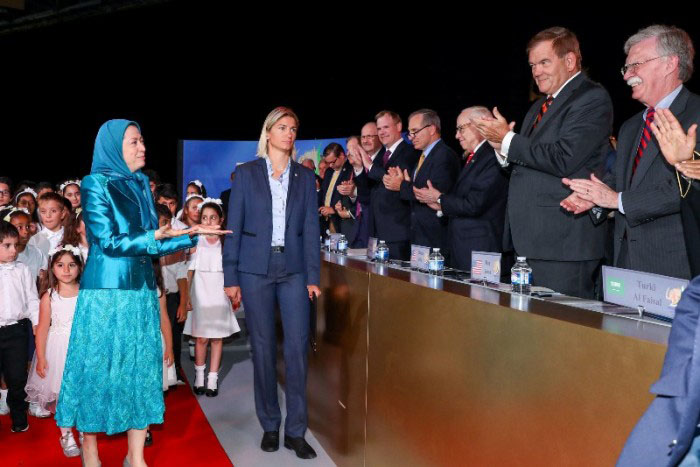
Female defectors of the Mujahedin Khalq Organizaion (the MKO/ MEK/ PMOI) participated an inter-parliamentary committee meeting organized by Parliament’s gender equality committee.

The conference that was held a day ahead of the International Women’s Day was focus on young women in politics as well as women’s real power in politics and how to boost it.
Women’s Rights and Gender Equality Committee members debated with more than 20 national MPs from 15 EU member states and Norway during an inter-parliamentary meeting on ‘‘Women’s power in politics’’.
Opening the event chaired by Vilija Blinkevičiūtė (S&D, LT), EP President Antonio Tajani declared: ‘‘We must keep working to have more women in politics, but also in businesses. It is a battle for dignity and respect that must be fought by all of us.’’
EP Vice-President and Chair of the High-level group on Gender Equality Dimitrios Papadimoulis added that even though women’s participation in politics was on the rise, ‘‘most of the important positions are still filled by men, and this has to change. If we continue according to the rhythms we are following now, we will achieve gender equality in 182 years!’’
The first-ever female President of Croatia, Kolinda Grabar-Kitarović, delivered a keynote speech in which she recalled how she had to fight for her place, both in life and in politics, and to break countless glass ceilings. “The starting point is a change in mind-set: we need to build a political culture which leads to women’s equal participation’’. In conclusion, her message to women and girl was: ‘‘Have faith and believe in yourselves, in your values, your strength and your capabilities. Your determination will make all remaining obstacles fall.’’

Among the other participants, Justice, Consumers and Gender Equality Commissioner Věra Jourová, EU foreign policy Chief Federica Mogherini and Women’s Rights Committee Vice-Chair João Pimenta Lopes advocated for more women in decision-making, pleaded for men to be involved in the fight for gender equality and for existing legislation on the subject to be properly enforced.
Batoul Soltani, Homeira Mohammadi and Zahra Moini of Women Association and Reza Jebeli of Aawa Association attended the meeting to denounce violent attitudes of the MKO leaders against their rank and files. Batoul Soltani condemned the MKO authorities for they separated her six-month old and two-year old children from her and smuggled them to Europe in 1991. She stated that the MKO has violated the rights of hers and her children’s.
Homeira Mohammad nezhad was a teenager when she joined the MKO. She addressed the conference on the psychological pressure she endured inside the MKO. As a fourteen year-old girl she was not allowed to contact her parents during the years she was a member of the group.
Zahra Moini gave testimony on forced divorce, forced celibacy, brainwashing sessions and violation of the most basic human rights in the MKO camps.
Reza Jebeli also talked to a number of representatives warning about the potential violence of the MKO and the destructives role of the group’s lobbies to obstruct the future EU elections.
In the margins of the conference, the defectors tried to enlighten EU parliament representatives offering them documented testimonies on the cult-like nature of the MKO. They called on the EU Parliament to recognize the rights of defectors of the MKO as refugees submitting their letters of requests for medical care and living facilities.
The human rights violations committed by the MKO was condemned by the representatives.
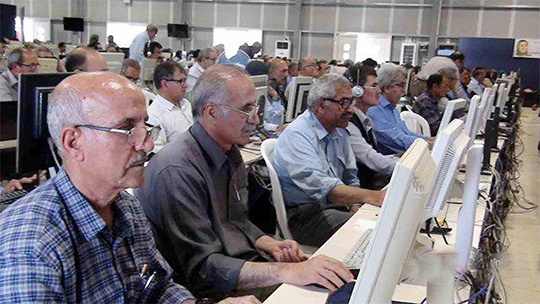
The grand gathering of families held at the Nejat Society office of Azerbaijan Province on Wednesday March 6 to March 8, 2019.
Former members of the MKO Cult also attended the meeting, giving answer to the families’ questions on the group’s situation at Albania and how they can help their beloveds getting themselves free.
Mr. Saadollah Seifi and Mr. Bakhshali Alizade who defected the group in Albania as well as Mr. Ali Ekrami who separated the group in Iraq were among the defectors who attended the meeting.
The families also talked to Mr. Parviz Heidarzade. Mr. Heidarzade is among the MKO defectors who defected the group in Albania and lives there.
The attendees cheered as the defection news of a new member in Albania was declared.
The families decided to get their complaints to the UN and Red Crescents’ office in Tehran.

Founded in the early 1960s, the Mujahedin Khalq Organization (the MKO/ MEK/ PMOI/ the Cult of Rajavi) was the first opposition group to fight against the Shah of Iran. Today, more than half a century after the foundation of the group it is not considered an opposition group anymore. However, it is mostly regarded as a cult-like establishment that opposes the Islamic Republic and is used as a tool to pressure the Iranian government.
In other words, as Mohammad Sahimi asserts, the MEK should be called a “fake opposition”. Muhammad Sahimi, a professor at the University of Southern California in Los Angeles, has been analyzing Iran’s political developments and its nuclear program for 25 years. He labels the entire Iranian opposition groups as “true” and “fake”. He correctly clarifies that a fake opposition is the one that does not enjoy the support of the Iranian public opinion and does supports any position against its nation including sanctions, military attack and so on.
“Two main groups have emerged among the opposition to Iran’s hardliners, both within Iran and in the diaspora,” Sahimi suggests. “One group, the true opposition that includes the reformists, religious-nationalists, secular leftists, various labor groups, human rights activists, and others, believes that it is up to the Iranian people living in Iran how to change the political system in their country. This group is opposed to foreign intervention, particularly by the United States and its allies, the illegal economic sanctions imposed by the United States on Iran, and the constant threats of military confrontation espoused by John Bolton, President Trump’s national security advisor, and other Iran hawks.” [1]
He puts the MEK in the list of the second group: fake oppositions. “Many Iranians refer to the second group as the “fake” opposition,” he writes. “It consists mostly of the monarchists, some ethnic groups, and the Mojahedin-e Khalq (MEK), the exiled group that is universally despised in Iran and was on the State Department’s list of “Foreign Terrorist Organizations” from 1997 until 2011. It is called the “fake” opposition because it supports the economic sanctions and the threat of military attacks, and has completely aligned itself not only with the Trump administration, but also with Saudi Arabia, the United Arab Emirates (UAE), and Israel, and endorses their propaganda against Iran. This group, whose followers are based mostly in the diaspora, acts more like a lobby for convincing the Iranian people to support the Trump-Mohammed bin Salman(MbS)-Benjamin Netanyahu triangle in their confrontation with Iran, rather than as a group supporting the true opposition within Iran for lasting, irreversible, and positive changes in the political system.” [2]
Ann Khodabandeh, former member of the MEK confirms that the group is never a normal opposition, not only because of its anti-national stances but also because of its potential threat as a terrorist entity. Referring to several cases of assassination and death attempts committed by the MEK, she proves that the group is a cult that is engaged in violence and is never responsive to journalists and critics despite all its efforts to take the gesture of a democratic alternative for the Iranian government. “It is a mistake to approach the MEK as a normal opposition,” she writes. [3]
Nonetheless, every now and then we see the American high profiles like John Bolton, Trump’s national security advisor who shout their ardent support for the MEK as their desired Iranian future government. Are they really such naïve to ignore the MEK’s fake face?
Ebrahim Khodabandeh, former member of the MEK and the general director of Nejat Society believes that current leader of the MEK Maryam Rajavi has also an expiration date just like her predecessor Massoud. “The MEK under Maryam Rajavi’s leadership has not met any of her new sponsors’ needs and requirements,” Khodabandeh asserts. “It is time, therefore, for a new face if the MEK is going to be of any value against the Islamic Republic of Iran. We are waiting for her disappearance after that of her husband.” [4]
Mazda Parsi
Sources:
[1] Sahimi, Mohammad, Pompeo, Bolton, and Iran’s “Fake Opposition”, Lobelog, February 6th, 2019.
[2] ibid
[3] Khodabandeh, Ann, It’s a mistake to treat the MEK as a normal opposition group, Iran Interlink, February 27th, 2019.
[4] Khodabandeh, Ebrahim, When would Maryam Rajavi disappear?, Iran Interlink , Feb 28, 2019
Ali Gholizade was a prisoner of war when the MKO cult tricked him into joining the cult. He is now 54. His family celebrated his birthday:
Hello my dear Ali, we are all good . My dear brother the cruel hands of Rajavis cult have parted us away from each other now for many years.
When would these bitter days come to an end and we hug each other?!
Do you know how old you are?!

This years , the same as every year we gathered together and celebrated your birthday . all our brothers and sisters participated the celebration except you, yourself. I hope you the best. We hope you be able to free yourself from the mental and physical barriers of the Rajavis Cult.
Dear Ali, we all missed you a lot. Come back soon .
The revelations recently made on the Mujahedin Khalq Organization (the MKO/ MEK/ PMOI) by Der Spiegel, resulted in two kinds of reactions. As usual the first was made by the group’s propaganda media that tried to accuse the Spiegel correspondent Luisa Hommerich of being the mercenary of the IRI assuming her report as an attempt to launch misinformation about the group.

Eventually, the second group that included former members of the group came to the scene to endorse the testimonies of other former members that were interviewed by Hommerich for its investigative report.
Among the many articles written by former members of the MKO such as Musa Damrudi, Hanif Heidarnezhad, Ann Khodabandeh and Ali Shirzad that integrated Hommerich’s article, that of Mohammad Razaghi is worth to consider seriously because of the detailed and completing endorsement that he provides for the original report.
The German correspondent cites from defectors of the group that members of the MKO are subjected to physical and mental tortures. The most horrific part of the report cites the interviewees as saying that the residents of the MKO camps regularly practice “cutting throats with knife”, “breaking hand”, “removing eyes with finger” and “tearing down mouth”. Mohammad Razaghi confirms the testimony and explains that such kind of trainings had been originally instructed by Iraqi officers to the MKO operatives when the group was located in Iraq.
“As a person who was a member of the MKO for 20 years, I have enough information on the terrorist nature and the mafia structure of the group,” he writes in his open letter to Luisa Hommerich. “Ms. Hommerich, I would like to say that your report is correct but incomplete.”
Razaghi asserts that the trainings of “cutting throats with knife”, “breaking hand”, “removing eyes with finger” and “tearing down mouth” that are accomplished in the MKO camp in Tirana are actually the practice of killing people without an arm. “Officers of Saddam’s special guard used to teach these technics to the MKO’s high ranking members.”
Razaghi writes of further trainings that the MKO members received in Iraq. “In addition to the trainings you stated in your report, Iraqi officers used to instruct them to make firing bombs, destructive bombs and sound bombs with the very accessible items that they can by in their local markets,” he avows.
Razaghi warns about the potential of the MKO members who have received such horrific trainings.
“Once the creators of such destructive bombs were gathered in the notorious Camp Ashraf but today they are in most European countries living in the group’s safe houses,” he writes.
Razaghi ends his testimony promising Hommerich to reveal more information on the dangerous nature of the MKO in case he would be able to visit her.
Nejat Society declares the establishment of “Mothers, Forgotten Victims” on February 26, 2019.
Commemorating the Iranian Women’s Day, Nejat Society central office declares the establishment of an association to support mothers of the victims of the Mujahedin Khalq Organization (MKO/ MEK/ PMOI). The mothers whose children have been imprisoned behind the bars of the cult-like MKO group, are deprived from their basic right which is a free visit with their loved ones.
Nejat Society aims to be the voice of the mothers whose rights are ignored by the international community.
Further information on the activities of “Mothers, Forgotten Victims” association will be published eventually.
Nejat Society