

Commander of Iraqi Army First Lieutenant General Ali Ghaidan who is visiting Iran at the head of a military delegation said on Wednesday that Baghdad is determined to expel the remaining members of the Mojahedin-e Khalq Organization (MKO) terrorist organization. Ghaidan made the comment in a meeting with the Commander of the Islamic Revolution Guards Corps (IRGC) Ground Force Brigadier General Mohammad Pakpour in which the two top commanders also talked about joint combat against terrorism and border security.
The Iraqi commander who accompanied the Iraqi defense minister on his trip to Iran, referred to the recent clashes in Camp Ashraf — in which at least 50 MKO members were killed — and said his country is determined to get rid of MKO members for good.
He also praised the Islamic Republic of Iran’s progress in various field, particularly in military warfare and defense industries.
Iran’s Ministry of Foreign Affairs on September 13 thanked the Iraqi government for its measures to close Camp Ashraf, the main training base of the MKO terrorists, and called on Baghdad to expel the remaining members of the group.
On September 1 some 52 MKO members were killed in clashes at the camp, which the Iraqi authorities blamed on infighting among the camp’s 100 residents.
The notorious camp, which in its heyday housed thousands of MKO terrorists, was fully evacuated by the Iraqi authorities from its much-hated residents on September 11.
Camp Ashraf’s residents have been relocated to Camp Liberty, near Baghdad’s international airport, under a United Nations-brokered deal that wants them resettled in other countries. A total of 162 MKO members have been resettled abroad so far, mostly in Albania.
MKO members were involved in many terrorist activities in Iran before they went to Iran in 1986, where they found a true patron in Iraq’s deposed dictator Saddam Hussein who gave them shelter and arms.
They fought along Saddam forces in the war it had imposed on Iran (1980-1988) and later turned their guns against the Iraqi citizens who had revolted against the ruthless dictator in 1991.
 ed war provided them with the chance.
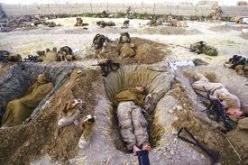 regime of Saddam Hussain, and hence the need to search the area.
 Other participants included Americans from around the country–some of whom “didn’t have a clue what it was all about,” in the words of one attendee–who had their tickets, food and hotel paid for by the organizers of the rally.
 movement in exile that had led a guerrilla campaign against the US-backed Iranian Shah during 1970s, which included attacks on US targets
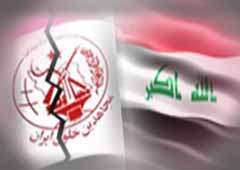 nment is reportedly planning to deport Iranian dissidents of an opposition movement in exile, known as the People’s Mujahideen Organization of Iran (MEK), which had led a guerrilla campaign against the US-backed Iranian Shah during 1970s, which included attacks on US targets.
 informed them of the Iraqi government’s objection towards the MKO’s presence in the country.
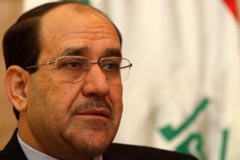 that seven of its members had been missing in the recent events that took place in the New Iraq camp, and claimed that they were abducted by Iraqi troops. As we reject these allegations altogether we reiterate the fact that the Iraqi forces has never conducted any actions against members of this organization, whether in the camp of New Iraq or any other site, but the elements of this organization, which is still on the list of terrorist organizations refused to allow Iraqi forces, which were protecting the camp, entering the camp at the time of the accident and impeded investigation efforts.
 the notorious group.
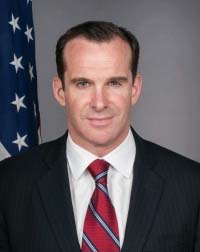 Nations Assistance Mission for Iraq (UNAMI). DAS McGurk met with senior representatives from the Mujahedine-e-Khalq (MEK), as well as officials from the United Nations High Commission for Refugees (UNHCR). He expressed his condolences to the survivors of the recent Camp Ashraf attack and emphasized the priority of the U.S. Government to ensure the safety and security of the residents of Camp Hurriya. He praised the efforts of UNAMI, and Mr. Busztin personally, to ensure the safe and secure relocation of the survivors from Camp Ashraf to Camp Hurriya last week.