
Dedicated to the people of Halabja who on March 16th, 1988 suffered the worst chemical attacks committed by the Iraqi regime. On that day, 5,000 innocent civilians, 75% women and children, immediately perished. This was not the only chemical attack ordered by Saddam, it was just the worst
Dear Lord Corbett,
With the greatest respect, I refer to your interview with the BBC Persian Service on February 23, 2007 (Link to the interview) which was published on the BBC’s website. May I first express my pleasure that you have entered into a free discussion about the Mojahedin Khalq Organisation (MKO). As you know, there are many questions about the Mojahedin Khalq Organisation which remain unanswered.
You have mentioned in your interview that the reason behind the proscription of the Mojahedin Khalq Organisation in Britain and other places is purely political and was made in relation to the interests of the Iranian Regime. This might be true, but what I would like to know is why the Mojahedin Khalq Organisation is still being kept on the lists of terrorist entities in almost every western country when these countries are engaged in a serious confrontation with the Islamic Republic of Iran? As you are well aware, Britain represents the toughest stance against Iran in Europe. At the same time Britain has been and is still leading the European Union against the Mojahedin Khalq Organisation. Doesn’t this reality disprove your claim that this matter is no more than politically motivated bargaining? I would like to know, if the Mojahedin was proscribed on the basis of a political decision, then why is it not de-proscribed now on the same basis? What could possibly be the political interest for the British government in insisting on keeping the Mojahedin Khalq Organisation on the list of proscribed terrorist organisations?
I think the reason for proscription of the Mojahedin Khalq as a terrorist organisation has never been a political decision. I think the decision has been purely security related. All the security services in the west categorise the MKO as a destructive cult in which violence has become part its infrastructure. Indeed, if anything, the point that the Mojahedin’s activities in western countries have not been confronted to the full could be interpreted as a politically motivated act due to the grievances between Iran and western countries. But no responsible security official would leave a cult like the MKO, which has theorised the use of violence, unchecked and unmonitored. The only way for the security services to be able to monitor and control the organisation is to keep it on the list of proscribed terrorist organisations. You are well aware yourself that the Mojahedin after the fall of the late dictator of Iraq, Saddam Hussein, is no longer considered to pose a threat to Iran. But could the people responsible for the security of European countries confidently announce the same? Could they really announce that the Mojahedin is not a threat to European countries?
In your interview, you have mentioned that the history of the Mojahedin Khalq Organisation’s armed operations goes back to before 2001, and you have emphasised that they have preformed no terrorist or similar activities after this date. What I really want to know is whether the organisation has in fact ruled out armed struggle – once the core of its ideology, strategy and tactics. Or is it simply because the organisation is incapable of carrying out terror acts at this moment of time?
You have also endorsed the Mojahedin’s assassination of the former head of Evin Prison. It has become a mystery for me. If the killing of all the people whom the Mojahedin have assassinated inside Iran is justified, then what about the thousands of similar people in Iran right now who have not been assassinated? Why is it that the Mojahedin Khalq Organisation (with your endorsement) does not attempt to deal with them? Why has the organisation refrained from its prior activities and is not working towards assassinating these subjects and instead has put a stop to its armed struggle from 2001? And if they have really come to the conclusion that they should stop this armed struggle, then why do not announce it publicly and criticise their past activities and above all why do you still try to legitimise their violent history?
I do not know if you have any answers for my questions. But I would be most grateful if you could offer some explanations concerning the questions I have posed. From my heart I wish that the Mojahedin Khalq Organisation would return to logic and one day be among the important players in the Iranian political scene. I would like to propose that the best course of action that the MKO could take is to start reviewing its past and clearly denounce violence against anyone and at anytime. I am sure that in doing so the organisation would be acting in its own best interests.
With many thanks.
Yours faithfully,
Ebrahim Khodabandeh
In Norway, there are some people who support an Iranian dissident group which is called Muajhedin-e-Khalq; however the group doesn’t deserve the support.
The group played an effective role in people opposing campaign against the regime of Shah but after the fall of Shah the group challenged the newly-come to power Islamic Regime and called the people to go on strike and demonstration. But the people turned against them and thus the group which was left alone set out for terrorizing the individuals, bombing and execution. They defeated in that fight. Therefore the group’s leader, Masud Rajavi fled Iran and took refuge in France. After some time Rajavi joined his supporters in Iraq and planned an alliance with Saddam Hussein. Saddam Hussein gave weapons, military bases and funds to them. Saudi Arabia and America also gave money to Mujahedin.
Mujshedin-e- Khalq attended the Iraqi military invasion to Iran by assisting Saddam Hussein’s forces against their own country. If the Iranian hadn’t already opposed the group now they didn’t hesitate to oppose it “ An Iranian whether agreed or disagreed the governing regime in the country, kept his patriotic emotion after the Iraqi arrack. The attack which was affirmed and backed by US and while that attack the so-called "people’s Mujahedin" fought Iran jointly with the enemy forces. Many of the members defected the group and several other members were persecuted or tortured by the group leaders.
A kind of fascist culture was formed in the group. The members were settled in common houses. A leader (Masul) was assigned for them; the "Masul" in his turn had to report everything to Masud Rajavi, the main leader of the organization. The report of routine activities ended with "Viva Rajavi". Following the leaders, order and hierarchy had become the principals of the organization to the extent that if the members wanted to get married, at first they had to ask the leader for permission. Speaking of marriage, the disgrace for the group was revealed when Masud Rajavi married the wife of Mehdi Abrishamchi, the fourth person in the organization hierarchy. Abrishamchi thanked God due to the opportunity the God gave him to share a "Successful Ideological Decision". A decision according to which his wife " Maryam Azdanlou" was elected as the co-leader of the organization. Political Department of MKO, the Central Committee and the central Council of MKO, all confirming the marriage, considered it as vital for stability and continuality of the growth of new leadership in a social and political domain. (Middle East Journal-Fall,1987)
We should consider the following points about MEK’s nature: – The organization has no support among Iranian people. – MKO’s structure is based on the leader Rajavi’s personality; even a sign of democracy can’t be seen in the organization. Several members of the group have defected MKO due to Rajavi’s dictatorial leadership and his alliance with Saddam’s regime.
– The group has launched several attacks against civilians in Iran. Since 1981, the group has admitted responsibility of the assassination of thousands of Iranians who, according to their claims, were the regime agents.
– The group assisted Saddam in violently suppressing Kurds in Iraq and even after the Iraqi invasion to Kuwait in 1990, it kept on supporting Saddam Hussein since Saddam funded them with hundreds million dollars.
Therefore, the group named Mujahedin-e-Khalq was put in the FTO list published by the US but now the card is turning and a number of people are trying to name the group as "non criminal" in order to use it in their fight against Iran. The military wing of the group which is still based in Iraq is under the US forces’ protection and ranking members of US congress and some others (including some Norwegians) want to legalize the group by removing it from the terror list and introduce it as an Iranian opposition.
And this is a wrong way to go to Iran.
Karin Linstad – Feb, 2007 – Norway-Salt journal
TEHRAN, Iran (CNN) — Militants detonated a percussion bomb at a girls school in southeastern Iran and opened fire on an electricity plant before fleeing and hiding in a nearby house in Zahedan, according to a Iranian news agency’s report.
No one was hurt in the blast, according to the Islamic Republic News Agency.
A percussion bomb is also known as a "sound bomb," and is used to cause distraction.
Police shot at the gunmen as they ran into a residential complex under construction Friday night, the city’s governor Gen. Hassan-Ali Nouri told IRNA, adding that the blast was "just a blind operation."
On Saturday, IRNA reported that police had restored order in Zahedan, a town at the juncture of the borders of Iran, Afghanistan and Pakistan.
Gunfire was heard after security forces blocked off streets near the bombers’ hideout. Police cut off the electricity to the housing complex, the semi-official FARS news agency said.
Abdolmalek Rigy, the leader of the Jondollah militant group, told MKO-TV that said his group was responsible for the bombing, FARS reported. However, MKO officials told CNN they aired no such claim.
MKO stands for the Mojahedin Khalq Organization, which the Iranian government considers a terrorist group stationed in Iraq.
The Jondallah group claimed responsibility for a car bomb in the same area Wednesday, Iranian officials said. Eleven people were killed and 30 more were wounded after a car bomb ripped through an Iranian military bus in Zahedan. (Full story)
The bus belonged to the Islamic Revolutionary Guards Corps, and a witness told IRNA that the car exploded as the bus arrived to pick up military personnel at a barracks. Five people, including a failed suicide bomber, were arrested after the Wednesday attack, IRNA reported.
Jondollah has a history of attacking Iranian border posts, according to Iranian news agencies.
Zahedan is on a busy route used by smugglers to traffic contraband, such as opium, through Iran.
CNN’s Shirzad Bozorgmehr contributed to this report.
On Jan. 23, 2007, CNN Arabic reported from Baghdad on the details of the 35th session of Anfal Court, which clearly points to the fact that Ali Hassan Al-Majid ordered MKO members to pursue and target Kurds inside Iran.
The report is as follows:
"35th session of Anfal Court was held in Iraq and it’s the second session without the presence of former Iraqi president Saddam Hussein, hanged on December 30.
In the previous session, prosecutor provided the court with audio tapes of talks between Saddam and Hassan Al-Majid, in which the orders were issued on using chemical weapons against the Kurds.
In the 35th session, new documents were presented on the accusations and the roles of former Iraqi president’s allies in attacking the Kurds in 1988 were identified.
What follows is part of the details of the session quoted by Iraqi TV:
– Prosecutor provided the court with a new audio tape in which Ali Hassan Al-majid talks about chemical weapons against the Kurds and promises to impose more restrictions on them, including the ban on speaking Kurdish.
– Another audio tape revealed that Hassan Al-Majid was planning a new scenario, including chemical attacks on the Kurds, gathering them in specified locations and then targeting them with chemical weapons.
– Prosecutor states that in a part of the tape, Al-Majid asks for pursuing the Kurds by special teams and also targeting them inside Iran by Mojahedin-e Khalq. The tape was not played.
CNN Arabic, 23 January 2007
Militarism is MKO’s Infrastructure
Dear Sirs,
Reported by Time on December 14 to confirm the EU’s stance on the ruling of the Court of First Instance, Jesus Carmona, spokesman for the European Union’s anti-terrorism authority, enunciated that "we’re going to comply with the court and publicly state the reasons for any group or individual on it”. For sure, the EU proscribed MKO on sound reasons, but we consider it our responsibility to give some details on the terrorist nature of MKO.
Stated in the judgment of the Court of First Instance concerning MKO, “it and all its members have expressly renounced all military activity since June 2001 and it no longer has an armed structure at the present time”. MKO might have said it “expressly”, as the judgment states, but they never believe in what they have expressed because violence is the organization’s inborn trait.
Mojahedin-e Khalq Organization, MKO (aka. MeK, PMOI, NCRI, NLA), a blacklisted Iranian terrorist organization, from the very beginning of its formation adopted the armed struggle as the infrastructure of its campaign. The organization’s past forty-year bloody history indicates that to advance its objectives, the priority has always been put on the application of terror and violence.
The very use of the term Mojahedin-e Khalq, meaning people’s holy warriors or combatant of the masses, as the title of the organization indicates that the line of struggle forbears to adapt to a political and peaceful route. The initially trainings of the members, from the beginning to the present, simultaneous with the ideological teachings, are militant trainings, use of weaponry as well as the practical use of chemicals to make explosives and detonating devices.
Formed during 1963-6 and late in 1969, after three successive years of study on its organizational structure and revolutions in other parts of the world, the organization commenced to organize its militant training programs and to form the team houses to stage armed operations inside Iran against the ruling monarch. [1] The History and Origination of Mojahedin Khalq Organization
Lacking the needed experience to establish training military camps and since it was actually impossible to conduct such activities under the eyes of the Shah’s intelligence system, the leaders resolved to seek external opportunities. As a result, they made contacts with Al-Fatah Organization, a militant establishment active in Palestine territories, to persuade it to train the organization’s members in its camps. Al-Fatah consented and the early members were dispatched to Al-Fatah’s camps located in Oman through Beirut. [2] MKO and Al-Fatah, The Outset of Guerilla Activities
MKO intensified their armed operations in the years between 1973 and 1976. Its terrorist operations were mainly aimed at American citizens and institutions inside Iran including assassination of 6 American military officers and civilians and bombing tens of buildings. [3] The US State Department Report on Mojahedin-e Khalq
After the Islamic revolution in Iran, MKO started a novel and different mode of struggle, this time against its own nation, and announced that it continued an armed campaign to overthrow the newly established Islamic system. In fact, it was the beginning of a bloody chapter in Iran’s contemporary history. It is hard to enumerate all the victims of MKO’s atrocities inside Iran, who were targets of its weapons’ bullets and bombing plots. However, there are reliable evidences and lists of these victims. [4] Victimes
In 1987-1988, in a publicly published booklet entitled “Resistance on the Rise;
A Review of the Recent Resistance Operations of the Mojahedin”, a product of MKO’s own publication, MKO depicted a detailed account of more than 20 noted terrorist operations that its insiders perpetrated in various Iranian regions and cities in 1987 as well as an account of its military training camps. [5] Resistance on the Rise
Strongly supported by Saddam, military units of MKO, based in Iraq under the flag of the National Liberation Army, were settled in seven facilities starting from 1986. Four were in the Baghdad area (the headquarter, Camp Ashraf at Khalis, Camp Anzali at Jalawla and Camp Bonyad Alavi), one in Kut (Camp Faezeh), one in Basra (Camp Habib) and one in Al-Amarah (Camp Homayoun).
NLA forces took part in the last phases of the Iran-Iraq war essentially operating across the Iranian borders. In some occasions they contributed to more important general operations along with regular Iraqi troops. After the end of the Iran-Iraq war, they continued to support Saddam’s regime and served as its trusted mercenaries and collaborated in the suppresion of the Iraqi Shiit and Kurds uprisings. [6] MKO Terrorist Operations
Justly judged, founded on the mentioned and non-mentioned terrorist deeds, MKO came to occupy a permanent row in the list of the US State Department’s designated terrorist organizations in 1997 and later on, by some other countries aw well as the EU.
In 2000 and 2001, the MKO was involved regularly in a series of mortar attacks against the innocent civilians and buildings. [7] The group was fully armed and continued its military activity right up to the invasion of the allied forces in 2003, when almost 4.000 NLA forces were forced to surrender to the U.S. Corps. Consequently, all the members were concentrated in the area of camp Ashraf and the organization’s heavy weapons were siezed by the US Army.
[7] MKO Terrorist Operations
Based on the presented evidences, and because of its adopted strategy and ideology, MKO cannot possibly foreswear terrorism and has never publicized such a claim. Although disarmed, the group’s main base in Iraq, Camp Ashraf is a bastion of militarism wherein the members, many against their will, are forced to run a harsh martial life. It must be noted that, as people say, a leopard cannot change its spots. That is true of MKO since neither can it renounce utilization of violence as the adopted means to achieve its non-democratic ends.
Yours sincerely,
Mojahedin.ws
info@mojahedin.ws
CC.
The UN Secretary-General Ban Ki-moon
Javier SOLANA, Secretary-General of the Council of the European Union
The European Parliament
The European Parliament Human Rights Committee
The Human Rights Watch
The US State Department
The Iraqi President
The European Court of First Instance
The UN Human Rights Committee
Mojahedin.ws – January, 2007
Following a violent trend of struggle, MKO typically cannot tolerate any form of criticism by anyone. The group usually attacks the critics and attributes them to Iranian regime.
On December 3. MKO-run website thus reported:
Citing the Undersecretary on Security Affairs of Iraq and the Governor of Diyala
Province, Iran’s ruling religious fascism claimed, “The PMOI cooperates with Al-Qaeda.” It added, “Activities of the U.S. forces has led the terrorist mojahedin group to murder Shiites in Diyala Province in cooperation with Takfiri groups (referring to Islamic extremist groups)."
Iraqi PM’s Security Advisor Shirvan Vaeli earlier in an interview with Al-Forat TV had said: "Mojahedin-e Khalq has made alliance with Al-Qaeda in Dyalah province; it’s conducting terrorist activities in this province."
Shirvan Vaeli’s comment came after MKO had announced that they had formed "National Front for Saving Dyalah". The national front the group referred to was, in fact, a novel alliance with Saddam loyalists and other insurgents that could not abide a free and democratic Iraq.
Being well aware of MKO’s terrorist nature, Iraqis have no need to be informed of the group’s terrorist activities by the Iranian side and the group’s alliance with other uncompromising Iraqi groups. Living among the Iraqis at the present, MKO sees no other way but to condemn Iran of the claims that are nothing but pure facts disclosed by Iraqi individuals.
mojahedin.ws – 07/12/2006
Friday afternoon, Iraqi and US joint forces rushed to the house of Adnan Al-Dulaimi, one of MKO’s big supporters who has wide secret ties with this group and has been elected due to the financial aids of the group, and found a number of bombed cars and a large cache of explosives in his house.
In this regard, Baha al-Din Al-A’raji, senior member of Iraqi parliament, said:”Baathists and terrorist had plotted for a coup in the past two days.”
“Those behind the issue were well aware that they couldn’t change the current situation with a coup. With the formation of the government and the Ministry of Defense, a coup is not and won’t be possible in Iraq,”he added.
Referring to the bombed cars and the explosives found in Dulaimi’s house, Al-A’raji said:”it’s not possible to execute the proposal of National Reconciliation unless the government itself and the parliament are cleaned of terrorists, Baathists and their agents.”
He also asked for the removal of legal immunity of MPs involved in the issue and said:”Some of the MPs take advantage of this immunity for terrorist operations”.
It should be noted that Adnan Al-Dulaim has had close ties with the MKO in Iraq. Also, Iraqi PM’s earlier comments on the MKO’s interferences in Iraqi affairs proved that MKO was in touch with the head of Iraqi Accord Front and that the group tried, through propagandistic and financial support, to send him to the parliament.
Al-Dulaimi is the only one who supports the illegal presence of terrorist MKO in Iraq, which is along with Saddam policies against Iran.
In an article in PUK-backed newspaper "Al-Ettehad", Shahab Al-Ghare Losi published documents on Chemical Ali and pointed to the role of MKO in massacring Iraqi Kurds.
Shahab Al-Ghare Losi writes:
"Ten audio tapes have been obtained from the house of Ali Hassan Al-Majid- known as Chemical Ali- on the operation of Anfal against Kurds and also on the suppression of 1991’s uprising. These tapes are about the meetings of Chemical Ali on the issue of Kurdistan."
In one of the tapes, dated April 15, 1988, Chemical Ali says:
"None of the villages should remain in this region until the next summer. We should transfer the people to townships and camps and control them. Their transfer from the villages to the North of Iraq is inevitable. From now on, I cut their water, electricity, oil, sugar, flour. Why should we let them live like donkeys and understand nothing? For their wheat? Well, I don’t want their wheat. We have been importing the wheat since 20 years ago and we can do it for more 5 years."
In the meeting, Chemical Ali stresses the need for evacuation of villages and says: "their homes should be destroyed completely. The people should be taken to labor camps and no one of them should be allowed to return."
In another meeting with the officials of sovereign provinces (as written on the tapes) on March 26, 1988, Chemical Ali emphasizes that Kurds should be forced to immigrate. He questions the ability of the army and Baath officials for doing this and brings their attention to the possible forces the army can take advantage of. "After all these years, why are the saboteurs still at large? They are looking at the way we function. Our orders and functions are not powerful enough".
He also says: "Jalal Talabani asked me to open a dialog channel with him. That night, I went to Suleimanieh and targeted them with special weapons." By special weapons, he meant "chemical weapons". He adds: "I won’t talk with Talabani and won’t stop the forced immigration plan unless the war has ended with Iran and Iranian troops have left the regions they captured. When the plan ends, we will start a large scale war against them and will try to recapture one-third of the lands. We will surround them in the valleys and then target them with chemical weapons. This chemical attack will last for 15 days. I don’t name these chemical weapons because it’s banned but I declare that we will defeat them with these new destructive weapons. We will follow them up to Iranian borders and then we will order the MKO to attack them there."
AlIttihad – IranDidban translation – 2006/09/02
http://www.alitthad.com/paper.php?name=News&file=article&sid=18831

The Bulletin indicates the mortar attacks and bombings of Iranian cities resulted in the injury a of innocent civilians and damage to their property. MKO claimed the responsibility for those operations by issuing press releases following the incidents.
This bulletin as an illustrated, documentary evidence of MKO atrocities, works well to illuminate facts on the terrorist nature of MKO and the cause for its proscription as a terrorist organization.
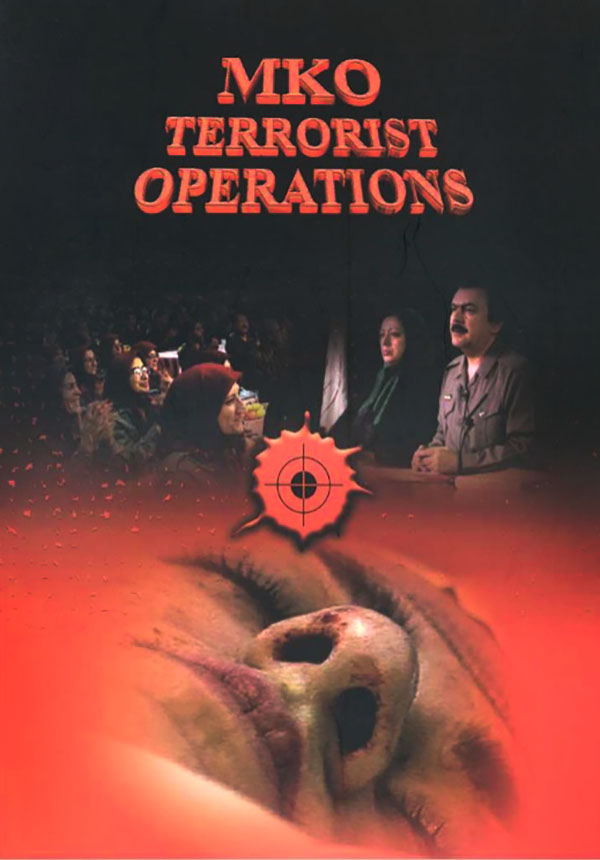
Download MKO TERRORIST OPERATIONS- Unit 1
Download MKO TERRORIST OPERATIONS Unit 2
Download MKO TERRORIST OPERATIONS – Unit 3
Download MKO TERRORIST OPERATIONS – Unit 4