
The armed struggle is not able to survive except by having the military equipments and support and especially the support and accompaniment of the public opinion. When an armed opposition loses such a support in the country, it has to look for it abroad.
As MKO was so eager to achieve the power in the political scene of Iran, it could not stay in Europe like the other Iranian dissident groups who are politically or socially fighting the Islamic Republic. The MEK stopped all its social and political activities in Europe in 1980s and sent the forces to Iraq to enjoy the Iran-Iraq war to expand its military power.
At the beginning the only common point of MKO and Saddam Hussein was their common enemy: Islamic Republic.
Iraq provided MEK with land, equipments and funds for their so-called National Liberation Army and in exchange the MEK were spying the Iranian forces’ intelligence for the Iraqi intelligence service.
Therefore the Iraqi government was using the MKO’s facilities to serve its own front.
The civil armed struggle was replaced by the front armed struggle because the civil struggles had been defeated in Iran and now MKO needed to depend on Saddam Hussein who was fighting Iran. If MKO had led its political struggles from Europe, France it would have not needed the support of a dictator and violator of Human Rights like Saddam Hussein.
The MEK had accepted the armed struggle by the side of Saddam Hussein, so they had to accept the presence of Iraqi specialists, military relationships, intelligence exchanged and cooperation in military operations …
To accept the war in the fronts where the invader enemy had started the war and bombarded and killed the innocent people, is more illegal and more anti-national than the civil war.
However after a while the Iraqi Intelligence Service suggested that MKO launch mortar attacks in the cities of Iran. Thus MKO mixed its armed struggle in the fronts with the partisan attacks in the cities and expanded the war in to the whole Iranian territory where a lot of innocent people were killed.
In the operations, the MKO members were under heavy pressure and stress because they knew that they were shooting their compatriots who were service-men or even civilians.
The people in the region also hated the MKO showing their hatred by not giving them any facility. In 1986, Masud Rajavi declared the end of civil partisan struggle officially announcing that:
” The macro-border war is replaced by the micro –civil war.”
Therefore they began to pay their debt to Saddam Hussein. They were so devoted to Saddam that sometimes the Iraqi Authorities assigned the terror objectives for MEK.
The important question, here is: How the anti-human dictator, Saddam Hussein, was so adopted with some pro-human freedom fighters?
The answer is their common ideology and idea and also activity. But how could the both side share the same ideology?
The answer should be analyzed psychologically: The idealist Iranian youth who were brainwashed, manipulated through a long indoctrination process, held the arms as their most excellent mean, camping among the anti-Iranian Baathists. How can they meet the demands of their own nation?
As soon as they picked up the arms, they got distanced from their own nation.
When they entered Iraq, they were completely separated from Iranians who viewed them as traitors since then.
When they attacked Iran, they were considered as the hostile mercenaries of Saddam Hussein.
Now that, their God father is overthrown, they are looking for another one, to hang on. This is the main characteristic of all opportunists who are hungry for the power.
 Massoud Khodabandeh, replied to the article published by "Alseyassah" on the first of this month under the heading "Iraqi warnings from the agent of the Iranian regime by the name of Massoud Khodabandeh", in a letter sent to the cultural office at the embassy of the State of Kuwait in London, of which "Alseyassah" has received a copy. In the reply, Massoud says that "the article was slanderous and defamatory to my good name and unfortunately its anonymous writer did not try to contact me by email or by telephone or at my address in Britain, or at the Centre de Recherches sur le Terrorism in Paris where I work". He refers to the scurrilous accusation made by the remnants of the Baathist regime in Iraq which links his name and his wife’s name to the Iranian intelligence services – which is completely untrue and there is not a shred of evidence for the lies which appear in that article.
 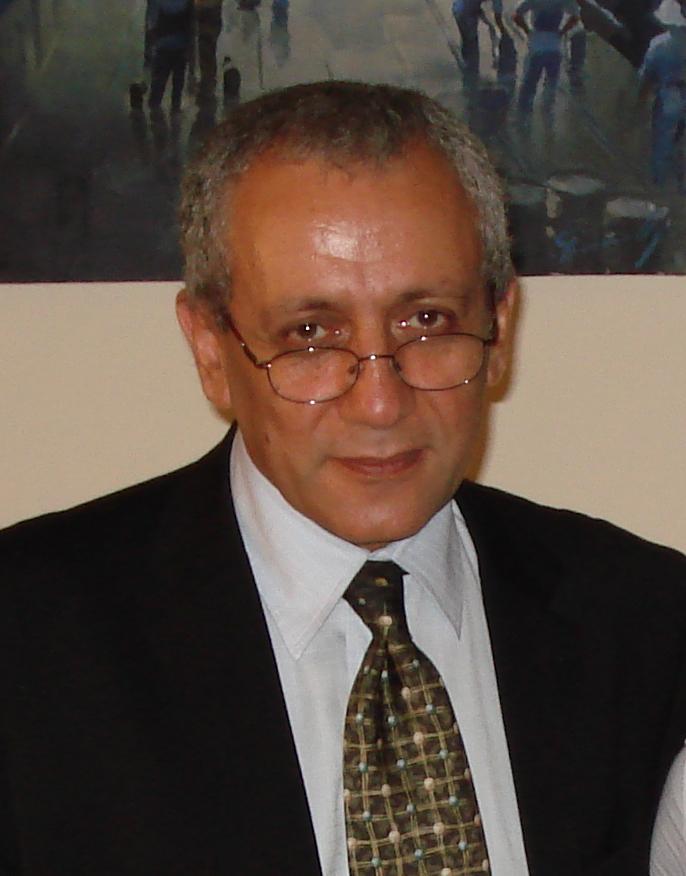 He also gives the reason why it was published. Mr Khodabandeh explains that he lives in the United Kingdom and is currently visiting Iraq at the invitation of government officials, and was invited in order to attend various meeting on the issue of foreign terrorist groups in Iraq. He adds that "in the course of this work I have regular contact with the US army and relevant humanitarian bodies and I am seeking ways to rescue people from the hands of the Saddamists in Diyali province". He considers that "as all Kuwaiti citizens know all too well, the "Mojahedin-e Khalq" organisation acted as Saddam’s private army in Iraq and helped to crush the Kurdish uprising in 1991 at the end of the first Gulf war. The Iraqi Government is now determined to remove all remnants of the Baathist regime, including the Iranian foreign terrorist group "Mojahedin-e Khalq", from its territory". He adds "I have travelled to Iraq to help those people who want to leave the group to find refuge and return to their families and to normal life."