
Nim Negah Website is publishing series of interviews with Ms. Ebrahimi. Nejat society translated excerpts of her memoirs of the sufferings of living in the MKO cult.
 Women stuck behind Cult bars
I liked music very much. I wished to listen to a piece by one of our famous singers like Ebi, Siavash or Darius…but in Camp Ashraf there was no access to radio or TV…
To our surprise, today the MKO rudely propagates the problems of satellite broadcasting in Iran while in the MKO we were not allowed to listen to music, let alone having a radio.
How can the group run propaganda criticizing the satellite issues in Iran? Of course this is why the MKO is called “Hypocrites” by the Iranian people!
Once, I saw a women listening to a walkman in a room labeled “Luggage Room”. She had been brought to the camp from Europe. The room was hardly ever trafficked by members so it was a silent place.
Immediately after she saw me, she hid the walkman. I called to her and said,” I won’t tell it to anyone.”
Then I asked her to lend her walkman to me for a while. She begged me not to let anyone know that she had kept her walkman. As it was usual members’ properties were confiscated before they entered Ashraf but this woman could manage to keep her walkman.
There was a problem with the walkman; it could be heard by a person next to you so it was dangerous. There was the risk that officials would learn about it.
That night I decided to stay up and listen to music but I had to wait until everyone would fall asleep. I waited until 1 am. When I made sure that everyone was asleep, I started listening to music under the blanket …suddenly the person next to me asked, “Are you listening to music?” I was so terrified that I couldn’t answer her. I turned it off… I couldn’t sleep all night long. The next morning I tried to be nice with the person who had found out that I was listening to music. I tried to ask her to forget the case. If she criticized me in the brainwashing sessions, I would be left into a big trouble; I had to explain why I had granted the right of listening to music to myself!
The self-criticism meetings were actually trials where you had no attorney, no right to defend yourself. You had to hear your comrades verbally abuse you. During the trial, there was no justice; nothing was fair… That was why in Ashraf the word Meeting was the equivalent of Stress and Fear. That was why, with my eyes I begged that girl who had found me listening to music, asking her not to tell it to anyone! [..]
After the separation from men, it was the first time you could see all female members in one place. Before that we were divided in different bases as you could not find out who was who! Once all women were settled in one single base, you could realize there were a lot of mothers whose children were separated from them by Rajavi , there were a lot of young girls who were kept in the MKO by Rajavi for their whole life so they had no idea of the outside world.
I remember a young girl asking me what the buildings in Iran were built of. I said, “I can’t understand what you mean?!” She said,” I mean the buildings there, are like Ashraf made of Conex (Bengals) or they are built of something else?”This was really surprising! It recalled you of the Seven Sleepers!
After some time of living in female base, I found out that those mothers, whose children were taken by Rajavi, were so nice with us – we were almost at the age of their separated children.
I didn’t know that in the MKO love was forbidden and no one was allowed to be kind with others. After a while I realized that they pretended to ignore us before the eyes of MKO officials, they never talked with us in front of them. Thus I got to know that kindness and love was forbidden in the MKO. Loving mothers were humiliated by the Rajavis!
Some of the mothers gave us gifts, they liked to hug and kiss us just like their own children but this was forbidden in the cult of Rajavi. The cult authorities said, ”once you recall your children and love other sisters in the memory of your children, you betray Rajavi”(!)
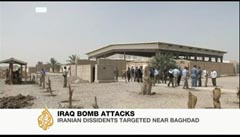
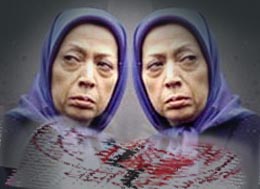 living at a former U.S. military base near Baghdad.
 witnessed that after this dreadful attack, the Mojahedin Khalq Organisation (aka; MKO, MEK, Rajavi cult) instead of helping Mr Martin Kobler the Special Representative of the Secretary General of the United Nations, and the office of UNHCR and UNAMI in Iraq, have embarked on yet another wave of hindering and creating obstacles in the resolution process. The latest conspiracy the Mojahedin Khalq have embarked on is that they have ordered the supporters of the organisation in European and North American countries to write letters to the UNHCR offices. They have been ordered to claim to be the distant or near families of the people who have been killed and they have been ordered to claim that the lives of the residents of Camp Liberty are in imminent danger and to ask that these people be returned to Camp Ashraf where they were living before. Some others claim that they are the families of the residents of Camp Liberty and claim that their family members have no security there and should be sent back to Camp Ashraf.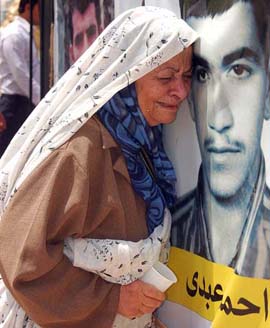
 should we deal with him?
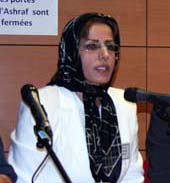 about sexual abuses committed by the MEK leaders, Massoud and Maryam Rajavi, against them and other women members, the following incidents have taken place against these women.
 had been a member for over twenty years.
 group. She was the first person to speak of the “Summit Operation” which was a cult jargon through which a large number of female members of the group became infertile by Hysterectomy surgery.
 Rajavists.