
Hardly may you encounter an organization struggling for a political, social, or any other cause to be highly 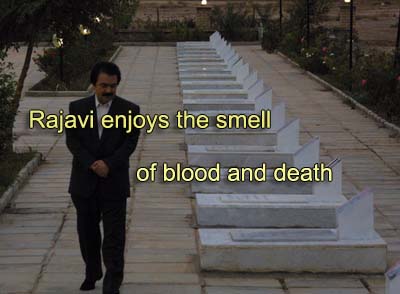 dependent on the blood of its devoted members, calling them martyrs. The terrorist cult of Mojahedin Khalq (aka. MKO, MEK, PMOI, NCR, NLA) is just one among a handful. And what is the necessity of such ever-growing dependence? The reason is simple; MKO needs flow of fresh blood to sustain its structure; it needs more and more martyrs to keep the whole enterprise going; it is a necessary means for the accomplishment of its causes, survival, and keeping its impressive propaganda machine going. As a vindication of its rightness in its struggle path, the group has always boasted about the counts of its members killed, injured and disabled as well as imprisoned members who are believed to substantiate its hegemonic legitimacy over all other opposition groups antagonizing the Iranian regime.
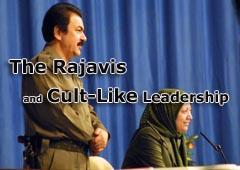
Blood, shed from its own members or those in opposite front, builds the cornerstone of MKO. The Rajavis, the husband-wife leaders of the group, are of the opinion that the rightness of any ideology is maintained by the number of its casualties and martyrs; included in their political and ideological framework, the life and death of man is so simple an issue like drinking water. Ask any defected member and they would promptly enumerate plain examples of the glorification of violence and death-seeking attitude within the organization, an experience that can better than any other theoretical sources of ideology lead you to fathom why the organization delights in victimization of its own members. And open a MKO-run webpage and you will see highlighted reports of Maryam Rajavi’s attending some ceremony to pay homage to the victims of some incident or glorification of the casualties of a certain attack or clash.
Due to the internal demand for constant indoctrination, the MKO cannot hold back from advertising its martyrs, better to say people who die for Rajavi. In fact, MKO longs and prays for a frequent bloody raid and aggression by any outsider against its insiders and in many cases, plots instigation of violent reaction. For instance, once in Camp Ashraf, before residents’ relocation to Temporary Transit Location TTL, the residents had the strict order to provoke a bloody clash since the group needed fresh blood and a few martyrs and wounded people to feed its new round of propaganda against the Iraqi government to maintain its gripe on the camp. As a result, at least twice in 2011 insiders provoked harsh clashes that led to many casualties from the both sides. MKO uncompromisingly refused to cooperate in transferring the insiders to TTL and the Special Representative of the Secretary-General for Iraq, Martin Kobler, had repeatedly expressed his concern about the possible eruption of violent clashes between the sides.
MKO’s settlement in TTL has totally gone against its expectation as the group never expected such indefinite prolongation of being kept in limbo. As the group was sinking into a political oblivion and there was an increasing number of members demanding to defect and there were instances of escapes, new blood was an urgent necessity. Just on February 9, rockets hit TTL leading 7 to their death and leaving many more injured. The media coverage presume MKO has received an awful shock and busy mourning for the killed, condemning the attacks and accusing this and that for committing what they call an appalling human tragedy. But in the heart the leaders are jubilant and behind the closed doors they are celebrating the bloody incident; they wish and hope the injuries hasten the injured to their death to make more martyrs.
The attacks carried out by any party have provided excellent excuses for MKO to display an exhibition of martyrs long victimized within the cult themselves. They could be free people like those escaped or defected and MKO is not uninterested to make all residents martyrs to demonize the Iraqi and Iranian governments as well as securing a much more extended period of stay in Iraq with all needed sympathy directed in its own favor. The world should be concerned about any plotted violence from the side of terrorist MKO that threatens the life of the insiders. The only words instilled into them are those that connote death and violence. They need to hear murmurs of love and life.
MKO needs flow of fresh blood to sustain its structure and accomplishment of its causes
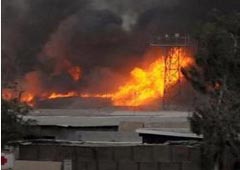 presence, has claimed responsibility for the mortar attacks on Camp Liberty that left a count casualty of nearly 60 on both sides, the Iraqi guards and the residing MKO members. In a statement, as it was expected, MKO accused the Iranian and Iraqi regimes to be not only the responsible but behind the attacks. But the chief responsible for the attacks and the inflicted casualties is MKO itself with Massoud Rajavi at the head.
 “inhumane condition” of Camp Liberty, the group leaders and supporters propagate “the necessity of returning residents to Ashraf”. Alejo Vida Quadras, the top MKO supporter in European Parliament suggested the new propaganda under the pretext of "lack of progress in relocation to third countries".
 fuels global rage against Iranian regime but praises the group and its leaders as pro-democratic unity devoted to peaceful campaign against all cruelties and violations of human rights! MKO is not the first in history clinging to such a paradox but following the footsteps of countless bullies who were determined to shift the focus of public attention and rage away from their own devious intention and plans to a hateful image of a “single adversary”.
 Intelligence and Security: a Profile’.
  findings and reports of local and international NGOs which vary from country to country according to their political, social and historical characteristics and particularly if a country experiences post-war crises. Even in such a country, Iraq for example, many people today realize that their government has obligations in the sphere of human rights and the government has also started to meet these obligations; the existence of the Ministry of Human Rights expresses how important human rights are for this country.
 one to make is to avoid admitting them. Of the recent expressions which best describes the terrorist MKO is the one stated by Alan Berger, a Boston Globe editorial writer expert on foreign policy and security issues. In his article entitled Iranian exiles and international blunders, he points to his last year’s interview with MKO’s leader, Maryam Rajavi, and the group’s members he talked to and concluded that “People caught up in a blood feud are not inclined to dwell on their past errors”. As a matter of fact, MKO has been pursuing a never-ending and long lasted vendetta against the Islamic Republic regime for many bloods the group’s own past errors themselves have been the main cause to shed. And MKO laid the cornerstone of all errors when it concluded the inevitability and necessity of initiating armed struggle and violent acts in 1981, a rebellion which was supposed to speed up the collapse of the regime just for a change of power rather than for the accomplishment of democratic and civil causes.