The attack Sunday September 1st on Camp Ashraf ended with the killing of 52 high ranking members of the Mujahedin Khalq Organization (the MKO). Those members had been remained at the Camp to allegedly watch 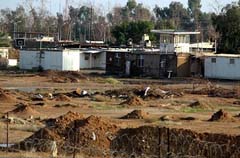 the group’s properties. The attack was reportedly the most bloody of the several mortar attacks on MKO camps in Iraq. However, the MKO leaders and supporters view “return to Ashraf” as the best solution to guarantee the security and safety of MKO members!
The news on the recent attack on Camp Ashraf is controversial. No credible report has been published on details of the incidence except those released by the group propaganda but one thing is sure: Camp Ashraf is not a safe place for former partners of Saddam Hussein who aided him in operations to suppress Kurdish and Shiite uprisings during the 1990’s. Iraqi people have sought to expel the MKO from their territory since the collapse of Baath regime but the MKO leaders’ unyielding position was to stay in Iraq. The group leaders have urged to return the members to Camp Ashraf since February 2013 when the majority of members were transferred to Camp Liberty, a former US military base near Baghdad airport.
In February 2013, following a much slighter attack on Camp Liberty –only five people were killed – Maryam Rajavi claimed that there was no guarantee of protection and safety for the residents at Camp Liberty and “the only way to prevent further killing is to compel the Iraqi government to return 3000 defenseless residents of Camp Liberty to Ashraf, their home for 26 years”.
Since then, running the agenda of “Return to Ashraf” became a non
Besides European sponsors of Maryam Rajavi, a delegation of her advocates in the US congress including Ted Poe who visited her at that time tried to appease her by saying that “the full protection of the residents of Camp Liberty can only be ensured by moving them out of the harm’s way and returning them to their home for 26 years at Camp Ashraf.”
The so called “home for 26 years” is actually a part of Iraqi territory granted by former Iraqi dictator, Saddam Hussein to foreign insurgents – the MKO members. Iraqi nation do not want the MKO as the remnants of the former dictator in their soil anymore.
Why do not the MKO leaders and their Western supporters “emphasize” on the residents’ urgent relocation to third countries?
Regarding the fact that previous attacks on Ashraf (April 2011 and July 2009) and Liberty (February 2013 ) were warnings for the group leaders to act more seriously to transfer residents out of Iraq and to cooperate more willingly with the UN. Nonetheless, Maryam Rajavi and her disappeared husband, Massoud Rajavi are so reluctant for the relocation process that one can conclude that they benefit more from staying in Iraq than leaving it ! Their agenda of “Return to Ashraf” is now considered absolutely questionable. The process of martyr-making out of attacks on the MKO camps using them to draw the World attention to the group or at least to gain their sympathy provides more fuel to the group’s propaganda machine. Bad for the group leaders, this time the world’ attention is focused on Syria.
By Mazda Parsi
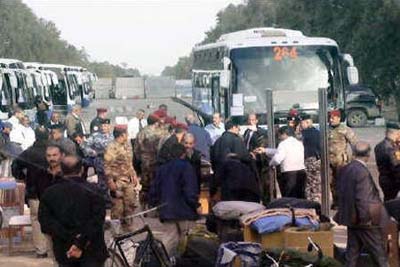
 condemned the killing of dozens of people in Camp Ashraf north of Baghdad, urging the Iraqi Government to investigate what happened.
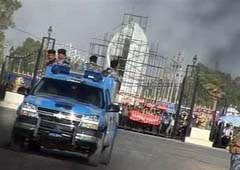
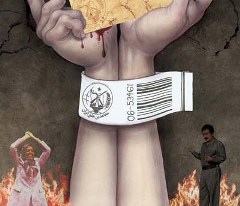 shop front of the Rajavi cult in Paris, started issuing statements one after another claiming that armed Iraqi forces had carried out an attack, killing some of the remaining people in Camp Ashraf while they have been handcuffed. international media started broadcasting this news and a flood of condemnation and sympathy resulted. It is unfortunate that the original source of this news has been the Mojahedin Khalq (aka MKO, MEK, NCRI), the dangerous, destructive Rajavi cult. The Mojahedin Khalq also distributed pictures which have also been broadcast worldwide, eliciting even more sympathy from various quarters. The speed at which this self-reporting was carried out and the wide circles to which it was distributed clearly shows some amount of readiness in this respect.
 that Baghdad says is in the country illegally.
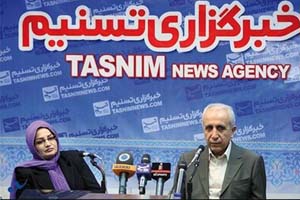 nature of the group which has a long history of hostility and terrorist attacks against the Iranian nation. Ebrahim Khodabandeh and Maryam Sanjabi had been working for the MKO for over 20 years before escaping from the group’s camp in Iraq almost 10 years ago.
 Intelligence Agency (CIA) officially admits it was behind the coup against Iranian democratically elected Prime Minister Dr. Mohammad Mosaddeq in August 1953. However, the release of such a document doesn’t mean that the United States has stopped taking actions to destabilize Iranian government. The Mujahedin Khalq Organization with its dark history of treason and bloodshed against the Iranian nation is now being backed by the US.